Do You Still Need a Shotgun in Minnesota?
Minnesota hunters have been grappling with a lot of changes lately, especially when it comes to what firearms they can legally use for deer hunting. For decades, many parts of our state were strictly "shotgun-only" zones, leading generations of hunters to invest heavily in slug guns and develop specific tactics around their limitations. Now that rifles are largely allowed statewide, many are left wondering: do I still need my trusty shotgun, or is it time to upgrade? This guide will cut through the confusion and help you decide if that slug gun still has a place in your deer camp.
The Shifting Sands of Minnesota Firearm Regulations
It feels like the ground beneath our hunting boots is always shifting, doesn't it? One year it's one rule, the next it's another, and keeping up can be a real headache. The changes to Minnesota's deer hunting firearm regulations have certainly stirred the pot, leading many to question the role of their beloved shotguns.
A Look Back: The Shotgun-Only Legacy
For a long, long time, if you hunted deer in the more populated southern and central regions of Minnesota, a shotgun loaded with slugs was your only option for a firearm. This wasn't some arbitrary decision; it was rooted in genuine concerns about public safety in areas with higher population densities, smaller land parcels, and more development. The idea was that a shotgun slug, while still powerful, generally has a shorter effective range and less propensity for extreme over-penetration compared to many rifle cartridges. This philosophy shaped how countless Minnesota hunters approached deer season.
Think about it: many of us grew up with grandpas and dads toting their pump-action 12-gauges, sighting them in at 50 or 75 yards, and becoming absolute masters of close-range deer hunting. Entire deer camps were built around slug guns, from the discussions about rifled barrels and sabot slugs to the specific techniques for still-hunting thick cover or orchestrating precise deer drives. It was a tradition, and for many, their slug gun isn't just a tool; it's a piece of family history, a part of their hunting identity. The investment in these firearms, both financially and emotionally, runs deep.
The New Statewide Rifle Rules
Then came the big change: Minnesota's New Statewide Rifle Rules. This was a game-changer for many hunters, especially those who felt limited by the effective range of their shotguns in certain landscapes. The new legislation largely permits the use of straight-wall rifle cartridges for deer hunting across most of the state, bringing Minnesota in line with many other states that had similar regulations in their more agricultural or populated regions.
This means that for the vast majority of deer permit areas, hunters now have the option to use a wider array of firearms. Cartridges like the .450 Bushmaster, .350 Legend, and .45-70 Gov't, which offer improved accuracy and a longer effective range compared to traditional shotgun slugs, are now viable choices for deer hunters in many areas where only shotguns were previously allowed. It opens up new possibilities for stand placement, shot distances, and overall hunting strategy, particularly in more open or semi-open terrain.
Where Shotguns Still Hold the Line
Now, here’s the critical detail that often gets overlooked in the excitement of "rifles are legal statewide!" While the vast majority of Minnesota is now open to straight-wall rifle cartridges, the legislation included a provision for individual counties to opt out and maintain their shotgun-only status. This means that hunters absolutely cannot assume that rifles are legal everywhere. It is imperative that you verify the regulations for the specific county or even parcel of land you plan to hunt.
So, if you're hunting in a county that chose to stick with the old ways, your trusty slug gun is not just still relevant, it's still required. Before heading out, make sure to check the official regulations or use a mapping tool like GoHunt to confirm the rules for your chosen hunting grounds. This is why Checking Your County's Shotgun-Only Ordinance is so important every season. Even if you've hunted an area for years, a local ordinance could have changed.
When a Shotgun Still Shines: Practical Considerations for Minnesota Hunters
Even in areas where rifles are now legal, don't write off your shotgun just yet. There are still many practical reasons why a shotgun might be your best — or at least a very good — choice for certain hunting situations here in Minnesota.
Dense Cover and Close-Quarters Hunting
Minnesota is a diverse state when it comes to habitat. While we have open farm fields, we also have vast expanses of incredibly dense cover. Think about those impenetrable cattail sloughs in the pheasant country or the thick popple regenerating after a timber cut up north. In these environments, shots are rarely long. More often than not, you're jumping deer at 20, 30, or maybe 50 yards as you push through the brush or wait along a tight travel corridor.
For these close-quarters encounters, a shotgun loaded with a modern slug is still incredibly effective. Their handling characteristics, often shorter overall length, and the immense knockdown power of a large-caliber slug at close range make them formidable. Trying to swing a long-barreled rifle through thick alder or dense dogwood can be a clumsy affair. When you're Hunting Minnesota Cattail Sloughs for Deer or Hunting a Funnel Between Two Sloughs, a quick-pointing slug gun can be the difference between a clean shot and a missed opportunity. The minimal over-penetration risk compared to some high-velocity rifle rounds can also offer a bit of peace of mind in areas where visibility is limited and you don't know what's beyond your target.
Public Land Pressure and Deer Drives
Minnesota's public lands can get a lot of hunting pressure, especially during the firearm season opener. This often means deer are moving, sometimes quickly, and shots can be hurried and at relatively close range. Many hunters engage in deer drives, whether organized affairs with a dozen people or smaller, more intimate pushes with just a few friends or family members. For these scenarios, a shotgun is often still the preferred tool.
When you're involved in Deer Drives With Three or Four Hunters, the action can be fast and furious, with deer breaking cover at unexpected angles. A shotgun's ability to quickly get on target and deliver a powerful punch at short to medium ranges is a real asset. Furthermore, the inherent limitations of a slug gun's range can actually be a safety advantage in crowded public land settings, helping to reduce the risk of shots traveling too far. If you're hunting areas where Hunting Pressure on Minnesota Public Land is a factor, a shotgun can be a highly practical choice, forcing you to focus on close-range opportunities and precise shot placement.
Budget and Familiarity: Not Everyone Needs a New Rifle
Let's be real: hunting is an expensive passion. Licenses, tags, gear, fuel, and time off work all add up. For many Minnesota hunters, their slug gun has served them well for years, perhaps even decades. They've invested in a good scope, practiced extensively, and know exactly how that firearm performs. The idea of shelling out hundreds or even thousands of dollars for a new rifle, new optics, and a new supply of ammunition, just to re-learn a different firearm, isn't appealing or necessary for everyone.
If you have a well-tuned slug gun that you shoot confidently and accurately, there's absolutely no compelling reason to ditch it just because rifles are now an option. Confidence in your equipment and your shooting ability trumps having the "latest and greatest" every single time. Your familiarity with your shotgun, knowing its sweet spot for different slugs and understanding its limitations, is a massive advantage that no new rifle can instantly provide. Stick with what you know, what you trust, and what puts meat in the freezer if it works for your hunting style and area.
Choosing Your Tool: Shotgun vs. Rifle for Different Terrains
The decision often comes down to matching your equipment to the specific terrain and hunting style you employ. Minnesota offers a huge variety of landscapes, and what works best in one area might be less ideal in another.
The Open Fields and Long Shots of Farmland
If you spend your deer season primarily hunting vast agricultural areas in southern or western Minnesota, where shots can often stretch out across large fields, cut corn, or open pasture, then a straight-wall rifle definitely offers a distinct advantage. These areas are tailor-made for the increased effective range and inherent accuracy of a rifle cartridge.
Imagine you're positioned on a distant field edge, glassing a food plot where deer are feeding 150 or 200 yards away. While some highly accurate slug guns can certainly connect at those distances, a rifle will generally offer a flatter trajectory and superior accuracy, greatly increasing your ethical shot opportunities. For hunters who are Hunting Minnesota Farmland Deer and anticipate longer shots, or who are Sitting a Field Edge in Late Season waiting for a buck to cross a wide-open expanse, the rifle has a clear performance edge.
Big Woods and Mixed Terrain
The "big woods" of northern Minnesota, with its endless stands of pines, hardwoods, and mixed forests, presents a different challenge. Here, shots are often much closer due to the dense cover, but there can also be open logging roads, clear-cuts, or natural openings where longer shots present themselves. This is where the choice can become more nuanced.
Many hunters in these areas find themselves Still-Hunting Minnesota Big Woods, moving slowly and deliberately through cover, anticipating close-range encounters. For this style, the quick handling of a slug gun can still be appealing. However, if you anticipate setting up on a wider logging trail or overlooking a large clear-cut, the added reach of a rifle becomes very attractive. Now that Hunting Minnesota Now That Rifles Are Legal Statewide is the norm, hunters in these mixed terrain areas have the flexibility to choose based on their specific stand setup or hunting strategy for the day.
The Versatility Factor: Shotguns for Other Game
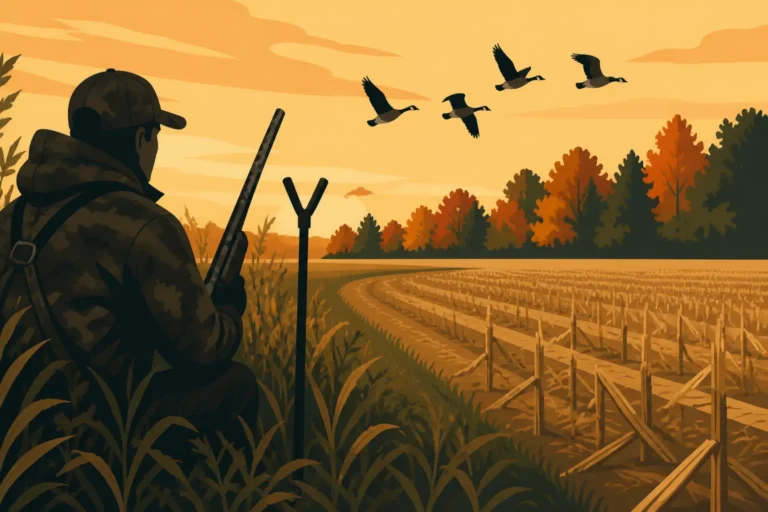
Finally, let's not forget that a shotgun isn't a one-trick pony. For many Minnesota hunters, their shotgun isn't just a deer gun; it's their upland bird gun, their duck gun, their goose gun. The ability to swap barrels or simply change ammunition makes the shotgun an incredibly versatile firearm that can be used across multiple seasons and for various species.
If you're someone who enjoys Pheasant Hunting Minnesota Farmland in October, chases Grouse and Woodcock Hunting in Minnesota through the popple and alder, and then transitions to Minnesota Waterfowl Hunting on Lakes and Potholes later in the fall, your shotgun is an indispensable tool. A single shotgun, perhaps with a dedicated slug barrel and a field barrel, can cover almost all your hunting needs. For the hunter who wants one firearm to do it all, or who simply loves chasing different game throughout the year, the shotgun remains a cornerstone of their arsenal. You can even use resources like GoHunt to understand specific season dates and regulations that might inform your firearm choice for various species.
Here's a quick comparison to help you weigh your options:
| Feature/Scenario | Shotgun (with slugs) | Straight-Wall Rifle |
|---|---|---|
| Effective Range | Typically 100-125 yards (some premium slugs up to 175) | Often 150-250+ yards (depending on caliber) |
| Accuracy | Good at close range, can be challenged at longer distances | Generally superior accuracy at extended distances |
| Handling in Cover | Often shorter, quicker to swing in dense brush | Can be longer, potentially less nimble in thickets |
| Kinetic Energy | High at close range, powerful knockdown | Excellent across effective range, flatter trajectory |
| Over-penetration Risk | Generally lower due to larger, slower projectile | Higher with some calibers, consideration in populated areas |
| Versatility (other game) | Excellent for upland birds, waterfowl, small game | Primarily dedicated to big game (deer, bear, elk) |
| Cost (new setup) | Can be more budget-friendly if already owned | Often higher initial investment for rifle/scope/ammo |
| Remaining Shotgun-Only Zones | Required in these specific counties/areas | Illegal in these specific counties/areas |
Ultimately, the question of whether you still "need" a shotgun in Minnesota isn't a simple yes or no. For some, particularly those who hunt specific counties or dense cover, it's still a requirement or the optimal choice. For others venturing into more open terrain, a rifle might offer new advantages. What's most important is that you understand the regulations for your specific hunting spot and choose the firearm you are most proficient and confident with. Happy hunting, and good luck out there!
Disclaimer
This article is for general informational purposes only and does not constitute professional advice. Laws, prices and regulations vary by location and change over time. Consult a qualified professional for guidance on your specific situation.