Still-Hunting Minnesota Big Woods
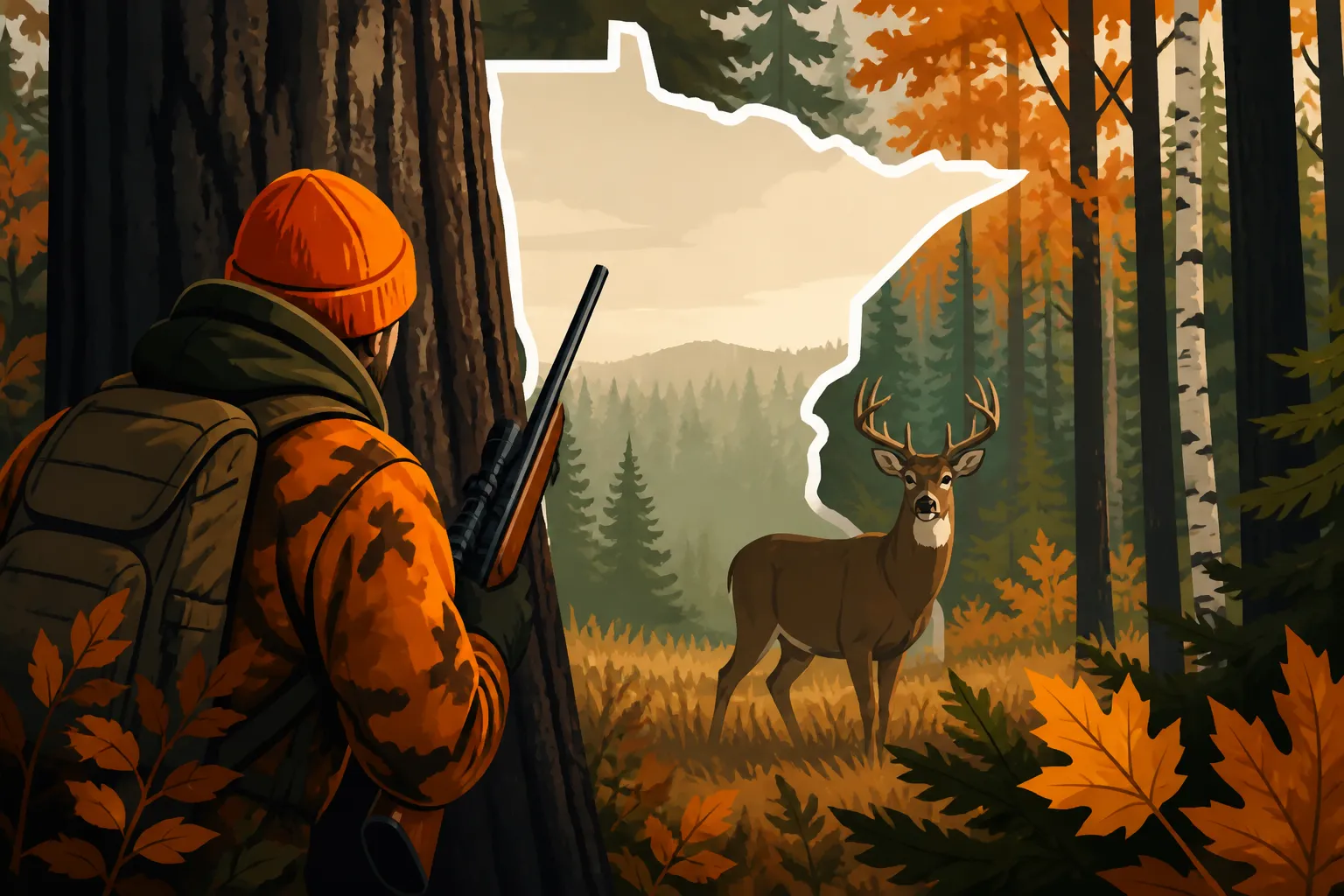
Many of us feel the frustration of stepping into Minnesota's sprawling "big woods" only to have deer seemingly vanish into thin air. It’s a vast, challenging landscape where traditional stand hunting often feels like a gamble. This guide is all about mastering the patient, stealthy art of still-hunting—a method that puts you in control, moving quietly and deliberately through the timber, seeking out those elusive whitetails on their terms.
Understanding the Minnesota Big Woods Environment
The "big woods" of Minnesota isn't just one type of forest; it's a diverse tapestry of habitats that demand a nuanced approach from any hunter. From the towering red and white pines of the north to the mixed hardwoods and sprawling tamarack swamps, each section presents its own set of challenges and opportunities for the still-hunter. Knowing what you're walking into is the first step to success.
Terrain and Vegetation Challenges
Imagine trying to quietly navigate through thick stands of young aspen, where every step seems to snap a twig, or picking your way across a boggy tamarack swamp that sucks at your boots with every stride. This is the reality of still-hunting in Minnesota's big woods. The terrain can be brutally uneven, with hidden blowdowns, rock outcroppings, and abrupt elevation changes. The vegetation shifts from dense, impenetrable dog hair thickets to more open, mature hardwood ridges. A prime example is the vast tracts of public land in counties like Aitkin or Itasca, where you might encounter everything from dense popple regrowth (ideal bedding cover) to mature oak stands on higher ground (critical food sources). You need to understand that the "woods" aren't uniform; they are a patchwork quilt of differing covers, each dictating your pace, vigilance, and even your route. The sheer scale and variety of the landscape mean you can't just blindly wander; you need a mental map of what type of cover you're currently in and what lies ahead.
Deer Behavior in Vast Landscapes
Deer in these expansive, less-pressured environments often behave differently than their farmland cousins. They're typically more accustomed to natural predators like wolves and coyotes, making them incredibly wary and tuned into subtle shifts in their surroundings. Instead of predictable patterns around small woodlots, big woods deer have vast ranges, moving between various bedding areas, feeding grounds, and water sources throughout the day, often dictated by wind, thermals, and hunting pressure. You might find a mature buck bedding in a thick cedar swamp miles from any road, only to move to an oak ridge for an afternoon feed, perhaps using a subtly defined ridge top for travel. This is where patience truly pays off. They don't have to tolerate your presence; they'll often melt away silently long before you ever see them, making every slow, deliberate step crucial. Understanding the nuances of their seasonal movements and preferred escape routes is key to putting yourself in the right place at the right time.
The Art of Still-Hunting: More Than Just Walking
Still-hunting is a mindful, deliberate dance with the forest, requiring more mental discipline and sensory awareness than simple movement. It's about blending in, becoming part of the landscape, and letting your eyes and ears do most of the work before your feet ever move.
The Mindset of Patience and Observation
Forget rushing. Still-hunting demands a glacial pace, often moving only a few steps before pausing to scan, listen, and simply be in the woods. This isn't about covering ground; it's about covering it effectively. The mindset is one of intense observation. Think like a predator, or perhaps more accurately, like a very slow, thoughtful deer. You're not looking for an entire deer right away; often, your first clue will be a flicker of an ear, the horizontal line of a back contrasting with vertical trees, or the dark patch of an eye against brush. Train your eyes to pick out anomalies. This means taking the time to really scrutinize the shadows, the dense undergrowth, and the edges of thickets. When you stop, don't just stand there; let your eyes meticulously pick apart the cover, from the ground up to the height of a deer's back. This constant, deliberate searching, combined with extreme patience, is what separates a successful still-hunter from someone merely walking through the woods.
Utilizing All Your Senses
While vision is paramount, a truly effective still-hunter engages all senses. Your ears are your early warning system. Listen for the crunch of leaves underfoot (your own and theirs), the distant snap of a twig, the soft rustle of movement in the brush, or even the subtle thump-thump of a deer getting up from its bed. The big woods can be surprisingly noisy, especially on a calm morning, but learning to filter out the ambient forest sounds from those indicating deer presence is an acquired skill. Use the wind, too. A gentle breeze can carry your scent away from deer, or better yet, carry their scent to you. A good hunter always moves into the wind or with a slight crosswind. Feeling the subtle shift in air currents can tell you if you're approaching a thermal draw or if the wind is swirling. Even your sense of smell can come into play; catching the musky scent of a buck or the distinct smell of fresh deer urine can tell you a deer has been, or still is, very close. It's an immersive experience that keeps you completely tuned into your surroundings.
Gear and Clothing for Silent Movement
Your gear choices are absolutely critical when still-hunting. Every item, from your boots to your outer layer, needs to be chosen with silence, comfort, and functionality in mind. Loud fabrics or ill-fitting boots can completely blow your chances, announcing your presence long before you see your quarry.
Layering for Stealth and Comfort
Minnesota weather, especially during deer season, is notoriously fickle. One minute it's crisp and cool, the next the sun is beating down, or a sudden squall rolls in. Effective layering is key to remaining comfortable and, more importantly, quiet. Start with a moisture-wicking base layer that pulls sweat away from your body, preventing chills when you pause. Over that, a mid-layer for insulation, perhaps a quiet fleece or wool blend. The outer layer is where silence truly matters. Avoid anything with a "crinkly" sound, like many rain shells. Opt for soft, brushed fabrics like wool, fleece, or specialized quiet synthetics that won't rustle against branches or your own movements. You might even consider something like a traditional wool jacket, which is incredibly warm, quiet, and retains warmth even when damp. The goal is to be able to shed or add layers discreetly as your activity level or the weather changes, maintaining an optimal body temperature without making a sound. Keeping your core comfortable prevents fidgeting, which can be just as noisy as crunchy clothing. For more on staying warm and quiet, check out this guide on Layering for a Minnesota Deer Stand.
Footwear for Quiet Navigation
Your boots are arguably the most important piece of gear for still-hunting. They need to be comfortable enough for miles of walking, provide excellent ankle support on uneven terrain, and, critically, be quiet. Heavy, clunky boots that slap or crunch with every step will quickly give you away. Look for boots with flexible, soft soles that allow you to feel the ground and carefully place your feet. Many still-hunters prefer rubber boots for their scent-containment properties and waterproofness, especially when navigating through bogs or wet leaves, common in areas like the Chippewa National Forest. However, ensure they fit well and aren't too bulky. Leather boots, if broken in and well-maintained, can also be quiet. The key is practicing a deliberate heel-to-toe step, feeling for twigs or leaves before committing your weight. This methodical foot placement, combined with quiet footwear, allows you to glide through the woods rather than stomp. For deep snow or frozen ground later in the season, traction is also important, so a subtle tread pattern that doesn't pick up too much debris is ideal. Find more great options in our discussion on Boots for Minnesota Swamps and Snow.
Reading the Woods: Sign, Tracks, and Thermals
Still-hunting isn't just about moving slowly; it's about moving intelligently. This intelligence comes from being able to decipher the subtle messages the forest constantly sends you. Every broken twig, scuff mark, or swirl of air tells a story, and learning to read these stories is paramount to finding big woods whitetails.
Interpreting Deer Sign and Tracks
Before you even start moving, or as you progress, keep your eyes peeled for fresh deer sign. This includes tracks in soft earth or snow, droppings, rubs on saplings, and scrapes on the ground. Fresh sign tells you that deer are actively using the area, increasing your chances. For instance, a line of fresh tracks heading into a dense cedar swamp on a cold morning likely indicates a deer moving to its bedding area. Conversely, tracks leaving a thicket and heading towards an oak ridge in the afternoon could mean a deer is transitioning to a feeding area. The size and depth of tracks can even give you clues about the size and weight of the deer. Pay attention to how often you find sign; if it's sparse, you might be in an unproductive area and need to adjust your route. Mapping tools like GoHunt's satellite imagery can be incredibly useful for identifying potential travel corridors and bedding areas before you even set foot in the woods, helping you anticipate where you might find this crucial sign. These tools allow you to study terrain features and vegetation changes from afar, saving valuable time and effort. Our guide on Finding Sign in Minnesota Big Woods offers even more detailed insights into what to look for.
Understanding Wind and Thermals
Wind and thermals are perhaps the most critical, yet often overlooked, factors in still-hunting. They are the invisible currents that carry your scent, and they can make or break your hunt. Always try to move into the wind or with a slight crosswind, ensuring your scent is blowing away from where you expect deer to be. In hilly or undulating terrain, thermals become a major player. As the sun rises, warm air begins to rise, carrying scent uphill. In the evening, as the air cools, it sinks, carrying scent downhill. This means that if you're still-hunting a ridge in the morning, you might want to move along the bottom or up a sidehill to keep your scent from blowing directly into bedding areas above. In the afternoon, reverse that, moving higher up as thermals begin to pull scent down into the valleys. A small bottle of wind checker powder is your best friend; puff it frequently to confirm the current wind direction and identify swirling air pockets, especially in dense cover or transition zones. Ignoring the wind and thermals is a surefire way to be busted by a deer you never even saw. Learn more about navigating these complex air currents in our article on Wind and Thermals on a Minnesota Ridge.
Strategic Movement and Pausing
Still-hunting is often described as "hunt a tree, then hunt another tree." It's not a continuous stroll, but a series of deliberate movements punctuated by extended pauses where observation is paramount. The rhythm of your hunt is what will determine your success in those big woods.
The Stop-and-Go Technique
This is the absolute cornerstone of effective still-hunting. You move incredibly slowly, taking a few careful steps, feeling the ground, and making sure each footfall is silent. Then you stop. Not just for a second, but for several minutes, sometimes even ten or fifteen minutes. During these pauses, you become a statue, motionless and hyper-aware. This is when deer that may have been spooked by your movement, or those that were simply camouflaged, might reveal themselves. They expect movement to continue; when it doesn't, their curiosity or sense of "all clear" might cause them to shift or take another step, giving you the critical visual cue you need. Use your binoculars during these stops to systematically pick apart every patch of cover within your view, looking for horizontal lines, unnatural shapes, or flickers of movement. On vast public lands like the George Washington State Forest or parts of the Superior National Forest, where deer can be anywhere, this meticulous approach is vital. It forces you to slow down, absorb your surroundings, and often spot deer before they spot you, turning a potential bust into an opportunity.
Anticipating Deer Movement and Bedding
Successful still-hunting isn't just reacting to what you see; it's about anticipating what the deer will do. As you move, constantly ask yourself: "If I were a deer, where would I be right now?" and "Where would I go if spooked?" Look for natural funnels, like narrow strips of timber between swamps, saddlebacks on ridges, or edges of clear-cuts that deer naturally use for travel. As you approach thicker cover, slow down even more, knowing that deer often bed in the densest areas for security. Cedar swamps, thick new growth popple, and even the tangled blowdowns within mature timber are prime bedding locations. Imagine a scenario where you're still-hunting an oak ridge. You find fresh tracks heading into a thick, gnarly blowdown area downwind. Instead of crashing in, you'd carefully circle downwind, pausing frequently, using your optics to scrutinize the edges of that thicket, anticipating a deer might be bedded there, ready to bolt. This proactive thinking, combining your knowledge of deer behavior with the specific features of the landscape, will put you in a position to intersect deer as they move or to spot them in their beds. Our insights on Where Big Woods Bucks Bed in Minnesota can further sharpen your predictive skills.
Navigating Hunting Pressure and Shared Public Land
The big woods might feel empty, but during Minnesota's deer seasons, it's rarely devoid of other hunters. Understanding how to manage and even leverage hunting pressure is a crucial skill for the still-hunter on shared public land.
Finding Unpressured Pockets
Even in heavily hunted areas, there are almost always pockets of unpressured ground. These are typically areas that are difficult to access, either due to distance from a road, dense topography, or natural barriers like large swamps or steep bluffs. The still-hunter thrives in these spots because they're willing to go where others aren't. While most hunters might stick to within a quarter-mile of a logging road or ATV trail, you're mentally prepared to go a mile or two deeper, carrying what you need and knowing you'll have to drag any success back out. Use satellite imagery on mapping apps like GoHunt to identify these "hard-to-reach" areas. Look for land features that create natural deterrents, such as expansive lowlands, dense timber changes, or areas without easy ATV access. Sometimes, even a dense patch of thorny brush or a small, overlooked ridge between two larger hunting blocs can hold deer that have learned to avoid the easier-to-access areas. These are the places where a truly large, unpressured buck might decide to make his home, knowing he's relatively safe from casual encounters. For tips on how to identify these zones, refer to our article on Finding Ground Others Walk Past.
| Still-Hunting Pace | Cover Type (Minnesota Examples) | Effective Use Case |
|---|---|---|
| Glacial (10 steps/5 min) | Dense Cedar Swamps, Heavy Popple Thickets, Blowdowns | Scouting bedding areas, tracking a specific deer, extremely wary bucks |
| Slow (20 steps/5 min) | Mixed Hardwoods with Moderate Undergrowth, Ridge Lines | General still-hunting in likely travel corridors, early morning/late evening |
| Moderate (30 steps/5 min) | Open Pine Plantations, Mature Hardwood Stands with Clean Understory | Covering ground between known hotspots, lighter pressure areas |
| Fast (4-500 yards/hour) | Rarely used for still-hunting; more like a slow stalk/walk | Not recommended for true still-hunting |
Utilizing Other Hunters' Movement
This might sound counterintuitive, but other hunters can actually work to your advantage. When deer feel pressure, they don't just disappear; they move, often to the thickest, nastiest cover available, or they become nocturnal. A still-hunter, moving quietly and intelligently, can intercept these displaced deer. Imagine it's opening morning, and you hear distant shots and shouts from a deer drive on public land, perhaps near the Nemadji State Forest. Instead of retreating, position yourself downwind of the commotion, ideally along a known escape route or a major topographical feature like a ridge line or a creek bottom that deer would naturally use to evade pressure. Deer pushed by drives or by other hunters simply walking through the woods will often travel surprisingly far but along predictable routes. The key is to be still and patient, positioned to intercept them as they try to get to safety. This strategy requires good judgment and a deep understanding of how deer react to disturbance, turning what many see as a negative into a potential opportunity. It's a reminder that even when the woods seem crowded, there's always a way to adapt and succeed.
Disclaimer
Hunting is an inherently dangerous activity. Always prioritize safety, understand and follow all Minnesota Department of Natural Resources regulations, and ensure you have proper training and equipment. The information provided here is for educational and informational purposes only and should not replace professional guidance or personal judgment.