Hunting a Funnel Between Two Sloughs
For any Minnesota deer hunter, the frustration of knowing deer are in the area but not being able to consistently intercept them is all too real. Deer are masters of using the landscape to their advantage, often slipping through cover unnoticed. This guide is all about understanding and effectively hunting those natural choke points, specifically the subtle yet incredibly productive funnels found between two sloughs, helping you put the odds back in your favor.
Understanding Why Slough Funnels Are Deer Magnets
Sloughs, those low, marshy, often cattail-choked areas, might seem like impenetrable messes to us, but to a whitetail deer, they're sanctuaries. They offer dense thermal cover from harsh winter winds, vital bedding areas during the day, and often provide unique food sources or easy access to water. The problem for us hunters often isn't that deer aren't in the sloughs, but that they're so well hidden within them. That's where the magic of the funnel comes in.
The Irresistible Pull of a Natural Pinch Point
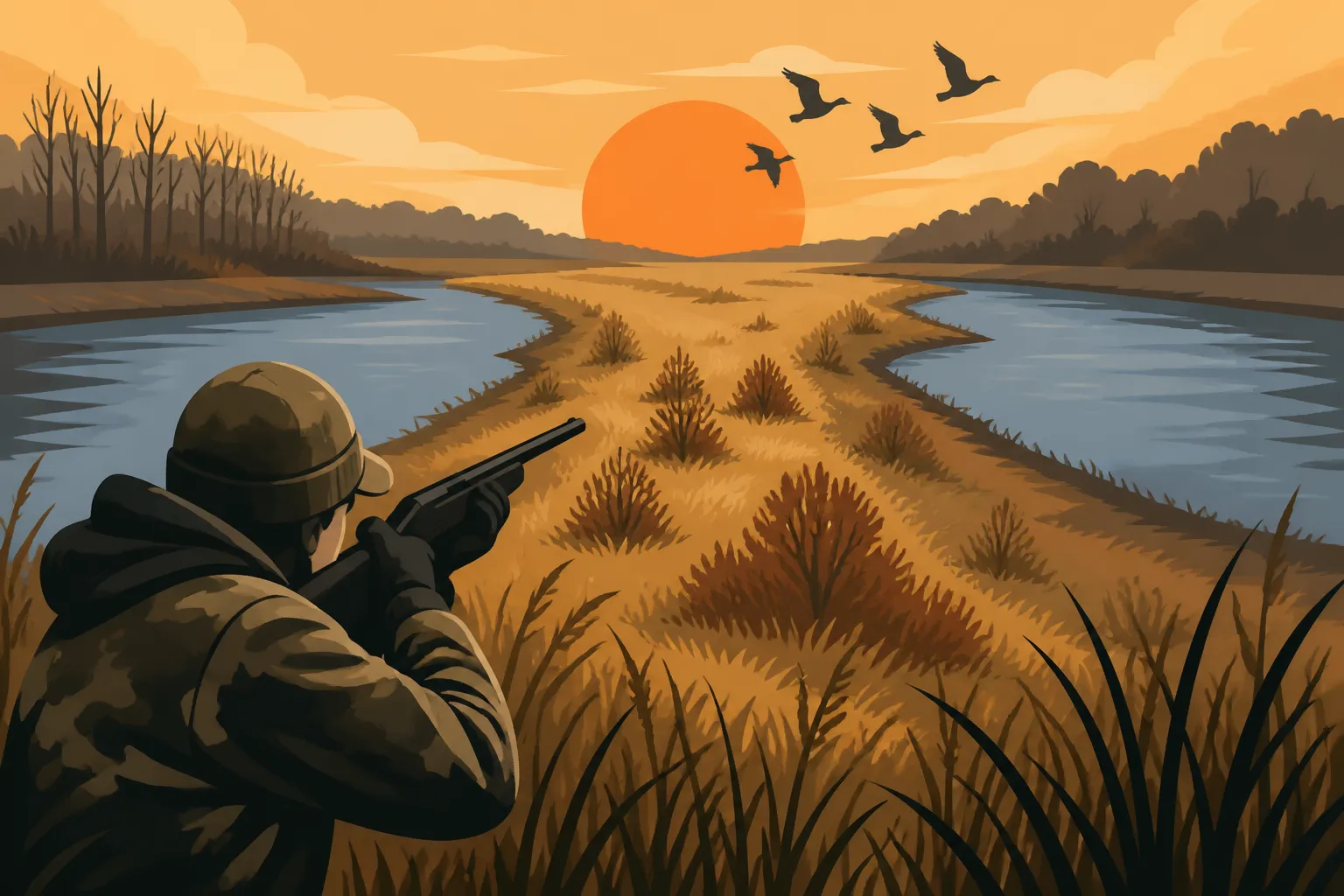
Imagine two large, dense sloughs, perhaps separated by a slightly higher, drier strip of timber or brush. Deer, being creatures of efficiency, will naturally seek the path of least resistance when traveling between these two secure bedding or feeding areas. This narrow strip of land, often just wide enough for a few well-worn trails, becomes a superhighway for deer movement. It's a natural pinch point, a topographical feature that literally funnels deer into a predictable, concentrated travel corridor.
These funnels aren't always obvious; they might not be dramatic ravines or towering ridges. Often, they're subtle, a slightly elevated finger of hardwoods, a thin row of pines, or even just a drier patch of brush that connects two larger, wetter areas. The deer's need for cover, safety, and efficient travel makes these spots irresistible, particularly when traveling from bedding to feeding, or when bucks are cruising during the rut. The challenge is often finding them on the ground through thick vegetation and then figuring out how to approach them without blowing out the whole area.
Challenges and Opportunities in Slough Funnel Hunting
Hunting slough funnels comes with its own unique set of challenges. The thick cover that makes these areas so attractive to deer also makes human navigation and scent control incredibly difficult. Wind swirls endlessly, especially in dense cattails or brush, making it a nightmare to predict. Access can be treacherous, often requiring trudging through mud, water, or dense tangles. Furthermore, deer in these areas are often quite educated, having grown up dodging hunters in similar cover.
However, these challenges are precisely what create opportunities. Because they're so difficult to hunt, many hunters shy away from them, leaving these prime funnels relatively unpressured. If you're willing to put in the work to scout, strategize your approach, and adapt to the conditions, you can find incredible success. The very nature of a funnel means that even if deer know you're around, they still have to use that constrained pathway, giving you a better chance to intercept them than in more open, unpredictable terrain.
Identifying Productive Funnels on the Landscape
Successfully hunting a slough funnel starts long before you ever set foot in the woods with your bow or rifle. It begins with diligent, multi-layered scouting that combines modern technology with old-fashioned boot leather.
Digital Scouting with Mapping Tools
Before you even leave your living room, modern mapping applications are your best friend. Tools like GoHunt or onX Hunt are invaluable for identifying potential slough funnels. Look for those dark green or blue areas on the map that indicate dense, wet cover—these are your sloughs. Then, search for narrow strips of lighter green (timber) or tan/brown (drier ground, brush) connecting two such areas. Pay close attention to subtle elevation changes; even a few feet of elevation can make a big difference in deer travel patterns.
When you're studying these maps, don't just look at the most obvious connections. Sometimes, the best funnels are those less apparent ones that might require deer to take a slightly longer route, but offer more consistent cover or less human disturbance. Zoom in to see if you can spot faint lines that might indicate old logging trails or barely perceptible changes in vegetation that could act as a subtle deer trail. You'll want to think about how you'd create your own Entry Routes Through a Cattail Slough to get to these spots quietly.
Consider the prevailing wind directions for your hunting season. If a funnel runs north-south, and you typically hunt with a west wind, how will your scent affect deer moving through it? Digital tools often allow you to overlay wind direction, which is a powerful way to eliminate unproductive stand locations or refine your entry and exit strategies. Use these applications to mark potential stand sites, likely bedding areas within the sloughs, and primary feeding areas outside of them. This digital groundwork will save you countless hours of walking unproductive ground.
Ground Scouting for Active Deer Sign
Once you've narrowed down your potential funnels on a map, it's time to hit the ground. Ground scouting is crucial, especially when trying to understand Hunting Minnesota Cattail Sloughs for Deer. You need to confirm that deer are actually using these funnels and understand how they're using them. This means looking for a variety of signs:
- Tracks: Fresh tracks are gold. Look for multiple sets of tracks, indicating consistent travel. Pay attention to the size of the tracks; larger tracks can indicate mature bucks.
- Trails: Well-worn trails are clear indicators of consistent deer movement. Often, several faint trails will converge into a more pronounced one within a funnel.
- Rubs: Rubs, especially fresh ones on larger trees, are a sign that bucks are actively using the area, often during the pre-rut and rut. Their size and height can give you clues about the buck's size.
- Scrapes: Scrapes are communication hubs for deer. Look for fresh pawed-out ground with an overhanging licking branch. Multiple scrapes along a trail, or a "scrape line," indicate heavy buck activity.
- Droppings: Fresh deer droppings are a good sign of recent activity. They can also give you clues about their diet, indicating what they're currently feeding on.
During your ground scouting, be as stealthy as possible, just as you would when Scouting Minnesota Public Land Before Season. Walk slowly, watch the wind, and wear neutral colors to avoid alerting deer. Take pictures, mark waypoints on your GoHunt app, and try to piece together the full picture of deer movement. Don't be afraid to crawl through thick stuff – the harder it is for you to get through, the more likely it is a natural barrier that funnels deer.
Considering Access Routes for Deer and Hunter
A great funnel is only as good as your ability to hunt it without spooking deer. This means meticulously planning your entry and exit routes. Think about where the deer are bedding and where they are feeding. Your route should aim to keep you completely out of their primary travel corridors and bedding areas before, during, and after your hunt.
For instance, if deer are bedding in a slough to your north and feeding in an alfalfa field to your south, and the funnel runs between them, your approach should come from an angle that doesn't put your scent across their path of travel. Often, this means circling wide, using natural terrain features, or even waders if the edge of a slough provides a noiseless, scent-free path. Remember that deer are incredibly sensitive to human scent and noise. A single bad entry or exit can ruin a prime funnel for days, if not weeks. This is especially true if you are trying to intercept deer during Hunting the Rut in Late October or when they are actively cruising during the peak of the rut.
Table: Stand Types for Hunting Slough Funnels
| Stand Type | Pros | Cons | Ideal Scenario |
|---|---|---|---|
| Treestand | Elevated vantage point, good for seeing over brush, better scent dispersal in some winds | Limited tree availability in thick slough edges, noisy setup, hard to move once placed | Good, mature timber on the funnel's edge, consistent wind, long sits, or for Treestand Setups in Minnesota Hardwoods |
| Ground Blind | Excellent concealment, scent containment (if sealed), protection from elements, easy to set up | Limited visibility over dense cover, potential for swirling thermals, takes up space | Thicker, brushier funnels, short sits, changing wind, or when Using a Ground Blind on Minnesota Public Land |
| Saddle Hunting | Ultimate mobility, lightweight, quiet setup/takedown, 360-degree shooting | Requires specific tree types, learning curve, less comfortable for long sits | Highly mobile hunting, scouting on the fly, quick adjustments to deer movement or wind shifts |
Strategic Setup for Hunting Slough Funnels
Once you've identified a promising funnel and confirmed deer activity, the next crucial step is strategically setting up your stand or blind. This isn't just about picking a tree; it's about making a calculated decision based on prevailing conditions.
Mastering Wind Direction and Thermals
Wind is, without a doubt, the single most critical factor when hunting slough funnels. The thick cover and often varied terrain around sloughs can create unpredictable wind currents and swirling thermals. It's a frustrating reality for hunters, but ignoring it guarantees failure. Deer will almost always approach a funnel, especially a pinch point, with the wind in their favor, attempting to scent-check anything ahead of them.
You need to know the prevailing wind for your hunting period and plan your setup accordingly. Ideally, you want a crosswind or a wind that carries your scent away from the primary travel routes. Never place yourself directly downwind of where you expect deer to approach. For example, if you anticipate deer moving from west to east through a north-south running funnel, a south wind might be ideal, carrying your scent south, away from their approach. However, even a slight shift can ruin the hunt. You might need to bring a wind-checker puff bottle and constantly monitor conditions. Understanding Wind and Thermals on a Minnesota Ridge is useful, even if you're not on a ridge, as similar principles apply to elevation changes around sloughs.
Thermals, which are rising or falling air currents, also play a huge role, especially during morning and evening hunts. In the morning, as the sun warms the earth, thermals rise. If you're set up low in a funnel, your scent can be carried upwards and out, but as the day progresses, it can swirl. In the evening, as the air cools, thermals fall, pulling your scent downwards. This often means your evening stand might need to be higher, or in a different spot than your morning one. Always consider how thermals will affect your scent cone and adjust your setup or hunting times accordingly.
Choosing Your Stand or Blind Location Wisely
The type and location of your setup are paramount. Given the tight quarters of a funnel, your shot distances are likely to be shorter, but deer might also appear suddenly.
- Treestands: If there are suitable trees on the edge of the funnel, a treestand offers an elevated perspective, helping you see over the dense cover and potentially allowing your scent to disperse above the deer's nose more effectively. Look for trees that offer natural back cover to break up your outline. Position your stand to account for your shooting lanes along the most used trails. Remember that in thick cover, shots can be fleeting, so clear shooting lanes are critical.
- Ground Blinds: In areas where suitable trees are scarce, or if you prefer hunting from the ground, a well-brushed-in ground blind can be incredibly effective. The key is to set it up early, allowing deer to get used to its presence. Brush it in thoroughly with natural vegetation from the area to help it blend seamlessly into the environment. A ground blind provides excellent concealment and can help contain some of your scent, especially if it's a quality blind. Just be mindful of swirling thermals that can dip your scent right into the funnel.
Regardless of your choice, consider the direction of the rising or setting sun. You don't want to be staring directly into the sun during prime hunting hours, nor do you want the sun silhouetting you.
Establishing Stealthy Entry and Exit Routes
This cannot be stressed enough: your entry and exit routes will determine the success or failure of your funnel hunt. Deer that are constantly bumped will quickly abandon a funnel, or become nocturnal. Your goal is to get into your stand or blind, hunt, and then leave, all without any deer in the area knowing you were there.
- Approach with the wind: Always approach your stand or blind with a wind that carries your scent away from the funnel and any known bedding areas. This might mean taking a much longer, circuitous route.
- Use natural cover: Utilize ditches, creek beds, dense timber edges, or even the watery edges of a slough (with waders, of course) to mask your movement and scent. The idea is to remain invisible and unheard.
- Timing: For morning hunts, arrive well before first light, giving the woods time to settle before deer start moving. For evening hunts, stay in your stand until well after dark, allowing deer to clear the area before you make your exit. This is especially important when you're targeting those elusive mature bucks that move primarily in low light. When you're dealing with Where Big Woods Bucks Bed in Minnesota, you know they're probably already holding tight to cover, making stealth even more critical.
- Minimize noise: Every rustle of leaves, every branch crack, carries far in the quiet woods. Walk slowly, deliberately, and pick up your feet. Wear quiet clothing, and if possible, avoid carrying gear that clanks or scrapes.
Tactics for Hunting a Funnel Between Two Sloughs
Once you've done your homework and set up strategically, it's time to put these tactics into action. The specific methods you employ can greatly increase your chances of success.
Timing Your Hunts for Peak Activity
Hunting a slough funnel isn't about sitting there all day, every day. It's about smart timing, focusing on when deer are most likely to be using that particular travel corridor.
- The Rut: This is prime time for hunting funnels. Bucks are constantly on the move, scent-checking for does, and they'll naturally use the most efficient travel routes available, including slough funnels. During the peak of the rut, a buck might cruise a funnel multiple times a day. If you're Hunting the Peak Rut in Early November, a funnel offers an excellent opportunity to intercept a buck that might otherwise be unpredictable.
- Cold Fronts: Following a significant cold front, deer often move more aggressively as they seek food to fuel their metabolism. A sudden drop in temperature, especially after a period of warm weather, can kickstart deer movement through funnels.
- Mid-Day Movement: While many hunters focus on dawn and dusk, funnels, particularly those offering heavy cover, can be excellent spots for mid-day cruising bucks, especially during the rut or on cloudy, overcast days. Deer might feel secure enough to move between bedding areas or check scrapes during these hours.
- Post-Season and Late Season: As the season progresses and food sources change, or deep snow limits travel, deer become even more reliant on established funnels to conserve energy. This can be an excellent time to fill an antlerless tag or pursue a buck if you've got the resolve for Cold-Weather Sitting Strategy in Minnesota.
Always check weather forecasts, moon phase calendars, and current deer activity reports (if available for your area) to help predict the best times to be in your stand.
Effective Calling Strategies
Because funnels concentrate deer, they can be excellent places to employ calling strategies. Deer moving through these corridors are already focused on travel, but a well-timed call can stop them, or even draw them in for a closer look.
- Grunt Calls: A soft tending grunt can often pique the curiosity of a cruising buck. If you see a buck moving through the funnel, a grunt can stop him, allowing you to get a shot. During the rut, more aggressive grunts can challenge a buck, especially if you pair it with some light rattling. Just be careful not to overdo it; sometimes less is more. For deeper insights into this, check out Grunt Calls in Mature Minnesota Timber.
- Rattling: The sound of antlers clashing can be incredibly effective, especially from late October through the peak of the rut. Bucks are constantly fighting for dominance and does, and the sound of a brawl can bring them right into your funnel. Start with light rattling, mimicking two smaller bucks sparring, and if there's no response, you can become more aggressive, simulating a full-blown fight. However, be aware of Rattling Volume in Thick Popple Cover; you don't want to overdo it in close quarters.
- Doe Bleats: A subtle doe bleat can sometimes attract a buck looking for a receptive female. This is often best used in conjunction with grunts or rattling, creating a realistic scenario.
- Fawn Distress Calls: These can sometimes draw in does (who might bring a buck with them) or even curious bucks. They are generally less effective during the rut but can work in other phases of the season.
The key to calling in a funnel is realism and moderation. Use calls sparingly, listen to the deer's response, and don't be afraid to remain silent if deer are already moving your way. Always be ready for a shot when calling, as deer can come in quickly and quietly.
Considering a Mini-Drive or Still-Hunting Scenario
While sitting over a funnel is often the primary tactic, sometimes conditions call for a more active approach, particularly if you know deer are using a slough for bedding and are difficult to dislodge.
- Mini-Drives: If you're hunting with a partner or a small group, a carefully planned mini-drive can push deer through a funnel. One or two hunters act as "blockers" or "posters" on the downwind side of the funnel, while another hunter or two slowly and quietly pushes through the slough or surrounding cover. The goal isn't to blast through, but to gently nudge deer along their natural travel corridors. This requires excellent communication and a deep understanding of deer movement. It can be particularly effective if you're trying Deer Drives With Three or Four Hunters. Always prioritize safety and know where everyone in your party is at all times.
- Still-Hunting: For the solitary hunter, still-hunting through the cover that forms the funnel itself, or along its edges, can be very productive. This involves moving incredibly slowly, taking one or two steps, then stopping and scanning for several minutes before repeating. Use your binoculars constantly, looking for horizontal lines, flicking ears, or patches of brown that betray a deer's presence. Still-hunting requires immense patience and keen observation skills, especially when you're navigating dense cover. It's a method that often allows you to spot a deer before it spots you, giving you the advantage of the first move.
These active tactics should only be employed after careful consideration of wind, hunter safety, and knowledge of the terrain. The goal is always to use the funnel to your advantage, whether you're sitting patiently or actively trying to push deer through it.
Disclaimer
Hunting is an activity that carries inherent risks. This guide provides general information and tactics. Always prioritize safety, understand and follow all local and state hunting regulations in Minnesota, and obtain proper licenses and permits. Be aware of your surroundings and hunt ethically and responsibly.