Rifled Versus Smoothbore Slug Barrels
The question of which slug barrel is best for deer hunting has been a long-standing debate among Minnesota hunters, and with the recent changes allowing rifles statewide, it's more important than ever to understand your options if you're still running a shotgun. Many of us have grown up with a trusty slug gun, and while rifles now offer extended range, there are still situations and preferences where a shotgun remains a potent deer-dropping tool. This guide will walk you through the distinct characteristics of rifled versus smoothbore slug barrels, helping you make an informed choice for your next deer season.
The Smoothbore Slug Barrel: A Classic Workhorse
For generations, the smoothbore shotgun was the go-to for deer hunters in Minnesota's shotgun-only zones. Before the recent regulations, most of us cut our teeth with these setups, and for good reason. They're reliable, versatile, and, when paired with the right ammunition, surprisingly effective within their intended range.
Understanding Smoothbore Basics for Slugs
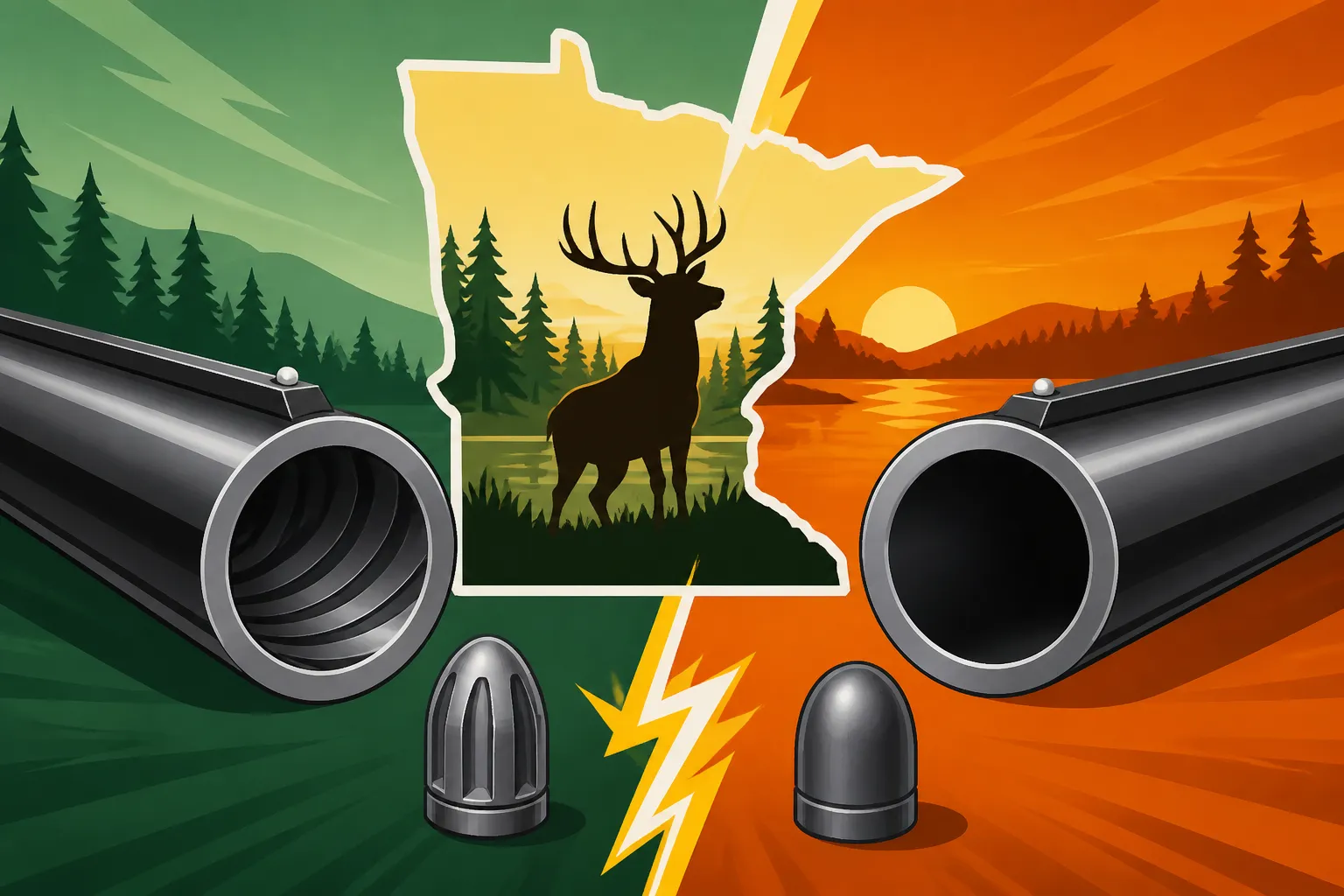
A smoothbore barrel, as the name suggests, has an interior surface that is entirely smooth, without any helical grooves (rifling). This design is primarily intended for shooting shot — a pattern of small pellets that spread out. However, when it comes to slugs, a smoothbore barrel relies on the slug itself to provide the stabilization needed for flight. Traditionally, these slugs were typically Foster-style slugs, characterized by a hollow base and a lead projectile that's heavier at the front. The weight distribution, combined with the slug's design, helps it maintain a relatively stable trajectory over short distances, much like how a badminton shuttlecock flies.
Many hunters simply swap out their bird hunting barrel for a different smoothbore barrel with rifle sights, or they add a cantilever scope mount. It's a system many are familiar with, and it often feels like a natural extension of their existing shotgun. The simplicity of design also means these barrels are generally robust and less prone to issues in harsh weather or tough field conditions, which is certainly a bonus when you're slogging through a cattail slough in December.
When Smoothbore Still Excels in Minnesota
Even with Minnesota's New Statewide Rifle Rules, smoothbore slug barrels still have their place, especially in close-quarters hunting environments. Think thick alder swamps, dense popple stands, or the brushy edges of a food plot where shots are typically under 75 yards. In these scenarios, the marginal accuracy gains of a rifled barrel might not translate into a significant advantage, and the smoothbore's reliability and often quicker target acquisition can be a real asset.
Consider hunting the dense river bottoms along the Mississippi, or the thick cover in a smaller WMA near populated areas where longer shots are simply not feasible or safe. In these situations, a smoothbore with open sights or a low-magnification scope is perfectly adequate. It's also a great option for younger hunters or those who prefer the familiar feel of a traditional shotgun. Plus, if you're one of the hunters still navigating Which Thirteen Counties Kept Shotgun-Only Rules, a smoothbore remains a primary tool, keeping you compliant while still being effective.
Ammunition Choices for Smoothbore Barrels
Selecting the right ammunition is paramount for maximizing your smoothbore's performance. As mentioned, Foster-style slugs are the traditional choice. These slugs are designed to deform slightly as they pass through any choke constriction, making them safe to use in various choked barrels (though improved cylinder or cylinder chokes are generally recommended for best accuracy and safety).
More modern options include sabot slugs designed for smoothbore barrels, which are less common but do exist. However, the vast majority of performance-oriented sabot slugs are specifically designed for rifled barrels. When choosing ammo for your smoothbore, look for slugs explicitly labeled for smoothbore or unrifled barrels. Experimentation is key; every shotgun has its preferred load. Buying a few different brands and styles and testing them at the range will reveal what shoots best out of your specific firearm. You might be surprised by the accuracy you can achieve at typical woods ranges with the right combination.
The Rifled Slug Barrel: Precision and Performance
The advent of the rifled slug barrel revolutionized shotgun hunting, dramatically extending the effective range and accuracy potential. For hunters looking to push their shotgun's capabilities, this is where the magic happens.
How Rifling Transforms Slug Performance
Unlike a smoothbore, a rifled barrel features helical grooves that impart a spin on the projectile as it travels down the bore. This spin stabilizes the slug in flight, much like the rifling in a rifle barrel stabilizes a bullet. This stabilization is crucial for accuracy over longer distances. With a rifled barrel, you're not relying on the slug's inherent design for stability; you're actively creating it.
This means you can use specialized sabot slugs. A sabot (pronounced "SAY-bow") is a plastic cup or sleeve that encases a smaller, typically bullet-shaped projectile. The sabot engages the rifling, spins with it, and then peels away from the projectile shortly after leaving the muzzle. This leaves the aerodynamically superior slug to continue its journey with rotational stability, leading to vastly improved accuracy and flatter trajectories compared to traditional smoothbore slugs. It's a significant leap in performance, transforming a shotgun into a truly capable medium-range deer rifle.
Optimal Scenarios for Rifled Slug Guns in Minnesota
A rifled slug barrel truly shines in Minnesota's more open hunting environments, or when you need to cover a bit more distance than a smoothbore can reliably handle. Imagine hunting the edges of large ag fields in southern Minnesota, setting up on a powerline cut in the northern forests, or needing to make a shot across a larger swamp opening. In these situations, where shots might stretch out to 100, 150, or even 200 yards, the rifled barrel with its accompanying sabot slugs offers the precision needed to make ethical kills.
Many hunters who prefer to stick with a shotgun, either out of tradition or because they simply love their scattergun, will opt for a dedicated rifled barrel. It gives them the confidence to reach out further, making them competitive with many centerfire rifle setups in terms of effective range. This also aligns with the advice many experts, like those at GoHunt, give about understanding your effective range and practicing within it, regardless of your chosen firearm. A dedicated rifled barrel with good optics can certainly hold its own in many of these scenarios.
Specialized Ammunition for Rifled Barrels
This is where rifled barrels truly come into their own. For these barrels, you must use sabot slugs. Trying to shoot traditional Foster-style (or even Brenneke-style) slugs through a rifled barrel is a recipe for disaster. It can lead to severe leading of the barrel, reduced accuracy, and potentially even safety issues due to excessive pressure or projectile deformation that could damage the barrel. Always check the ammunition box; it will clearly state "for rifled barrels only" or "for smoothbore barrels only."
Sabot slugs come in a bewildering array of designs, weights, and bullet styles. Many mimic common rifle calibers, such as .45 or .50 caliber projectiles encased in a 12-gauge or 20-gauge sabot. They can be hollow points, polymer-tipped, or solid copper, each designed for specific ballistic performance and terminal effects. Just like with smoothbore ammo, finding the most accurate sabot slug for your specific rifled barrel and shotgun is crucial. This often means buying several boxes from different manufacturers, heading to the range, and meticulously testing them. The difference in accuracy between a slug your gun likes and one it doesn't can be dramatic.
Key Differences and Decision-Making Factors
Choosing between a smoothbore and a rifled slug barrel isn't just about what's "better"; it's about what's better for your specific hunting style, preferred terrain, and budget. Let's break down the core distinctions.
Accuracy and Effective Range Comparison
The most significant difference lies in accuracy and effective range.
| Feature | Smoothbore Slug Barrel | Rifled Slug Barrel |
|---|---|---|
| Accuracy | Good up to 75 yards, rapidly degrades beyond. | Excellent, often sub-3-inch groups at 100 yards+. |
| Effective Range | Realistically 50-75 yards for ethical deer hunting. | Up to 150-200 yards (sometimes more with premium ammo). |
| Ammunition Type | Foster-style slugs, Brenneke slugs (lead). | Sabot slugs (jacketed bullets in plastic carriers). |
| Projectile Design | Heavier at front, relies on air drag for stability. | Aerodynamic bullet, stabilized by spin. |
| Trajectory | More pronounced arc, significant drop past 75 yards. | Flatter shooting, less drop within effective range. |
| Ideal Use | Thick cover, short-range shots, dense woods. | Open fields, power lines, longer shots, diverse terrain. |
As you can see, a rifled barrel completely changes the game for shotgun slug hunting. It transforms a relatively short-range, rainbow-trajectory projectile into a much flatter-shooting and more precise option. This means greater confidence for those slightly longer shots you might encounter when Hunting Minnesota Farmland Deer or in more open timber.
Cost, Versatility, and Maintenance Considerations
- Cost: A smoothbore barrel is generally less expensive than a dedicated rifled slug barrel. Ammunition for smoothbores (Foster slugs) is also typically more affordable than premium sabot slugs. If budget is a primary concern, or if you only use a slug gun occasionally, a smoothbore setup can be very economical.
- Versatility: This is where smoothbores shine. Many shotguns can quickly swap between a smoothbore barrel for bird hunting and another smoothbore barrel (perhaps with rifle sights) for slugs. A dedicated rifled barrel, however, is essentially a single-purpose tool for slugs. While you can technically shoot birdshot through a rifled barrel, the rifling will spin the shot cup, creating a donut-shaped pattern with a void in the center, making it completely ineffective for wingshooting. If you want one shotgun that does it all, a smoothbore is the clear winner.
- Maintenance: Smoothbore barrels are incredibly easy to clean. A few passes with a brush and patch, and you're good to go. Rifled barrels, especially after shooting lead-based sabot slugs (some have copper jackets, but the sabot itself can leave plastic fouling), can be more challenging to clean thoroughly. Plastic fouling from the sabot can build up in the rifling, requiring specific solvents and brushes to remove effectively.
Matching Your Barrel to Minnesota's Diverse Terrain
Minnesota is a state of incredible hunting diversity, from the sprawling "Big Woods" of the north to the rolling farmlands of the south. Your choice of slug barrel should ideally match the terrain you primarily hunt.
- Dense Northern Forests: If you spend most of your time still-hunting thick stands of popple, pushing heavy cover, or sitting in an old growth patch where visibility is limited to 50 yards, a smoothbore barrel is often perfectly adequate. The shots are close, and the reliability of a smoothbore is a virtue. This holds true for Still-Hunting Minnesota Big Woods or exploring heavy cover.
- Farmland Edges and Openings: For hunters working agricultural fields, larger food plots, or areas with more open timber, a rifled slug barrel offers a distinct advantage. The ability to make a clean shot out to 100-150 yards means you can confidently cover more ground and take advantage of opportunities that a smoothbore might limit. This is particularly relevant when scouting open areas using tools like GoHunt to identify potential long-range shooting lanes.
- Mixed Habitat: If you hunt a mix of terrains, say a farm country parcel with some thick creek bottom cover and open cornfields, a rifled barrel might be the more versatile slug-specific choice, allowing you to adapt to various shot distances. However, if you also plan to chase pheasants in those same fields, you'd be looking at two separate shotguns or swapping barrels constantly.
Beyond the Barrel: Other Considerations for Slug Hunters
Choosing the right barrel is just one piece of the puzzle. To truly maximize your slug gun's potential, you need to think about the complete system.
Optics and Sighting for Slug Guns
Regardless of whether you choose a smoothbore or rifled barrel, proper sighting is critical.
- Smoothbore: For traditional smoothbores, rifle-style open sights are common and effective for short ranges. Ghost ring sights can also be very fast for close-up work. If you add a scope, keep it low-magnification (1-4x or 2-7x) to aid in quick target acquisition in thick cover. Remember that the recoil of slugs is substantial, so choose a scope built to withstand that punishment.
- Rifled Barrel: A quality low-to-medium power scope is almost a necessity for a rifled slug barrel. The accuracy potential of these barrels demands precise aiming. A 3-9×40 or 2-7×32 scope is a popular choice, offering a good balance of field of view and magnification. Just like with any rifle, take the time to Sighting In a Rifle for Minnesota Woods Ranges, even if it's a slug gun. It's a heavy-recoiling system, so good mounting and a durable scope are key. Don't skimp on rings and bases; a scope that shifts under recoil is useless.
Many companies, including those mentioned by hunting resource GoHunt, emphasize the importance of matching your optics to your firearm and hunting conditions. For a slug gun, especially a rifled one, this means a robust scope with good eye relief and clear glass, even if it's not the high-magnification setup you might put on a long-range rifle.
Legalities and Local Ordinances
Even with the statewide rifle changes, always double-check local regulations. While Minnesota now generally allows rifles, individual counties or specific public land units might still have unique restrictions. This is less about barrel type directly, but it impacts the broader decision of whether to even use a slug gun versus a rifle. For example, some wildlife management areas might have specific rules for certain hunts.
Remember that blaze orange requirements apply to slug gun hunters just as they do to rifle hunters during certain seasons. Make sure you're wearing the minimum amount of blaze orange to stay safe and legal. How Much Blaze Orange Minnesota Requires is something every hunter should know by heart.
The choice between a rifled and smoothbore slug barrel comes down to understanding the capabilities and limitations of each, and then aligning that with your personal hunting style and the specific Minnesota terrain you plan to hunt. Both can be incredibly effective deer-getting tools when used within their strengths, and the right choice will undoubtedly lead to a more confident and successful hunt.
Disclaimer
This article is for general informational purposes only and does not constitute professional advice. Laws, prices and regulations vary by location and change over time. Consult a qualified professional for guidance on your specific situation.