Turkey Calls Worth Carrying in Minnesota
Few things are more frustrating for a Minnesota turkey hunter than sitting in a beautiful oak stand, trying to coax in a gobbler, only to be met with dead silence. Or worse, hearing a distant bird gobble once and then fade away, leaving you wondering if your calls were just… off. This guide is all about equipping you with the knowledge to choose and master the right turkey calls, ensuring you can communicate effectively with those wily Minnesota gobblers, no matter where you're hunting in our great state.
The Core Calling Arsenal: Must-Have Turkey Calls for Minnesota
Every serious turkey hunter in Minnesota needs a versatile collection of calls to adapt to different situations. What works perfectly on a calm morning in the bluffs of southeastern Minnesota might not cut it on a windy afternoon in the big woods up north. Having a few different options at your disposal gives you the flexibility to sound like a whole flock or just a lonely hen, catering to whatever the gobblers are listening for that day.
Mouth Diaphragm Calls: Versatility in Your Mouth
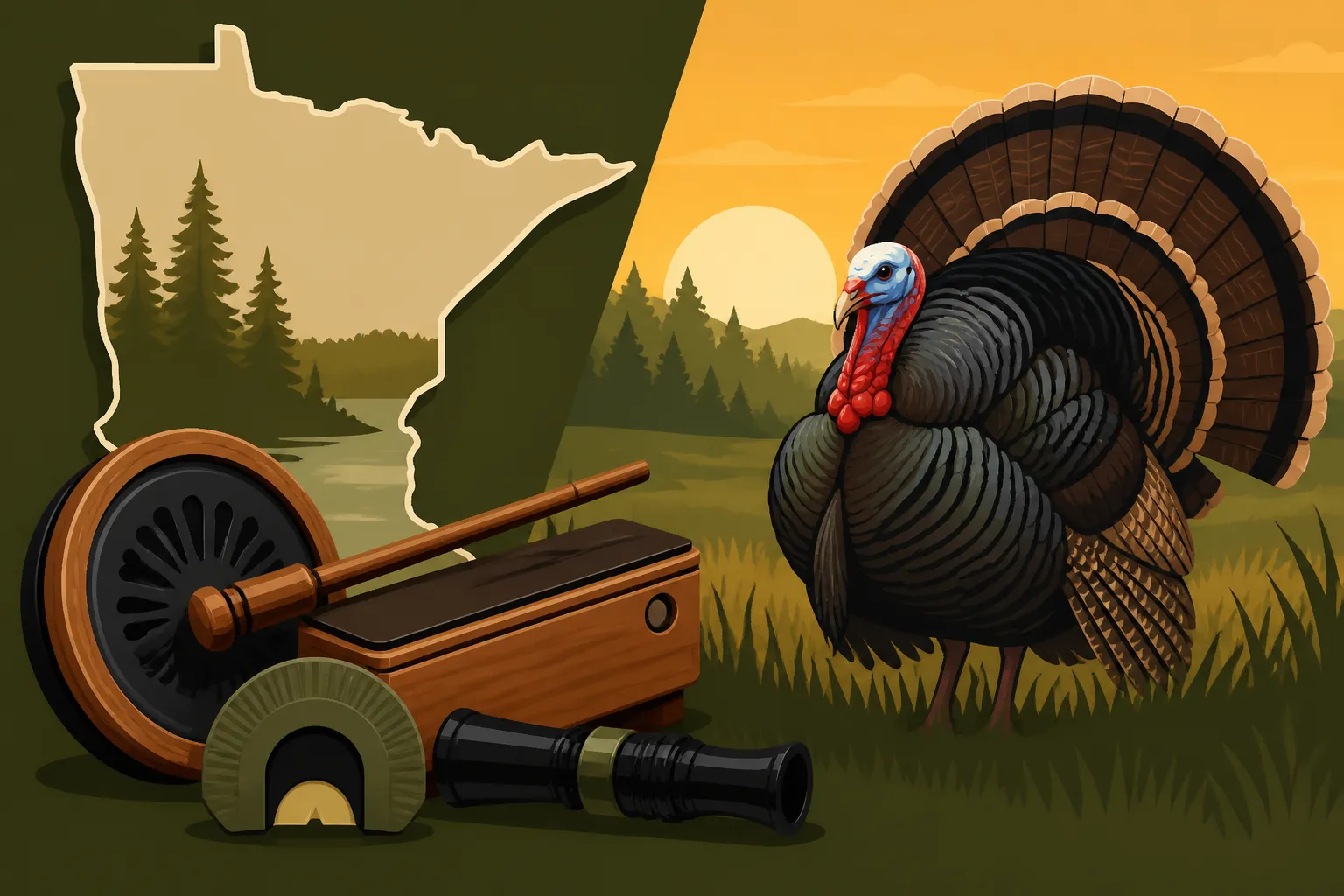
Mouth diaphragm calls are arguably the most versatile tools in a turkey hunter's arsenal. Tucked neatly into the roof of your mouth, they allow for completely hands-free operation, which is absolutely crucial when a gobbler is finally in your lap, coming in silent, and you need to keep your gun up and ready. The learning curve can be a bit steep initially, turning many newcomers away, but the payoff in realistic, fluid turkey sounds is immense. Once you get the hang of them, you can produce a full range of sounds – soft tree yelps, aggressive cutting, pleading clucks, and even the soft purrs that can seal the deal at close range.
There are various types of mouth calls, typically distinguished by the number of reeds and their cut. Single-reed calls often produce softer, higher-pitched sounds, making them excellent for subtle clucks and purrs when a bird is close or for Hunting the Rut in Late October. Double and triple-reed calls, with their more complex cuts, can offer greater volume and rasp, ideal for cutting through wind or for making those aggressive cutting sounds that sometimes infuriate a gobbler into strutting right into your setup. The key is finding a few that fit your mouth comfortably and produce sounds you can control consistently. When it's raining or your hands are numb from a crisp Minnesota spring morning, a mouth call can be the only reliable option.
Slate and Pot Calls: The Foundation of Turkey Calling
For many, the slate or pot call is where their turkey calling journey truly begins. These calls are relatively easy to learn, allowing hunters to produce very realistic and consistent turkey sounds with minimal practice. A pot call consists of a circular pot, typically made of slate, glass, or aluminum, and a striker, usually made of wood, carbon, or a composite material. By drawing the striker across the surface of the pot in various patterns, you can create a wide array of vocalizations, from soft purrs and clucks to louder yelps and cuts. They're excellent for simulating the natural sounds of a hen moving through the woods.
Different pot surfaces produce distinct sounds: slate generally offers a softer, keelier sound, perfect for early morning tree yelps or subtle hen talk; glass can be sharper and louder, great for getting a response from a distant bird; and aluminum often produces a very high-pitched, crisp sound that really cuts through the air. The striker material also plays a huge role; a hardwood striker might give a deeper tone, while a carbon or plastic striker can produce a sharper, more piercing sound. The challenge with pot calls in Minnesota can be wet weather; a damp surface or striker can render them useless, so always keep them dry with a piece of sandpaper or a conditioning pad. They are, however, fantastic for setting up Decoy Placement for Pressured Minnesota Birds as you can vary the sound easily.
Box Calls: Classic Sounds, User-Friendly
The box call is another classic that has stood the test of time, and for good reason. It's incredibly user-friendly, produces loud, resonant turkey sounds, and requires very little skill to get started. A typical box call consists of a wooden box with a hinged lid. By drawing the lid across the lip of the box, you can create yelps, clucks, and even gobbling sounds. The inherent volume of a box call makes it an excellent choice for locating distant birds, especially when you need to project sound across open fields or through dense timber.
The simplicity of a box call makes it a favorite for many, from beginners to seasoned veterans. It's often the first call a new hunter picks up because they can immediately produce a recognizable turkey sound. The range of sounds, from soft, pleading yelps to loud, aggressive cutting, is impressive. Materials, usually various hardwoods, influence the tone, with different woods like mahogany, cedar, or walnut offering distinct pitches and rasps. Just like pot calls, box calls can be sensitive to moisture, so keeping them dry in your vest is essential for consistent performance. They’re fantastic for making some aggressive locator yelps, particularly when you're doing a Run-and-Gun Turkey Tactics on Public Land approach.
Specialized Calls for Specific Minnesota Scenarios
While the core calls cover most bases, having a few specialized calls can give you an edge, especially when dealing with specific gobbler moods or challenging conditions found across Minnesota's diverse landscapes.
Locator Calls: Getting a Response from a Distant Gobbler
Sometimes, the hardest part of turkey hunting isn't calling a bird in, but simply finding one that's willing to talk. That's where locator calls come into play. These aren't meant to sound like turkeys, but rather common woodland creatures that might provoke a territorial gobbler into sounding off. Owl hoots, crow calls, and even coyote howls are the most popular choices. The idea is to surprise a gobbler into revealing his location, often while he's still on the roost in the early morning, or during the quiet midday hours when he might be less inclined to respond to hen calls.
An owl hooter, especially one mimicking a barred owl's "Who cooks for you?" call, is fantastic for cracking the silence before dawn or even after a gobbler has flown down. A loud crow call can be used throughout the day to get a shock gobble from a bird that might be unresponsive to hen calls. Coyote howls can also be effective, especially in more open country where coyotes are prevalent, as a gobbler might sound off to assert his dominance. These calls are not about luring the bird, but about pinpointing his position so you can then plan your approach and switch to more convincing hen vocalizations. Using a mapping tool, perhaps even an advanced one available through GoHunt, can help you analyze the terrain to better understand where your locator calls will carry best and where a gobbler might respond from.
Push-Button Calls: Simplicity and Consistency
Push-button calls are a fantastic option for both beginners and experienced hunters looking for simplicity and consistency. These calls are designed to be operated with one hand, making them incredibly easy to use and master. They typically produce clear, consistent clucks and purrs, which are often the most crucial sounds when a gobbler is within sight and you need to keep him calm and committed. The one-handed operation is a huge advantage when a bird is close and you need to keep your shotgun mounted and ready.
Imagine a situation where a gobbler has hung up at 60 yards, just out of range, wary of the slightest movement. You might need to offer a few soft, reassuring purrs or clucks to convince him to take those last few steps. A push-button call allows you to do this with minimal movement, keeping your hands free and your focus on the bird. While they might not offer the full range of sounds that a mouth call or pot call does, their reliability and ease of use in critical close-range situations make them a valuable addition to any Minnesota turkey hunter's vest, especially when Setting Up Against a Big Oak and waiting for a close encounter.
Trumpet and Yelper Calls: Advanced and Authentic
Trumpet calls, also known as yelpers, represent a more traditional and often more challenging form of turkey calling. While they require significant practice and skill to master, the payoff is an incredibly authentic and rich turkey sound that can be difficult to replicate with other call types. These calls typically consist of a mouthpiece, a barrel, and a bell, often made from wood, bone, or even plastic. The hunter draws air through the call while manipulating the mouthpiece and hand positioning to create various turkey vocalizations.
The beauty of a well-played trumpet call lies in its ability to produce deep, resonant yelps and cuts that sound incredibly realistic. Many seasoned hunters swear by them for their pure, unadulterated turkey sound. While they might not be the go-to for quick locating, they can be absolutely deadly for working a wary gobbler that has heard every other type of call in the book. If you're looking to add another dimension to your calling repertoire and truly differentiate your sounds, investing time in mastering a trumpet call can be incredibly rewarding.
Matching Your Call to Minnesota's Diverse Terrain and Weather
Minnesota offers a wide variety of turkey habitats, from dense northern forests to open agricultural fields. Each environment presents unique challenges and opportunities for calling, and a smart hunter knows how to adapt their call choices accordingly.
Calling in Northern Forests and Big Woods
The vastness of Minnesota's northern forests, often referred to as the "Big Woods," presents distinct challenges for turkey hunters. Dense stands of timber, thick underbrush, and rolling terrain can muffle sounds, making it hard to locate birds or project your calls effectively. In these environments, volume and a good sense of direction are key. This is where loud locator calls shine. An aggressive owl hoot or crow call can cut through the timber and get a shock gobble from a bird that might be hundreds of yards away. Once you've pinpointed a gobbler, you'll often need to be more aggressive with your turkey calls as well.
Box calls or multi-reed mouth calls with plenty of rasp can help your hen yelps carry further. However, as the gobbler gets closer, you'll want to dial it back significantly. Turkeys in thick cover can pinpoint sounds incredibly well, and overly loud calling at close range can make them wary. Switch to softer clucks and purrs with a single-reed mouth call or a slate call to draw him the final few yards. Remember, sound carries and echoes differently in the woods, so avoid calling too frequently or too loudly once a bird is within 100 yards, especially if he's actively working your way.
Calling in Farmland and Prairie Fringe
Contrast the Big Woods with the open farmland and prairie fringe regions of central and western Minnesota, and your calling strategy shifts dramatically. Here, sound travels much further, and visual cues (like decoys) play a more significant role. In these areas, birds can often see for long distances, and they've likely heard every loud, aggressive call in the book from other hunters. While locator calls still have their place to find birds, you might find that subtler, more realistic turkey sounds are more effective once a gobbler is aware of your presence.
Soft hen yelps from a slate or glass call, followed by contented clucks and purrs, can be incredibly effective. Because gobblers can see more, your setup, including Decoy Placement for Pressured Minnesota Birds, becomes critical. The visual of a hen or jake decoy can draw a bird into range even if your calling is subtle. Loud, aggressive calling might be needed to initially get a distant bird's attention across a large field, but once he's headed your way, focus on sounding like a calm, receptive hen. Avoid overcalling, as it can sound unnatural in wide-open spaces.
Dealing with Minnesota's Variable Weather
Minnesota's spring turkey season can throw a curveball with its unpredictable weather. One day it's sunny and calm, the next it's a cold, driving rain, or even snow. Your choice of call can be heavily impacted by these conditions. Wet weather is the bane of most friction calls. Slate, glass, and especially box calls can become completely silent or produce terrible sounds when wet. Imagine trying to get a gobbler to commit when your box call is squawking instead of yelping!
This is where mouth diaphragm calls truly shine. They are completely waterproof and unaffected by rain or humidity, making them an indispensable tool for hunting on those soggy Minnesota mornings. If you prefer friction calls, carry a small piece of sandpaper or a conditioning pad to dry and rough up the surface of your pot call, and keep your box call tucked deep in a waterproof pocket when not in use. Cold temperatures can also affect manual dexterity, making it harder to operate small strikers or produce precise sounds, again pushing the advantage towards hands-free mouth calls. Always consider the forecast when packing your turkey vest.
Practice Makes Perfect: Mastering Your Minnesota Turkey Calls
Having a collection of calls is one thing; knowing how to use them effectively is another. Consistent practice and a deep understanding of turkey vocalizations are what truly elevate a hunter's success.
Consistent Practice Routines
Just like any skill, turkey calling requires consistent practice. Don't wait until the week before the season opener to pull out your calls. Develop a routine that allows you to practice regularly, even if it's just for 15-20 minutes a few times a week. This isn't just about making noise; it's about developing muscle memory, finding the sweet spot on your friction calls, and refining the subtle nuances that make your calls sound realistic.
Listen to real turkeys. There are countless resources online, including audio tracks on apps or websites like GoHunt, that feature actual wild turkey sounds. Mimic what you hear. Pay attention to the cadence, the rasp, and the emotion in their calls. Practice sequences – a fly-down cackle followed by a series of yelps, or soft clucks and purrs. Record yourself and listen back critically. Do you sound like a turkey, or just a human trying to sound like one? The more you practice, the more natural your calling will become, and the more confidence you'll have in the field.
Understanding Turkey Vocalizations
Beyond simply making turkey sounds, truly effective calling involves understanding what those sounds mean. Turkeys communicate through a complex language of yelps, clucks, purrs, cuts, and cackles, each conveying different intentions and emotions. Knowing when to use an aggressive cutting series versus soft, reassuring purrs can make all the difference between a gobbler coming in or walking away. For instance, a soft tree yelp is perfect for Calling a Minnesota Gobbler Off the Roost as it mimics a hen waking up.
Yelps are generally an assembly call, indicating a hen looking for company. Varying the speed and cadence of your yelps can express urgency or contentment. Clucks are softer, shorter notes, often used as reassurance or to get attention. Purrs are the softest, most intimate sounds, signaling contentment and often used to draw a bird those last few hesitant yards. Cuts are sharp, excited yelps, often used to challenge another bird or express excitement. Taking the time to learn the meaning behind these vocalizations, perhaps even using a resource like GoHunt's extensive library of game animal behavior, will allow you to "speak" to turkeys more effectively, responding to their calls with appropriate answers rather than just random sounds.
A Comparison of Popular Turkey Call Types
Here's a quick look at the pros and cons of some of the most popular turkey call types you might carry in your Minnesota vest:
| Call Type | Pros | Cons | Best for Minnesota Scenarios |
|---|---|---|---|
| Mouth Diaphragm | Hands-free, versatile, weatherproof, quiet | Steep learning curve, can be hard to master | Close-in work, wet weather, aggressive cutting, quiet locating |
| Slate/Pot Call | Realistic, easy to learn, versatile tones | Sensitive to moisture, two-handed operation | Soft, natural hen sounds; early morning yelps, close-range purrs |
| Box Call | Loud, easy to use, great for locating | Sensitive to moisture, less subtle | Long-range locating, aggressive yelps, windy conditions |
| Push-Button | Easy, consistent, one-handed operation | Limited sound range, less versatile | Close-range clucks and purrs, beginner-friendly |
| Locator Calls | Excellent for finding distant birds | Not for luring, can spook close birds | Roost locating, midday scouting, windy conditions |
Combining Calls for a Realistic Minnesota Symphony
The most successful turkey hunters rarely rely on just one call. Instead, they master the art of combining different calls and varying their sequences to create a realistic "symphony" of turkey sounds that truly brings a gobbler in.
The Art of the Call Sequence
A crucial part of effective turkey calling is understanding the flow of a realistic conversation. You wouldn't just blast out a loud yelp every 30 seconds. Instead, you'd start with a locator call to find a bird, then transition to a series of soft hen yelps, perhaps followed by a few contented clucks and purrs as he approaches. Knowing when to call, what to say, and critically, when to shut up, is paramount. Often, the worst thing you can do is overcall.
A common sequence might begin with a loud crow call to get a distant shock gobble. Once you have a direction, you might make your move to get closer, then offer a series of medium-volume yelps from a box call or a diaphragm. If the gobbler responds and starts coming, you'll want to gradually reduce your volume and switch to softer, more enticing sounds – short yelps, clucks, and purrs from a slate or a push-button call. Remember, as the bird gets closer, less is often more. Let him do the work, and be ready when he finally steps into range. A consistent sequence often involves starting with curiosity, building to interest, and finishing with seductive, quiet calls to close the distance.
Two-Handed Techniques and Hands-Free Options
Combining calls can involve using multiple calls simultaneously or in rapid succession. For instance, you might use a box call for loud, attention-grabbing yelps, and then immediately switch to a mouth call for soft clucks as the bird responds. Some hunters even learn to use a friction call with one hand while operating a mouth call with their mouth, creating a dynamic, multi-hen sound that can be incredibly convincing. This "two-handed" approach can sound like multiple hens, which can be very appealing to a lonesome gobbler.
However, as a bird gets very close, the ability to be completely hands-free is invaluable. This is where the mouth diaphragm call truly shines. With your hands free to hold your gun steady and remain completely still, you can offer those critical, soft purrs or clucks that coax a wary gobbler the final few steps into range. Practicing these transitions, from loud locator calls to a quiet, hands-free finish, will make you a much more adaptable and successful turkey hunter in any of Minnesota's diverse spring environments.
Disclaimer
This article is for general informational purposes only and does not constitute professional advice. Laws, prices and regulations vary by location and change over time. Consult a qualified professional for guidance on your specific situation.