Shooting Sticks for a Farmland Field Edge
There's nothing quite like the feeling of spotting a whitetail working its way across a vast Minnesota farm field, or seeing a coyote slinking along a distant treeline. But the moment of truth in these open-country scenarios often brings a familiar frustration: a lack of natural rests. You might be kneeling by a ditch, perched on a flimsy fence post, or trying to hold steady while standing, and that stable, ethical shot feels just out of reach. This guide is all about overcoming that challenge, exploring how shooting sticks can be your secret weapon for confident, accurate shooting on those wide-open Minnesota farmland edges.
Why Shooting Sticks Are a Game-Changer on Minnesota Farmland Edges
Hunting the agricultural belts of Minnesota offers incredible opportunities, but it also presents unique challenges. Unlike the dense hardwoods or the rugged terrain of the Northwoods, farmland edges often mean long sightlines and minimal cover. This combination demands a different approach to stability, and that's precisely where shooting sticks shine.
The Challenge of Open-Field Stability
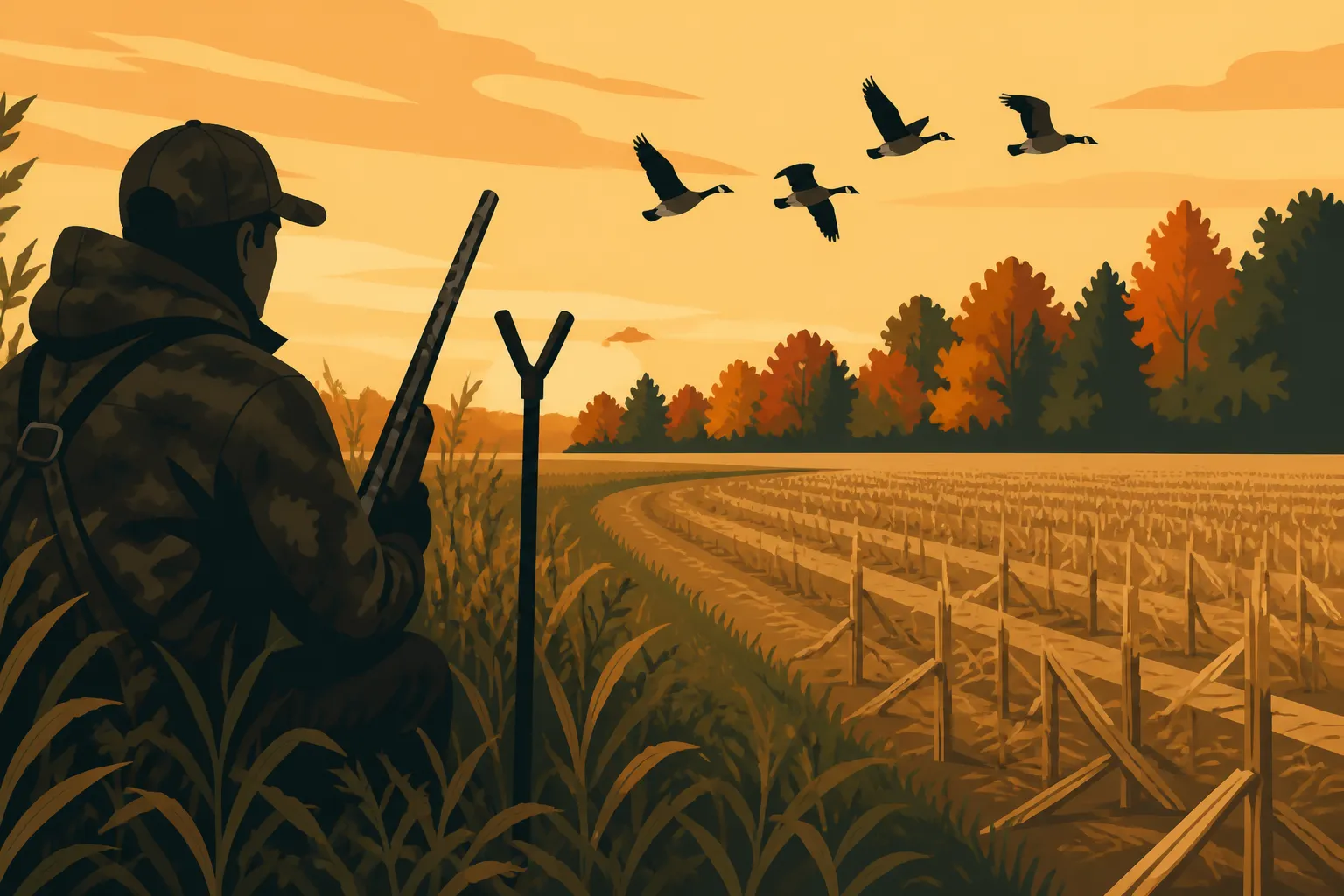
Picture this: you're set up along a cut cornfield in southern Minnesota, watching a prime buck slowly make its way out of a woodlot a few hundred yards away. There isn't a single tree stump, sturdy fence post, or rock in sight to steady your rifle. You might try to brace against your knee, or lean on a backpack, but these improvised rests are rarely as solid as you need for a confident shot at distance. The ground might be uneven, or you might be standing in a ditch trying to keep a low profile.
This lack of reliable, natural support means your shot can be compromised by small movements, increased fatigue, and a fluctuating point of aim. The last thing any ethical hunter wants is to rush a shot because they can't get steady, leading to a potentially poor outcome. Minnesota's farmland can stretch for miles, offering incredible visibility, but without a solid rest, that visibility can become more of a psychological hurdle than an advantage. You see the animal, but getting locked onto it feels impossible.
Enhancing Ethical Shot Placement
The core of ethical hunting is making the quickest, most humane kill possible. This hinges almost entirely on accurate shot placement. When you're dealing with longer distances common in open fields, even a small wobble in your hold can translate to several inches of error at the target, risking a non-lethal hit. A solid rest drastically reduces this variable, allowing you to focus on your breathing, trigger control, and the exact aiming point.
Shooting sticks provide a stable platform that minimizes human error. They absorb much of the shake and fatigue that can plague a freehand shot, especially after you've been holding your rifle up for a few minutes while waiting for an animal to present itself. This enhanced stability isn't just about hitting the target; it's about hitting the right spot on the target, consistently and confidently, ensuring a clean kill every time. When you know you're locked in, you can take a breath, squeeze the trigger deliberately, and know you've done everything in your power to make an ethical shot.
Types of Shooting Sticks for Your Minnesota Hunt
Just like you wouldn't use the same rifle for every hunting scenario, there isn't a one-size-fits-all solution when it comes to shooting sticks. Understanding the differences between monopods, bipods, and tripods will help you choose the best option for your specific hunting style and the varied terrain you might encounter on Minnesota's farmland edges. Each type offers a different balance of portability, speed, and stability.
Monopods: Quick Support on the Go
A monopod is essentially a single adjustable leg with a rifle rest at the top. Think of it as an extension of your arm, providing one point of contact with the ground to help brace your shot. They are incredibly lightweight and quick to deploy, making them ideal for hunters who are constantly on the move, perhaps Still-Hunting Minnesota Big Woods but also along a long field edge, or when a fast, unexpected shot presents itself.
The primary advantage of a monopod is its portability and rapid deployment. You can extend it quickly to match your height for a standing shot or shorten it for a kneeling position. While it doesn't offer the rock-solid stability of a bipod or tripod, it significantly improves on freehand shooting, especially when you need to quickly get on target. It's perfect for those situations where a full, stable setup isn't practical, but you still need more support than just your body can provide.
Bipods: Two Points of Contact for Enhanced Stability
Bipods feature two adjustable legs, offering a more stable platform than a monopod. They provide two points of contact with the ground, creating a much more solid rest. Many bipods attach directly to your rifle's sling swivel stud or a Picatinny rail, folding up out of the way when not in use. Others are standalone units that you carry and deploy separately.
For hunting Minnesota farmland, bipods strike an excellent balance between portability and stability. They're quick enough to deploy for many scenarios, yet offer significantly improved accuracy over a monopod or freehand. They work exceptionally well for sitting or kneeling shots, providing a steady base. However, for standing shots, you still need to actively support the rifle, as a bipod only has two points of contact with the ground. If you're going to be Hunting a Standing Cornfield in Farm Country, and might be shooting over a considerable distance, a good bipod can make a real difference, giving you the confidence to make the shot count.
Tripods: Maximum Stability for Precision Shooting
Tripods, as the name suggests, have three adjustable legs, offering the highest level of stability among shooting sticks. They are designed to provide a completely free-standing, rock-solid platform for your rifle. While often heavier and bulkier than their monopod or bipod counterparts, the stability they offer is unmatched, making them invaluable for precise, long-range shooting.
For hunters who frequently sit for extended periods, perhaps in a ground blind overlooking a vast bean field or while calling coyotes from a strategic position, a tripod is an outstanding choice. Its three points of contact eliminate nearly all body movement from the equation, allowing for maximum focus on breath and trigger control. Many tripods also feature versatile heads that allow for smooth panning, which is crucial when tracking an animal moving across a wide-open landscape. If you're aiming for extreme precision and aren't constantly on the move, a tripod is the ultimate tool for stability on the farm.
Practical Application and Choosing the Right Sticks for Minnesota Farmland
Now that we've covered the different types, let's talk about putting them to work and what you should consider when making your purchase. The right set of shooting sticks can truly transform your success and confidence when hunting the open country of Minnesota's agricultural zones.
Situational Versatility on the Farm
The beauty of hunting Minnesota farmland is its diversity, even within the agricultural setting. You might be still-hunting a ditch line, sitting in a pop-up blind on a field edge, or slowly working a tree belt between two large fields. Each of these scenarios can dictate the best type of shooting stick for your needs.
If you're constantly walking and glassing, a monopod might be your go-to for quick, opportunistic shots, such as when a coyote suddenly appears at 150 yards while you're Coyote Calling in a Minnesota Winter. However, if you're planning an all-day sit in a ground blind, patiently waiting for a deer to emerge from a bedding area, the unwavering stability of a tripod will be a far better companion. For those who like to move and set up frequently, a bipod often hits that sweet spot of portability and significant stability improvement. It's worth considering the topography too; a slight rise or dip in the field edge might necessitate quicker adjustments, and some stick designs handle this better than others. Always think about how you typically hunt and what kind of shot opportunities you expect.
Key Features to Look For
When you're ready to invest in shooting sticks, several features are paramount, especially for the unique demands of Minnesota's farm country.
- Material: The two most common materials are aluminum and carbon fiber. Aluminum is generally more affordable and robust, but can be heavier. Carbon fiber is lighter, often more rigid, and dampens vibrations better, but typically comes with a higher price tag. Given the sometimes long walks to a stand on public land or a private farm, weight can be a significant factor.
- Height Adjustment: This is absolutely critical. You need sticks that can quickly adjust to various shooting positions – standing, kneeling, and sitting – to adapt to the terrain or the cover you're using. Look for quick-release levers or twist-lock mechanisms that are easy to operate, even with gloves on in cold Minnesota weather. A good set of sticks should allow you to comfortably shoot over standing beans or a mature cornfield.
- Head Type: Most shooting sticks come with a V-yoke or a universal cradle at the top that supports your rifle's forend. Some higher-end models offer a swiveling or ball head, which allows for smooth horizontal tracking of moving animals without having to reposition the entire stick setup. This is incredibly useful when a deer is walking parallel to a field edge. When scouting for potential spots, tools like GoHunt mapping features can help you visualize the distances and possible shot angles you'll encounter, which in turn helps you decide on the right head type that allows for quick and fluid adjustments.
- Weight and Portability: As mentioned, if you're covering ground, lighter is better. How easily do they collapse? Can they be strapped to a backpack without being cumbersome? A compact folded length is also a bonus for navigating brush or simply fitting in your vehicle.
- Noise: This is often overlooked but incredibly important. Flimsy, rattling legs or noisy adjustment mechanisms can easily spook game. Test them out. Do they extend and retract quietly? Are the locking mechanisms silent when engaged? In the quiet stillness of a Minnesota dawn, every little sound is amplified.
Integrating Sticks into Your Hunting Strategy
Once you have your shooting sticks, they shouldn't just be an afterthought. Integrate them into your overall hunting strategy. When you arrive at your chosen hunting spot, whether it's a Using a Ground Blind on Minnesota Public Land or just a strategic fence line, take a moment to set up your sticks before the action starts. Extend them to a comfortable height for your preferred shooting position and get a feel for the setup.
Don't limit their use to just shooting. Many hunters use their tripods or bipods as steady rests for binoculars or spotting scopes while glassing expansive fields. This significantly reduces fatigue and allows for more detailed, prolonged observation, which is vital for picking out that subtle antler tine at a distance. Practicing with your sticks at the range is also essential. Get comfortable with deploying them quickly, adjusting their height, and transitioning between shooting positions. Just like you'd practice Sighting In a Rifle for Minnesota Woods Ranges, you should practice with your field setup. The more familiar you are with your equipment, the more natural and effective its use will be when a magnificent Minnesota buck steps out of the timber and onto that field edge.
| Feature / Type | Monopod | Bipod | Tripod |
|---|---|---|---|
| Stability | Good (better than freehand) | Very Good | Excellent (rock-solid) |
| Portability | Excellent (light, compact) | Good | Fair (bulkier, heavier) |
| Deployment Speed | Very Fast | Fast | Moderate |
| Best Position | Standing, Quick Kneeling | Kneeling, Sitting, Prone | Standing, Kneeling, Sitting, Prone |
| Ideal Use Case | Mobile hunting, quick shots, stalking | Stand hunting, moderate movement, ground blinds | Stationary hunting, calling setups, long-range precision |
| Farmland Suitability | Excellent for walking field edges | Excellent for most field edge scenarios | Excellent for fixed positions, ground blinds |
Remember, the goal isn't just to buy a piece of gear; it's to enhance your abilities as a hunter and ensure you're always prepared to make an ethical, confident shot. Whether you're chasing deer, coyotes, or even looking for opportunities while Pheasant Hunting Minnesota Farmland, a good set of shooting sticks will undoubtedly increase your odds of success in Minnesota's open country.
Disclaimer
This article is for general informational purposes only and does not constitute professional advice. Laws, prices and regulations vary by location and change over time. Consult a qualified professional for guidance on your specific situation.