Hunting Minnesota Farmland Deer
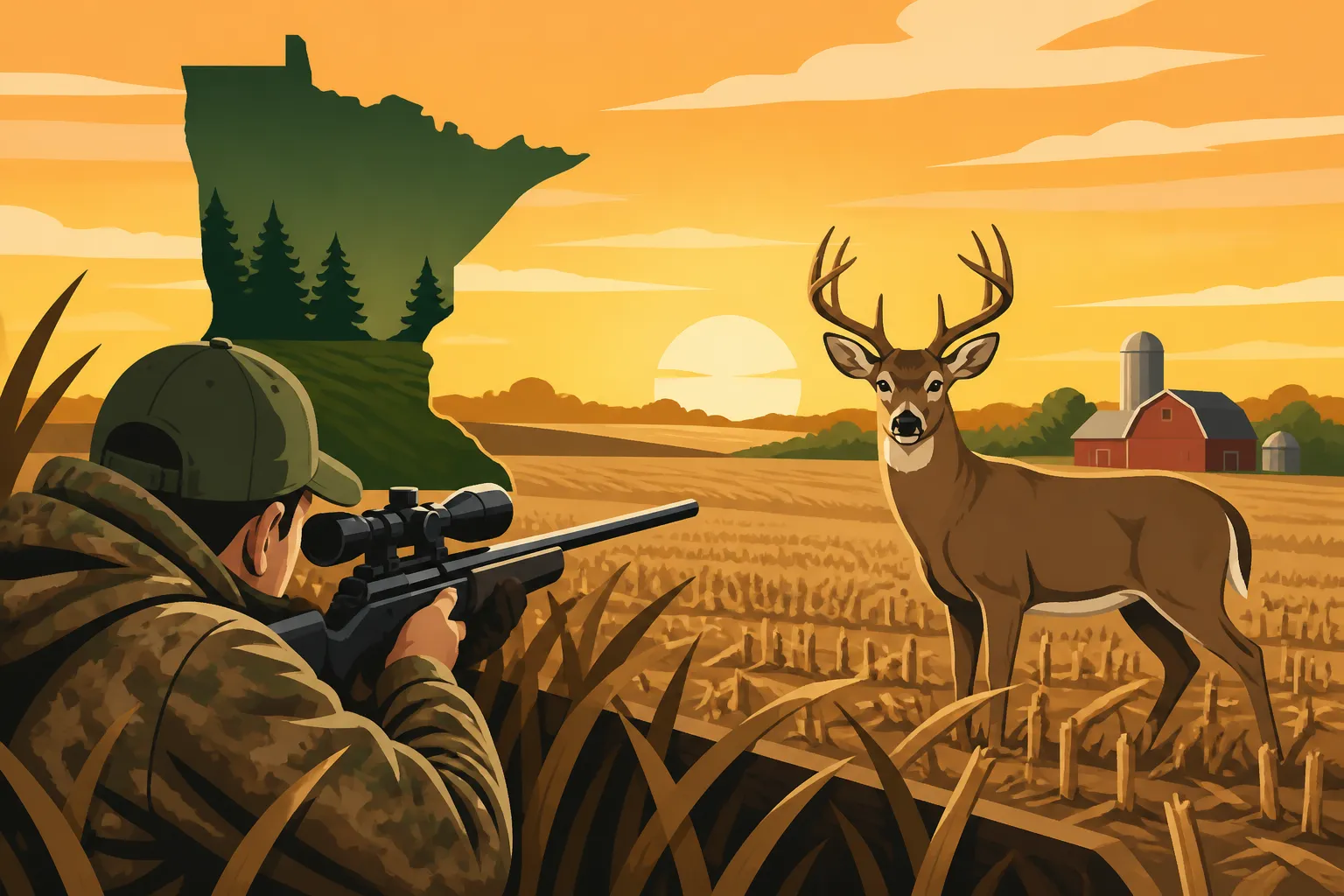
Hunting deer in Minnesota's vast agricultural landscapes presents a unique set of challenges compared to the thick timber of the north. Instead of dense forests, you're often dealing with wide-open fields, limited cover, and deer patterns heavily dictated by crop cycles and human activity, making consistent success feel like a frustrating puzzle. This comprehensive guide is dedicated to equipping you with the specialized knowledge and tactics necessary to confidently navigate and succeed when hunting Minnesota farmland deer, turning those open fields into your strategic advantage.
Understanding the Farmland Deer Landscape
Minnesota's agricultural regions, particularly in the western and southern parts of the state, are a world apart from the deep woods. Deer in these areas adapt to a landscape dominated by corn, soybean, and alfalfa fields, interspersed with woodlots, shelterbelts, and cattail sloughs. Their survival and movement patterns are inextricably linked to these features, making it crucial for hunters to understand this unique environment. It’s not about finding massive blocks of wilderness; it’s about deciphering how deer use fragmented cover and abundant food.
Deer Movement Patterns Near Croplands
Deer in farmland environments are essentially creatures of habit and efficiency, their daily lives revolving around bedding cover and food sources. Their movement patterns are often less sprawling than big woods deer and more confined to specific travel corridors that connect these vital resources. You'll observe distinct daily routines: moving from bedding areas in woodlots, CRP fields, or dense creek bottoms out to feeding in corn, soybean, or alfalfa fields, especially during dawn and dusk. Midday movements are usually minimized unless pressured, or if they're cruising for does during the rut. Understanding these movements is key, and it often involves identifying subtle travel routes like drainage ditches, fence lines with brush, or even just slight terrain changes that offer minimal concealment in an otherwise open landscape.
The timing of crop harvests significantly impacts these patterns. When corn is standing tall, it provides incredible security cover, and deer will live inside it for weeks, only venturing out for water or to visit a different food source nearby. Once those fields are cut, deer suddenly lose their sanctuary and are forced to relocate to smaller woodlots, CRP fields, or even thick cattail sloughs, changing their travel patterns dramatically. The same goes for soybeans; a lush green bean field provides protein and cover, but once they yellow and drop leaves, deer move on. Paying attention to crop rotations and harvest schedules is paramount.
Identifying Key Habitat Features
Even in seemingly flat and open agricultural zones, deer rely on specific habitat features for their survival. These can be small but incredibly significant. Woodlots, often consisting of oaks or other hardwoods, provide acorns, cover, and bedding. Shelterbelts, rows of trees planted to break the wind, offer critical travel corridors and thermal protection. Creek bottoms, even if dry, often hold denser vegetation, water, and act as natural funnels. Perhaps most overlooked are the cattail sloughs and wetland edges that dot the Minnesota landscape; these provide impenetrable thermal cover, especially in winter, and excellent bedding, often holding deer even when standing corn is scarce.
Other features, like overgrown fence lines, small unharvested patches of crops, or even abandoned farmsteads with overgrown shrubs and trees, can become prime bedding or staging areas. Deer will utilize any available cover, no matter how small or seemingly insignificant, to feel secure. The challenge for hunters is to identify these smaller, often linear pieces of cover and understand how deer connect them to larger food sources or other bedding areas. This is where tools like GoHunt can really shine, allowing you to meticulously scan aerial photos for these subtle features.
The Impact of Crop Rotation
The dynamic nature of agricultural production directly influences where and how deer live. Farmers rotate crops, meaning a prime cornfield one year might be a soybean field the next, or even fallow. This annual shift completely alters deer behavior and distribution. A field that held dozens of deer in standing corn might be virtually empty if it's planted to beans the following year and pressured. This means you can't rely on last year's intel alone; continuous, up-to-date scouting is essential.
Different crops offer varying nutritional value and appeal to deer at different times of the year. Alfalfa fields, for example, are a high-protein draw in spring and summer, continuing to provide forage through early fall. Winter wheat or rye cover crops can become crucial late-season food sources when other options are scarce. Corn is king for bulk calories in the fall and winter, especially when left standing. Soybeans offer protein in summer and, if fields are left unharvested or have shattered beans, can provide a high-fat food source through the winter. Understanding these nutritional timelines helps you predict where deer will be feeding as the seasons progress.
| Crop Type | Primary Appeal to Deer | Season of High Use | Hunter's Strategy Considerations |
|---|---|---|---|
| Standing Corn | Security cover, high-calorie food | Early Fall – Late Winter | Deer live in it. Hunt edges, funnels, or set up drives if permission allows. Pay attention to how deer enter/exit. Once harvested, focus shifts to remaining food/cover. |
| Harvested Corn | Scatters of leftover kernels, stalks | Late Fall – Late Winter | Crucial food source after harvest. Deer will filter through, especially after dark. Hunt transition lines between cover and corn, or ambush travel routes to these fields. |
| Soybeans | Protein-rich forage, some cover | Spring – Mid-Fall | High appeal when green. Deer will browse heavily. After harvest, shattered beans are an important food source. Hunt travel corridors leading to these fields, especially during early archery. |
| Alfalfa/Hay | High-protein forage | Spring – Mid-Fall | Constantly regenerating food source. Often draws deer throughout the day if near good cover. Be mindful of cutting schedules. Good for early season archery or firearm hunting. |
| Winter Wheat/Rye | Green browse | Late Fall – Early Spring | Becomes a critical green food source when other options are dormant or covered in snow. Look for deer actively browsing these fields, especially around dusk. Often planted as a cover crop, can be a hidden gem. |
Scouting Strategies for Farm Country Whitetails
Effective scouting in Minnesota's farmland is a year-round endeavor that takes a meticulous, multi-faceted approach. You can't just stumble into a productive area; you have to find it, analyze it, and understand it intimately. This often means combining technological tools with old-fashioned boots-on-the-ground effort, focusing on the subtle clues that deer leave behind in a landscape that, at first glance, might seem monotonous.
Pre-Season Aerial Map Analysis
Before you ever step foot in the field, spend significant time poring over aerial maps. This is where you can identify potential hotspots and understand the lay of the land without disturbing any deer. Look for distinct features: small woodlots, creek drainages, shelterbelts, thickets, and even subtle changes in elevation that might offer a hidden travel corridor. Pay close attention to how these cover elements connect to larger food sources like corn or soybean fields. Think about pinch points where cover narrows, forcing deer into predictable paths. These are often the easiest places to set up.
Tools like the Minnesota DNR's Recreation Compass App or subscription services like GoHunt offer invaluable high-resolution satellite imagery. With GoHunt, for instance, you can mark potential bedding areas, travel corridors, and stand locations from the comfort of your home. Identify property lines, especially if you're targeting private land, and look for potential public access points if you're hunting WMAs or State Forests in agricultural zones. Remember, deer will often cross property lines, so understanding the surrounding landscape is just as important as knowing your specific hunting parcel. This digital scouting can save you countless hours of unproductive walking.
Boots-on-the-Ground Reconnaissance
Once you've identified promising areas on your maps, it's time for some old-fashioned legwork. Boots-on-the-ground scouting is irreplaceable for confirming what you see from above and finding fresh sign. Walk potential travel corridors, examining fence lines, field edges, and woodlot perimeters for rubs, scrapes, and tracks. During the early season, look for well-used trails leading from bedding cover to prime feeding areas. As crops come down, revisit these areas to see how deer patterns have shifted.
Focus on transition zones: where woods meet fields, where different crop types meet, or where thickets transition into open pasture. These are often high-traffic areas. Look for buck sign – especially larger rubs on trees or posts – to indicate mature deer activity. Don't be afraid to walk through dense cover if you have permission; finding actual bedding sites can be a game-changer. Just be mindful of spreading human scent, especially closer to hunting season. For more insights on finding good ground, consider reading about Scouting Minnesota Public Land Before Season.
Using Trail Cameras in Open Country
Trail cameras are incredibly effective scouting tools in farmland, helping you confirm deer presence, identify specific bucks, and understand movement times without constant human intrusion. In open farm country, placement is critical. Instead of placing them directly over a food plot, focus on pinch points, trail intersections, or the entrances to woodlots and thickets where deer funnel. If you have permission, placing cameras on active scrape lines along field edges or on trails leading into standing corn can be particularly effective.
When placing cameras in areas with limited cover, try to find a natural backdrop or brush them in to make them less obvious to deer and other hunters. Consider using Cuddeback, Browning, or other popular brands known for fast trigger speeds and good battery life. Cellular cameras, though more expensive, can give you real-time intel, allowing you to react quickly to changing deer patterns or the presence of a target buck. Just be sure to check local regulations regarding trail camera use on public land if that's where you're scouting. Understanding how to use these tools effectively can be the difference between a successful season and an empty freezer.
Effective Hunting Tactics for Agricultural Areas
Hunting farmland deer requires specific tactics that account for the open landscape, fragmented cover, and concentrated food sources. You can't just sit in the woods and hope; you need a strategy that exploits deer's predictable patterns and their reliance on limited security. This often means being more strategic with stand placement, adapting your hunting style to the terrain, and even working with a team when appropriate.
Stand Placement on Field Edges and Funnels
In farm country, your stand placement is paramount. Deer in these areas live on edges: the edge of a woodlot meeting a cornfield, the edge of a cattail slough bordering a bean field, or the edge of a creek bottom providing a travel corridor. Look for natural funnels where two pieces of cover narrow, or where deer are forced to cross a specific opening. A classic setup is a stand on a field edge, especially one with a good wind advantage, overlooking a travel corridor between bedding cover and a food source. Consider a setup on a clear-cut edge where new growth provides both cover and browse, drawing deer out of thicker timber.
When choosing a specific tree or ground blind location, think about your entry and exit routes. You want to be able to get to and from your stand without spooking deer, especially when hunting evening movements near feeding areas. This often means using natural terrain features, ditch lines, or thick cover to conceal your approach. Pay attention to the wind, as scent control is even more critical in open areas where your scent can travel further. A well-placed stand in a strategic funnel or on a heavily used field edge can lead to consistent encounters, especially during the rut when bucks are actively cruising. For more specific advice on stand placement, check out this article on Hanging a Stand on a Big Woods Funnel, as many principles apply even in different terrain.
Still-Hunting and Spot-and-Stalk
While stand hunting is a staple, still-hunting and spot-and-stalk tactics can be highly effective in the right farmland scenarios. Still-hunting, moving slowly and deliberately through cover, works well in small woodlots, brushy creek bottoms, or dense cattail sloughs where deer are bedding. The key is to move at a snail's pace, pausing frequently to scan for deer sign or the deer themselves. Use the wind to your advantage, moving into it to keep your scent from preceding you. This method allows you to cover ground and be adaptable to changing conditions, often surprising deer in their sanctuaries.
Spot-and-stalk is particularly effective in very open country, or when crops like corn have been harvested, leaving deer exposed. This involves using binoculars or a spotting scope from a vantage point (like a distant hill, silo, or even a vehicle if legally scouting) to locate deer feeding in a field. Once a target is identified, the challenge is to use any available terrain features, fence lines, or small rises to get within shooting range undetected. This takes patience, good optics (brands like Vortex, Leupold, and Maven offer excellent glass), and often a low crawl through mud or stubble. It's a demanding but incredibly rewarding tactic for the patient hunter.
Utilizing Deer Drives in Farm Fields
Deer drives, when executed safely and with proper planning, can be an excellent way to push deer out of dense cover in farmland, especially later in the season. These are most effective in smaller, isolated woodlots, dense creek bottoms, or especially standing cornfields where deer feel secure. A small group of three or four hunters can effectively stage a drive. Designate a few standers on the downwind side, positioned where deer are likely to escape, and a few drivers who walk through the cover, pushing deer towards the standers. For more on this, consider reading Deer Drives With Three or Four Hunters.
The key to a successful farm country drive is understanding the deer's escape routes. They will almost always try to use the thickest cover available or skirt the edges of fields to get away. Block these primary escape routes with your standers. Safety is paramount: always know where every hunter is, wear ample blaze orange, and only take safe shots. Drives can be particularly useful for extracting deer that are otherwise unhuntable in dense, unpressured pockets of cover that dot the agricultural landscape.
Dealing with Hunting Pressure and Access Challenges
One of the biggest frustrations when hunting Minnesota farmland is often not finding deer, but gaining access to them and navigating the inevitable hunting pressure. Unlike vast public forests, private land dominates many agricultural regions, and even public parcels can see significant traffic. Overcoming these hurdles requires persistence, good manners, and strategic thinking.
Gaining Private Land Permission
Access to private land is the holy grail for many farmland deer hunters. Farmers often own excellent habitat, and securing permission can unlock unparalleled hunting opportunities. The best way to start is by simply asking. Approach landowners well in advance of the season, preferably in the late winter or early spring. Dress respectfully, be polite, and have a clear, concise request. Offer to help with chores, share some of your harvest, or even offer to help with nuisance animal control. Building a relationship is key; it’s not a one-time transaction.
When asking, emphasize safety and respect for their property. Let them know you'll close gates, stay away from livestock, and be mindful of their farm operations. Consider offering a copy of your hunting license and insurance. Many farmers appreciate knowing who is on their land. For more detailed advice on building these relationships, I highly recommend reading Knocking on Doors in Minnesota Farm Country. Remember, a "no" today doesn't mean a "no" forever; sometimes, simply being respectful and persistent can pay off in future seasons.
Navigating Public Land in Farm Zones
While private land dominates, Minnesota does offer public hunting opportunities in agricultural areas, primarily through Wildlife Management Areas (WMAs) and some Waterfowl Production Areas (WPAs). These parcels often consist of restored prairies, wetlands, and small woodlots interspersed among farmed fields. They can hold surprising numbers of deer, especially if they offer good bedding cover adjacent to private croplands. The challenge is often finding these parcels and dealing with competition.
Use the Minnesota DNR's Recreation Compass App, or a mapping platform like GoHunt, to identify and scout these public lands. Look for WMAs that are near active crop fields, as deer will often bed on public land and feed on nearby private fields. Be prepared for company, especially on opening weekend. To escape pressure, you might need to walk further than most hunters, or target smaller, less obvious parcels. Sometimes, a smaller, brushy WPA parcel that looks insignificant on a map can be a goldmine if it's surrounded by prime feeding habitat and few hunters bother to check it. Pay close attention to rules specific to these areas, such as prohibitions on ATVs or limitations on stand types. You might also find good public hunting by carefully reading maps for areas covered by Minnesota Walk-In Access Land.
Dealing with Other Hunters
Hunting pressure, whether on public or private land, can significantly alter deer behavior. If deer are constantly being pushed or spooked, they become more nocturnal, utilize denser cover, and become much harder to pattern. Acknowledge that other hunters are out there and factor their presence into your strategy. If you know a property or public land parcel gets heavily hunted, consider hunting mid-week, during less popular times of day, or focusing on areas that other hunters tend to overlook.
Instead of competing directly, try to use other hunters' movements to your advantage. Sometimes, deer pushed by other hunters will funnel right into your stand if you've positioned yourself strategically on an escape route. Conversely, if you notice a specific area is consistently being disturbed, it might be time to find new ground. Being flexible and adaptable is crucial. Maintaining a good relationship with fellow hunters, even strangers on public land, can also lead to shared knowledge and a more enjoyable experience. Remember, everyone is out there for the same reason, and a respectful attitude goes a long way.
Late-Season Opportunities in Minnesota Farmland
As the season progresses into late fall and early winter, Minnesota's farmland transforms, and so do the opportunities for deer hunters. The leaves are down, crops are harvested, and the landscape is colder and often covered in snow. These conditions force deer to consolidate and reveal their patterns in new ways, offering some of the best chances for success for the persistent hunter.
Focusing on Winter Food Sources
In the late season, with most crops harvested and natural forage depleted, deer become incredibly focused on available food sources. Unharvested cornfields, or fields with significant waste grain, become magnets. Deer will travel considerable distances to access these high-calorie sources needed to survive the harsh Minnesota winter. Standing bean fields with shattered pods or winter wheat/rye cover crops also become critical. Identifying these prime food plots is paramount.
Often, deer will bed in the thickest cover available – cattail sloughs, dense cedar swamps, or impenetrable woodlots – and make a deliberate move to these food sources just before dark. Your strategy should revolve around intercepting them along these travel routes. This often means sitting longer in bitter cold, as deer may not move until the last minutes of daylight. Scouting for fresh tracks in the snow leading to and from these fields is incredibly effective in pinpointing these crucial travel corridors. Consider this closely when seeking Late-Season Food Sources for Minnesota Whitetails.
Post-Rut Buck Behavior
By the late season, the rut is largely over, and bucks are no longer consumed by chasing does. Their primary focus shifts to recovery: finding as much food as possible and conserving energy. They will often revert to more solitary, nocturnal patterns, but their need for calories can make them predictable. While you won't see the frantic daylight cruising of early November, a mature buck will still move to feed, especially during periods of stable weather or before a major cold front.
Look for the largest tracks leading into and out of prime food sources, often appearing close to dark. Bucks will also utilize the thickest, most secluded cover for bedding during this time, often bedding close to their preferred food source to minimize travel. Don't be afraid to hunt the fringes of known bedding areas if the wind is right, as bucks may stage there before committing to an open field. Patience is a virtue when waiting for these reclusive giants to make an appearance. Remember that understanding Hunting the Peak Rut in Early November is different from late-season tactics.
Cold Weather Strategies
Late-season hunting in Minnesota inevitably means dealing with cold, and often snow. Your cold-weather sitting strategy needs to be dialed in. Layering is crucial: base layers that wick moisture, insulating mid-layers, and a windproof, waterproof outer shell. Investing in good insulated boots, hand warmers, and a warm hat is non-negotiable for all-day sits. Consider a heated seat pad or a well-insulated ground blind to cut the wind chill.
As the temperature drops, deer move less frequently during the day, making evening hunts over food sources particularly productive. However, a sunny, cold day after a prolonged period of severe cold can often trigger midday deer movement as they seek to warm themselves and feed. Pay attention to weather patterns, especially major temperature swings or approaching snowstorms, as these often trigger increased deer activity. Sometimes the best strategy is simply to endure the elements longer than other hunters are willing to, especially if you're Sitting a Field Edge in Late Season.
Disclaimer
Hunting is an inherently dangerous activity. This guide provides general information and recommendations for hunting in Minnesota. Always prioritize safety, adhere to all local, state, and federal hunting regulations, and obtain appropriate licenses and permits. Wildlife populations, regulations, and access can change. It is your responsibility to stay informed and hunt ethically and legally.