Rangefinding Binoculars Worth the Cost
Every Minnesota hunter knows the frustration of fumbling for a separate rangefinder while trying to pin down yardage on a buck in thick timber or across a wide field. That critical moment often slips away. Rangefinding binoculars promise to combine these essential tools, but their significant price tag makes many of us question if the investment is truly worth it. This guide explores the value of rangefinding binoculars for hunters across Minnesota's diverse landscapes.
What Exactly Are Rangefinding Binoculars and How Do They Work?
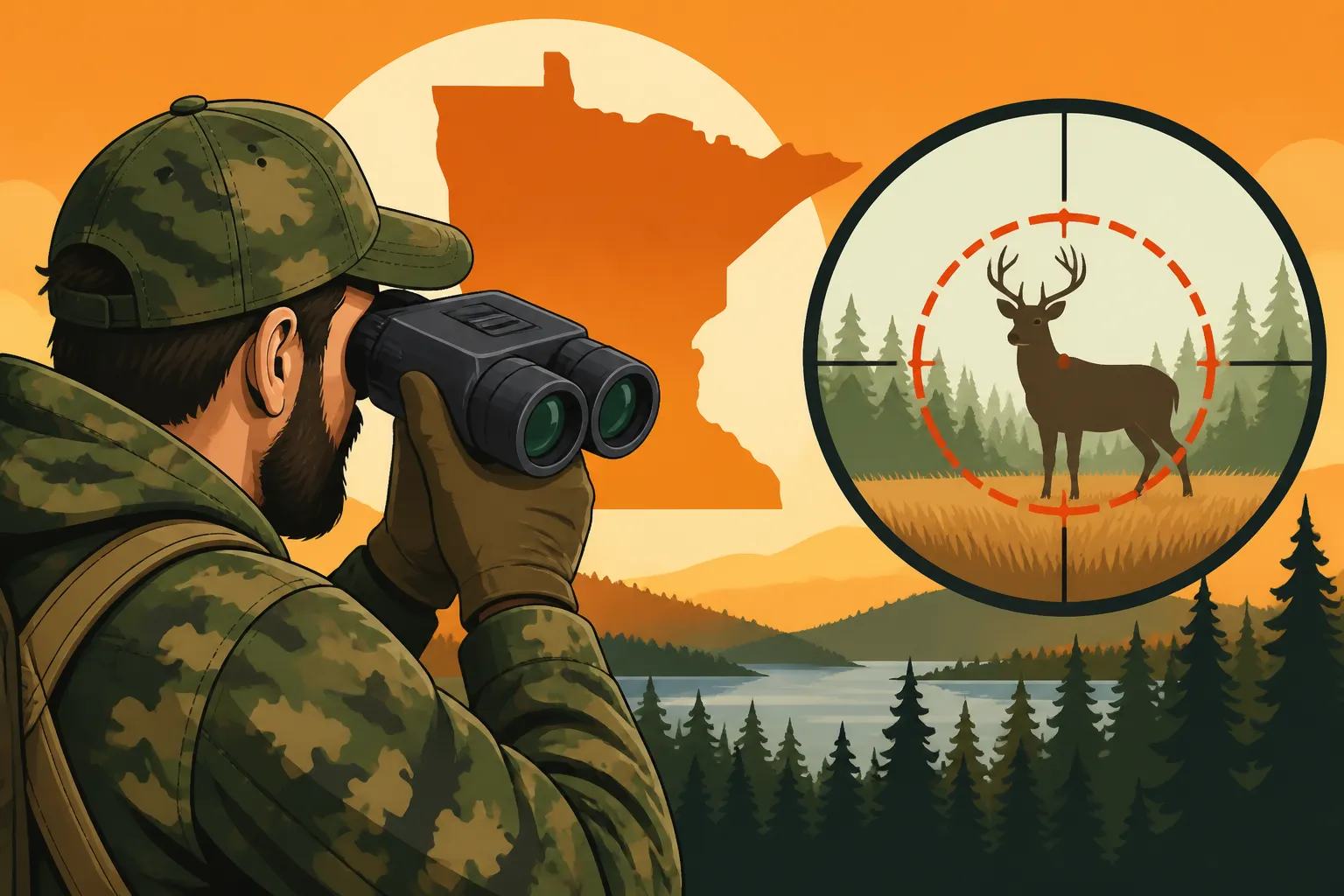
At their core, rangefinding binoculars, often simply called "RF binos," are precisely what their name suggests: a combination of high-quality optical binoculars and a laser rangefinder, all integrated into a single, cohesive unit. This might seem like a simple concept, but the execution and the technology packed into these devices are anything but. They aim to provide an immediate, seamless experience that separate devices can't quite match, giving you an optical view and an accurate distance reading without breaking your glassing rhythm.
Combining Two Crucial Tools into One Streamlined Unit
Think about your current hunting setup. You likely have a pair of binoculars around your neck or in a chest harness, and a separate handheld rangefinder that you pull out when a shot might present itself. This means two separate pieces of gear to manage, two sets of lenses to keep clean, and two distinct movements to make when a target appears. Rangefinding binoculars eliminate this duality. With an RF bino, you glass the deer, press a button, and bam—the yardage displays right in your field of view. There's no fumbling, no switching hands, no delay. This singular efficiency is one of their most touted benefits, especially when stalking or in situations where speed is critical, like when Hunting the Minnesota Rut in Early November and a buck might only offer a fleeting glance.
The integration also means less weight and bulk overall if you're comparing carrying both a premium binocular and a premium rangefinder. While a single RF bino might weigh more than a standard binocular, it's often less than the combined weight of two separate, high-quality units. This can be a real consideration for hunters who put in serious miles, whether they're hiking deep into the Superior and Chippewa National Forest Hunting or navigating dense cattail sloughs in farm country.
The Underlying Technology: Laser Precision in Your Line of Sight
The magic behind rangefinding binoculars is the miniature laser rangefinder built into the optical path. When you press the firing button, an invisible laser beam is emitted from the unit. This beam travels to your target, reflects off it, and returns to a sensor within the binocular. The device then precisely measures the time it took for the laser to make this round trip. Since the speed of light is a known constant, the internal computer can accurately calculate the distance to the object.
Modern rangefinding binoculars don't just stop at a simple line-of-sight distance. Many models incorporate advanced features like angle compensation, which is incredibly useful in Minnesota's bluff country or when shooting from an elevated treestand. The display inside the bino will show you not only the straight-line distance but also the "shoot-to" distance, factoring in the incline or decline. Some even include ballistic solvers that can work with your specific bullet drop data to give you exact holdovers, though these are more common in long-range rifle shooting scenarios. For most typical Minnesota deer hunting ranges, the angle compensation is the standout feature that genuinely enhances accuracy and confidence in hilly terrain or when using Treestand Setups in Minnesota Hardwoods.
The Undeniable Advantages for Minnesota Hunters
For those hunting the diverse landscapes of Minnesota, from the vast timber of the north to the open fields of the south, rangefinding binoculars offer several compelling advantages that can genuinely improve your success and enjoyment in the field. These aren't just fancy gadgets; they're tools that address real challenges hunters face.
Speed and Efficiency in the Field
Imagine a scenario: you're still-hunting along a ridge in northern Minnesota, glassing a distant clear-cut. Suddenly, a mature buck steps out, wary, moving quickly. With traditional gear, you'd lower your binoculars, reach for your rangefinder, bring it up, find the target again, get a reading, then perhaps shoulder your rifle and make the shot. This sequence, even for practiced hunters, takes time – precious seconds that a deer often won't grant you.
With rangefinding binoculars, the process is streamlined. You're already glassing. You spot the deer. You press the button. The range appears in your view almost instantly. Your hands don't move, your eye stays on the animal, and your focus remains uninterrupted. This efficiency is a game-changer when you're trying to Still-Hunting Minnesota Big Woods or trying to get a quick reading on a turkey stepping into a food plot. That saved second or two can be the difference between getting a shot off and watching the animal vanish back into the cover. It also means you can range multiple objects quickly, like trees or landmarks, which helps with quick shot planning, especially when deer are on the move during the rut.
Confidence in Shot Placement, Especially in Varied Terrain
Accuracy is paramount for ethical hunting, and knowing the precise distance to your target is a critical component of that accuracy. In Minnesota, we deal with incredibly varied terrain. A shot across a flat bean field is different from a shot downhill into a creek bottom or uphill onto a bluffy ridge in southeastern Minnesota. Angle compensation, a common feature in quality RF binos, truly shines here.
Instead of trying to mentally calculate the "horizontal equivalent distance" or relying on guesswork, your rangefinding binoculars give you the precise "shoot-to" distance. This eliminates one major variable and instills a profound sense of confidence. Whether you're in a high Treestand Setups in Minnesota Hardwoods looking down into a swamp or hunting the undulating terrain of Hunting Southeast Minnesota Bluff Country, you'll know exactly where to hold. This confidence translates directly into more precise shot placement and ultimately, more successful and ethical hunts. For rifle hunters, especially those taking advantage of Minnesota's New Statewide Rifle Rules, knowing your precise yardage out to 200 or 300 yards in open areas is indispensable for making clean, humane shots.
Versatility Across Minnesota Hunting Scenarios
Rangefinding binoculars aren't just for one type of hunting. Their versatility makes them valuable across a wide array of Minnesota's hunting pursuits. Imagine Hunting Minnesota Farmland Deer where you might be glassing across expansive fields, needing to quickly range deer moving between woodlots or through standing corn. The ability to scan and range with one fluid motion is a huge benefit here.
Similarly, for archery hunters, particularly during Bowhunting Minnesota's Long Archery Season, having an integrated rangefinder means less movement at crucial moments. If a deer approaches your setup and stops, you can quickly verify the distance without drawing attention to yourself. Even for bird hunters, understanding distances can be useful for planning decoying efforts for waterfowl or estimating shot distances for upland birds if you're patterning a new shotgun. While not their primary application for birds, the optical quality and rangefinding ability still add a layer of information. Many hunters use tools like GoHunt's mapping features during scouting, and being able to then verify distances in the field with a rangefinding binocular adds a practical layer to that digital planning.
Considering the Investment: Are They Really Worth the Cost for You?
Let's be honest: rangefinding binoculars represent a significant investment. They are typically among the most expensive pieces of gear a hunter will buy, often costing as much as or more than a quality rifle or a top-tier bow. This price point makes many hunters pause and rightly ask: is this truly necessary, or am I just buying into a luxury? The answer, as with many gear choices, depends heavily on your individual hunting style, budget, and priorities.
Comparing to Separate Binoculars and Rangefinders
To properly evaluate the cost, it’s helpful to compare it to purchasing separate, high-quality units. If you're currently running a cheap pair of binoculars and a basic rangefinder, the jump to RF binos will feel immense. However, if you already own a premium pair of alpha-glass binoculars and a high-end, feature-rich rangefinder, the price difference might not be as astronomical as it first appears.
A top-tier pair of standalone binoculars can easily run into several hundreds, or even thousands, of dollars. Add to that a high-performance rangefinder with angle compensation and fast readings, and you're often looking at another few hundred dollars or more. When you combine those two price tags, suddenly a quality pair of rangefinding binoculars starts to look more competitive. The key is to compare apples to apples: a budget RF bino might not outperform mid-range separate units, but a premium RF bino almost certainly offers a superior experience to mid-range separate units, and often even rivals separate premium optics. The convenience factor, the weight reduction (when comparing two premium units), and the streamlined operation are often where the true value lies.
When the Cost Justifies It: Your Hunting Style and Priorities
For some hunters, rangefinding binoculars are a game-changer that justifies every penny. Who are these hunters?
- Serious Western Hunters: While our focus is Minnesota, this group truly pushes the need for RF binos. They live behind glass, ranging constantly over vast distances, and the speed is essential. For elk hunters in the Minnesota's Northwest Elk Herd, this applies.
- Archers Who Stalk or Hunt Open Ground: Bowhunters operating in more open terrain where animals might stop at unknown distances, or those who stalk, benefit immensely from the rapid, silent ranging. The fewer movements you make, the less likely you are to be busted.
- Rifle Hunters on Large Properties or Public Land: If you hunt large tracts of public land or private properties where shot distances are variable and can exceed 100-150 yards, precise ranging without fumbling is a huge asset. This is especially true now with Hunting Minnesota Now That Rifles Are Legal Statewide where longer shots might be more common.
- Hunters Prioritizing Efficiency and Minimal Movement: If your hunting style values speed, minimal movement, and the ultimate in streamlined gear, then RF binos fit the bill perfectly. They allow you to stay focused on the animal, rather than on your gear.
- Those Who Value Premium Optics: If you're already committed to investing in high-quality glass for better light transmission, clarity, and overall viewing experience, then upgrading to rangefinding binoculars that maintain that optical quality makes sense. You're combining two top-tier tools rather than sacrificing one for the other.
If you primarily hunt small woodlots with known distances, or only take shots under 50 yards with a shotgun slug, the benefits might not outweigh the cost as much. However, for those who truly utilize their optics and want every edge possible, the investment often pays dividends.
| Feature | Rangefinding Binoculars | Separate Binoculars + Rangefinder |
|---|---|---|
| Ergonomics | One unit, natural two-hand grip for ranging | Two units, often fumbling between them |
| Speed | Near-instantaneous range during glassing | Requires switching hands/eyes, slower |
| Weight/Bulk | Often less than two premium units combined | Always two separate units, more to carry |
| Cost | High initial investment for quality | Can be less for mid-range, comparable for premium |
| Optical Quality | Excellent in premium models | Can pick and choose best of both worlds |
| Angle Compensation | Common in mid to high-end models | Common in mid to high-end rangefinders |
| Ballistics | Some models offer integrated solvers | Only in advanced rangefinders |
| Maintenance | One unit to clean and care for | Two units to clean and care for |
The Learning Curve and Practical Field Use
While the concept is simple, there can be a slight learning curve with rangefinding binoculars, mainly related to how the display appears in your field of view and getting accustomed to the button placement. Most modern RF binos feature internal displays that project the range, and sometimes other data like angle or temperature, without obscuring your view. Some displays are red, some black, some green, and their brightness can often be adjusted to suit lighting conditions.
Practice is key, just as it is with any new piece of gear. Take them out during Scouting Minnesota Public Land Before Season and range everything. Get used to the feel, the buttons, and how quickly you can get a reading. Understand their limitations, like ranging through heavy rain, dense fog, or very thick brush which can sometimes interfere with laser performance. Knowing these nuances before you're in a high-pressure hunting situation will ensure you get the most out of your investment. It's also worth noting that battery life can be a consideration, so always carry spares, especially in colder Minnesota weather which can drain batteries faster.
Choosing the Right Pair: Features to Look For and Considerations
If you've decided that rangefinding binoculars are a worthwhile investment for your Minnesota hunting adventures, the next step is navigating the myriad of options available. This isn't a purchase to make lightly, so understanding the key features and considerations will help you make an informed decision that suits your needs and budget.
Key Specifications to Evaluate Beyond the Price Tag
When you're looking at RF binos, there's more to it than just the biggest number on the price tag or the longest stated range. Here are some critical specifications to delve into:
- Magnification and Objective Lens Size: Like any binocular, this defines your viewing experience. Common choices for hunting include 8×42 or 10×42. An 8x magnification provides a wider field of view and is generally steadier to hold, which is great for thick timber and quick scanning. A 10x offers more detail at longer distances, useful for Hunting Minnesota Farmland Deer or wide-open spaces. The "42" refers to the objective lens diameter in millimeters, which influences light-gathering ability. A larger objective means brighter images, especially in low light. Consider what Optics for Minnesota Big Woods and Farmland truly demand.
- Maximum Ranging Distance: While many manufacturers advertise impressive maximum ranges (e.g., 2,000+ yards), it's crucial to understand these are often for highly reflective targets under ideal conditions. For practical hunting ranges (e.g., deer-sized targets), the effective range will be less. A unit that reliably ranges deer out to 500-800 yards is more than sufficient for most Minnesota hunting scenarios, even with a rifle Sighting In a Rifle for Minnesota Woods Ranges. Don't get overly hung up on theoretical maximums unless you're truly planning for extreme long-range shooting.
- Angle Compensation (ARC/BOW/EHR modes): As discussed, this is a must-have for hunting in varied terrain. Ensure the model you choose includes a reliable angle compensation feature. It provides the "equivalent horizontal range" which is the actual distance your bullet or arrow will travel effectively.
- Display Type and Brightness Settings: Most use an LED or OLED display. OLEDs generally offer better contrast and color in varying light conditions. Multiple brightness settings are essential so you can adjust the display to be visible on a bright, sunny day but not blinding in the dim light of dawn or dusk. Some models even have automatic brightness adjustment.
- Scan Mode: This feature allows you to continuously range as you pan across terrain or track a moving animal. It's incredibly useful for getting multiple readings quickly or for an animal that isn't standing perfectly still.
- Battery Type and Life: Most use common CR2 batteries, while some might use AAs or even rechargeable packs. Check the estimated battery life and how readily available spare batteries are.
- Optical Coatings and Glass Quality: Just because it has a rangefinder doesn't mean the optics are secondary. Look for fully multi-coated lenses and high-quality glass for superior light transmission, clarity, and color fidelity. This directly impacts how well you can spot and identify game.
Durability and Weather Resistance for Minnesota's Conditions
Minnesota weather is notoriously unpredictable. From crisp, clear autumn days to torrential downpours, sleet, snow, and extreme cold, your gear needs to stand up to it all. Investing in rangefinding binoculars means you need a unit that is built to last through these conditions.
Look for models that are fully waterproof and fogproof. This typically means they are O-ring sealed and nitrogen or argon purged to prevent internal fogging in fluctuating temperatures. A robust, rubber-armored housing will provide shock absorption and a secure grip, even when wet or cold. A solid build quality not only protects your investment but also ensures reliable performance when you need it most. Imagine being out during Muzzleloader Tactics in December Cold or Hunting Deer in Deep Northern Minnesota Snow; you need optics that won't fail due to moisture or temperature extremes. Don't compromise on durability for the sake of a slightly lower price.
Ergonomics and User Interface: Comfort and Ease of Use
No matter how advanced the technology, if the device isn't comfortable to hold and easy to operate in the field, you won't use it effectively. When considering a pair of rangefinding binoculars, think about:
- Weight and Balance: Hold them in your hands. Do they feel too heavy or awkwardly balanced? Remember you'll be carrying these, potentially around your neck or in a chest harness, for hours.
- Button Placement: Are the range button and other controls intuitively placed and easy to operate with gloved hands? This is a huge factor during the late season when you're bundled up.
- Focus Wheel and Diopter Adjustment: These should be smooth, precise, and easy to manipulate. The diopter adjustment allows you to fine-tune the focus for each eye, ensuring a crisp image for everyone.
- Eyecups: Adjustable eyecups are crucial for comfort, especially for those who wear glasses. They should extend and retract smoothly and securely.
Some brands like GoHunt offer platforms or communities where users can share reviews and experiences with various gear, including rangefinding binoculars. Checking out real-world feedback on ergonomics and user-friendliness can be just as valuable as looking at spec sheets. Ultimately, the best rangefinding binoculars are the ones you're comfortable using consistently and effectively, year after year, across all your diverse Minnesota hunting grounds.
Disclaimer
This article is for general informational purposes only and does not constitute professional advice. Laws, prices and regulations vary by location and change over time. Consult a qualified professional for guidance on your specific situation.