Muzzleloader Tactics in December Cold
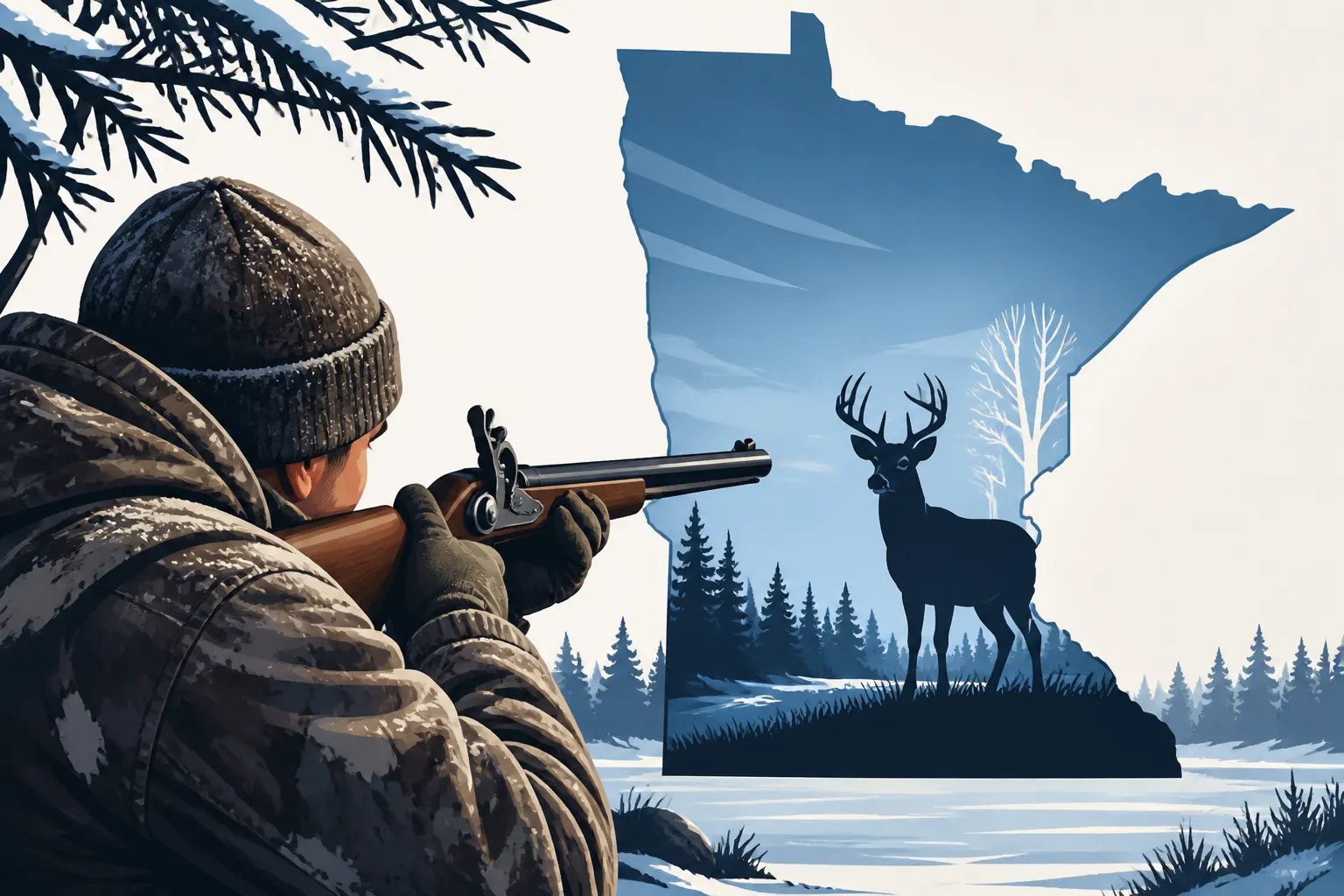
December in Minnesota is a whole different beast when you're toting a muzzleloader. The late-season cold can be brutal, freezing your fingers, testing your resolve, and making consistent ignition a real challenge. Many hunters get discouraged, dealing with misfires or just plain misery from the cold. But don't despair – with the right preparation and tactics, you can turn those frigid December days into a successful hunt. This guide is all about giving you the proven strategies to punch your tag during Minnesota's late muzzleloader season, even when the mercury plummets.
Preparing Your Muzzleloader for Extreme Cold
Hunting with a muzzleloader in December isn't just about showing up; it's about meticulously preparing your firearm to perform under conditions that would make lesser guns seize up. The cold and moisture are your biggest enemies, but with some foresight, you can minimize their impact.
Keeping Powder and Primers Dry
This is, hands down, the most critical aspect of cold-weather muzzleloader hunting. A misfire when that big deer finally steps out is heartbreaking and preventable. Black powder and its substitutes are hygroscopic, meaning they love to absorb moisture from the air, and cold temperatures only exacerbate the issue of condensation. You absolutely cannot afford to have your powder damp.
First, consider how you store your powder and primers before the hunt. Keep them in airtight, waterproof containers. When you're in the field, invest in a good powder measure with a sealed cap. Some seasoned hunters even pre-load several powder charges into small, waterproof tubes, like those made by Traditions or Thompson/Center, so they're ready to drop down the barrel. This minimizes exposure to humidity and cold air while you're loading. As for primers, they are incredibly sensitive to moisture. Use a primer caddy that offers a snug, watertight seal. Don't leave your primers exposed to the elements or in a loose pocket where they can pick up condensation. Remember that internal link about Keeping a Muzzleloader Dry in Lake-Effect Snow? That advice becomes even more crucial when the air itself feels like it's trying to get inside your breech plug.
Before you ever head out, make sure your breech plug is clean and dry. Any residue from previous shots or cleaning solutions can attract moisture and cause ignition problems. A good method is to clean it thoroughly, then run a dry patch with a little rubbing alcohol or denatured alcohol through it to ensure it’s completely free of oil and moisture, then let it air dry completely. Some hunters even put a small piece of electrical tape over the muzzle and a piece over the breech plug opening (where the primer sits) once it's loaded to create an extra barrier against moisture, removing them just before the shot. This might sound excessive, but trust me, it’s far better than the sickening click of a misfire when you've waited all day in the bitter cold for your chance.
Choosing the Right Projectiles and Loads
The specific load you use can also impact performance in cold weather. While most modern muzzleloader powders are designed to perform well across a range of temperatures, some combinations are more forgiving than others. Granular powders, like true black powder or Hodgdon Triple Seven FFFg, tend to be less susceptible to moisture issues than some pelletized powders, as they fill the bore more completely, leaving less room for condensation to form. However, pellets like those from Pyrodex or Triple Seven are incredibly convenient, especially if you're layering up and your fingers are stiff. If using pellets, ensure they are stored absolutely dry and seated firmly against the breech plug.
When it comes to projectiles, consistency is key. Saboted bullets, while very accurate, rely on a plastic sabot to engage the rifling. In extreme cold, plastic can become brittle. While it's rare to have a sabot fail, it's something to be aware of. Conical bullets, which are solid lead or copper and engage the rifling directly, don't have this concern. The most important thing is to choose a projectile that loads consistently and accurately in your rifle and is proven to expand reliably at typical muzzleloader velocities, which are often lower than modern centerfire rifle speeds. Brands like Hornady's SST or Federal's B.O.R. Lock MZ bullets are popular for good reason, offering both accuracy and terminal performance. The article Muzzleloaders for a Minnesota December might offer some more specific gear recommendations worth looking into.
Once you’ve chosen your powder and projectile, consistency in loading is paramount. Use a consistent ramrod pressure to seat the bullet. A common mistake is not seating the bullet firmly against the powder, which can lead to hangfires or squib loads – both dangerous and undesirable. In the cold, with gloved hands, this can be tougher than it sounds, so practice at home. The goal is a reliable, repeatable loading process that won't let you down when your hands are numb and a deer is standing broadside.
Sighting In and Practice in Winter Conditions
This is where many hunters cut corners, and it can cost them. Sighting in your muzzleloader in a warm indoor range in September won't tell you how it will perform when it's five degrees Fahrenheit and the wind is howling. The cold impacts everything: your rifle's metal components shrink ever so slightly, your optics can fog, and most importantly, you will be different. Your grip will be stiff, your trigger finger numb, and your breathing visible.
Make it a point to go to the range on a truly cold day, ideally with some snow on the ground, before the season or during a break in the action. Dress exactly as you would for hunting. Wear the same gloves, the same heavy coat, and bring the same muzzleloader you plan to use. You might find that your point of impact shifts slightly, or that the recoil feels sharper with all those layers on. Practice your loading procedure with cold hands. See how quickly you can get a second shot off if needed (though hopefully, you won't!). It’s also an excellent time to test your scope's performance. Can you still see clearly through it when it's cold, or does it fog up with your breath? Some optics perform better in extreme cold than others.
Practicing in actual winter conditions builds confidence in your setup and your own abilities. It helps you identify any weak points in your gear or technique before you're out in the woods with a deer in front of you. It's an investment of time that pays dividends in reducing missed opportunities and ensuring clean, ethical kills.
Deciphering Deer Movement in December
Deer in December are in full-on survival mode. The rut is largely over, and their priorities have shifted entirely to food, cover, and conserving energy. Understanding these factors is key to predicting where they’ll be.
Locating Late-Season Food Sources
With the major breeding phase behind them, deer are desperate to pack on calories and replenish their fat reserves to endure the long winter. This means their focus turns heavily to reliable, high-energy food sources. Forget the scattered acorns of October; these deer are looking for concentrated food.
Prime late-season food sources often include standing cornfields, if still available, or picked cornfields where they can glean overlooked kernels. Soybeans are another magnet. In areas without agriculture, look for browse that remains palatable and nutritious, such as certain woody stems, conifer needles (like cedar), or even late-holding apples if you can find them. Often, deer will hit food sources at first light and again in the late afternoon, but during periods of extreme cold, they might be forced to feed more frequently, even throughout the day, just to maintain their body temperature. This makes scouting crucial. Use your mapping apps like GoHunt to identify agricultural fields bordering thick cover or public land parcels that might still hold some browse.
When scouting, don't just look for tracks on the edges of fields. Walk into the field a bit and look for heavily browsed plants or telltale deer droppings. Pay attention to how fresh the sign is. The hungrier the deer, the less picky they become, and the more they'll risk venturing into open areas. You can get more details on what they're looking for in Late-Season Food Sources for Minnesota Whitetails. The key is finding these spots and setting up patiently, often on the downwind side, ready for deer to appear at any time.
Understanding Thermal Cover and Bedding Areas
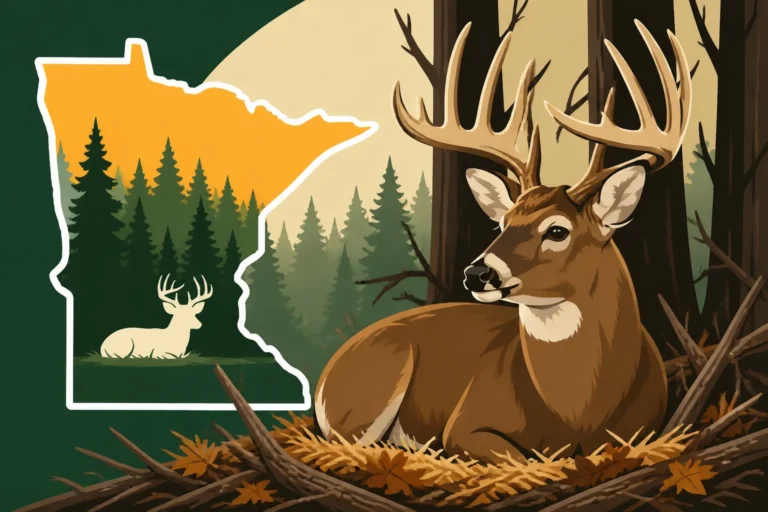
Just as important as food is thermal cover. In December, deer seek refuge from the biting wind, cold, and deep snow. They want to conserve every bit of energy possible. This means they will gravitate toward thick conifer stands – pines, cedars, spruce – that block the wind and hold heat better than open hardwoods. South-facing slopes are also prized bedding areas because they catch more sunlight, helping to warm the deer and melt snow faster.
Don't overlook dense cattail sloughs or thickets of dogwood and willow. These areas, while not always offering a lot of food, provide incredible protection from the elements. Deer will often bed right in the middle of these seemingly impenetrable places, especially on particularly cold or windy days. They might only move a short distance from bedding to feeding, often using the thickest, most protected routes possible. Using satellite imagery on apps like GoHunt can help you pinpoint these dense patches of cover, whether it’s a cluster of evergreens in a hardwood forest or a sprawling wetland.
When you're still-hunting or moving to a stand, always approach these thermal cover areas with extreme caution. Deer will often be bedded down tight, relying on their senses and the cover to stay hidden. Wind direction is critical here; always approach from downwind, or at least crosswind, to avoid blowing your scent into their sanctuary. Knowing where they feel safe allows you to anticipate their movements as they leave for food or shift bedding areas throughout the day.
The Impact of Snow Depth and Temperature
Snow is a double-edged sword for late-season hunters. On one hand, deep snow can make deer movement more predictable, as they'll often stick to established trails or areas of shallower snow to conserve energy. On the other hand, it can make tracking incredibly challenging and impact your own mobility. Heavy snow can force deer into specific corridors, such as ridges, old logging roads, or edges of fields where travel is easier. Pay close attention to these travel patterns.
Extreme cold snaps will often put deer on their feet, moving more to find food and avoid freezing, but they'll do it as efficiently as possible. They might be more active during daylight hours simply because they need to fuel their internal furnace. Conversely, during a mild December day, they might be more apt to lay up longer. A fresh snowfall can be a game-changer, making tracking significantly easier by revealing fresh activity and travel routes.
| Snow Depth Impact | Deer Behavior | Hunter Implications |
|---|---|---|
| Light (0-4") | Deer move freely, often feeding actively. | Easier tracking, but deer movement is less predictable. Good for still-hunting or stand hunting food sources. |
| Moderate (4-10") | Deer start using established trails, seeking out easier travel. Increased reliance on thermal cover and concentrated food. | Excellent for identifying travel corridors. Deer are more predictable, but your own movement is harder and noisier. |
| Deep (10"+) | Movement is significantly restricted. Deer conserve energy, staying in thick cover and feeding only when necessary. | Critical to locate concentrated food and thermal cover. Deer may only move during prime feeding windows. Challenging for hunter movement. |
| Crusty/Icy | Movement is noisy for deer, making them jumpy. Can cause cuts on legs. | Difficult for quiet hunter movement. Deer will be on high alert. Focus on ambush points. |
Understanding these dynamics, combined with scouting your hunting area with mapping tools like GoHunt and observing the actual conditions, will greatly increase your odds of success. For more on this, check out Hunting Deer in Deep Northern Minnesota Snow.
Staying Warm and Maintaining Focus in the Stand
The biggest battle in December muzzleloader hunting often isn't with the deer, but with the cold itself. Staying warm, comfortable, and mentally alert for hours on end is crucial for success.
Layering Strategies for Bitter Cold
Effective layering is an art form, especially when you're going to be stationary in frigid temperatures. The goal is to trap warm air close to your body while allowing moisture to escape, preventing dangerous chills. Forget cotton; it holds moisture and will make you cold.
Start with a good base layer of merino wool or synthetic material. This wicks sweat away from your skin. Next, add a mid-layer for insulation – fleece, down, or another heavy wool blend. You might need two mid-layers on truly brutal days. Finally, your outer layer needs to be windproof and water-resistant (or waterproof if snow is falling), providing an additional barrier against the elements. Look for quiet materials that won't spook deer. Don't forget extremities: a warm wool or fleece hat that covers your ears, a neck gaiter or balaclava, heavily insulated mittens (easier to keep fingers warm than gloves), and thick, wool socks. Many hunters swear by multiple pairs of thin wool socks over one thick pair, creating air pockets for insulation.
A common mistake is to overdress for the walk in, then sweat, and get chilled sitting in the stand. Consider carrying your heaviest outer layers and putting them on once you reach your stand. This strategy helps you avoid sweating profusely, which is the quickest way to get cold. For more on sitting out those long, chilly waits, read up on Cold-Weather Sitting Strategy in Minnesota.
Essential Gear for All-Day Sits
Beyond clothing, a few key pieces of gear can make an all-day sit in December tolerable and even enjoyable. A high-quality, insulated seat pad is a non-negotiable item. Sitting directly on a cold treestand platform or the frozen ground will suck the heat right out of you. Many hunters use inflatable pads or closed-cell foam pads. A large, insulated thermos filled with hot coffee, tea, or broth can be a huge morale booster and help warm you from the inside out.
Hand and foot warmers are your best friends. Place them in your mittens or inside your boots (on top of your toes, not underneath, to avoid cutting off circulation). Chemical warmers can last for hours and provide just enough warmth to keep your fingers and toes functional, especially critical for operating your muzzleloader. A small backpack or fanny pack to hold these essentials, plus snacks (high-energy, easily digestible ones like nuts or protein bars), and a headlamp for navigating in the dark are also crucial. Make sure your headlamp has a red light option to preserve your night vision. Remember that planning your route in and out, especially if you're venturing deep into public land, can be made easier with detailed maps from services like GoHunt, helping you avoid unnecessary detours in the cold.
Mental Toughness and Patience
Staying warm is physical, but staying focused is mental. December hunting is often a test of patience. The woods can be quiet, and deer movement sporadic. It's easy to get discouraged, start fidgeting, or even decide to call it quits early. However, the deer that move are often the ones you're looking for – big, mature animals that know how to survive.
Remind yourself why you're out there. Focus on the beauty of the winter woods, the quiet, the challenge. Practice stillness. Scan your surroundings slowly and deliberately. Every now and then, stand up slowly in your stand (if safe to do so) to stretch and get the blood flowing. Small, controlled movements can help keep you from stiffening up without spooking game. The mental game is just as important as the physical in late-season hunting. If you can outlast the cold and maintain your focus, you dramatically increase your chances of being there when that opportunity finally presents itself.
Tracking and Recovery in Deep Snow
You’ve done everything right: prepared your muzzleloader, found the deer, made a great shot. Now comes the next critical phase: tracking and recovering your animal, especially challenging in December's often deep snow.
Initial Track and Observation
After the shot, resist the urge to immediately jump down and run to where you last saw the deer. Even with a seemingly perfect shot, a muzzleloader's velocity can sometimes allow a deer to run a surprising distance. Take a moment to replay the shot in your mind. What was the deer’s reaction? Did it kick, stumble, or hunch? Did you hear a crash? Pay attention to sounds; in the quiet December woods, a deer crashing through brush or hitting the ground can carry a long way. This is particularly relevant advice for Tracking a Deer in Fresh Minnesota Snow.
Give the deer time. How much time depends on your shot placement. For a suspected lung or heart shot, 30 minutes to an hour is usually sufficient. For a gut shot, which can happen even with the best intentions, you might need to wait 4-6 hours, or even overnight if temperatures are cold enough to prevent spoilage. This waiting period is agonizing but crucial. Use this time to mark the spot where you shot from, and where you last saw the deer. Take note of any landmarks. This makes starting the trail much easier and prevents you from contaminating the initial blood trail.
Following a Blood Trail in Snow
Snow can be both a blessing and a curse for blood trailing. Fresh snow makes even small drops of blood stand out like a beacon. However, very deep or fresh falling snow can quickly obscure a trail. Start at the point of impact. Look not just for blood, but for hair, bone fragments, or disturbed earth. These initial clues can tell you a lot about the shot.
As you follow the trail, move slowly and deliberately. Don't walk directly on the blood trail itself; walk to the side. Look for patterns in the tracks. Is the deer walking normally, or is it stumbling, dragging a leg, or leaving a wider stance? What does the blood look like? Bright red, frothy blood usually indicates a lung shot. Dark, thick blood often points to a liver or muscle hit. Greenish material or a foul odor suggests a gut shot. These details help you assess the severity of the wound and decide how long to continue tracking immediately versus backing out. Having a buddy helps immensely, allowing one person to track while the other watches ahead for the deer or marks the last known blood. For more nuanced advice on this, you might find Blood Trailing After Dark in Minnesota a useful resource, even if you are tracking during the day.
What to Do When the Trail Fades
It's an awful feeling when the blood trail peters out, especially in snow where it should be easy to see. Don't panic. This is where patience and a systematic approach come in. Start by marking the last confirmed blood spot with a piece of flagging tape or an easily visible item. Then, begin a grid search or an expanding circle search from that last spot. Look for subtle signs: disturbed snow, broken twigs, a stray hair caught on a branch, or even urine that might be tinged with blood.
Walk in an ever-widening circle around the last blood, looking for any sign of continued movement. Enlist friends or family to help; more eyes on the ground can make all the difference. Sometimes a deer will make a hard turn, or bed down in a thicket, and the blood trail will become sparse. If you suspect the deer has bedded, approach cautiously, always ready for a follow-up shot. If it's getting dark and the trail is lost, you might have to consider backing out until morning, but only if temperatures are low enough to ensure the meat won't spoil overnight. The disappointment of losing a deer is immense, but exhausting every possible avenue for recovery is part of being an ethical hunter. Sometimes, you might even have to consider options like Recovering a Deer From a Frozen Slough if the deer enters water. For carrying your prize out of deep snow, consider gear discussed in Sleds and Drags for Snow Country.
Disclaimer
Please note: Hunting regulations, license requirements, and season dates can change. Always consult the official Minnesota Department of Natural Resources (DNR) regulations before heading into the field. This guide is for informational purposes only and does not supersede state laws or official DNR guidance.