Ground Blinds on Minnesota Field Edges
Hunting Minnesota's field edges can feel like a game of cat and mouse where the deer always seem to have the upper hand. You spend hours nestled against a sparse tree line, only to watch a magnificent buck skirt the far side of the field, completely out of range, or worse, bust you as you try to sneak in or out. It's incredibly frustrating when you know the deer are using those food sources, but you just can't get close enough without giving yourself away. This guide is here to transform your field edge hunting strategy, showing you how ground blinds can be your secret weapon to turn those near misses into successful hunts.
Why Ground Blinds Excel on Minnesota Field Edges
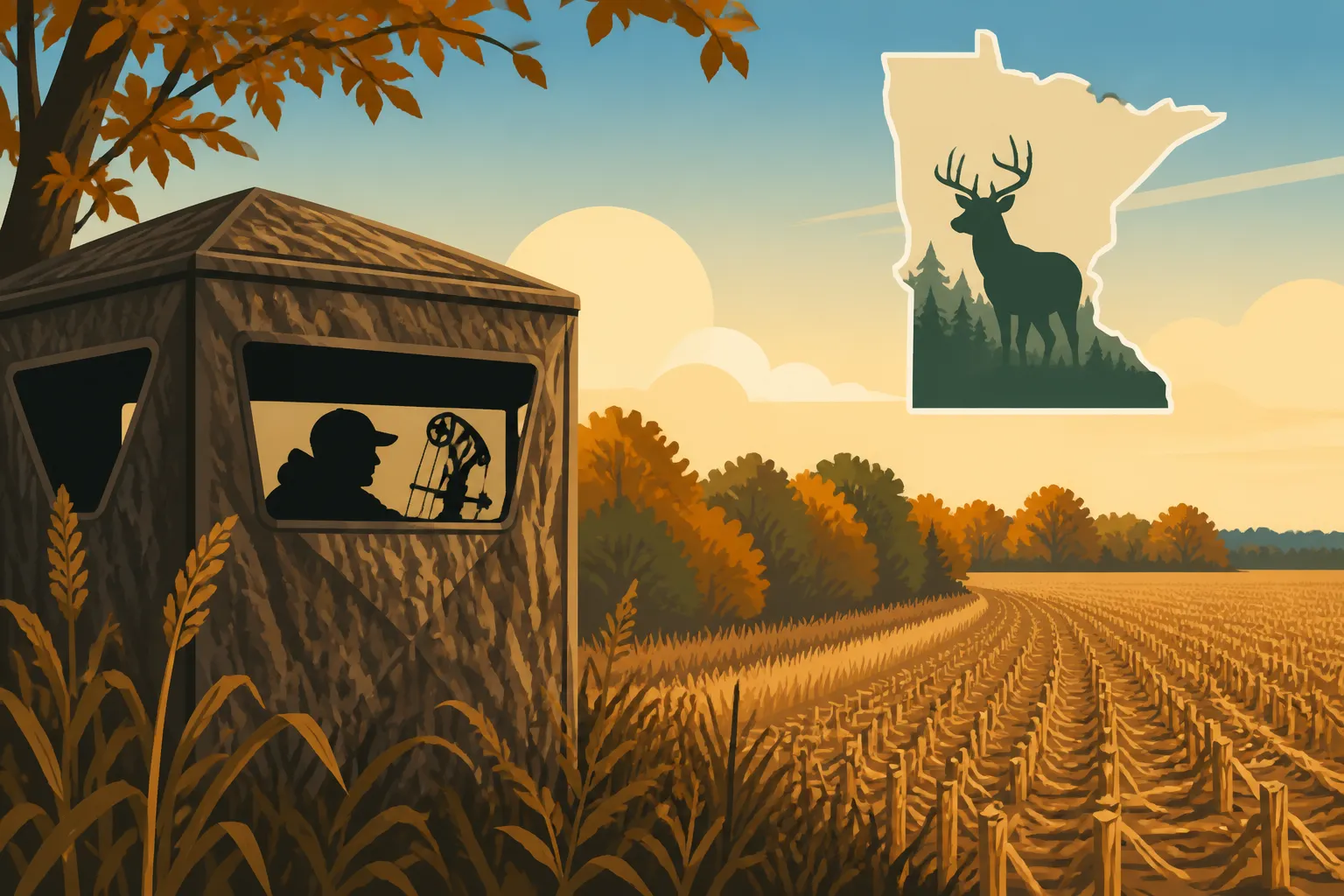
Field edges in Minnesota, whether they border vast cornfields, soybean plots, or even smaller food plots on public land, are absolute magnets for deer. They offer a reliable food source, often providing a clear transition point between bedding cover and feeding areas. But the open nature of these environments presents a huge challenge: a distinct lack of natural cover. That's where a well-placed and properly set-up ground blind becomes indispensable.
Overcoming the Lack of Natural Cover
Let's be real, you can't always find a perfect ambush spot on a field edge. Sometimes, it's just a fence line, a few scattered brush piles, or a single scraggly oak tree that offers minimal concealment. Trying to hide in these situations, especially when deer are on high alert, often results in them spotting your silhouette or detecting your movement long before you get a shot opportunity. A ground blind provides a portable, self-contained concealment system that you can put exactly where you need it. It breaks up your human outline, shields you from the elements, and allows for more comfortable and less restricted movement inside. For those late season hunts when deer are hammering cut cornfields, but the surrounding timber is bare, a blind can be the only way to effectively hunt those prime spots.
Managing Wind and Scent Control
Wind is the hunter's constant nemesis, and on open field edges, it can feel particularly tricky. Your scent carries far and wide, and even the slightest swirl can give you away. Ground blinds, while not scent-proof, do offer a distinct advantage in managing your scent cone. The fabric acts as a partial barrier, somewhat containing your scent and reducing its direct dispersal compared to sitting exposed. You still need to play the wind, absolutely, but a blind can help mitigate minor shifts or eddies. Furthermore, many blinds are designed with multiple window configurations, allowing you to open only the necessary shooting lanes while keeping other sides closed, further minimizing outward scent dispersal. Combining a good quality blind with your diligent scent control regimen, like scent-eliminating sprays or ozone treatments, can make a significant difference.
Comfort for Longer Sits and Diverse Weather
Minnesota weather is, shall we say, unpredictable. From warm early archery mornings to bone-chilling late-season rifle hunts, you can experience it all. Sitting still for hours in a flimsy chair, exposed to rain, wind, or snow, is not only miserable but makes it incredibly difficult to remain focused and motionless. A ground blind offers a remarkable level of comfort and protection from the elements. This isn't just about luxury; it's about endurance. The ability to sit comfortably, perhaps with a small heater in colder temps or out of the direct sun on warmer days, means you can stay on stand longer, increasing your odds. You can also discreetly shift positions, grab a thermos of coffee, or check your phone (quietly, of course!) without fear of spooking every deer within a quarter-mile. This increased comfort is especially beneficial when introducing new hunters or youth to the sport, helping them endure those long sits and stay engaged.
Choosing the Right Ground Blind for Field Edge Hunting
Selecting a ground blind isn't just about grabbing the cheapest one off the shelf. You need a blind that can stand up to Minnesota's elements, offer effective concealment, and be practical for your hunting style. There are several factors to consider, from size and material to portability and window configurations.
Size and Portability Considerations
When you're hunting field edges, sometimes you'll be able to drive right up to your spot, but often, you'll be packing in your gear a fair distance. If you're planning on covering a lot of ground on public land, searching for that perfect field edge overlooked by others, portability becomes paramount. Lighter blinds, often with backpack-style carrying cases, are a godsend. However, don't sacrifice too much interior space for portability, especially if you plan to hunt with a crossbow, a firearm, or bring a buddy or a youth hunter. A blind that's too cramped will lead to uncomfortable, noisy movements and missed opportunities.
Consider how many people will hunt from the blind. A single-person blind is generally quicker to set up and lighter to carry. A two- or three-person blind offers more room for gear, an extra hunter, or simply more space to maneuver a long gun or bow. For those hunting specific field edge pinch points on private land where a long-term setup is feasible, a larger, more permanent blind might be an option, but for general field edge hunting, pop-up hub-style blinds offer the best balance.
Camouflage Patterns and Material Durability
The effectiveness of your ground blind hinges significantly on its camouflage pattern. While any pattern will break up your outline, choosing one that matches the typical foliage around Minnesota field edges is crucial. Think about what kind of field you're hunting – a standing cornfield will call for a different pattern than a cut soybean field with dry stubble, or a field bordered by oak and aspen. Many manufacturers offer versatile patterns that blend well in various environments, incorporating natural greens, browns, and grays. Reading Aerial Photos for Big Woods Deer can help you scout the surrounding vegetation to pick the best pattern.
Durability is another non-negotiable factor. Minnesota weather can be brutal. Look for blinds made from heavy-duty, water-resistant polyester or similar synthetic fabrics. Reinforced stitching, strong hub mechanisms, and robust zippers are indicators of quality. You don't want your blind tearing in a strong gust of wind or leaking during a mid-day rain shower. Some blinds even come with a black interior coating to eliminate internal glare and prevent your silhouette from showing through, which is a subtle but very important feature for field edge hunting where deer often have a clear view.
Window Configurations and Shooting Lanes
The windows on your ground blind are your eyes and your shooting lanes. How they're designed can make or break your hunt. Field edge hunting often requires shots at varying distances and angles as deer move along the edge or enter the field. Look for blinds with versatile window systems – silent mesh panels that can be opened or closed quickly, zippers that don't snag, and multiple shooting ports. Some blinds feature a 270 or 360-degree view, which is fantastic for field edges where deer can approach from any direction.
It's also important to consider the height of the windows. If you're primarily bowhunting, ensure the windows are tall enough to allow for a full draw without your bow limbs hitting the roof or window frame. For firearm hunters, a lower window might be sufficient, but flexibility is always key. Silent window closures, such as magnets or quiet hooks, are paramount. The last thing you want is a loud rip of Velcro or a squeaky zipper alerting that mature buck you've been watching for twenty minutes.
Strategic Placement and Setup for Maximum Concealment
Setting up your ground blind correctly on a field edge is an art form. It's not just about finding a spot; it's about integrating the blind into the landscape to become virtually invisible to incoming deer. Poor placement can turn your blind into a giant, deer-spooking billboard.
Identifying Key Travel Corridors and Pinch Points
Deer don't just randomly wander out into a field. They often use specific routes, especially when transitioning from bedding areas to feeding grounds. On field edges, these routes might be subtle changes in terrain, old logging roads, brush lines, or even dips and swales that offer a bit of cover. Use scouting tools like GoHunt's mapping features to identify these potential travel corridors and pinch points where natural cover funnels deer movement. Look for fresh tracks, droppings, and rub or scrape lines along the field edge. These are clear indicators of high deer activity.
When placing your blind, think about where these deer are most likely to enter the field or walk along its edge. Set up slightly back from the actual edge, perhaps 10-20 yards into the timber or brush line, to blend in better with the background. Avoid placing your blind directly on a ridge or skyline where your silhouette will be obvious. Instead, try to tuck it into a natural depression, behind a cluster of trees, or in line with a prominent feature that breaks up its outline. Remember, deer are constantly scanning their surroundings for anything out of place.
Optimizing Wind Direction and Sun Position
Wind direction is paramount, especially on open field edges. Always set up with the prevailing wind in mind, ensuring your scent is blowing away from where you expect deer to approach or travel. While a blind can help mitigate some scent, it's not a magic bullet. Using a wind checker frequently during scouting and on the day of the hunt will confirm your setup is safe. It's often better to sacrifice a slightly "perfect" shooting lane for a completely safe wind direction. If you're on public land, consider how Hunting Pressure on Minnesota Public Land might influence deer movement and how the wind might carry your scent to other hunters or, more importantly, to the deer being pushed around.
Sun position is another crucial, often overlooked, factor. The sun's glare, both in the morning and evening, can create harsh shadows or even illuminate the inside of your blind, making you visible. If possible, position your blind so the sun is either directly behind it or off to the side, preventing it from shining directly into your shooting windows. This also helps you see deer better without squinting into the sun. On morning hunts, place the blind with the rising sun at your back; for evening hunts, have the setting sun at your back. This creates an optical advantage, often putting deer in full sunlight while you remain in shadow.
Brushing In Your Blind for Unbeatable Camouflage
You can buy the most advanced camo pattern on the market, but if your blind stands out like a neon sign, it's useless. Brushing in your ground blind is arguably the single most important step after selecting your location. It integrates the blind into its surroundings, making it a natural part of the landscape rather than an obvious intruder. Brushing In a Blind on a Field Edge is an art form that pays dividends.
Gathering Natural Materials from the Area
The key to effective brushing in is to use materials found exactly where you're hunting. Don't bring in cedar boughs if you're set up next to a field of dead sunflowers. Deer are incredibly observant, and anything that looks out of place will put them on high alert. Before you even set up your blind, take a few minutes to walk around your chosen area and gather materials. Think about what's naturally there: dead grass, fallen branches, corn stalks, leafy branches from nearby saplings (if permitted and you're not damaging live trees), or even cattails if you're near a marshy edge.
Collect a variety of materials – some taller pieces to break up the top edges of the blind, and smaller, denser pieces to fill in gaps and add texture. The goal is to make the blind disappear, not just be covered. This often means working with the natural contours of the land, piling material around the base, and weaving branches into the blind's loops (many quality blinds have these for this very purpose).
Techniques for Blending the Blind Naturally
Once you have your materials, start from the bottom up. Pile dead leaves, grass, and smaller debris around the base of the blind. This helps to eliminate that tell-tale "hard edge" where the blind meets the ground. Then, start working your way up the sides. Weave in longer branches and stalks, making sure to vary their angles and densities. Think like a deer looking at the blind: are there any straight lines? Any unnatural voids?
Don't just lean branches against the blind; try to interlock them or tuck them into the fabric loops so they stay put, even in a strong breeze. Pay special attention to the corners and top edges, as these are often the most difficult to blend and the most obvious to an approaching deer. Some hunters even go as far as throwing a handful of mud or dirt on the fabric to help it blend, though this isn't always necessary with a good camo pattern. The more time you spend, the more invisible your blind will become. If you can walk away and struggle to spot your own blind from 50 yards, you've done a great job.
Consider the time of year you'll be hunting. Early season means green foliage; late season means brown and gray. Plan accordingly, and be prepared to refresh your brushing materials if your hunt extends into a different part of the season.
| Blinding Material Type | Best Use Case | Pros | Cons |
|---|---|---|---|
| Corn Stalks | Cut cornfields, agricultural edges | Excellent vertical cover, blends perfectly | Can be brittle, hard to secure in strong winds |
| Oak/Aspen Branches | Forested edges, transition zones | Good density, natural look, readily available | Can be heavy, requires trimming, leaves fall in late season |
| Cattails/Tall Grass | Marshy edges, wet field borders | Very natural, lightweight, good texture | Not very dense, can get brittle/blow away easily |
| Pine/Cedar Boughs | Evergreen edges, northern forests | Great scent, excellent density, durable | Can be heavy, might stand out in deciduous areas |
| Dead Leaves/Debris | Around the base, filling gaps | Easy to gather, eliminates hard edges | Offers little vertical cover, blows away easily |
Dealing with Challenges: Wind, Weather, and Deer Pressure
Hunting from a ground blind on a Minnesota field edge comes with its own set of challenges, beyond just initial setup. Wind, unpredictable weather, and wary, pressured deer can all test your resolve and tactics. Being prepared for these obstacles is key to success.
Battling High Winds and Rain
Minnesota is no stranger to strong winds, especially in open country, and a ground blind can become a sail if not properly secured. The constant flapping of fabric in a strong wind is not only noisy and distracting but can also make the blind appear unnatural to deer. Always use the provided stakes and guy lines to anchor your blind firmly. Many hunters also bring additional, heavier-duty stakes or even tie their blind off to a nearby tree or fence post for extra security. A blind that moves excessively in the wind is an instant red flag for deer.
Rain, sleet, and even light snow are also common. While a quality blind will be water-resistant, prolonged downpours can still find their way in. Consider bringing a small tarp to place under your chair and gear to keep things dry. If the weather is truly miserable, remember the comfort benefits discussed earlier – staying dry and relatively warm inside a blind beats sitting exposed every time. For keeping a muzzleloader dry in December, a blind can be invaluable, shielding it from lake-effect snow or freezing rain.
Adapting to Pressured Deer Behavior
Deer that spend time near field edges, particularly on public land or heavily hunted private ground, quickly become accustomed to human activity. They’ll adapt by becoming more nocturnal, moving during low light, or simply avoiding wide-open spaces during daylight hours. This means your blind setup needs to be absolutely flawless. A blind that's newly erected and not brushed in will be immediately suspect. Ideally, set up your blind several days or even weeks before you plan to hunt, giving deer time to get used to its presence.
When hunting pressured deer, consider your entry and exit routes meticulously. Walking across an open field edge at dawn or dusk will undoubtedly alert deer. Use existing cover, like ditches, timber strips, or brush lines, to sneak in and out undetected. If possible, have someone drop you off and pick you up to minimize foot traffic. Hunting Pressure on Minnesota Public Land is a real factor, and your ability to remain unseen getting to and from your stand is just as important as your concealment while in it. Using a blind on a field edge can also allow you to hunt during times when deer are only moving at very low light, giving you an edge during those critical first and last minutes of legal shooting light.
Making the Shot from a Ground Blind
Once you've done all the hard work of scouting, setting up, and brushing in, the moment of truth arrives: taking the shot. Shooting from a ground blind, especially with a bow, requires some specific considerations to ensure a clean, ethical kill.
Practicing Your Shot with Hunting Gear
It might sound obvious, but you'd be surprised how many hunters forget to practice shooting from their actual hunting setup. Shooting your bow or rifle from a standing position on the practice range is very different from making a shot while seated in a confined ground blind, especially when your heart is pounding. Before the season, set up your blind in the backyard or a safe shooting area. Sit on your hunting chair and practice drawing your bow or shouldering your rifle. Pay attention to any obstructions – do your bow limbs hit the roof? Does your rifle barrel clear the window sill? Are your shooting sticks positioned correctly?
Practice at various distances and angles, mimicking the shots you might get on a field edge. This will build muscle memory and confidence. For archery, ensure you can come to a full draw smoothly and quietly without bumping anything inside the blind. Make sure you're comfortable with both broadside and quartering-away shots, as deer rarely present a perfect, stationary target. The quiet interior of a blind can also amplify small noises, so focus on silent movements.
Understanding Shooting Lanes and Obstructions
Even after meticulous setup, the internal structure of a ground blind and the brushing you've added can create unexpected obstructions. Before legal shooting light, take time to quietly open your shooting windows and visually identify all potential shooting lanes. Identify any small branches or pieces of brushing material that might interfere with your arrow or bullet's flight path. Trim or move anything that could deflect your shot. A tiny twig that seems insignificant can send an arrow wildly off course.
For bowhunters, be acutely aware of the mesh covering the windows. While designed to be shot through, some mesh can slightly impede arrow flight, especially with certain broadhead types. It's always best to shoot through an open window if possible. If you must shoot through mesh, practice extensively with your actual hunting broadheads to understand any potential impact. For firearm hunters, ensure your barrel has ample clearance and isn't resting on the window sill, which can affect accuracy and create a loud noise that scares deer.
Using a stable shooting rest, whether built into your chair or a portable bipod or shooting stick, is highly recommended from a ground blind. This maximizes accuracy, especially for those longer shots often presented on field edges. With GoHunt's detailed maps, you can even pre-range potential shot locations from your blind, marking them on your digital map to quickly verify distances when a deer steps out. This is especially helpful when Sighting In a Rifle for Minnesota Woods Ranges versus wide-open field edges.
Maintaining and Storing Your Ground Blind
Your ground blind is an investment that, with proper care, can last you many seasons. Neglecting it after the hunt can lead to premature wear and tear, making your next season's setup a hassle.
Cleaning and Drying After Each Hunt
One of the easiest ways to ruin a ground blind is to pack it up wet and forget about it. Moisture is the enemy, promoting mildew, degrading fabrics, and corroding metal components. After each hunt, even if it didn't rain, always set up your blind (or at least unfold it mostly) at home to allow it to thoroughly air dry. Hang it in a garage or basement where there's good airflow, away from direct sunlight which can degrade the camo pattern over time.
Once dry, give it a good shake to remove any loose dirt, leaves, or bugs. If it's particularly muddy or stained, gently wipe it down with a damp cloth and mild soap, then rinse and dry completely. Pay special attention to zippers and hubs, as dirt can cause them to seize up. Lubricate zippers periodically with a silicone spray. Inspect the fabric for any small tears or abrasions and patch them immediately with a blind repair kit to prevent them from worsening.
Proper Storage for Longevity
When the season is over, and your blind is clean and bone-dry, it's time for proper storage. Most pop-up blinds come with a carrying bag, but sometimes these bags are a tight fit. Don't force your blind into a bag that's too small, as this can stress the fabric and hub rods. If your original bag is too small or damaged, invest in a slightly larger, more durable replacement.
Store your blind in a cool, dry place, out of direct sunlight and away from extreme temperatures. A shed, garage, or even a large closet works perfectly. Avoid storing it directly on a concrete floor, as moisture can wick up. Placing it on a pallet or shelf is ideal. Periodically, you might want to unfold it and check it again, especially if it's been stored for many months. This will ensure no critters have made a home in it and that it's still in prime condition for your next season of Hunting Minnesota Farmland Deer or any other field edge adventures.
Disclaimer
This article is for general informational purposes only and does not constitute professional advice. Laws, prices and regulations vary by location and change over time. Consult a qualified professional for guidance on your specific situation.