Rangefinders Under 100 Yards
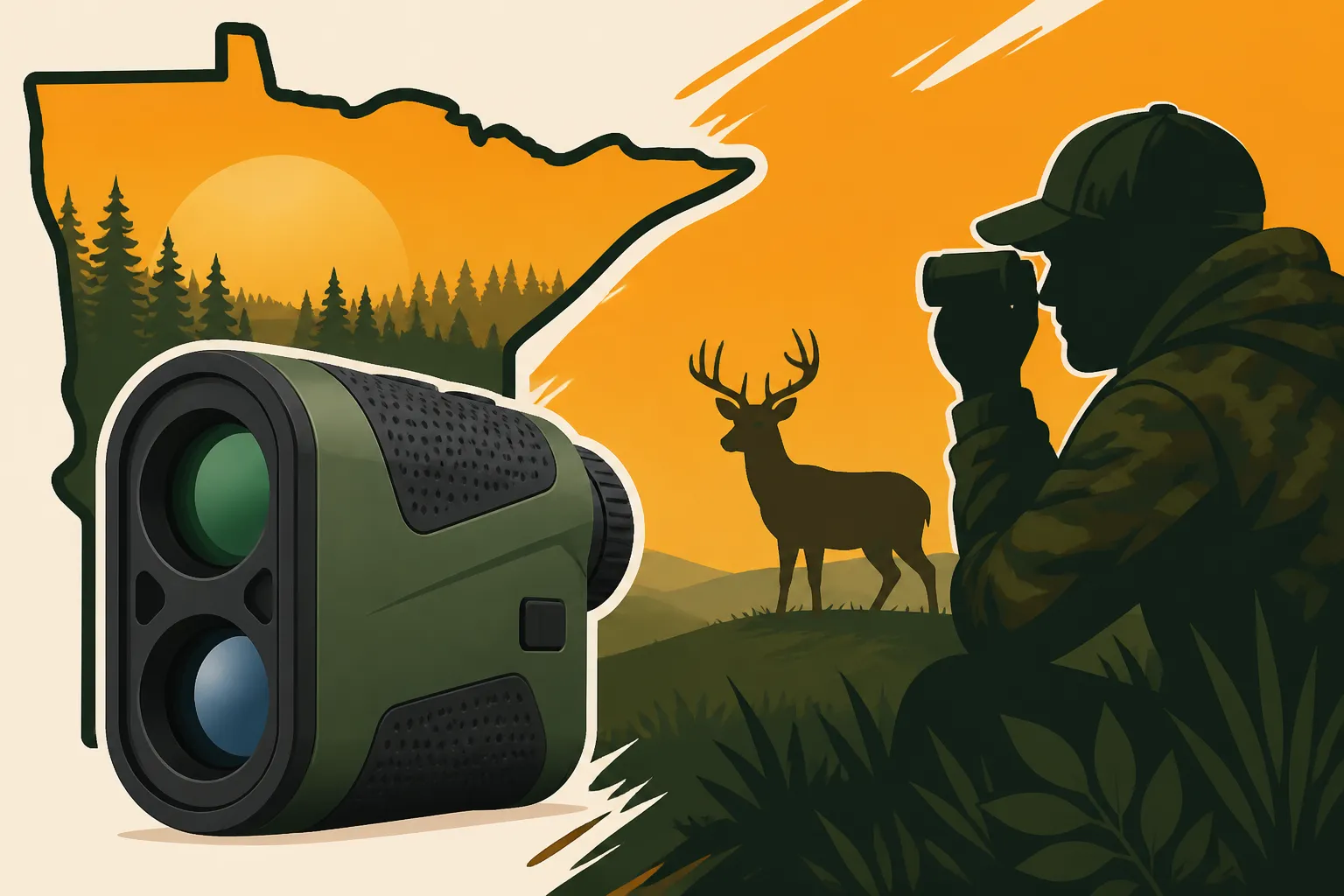
It's a common frustration in the hunting world: everyone tells you that you need the latest, most expensive gear to be successful, but your wallet often tells a different story. If you're a Minnesota hunter looking to get precise range readings without emptying your bank account, especially for those close-to-mid-range shots common in our woods and fields, this guide is for you. We're going to dive deep into how a budget-friendly rangefinder can be a perfectly capable tool, what to realistically expect from it, and how to make it work effectively for your hunting style, particularly for those crucial distances under 100 yards.
Why a Budget Rangefinder Still Makes Sense for Minnesota Hunters
Let's be real: the sticker shock of some top-tier rangefinders can make you question if you even need one. But for many Minnesota hunting scenarios, especially when you're dealing with thick cover, rolling hills, or simply stalking through the timber, a modest rangefinder that performs reliably under 100 yards is often more than enough. You don't always need to shell out hundreds of dollars for features designed for 1000-yard shots in open country when your longest shot might be 75 yards through the popple.
The Myth of Needing High-End for Close Shots
There's a prevailing idea that if you don't buy the most advanced, laser-accurate rangefinder, you're somehow handicapping yourself. But in Minnesota, where many of us are hunting whitetails in dense hardwoods, cattail sloughs, or even thick tamarack swamps, most of our shots are well within 100 yards. Think about it: how often do you realistically get a clear, ethical shot opportunity much beyond that in heavy cover? Very rarely. The terrain dictates the shot, not just your equipment.
This means that a rangefinder that reliably gives you an accurate reading within, say, 10 to 150 yards, often for a price under a hundred bucks, is perfectly adequate. You're not going to be ranging elk across a vast prairie or antelope on the plains. You're looking for that buck easing through a spruce thicket at 40 yards, or a doe browsing along a field edge at 80. For these distances, the minor differences in precision offered by a high-end unit simply don't translate into a meaningful advantage. Many hunters feel pressured to keep up with the latest tech, but sometimes, simple and effective is truly the best route.
Essential Features You Can Expect in the Sub-$100 Category
When you're looking at rangefinders in the budget category, typically under $100, you're going to find devices that focus on the core function: providing a distance measurement. You won't get ballistic calculators, environmental sensors, or advanced angle compensation that adjusts for uphill or downhill shots. And that's okay!
What you can expect is a device that will give you a clear, digital readout of the linear distance to your target. Many will also offer a "scan mode," which is incredibly useful for sweeping an area to get multiple readings as an animal moves, or to quickly identify distances to various landmarks around your stand. Some might even have a basic archery mode that provides a horizontal equivalent distance, which can be helpful if you're bowhunting from a Treestand Setups in Minnesota Hardwoods on a steep incline, though this feature might be less common at the very lowest price points. The optics might not be crystal clear like a high-end binocular, but they'll be good enough to see your target and aim the reticle. Focus on reliability for basic distance measurement, and you'll find plenty of good options that fit the bill.
Understanding Limitations and Managing Expectations
Just like with any piece of gear, especially when you're working with a tighter budget, it's crucial to understand the limitations of what you're buying. A budget rangefinder isn't going to perform identically to a top-shelf model, but that doesn't mean it's not a highly effective tool for its intended purpose. Setting realistic expectations will prevent disappointment and help you get the most out of your purchase.
Accuracy and Consistency at Shorter Ranges
One of the biggest concerns hunters often have with budget rangefinders is accuracy. While a $500 rangefinder might boast accuracy to within half a yard at 800 yards, a sub-$100 model is typically rated for +/- 1 yard at ranges up to 200-300 yards. For your average Minnesota hunting shot, which is often under 100 yards, this level of precision is more than adequate. An extra yard or two at 50 yards is not going to make a difference in your point of impact for a deer-sized target.
The consistency can sometimes be where budget models show their true colors. In perfect conditions, they might be spot on, but extremely cold temperatures, heavy fog, or low battery life can sometimes cause erratic readings or slower acquisition times. However, for most clear, daytime hunting conditions, and especially at those shorter distances, you'll find they are surprisingly reliable. The key is to test it thoroughly in varying conditions before opening day. Trusting your gear comes from understanding its capabilities and its quirks.
Durability and Weather Resistance Trade-offs
This is perhaps the most noticeable area where budget rangefinders will differ from their premium counterparts. Many high-end rangefinders boast military-grade shockproofing, complete waterproofing, and nitrogen purging to prevent internal fogging. A sub-$100 rangefinder will very likely not have these features. You might find "weather-resistant" or "splash-proof" claims, but rarely truly "waterproof" for submersion.
This means you'll need to be a bit more mindful of how you handle and store your rangefinder. Don't leave it exposed to a torrential downpour, and consider keeping it in a secure, easily accessible pocket to protect it from bumps and drops. If it does get wet, make sure to dry it thoroughly at camp. Condensation can also be an issue if moving from a warm cabin to cold air, so be prepared for potential Fogged Optics in Minnesota Cold. While they may not withstand the same abuse as a ruggedized model, with a little care, a budget rangefinder can still provide years of service in the Minnesota elements. Resources that compile user reviews and tips, sometimes found on hunting forums or platforms that aggregate gear information like GoHunt, can offer insights into the real-world durability of specific budget models.
Practical Application for Minnesota Hunting Scenarios
So, you've got your budget rangefinder. How do you actually use it to your best advantage when you're out in the Minnesota woods? It's all about proactive ranging and understanding your typical shooting lanes. These devices truly shine when you integrate them into your overall hunting strategy, especially when those crucial distances are all within that 100-yard sweet spot.
Treestand and Ground Blind Setups
From a fixed position like a treestand or a ground blind, your rangefinder becomes an invaluable tool for pre-hunt scouting and preparation. Before legal shooting light, or even days before the season when you're setting up your stand, take the time to range various landmarks. What's the distance to that oak tree to your left? How far is that fallen log in front of you? What about the edge of the thick brush where you expect deer to emerge? Mark these distances in your memory or even on a small piece of tape on your bow or rifle stock.
This proactive approach eliminates guesswork when a deer finally steps out. You don't want to be fumbling with your rangefinder, trying to get a reading, when that big buck finally offers a shot. By having key ranges already locked in, you can quickly assess the situation and make an ethical shot. This is especially vital when hunting from a fixed position, whether it's an elevated perch in the hardwoods or a carefully brushed-in blind on a field edge, as detailed in Using a Ground Blind on Minnesota Public Land. Knowing your lanes makes all the difference.
Still-Hunting and Spot-and-Stalk Situations
For the active hunter who prefers to be on the move, covering ground, a budget rangefinder is still incredibly useful. When you're Still-Hunting Minnesota Big Woods, you're constantly evaluating your surroundings, looking for sign, and anticipating where a deer might appear. When you spot an animal, or even a promising patch of cover where one might be bedded, a quick range can confirm if a shot is feasible.
This isn't about ranging every single tree you walk past, but rather using it as a verification tool when you're in a potential shooting situation. If you're slipping through the timber and suddenly see a deer at what you estimate to be 60 yards, a quick range confirms that distance, allowing you to confidently make the shot or adjust your approach. It’s about reducing variables, especially when adrenaline is high. The speed of acquisition on many budget rangefinders is perfectly adequate for these kinds of quick checks, as you’re unlikely to be ranging beyond their optimal short-to-mid range capabilities.
Maximizing Your Budget Rangefinder's Performance
Getting a rangefinder for under $100 is a smart move for many Minnesota hunters, but merely owning one isn't enough. To truly leverage its potential, you need to treat it right, understand its nuances, and most importantly, practice with it. Just like any other piece of gear, familiarity breeds confidence and effectiveness in the field.
Practice, Practice, Practice
The most critical step to maximizing any rangefinder, especially a budget-friendly one, is consistent practice. Don't wait until opening morning to pull it out of the box. Take it with you on scouting trips, even if it's just to the backyard or a local park (where legal). Range trees, fences, sheds, and anything else you can think of. Get a feel for how quickly it acquires a target, how stable you need to be, and what the display looks like in different lighting conditions.
This consistent interaction builds muscle memory and confidence. You'll learn its quirks, like if it struggles with very dark targets or if it's slower in dim light. By knowing these things beforehand, you can adapt in the field. Using mapping apps like GoHunt can also help you scout digitally and identify key topographical features or potential shooting lanes, which you can then verify with your rangefinder in person. This combination of digital planning and physical practice is a powerful way to prepare for the season. Remember, a rangefinder is just a tool; it's your proficiency with it that truly matters.
Essential Accessories and Care Tips
Even with a budget rangefinder, a few simple accessories and care routines can significantly extend its life and improve its performance.
First, a good lanyard or tether is non-negotiable. Many budget rangefinders are lightweight and small, making them easy to drop. A lanyard will prevent it from hitting the forest floor if it slips from your hand, which can be the death knell for less durable optics.
Second, always carry spare batteries. Cold weather, like what we often experience during Muzzleloader Tactics in December Cold or Cold-Weather Sitting Strategy in Minnesota, can drain batteries faster. A dead battery makes your rangefinder useless. Check the battery type your specific model uses and keep a fresh set in your pack.
Third, keep the lenses clean. Dust, dirt, and fingerprints can significantly degrade performance, making it harder for the laser to read distances accurately and affecting the clarity of the view. A soft lens cloth or lens pen is a small investment that makes a huge difference. Avoid using your shirt or harsh chemicals.
| Feature | Budget Rangefinder (Under $100) | Premium Rangefinder ($300+) |
|---|---|---|
| Max Range | ~200-600 yards (effective hunting range often <150) | ~800-2000+ yards |
| Accuracy (Sub-100Y) | +/- 1 yard (reliable) | +/- 0.5-1 yard (highly precise) |
| Angle Compensation | Often absent or basic (e.g., archery mode) | Advanced ballistic solutions, angle compensation, environmental data |
| Durability | Weather-resistant (splash-proof), care required for longevity | Fully waterproof, fogproof, shockproof (ruggedized) |
| Optics Quality | Decent for ranging, functional for target acquisition | Bright, clear, excellent low-light performance |
| Scan Mode | Common and effective | Common, often faster and more consistent |
| Display | Basic LCD, sometimes illuminated | Advanced OLED, adjustable brightness, custom reticles |
| Size/Weight | Compact, lightweight | Varies, some compact, some larger with advanced features |
By following these simple steps, your affordable rangefinder will be a reliable companion for many seasons in the Minnesota woods. Whether you're hanging a stand, still-hunting, or just confirming a shot, having that precise distance information at your fingertips, without having spent a fortune, is truly liberating.
Disclaimer
This article is for general informational purposes only and does not constitute professional advice. Laws, prices and regulations vary by location and change over time. Consult a qualified professional for guidance on your specific situation.