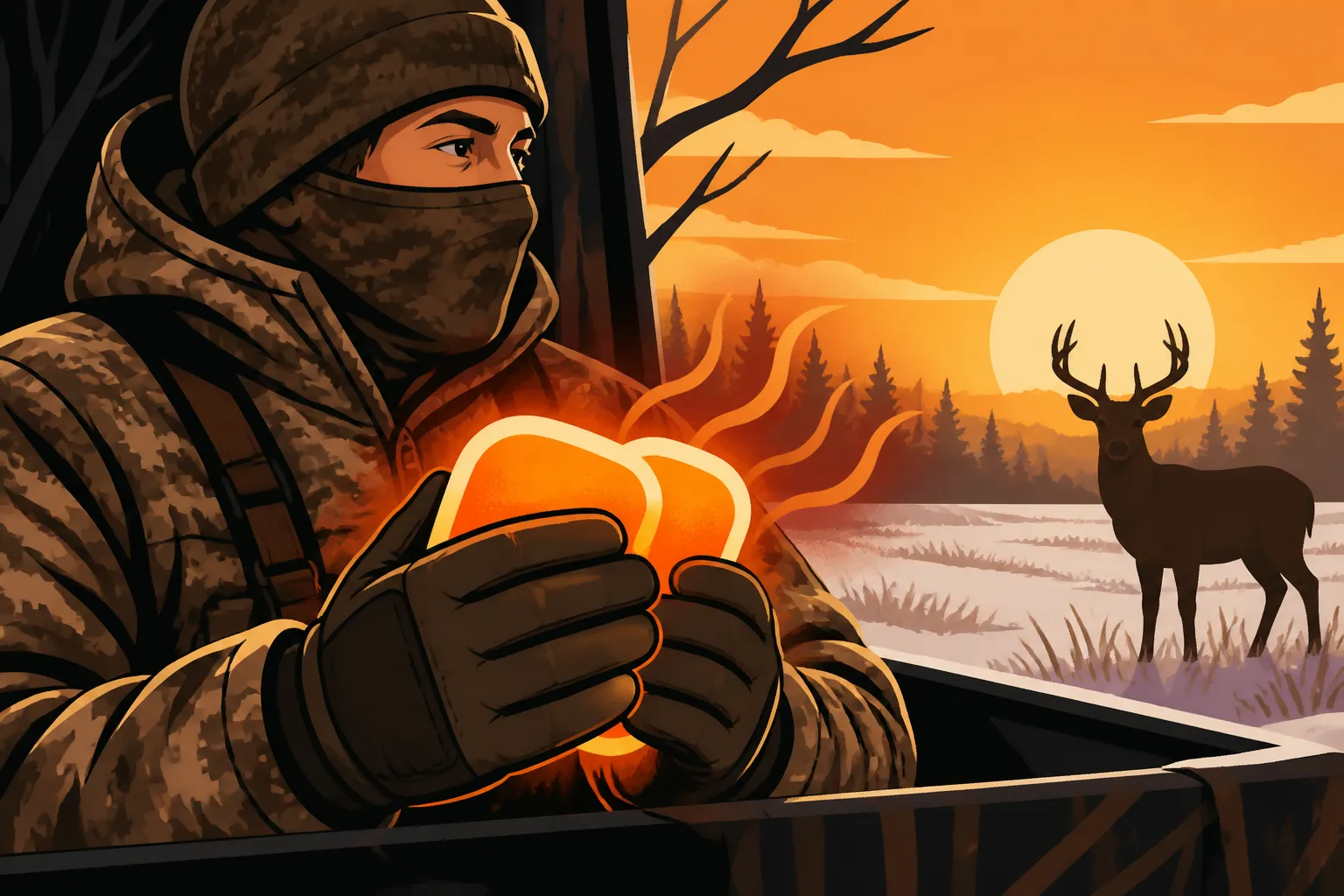
Hand Warmers That Last a Full Sit
There’s nothing quite like the biting cold of a Minnesota autumn or winter morning when you’re perched silently in a treestand, or tucked into a blind, waiting. Your body might be bundled, but inevitably, your fingers start to tingle, then ache, turning that hopeful anticipation into a painful test of endurance. This guide is all about tackling that common frustration head-on, exploring the best hand warmer solutions to keep you comfortable and focused for your entire sit, ensuring cold hands don't send you packing early or, worse, ruin a shot opportunity.
The Frustration of Freezing Fingers on a Long Sit
We've all been there. You're up before dawn, layered up, thermos filled, and filled with optimism. You settle into your spot, the woods slowly wake up, and for the first hour or two, things are great. Then, the real cold starts to seep in, usually targeting your extremities first. Your toes might feel it, but often, it's your hands that suffer the most, turning into frozen claws that feel utterly useless. This isn't just about comfort; it genuinely impacts your ability to hunt effectively and safely.
Why Cold Hands are More Than Just Uncomfortable
Cold hands do far more than just make you miserable. They steal your dexterity, making simple tasks like unzipping a pocket, adjusting your scope, or even gripping your bowstring or rifle stock feel like monumental efforts. Imagine that prime whitetail finally steps out, perfectly broadside, but your fingers are so stiff you can't properly manipulate your safety or get a clean, smooth trigger pull. That's a gut-wrenching scenario we all dread, and it's precisely what cold, numb hands can lead to. Your focus shifts from the deer to the burning sensation in your fingertips, pulling you out of the moment and making you less effective as a hunter.
The Shortcomings of Disposable Warmers for All-Day Hunts
For years, those little air-activated disposable hand warmers were the go-to. They're cheap, readily available, and provide a quick hit of warmth. But let’s be honest, for a true all-day sit in chilly Minnesota weather, they often fall short. You might get a good 4-6 hours out of them, but then the heat fades, leaving you scrambling to replace them or, worse, resigned to the cold. Carrying a dozen packets for a full day means bulky pockets, and the environmental impact of all that waste isn't ideal either. While great for a quick boost or shorter hunts, they rarely offer the sustained, reliable warmth needed for those truly long waits in the woods.
Understanding Long-Lasting Hand Warmer Technologies
Thankfully, advancements in technology and a renewed appreciation for older methods mean we have some fantastic options that go far beyond the typical disposable packet. Whether you're after a quick heat-up or something that will keep you toasty from sunup to sundown, there's a solution that fits your hunting style and budget. The key is knowing what's out there and how each type performs when the mercury drops.
Reusable Chemical Hand Warmers: The Classic Choice, Evolved
While many disposable warmers fade quickly, some companies have upped their game, offering larger, more robust air-activated chemical warmers designed for extended use. These still work on the same principle: iron powder, salt, carbon, and water reacting with oxygen to produce heat. The difference is often in their size and formulation, allowing them to sustain heat for 10, 12, or even 18+ hours. They're activated by simply opening the package and exposing them to air. They're still single-use, but their extended duration means you might only need one or two for a full day afield, significantly cutting down on the mid-hunt scramble. Always check the packaging for the advertised duration when you pick these up.
Many hunters will stash these larger chemical packs in a muff or a deep pocket, giving them a consistent source of warmth without needing to fuss with fuel or batteries. They’re great for Cold-Weather Sitting Strategy in Minnesota where you really don’t want to be making noise or fumbling with gear. While not truly "reusable," their extended life makes them a much more viable option for those long stints on stand compared to their smaller, less enduring cousins.
Catalytic Lighter Fluid Warmers: Old School Reliability
Now, if you want something that truly lasts and provides a consistent, robust heat, many seasoned hunters swear by catalytic lighter fluid warmers. Think Zippo or similar brands. These operate on a completely different principle: a small amount of lighter fluid is poured into a wicking material, and a platinum catalytic burner ignites the vapor without an open flame. The result is flameless heat that can last for an astonishing 12 to 24 hours on a single fill, depending on the model and fuel amount. They radiate a serious amount of heat, making them incredibly effective in frigid conditions.
The pros are clear: incredibly long-lasting, consistent, and powerful heat. They don’t rely on batteries that might die in the cold, a huge plus when you’re deep in the woods during Muzzleloader Tactics in December Cold. The cons include needing to carry lighter fluid (which can be messy if it leaks), a faint smell of lighter fluid (though most report it dissipates quickly after the initial light-up), and the need to light them with an actual flame before they start their flameless burn. You also can’t just turn them off; they burn until the fuel is gone or oxygen is deprived. Despite these minor inconveniences, many hunters consider their reliability and intense warmth an absolute game-changer for serious cold-weather hunting.
Rechargeable Electric Hand Warmers: Modern Convenience
For the tech-savvy hunter who values convenience and adjustability, rechargeable electric hand warmers have become incredibly popular. These compact devices are essentially small batteries wrapped in a heating element. They typically offer multiple heat settings, allowing you to dial in the perfect temperature, and most importantly, they’re reusable by simply plugging them into a USB charger. Many models also double as portable power banks, which can be a lifesaver for charging your phone or GPS unit when you're relying on apps like GoHunt to navigate Scouting With the Minnesota Recreation Compass App or review satellite imagery from onX Layers for Minnesota Land Status.
The benefits here are substantial: no waste, adjustable heat, and often a dual-purpose charging function. They’re fantastic for Hunting the Minnesota Rut in Early November when you need reliable, on-demand warmth. However, battery life can be a concern in extreme cold, as batteries naturally drain faster at low temperatures. You’ll want to keep them close to your body to conserve power, and investing in a model with a larger battery capacity is wise for all-day excursions. While they might be a higher upfront cost, their reusability and versatility often make them a sound investment over time.
Practical Considerations for All-Day Warmth in Minnesota
Having a good hand warmer is just one piece of the puzzle. How you integrate it into your overall cold-weather strategy makes a huge difference in how effective it truly is. A powerful warmer can still fall short if you're not optimizing its use in the challenging conditions Minnesota often throws at us. Thinking about placement, battery management, and even supplemental gear is crucial for sustained comfort.
Layering and Placement for Maximum Effect
It's not enough to just have a hot hand warmer; you need to keep that heat where it counts and prevent it from escaping too quickly. A common mistake is just holding the warmer in an uninsulated glove. Instead, consider using a good quality hand muff, ideally one with a waterproof exterior and a fleece-lined interior. Drop your catalytic or electric warmer inside the muff, and then slip your hands in. This creates a warm little microclimate that will keep your fingers toasty even with thinner gloves. You might also want to explore different glove and mitten systems. For instance, using thin liner gloves for dexterity, then pulling a warm, insulated mitten over them, with a warmer tucked inside.
Another effective strategy is to place the warmer in a chest pocket or against your core, especially if it's an electric model. This keeps the battery warmer, extending its life, and it can also warm your core blood, which then circulates to your extremities. For a long sit in a Treestand Setups in Minnesota Hardwoods, where you’re relatively stationary, optimizing this heat retention through layering and smart placement is paramount. Don't forget to wear appropriate gloves, like those designed for extreme cold, and consider pairing them with truly insulated Boots for Minnesota Swamps and Snow or Insulated Boots for All-Day Sits to keep your whole body warm.
Battery Management in Cold Weather (for electric)
If you're relying on a rechargeable electric hand warmer, managing its battery life in the frigid Minnesota air is critical. As mentioned, cold temperatures naturally deplete batteries faster. To counteract this, always start with a full charge. When not actively using it, keep the warmer in an inside pocket, close to your body, to maintain its temperature. This helps preserve the battery and ensures it's ready when you need it most. Use the lowest effective heat setting; cranking it to max all day will drain it quickly. Many hunters will even carry a dedicated power bank to recharge their hand warmer (or phone, if it's a dual-purpose device) mid-day.
Think of it like preserving your phone battery when you’re using it for navigation or scouting; every little bit helps. If you're out for an all-day hunt, especially during the colder periods, a larger capacity electric warmer or a backup power bank is a smart addition to your pack. It’s peace of mind, knowing your warmth won't suddenly vanish when that trophy buck finally makes an appearance in the late afternoon.
Fuel and Storage for Chemical and Catalytic Warmers
For chemical warmers, the main consideration is storage before use. Keep them in their sealed packaging until you're ready to activate them. Once opened, they begin to generate heat and cannot be "turned off" easily. Having a few extra packets in a waterproof bag in your pack is always a good idea, just in case one doesn't get as hot as expected or you need a refresher later in the day.
Catalytic warmers require a bit more attention. You'll need to carry a small bottle of lighter fluid (preferably in a secure, leak-proof container) if you plan on refilling it during a multi-day trip or if you're worried about it running out on a particularly long day. It’s generally best to fill it before you head out and light it. Once it's burning, it’s flameless, but still generates heat, so store it in a protective pouch or within a hand muff to prevent accidental burns or damage to clothing. Remember, these can’t be easily shut off, so plan your fuel accordingly for the duration of your hunt. For those quiet, long waits, especially when Saddle Hunting in Minnesota Oaks, a steady, long-burning heat source can make all the difference.
Making Your Choice: A Comparison Table and Real-World Scenarios
Choosing the right hand warmer really boils down to understanding your specific hunting needs, the conditions you'll face, and your personal preferences for convenience versus reliability. There's no single "best" option, but rather the best option for you. Let’s break down the different types and how they might fit into your Minnesota hunting adventures.
| Feature | Disposable Chemical Warmers | Catalytic Lighter Fluid Warmers | Rechargeable Electric Warmers |
|---|---|---|---|
| Duration | 4-18 hours (varies by size) | 12-24 hours | 4-12 hours (varies by setting/model) |
| Heat Output | Moderate to Good | Excellent, very consistent | Adjustable (Low to High), consistent |
| Cost | Low (per packet), higher over time | Moderate upfront, low long-term fuel | Higher upfront, zero long-term fuel |
| Convenience | Open, activate; single use | Fuel, light, burn out | Charge, turn on/off, multiple settings |
| Cold Resilience | Good | Excellent (not battery dependent) | Good (can drain faster in extreme cold) |
| Smell/Noise | None | Faint fuel smell initially | None |
| Portability | Light, many packets needed for long day | Compact, need to carry fuel | Compact, heavier due to battery |
| Additional Use | None | None | Often doubles as a power bank |
Matching the Warmer to Your Hunt Style
Consider the type of hunting you'll be doing. Are you mostly still-hunting, making slow, deliberate movements through the timber for grouse, or are you sitting for hours in a fixed position? For active hunts where you're generating some body heat, a smaller, quicker warming disposable might suffice, or a lower setting on an electric warmer. But for those dedicated, long sits targeting whitetails, especially when Hunting the Peak Rut in Early November when temperatures can plummet, you need sustained warmth.
A catalytic warmer is fantastic for deep cold and long duration, but you have to plan ahead to get it lit and burning before you get to your stand. Electric warmers are great for their on-demand heat and ability to turn them off and on, making them versatile for varying conditions or if you only need warmth periodically. Some of the longer-lasting disposable chemical packets are a good compromise if you want the "set it and forget it" nature of chemical warmth without the fuss of fuel.
Combining Technologies for Ultimate Comfort
Don't feel like you have to pick just one! Many experienced Minnesota hunters will employ a combination of hand warmers to tackle diverse conditions. You might start your day with a catalytic warmer already burning in your hand muff for constant, intense heat. Then, you could have an electric warmer in your pocket, ready to quickly charge your phone or act as a backup heat source if the catalytic one runs out. For really brutal days, some will even tuck a couple of smaller disposable packets into their glove fingers for an extra blast of warmth on their fingertips.
The goal is to maintain comfort and dexterity throughout your hunt, regardless of how long you're out there or how low the temperature drops. Experiment with different options and find what works best for your specific needs. A little preparation and the right hand warmer can truly transform a cold, miserable hunt into an enjoyable and productive day in the Minnesota woods. Don't let cold hands be the reason you punch out early!
Disclaimer
This article is for general informational purposes only and does not constitute professional advice. Laws, prices and regulations vary by location and change over time. Consult a qualified professional for guidance on your specific situation.