Rifle Scope Magnification for Minnesota Deer
Choosing the right rifle scope magnification for deer hunting in Minnesota can feel like a real puzzle. You're trying to anticipate everything from the dense cover of northern forests to the wide-open expanse of a southwestern farm field, all while picturing that fleeting moment when a deer steps out. This guide will help you sort through the options, understand what different magnifications mean for your shot, and ultimately pick a scope that gives you the best advantage in Minnesota's diverse hunting landscapes.
Understanding Magnification Basics for Minnesota Hunting
When you look at a rifle scope, you'll see numbers like "3-9×40" or "4×32." The first number, or range of numbers, tells you about the magnification. "3-9x" means the scope can zoom from 3 times magnification up to 9 times. "4x" means it's a fixed power scope, always magnifying by 4 times. Understanding how this magnification impacts your sight picture is crucial, especially when you consider the varying terrain we hunt across Minnesota.
Fixed Power vs. Variable Power Scopes
For years, many Minnesota hunters relied on fixed power scopes, often a simple 4x or 6x. There's a certain elegance to their simplicity; fewer moving parts often mean greater ruggedness and reliability, which can be a real plus when you're crashing through brush or dealing with freezing rain. With a fixed power scope, what you see is what you get, always the same magnification, always the same field of view. This can be great for someone who hunts a very specific type of cover consistently, like a dense cedar swamp where all shots are expected to be short and fast.
However, the vast majority of modern hunters, especially those chasing deer across Minnesota's varied landscape, opt for variable power scopes. These allow you to adjust the magnification to suit the situation. Picture this: you're sitting in a stand overlooking a narrow logging road, and then a deer slips out on the far edge of a clear-cut 200 yards away. With a variable scope, you can dial down to 3x for a wide field of view if it's close in the timber, or crank it up to 9x to pick apart that distant buck. This versatility is incredibly valuable when you might encounter both close-quarter opportunities and longer shots on the same hunt, which is pretty common across our state. The trade-off is often a slight increase in weight and complexity, and sometimes a higher price tag, but for many, the adaptability is worth it.
The "Sweet Spot" Magnification for Deer
The "sweet spot" for rifle scope magnification isn't a single number; it's more about understanding the common ranges and how they align with typical Minnesota deer hunting scenarios. You'll often hear hunters talking about different zoom ratios and what works best for them.
Let's look at some common ranges:
- 1-4x or 1-6x: These are fantastic for thick brush, heavy timber, or during a deer drive where shots are often up close and personal, and fast target acquisition is paramount. At 1x, some scopes can even be shot with both eyes open, almost like a red dot sight, giving you an extremely wide field of view. This is perfect for those tight popple cuts where a grouse might explode, let alone a buck. If your hunting involves lots of still-hunting through dense cover or participating in close-range Deer Drives With Three or Four Hunters, a lower power scope like this is a solid contender.
- 2-7x or 2.5-10x: This range is arguably the most versatile for a large percentage of Minnesota deer hunters. The low end provides enough field of view for relatively close shots in moderately open woods, while the higher end offers sufficient magnification for shots out to 200-300 yards across fields or longer clearings. This is ideal for hunting the transition zones between woods and fields, or in mixed hardwood forests where shot distances can vary significantly. You'll find many popular hunting calibers like the .30-30 or .308 pair well with scopes in this magnification range.
- 3-9x or 3.5-10x: This is perhaps the most classic and widely recommended magnification range for general deer hunting worldwide, and it holds true for much of Minnesota. It strikes an excellent balance between a decent field of view at the low end and enough magnification for precise shot placement at typical hunting distances. For a hunter primarily sitting in a stand or blind overlooking a food plot or a well-used trail, a 3-9x offers incredible utility. You can easily adjust from picking up a deer at 50 yards to making a confident shot at 250.
- 4-12x or 4-16x: When your hunting takes you to more open country, like the prairie edges of western Minnesota, or if you're consistently making longer shots across large clear-cuts in the north, these higher magnification scopes start to shine. The increased zoom allows for more precise aiming at greater distances. However, the trade-off is often a narrower field of view at the low end, which can be a real detriment if that trophy buck suddenly appears 30 yards away in the timber. While not always necessary for Hunting Minnesota Farmland Deer, these scopes can certainly extend your effective range with proper practice and Sighting In a Rifle for Minnesota Woods Ranges.
Ultimately, the "sweet spot" is where your scope's capabilities align with your most common hunting scenarios, ensuring you're prepared for the shots you're most likely to encounter.
Magnification for Different Minnesota Hunting Environments
Minnesota's deer habitat is incredibly varied, from the big woods of the north to the agricultural lands of the south and west. The ideal scope magnification for one area might be a serious handicap in another. It's really about matching your gear to the ground you'll cover.
Deep Woods and Heavy Cover Scenarios
Imagine yourself in the heart of northern Minnesota's big woods, surrounded by dense balsam fir, thick stands of young popple, and matted alder swamps. Here, visibility is often measured in tens of yards, not hundreds. A deer might materialize silently just 30 or 40 yards away, and you'll need to react instantly. In these situations, too much magnification can be your worst enemy.
A scope set at 9x magnification will give you a tiny, tunnel-like view, making it nearly impossible to quickly locate a deer that's moving through heavy cover. You'll be "hunting the reticle" – frantically trying to find the deer in your magnified sight picture instead of finding it first with your naked eye and then bringing the rifle up. This is why scopes with a low minimum magnification (1x, 2x, or 3x) are kings of the timber. They provide a wide field of view, allowing you to see more of the surrounding woods, track a moving deer, and get on target much faster. A simple 1-4x or 2-7x scope excels here, offering a generous eye box and forgiving eye relief that helps you acquire the target quickly, even if your head isn't perfectly aligned with the scope. Remember, in heavy cover, quick target acquisition and a wide field of view are far more valuable than the ability to zoom in on a distant antler tine. If you're often Still-Hunting Minnesota Big Woods or creeping through cattail sloughs, lower magnification is your friend.
Farmland Edges and Open Country
Now, shift your focus to the rolling farm fields of southern or western Minnesota. Here, you might be overlooking a vast cornfield edge, a bean field, or a long-range food plot. Shots of 150, 200, or even 300 yards aren't uncommon, especially if you're not in a thick shelterbelt. In these environments, higher magnification becomes a distinct advantage.
With a higher power scope, say a 3-9x, 4-12x, or even a 4-16x, you can more clearly identify antlers, verify shot placement, and aim with greater precision at extended distances. The ability to distinguish between a branch and a leg, or to pinpoint exactly where the vitals are on a deer at 200 yards, is greatly enhanced by more magnification. For hunters who spend a lot of time in a blind over a large field or targeting deer moving across vast tracts of open land, these scopes offer the confidence needed for those longer shots. However, it's still wise to ensure your scope has a usable low end (like 3x or 4x) for those occasions when a deer might pop up closer than expected. A quality scope with good Low-Light Performance in a Scope is also critical in these situations, as deer often move at dawn and dusk.
Mixed Habitat: Northern Hardwoods and Transition Zones
Many Minnesota hunters find themselves in a blend of these environments – the classic northern hardwood forests with pockets of aspen, scattered swamps, and small clearings, or the transition zones where big woods meet agricultural land. This is where a versatile variable power scope truly earns its keep.
In these mixed habitats, you might take a 40-yard shot through thick timber in the morning and then spot a deer bedded at 175 yards across a regenerating clear-cut in the afternoon. A scope with a magnification range like 2-7x, 2.5-10x, or the ubiquitous 3-9x offers the best of both worlds. You can dial it down to the lower end for navigating dense brush or for a quick, close-range opportunity, giving you that wide field of view to scan for movement. Then, if a deer presents itself further out in an opening, you can crank up the magnification to precisely place your shot. This adaptability is key to maximizing your opportunities in the diverse and often unpredictable Minnesota deer woods. For example, when you're targeting deer during Hunting the Minnesota Rut in Early November, bucks are on the move and could appear anywhere from inches away to hundreds of yards across a field. Having a scope that can adapt quickly is paramount. Many hunters zero their rifles at 100 yards and then learn their holdovers for longer shots, making a versatile scope a crucial partner in this approach.
Practical Considerations Beyond Magnification
While magnification is what initially catches your eye, it's far from the only factor when choosing a rifle scope for Minnesota deer hunting. Our unique climate and terrain demand attention to several other critical features that can make or break your hunting experience. Don't let the numbers on the side of the box distract you from the bigger picture of optical quality and durability.
Field of View and Light Gathering
These two aspects are inextricably linked and incredibly important for hunting in Minnesota, especially during those magical, but often dim, legal shooting hours at dawn and dusk.
- Field of View (FOV): This refers to the width of the area you can see through your scope at a given distance, typically measured in feet at 100 yards. Generally, the lower the magnification, the wider your field of view. A wide FOV is crucial for quickly acquiring a target, tracking a moving deer, and understanding the context of your shot. In thick timber, a narrow FOV can cause you to lose a deer that's just outside your sight picture. It's like looking through a straw instead of a window. When a deer bounds through the woods after a flush, a wide FOV might be the only thing that lets you get on target for a follow-up shot.
- Light Gathering: This is largely determined by the size of your objective lens (the front lens of the scope) and the quality of the glass and coatings. A larger objective lens (e.g., 40mm, 44mm, 50mm) allows more light to enter the scope. When combined with high-quality, multi-coated lenses, this translates to a brighter, clearer image in low-light conditions – precisely when deer are most active. While a 50mm objective will gather more light than a 40mm, it also adds weight and can sometimes necessitate higher scope rings, altering your cheek weld. Many hunters find a 40mm or 44mm objective to be a good balance for their Rifle Scopes for Low-Light Timber. Remember, even with legal shooting hours extending to thirty minutes before sunrise and after sunset, those are often the darkest moments in the woods, and superior light gathering can make the difference between a clean shot and an uncertain one.
Exit Pupil and Eye Relief
These two specifications directly impact how comfortable and effective your scope is to use, particularly in dynamic hunting situations.
- Exit Pupil: This is the diameter of the light beam that exits the eyepiece and enters your eye. It's calculated by dividing the objective lens diameter by the magnification. For example, a 3-9×40 scope set at 4x has an exit pupil of 10mm (40/4=10). At 9x, it's about 4.4mm (40/9≈4.4). Your pupil dilates in low light, up to about 7mm. For optimal low-light performance, you want the exit pupil to be as large as your dilated pupil. A larger exit pupil makes the scope more forgiving – it's easier to get a full, bright sight picture even if your eye isn't perfectly centered behind the eyepiece. This is incredibly valuable when you're quickly shouldering your rifle, possibly wearing heavy layers, or when you're in an awkward shooting position.
- Eye Relief: This is the distance your eye needs to be from the eyepiece to see a full, clear image. Too little eye relief, and you risk getting "scoped" (the scope hitting you in the eyebrow under recoil). Too much, and you might struggle to get a consistent sight picture. For hunting in Minnesota, where you might be wearing a thick winter coat, a hat, and gloves, consistent eye relief is important for fast, reliable target acquisition. Most modern scopes offer a comfortable 3-4 inches of eye relief, which is generally sufficient. It's also critical for safety, especially if you're Choosing a Rifle Now That Shotgun Zones Are Gone and stepping up to a more powerful cartridge. Always make sure your scope's eye relief is appropriate for your rifle's recoil and your shooting style.
Weight and Size of Your Scope
When you're trekking miles into public land, sometimes through deep snow or dense brush, every ounce matters. A heavy, bulky scope can throw off the balance of your rifle, making it less comfortable to carry and potentially slower to shoulder and steady for a shot.
Consider this: if you're still-hunting all day, slowly picking your way through the woods, a rifle that feels unwieldy will quickly become a nuisance. A large objective lens (50mm+) or a scope with very high magnification ranges often means a longer, heavier optic. While these can offer advantages in light gathering or long-range precision, they might be overkill for typical Minnesota woods hunting. Many hunters find that a compact, lighter scope (with a 40mm or 44mm objective) weighing around 12-16 ounces provides a much better overall balance and handling experience. This is particularly true if you're carrying your rifle for extended periods or hunting from a portable treestand or saddle, where bulk can hinder movement. For example, if you're exploring Superior National Forest Hunting ground, you'll appreciate a lighter setup.
Reliability and Durability in Minnesota Weather
Minnesota's hunting seasons throw everything at you: torrential rain, driving snow, sleet, bitter cold, and sudden thaws. Your scope needs to be built to withstand it all, without fogging up internally or losing its zero.
- Weatherproofing: Look for scopes that are advertised as being fully waterproof and fogproof, typically achieved by O-ring sealing and nitrogen or argon purging. This prevents moisture from entering the scope and condensing on the internal lenses, which can instantly ruin a hunt. Nothing is more frustrating than having a deer appear, only to look through a foggy scope.
- Shockproof Construction: The recoil of your rifle, coupled with bumps and drops that inevitably happen in the field, can wreak havoc on a cheaply made scope. Good scopes are designed to be shockproof, holding their zero even after repeated impacts. This is especially important for Muzzleloader Tactics in December Cold where conditions can be brutal.
- Lens Coatings: Beyond light gathering, good lens coatings also protect the glass from scratches and repel water and dirt, making it easier to keep your sight picture clear in adverse conditions.
Investing in a quality scope from a reputable brand will pay dividends in reliability, ensuring your scope performs when it matters most, regardless of what Mother Nature throws at it. A resource like GoHunt can offer reviews and comparisons on scope durability from other hunters who have put gear through its paces.
Making Your Magnification Choice
Alright, we've talked about the technical stuff, the different environments, and the critical features beyond just how much a scope zooms in. Now, how do you pull all this together to make a smart decision for your Minnesota deer hunting? It really boils down to understanding your own hunting style, doing a bit of research, and most importantly, getting hands-on with your gear.
Assessing Your Primary Hunting Style
This is perhaps the most crucial self-assessment you can make. Be honest with yourself about how you typically hunt deer in Minnesota.
- Are you primarily a stand hunter? Do you spend most of your time in a fixed position, overlooking a known travel corridor, food plot, or pinch point? If so, consider the average and maximum distances you expect to shoot from that spot. If you're often covering wide-open spaces or long lanes, a scope with a higher usable top end (like a 3-9x or 4-12x) might give you the confidence to make those longer, more precise shots. You might also prioritize light gathering if you plan to shoot at the edges of legal light.
- Do you favor still-hunting or spot-and-stalk? If you're constantly moving, slowly slipping through the timber, you'll value a lighter, more compact scope that doesn't snag on branches. A wide field of view and quick target acquisition on the low end of your magnification (like a 1-4x or 2-7x) are paramount, as shots are often fast and close-quarters. Being able to quickly acquire a deer that jumps from its bed or sneaks through the underbrush is far more important than seeing individual hairs at 200 yards.
- Are you part of a deer drive crew? When participating in Deer Drives With Three or Four Hunters, safety and quick target acquisition are critical. Shots can be incredibly close, fast, and often involve moving targets. A very low minimum magnification (1x or 2x) is ideal, offering the widest field of view and allowing you to track game safely and effectively. You rarely need more than 4x or 6x in these scenarios.
- Do you hunt diverse areas? If you hunt both the thick Northwoods and open farmland in the same season, or even the same week, a versatile variable scope (like a 2-7x or 3-9x) will give you the flexibility you need. It might not be "perfect" for every single scenario, but it will be highly effective for most.
Your hunting style should dictate your magnification choice, not the other way around. Don't buy a long-range scope if you're a brush hunter, and don't limit yourself with a low-power optic if you consistently hunt open country.
Budget and Brand Considerations
Let's be real: quality optics can be an investment. Like anything, you often get what you pay for when it comes to glass quality, lens coatings, and robust construction. However, you don't necessarily need to break the bank to get a very capable scope for Minnesota deer hunting.
Many reputable brands offer excellent options across various price points. Instead of focusing on specific price tags, think about the tier of quality you're looking for. A good mid-range scope will likely offer excellent light transmission, reliable tracking, and sufficient durability for most Minnesota hunters. Top-tier scopes offer marginal improvements in optical clarity, often at the very edges of legal light, and sometimes more advanced features like illuminated reticles or robust turrets for dialing. If your budget allows, these are certainly nice to have.
When researching, look at reviews and discussions from other hunters. Websites like GoHunt can be fantastic resources for independent reviews, user experiences, and specifications, helping you compare different models and understand where particular scopes excel or fall short in real-world hunting situations. They often feature detailed breakdowns that go beyond just magnification.
Testing and Practice
Once you've chosen a scope, the work isn't over – it's just beginning! The most expensive, technically advanced scope in the world is useless if you're not intimately familiar with it.
- Mounting and Eye Relief: Spend time at home ensuring your scope is properly mounted and that you have optimal eye relief. Shouldering your rifle quickly and comfortably should result in a clear, full sight picture every time.
- Range Time: Take your rifle and scope to the shooting range and practice at various magnifications and distances. Don't just zero at 100 yards; practice shooting at 50, 75, 150, and 200 yards (or whatever distances you expect to encounter). Learn your scope's capabilities. How well can you pick up the target at 3x? How steady are you at 9x? Pay attention to how the field of view changes, and how comfortable it is to dial magnification up and down. This practice will build muscle memory and confidence.
- Low-Light Practice: If your range allows, practice shooting in low-light conditions to truly understand your scope's light-gathering capabilities and how well you can acquire targets when it matters most. It's one thing to read about Low-Light Performance in a Scope, and another to experience it.
- Cold Weather Simulation: Before the season, dress in your full hunting gear, including heavy gloves, and practice shouldering and operating your rifle and scope. Can you easily adjust the magnification ring? Is your eye relief still good with your heavy jacket on? You'll quickly discover if your gear is truly ready for a Minnesota deer season.
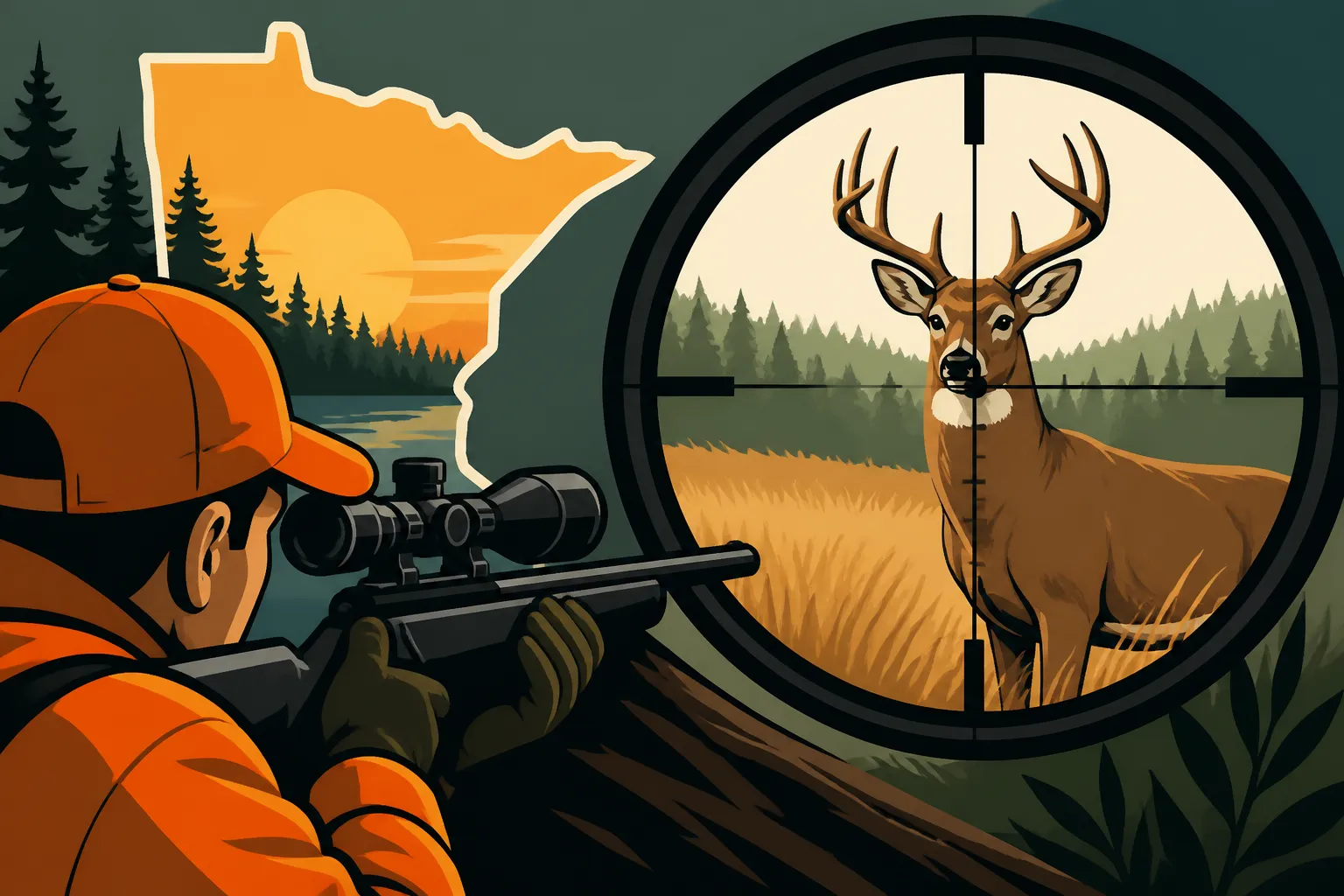
By taking the time to truly understand your scope, you'll be far more prepared for that moment of truth when a Minnesota whitetail steps into your crosshairs.
Disclaimer
This article is for general informational purposes only and does not constitute professional advice. Laws, prices and regulations vary by location and change over time. Consult a qualified professional for guidance on your specific situation.