Treestand Setups in Minnesota Hardwoods
Finding that perfect treestand setup in the dense, often unforgiving Minnesota hardwoods can feel like trying to hit a moving target with a blindfold on. The deer are constantly shifting their patterns, hunting pressure ebbs and flows, and what worked last year might be a bust this season. This guide isn't about giving you a magical bullet, but rather a deep, realistic dive into understanding deer movement, choosing the right spots, and meticulously setting up your treestand for consistent success in the challenging big woods.
Understanding Minnesota Hardwoods and Deer Movement
Before you even think about hoisting a stand, you've got to become a student of the woods. Minnesota's hardwoods aren't just a collection of trees; they're a complex ecosystem that dictates deer behavior, and truly understanding it is your first step toward success.
Identifying Key Tree Species for Cover and Food
In Minnesota's hardwood forests, deer are constantly on the lookout for two things: food and cover. Knowing which trees provide what, and when, is absolutely crucial. For instance, oak trees are often deer magnets, especially in the fall when their acorns drop. Deer will gorge themselves on acorns, building up fat reserves for the lean winter months. If you find a productive oak flat, especially one near thicker cover, you've hit the jackpot. But it's not just oaks; maple trees, particularly red maples, offer browse and can sometimes be found in areas deer use for bedding. Basswood is another under-appreciated species; its leaves and inner bark are palatable to deer, and mature basswoods often have gnarly, multi-trunked bases that provide fantastic ground cover for hiding. Even aspen stands, while typically thought of for grouse, can provide excellent thick cover and browse for deer, especially young aspen regenerations.
The key is to learn to identify these trees, even when they're bare in late fall. Look for distinctive bark patterns, remaining leaves, or even the remnants of old acorns on the forest floor. The presence of certain tree types will tell you a story about what the deer are doing and where they might be headed. This knowledge helps you predict movement, not just react to it.
Reading Topography and Terrain Features
Deer are creatures of efficiency and safety, and they use the lay of the land to their advantage. Learning to read topography means understanding how they travel, where they seek refuge, and where they feel safe. Ridges are often travel corridors, especially the sides and tops. Deer will typically walk just off the crown of a ridge to stay out of the prevailing wind and use the slight elevation for a better view. Draws are natural low spots or valleys, often leading down into thicker cover or water sources. These are prime travel routes, particularly in hilly terrain, as deer prefer to move through depressions to stay out of sight. Saddles, those subtle dips in a ridge line, are absolute magnets. Deer will almost always cross a ridge at its lowest point, making saddles some of the most consistent bottlenecks in the woods. Benches, flat spots along a hillside, are also frequently used for bedding, especially on south-facing slopes that catch more sun.
Many hunters overlook the subtle nuances of terrain. A slight depression, a small rise, or a change in grade can act as a natural highway for deer. When you combine these features with known food or cover, you start to paint a clear picture of deer movement. Using detailed topo maps or apps like GoHunt can help you identify these features before you even step foot in the woods, giving you a critical scouting advantage.
Impact of Hunting Pressure and Human Activity
Deer are smart, and they adapt quickly to hunting pressure. In areas that see a lot of hunters, especially public lands, deer become incredibly wary. They'll often go nocturnal, move deeper into the thickest, nastiest cover, or find small, overlooked pockets of refuge. What this means for you is that the obvious deer trails leading to a cornfield might be active at night, but during legal shooting hours, those deer are likely hunkered down in a swamp or a dense conifer thicket a quarter-mile away.
You need to think like a pressured deer. Where would you go to escape the constant human intrusion? This often leads to searching for stands in harder-to-reach areas, across swamps, or deep within dense timber. Understanding how Hunting Pressure on Minnesota Public Land impacts deer movement is paramount. The deer that survive multiple seasons are the ones that have learned to avoid hunters. Your job is to outsmart them by anticipating their escape routes and hiding spots, rather than just chasing their daylight patterns in high-pressure zones.
Strategic Placement: Where to Hang Your Stand
Once you understand the landscape and deer behavior, the next step is strategic stand placement. This isn't just about finding a good tree; it's about finding the right tree in the right spot at the right time.
Targeting Funnels and Chokepoints
Deer, like most animals, take the path of least resistance or the path of most security. This often leads them through natural funnels and chokepoints. A funnel could be a narrow strip of timber between two swamps, a small patch of woods connecting two larger blocks, or a pinch point where a ridge meets a river. These are areas where deer traffic is naturally concentrated. Man-made funnels, like old fence lines, power lines, or even less-used logging roads, can also direct deer movement in predictable ways.
Think about how terrain, water, or thick cover forces deer into a narrow travel corridor. When you identify these areas, you've found a high-odds location for a stand. For example, if you find a low, wet area that's difficult for deer to cross, look for the dry land surrounding it that they have to use. That's your funnel. It's similar to Hanging a Stand on a Big Woods Funnel, where you capitalize on geography to increase your encounter rates. These spots are gold because they guarantee deer will eventually pass through, increasing your chances even if individual deer movements are unpredictable.
Exploiting Food and Water Sources
Deer are driven by their stomachs and thirst. Setting up near reliable food and water sources, especially during specific times of the year, can be incredibly productive. In early fall, focus on oak flats loaded with acorns. As the season progresses and acorns dry up, shift your attention to agricultural field edges (like corn or soybean fields, especially after harvest) or areas with late-season browse. Small, secluded water sources, like a hidden spring or a small pond deep in the woods, can also be overlooked hotspots, particularly during dry spells or in areas where larger water bodies are frozen over.
The key here is timing. An oak flat that's hot in early October might be barren by November. You need to scout regularly to determine current food preferences. For example, understanding Hunting After a Poor Acorn Year might mean shifting your focus from oak stands to areas with dogwood or maple browse, or even agricultural fields if available. Always have a few stand locations scouted near different food sources to adapt to what the deer are currently eating.
Bedding Area Edges and Transition Zones
Deer spend a significant portion of their day bedded down, resting and digesting. They typically bed in thick cover where they feel safe, often on elevated terrain for good visibility or in dense swamps for security. While you generally don't want to hunt directly in a bedding area (you'll just push them out), setting up on the edges or in the transition zones between bedding and feeding areas can be lethal.
Think about the paths deer take when they get up from their beds in the late afternoon to head to food, or when they're returning to bed in the morning after feeding all night. These transition corridors, often slightly less dense than the bedding area itself, are where you want your stand. You're intercepting them as they move naturally, without disturbing their sanctuary. Knowing Where Big Woods Bucks Bed in Minnesota can help you pinpoint these critical zones. Look for tracks leading in and out of thickets, rubs and scrapes on the perimeter, or distinct trails emerging from dense cover. Patience is crucial for these setups, as deer might not move until just before dark or first light.
Stand Selection and Setup Considerations
Choosing the right location is only half the battle; the other half is selecting the appropriate stand and setting it up correctly and safely.
Choosing the Right Treestand Type
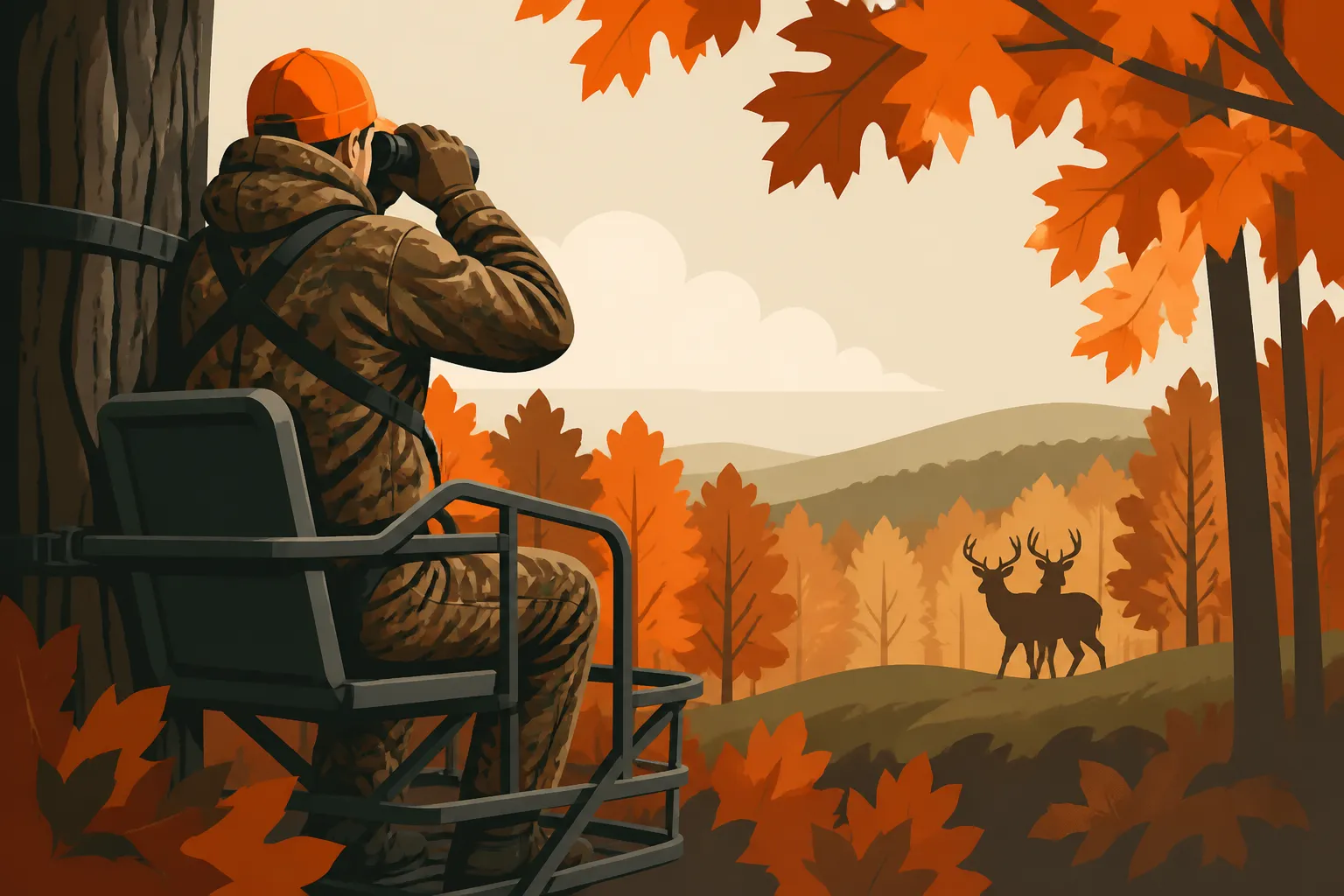
Not all treestands are created equal, and the type you choose depends heavily on the terrain, the tree selection, and your hunting style. Hang-on stands are incredibly versatile, allowing you to pick almost any healthy tree, even those with branches or slight curves. They offer excellent concealment if you can find a suitable tree with good cover. They are often lighter and more portable, making them ideal for run-and-gun tactics or packing deep into public land. Many hunters prefer these for their quietness and flexibility.
Climber stands are great if you're hunting areas with relatively straight, limbless trees, like mature pines or smooth-barked maples. They're fast to set up and take down, and you can easily adjust your height. However, they're limited by tree type and can be noisy if you're not careful. Ladder stands offer unmatched stability and comfort, but they're heavy, bulky, and generally only suitable for semi-permanent setups on private land or easily accessible public spots. They're not ideal for packing deep into the woods where most deer sign might be. For packing into those hard-to-reach, low-pressure areas, something like a portable hang-on stand is often the best choice, as detailed in Portable Treestands Worth Packing In. Using a tool like GoHunt to scout potential public land spots can also inform your stand choice – if you're targeting a remote block, a lightweight hang-on and sticks are almost always the answer.
| Treestand Type | Pros | Cons | Ideal Minnesota Hardwood Use Case |
|---|---|---|---|
| Hang-On | Versatile, portable, quiet, good cover | Requires separate climbing sticks | Deep public land, irregular trees, mobile hunting |
| Climber | Self-sufficient, quick setup/takedown | Limited to straight, limbless trees | Mature pines/maples, scouting new areas quickly |
| Ladder | Stable, comfortable, easy access | Heavy, bulky, less portable, exposed | Private land, easily accessible semi-permanent sets |
Camouflage, Cover, and Concealment
Even if you're 20 feet up, a deer's eyes are keen. You need to break up your silhouette and blend into the environment. The best way to do this is to pick a tree that has natural cover around it – think evergreens, or a hardwood with lots of smaller branches or vines. Don't just pick the tallest tree; pick the tree that offers the best backdrop for concealment. You want to disappear into the tree, not stand out against the sky.
Trim your shooting lanes before the season, if possible. Do it discreetly to avoid disturbing the area. Only cut what's absolutely necessary for a clean shot. Remember, every branch you cut is one less piece of cover between you and a deer's eyes. If you can, use a saw to make clean cuts that don't leave jagged edges which can catch light and draw attention. The more natural your setup looks, the less likely a deer is to pick you out.
Safety First: Harnesses, Lines, and Tree Health
This isn't just a suggestion; it's a non-negotiable rule. Every time you leave the ground, you need to be wearing a full-body safety harness that is attached to the tree from the moment your feet leave the ground until they return. Invest in a good quality lifeline system that stays on the tree all season, allowing you to be tethered during your entire ascent and descent. Falls from treestands are one of the leading causes of serious hunting injuries, and they are almost entirely preventable.
Before you even begin climbing, thoroughly inspect the tree you intend to use. Is it healthy? Are there any dead branches that could fall? Is the bark loose or compromised? Avoid dead, decaying, or hollow trees at all costs. A tree that looks fine from the ground might be rotting at the top or have structural issues. Always choose a living, sturdy tree. It's not worth risking your life for a stand location. Practice using your harness and lifeline in a controlled environment, close to the ground, so you're confident and comfortable with the equipment when it counts.
Access and Wind: The Unsung Heroes of Success
You can have the perfect stand in the perfect spot, but if you mess up your entry, exit, or ignore the wind, all your hard work is for naught. These two factors are critical, yet often underestimated.
Crafting Stealthy Entry and Exit Routes
Think of your stand as a "kill zone," and your entry and exit routes as the paths that lead you to and from it. These routes need to be as stealthy and scent-free as possible. Avoid walking directly on deer trails to get to your stand. Instead, use natural barriers like creek beds, ditches, or dense thickets that don't hold many deer, or even a logging road that you know deer avoid during daylight. Plan your route so you're not walking past known bedding areas or feeding zones on your way in or out.
The goal is to get to your stand undetected and leave without spooking any deer that might be in the vicinity. This is especially true for morning hunts where deer might still be feeding near your stand. An ideal entry might involve using a dry creek bed or a field edge well away from the woods line for the majority of your walk, only dipping into the timber for the final few hundred yards to your stand. The same goes for your exit. If you spook deer walking out, you're educating them and making future hunts in that area much harder. Even a seemingly insignificant route, like an Entry Routes Through a Cattail Slough, can be critical for avoiding detection if it keeps you out of sight and downwind.
Playing the Wind and Thermals
The wind is not your friend if you're trying to hide your scent, but it can be your best ally if you use it correctly. Always, and I mean always, hunt with the wind in your favor, blowing your scent away from where you expect deer to approach. This often means having multiple stand locations for different wind directions. You might have a prime spot for a north wind, another for a south, and so on. Never compromise on wind direction, even if it means not hunting your absolute favorite stand.
Thermals are another crucial, often misunderstood, aspect, especially in hilly or mountainous terrain. Thermals are air currents that rise as the sun warms the earth (typically in the morning) and fall as the air cools (in the evening). In the morning, your scent will be carried uphill as thermals rise. In the evening, it will be carried downhill. You need to account for both the prevailing wind and the thermal currents, especially during those crucial first and last hours of light. Using a mapping app that includes topography, like GoHunt, can help you visualize how wind and thermals will behave in a specific area. You can drop a pin, observe the terrain, and get a rough idea of how your scent will carry. This strategic thinking around Wind and Thermals on a Minnesota Ridge can be the difference between seeing deer and having them bust you before you even know they're there.
Minimizing Scent Contamination
Deer have an incredible sense of smell, far superior to ours. Minimizing your scent contamination is critical. This starts long before you step foot in the woods. Wash your hunting clothes in scent-free detergent, store them in airtight containers, and dress at your vehicle, not in your house, to avoid picking up household odors. Use scent-eliminating sprays on your boots and outer layers, but remember, these are aids, not foolproof solutions. The wind is still your primary scent control.
Beyond your body, be mindful of what you touch. Try to avoid handling branches or vegetation around your stand with bare hands. Use gloves. If you're building a ground blind, minimize how much you disturb the surrounding area. The less human scent you leave on the ground or on the trees, the better. Consider scouting for low-pressure areas, which GoHunt can help identify using public land maps, where deer are less accustomed to human intrusion and therefore might be slightly less wary of residual scent. Even small things, like taking a non-scented snack instead of a candy bar, can make a difference.
Seasonal Adjustments and Scouting
Deer patterns aren't static. What works in September won't necessarily work in November. Successful hunters adapt their strategies throughout the season and continuously scout, even when not hunting.
Early Season and Pre-Rut Adjustments
During the early season (late September, early October), deer are often still on fairly predictable patterns, heavily focused on food. They're recovering from summer and building up fat reserves. This is the time to focus your stands around primary food sources like oak flats or early-maturing agricultural fields. Bucks might still be somewhat grouped up or on summer patterns, and they haven't started their intensive rutting behavior yet.
As the pre-rut approaches in mid-October, bucks start to become more aggressive, making rubs and scrapes, and beginning to cruise for does. Your focus might shift from strict food sources to transition areas and travel corridors that connect doe bedding and feeding areas. This is when you'll start to see more daylight activity from bucks as they begin to explore and establish their dominance. Thinking about Hunting the Rut in Late October requires a change in approach, moving away from static food plots to dynamic travel routes.
Rut and Post-Rut Strategies
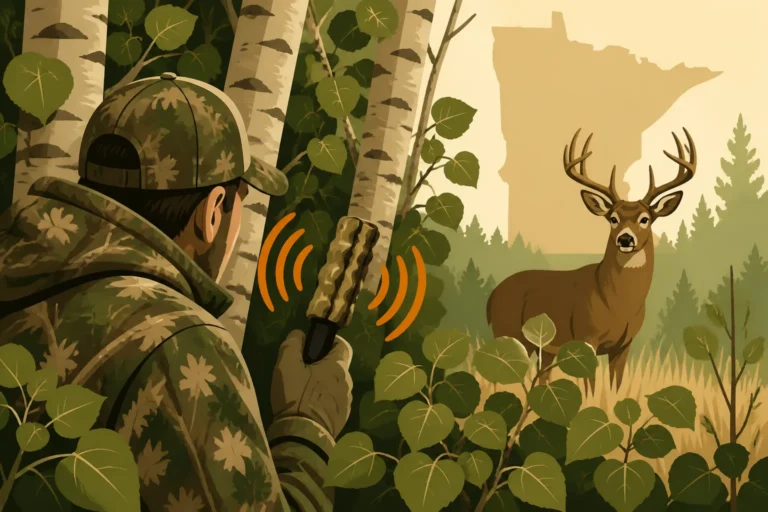
The rut, usually peaking in early to mid-November in Minnesota, is when deer behavior becomes most erratic and exciting. Bucks are actively chasing does, sometimes moving significant distances throughout the day. Your stand strategy should capitalize on this increased movement. Focus on funnels, saddles, and pinch points that connect large blocks of timber, especially those that doe groups frequent. Scrape lines and rub lines become active indicators of buck travel, and setting up near these can be effective. Consider using calls during this time, like a grunt call to draw in a curious buck, which is a key tactic for Grunt Calls in Mature Minnesota Timber. Don't neglect the potential of Scrape Lines Along a Logging Trail either, as these are highways for cruising bucks.
After the rut, during the late season (late November into December), deer revert to being heavily food-focused, but now with an added urgency due to cold weather. Bucks are often exhausted and seeking to replenish reserves. Stands near late-season food sources like standing corn, brassicas, or even thick browse in protected areas become critical. Deer will also seek out thermal cover (thick evergreens) to conserve energy, so stands on the edges of these areas, near food, can be productive.
Year-Round Scouting and "GoHunt" Integration
Scouting isn't just something you do a week before opening day; it's a year-round commitment. Off-season scouting, especially in late winter after the snow melts, allows you to find sign that's been accumulating all season. You can easily spot old rub lines, travel corridors, and bedding areas without disturbing the deer. Trail cameras are invaluable tools for monitoring deer movement, especially at specific stand locations. They help you understand patterns, buck quality, and when deer are active.
Modern mapping apps like GoHunt have revolutionized scouting. You can virtually scout massive areas from your couch, identifying terrain features, potential funnels, and access points. You can mark points of interest like rubs, scrapes, or bedding areas directly on the map, creating a detailed digital record of your findings. This allows you to plan your hunts, predict deer movement, and even craft stealthy entry and exit routes, as described in Reading Aerial Photos for Big Woods Deer. When you finally hit the woods for Scouting Minnesota Public Land Before Season, you're not starting from scratch; you're verifying and refining your digital plan, saving you countless hours of aimless wandering and increasing your efficiency.
Common Mistakes and How to Avoid Them
Even experienced hunters make mistakes. Being aware of the most common missteps can save you from frustration and increase your odds.
Overlooking Subtle Sign and Pressure
One of the biggest mistakes hunters make is only looking for the obvious. They'll walk past a fresh rub the size of a telephone pole but miss the faint deer trail that winds through a dense thicket just 50 yards away. Subtle sign, like barely visible tracks in damp soil, a few browsed saplings, or a small patch of scat, can tell a more accurate story of daily deer movement than the massive, obvious sign that often gets hammered by other hunters.
Another error is ignoring hunting pressure. Just because you found a fresh rub line doesn't mean it's a good place to hunt if that area is a popular spot for other hunters. Deer will quickly abandon heavily pressured areas during daylight. Learn to look for the unpressured sign, the subtle hints that deer are using an area where other hunters might not venture. This might mean walking an extra half-mile through tough terrain or setting up in a spot that feels "too thick" to be productive. Often, those are the exact places pressured deer will hide.
Poor Stand Access and Exit
We've touched on it, but it bears repeating: your access and exit routes can make or break your hunt. Many hunters get so focused on the stand itself that they neglect the approach. Walking in noisy, directly across a field, or through a known bedding area just before daylight will alert deer to your presence before you even climb the tree. The same goes for leaving. Spooking deer on your way out not only ruins that hunt but can educate those deer for future encounters.
Always approach your stand with the wind in your face or crosswind, never blowing your scent ahead of you into the area you intend to hunt. Plan to get to your stand well before legal shooting light and stay until well after, allowing deer to move naturally without bumping them. If you suspect deer are bedded between you and your exit, wait until dark or take a longer, quieter, indirect route. Patience and meticulous planning for your entry and exit are just as important as the stand location itself.
Neglecting Wind and Scent
This is arguably the most common and devastating mistake. No matter how good your stand location, how well you've scouted, or how much scent-eliminating spray you've used, if the wind is blowing your scent toward the deer, they will smell you. Period. There's no magical product that completely negates a bad wind.
Never convince yourself that "maybe the deer won't come from that direction" or "it's not too bad, it's just a light breeze." If the wind is wrong for your stand, don't hunt it. Have multiple stand locations for different wind directions, or be prepared to sit on the ground if conditions allow. Consistently checking weather forecasts, using wind direction tools on mapping apps, and even carrying a small squeeze bottle of powder or milkweed seeds to check swirling currents in the woods are critical habits. The wind is the ultimate chess master in deer hunting; learn to play with it, not against it.
Disclaimer
Hunting is an inherently dangerous activity. Always prioritize safety, understand and adhere to all local and state regulations, and obtain proper landowner permission if hunting private land. The information provided in this guide is for informational purposes only and should not replace professional guidance or personal judgment.