Minnesota Archery and Muzzleloader Season Structure
Navigating Minnesota's deer hunting seasons can feel a bit like trying to solve a puzzle, especially when you're trying to figure out the nuances of archery and muzzleloader opportunities. Many hunters get confused about when they can legally hunt with a bow versus a muzzleloader, what gear is actually allowed, and how those pesky permit areas affect their chances. This comprehensive guide is here to untangle all those questions, laying out the clear structure for both archery and muzzleloader seasons in Minnesota so you can plan your hunts with confidence.
Overview of Minnesota's Archery Season
Minnesota’s archery season is a truly unique opportunity for deer hunters, offering a substantially longer window than many other states. It demands a different kind of patience and skill, rewarding those who embrace the quieter, more intimate pursuit of whitetails.
Archery Season Dates and Duration
If you're a bowhunter in Minnesota, you're in for a treat because the archery season generally kicks off in mid-September and, in most areas, extends all the way through December, often bleeding into early January. This incredible length gives you unparalleled opportunities to hunt deer across various phases of their annual cycle. You can be out there during the last gasps of summer-like weather, catching deer still on predictable feeding patterns, then transition into the frantic days of the rut, and finally, brave the deep cold of late season.
This extended season, which you can learn more about by checking into the official "Minnesota Archery Season Dates", really allows you to adapt. Early in the season, you might focus on green food sources like alfalfa fields or oak ridges where acorns are dropping. As October progresses, you'll shift your strategy to intercept cruising bucks as they begin to scent-check scrapes and does. By the time November rolls around, you're in the thick of the breeding frenzy, and your tactics for "Hunting the Rut in Late October" and even "Hunting the Peak Rut in Early November" become critical. Even when the snow flies and the temperatures plummet in December and January, you'll still have a tag in hand, targeting deer focused on high-energy food sources or seeking thermal cover. This long window is a blessing, offering multiple chances even if early hunts don't pan out.
General Rules and Regulations for Bowhunters
Beyond just knowing when to go, it’s crucial to understand the specific rules governing archery equipment in Minnesota. The state permits both vertical bows and crossbows for deer hunting, but there are some important distinctions to keep in mind. For vertical bows, your draw weight needs to meet a certain minimum, ensuring sufficient energy for a clean kill. Broadheads, too, have specific requirements, usually revolving around a minimum cutting diameter to ensure proper wound channels. It’s not just about what looks cool; it's about ethical hunting.
For those considering crossbows, the rules have evolved. Initially, crossbows often had restrictions, but now they are generally legal for all hunters during the archery season. However, it's always smart to double-check the most current regulations, especially as they can change. You can dive deeper into these specifics by exploring "Minnesota Crossbow Rules During Archery Season". Another vital regulation is blaze orange. While archers generally aren't required to wear blaze orange during periods when only archery season is open, this changes dramatically if your archery hunt overlaps with any firearm deer season, including the muzzleloader season. During these overlaps, bowhunters must also wear blaze orange or blaze pink, just like firearm hunters, for safety's sake. Lastly, always remember the importance of proper tagging and registration. Once you harvest a deer, you need to validate your tag immediately and register the animal according to the DNR's guidelines, which can often be done online or via phone.
Understanding Minnesota's Muzzleloader Season
The muzzleloader season in Minnesota offers a unique challenge and a fantastic opportunity for deer hunters, often arriving when other firearm seasons have quieted down and the landscape has transformed into a winter wonderland. It’s a pursuit steeped in tradition but requiring modern understanding of rules and gear.
Muzzleloader Season Dates and Duration
For many Minnesota hunters, the muzzleloader season is a cherished late-season opportunity, typically kicking off after the general firearm season has wrapped up. This usually means it runs from late November or early December, extending into late December or even the first week of January, depending on the year and specific permit area. This timing places muzzleloader hunters firmly in the cold, often snowy, conditions of a Minnesota winter.
The beauty of this season is that it often provides a quieter woods experience. After the initial rush of the rifle opener and the subsequent weeks of firearm pressure, deer patterns can become more predictable, often gravitating towards prime late-season food sources and thick thermal cover. However, this also means contending with frozen ground, deep snow, and bitter temperatures. It's a season that truly tests your resolve and your gear, but the rewards can be substantial, especially when you're the only hunter in a vast, snow-covered landscape. For more specific dates and how they align, check out the "Minnesota Muzzleloader Season Dates".
Specific Muzzleloader Regulations
Muzzleloader hunting in Minnesota comes with its own distinct set of rules, which are important to understand to stay legal and safe. Generally, legal muzzleloaders include both traditional flintlock and percussion models, as well as the more modern in-line muzzleloaders. The key is typically that they must be loaded from the muzzle. When it comes to projectiles, you'll generally be allowed to use sabots, conical bullets, or patched round balls. The powder used must be black powder or an approved black powder substitute. You can't just throw any old smokeless powder in there!
Perhaps one of the most common surprises for hunters new to Minnesota's muzzleloader season is the regulation on optics. Historically, magnified scopes have been prohibited, limiting hunters to open sights or 1x magnification (non-magnifying red dot sights are often permitted). This really harkens back to the traditional aspect of muzzleloader hunting and adds a layer of challenge, especially in low light conditions or when trying to judge distance in a snowy landscape. As always, blaze orange is a non-negotiable requirement during muzzleloader season, much like the general firearm season. You need to be seen! And if you're worried about your powder getting wet in a December snowstorm, which is a very real concern, there are tactics you can employ to keep it dry, which you can read more about in "Keeping a Muzzleloader Dry in Lake-Effect Snow". Planning for these colder, potentially wetter conditions, especially how it impacts your firearm, is part of the allure and challenge of late-season "Muzzleloader Tactics in December Cold".
Overlap and Strategic Considerations
Minnesota’s hunting seasons don't always exist in neat, isolated boxes. There are periods when different seasons overlap, creating both strategic opportunities and important safety considerations. Understanding these overlaps is key to a successful and responsible hunt.
Hunting During Archery and Muzzleloader Overlaps
It's a common scenario: you're out with your bow in mid-November, enjoying the peak of the rut, and suddenly, the firearm deer season opens up in your zone. Or perhaps you're bowhunting into December, and the muzzleloader season kicks off. These overlaps are a reality in Minnesota. When archery season runs concurrently with any firearm deer season (which includes the muzzleloader season), bowhunters are legally required to wear blaze orange or blaze pink. This isn't just a rule; it's a critical safety measure that protects everyone in the woods.
From a strategic standpoint, these overlaps significantly alter deer behavior. The influx of firearm hunters often pushes deer into thicker cover, makes them more nocturnal, and generally puts them on high alert. For an archer, this means adapting. You might need to change your stand locations to intercept deer moving between bedding and feeding areas under the cover of darkness, or to escape pressure. Think about pinch points, thickets, or even private land boundaries that act as sanctuaries. It's not uncommon for a bowhunter to experience quieter woods for a few days after the firearm opener as deer settle into new patterns, only to find increased activity as they adjust to the pressure. Safety is paramount during these times; always be aware of your surroundings and identify your target positively.
Planning Your Hunt for Both Seasons
For dedicated deer hunters, having both archery and muzzleloader tags can extend your season significantly and offer diverse opportunities. The real trick is to plan your approach to maximize success across both. Start your scouting early, focusing on areas that hold deer throughout the fall. A good strategy might involve targeting early-season food sources with your bow, then transitioning to rut-focused funnels and travel corridors, and finally, shifting to late-season food plots or heavy thermal cover for the muzzleloader season.
Consider your stand setups. A mobile archery setup, like a saddle or lightweight treestand, allows you to be nimble and react to changing deer patterns and pressure. You can explore "Saddle Hunting in Minnesota Oaks" for ideas. For the muzzleloader season, given the colder weather, you might prefer a more comfortable, insulated ground blind or an enclosed elevated stand that offers protection from the elements during those long, cold sits. The long archery season, as mentioned earlier, gives you ample time to observe deer and learn their habits, information that can be invaluable when the muzzleloader season rolls around. Knowing how deer use certain terrain during the rut, for instance, can help you predict their late-season movements as they seek recovery and food. Having a good mapping app, such as those offered by GoHunt, can be indispensable for marking sign, tracking deer movement, and identifying prime spots for both your bow and muzzleloader hunts.
Permit Areas and Lottery Systems
Understanding Minnesota's deer permit areas (DPAs) and their associated lottery systems is absolutely critical for any deer hunter, whether you're toting a bow or a muzzleloader. These zones dictate everything from how many deer you can harvest to whether you need to apply for a special tag.
How Permit Areas Affect Archery Hunters
Minnesota's landscape is carved into numerous deer permit areas, each with its own management goals and regulations. For archery hunters, many DPAs operate under what's called a "hunter choice" system. What this means is that with your standard archery deer license, you can harvest either an antlered buck or an antlerless deer within that specific permit area, assuming it's an antlerless hunter choice area. This flexibility is fantastic, allowing archers to fill a tag on the first legal deer they encounter, whether it's a mature buck or a doe.
However, it's not always so straightforward. Some permit areas, often those with lower deer populations or specific management needs, might have more restrictive rules, perhaps limiting antlerless harvest or even requiring a special permit even for archers. The key takeaway here is always to check the specific regulations for the DPA you plan to hunt before you head out. These details are typically found in the Minnesota DNR's annual hunting regulations handbook, and digital tools like the GoHunt app can also provide invaluable, up-to-date information on permit area boundaries and regulations right in the field. Don't assume that rules in one DPA apply to all others; they almost certainly don't!
Muzzleloader Lottery and Hunter Choice Zones
The muzzleloader season often introduces an additional layer of complexity, particularly regarding antlerless deer. While some permit areas may still be "hunter choice" for muzzleloaders, allowing you to take an antlered or antlerless deer with your regular license, many others operate under a lottery system for antlerless tags. This means that to harvest an antlerless deer in these designated "lottery" permit areas during the muzzleloader season, you must apply for and be drawn for an antlerless permit.
The application period for these lotteries is usually in early September, and it's a hard deadline. Missing it means you're out of luck for an antlerless tag in those specific zones, so mark your calendar! You can find precise details on "The Antlerless Lottery Deadline in Minnesota". The DNR often announces results later in September or early October, giving you time to adjust your hunting plans if needed. If you're planning to hunt a lottery area, it's absolutely critical to apply for "Applying for the Antlerless Lottery Before September 10". Additionally, in certain CWD (Chronic Wasting Disease) management or surveillance zones, there might be further restrictions or mandatory testing requirements that impact both permit availability and how you handle your harvested deer. Always check the DNR website or a reliable app like GoHunt for the most current information regarding your chosen permit area, as these rules can change from year to year.
Gear and Method Considerations
Hunting in Minnesota's diverse and often challenging environment requires not just skill and patience, but also the right gear. Whether you're a bowhunter sneaking through the hardwoods or a muzzleloader enthusiast braving a December snow, your equipment choices can make or break your hunt.
Archery Gear for Minnesota's Diverse Terrain
Minnesota's archery season stretches across such a wide range of weather and terrain that your gear needs to be versatile and reliable. Early season bowhunting can be warm, even hot, requiring lightweight, breathable layers and meticulous scent control. By November, you'll be layering up to combat brisk winds and freezing temperatures. The varied landscape, from the thick popple cuts of the north to the open fields and woodlots of farmland country, means your approach, and thus your gear, must adapt.
For navigating dense cover, a compact bow and fixed-blade broadheads are often favored by many, ensuring reliability on close-range shots. Rangefinders are invaluable, especially in the timber where distance estimation can be tricky. Good optics, like 8×42 or 10×42 binoculars, become crucial for spotting subtle deer movements in low light conditions during dawn and dusk. Mobile hunting setups, whether a saddle or a lightweight lock-on stand with climbing sticks, have gained immense popularity because they allow archers to quickly move and adapt to changing deer patterns and hunting pressure on public land. The ability to hang a stand in a new hot spot based on fresh sign can be a game-changer. Remember, Minnesota can throw everything at you, from mosquitoes to freezing rain, so durable, weather-appropriate clothing is non-negotiable.
Muzzleloader Gear for Late Season Conditions
Muzzleloader season in Minnesota often means one thing: cold. And usually snow. This dictates a heavy emphasis on warmth and weather protection for both you and your firearm. Your clothing system for a "Cold-Weather Sitting Strategy in Minnesota" needs to be top-notch: insulated boots designed for extreme cold, multiple layers of wool or high-performance synthetics, and quality outer shell that breaks the wind and repels moisture are essential. Hand warmers and insulated muffs can literally save your hunt by keeping your fingers nimble enough to operate your weapon.
Your muzzleloader itself needs protection from the elements. A scope cover or a well-designed action cover can prevent snow and moisture from fouling your powder or optics. Carrying spare primers or percussion caps in a waterproof container is a smart move. When choosing your muzzleloader, consider reliability in cold weather; some models perform better than others when temperatures plummet. You can learn more about this by researching "Choosing a Muzzleloader for December Cold". Given the potential for tracking deer in snow, a good headlamp, a reliable GPS unit or a mapping app from a provider like GoHunt (with offline maps downloaded, because cell service can be spotty up north), and robust blood trailing skills are all crucial. Recovering a deer in deep snow or frozen ground can be a challenge, so come prepared with a sturdy knife and perhaps even a game sled.
Season Structure at a Glance
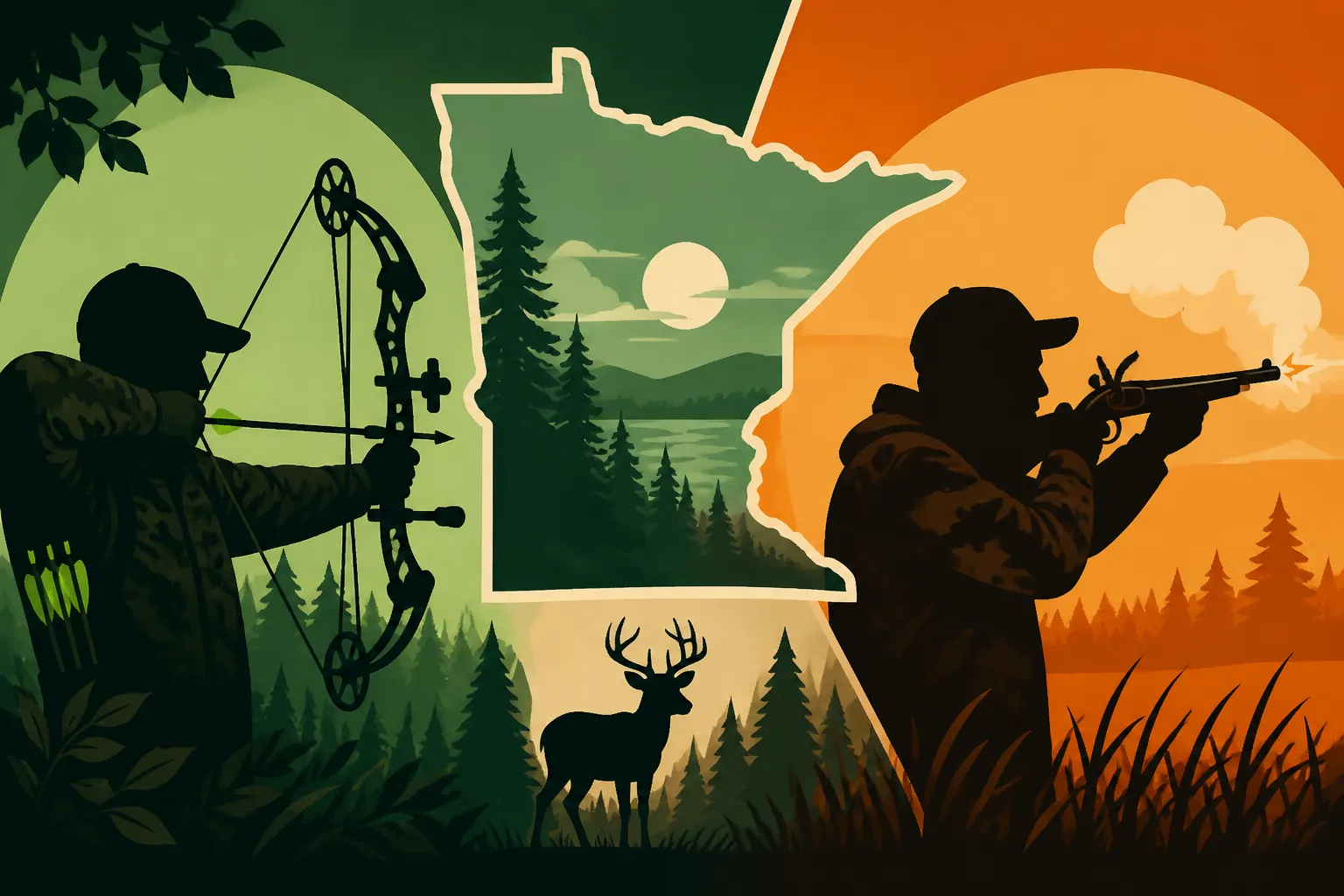
To help you visualize the differences and overlaps, here's a quick comparison of Minnesota's archery and muzzleloader seasons:
| Season | Typical Dates | Legal Equipment Highlights | Blaze Orange Required? | Antlerless Tag System (Common) | Notes |
|---|---|---|---|---|---|
| Archery | Mid-September to Dec/Jan | Vertical Bows, Crossbows (statewide legal) | Only during firearm overlaps | Often Hunter Choice | Longest season, quiet hunting, adaptability |
| Muzzleloader | Late Nov/Early Dec to Dec/Jan | Muzzleloaders (muzzleloaded, open/1x sights) | Yes, always | Often Lottery for Antlerless | Cold weather, post-rut focus, traditional challenge |
Disclaimer
The information provided in this guide is for general informational purposes only and is subject to change. Hunting regulations, season dates, and permit area rules are set by the Minnesota Department of Natural Resources (DNR) and can be modified annually. Always consult the official Minnesota DNR hunting regulations handbook or website for the most current and accurate information before planning your hunt.