How Much Blaze Orange Minnesota Requires
It can be incredibly confusing to keep up with all the rules and regulations when you're preparing for a hunting trip in Minnesota, especially when it comes to something as critical as blaze orange. You just want to make sure you're doing things right, staying safe, and not accidentally breaking a law. This guide is going to break down exactly what Minnesota requires for blaze orange and blaze pink, offering practical advice to keep you visible and legal in the field.
Understanding Minnesota's Blaze Orange Laws for Hunter Safety
When you head out into the vastness of Minnesota's woods and fields, especially during big game seasons, safety isn't just a suggestion—it's paramount. The laws around blaze orange aren't there to make your life harder; they're literally life-saving measures, designed to prevent tragic accidents by making hunters highly visible to one another. It's easy to dismiss it as just another regulation, but once you understand the "why" behind it, it clicks into place.
Why Blaze Orange Matters in the Northwoods
Imagine yourself in a dense stand of pines or a thick patch of popple in November. The light is flat, the colors are muted browns and grays, and shadows play tricks on your eyes. Now, consider another hunter moving silently through that same cover. Without a stark, unnatural color to cut through the camouflage of the forest, distinguishing a person from a deer, a bear, or even just a stump can be incredibly difficult, especially in fleeting moments. This is precisely why blaze orange is so effective. Its unique wavelength stands out against natural backdrops, making it instantly recognizable as a human presence, even in poor light or dense foliage.
The statistics consistently show that hunter visibility, largely due to blaze orange, is a primary factor in preventing mistaken-for-game accidents. It's not just about stopping a bullet, but about preventing the split-second decision that could lead to one. When you put on that bright vest or hat, you're not just complying with the law; you're actively participating in a culture of safety that protects you and every other hunter in the woods. This peace of mind allows you to focus on the hunt itself, rather than constantly worrying about another hunter's presence.
Specific Requirements for Different Hunting Types
Minnesota's blaze orange requirements vary depending on what you're hunting and with what weapon. It's not a one-size-fits-all rule, and knowing the specifics can prevent a headache with a conservation officer or, more importantly, a dangerous encounter.
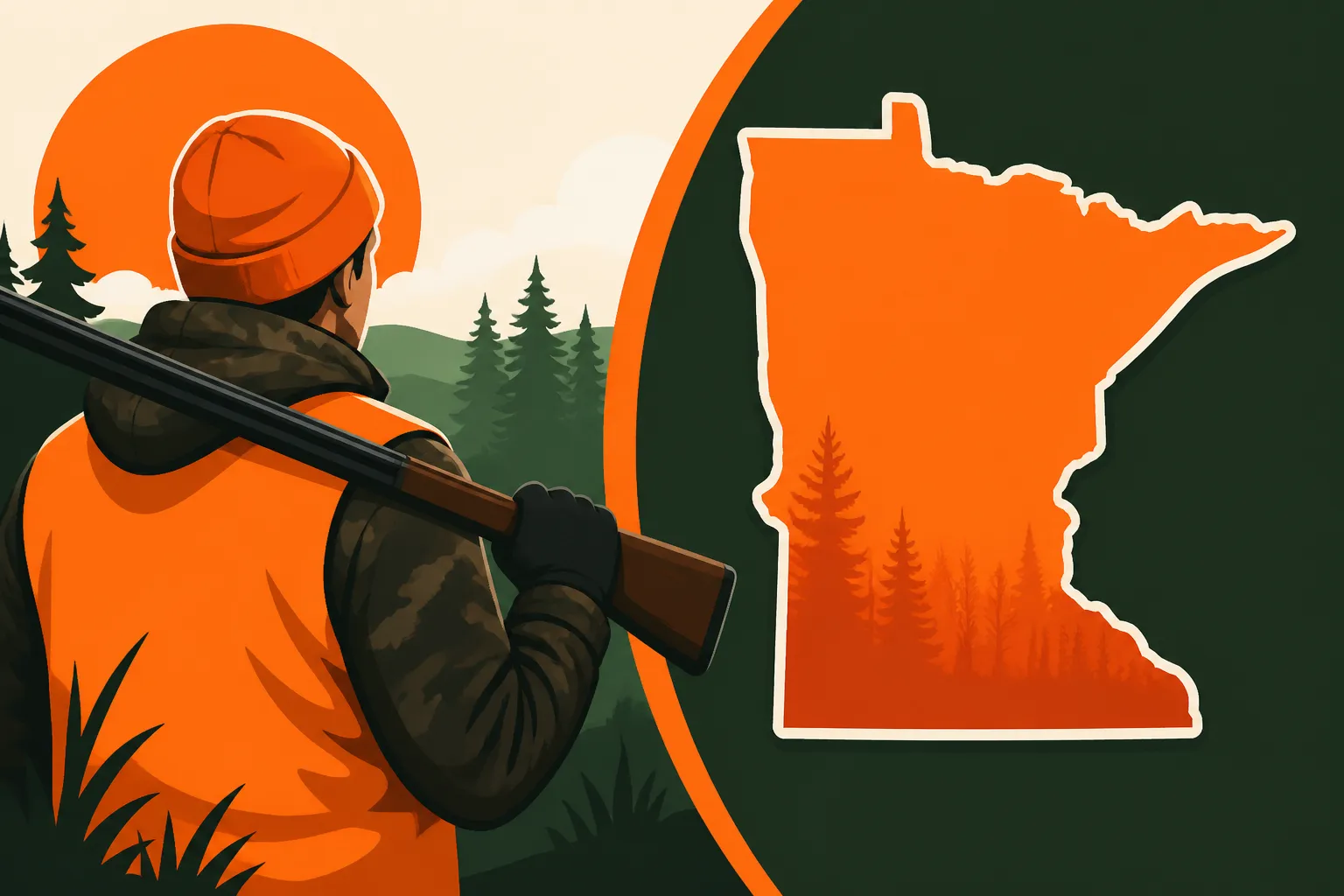
For firearm deer season, which for many is the quintessential Minnesota hunt, the rules are very clear. Any person taking or attempting to take deer with a firearm (which now includes rifles statewide, thanks to Minnesota's New Statewide Rifle Rules) must wear blaze orange or blaze pink. This applies to everyone in the party, whether they're actively carrying a firearm or simply helping to drive deer or track. The requirement is that at least 50% of the visible portion of your cap and the visible portion of your outer clothing above the waist, excluding sleeves and gloves, must be blaze orange or blaze pink. This means a bright orange hat and a vest or jacket covering your torso. This rule kicks in for the entirety of the regular firearm seasons, including the 100 Series Firearm Deer Zone, 200 and 300A Firearm Deer Zones, and the 300B Late Firearm Zone.
When it comes to archery season, the rules are a bit different, reflecting the closer-range nature of bowhunting and the earlier season dates. During the traditional archery-only deer season, hunters are not required to wear blaze orange. This is a common point of confusion, as many hunters are so accustomed to wearing it for firearms that they mistakenly believe it's always required. However, there's a crucial caveat: if you're bowhunting during any period when a firearm deer season is open in that particular permit area, then you must adhere to the blaze orange requirements. This often happens later in the fall when the seasons overlap or during special youth hunts like the Minnesota Youth Antlerless Weekend. It's always best to check the specific dates and concurrent seasons for your permit area before heading out.
For small game hunters, the requirements are also distinct. If you are hunting small game (like pheasants, grouse, or rabbits) during any time or in any area where a firearm deer season is open, you must also wear blaze orange or blaze pink to the same specifications as deer hunters. This includes anyone accompanying you. However, outside of those overlapping deer seasons, small game hunters are generally not required to wear blaze orange. This is particularly relevant for those pursuing game birds like during the Minnesota Small Game and Upland Bird Seasons. Still, many choose to wear it for increased visibility, especially if hunting public land where other users might be present. It's a smart, voluntary safety choice that many experienced hunters make.
Calculating the Right Amount of Blaze Orange
Understanding the "50% rule" can be a little like trying to solve a riddle without all the pieces. It’s not just about throwing on some orange; it's about making sure enough of you is visible to truly make a difference in the field. This isn't theoretical; it's about practical safety.
The 50% Rule and Visible Surface Area
Minnesota's law states that "at least 50 percent of the visible portion of the hunter's cap and the visible portion of the hunter's outer clothing above the waist, excluding sleeves and gloves," must be blaze orange or blaze pink. What does "visible portion" really mean? It means the parts of your body that are likely to be seen by another hunter. So, if you're wearing a jacket, the front and back of that jacket are the "visible portion." If you're wearing a cap, the entire crown and brim are included.
Let's break this down with a couple of practical examples:
- The Minimalist Hunter: You've got a blaze orange stocking cap (covering more than 50% of your head, check!) and a blaze orange vest over a brown jacket. As long as that vest covers at least half of your torso's visible surface area (front, back, and sides), you're compliant. The key here is to think about how you'll move. Will your backpack cover too much of the vest? What if you bend over to pick up a shed antler or track a deer? A small vest might shift, reducing your visible orange.
- The Proactive Hunter: This hunter opts for a full blaze orange jacket. Not only does this easily meet the 50% rule, but it often exceeds it, offering maximum visibility. They might also choose a brightly colored GoHunt hat in blaze orange to complement their jacket, ensuring visibility even if their jacket is momentarily obscured.
The trick is to imagine yourself from another hunter's perspective, especially if they're looking through brush or from a distance. A slight turn or bend can quickly obscure a significant portion of your orange if you're only meeting the bare minimum. That's why many experienced hunters choose to wear a full blaze orange jacket rather than just a vest, especially in dense cover where visibility can be compromised. This approach gives you an extra margin of safety.
Considerations for Different Hunting Environments
The environment you're hunting in can significantly impact how visible your blaze orange actually is. What works well in an open cornfield might not be enough in the dark timber of the Northwoods.
In dense woods, like the vast hardwood forests of northern Minnesota or thick aspen cuts where grouse and deer thrive, light struggles to penetrate. Shadows are deep, and the natural camouflage of trees, brush, and fallen leaves can swallow up even bright colors. In these environments, maximizing your blaze orange is a no-brainer. A full blaze orange jacket and hat become even more critical than a simple vest. The more surface area you have covered, the better your chances of being seen, even if you're partially obscured by a branch or a thicket. This is especially true when still-hunting Minnesota Big Woods, where silent movement through heavy cover is the goal, but visibility is still key.
Contrast that with open farmland or prairie country, like what you'd find in southwest Minnesota where pheasants roam. Here, visibility is generally much higher. You can see for hundreds of yards, and the blaze orange stands out sharply against the stubble fields or vast grasslands. While the legal minimum still applies, the inherent visibility of the environment might make a vest and hat feel more adequate. However, don't let the open spaces lull you into complacency. Hunters often blend into the terrain surprisingly well, especially if they are stationary against a backdrop of similar colors. For safety, many hunters still prefer to wear a full jacket.
Furthermore, varying light conditions throughout the day play a huge role. At dawn and dusk, when animals are most active and hunters are often moving, the ambient light is low. This "magic hour" for hunting is also a critical time for safety. Blaze orange is designed to be highly visible even in these challenging light conditions, but the more you wear, the better. Consider how a full blaze orange outer layer maximizes your presence when you're walking in before legal shooting hours or walking out after dark.
Practical Tips and Common Misconceptions
Beyond just knowing the rules, there are smart, practical things you can do to enhance your safety and visibility in the field. It’s about taking responsibility for your own well-being and that of those around you.
Beyond the Minimum: Enhancing Your Visibility
While Minnesota law provides a minimum standard, thinking of blaze orange as merely a legal obligation misses the point. It's a fundamental safety tool, and in many cases, going above and beyond the minimum is just plain smart hunting.
One of the easiest ways to enhance your visibility is to choose a full blaze orange jacket or coat rather than just a vest. This ensures maximum coverage, especially as you move, bend, or sit. The more surface area that is blaze orange, the easier you are to spot from any angle, whether you're climbing into a treestand setup in Minnesota hardwoods or tracking game through dense brush.
Another proactive step is to consider the quality and shade of your blaze orange gear. Some cheaper fabrics might fade over time, reducing their vibrance. Invest in good quality gear that maintains its brightness season after season. Also, think about layering. If you plan to shed outer layers as the day warms up, make sure that the next visible layer is also blaze orange. You don't want to start the day compliant and end it invisible.
Tools like the GoHunt app can also indirectly contribute to your safety. While it doesn't replace blaze orange, understanding land boundaries and other public land features can help you anticipate where other hunters might be. Knowing your location precisely and being aware of the broader hunting pressure on Minnesota public land can inform your visibility choices, perhaps prompting you to wear even more orange in popular spots.
Common Mistakes and How to Avoid Them
Even experienced hunters can make simple mistakes regarding blaze orange, often due to habit or oversight. Being aware of these pitfalls can help you stay safe and compliant.
One frequent mistake is forgetting to switch gear when transitioning seasons. A bowhunter might spend weeks in camouflage during the early archery season. If they then join a firearm deer hunt, they might forget to don their blaze orange, thinking their camo is sufficient. The change in weapon type or season means a change in required safety gear. Always double-check your clothing before you leave the vehicle, especially if you're combining archery with an open firearm season.
Another common issue is backpacks or other gear obscuring blaze orange. A large backpack can easily cover the back of a vest, significantly reducing your visible orange surface area. The same goes for carrying an uncased firearm or slinging a bow over your shoulder. Make sure that even with your pack on, at least 50% of the remaining visible clothing above the waist is blaze orange. Some hunters opt for an orange backpack cover or attach orange fabric to their pack for this very reason.
Finally, a misunderstanding of the "visible portion" can lead to issues, particularly when sitting in a stand or on the ground. If you're slumped in a ground blind on Minnesota public land or sitting on a stump, much of your blaze orange might be obscured by your posture or by natural cover. This is where wearing ample blaze orange—more than just the minimum—becomes critical. A hat alone isn't enough if your torso is hidden.
Here's a quick comparison of good practices versus common mistakes:
| Practice | Good Example | Common Mistake |
|---|---|---|
| Torso Coverage | Full blaze orange jacket, or a large vest over another orange layer. | Small vest, often obscured by backpack or sitting posture. |
| Headwear | Blaze orange stocking cap or baseball cap, always worn. | Hat taken off due to heat, or wearing a camo hat with orange on the vest only. |
| Layering | All outer layers (jacket, vest) are blaze orange, even if shedding layers. | Only outer layer is orange; inner non-orange layer becomes visible when shedding. |
| Awareness | Regularly checking one's own visibility and being aware of surroundings. | Assuming compliance without considering movement, gear, or environment. |
| Season Transition | Changing to full blaze orange immediately when firearm season opens. | Forgetting blaze orange when moving from archery-only to combined seasons. |
Exploring Blaze Pink and Other Options
Minnesota is one of several states that has recognized blaze pink as an acceptable alternative to blaze orange. This was largely driven by a desire to offer more options for hunters and potentially increase participation, particularly among women.
Blaze pink, like blaze orange, is specifically designed to stand out in natural environments. Studies have shown that it is just as, if not more, visible than blaze orange in various light conditions and against different natural backdrops. From a legal standpoint, Blaze Pink Options Under Minnesota Law means that anything that applies to blaze orange also applies to blaze pink. So, if you meet the 50% visible surface area requirement with blaze pink, you are fully compliant.
The choice between blaze orange and blaze pink often comes down to personal preference. Both are effective safety colors. The most important thing is that whichever you choose, you ensure it meets the legal requirements and you wear enough of it to be clearly seen by other hunters.
While blaze orange and blaze pink are the only legally recognized colors for hunter visibility in Minnesota, there are other considerations. Some hunters use reflective strips on their gear for walking in and out of the woods in true darkness, especially if using a headlamp. While these aren't a substitute for blaze orange during legal hunting hours, they add another layer of safety in low-light travel. Always remember that maximizing your visibility is a continuous effort throughout your hunt.
Important Exceptions and Special Circumstances
Like many regulations, Minnesota's blaze orange requirements have specific nuances and exceptions that are worth understanding. These aren't loopholes, but rather acknowledgements of different hunting scenarios.
Archery-Only Zones and Youth Seasons
As we touched on earlier, archery hunters are generally exempt from blaze orange requirements unless a firearm deer season is concurrently open in the same permit area. However, there are also specific "archery-only" zones or special hunts, particularly around urban or suburban areas, where firearms are prohibited. In these specific areas, typically focused on nuisance deer management or very specific habitat types, blaze orange is not required, even if the general statewide firearm season is running elsewhere. It’s critical to verify your specific permit area rules, which can be found by consulting the current Minnesota Hunting and Trapping Regulations Handbook or the DNR's eLicense system. Never assume; always check the specific rules for your hunt.
Youth hunting seasons, such as the Minnesota Youth Early Antlerless Season or the general youth waterfowl weekend, often have slightly different rules or strongly worded recommendations. While the blaze orange requirement for firearm deer remains consistent for youth hunters during those seasons, it's an excellent opportunity for mentors to instill good safety habits. For instance, even if a youth is hunting small game outside of a firearm deer season where blaze orange isn't legally mandated, having them wear it anyway is a great way to build the habit and ensure they're always visible. Minnesota Mentored Youth Hunting Rules emphasize safety, and high visibility is a key component of that.
Hunting Blinds and Elevated Stands
Hunting from a ground blind is a popular method, especially on public land where cover might be sparse or for hunters who prefer a stationary approach. Minnesota law makes an important distinction here: if you are hunting deer from a ground blind that is completely enclosed (meaning walls and a roof that totally conceal you) and the exterior of that blind is blaze orange or blaze pink, then you are not required to wear blaze orange while inside the blind. This is because the blind itself acts as your visible marker. However, the moment you step outside that blind, or if the blind is not fully enclosed or is not blaze orange/pink, you must be wearing your personal blaze orange or blaze pink.
Similarly, when hunting from an elevated stand, such as a ladder stand or a hang-on stand, the personal blaze orange requirements still apply. While you might be above some of the ground-level brush, you are still exposed and need to be visible to other hunters who might be scanning the woods. Even though a treestand might offer a different perspective, the principle of being seen by other hunters is unchanged. Ensure your outer clothing above the waist, and your cap, meet the 50% blaze orange/pink visible surface area rule. This is vital whether you're climbing up, sitting in the stand, or descending after a long sit. Safety harnesses are non-negotiable, and so is your blaze orange.
Disclaimer
Please remember that hunting regulations can change. While this guide provides comprehensive information based on current Minnesota DNR guidelines, it is always your responsibility to consult the most recent official Minnesota Hunting and Trapping Regulations Handbook or the Minnesota Department of Natural Resources website before heading afield. This content is for informational purposes only and should not be considered legal advice.