Chippewa National Forest Deer Ground
Hunting deer in a massive expanse like the Chippewa National Forest can feel overwhelming. It’s not your average woodlot hunt; we’re talking about vast tracts of timber, swamp, and dense cover where a deer can simply vanish. This guide is designed to help you break down the challenge of pursuing whitetails in the Chippewa, from understanding its unique terrain to implementing effective strategies for success.
Understanding the Chippewa National Forest Landscape
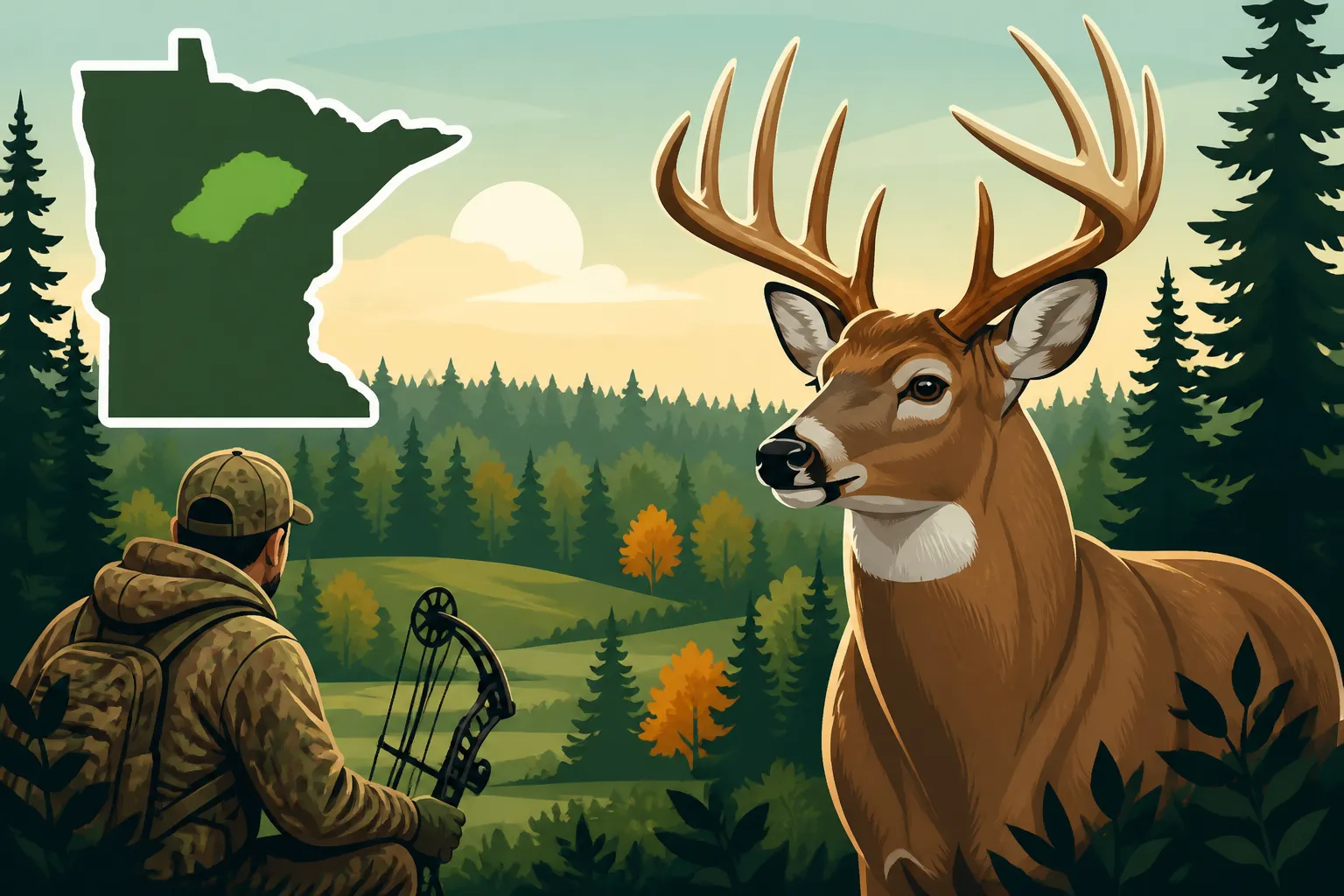
The Chippewa National Forest, nestled in north-central Minnesota, is a truly special place. It’s an intricate mosaic of towering pines, mixed hardwoods, sprawling wetlands, and hundreds of lakes and streams. Unlike the more homogeneous landscapes you might find in some parts of the state, the Chippewa presents a diverse and often challenging environment for hunters.
Geographic Features and Habitat Zones
Imagine driving through the Chippewa – you might go from dense, almost impenetrable spruce bogs to rolling hillsides covered in mature oak and maple, then suddenly find yourself on the edge of a massive cattail marsh. This varied topography is precisely what makes it such excellent deer country, but also what makes it tough to hunt. The higher ground often features a mix of aspen, birch, and pines, while lower areas transition into cedar swamps, tamarack bogs, and willow thickets. Each of these distinct habitat zones holds deer, but how they use them changes with the season, weather, and hunting pressure.
Within this vast forest, you'll encounter everything from old-growth stands that provide critical thermal cover in winter to regenerating clear-cuts that offer a buffet of browse for deer. The sheer scale means that understanding the dominant forest types and water features in your chosen area is paramount. A good map is your best friend here, helping you visualize how these different elements connect and where deer might travel between them. Identifying the edges where these habitat types meet—like a pine stand bordering an aspen cut—is often key, as these transition zones are natural travel corridors.
Public Access and Recreation
One of the great gifts of the Chippewa National Forest is its extensive public access. Miles of forest roads, old logging trails, and even canoe routes crisscross the landscape, offering countless entry points for hunters. However, "access" doesn't always mean easy access. Many of these roads can be rough, especially after heavy rains, and some areas require a significant hike or even a paddle to reach truly untouched ground. You might find yourself sharing certain areas with campers, hikers, or anglers, especially during warmer months, so understanding local use patterns can help you find quieter spots come hunting season.
It’s crucial to remember that while it's all public land, not all areas are created equal in terms of hunting pressure or deer density. Some areas close to main roads or campgrounds will see more foot traffic, pushing deer into thicker, more remote cover. Using tools like onX Hunt can be incredibly valuable here, as it allows you to clearly delineate public boundaries and often reveals subtle access points or hidden logging spurs that might lead you to less-pressured areas. Chippewa National Forest Deer Ground offers excellent opportunities, but planning your entry and exit strategies is just as important as finding the deer sign itself.
Deer Behavior and Habitat in the Chippewa
Deer in the Chippewa National Forest are truly wild animals, shaped by the vastness of their home. Their patterns are less predictable than those in agricultural areas, relying heavily on cover, food sources, and thermal protection throughout the year.
Seasonal Movement and Food Sources
The whitetails of the Chippewa are masters of adapting to their environment, constantly shifting their patterns based on the calendar. In the early archery season, you might find them clinging to thick alder swamps and willow bottoms, particularly if acorns are scarce. As the season progresses into late October and early November, their focus often turns to hard mast crops like acorns if available, drawing them to oak ridges. If it's been a poor acorn year, they'll pivot to browse like aspen regeneration, dogwood, or even leftover agricultural fields on the forest fringes. Understanding these shifting food preferences is absolutely critical.
During the cold Minnesota late season, especially once snow starts to pile up, deer will seek out dense thermal cover. This often means large stands of mature conifers—pine, spruce, and balsam fir—which offer shelter from bitter winds and deep snow. These areas become crucial bedding and staging grounds. They'll venture out to feed, but their core areas will be in these thick evergreens. Knowing how to identify these wintering areas, even when scouting in summer, can give you a massive advantage come November or December. Late-Season Food Sources for Minnesota Whitetails is a deep dive into what keeps deer moving when the mercury drops.
Rut Activity in North-Central Minnesota
The rut in the Chippewa, much like elsewhere in Minnesota, is an intense and fascinating period, typically peaking in early to mid-November. However, it can feel different in such vast, unbroken timber. Instead of chasing does across wide-open fields, bucks often utilize natural funnels created by wetlands, timber changes, or subtle ridge lines. They'll cruise these areas, scent-checking for receptive does, and rubbing and scraping with a fervor that can be astounding.
During this time, understanding typical buck travel corridors becomes paramount. Look for trails paralleling swamps, edges of dense conifer stands, or slight topographical changes that funnel movement. These are the places where bucks are most likely to be searching for does, sometimes making long, winding routes through the cover. Unlike farm country, where big bucks might be visible in open areas, in the Chippewa, they are masters of staying hidden, moving through dense security cover even during daylight. Hunting the Peak Rut in Early November can provide further insights into this critical time of year.
Strategic Scouting and Accessing Remote Areas
The sheer scale of the Chippewa National Forest means that effective scouting, both pre-season and in-season, is absolutely non-negotiable. You can't just wander in and expect to find deer consistently. You need a plan to locate the right habitat and identify areas of low pressure.
Using Mapping Tools and Aerial Imagery
Before you even set foot in the woods, your digital mapping tools should be humming. Programs like onX Hunt are invaluable for dissecting the Chippewa. Start by looking at aerial photos to identify different timber types: dark green for conifers, lighter greens for aspen or birch, and open areas for wetlands or bogs. Pay close attention to recent logging activity, which appears as distinct block cuts or lighter colored patches of new growth. These clear-cuts, especially those a few years old, are deer magnets for browse.
Topographical lines are equally important. Look for subtle ridge lines, saddles, and benches that might not be obvious on the ground but can funnel deer movement. Also, critically, identify potential access points – forest roads, old two-tracks, or even boat launches on lakes that provide entry to interior blocks. With onX Hunt, you can mark these features, measure distances, and save offline maps, which is vital because cell service is often spotty or non-existent in the depths of the Chippewa. Reading Aerial Photos for Big Woods Deer explains how to interpret these critical features from your armchair.
On-the-Ground Reconnaissance
Once you've done your digital homework, it’s time to hit the ground. Scouting in the Chippewa isn't about covering miles quickly; it's about covering them thoughtfully. Focus on confirming what your maps told you. Is that clear-cut regenerating with good browse? Does that cedar swamp offer the dense thermal cover you expected? Look for actual deer sign: rubs, scrapes, fresh tracks, and most importantly, concentrated droppings. Don't just look for big buck sign; look for areas of general deer activity, as does will draw in bucks during the rut.
Walking old logging roads and utility lines can be a great way to penetrate deeper into the forest, but be prepared to branch off and bushwhack. Often, the best sign is found a few hundred yards off the beaten path, away from casual recreationists. Focus on transition zones, bottlenecks between swamps, and the edges of dense cover. Carrying a GPS or using your onX Hunt app to drop waypoints on every piece of significant sign will build a powerful picture of deer movement over time. Remember, fresh sign is king; old sign tells you where they were, new sign tells you where they are. Scouting Minnesota Public Land Before Season details more on these methods.
Hunting Tactics for Chippewa Whitetails
Hunting in the Chippewa demands a flexible and adaptable approach. What works in one area might be useless in another, and the vastness of the forest means you need to be prepared for a marathon, not a sprint.
Still-Hunting and Stand Hunting Strategies
Both still-hunting and stand hunting have their place in the Chippewa, often used in conjunction. Still-hunting, moving slowly and deliberately through the woods, can be incredibly effective, especially when you're covering ground to locate active sign or when the rut is on and bucks are on the move. Focus on moving into the wind or crosswind, pausing often to scan ahead, and using binoculars to pick apart dense cover. It's a game of patience and observation, where spotting a flick of an ear or a horizontal line against the vertical timber can make all the difference.
For stand hunting, whether it's a treestand or a ground blind, placement is everything. In such dense cover, your shooting lanes will be limited, so focus on high-traffic areas like natural funnels, pinch points between swamps, or travel corridors leading to bedding or feeding areas. Consider how deer will approach your stand based on prevailing winds and topography. Treestand Setups in Minnesota Hardwoods can offer great advice, even though the Chippewa has a mix of hardwoods and conifers. A ground blind, particularly in thick cedar or spruce, can also be very effective for breaking up your silhouette in areas where trees might not be suitable for a stand.
Deer Drives and Group Hunting
Given the immense size and dense cover of the Chippewa, deer drives can be a highly productive tactic, especially for groups of hunters. Drives are particularly effective in pushing deer out of thick thermal cover or dense swamps where they feel safe. The key is to coordinate closely, understanding the terrain, and setting up blockers in strategic locations where deer are likely to exit the driven area. This isn't about randomly pushing; it's about intelligently anticipating deer movement.
Safety is paramount with deer drives, especially on public land. Communication is vital, and everyone must be absolutely clear on their role, direction of travel, and shooting lanes. Always ensure you have a safe backdrop for any shot. Drives can be grueling work, but they can pay off big in areas where deer hold tight. For smaller groups, even a "mini-drive" with just two or three hunters can be effective in pushing a small block of cover. Deer Drives With Three or Four Hunters offers insights into making these successful and safe.
Permits, Regulations, and Staying Legal
Navigating the rules and regulations in a National Forest can sometimes feel more complex than hunting itself. It's crucial to be aware of general Minnesota hunting laws, as well as any specific regulations pertinent to National Forest land.
General Minnesota Hunting Regulations
As a hunter in the Chippewa, you'll operate under the umbrella of Minnesota's statewide hunting regulations. This includes understanding the various deer seasons – archery, firearm, and muzzleloader – and their respective dates. You'll also need the appropriate licenses and tags for your chosen weapon and permit area. The Chippewa National Forest falls into different deer permit areas, so ensure you know which one you are hunting in and its specific antlerless permit status (Intensive, Managed, or Lottery). Minnesota Deer Seasons and Permit Areas is an essential resource for clarifying these details.
Don't forget the requirements for blaze orange or blaze pink during certain seasons, which is critical for safety on public land. Minimum caliber requirements for firearms, archery draw weights, and broadhead rules are also standard regulations you must adhere to. Always register your deer legally and promptly after harvest, whether online or at a physical station. Ignorance of the law is never an excuse, so a thorough review of the current Minnesota hunting regulations booklet is a must before you head out.
National Forest Specific Rules
While the Chippewa National Forest follows state hunting regulations, there are sometimes additional rules that apply specifically to National Forest land. These often pertain to things like vehicle use on forest roads (some might be seasonally closed or restricted), camping regulations (dispersed camping is often allowed, but check for fire bans or length-of-stay limits), and the placement of treestands or ground blinds.
For instance, most national forests require that stands and blinds be removed at the end of the season, and you typically cannot use nails, screws, or any device that damages a tree. It’s important to respect the "Leave No Trace" principles. Also, while trail cameras are generally allowed, check for any specific restrictions in certain areas. Always know your boundaries; while onX Hunt helps identify public land, it's also your responsibility to know if you're venturing into a wilderness area or private inholding where different rules might apply. Superior and Chippewa National Forest Hunting provides a good overview of how national forests are managed for hunting.
Packing Smart for a National Forest Hunt
Hunting the Chippewa National Forest isn't a casual stroll. It requires preparation, especially when it comes to what you carry on your back. Being self-sufficient and ready for anything is key to a safe and successful hunt in this vast wilderness.
Essential Gear for Deep Woods Hunting
When you’re venturing deep into the Chippewa, your pack needs to be a lifesaver. Beyond your weapon and ammunition, think navigation: a reliable GPS unit or a fully charged phone with offline onX Hunt maps is non-negotiable, along with a compass and physical map as a backup. A good headlamp or flashlight is crucial for predawn walks in and post-dusk walks out. Carry enough water for the day, and extra snacks to keep your energy up. You'll be burning a lot of calories.
A basic first-aid kit is also a must, covering everything from minor cuts to blisters. Think about cordage (rope or paracord) for hanging a game bag or securing gear, a sharp knife, and fire-starting materials. Many hunters also carry a small saw for clearing shooting lanes or processing game. Remember, in this environment, a small problem can quickly become a big one if you're unprepared and miles from your vehicle. Packs for a Day on Public Land can give you more ideas for essential items.
Clothing for Minnesota's Changing Weather
Minnesota weather, especially in the northern forests, is notoriously fickle. You can start your day with crisp autumn air and end it with sleet, snow, or even rain. Layering is the name of the game. A good base layer to wick moisture, an insulating mid-layer for warmth, and a waterproof/windproof outer shell are essential. Wool and synthetics are generally preferred over cotton because they retain warmth even when wet.
Don't forget your extremities: warm, waterproof boots (especially if you're wading through swamps or walking in wet snow), gloves, and a warm hat. Even if it feels mild at noon, temperatures can drop dramatically by sunset. Having extra layers in your pack allows you to adapt to changing conditions and stay comfortable during long sits or arduous still-hunts. Staying dry and warm is critical for maintaining focus and endurance throughout your hunt. Clothing for a Minnesota November covers exactly what you need to stay comfortable in the field.
Disclaimer
This article is for general informational purposes only and does not constitute professional advice. Laws, prices and regulations vary by location and change over time. Consult a qualified professional for guidance on your specific situation.