Rifles for the Thirteen Shotgun-Only Counties
Navigating the ever-evolving landscape of Minnesota's hunting regulations can feel like trying to hit a moving target, especially when it comes to firearms. While many of us celebrated the statewide legalization of rifles, the reality for hunters in those thirteen specific "shotgun-only" counties remains a frustrating puzzle. This guide will walk you through understanding these unique rules and help you choose the best straight-wall rifle options to confidently and legally pursue deer in these particular areas.
The Shifting Sands of Minnesota's Rifle Laws
For years, many parts of southern and central Minnesota were designated "shotgun-only" zones, a rule often attributed to higher population densities and perceived safety concerns. This meant hunters in these areas were limited to shotguns with slugs, muzzleloaders, or archery equipment. Then came the big news: rifles were largely legalized statewide. However, like many things in life, the devil is in the details, and a handful of counties maintained their own specific restrictions.
Understanding the Statewide Shift and Local Exceptions
The excitement was palpable when the Minnesota DNR announced that rifles were legal for deer hunting across much of the state. For hunters who had been longing to use their favorite bolt-action or lever-action deer rifle, this felt like a major victory. It meant more versatility, potentially longer effective ranges in suitable terrain, and the ability to use equipment they might already own and be proficient with. It was a clear move to modernize hunting regulations and align Minnesota with many other states that allow rifles for deer hunting.
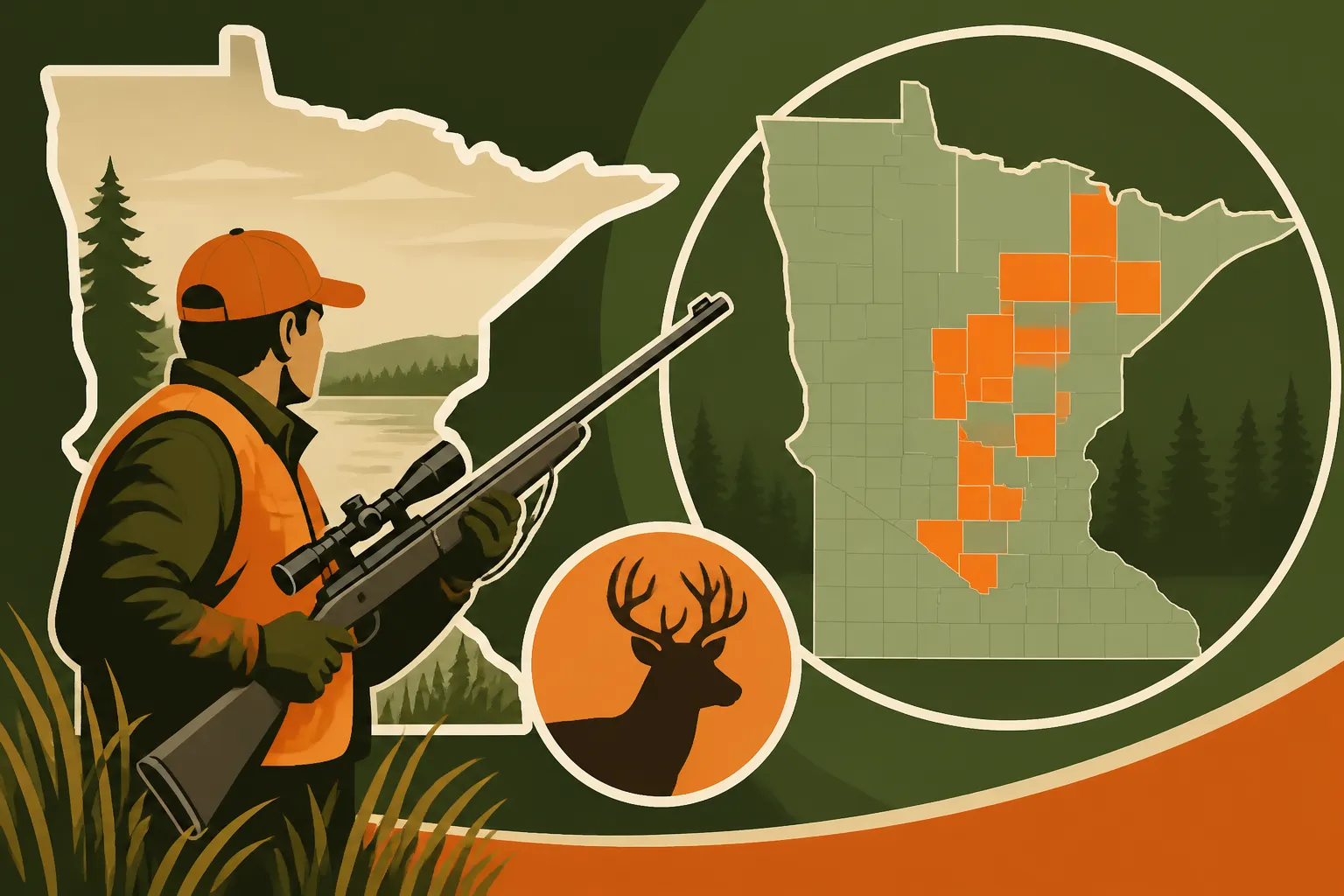
However, the widespread celebration overlooked a crucial detail for some. A closer look at the updated regulations revealed that not all "shotgun-only" designations vanished into thin air. A specific group of thirteen counties, often those with denser populations or unique geographical considerations, retained a modified version of the restriction. This left many hunters in these areas feeling a mix of confusion and disappointment. They thought they were finally free to use their rifles, only to find themselves still constrained by local ordinances that mandated "straight-wall cartridges" or maintained a completely "shotgun-only" status. It's a tricky situation that requires careful attention to detail, and a quick glance at the Minnesota's New Statewide Rifle Rules won't tell the whole story for these specific locales.
Why These Thirteen Counties Remain Different
So, why are these thirteen counties different? It largely boils down to a blend of historical context, population distribution, and local legislative decisions. These counties, often located closer to major metropolitan areas or boasting a higher concentration of homes and businesses, have historically had more stringent firearm regulations to address public safety concerns. The idea was that shotgun slugs or straight-wall rifle cartridges, with their generally shorter maximum effective ranges and rapid energy dissipation, posed less risk to unintended targets in more developed areas compared to bottleneck rifle cartridges.
The decision to retain these specific rules wasn't made lightly and reflects ongoing discussions between local communities, landowners, and hunting advocates. It's a frustration many hunters share when they look at a state map and see a patchwork of rules, but it’s the reality we operate within. To avoid any unwelcome surprises or legal trouble, it's absolutely paramount to verify the specific ordinances for the county you plan to hunt in. You can't assume. Always, always check the current regulations with the Minnesota DNR or local authorities before heading out. Sometimes, specific townships or cities within a county might even have their own nuanced rules. For an up-to-date list and guidance, be sure to check Which Thirteen Counties Kept Shotgun-Only Rules and understand how they affect your hunting plans. This often involves a quick search on the DNR's website or calling a local field office to ensure you're squared away, especially when you're Checking Your County's Shotgun-Only Ordinance.
Decoding "Straight-Wall Cartridge" for Deer Hunting
If you're hunting in one of Minnesota's thirteen remaining "shotgun-only" counties, the term "straight-wall cartridge" is going to become your new best friend. It's the key that unlocks rifle hunting in these areas, offering a significant upgrade in accuracy and range compared to traditional shotgun slugs, while still adhering to the spirit of the local regulations.
What Exactly is a Straight-Wall Cartridge?
At its core, a straight-wall cartridge is exactly what it sounds like: a cartridge where the bullet casing is a straight cylinder, or nearly so, from its base up to the bullet. Unlike a bottleneck cartridge, which tapers down to a narrower neck to hold a smaller-diameter bullet (think a typical .30-06 or .270), a straight-wall casing maintains a consistent diameter for most of its length. This design characteristic is often associated with handgun cartridges like the .357 Magnum or .44 Magnum, but it also applies to purpose-built rifle cartridges like the .350 Legend or .450 Bushmaster.
The practical implication for hunters is significant. Due to their design, straight-wall cartridges typically generate less pressure and propel bullets at lower velocities compared to high-power bottleneck rifle cartridges. This results in a ballistic profile characterized by a more pronounced bullet drop over distance and a generally shorter maximum range, especially when compared to something like a 6.5 Creedmoor. This reduced long-range capability is precisely why they are permitted in areas where public safety concerns dictate limits on bullet travel. For you, the hunter, it means you're getting rifle-level accuracy and a flatter trajectory than a shotgun slug, but you're still hunting within a responsible, often sub-200-yard effective range envelope.
Popular Straight-Wall Options That Fit the Bill
Thankfully, manufacturers have responded to the demand for effective straight-wall options, offering a variety of calibers that are perfectly legal and highly effective for deer in these specific Minnesota counties. These aren't obscure, hard-to-find rounds; they are widely available and increasingly popular.
One of the most popular choices to emerge in recent years is the .350 Legend. It's known for its mild recoil, relatively flat trajectory out to 200 yards, and excellent terminal performance on deer. It's quickly become a favorite for new hunters, youth hunters, or anyone looking for a low-recoil option that still packs a punch. Another formidable contender is the .450 Bushmaster. This round delivers a significant amount of energy, making it a powerful choice for larger deer and providing decisive knockdown power. It does come with a bit more recoil than the .350 Legend, but many hunters find it manageable, especially in a heavier rifle platform.
For those who appreciate classic firearms, the .45-70 Government is a fantastic straight-wall option, typically found in iconic lever-action rifles. It's a hard-hitter with a long history of taking large game, offering deep penetration and a strong punch within typical hunting ranges. While its trajectory is more rainbow-like compared to the .350 Legend, it's incredibly effective at shorter distances, which is often the reality in many of these counties. Additionally, handgun calibers like the .357 Magnum and .44 Magnum are also straight-wall cartridges. When chambered in a lever-action rifle, they make excellent, low-recoil, close-range deer guns, especially for those who might also carry a handgun in the same caliber. For a deeper dive into these options, check out articles like Straight-Wall Cartridges Legal in Minnesota and Straight-Wall Cartridges Worth Considering to help you make an informed decision.
| Cartridge | Typical Caliber (inches) | Primary Rifle Type (Common) | Recoil (Relative) | Effective Deer Range (Yards) | Notes |
|---|---|---|---|---|---|
| .350 Legend | .357 | Bolt-action, AR-style | Low | 175-200 | Great for new hunters, low recoil, good availability. |
| .450 Bushmaster | .458 | Bolt-action, AR-style | Medium-High | 150-175 | Powerful, excellent knockdown, good for larger deer. |
| .45-70 Government | .458 | Lever-action | High | 125-150 | Classic, heavy-hitting, deep penetration, often a thumper. |
| .44 Magnum | .429 | Lever-action | Low-Medium | 100-125 | Versatile (handgun/rifle), light recoil, good close range. |
| .357 Magnum | .357 | Lever-action | Low | 75-100 | Very light recoil, good for brush, excellent youth option. |
Performance and Practicality in the Field
Choosing a straight-wall rifle for hunting in Minnesota's specific counties isn't just about legality; it's about understanding the practical implications for your hunting style and the terrain you'll encounter. While these cartridges are designed with limitations, they are still incredibly effective tools for harvesting deer when used within their strengths.
Effective Range and Ballistics for Straight-Walls
Let's be realistic: a straight-wall cartridge isn't going to rival the flat trajectory and long-range energy of a .308 or a 6.5 Creedmoor. That's precisely the point of the regulation. However, what they do offer is a significant improvement over traditional shotgun slugs in terms of accuracy and practical range. While a slug might be reliably accurate out to 75-100 yards for most hunters, a well-placed shot with a .350 Legend can be effective out to 200 yards, and a .450 Bushmaster or .45-70 can easily handle 150 yards with proper bullet selection and practice.
The key difference you'll notice is bullet drop. Straight-wall cartridges, particularly the heavier, slower ones, will drop more significantly at longer distances than bottleneck rifle rounds. This means knowing your rifle and your chosen ammunition intimately is crucial. You'll need to spend time at the range, not just zeroing at 100 yards, but practicing shots at various distances to understand your holdovers. However, for most hunting scenarios in the woods and along field edges common in these Minnesota counties, a 100-150 yard shot is far more likely than a 300-yard hail mary. Within those typical distances, straight-wall cartridges deliver excellent terminal performance, ethically and effectively putting deer down. For advice on getting your rifle dialed in for these distances, take a look at Sighting In a Rifle for Minnesota Woods Ranges.
Rifle Platforms for Straight-Wall Cartridges
The good news is that you have a fantastic array of rifle platforms available to you, regardless of your personal preference. Straight-wall cartridges are chambered in a variety of actions, allowing you to choose a rifle that feels right in your hands and suits your hunting style.
Lever actions are perhaps the most classic choice for many straight-wall calibers like the .357 Magnum, .44 Magnum, and especially the venerable .45-70 Government. These rifles are iconic, fast-handling, and offer quick follow-up shots. They are often lightweight and well-balanced, making them a joy to carry through thick timber or brush, which is common in many of Minnesota's hunting grounds. For hunters who appreciate tradition and rugged reliability, a lever action is a superb choice.
For those who prefer modern precision, bolt-action rifles chambered in .350 Legend or .450 Bushmaster are increasingly popular. These offer exceptional accuracy, often surpassing the practical accuracy of lever actions, and are well-suited for hunters who prioritize precise shot placement. Many bolt-action models are now specifically designed for these straight-wall cartridges, providing a comfortable shooting experience. Finally, AR-style platforms have also embraced the straight-wall movement, with popular options chambered in .350 Legend and .450 Bushmaster. These offer modularity, adjustable stocks, and a familiar operating system for many shooters. While perhaps not traditional "deer rifles," they are highly effective and offer excellent ergonomics, especially when used with modern optics. Regardless of the platform, GoHunt's robust mapping tools can be a game-changer when scouting. By using its aerial imagery and terrain layers, you can visualize the cover, identify potential shot lanes, and estimate likely shot distances in these shotgun-only counties, helping you determine if a particular straight-wall setup is ideal for the area. This kind of planning helps you align your chosen rifle platform with the actual hunting conditions you'll face. When considering which caliber to pick, you might also find value in exploring Best Rifle Calibers for Minnesota Whitetails.
Choosing the Right Setup for Your Hunt
With a better understanding of straight-wall cartridges and the rifle platforms available, the next step is to tailor your setup to your personal preferences and hunting conditions. This means considering everything from the specific caliber to the optics you mount.
Caliber Considerations: Power, Recoil, and Availability
When selecting your straight-wall cartridge, you'll want to balance power with manageable recoil and ammunition availability.
.350 Legend: This is an incredibly versatile cartridge that has taken the straight-wall market by storm. It boasts very mild recoil, making it an excellent choice for new hunters, youth hunters, or anyone sensitive to heavy kick. Despite the low recoil, it delivers more than enough energy for whitetails out to 200 yards. Ammunition is generally plentiful and relatively affordable, which is always a bonus for practice. It's often compared to a souped-up .30-30 in terms of performance but with less felt recoil..450 Bushmaster: If you're looking for more raw power and don't mind a bit more recoil, the .450 Bushmaster is a fantastic option. It's often dubbed a "thumper" for a good reason – it hits deer exceptionally hard, providing rapid energy transfer and decisive kills. While the recoil is noticeable, it's generally manageable for most experienced shooters, especially in heavier rifles. It shines in thicker cover where shots are typically shorter and you want maximum impact..45-70 Government: This venerable cartridge has been taking big game for over a century, and its performance on deer is undeniable. Typically found in lever-action rifles, the .45-70 offers heavy, deep-penetrating bullets. Recoil can be stout, especially with modern loads, but it's incredibly effective within its effective range of 100-150 yards. If you appreciate tradition and a proven track record, the .45-70 is an excellent, reliable choice..357 Magnum/.44 Magnum: These handgun cartridges, when fired from a carbine or lever-action rifle, offer very low recoil and are incredibly fun to shoot. They are excellent choices for close-range hunting, especially in dense brush or timber where shots are rarely beyond 75-100 yards. Their versatility, allowing you to carry a handgun in the same caliber, is also a neat bonus. However, their effective range for deer is the shortest of the straight-wall options, so you need to be mindful of shot distance.
The ultimate choice often comes down to personal comfort, the type of terrain you hunt most frequently within these counties, and your budget for both the rifle and ammunition.
Optics and Accessories for Straight-Wall Rifles
Once you've settled on your rifle and caliber, pairing it with the right optics and accessories is crucial for success. For straight-wall cartridges, given their typical effective ranges, overly powerful, high-magnification scopes aren't usually necessary.
A low-power variable scope, something in the 1-4x, 2-7x, or 3-9x range, is often ideal. This allows for a wide field of view at lower magnifications for quick target acquisition in thick cover, and enough zoom for more precise shots at longer (but still ethical) straight-wall ranges. Red dot sights are also excellent for fast, close-range engagements in heavy brush, offering incredible speed. Look for optics with good low-light performance, as many crucial deer movements happen at dawn and dusk. For insights into selecting the right glass, consider reading Rifle Scopes for Low-Light Timber and Binocular Choice for Minnesota Whitetails.
Beyond optics, a quality sling is essential for comfortable carrying, especially if you're walking in deep to find those less-pressured areas. A comfortable, well-fitting stock can help manage recoil, particularly with the more powerful .450 Bushmaster or .45-70. Don't forget ample, reliable ammunition for practice and hunting. Lastly, consider how tools like GoHunt can assist in preparation. Its detailed satellite imagery can help you identify tight cover, open clearings, and potential travel corridors in your chosen county. By understanding the lay of the land, you can better anticipate shot distances and select the appropriate scope magnification or even decide if a red dot is more suitable for a particular area.
Navigating Regulations and Ethical Hunting
Hunting in these specific Minnesota counties with straight-wall rifles requires not just the right gear, but also a deep understanding and respect for the regulations. Being a responsible hunter means staying informed and making ethical choices in the field.
Staying Legal and Informed
The most important rule in hunting is knowing and following the law. Even though you've done your research on straight-wall cartridges, regulations can sometimes change, or specific nuances might apply to certain public land parcels within a county. Never rely solely on information from a few years ago or what a buddy told you. The official source is always the Minnesota Department of Natural Resources (DNR). Their website is the first place to check for current regulations, season dates, and specific county ordinances. If you're ever in doubt, a quick call to a local DNR office can clear up any confusion and prevent potential legal issues. It's a small step that can save a lot of headaches.
Beyond the firearm specifics, remember all the other general hunting regulations. This includes legal shooting hours, which are typically half-hour before sunrise to half-hour after sunset, as detailed in Minnesota Legal Shooting Hours. Always ensure you're using legal ammunition, and remember that minimum rifle caliber rules also apply even to straight-wall cartridges, so double-check Minimum Rifle Caliber for Minnesota Deer to ensure your chosen round meets the power requirements. While GoHunt is primarily a mapping and scouting tool, it can sometimes incorporate publicly available regulatory layers or help you visualize specific boundaries (like public vs. private land, or WMA borders) that might have additional rules, making it easier to stay within legal parameters.
Embrace the Challenge, Not the Frustration
It's easy to feel frustrated by the seemingly arbitrary distinction of "shotgun-only" counties, especially when rifles are legal almost everywhere else. However, I encourage you to shift your perspective. Instead of seeing it as a limitation, view it as a unique challenge that calls for different skills and equipment. Hunting these areas with a straight-wall rifle forces you to become a better hunter in many ways. You'll likely focus more on still-hunting, tracking, and understanding deer movement in tighter cover, often prioritizing closer shots.
Embracing a straight-wall rifle is an opportunity to expand your hunting repertoire. Become proficient with your chosen setup – learn its ballistic characteristics, practice at various distances, and understand its ethical limitations. Focus on getting closer, reading the wind, and setting up smart stands along natural funnels or food sources. These skills are invaluable regardless of what firearm you carry, and mastering them in these restricted zones will make you a more well-rounded hunter overall. Many fantastic hunting opportunities exist in these areas, both on Hunting Small Private Tracts in Minnesota and public lands, and a straight-wall rifle lets you take full advantage of them. You'll find these areas can be incredibly productive, especially for Hunting Minnesota Farmland Deer that seek refuge in smaller woodlots and creek bottoms.
Disclaimer
This article is for general informational purposes only and does not constitute professional advice. Laws, prices and regulations vary by location and change over time. Consult a qualified professional for guidance on your specific situation.