Treestands and Saddles on Public Land
Navigating Minnesota's vast public lands with the goal of an elevated hunt can feel like a daunting puzzle. From understanding the nuances of where you can even place a stand, to choosing the right gear that won't weigh you down or leave you exposed, it's a challenge many of us face. This guide will walk you through everything you need to know about successfully using treestands and hunting saddles on Minnesota public land, ensuring you're safe, effective, and compliant with all the rules.
The Public Land Treestand Dilemma in Minnesota
Hunting public land in Minnesota offers incredible opportunities, but it also comes with a unique set of challenges, especially when it comes to elevated hunting positions like treestands and saddles. It’s not simply a matter of throwing up your favorite stand wherever you find a good tree. The rules are in place for good reasons—to protect the land, ensure fair chase, and keep everyone safe—but understanding and adhering to them can feel like a full-time job.
Understanding Public Land Regulations for Stands
One of the biggest frustrations for hunters on public land is the confusion around what's allowed and what's not. You hear whispers at the local bait shop about someone's stand being cut down or confiscated, and it makes you nervous. In Minnesota, the general rule of thumb for most Wildlife Management Areas (WMAs) and State Forests is that treestands must be portable and temporary. This usually means they need to be removed at the end of each hunting day or, at the very least, at the end of the specified season. Leaving a stand up permanently or for extended periods can lead to it being removed by the DNR or even fines. Always check the specific regulations for the public land you intend to hunt, as rules can sometimes vary slightly between different types of public access land, such as certain federal lands or local parks.
The spirit of these rules is to prevent "claiming" a spot and to ensure that public resources remain accessible to everyone. Imagine if every prime tree on a popular WMA had a stand bolted to it all season long; it would quickly make public hunting miserable for newcomers or those who don't have the time to scout weeks in advance. These regulations, while sometimes inconvenient, level the playing field. They force us to be mobile and adaptable, which often makes us better hunters in the long run. Familiarize yourself with the specifics of Minnesota Wildlife Management Areas and their particular guidelines regarding stand placement.
Scouting for Your Perfect Stand Location
Before you even think about hauling your treestand or saddle into the woods, serious scouting is non-negotiable, especially on public land. You're not just looking for a deer sign; you're looking for the right deer sign in the right tree, in a spot that offers a safe and effective shot, and allows for legal stand placement. It's a tall order! Many hunters start their scouting digitally, using mapping tools to identify potential funnels, pinch points, and cover transitions. You can layer satellite imagery with topographic maps to get a real feel for the terrain from your living room.
Once you have a few promising spots marked on your map, it’s time to hit the woods. This usually happens long before the season opens, ideally in late winter or early spring when foliage is down, making it easier to see rubs, scrapes, and old bedding areas. As you scout, look for high-traffic corridors, natural bottlenecks where deer are forced to move in a predictable pattern, and areas offering food and cover. Keep wind direction in mind for every potential setup. A stand in the perfect travel corridor is useless if the prevailing wind constantly blows your scent directly into the deer's path. Tools like GoHunt's mapping features can be incredibly useful for marking potential tree locations, exit and entry routes, and even observing past hunter activity if available, helping you plan your approach and escape routes discreetly. This pre-season work is truly the foundation for a successful hunt. Remember, the more you understand the terrain and deer movement, the better equipped you'll be to pick an effective and legal stand site. To dive deeper, check out Scouting Minnesota Public Land Before Season.
Treestand Types and Their Public Land Suitability
Choosing the right type of elevated stand for public land in Minnesota comes down to balancing mobility, comfort, and compliance with regulations. Each option has its strengths and weaknesses, and what works perfectly for one hunter or one type of terrain might be a total bust for another. It’s about understanding your hunting style and the specific conditions you’ll face in the woods.
Portable Hang-On Stands
Portable hang-on stands are a staple for many public land hunters, and for good reason. They're typically lightweight, making them easier to pack deep into remote areas where other hunters might not venture. Their versatility is a huge plus; they can be hung on a wide variety of trees, including those with some lean or irregular trunks that a climber stand wouldn't accommodate. This adaptability means you can often find a suitable tree in a prime location that others overlook. However, their primary downside is the need for separate climbing sticks or a climbing aid, which means extra gear to carry and additional time for setup and takedown. This can be cumbersome in the dark or in extremely cold weather.
When using a hang-on, you're looking for a straight, healthy tree that offers good cover and a clear shooting lane. The ideal tree is often 15-20 feet up, just enough to get above the deer's line of sight and minimize your scent cone. The time investment for hanging and taking down a hang-on, especially if you're doing it daily, can be significant. However, for a hunter who values mobility and the ability to adapt to changing deer patterns or pressure, a good hang-on stand is invaluable. You might pack it in a mile or two on your back, set it up for a morning hunt, and then take it down to move to a new spot for the evening if the sign isn't right. For more on these nimble options, read Portable Treestands Worth Packing In.
Climbing Stands
Climbing stands offer a self-contained solution for elevated hunting, eliminating the need for separate climbing sticks. They consist of two sections—a seat section and a platform section—that you "climb" up the tree with. The biggest advantage here is the reduced amount of gear and the potential for a quieter, quicker setup once you're at the tree. They're popular for hunters who like to move frequently, as the entire unit goes up and down with you. However, their major limitation is tree selection; climbing stands require a relatively straight, limbless tree trunk for safe and effective use. Finding such a tree in thick, diverse Minnesota cover can sometimes be a challenge, particularly in areas with a lot of young popple or gnarly oaks.
While a climber can be incredibly efficient in the right timber, they tend to be bulkier and heavier to carry than many hang-on stand setups. Transporting them over long distances, especially through dense brush or swamps, can be a workout. Many hunters find them ideal for public land with mature, straight-trunked hardwoods or pines, allowing them to quickly ascend to their desired height. The sound of a climber stand can also be a factor, as the metal-on-bark friction during ascent and descent can be audible to nearby deer if you're not careful. Still, for a hunter seeking simplicity and a self-contained unit, a climbing stand can be a fantastic choice, provided your hunting area offers suitable trees. Explore Climber Stands on Straight Trunks for more insights.
Ground Blinds on Public Land
Sometimes, an elevated position just isn't feasible or desirable, and that's where ground blinds come into play. While not technically "treestands," they serve a similar purpose of concealment and offer unique advantages on public land. Ground blinds provide excellent concealment, shielding your movement and helping contain scent, which can be a huge benefit, especially with young or new hunters who might fidget. They also offer a degree of protection from the elements, a welcome comfort during a cold November sit in Minnesota. Setting up a ground blind, however, takes careful consideration on public land.
Regulations typically require ground blinds to be temporary and removed daily, or within a certain timeframe, just like treestands. Some areas might have specific rules about what materials can be used or how close to a boundary line you can place them. They can be bulky to carry, so they're often best suited for situations where you don't need to walk great distances, such as hunting a field edge or a specific food plot on public land that allows it. The main downside is that your scent cone is at ground level, which can be a significant disadvantage with swirling winds. Plus, they obscure your line of sight more than an elevated stand, making it harder to spot approaching game. Despite these drawbacks, a well-brushed-in ground blind can be incredibly effective, especially for wary deer that are accustomed to looking up for threats, not straight ahead. Understanding Ground Blind Rules on Minnesota WMAs is crucial before you deploy one.
Embracing the Saddle Hunting Revolution
Saddle hunting isn't new, but it's experienced a massive resurgence in popularity, especially among public land hunters. If you've never tried it, the idea of "hanging" from a tree in a harness might seem a little unconventional. However, it offers a level of mobility, stealth, and versatility that traditional treestands often can't match, making it a powerful tool for navigating Minnesota's diverse and often heavily pressured public lands.
Why Saddle Hunting is Gaining Traction
The core appeal of saddle hunting on public land boils down to three words: lightweight, mobile, and versatile. A full saddle setup, including the saddle itself, a small platform, and climbing sticks, is typically much lighter and more compact than even the lightest portable hang-on stand. This means you can pack in further and faster, accessing those overlooked pockets of public ground that other hunters can't or won't reach. The silence of packing a soft saddle compared to rattling metal stands is also a huge advantage, letting you slip in undetected during predawn hours.
But perhaps the biggest game-changer is the 360-degree shooting capability. Unlike a fixed treestand, where you're often limited to a 90-degree shooting window in front of you (unless you contort yourself awkwardly), a saddle allows you to swing around the tree. This means you can comfortably shoot to your left, right, or even behind the tree, dramatically expanding your shot opportunities and making you a much more adaptable hunter when deer inevitably approach from an unexpected angle. It fundamentally changes how you think about treeline selection and shot angles, offering a tactical edge on wary public land deer.
Components of a Public Land Saddle Setup
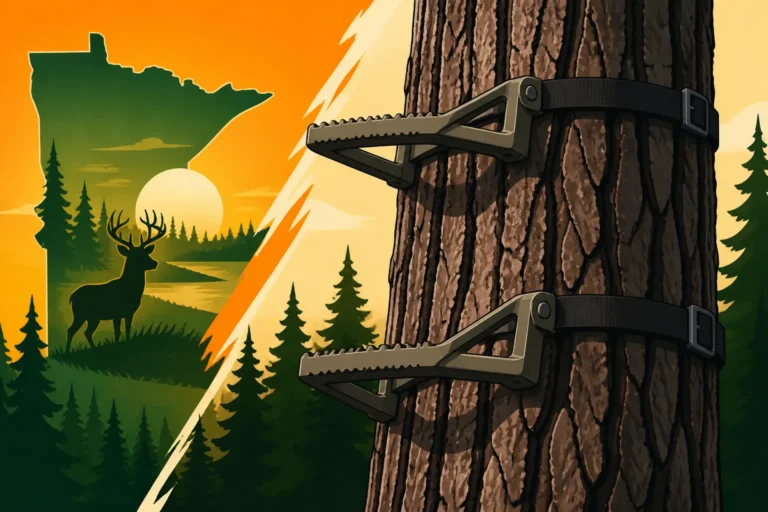
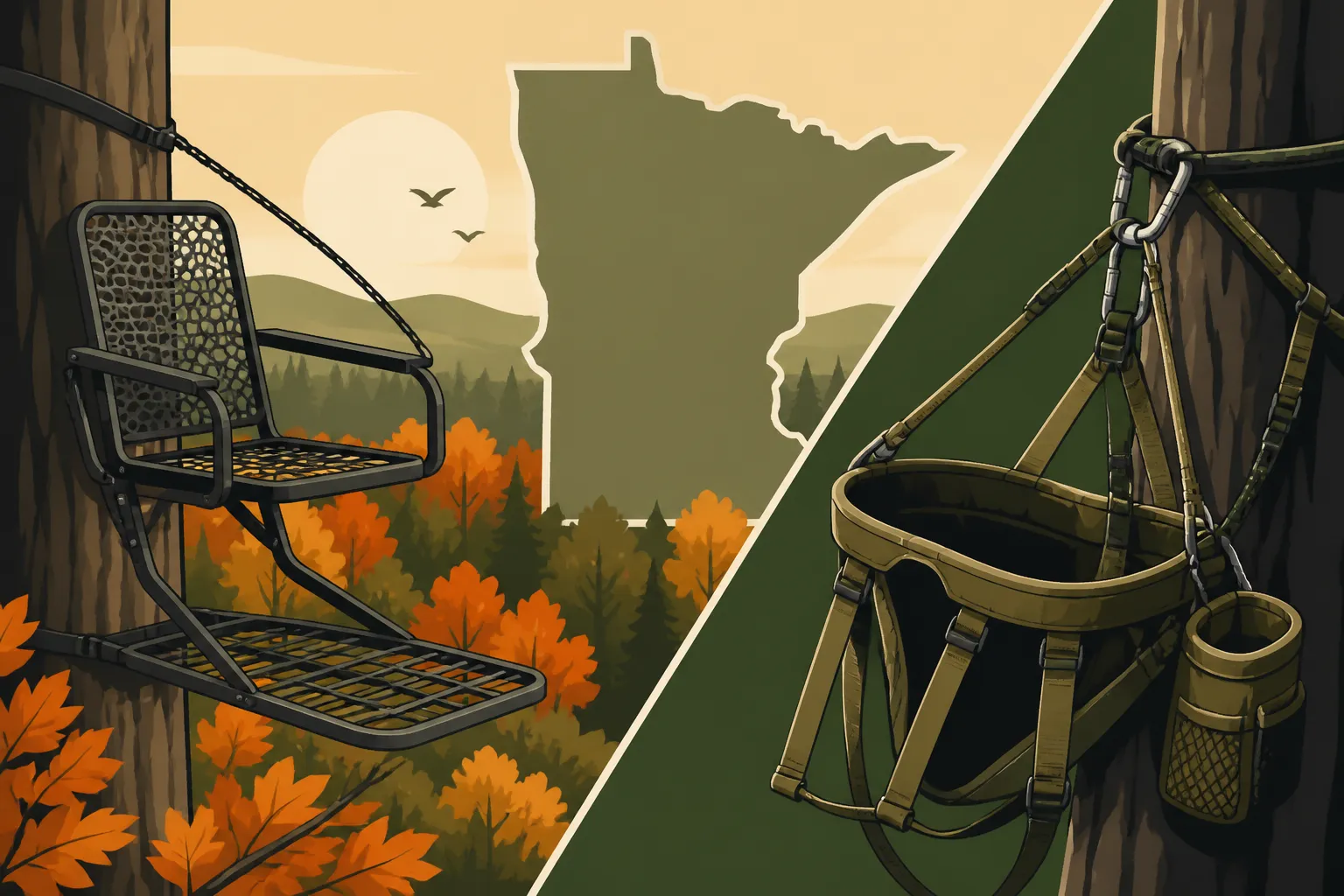
A complete saddle hunting setup for public land requires a few key components, all designed with minimalism and functionality in mind. First, of course, is the saddle itself, which is essentially a padded harness that you wear. Different brands offer various levels of padding and features, so finding one that fits your body and comfort preferences is important. Second, you'll need a platform or "steps" to stand on once you're in the tree. These can range from small, foldable platforms to individual steps that screw into the tree (where allowed) or attach with straps. This platform provides stability and allows you to move around the tree.
Third, a reliable climbing method is essential. The most common choices are lightweight climbing sticks, which attach to the tree in sections, or a single rope-style climbing system. Many hunters opt for multiple climbing sticks to reach their desired height, usually around 15-20 feet. Finally, you'll need a tether rope and a lineman's belt (also a rope) for safety. The lineman's belt secures you to the tree as you climb, freeing up both hands, while the tether rope is what you attach to once you're at hunting height, allowing you to move around the tree. All these components are chosen for their light weight and packability, enabling hunters to quickly deploy and retrieve their setup without leaving a trace on public land. Exploring Saddle Hunting in Minnesota Oaks can provide more specific insights into this versatile method.
Learning the Ropes: Safety and Practice
As with any elevated hunting method, safety is paramount when saddle hunting, and it requires dedicated practice to become proficient and confident. Don't make the mistake of buying a saddle and taking it into the woods for the first time on opening day. You need to spend serious time in your backyard or a low-pressure area learning the ropes, literally. Practice setting up your climbing sticks, ascending the tree, attaching your lineman's belt, and transitioning to your tether rope. Get comfortable with the feel of the saddle, how to move around the tree, and how to draw and aim your bow or rifle from various angles.
Tree selection is critical. Always choose a healthy, sturdy tree free of dead branches that could break. Avoid climbing trees with loose bark or excessive ivy that could compromise your grip or stability. Practice attaching your tether rope at a comfortable height that allows you to lean back and shoot effectively without hitting the tree. It’s also wise to practice in your full hunting clothes, including your backpack, to simulate real-world conditions. Many saddle hunters swear by a redundant safety system, always having at least two points of contact with the tree. The initial learning curve can be steep, but the mobility and versatility gained are immense, especially for public land hunting where adaptability is key. A little practice beforehand can prevent a lot of frustration—and ensure your safety—when you're out in the field.
Key Considerations for Public Land Hunting from Above
Whether you choose a traditional treestand or embrace the saddle hunting method, there are universal truths and critical considerations when hunting from an elevated position on Minnesota's public lands. Ignoring these factors can not only lead to an unsuccessful hunt but, more importantly, can put your safety or the integrity of the land at risk.
Safety First: Harnesses and Lifelines
This cannot be stressed enough: Always, always, always wear a full-body harness and use a lifeline or safety rope when hunting from any elevated position. Every hunting season, we hear tragic stories of hunters falling from stands, often with life-altering or fatal consequences. These accidents are almost entirely preventable with proper safety equipment and its consistent use. A full-body harness isn't just a suggestion; it's an essential piece of gear. It’s designed to distribute the impact of a fall and keep you upright, allowing you to recover or call for help.
Your lifeline (or descending rope) should be attached to the tree from the moment your feet leave the ground until you're back on solid earth. This keeps you connected to the tree at all times, preventing falls during the most vulnerable moments of climbing or descending. Many companies offer easy-to-use lifelines that remain on the tree, allowing for quiet and secure access on subsequent hunts if regulations permit leaving a rope. Don't skip this step, and don't take shortcuts. No deer is worth your life or a debilitating injury. Invest in a quality harness and lifeline, learn how to use them correctly, and make them an automatic part of your routine. Your loved ones will thank you. For more essential safety gear, look into Safety Harnesses and Lifelines.
Minimizing Your Footprint and Scent
Public land deer in Minnesota, especially those close to access points, are incredibly wary. They've been hunted, pushed, and educated. Therefore, minimizing your footprint and managing your scent become even more critical when hunting from an elevated position. Your entry and exit routes to and from your stand or saddle location are just as important as the spot itself. Try to use routes that are naturally covered, against a ridge line, or through thick brush, avoiding open areas where you might be silhouetted or easily seen. Consider routes that lead away from bedding areas rather than directly through them. This means choosing a path that doesn't put deer on high alert before you even get into your stand.
Scent control is a constant battle. While an elevated position helps by dispersing your scent cone above ground level, it doesn't eliminate it. Showering with scent-eliminating soaps, washing your hunting clothes in scent-free detergent, and storing them in airtight bags can all help. Pay particular attention to your boots, as they're constantly on the ground. Use scent-wipes on your gear and avoid bringing anything with strong odors into the woods. A smart hunter understands that every action, from the snack they eat to the clothes they wear, can leave a trail that deer will inevitably pick up. Thinking like a deer about where they would smell you coming from is a powerful strategy. Consider a deeper dive into Entry Routes Through a Cattail Slough for route planning.
Packing It In and Out: Mobility and Weight
One of the defining characteristics of public land hunting, especially in Minnesota's vast stretches of wilderness or extensive WMAs, is the need for self-sufficiency and mobility. You’ll be carrying all your gear in and out, often over considerable distances and challenging terrain. This makes weight a primary consideration for your treestand or saddle setup. Every pound counts, particularly when you're looking at a multi-mile hike to reach your chosen spot.
Lighter gear means less fatigue, which translates to more energy for focus, better decision-making, and safer climbs. When evaluating stands or saddles, look not just at the weight of the main unit but also the combined weight of your climbing sticks, platform, ropes, and safety equipment. Can you consolidate items? Is there a lighter alternative for a component? While investing in premium, lightweight gear can be a financial stretch, it's often worth it in the long run for the increased comfort, access, and overall enjoyment of your public land hunts. Planning your pack strategy is also key, ensuring everything is secure, balanced, and quiet so you don't spook game on your way in or out. Many hunters, using tools like GoHunt, meticulously plan their routes, factoring in elevation changes and cover, which further emphasizes the need for a portable, packable setup.
Maximizing Your Elevated Position on Minnesota Public Land
Getting into an elevated position on public land is only half the battle. To consistently find success, you need to understand how to leverage that height to your advantage, reading the landscape and adapting to the dynamic environment of the Minnesota woods. Public land deer are smart, and our strategies need to be even smarter.
Strategic Placement for Deer Movement
The most expensive treestand or lightest saddle is useless if it's placed in the wrong spot. Strategic placement is paramount. On public land, this often means focusing on "micro-funnels" or subtle terrain features that concentrate deer movement. These aren't always obvious. Look for narrow strips of timber between open fields, fence lines that force deer through a gate, or subtle changes in elevation that create natural travel corridors. Even a small ditch or a slight rise can be enough to channel deer predictably. When scouting, pay close attention to historical sign: old rub lines, persistent scrapes, and well-worn deer trails.
Consider the time of day you'll be hunting. For a morning hunt, you might want to be closer to a bedding area, intercepting deer as they move from feeding to bed. For an evening hunt, reversing that, placing your stand closer to a food source or a transition zone between cover and feed. Think about your shot angles and lanes. Once you're 15-20 feet up, the angle changes significantly. Make sure you have clear lines of sight and shooting lanes to areas where you anticipate deer will appear, but also enough cover to break up your silhouette. Understanding these nuances will dramatically increase your odds. For more on reading the land, check out Reading a Ridge for Northern Minnesota Deer.
Adapting to Changing Conditions
Minnesota weather is notoriously unpredictable, and successful public land hunters are masters of adaptation. Wind direction is arguably the single most critical factor when hunting from an elevated stand. A shift in wind can completely ruin a hunt by carrying your scent directly to the deer. Always have multiple stand locations or "milk runs" scouted for various wind directions. If the wind changes mid-hunt, be prepared to move, or at least understand the implications for deer movement. Thermals, especially in hilly terrain like Southeast Minnesota's bluff country, also play a huge role. Early mornings see thermals falling (moving downhill), while evenings see them rising (moving uphill). Positioning your stand to account for these subtle air currents can keep your scent out of a deer's nose.
Beyond wind, consider other environmental factors. A sudden cold snap might push deer to different food sources or more sheltered bedding areas. Fresh snow can create new travel patterns, making previously uninteresting areas hot. Rain can wash away scent but also makes for noisy movement. The best public land hunters aren't just reacting to these changes; they're anticipating them based on their knowledge of the area and deer behavior. Always consult weather forecasts, and don't be afraid to adjust your plans on the fly. Being able to move quickly and quietly with a versatile stand or saddle setup is a huge advantage when conditions demand a change. Delve deeper into managing these conditions with Wind and Thermals on a Minnesota Ridge.
Dealing with Hunting Pressure
Public land in Minnesota, particularly during peak firearm season or the rut, can experience significant hunting pressure. This pressure dramatically alters deer behavior, making them more nocturnal, skittish, and prone to using dense, overlooked cover. When everyone is hitting the obvious trails and clearings, you need to think differently. One of the best ways to deal with pressure is to simply walk further. Most hunters won't venture more than a half-mile or so from an access point. The further you're willing to go, the less pressure you'll encounter, and the more likely you are to find deer acting naturally.
Another strategy is to identify those overlooked, undesirable pieces of habitat—a small, nasty cattail slough, a thick regenerating clear-cut, or a seemingly impenetrable cedar swamp. These areas often become sanctuaries for pressured deer. While it might be a challenging climb or a tough walk to get there, these spots can hold mature deer that have learned to avoid easy access points. Consider hunting mid-week if your schedule allows, as weekend pressure is typically much higher. Using your elevated position to spot other hunters can also help you understand how deer might be pushed. If you see hunters moving through a certain area, anticipate deer being driven out of it and position yourself to intercept them. Adapting to and anticipating hunter pressure is a crucial skill for consistent success on public ground. For more on navigating crowds, read Hunting Pressure on Minnesota Public Land.
Comparison of Elevated Hunting Options for Public Land
To help you decide which elevated hunting method might be best for your next public land adventure in Minnesota, here’s a quick comparison of the pros and cons of each.
| Feature | Portable Hang-On Stand | Climbing Stand | Hunting Saddle | Ground Blind |
|---|---|---|---|---|
| Mobility | Good (requires climbing sticks) | Good (self-contained unit) | Excellent (lightest, most compact) | Fair (bulky, but no climbing needed) |
| Tree Suitability | Versatile (fits varied tree types, incl. crooked) | Limited (requires straight, limbless trunks) | Very Versatile (fits almost any tree) | Not Tree Dependent (can be set up anywhere) |
| Stealth (Pack-in) | Fair (some metal noise, but can be muffled) | Good (can be bulky, some noise) | Excellent (minimal noise, soft materials) | Fair (bulky, can be noisy to carry) |
| Setup Time | Moderate (hanging stand & sticks) | Fast (once at suitable tree) | Moderate (setting sticks/platform & saddle) | Fast (deploying blind, brushing in) |
| Shooting Angles | Good (limited by stand size/tree position) | Good (limited by stand size/tree position) | Excellent (360-degree range around tree) | Limited (shooting windows, ground level) |
| Scent Management | Good (elevated) | Good (elevated) | Excellent (elevated, smaller profile) | Fair (ground level, but contained) |
| Comfort | Varies by model (can add cushions) | Varies by model (can add cushions) | Varies greatly (personal preference, practice needed) | Excellent (shelter from elements, room to move) |
| Primary Use Case | Mobile, adaptive hunting in varied cover | Quick setups in areas with suitable trees | Deep public land penetration, ultimate adaptability | Specific travel corridors, field edges, bad weather |
| Public Land Rules | Must be removed daily/season's end (check local rules) | Must be removed daily/season's end (check local rules) | Must be removed daily/season's end (check local rules) | Must be removed daily/season's end (check local rules) |
Ultimately, the best choice for you will depend on your personal hunting style, the specific public land you intend to hunt, and your willingness to invest time in practice and gear. Many public land hunters will have a mix of these options at their disposal, choosing the right tool for the right situation.
Disclaimer
This article is for general informational purposes only and does not constitute professional advice. Laws, prices and regulations vary by location and change over time. Consult a qualified professional for guidance on your specific situation.