Minimum Rifle Caliber for Minnesota Deer
It's incredibly common for hunters, especially those new to Minnesota or returning after some time away, to feel a bit lost when it comes to rifle caliber regulations for deer. With all the recent changes, the question of "what's legal?" has become more important than ever. This comprehensive guide is here to cut through the confusion, clearly outline the minimum rifle caliber requirements for deer hunting in Minnesota, and help you make an informed, ethical choice for your next season.
Navigating Minnesota's Legal Rifle Caliber Landscape
The rules surrounding rifle calibers for deer in Minnesota have seen significant updates in recent years, moving away from the long-standing divide between shotgun-only zones and rifle zones. This shift has brought greater clarity but also introduced new questions about what is truly legal and effective.
The Statewide Shift and Understanding the Minimums
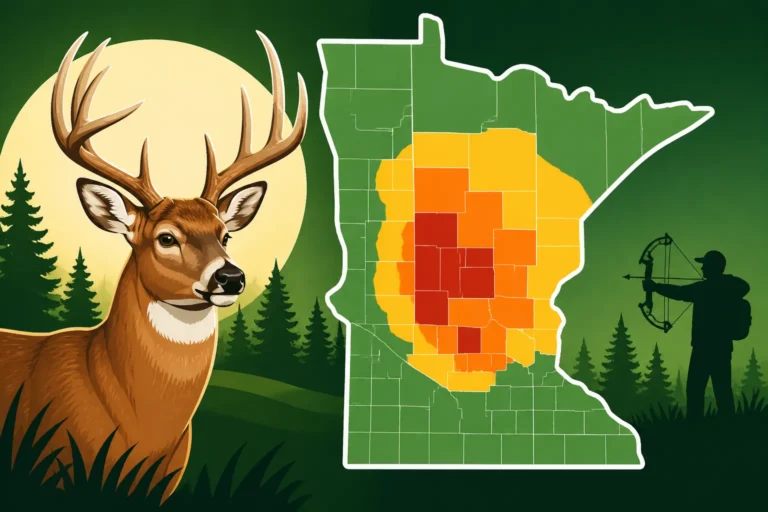
For decades, Minnesota deer hunting was bifurcated, with much of the southern and central parts of the state designated as "shotgun-only" zones due to population density and safety concerns. This meant hunters in these areas relied on slug guns or muzzleloaders, while those in the expansive northern forests could use traditional rifles. This distinction often led to hunters owning multiple firearms or limiting their hunting locations based on their equipment. However, the Minnesota DNR, after years of discussion and legislative efforts, implemented significant changes, allowing centerfire rifles for deer hunting statewide, with very few exceptions. You can read more about Minnesota's New Statewide Rifle Rules and the reasons behind them.
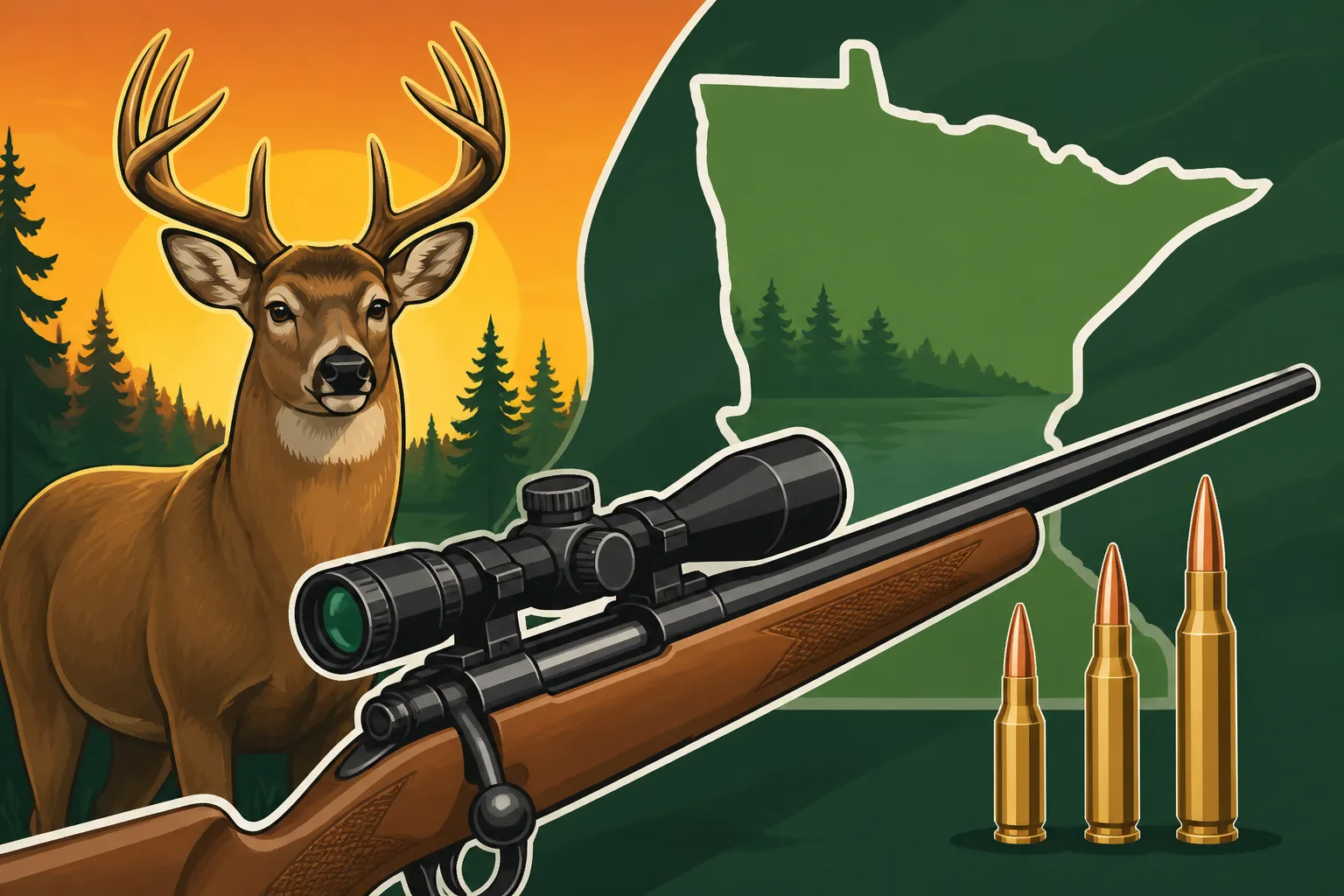
The crucial detail for any hunter is understanding the minimum legal requirements. For hunting deer in Minnesota, the law now states that centerfire rifles must be .22 caliber or larger and use ammunition with a soft point or expanding bullet. This means cartridges like the popular .223 Remington, .243 Winchester, .270 Winchester, .30-30 Winchester, .308 Winchester, and .30-06 Springfield are all perfectly legal, provided they meet the expanding bullet criterion. The removal of the "straight-wall cartridge only" restriction in most areas opened up a vast array of effective hunting rounds that were previously off-limits to many Minnesota deer hunters. This change means you're no longer restricted to specific firearm types when considering your options, giving you much more flexibility in your choice of rifle setups for Minnesota deer hunting.
This statewide allowance dramatically simplifies things for many, but it does place the onus on hunters to understand the capabilities and limitations of their chosen cartridge. While a .22 centerfire might be legal, whether it's the most ethical choice is a question we'll delve into later. The intent behind the minimum caliber is to ensure sufficient energy and bullet construction for a quick, humane kill, reflecting a core principle of responsible hunting.
The Enduring Role of Straight-Wall Cartridges in Minnesota
While the statewide rifle legalization has largely done away with the "straight-wall only" mandate, it's not entirely gone. There are still specific circumstances where straight-wall cartridges retain a place, either by choice or by local ordinance. For instance, even though most counties can now use bottlenecked cartridges, a few—thirteen counties, to be exact—have opted to retain their "shotgun-only" status. These are primarily located in the more populated, developed areas near the Twin Cities metropolitan region or other high-density areas. Hunters in these specific counties will still be restricted to shotguns with slugs, muzzleloaders, and, yes, straight-wall rifle cartridges. This means understanding Which Thirteen Counties Kept Shotgun-Only Rules is vital if you hunt in those particular areas.
For hunters who frequently move between different states with varying regulations, or those who simply prefer the characteristics of straight-wall cartridges, options like the .45-70 Government, .444 Marlin, .350 Legend, .450 Bushmaster, and .357 Magnum (in a rifle) remain excellent choices. These cartridges offer significant knockdown power at typical deer hunting ranges, often excelling in dense cover where longer shots are rare. Many hunters also appreciate the lower recoil of some straight-wall options, like the .350 Legend, making them excellent choices for new hunters or those sensitive to recoil. Their effectiveness within 150-200 yards is undeniable, and for many Minnesota hunters, especially in the woods, those are precisely the ranges they encounter.
This continued relevance of straight-wall cartridges highlights the importance of checking local ordinances, even within a state with statewide rifle legality. It’s always best practice to confirm the specific regulations for your chosen hunting grounds, whether through the DNR's official resources or by consulting mapping applications like those offered by GoHunt, which often provide overlay information about hunting zones and special restrictions. Choosing a rifle that is versatile enough for both scenarios, or having a dedicated firearm for each, ensures you're always hunting legally and effectively.
Essential Safety and Ethical Considerations
Beyond merely meeting the legal minimum, responsible deer hunting in Minnesota demands a deep understanding of ethical considerations and safety. Choosing a rifle caliber isn't just about what's allowed; it's about what ensures a quick, humane harvest and maintains safety for everyone in the field. A bullet's effectiveness hinges on its ability to transfer sufficient energy to the animal, creating a wound channel that leads to rapid incapacitation. While a .22 centerfire might be legal, its marginal energy for deer, especially beyond very close ranges or with less-than-perfect shot placement, means many experienced hunters would consider it a poor ethical choice.
Over-penetration is another factor, particularly important on Minnesota's public lands, which can sometimes see significant hunting pressure. A bullet that passes through a deer without expending all its energy can continue on, potentially creating a hazard for other hunters or property beyond the target. While modern bullet construction aims to mitigate this by designing projectiles that expand reliably and shed energy within the animal, it's still a consideration. Selecting a cartridge and bullet combination that consistently expands and creates a devastating wound channel, without excessive over-penetration, is key.
Ultimately, the most ethical choice is the rifle you can shoot most accurately. A powerful magnum caliber is useless if you can't place the shot precisely where it needs to go. Conversely, a moderately powered cartridge placed perfectly in the vitals is far more effective than a high-powered round that wounds an animal. This emphasizes the critical importance of practice at the shooting range, not just to sight in your rifle for Minnesota woods ranges, but to become intimately familiar with your firearm's recoil, trigger pull, and point of impact at various distances. Knowing your rifle and your limits is the cornerstone of ethical hunting, ensuring that when the moment of truth arrives, you're prepared to make a clean, humane shot.
Practical Rifle Caliber Choices for Minnesota's Diverse Deer Hunting Terrain
Minnesota is a state of incredible contrasts, from the vast, dense forests of the north to the open agricultural fields of the south and west. This varied landscape means that the "best" rifle caliber can often depend heavily on where you're hunting.
Calibers for the Thick Big Woods and Northern Forests
Hunting in Minnesota's "Big Woods" country, particularly in the northern reaches, presents a unique set of challenges and opportunities. Here, shot distances are often short, ranging from 20 to 100 yards, and visibility can be severely limited by thick aspen, pine, and alder stands. Quick, decisive shots are the norm, and a bullet's ability to navigate light brush without deflecting too much, while delivering maximum energy upon impact, is paramount. Many hunters still swear by traditional brush guns or those designed for moderate ranges.
Cartridges like the classic .30-30 Winchester are legendary in this type of terrain. Its moderate velocity, paired with a heavy, flat-nosed or round-nosed bullet, means it carries good energy at typical timber ranges and has a reputation for cleanly taking deer. The .45-70 Government, a powerful straight-wall option, is another fantastic choice for the Big Woods, delivering immense knockdown power at close range, perfect for situations like still-hunting Minnesota big woods or hunting a funnel between two sloughs. The newer straight-wall cartridges, such as the .350 Legend and .450 Bushmaster, also fit perfectly into this niche, offering modern rifle platforms with excellent ballistic performance for close-to-moderate range hunting. Their design means they often perform well even if they clip a small twig on the way to the target, though no bullet is truly "brush-proof."
The key here isn't necessarily flat trajectory over hundreds of yards, but rather reliable terminal performance at closer distances. You want a bullet that expands quickly and efficiently, transferring all its energy into the deer. Bullet construction matters immensely; softer, faster-expanding bullets are often preferred over hard, deep-penetrating ones designed for much larger game or longer distances. The goal is to anchor the deer quickly, preventing it from running into impenetrable cover.
Farmland, Open Fields, and Longer Shot Opportunities
Shift your focus to the agricultural heartland of southern and western Minnesota, and the hunting dynamic changes dramatically. Here, deer often feed in vast cornfields, soybean fields, or winter wheat plots, and bed in small woodlots or cattail sloughs. Shots can range from 100 yards to sometimes 300 yards or even more, depending on the setup and field of view. In these open environments, a flat-shooting cartridge that retains energy over longer distances becomes a distinct advantage.
Calibers such as the .270 Winchester and .308 Winchester are perennial favorites for this type of hunting. The .270 is renowned for its flat trajectory and excellent energy retention, making it a superb choice for those longer shots across a field. The .308 offers similar versatility with a slightly heavier bullet, making it a fantastic all-around cartridge that performs well in both open country and moderate woods. For those looking for a more modern, exceptionally accurate option, the 6.5 Creedmoor has quickly gained immense popularity. While often associated with long-range precision shooting, its mild recoil and excellent ballistic coefficient make it incredibly effective for deer at extended ranges, even though it started in more mountainous terrain, it's quickly proven its worth in places like Minnesota farmland deer hunting. You can learn more about how the 6.5 Creedmoor for Minnesota Big Woods can also adapt well to open country.
When hunting in these more open areas, the choice of bullet is just as important as the caliber. Look for bullets with a high ballistic coefficient (BC) that resist wind drift and maintain velocity better over distance. Controlled expansion bullets are generally a good choice, ensuring deep penetration and significant tissue damage without fragmenting excessively. It's also critical to zero your rifle appropriately for these longer distances, often at 200 yards, to minimize holdover or hold-under at typical hunting ranges. Mapping applications, like those available through GoHunt, can be incredibly useful in scouting these open areas, identifying potential shot lanes, and estimating distances before you even set foot in the field.
Balancing Recoil, Accuracy, and Bullet Performance
Choosing the "right" caliber is a deeply personal decision that goes beyond legality and terrain; it must factor in the shooter's ability and comfort. Many hunters mistakenly believe that a more powerful cartridge automatically equates to a more effective kill. While bullet energy is undoubtedly important, it's far from the only variable, and often, it's not even the most important.
The reality is that accuracy trumps raw power every single time. A smaller, less powerful caliber that you can shoot with pinpoint precision will always be more effective and ethical than a magnum round that causes you to flinch, anticipating heavy recoil, leading to a poorly placed shot. Recoil sensitivity varies greatly from person to person. Some hunters can comfortably shoot a .300 Winchester Magnum all day, while others find a .30-06 or even a .270 to be at the upper limit of their comfortable shooting experience. The key is to find a caliber that allows you to maintain proper shooting form and follow-through, ensuring that bullet consistently lands where you intend it to. If you’re flinching or anticipating recoil, your accuracy will suffer, leading to wounded animals and frustration.
Furthermore, the design and construction of the bullet itself often play a more critical role in terminal performance than the slight differences in velocity or energy between similarly sized calibers. A well-designed bullet that expands reliably and retains its weight will create a more devastating wound channel and penetrate adequately, regardless of whether it came from a .270 or a .308. Factors like bullet weight, jacket thickness, core material, and nose design all contribute to how a bullet behaves on impact. Spend time researching different bullet manufacturers and their designs for your chosen caliber to find one optimized for deer-sized game and your expected hunting distances. This balance of a shootable rifle, combined with high-quality ammunition, is what truly maximizes your effectiveness and ensures humane harvests in the Minnesota woods or fields.
Common Questions and Expert Recommendations
With so many choices and regulations, it’s natural to have questions. Let's tackle some of the most common queries and offer some expert recommendations to help you make the best decision for your Minnesota deer hunt.
Is a .223/5.56 Legal? Addressing the Small Caliber Debate
This is one of the most frequently asked questions now that Minnesota has opened up to smaller centerfire rifle calibers. Yes, technically, a .223 Remington (or its military counterpart, 5.56x45mm NATO, which is often interchangeable but check your rifle's chambering) is legal for deer hunting in Minnesota, as it meets the .22 caliber minimum and uses an expanding bullet. However, "legal" doesn't always equate to "optimal" or "most ethical."
While a .223 can certainly kill a deer, it does so with less margin for error than larger calibers. Its lighter bullets carry less kinetic energy and often struggle with penetration on larger-bodied deer or if the shot angle isn't perfect. This means shot placement becomes even more absolutely critical. If you hit bone, especially the shoulder, a .223 might struggle to break through and reach the vitals, leading to a wounded animal. Many experienced hunters consider it to be at the very bottom end of acceptable calibers for deer due to these limitations.
If you choose to hunt with a .223/5.56, it is imperative to use premium, purpose-built hunting ammunition designed for deer. Avoid using standard FMJ (full metal jacket) military-style rounds, which are designed for penetration, not expansion, and are illegal for hunting. Look for bullets like bonded soft points, monolithic copper designs, or other controlled expansion projectiles specifically engineered for medium game. Furthermore, limit your shots to close ranges (under 150 yards) and ensure you have an absolutely broadside, clean shot into the vitals. For youth hunters, or those extremely sensitive to recoil, a .243 Winchester, as explored in Is a .243 Enough for Minnesota Whitetails?, often provides a better balance of low recoil and sufficient energy for deer. While the .223 can work, most experts recommend something with a bit more punch for consistent, ethical kills on Minnesota whitetails.
Beyond Caliber: The Importance of Ammunition and Shot Placement
It's a common trap to get hung up solely on caliber numbers, but a truly successful and ethical hunt is a complex equation where caliber is just one variable. Far more important than the specific number on the cartridge head are the quality of your ammunition and, most critically, your ability to place the shot precisely. Even the most powerful magnum rifle will fail to cleanly kill a deer if the bullet doesn't hit the vitals. Conversely, a well-placed bullet from a moderately powered rifle, even in Minnesota's tough conditions, can drop a deer efficiently.
Modern ammunition technology has come a long way. Today's bullets are designed for specific purposes, from rapid expansion for varmints to deep penetration for dangerous game. For deer hunting, you want a bullet that expands reliably upon impact, creating a wide wound channel that damages vital organs, but also retains enough weight to penetrate deeply. Look for terms like "bonded," "controlled expansion," "monolithic," or "partitioned." These designs ensure the bullet doesn't just fragment on impact or, conversely, punch straight through without imparting sufficient energy. Brands like Federal Premium, Hornady Precision Hunter, or Winchester Deer Season XP offer excellent options across various calibers. Remember that Ammunition Availability Before Opening Day can be spotty, so plan ahead.
No matter your chosen caliber or bullet, diligent practice at the shooting range is non-negotiable. Knowing your rifle's point of impact at different ranges, understanding how bullet drop affects your shot, and being able to make a clean, confident shot under pressure are the ultimate determinants of success. Practice from various positions you might encounter in the field – standing, kneeling, sitting, using a tree or pack as a rest. The goal is to make shot placement second nature, ensuring that when that trophy buck or freezer doe steps into your shooting lane, you can deliver an accurate, ethical shot every single time. Scouting with tools like GoHunt to understand terrain and potential shot distances can also inform your practice regimen.
The Role of Optics and Sighting in Your Rifle
A rifle, regardless of its caliber, is only as effective as its aiming system. This is where quality optics and proper sighting-in become absolutely crucial for deer hunting in Minnesota's diverse environments. Whether you're peering through thick timber or scanning an open field, a clear, bright scope that holds its zero is an invaluable asset.
For hunting in dense Minnesota timber, where light can be low in the early mornings or late evenings, a scope with good low-light performance and a relatively low minimum magnification (e.g., 2-7x, 3-9x) is ideal. A wider field of view at lower power helps you acquire a moving target quickly. In more open farmland, a scope with higher magnification capabilities might be beneficial for identifying deer at longer ranges, though even here, a variable scope up to 12-14x is often more than sufficient. Durability and fog-proof performance are also non-negotiable, given Minnesota's often cold, wet, or snowy conditions. Investing in a quality scope from reputable brands like Leupold, Vortex, or Sig Sauer is an investment in ethical hunting. You can delve deeper into selecting the right glass in Rifle Scopes for Low-Light Timber.
Equally important is properly sighting in your rifle. This means ensuring your bullet hits exactly where you aim at a predetermined distance. For most Minnesota deer hunting scenarios, especially in the Big Woods, a 100-yard zero is often practical. For more open country, a 150- or 200-yard zero can give you a bit more "point-and-shoot" range without worrying about significant holdover. Remember that bullet trajectory isn't a straight line; it's an arc. You need to know where your bullet impacts at closer and farther distances than your zero. Practice shooting at various distances to understand these dynamics. Many guides like Sighting In a Rifle for Minnesota Woods Ranges can provide detailed instructions. Neglecting to properly sight in your rifle is like driving a car with a misaligned steering wheel – you'll never hit your intended target reliably. Combined with thorough scouting, potentially using GoHunt to mark waypoints and distances, a well-sighted rifle and quality optics empower you to make precise, ethical shots every time.
| Caliber | Minimum Legal Bore | Typical Bullet Weight | Best Use Cases (Minnesota) | Pros | Cons |
|---|---|---|---|---|---|
| Minimum Legal | .22 Caliber | ||||
| .223 Remington | .224" | 55-77 grains | Varmints, small deer (ethical debate) | Low recoil, inexpensive ammo, widely available, accurate | Marginal energy for deer, requires premium bullets, limited range |
| .243 Winchester | .243" | 80-100 grains | Youth, recoil-sensitive, open fields | Low recoil, flat trajectory, effective for deer, versatile | Can be light for larger bucks/poor angles, moderate energy |
| 6.5 Creedmoor | .264" | 120-143 grains | Open fields, longer range, versatile | Excellent accuracy, low recoil, high ballistic coefficient, modern | Ammo can be pricier, newer to some hunters |
| .270 Winchester | .277" | 130-150 grains | Open fields, all-around deer | Flat trajectory, excellent energy, widely available, proven | Moderate recoil, not ideal for thick brush (bullet construction) |
| .30-30 Winchester | .308" | 150-170 grains | Thick woods, brush, close range | Classic, reliable, good energy at close range, low recoil in lever-gun | Limited range (200 yds), curved trajectory, slower velocity |
| .308 Winchester | .308" | 150-180 grains | All-around, woods & fields, versatile | Excellent energy, good trajectory, widely available, accurate | Moderate recoil |
| .30-06 Springfield | .308" | 150-180 grains | All-around, larger deer, longer range | Excellent power, versatility, proven on all N. American game | Moderate to heavy recoil, can be overkill for smaller deer |
| .350 Legend | .357" | 150-180 grains | Straight-wall zones, brush, close-mid | Low recoil, good energy at range, modern straight-wall | Limited range, still relatively new, less common ammo |
| .45-70 Government | .458" | 300-405 grains | Thick woods, heavy brush, close range | Immense knockdown power, deep penetration | Heavy recoil, very limited range, expensive ammo |
Disclaimer
The information provided in this article is for general guidance and informational purposes only, and does not constitute legal advice. Hunting regulations in Minnesota can change, and specific rules may vary by season, permit area, or local ordinance. Always consult the official Minnesota Department of Natural Resources (DNR) regulations and current statutes before engaging in any hunting activities. It is the hunter's responsibility to know and follow all applicable laws and regulations.