Minnesota Legal Shooting Hours
It’s a frustrating scenario many of us have faced: you’re nestled in your stand, the woods slowly waking up, and that feeling of anticipation is almost unbearable. A deer steps out, just as the sky starts to lighten, and you wonder, "Is it legal shooting time yet?" Or maybe the sun is sinking fast, and you see movement, but the clock is ticking. Understanding Minnesota's legal shooting hours isn't just about following the rules; it's about making ethical decisions and staying safe. This comprehensive guide will unravel the complexities of when you can and cannot pull the trigger in the North Star State.
Understanding the Basics of Minnesota's Shooting Hours
Minnesota's hunting regulations can feel like a labyrinth sometimes, with different rules for different species and even specific dates. But when it comes to legal shooting hours, there’s a foundational principle that most hunters need to grasp. It’s crucial not to just rely on what your eyes tell you, but to consult the official times.
The General Rule: 30 Minutes Before Sunrise to 30 Minutes After Sunset
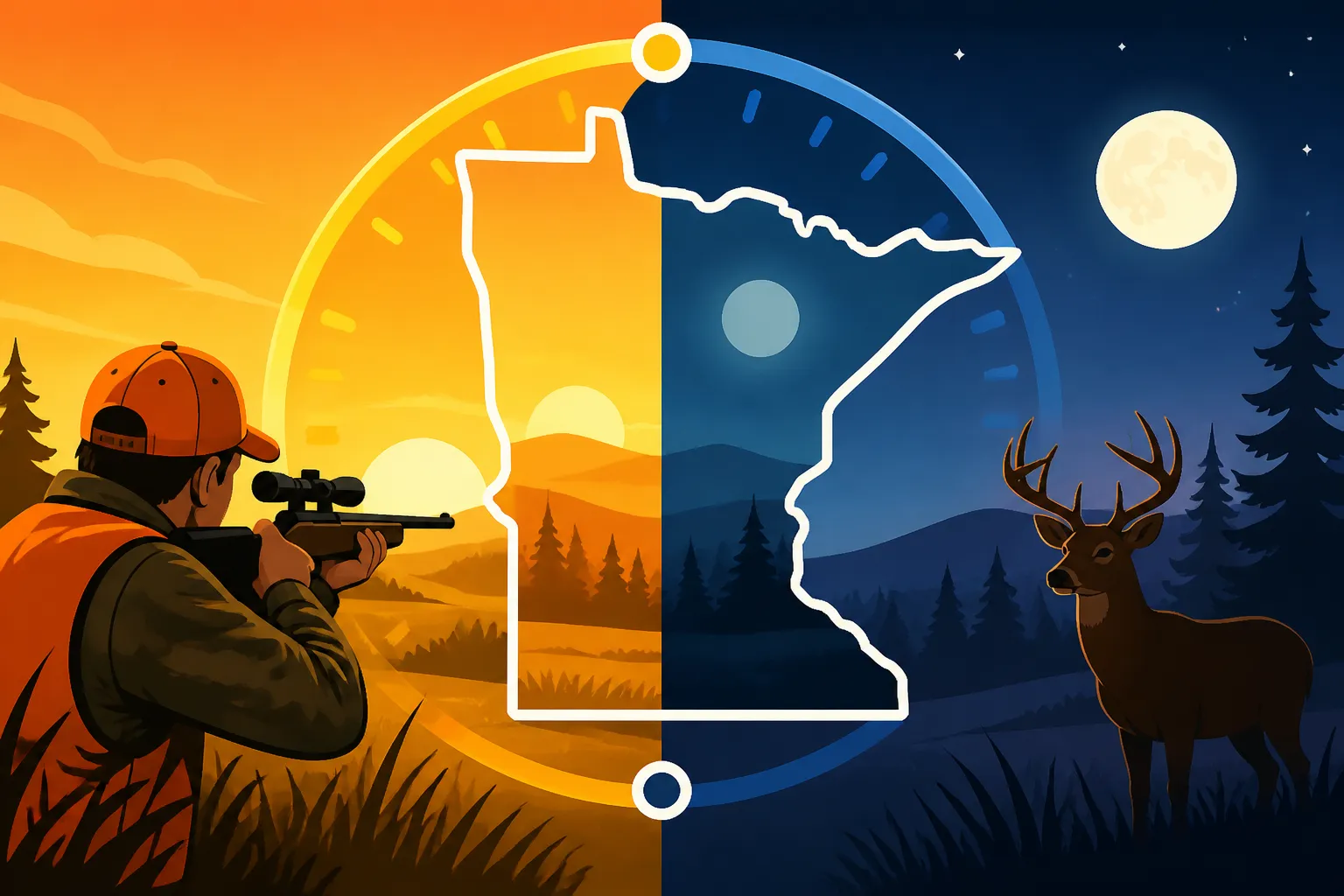
For the vast majority of hunting in Minnesota, including our beloved whitetails, black bears, and most upland game, the legal shooting window opens 30 minutes before official sunrise and closes 30 minutes after official sunset. This isn't just some arbitrary timeframe; it's carefully calculated to provide sufficient ambient light for hunters to positively identify their target and have a clear, ethical shot.
Think about those crisp November mornings. That 30-minute buffer before the sun peeks over the horizon can feel like an eternity, especially when you hear crunching leaves nearby. Conversely, in the evening, when the woods grow dim, you're often surprised by how quickly that 30-minute grace period after sunset evaporates. It forces us to be acutely aware of the time and the fading light, prioritizing safety and ethical shot placement over a last-ditch effort.
Why These Rules Exist: Safety and Fair Chase
These strict timeframes aren't there to make our lives harder; they're fundamentally about hunter safety and promoting fair chase. Imagine trying to make out antlers from branches in near-darkness, or distinguish between a deer and a fellow hunter wearing muted colors. The pre-dawn and post-dusk periods are inherently low-light situations where mistakes are more likely to happen. The Minnesota DNR sets these parameters to minimize the risk of accidental shootings and to ensure that hunters have a reasonable chance to identify their target completely.
Beyond safety, there’s the aspect of fair chase. Hunting should be a challenge, not an unfair advantage over the animal. Pursuing game in conditions where they are severely hampered by poor visibility, or when you can't be sure of your shot, isn't in the spirit of ethical hunting. These rules help maintain the integrity of our hunting traditions and ensure that we're making responsible decisions in the field. It might be frustrating to pack up your gear when you know a big buck is about to move, but it's part of the deal, ensuring everyone plays by the same, safe rules.
How to Accurately Determine Shooting Hours
This is where the rubber meets the road. "Official sunrise" and "official sunset" aren't just guesses; they're precise times calculated for your specific location. While your phone might give you a general sunrise/sunset, it's often not the exact official time used by the DNR, which can vary by a few minutes depending on your precise latitude and longitude.
The absolute best source for official shooting hours is always the Minnesota Department of Natural Resources (DNR) website. They publish tables or provide tools where you can input the date and location to get the exact legal times. Many dedicated hunting apps also do a fantastic job of integrating this data. Apps like GoHunt, HuntStand, and onX Hunt are incredibly popular among Minnesota hunters because they not only show property lines and public land boundaries, but they also provide real-time, location-specific legal shooting hours right on your screen. They're an invaluable tool for ensuring you're always within the legal window, especially when you're deep in the woods or far from cell service (though many apps allow for offline map downloads). Never assume the general time; always check the official numbers for your exact hunting spot and date.
Species-Specific Exceptions and Nuances
While the 30-minutes-before-sunrise to 30-minutes-after-sunset rule is the general standard, Minnesota hunting regulations do have some critical exceptions you need to be aware of. Getting these wrong can quickly lead to a citation, or worse, an unsafe situation.
Deer and Bear Hunting Hours
For the pursuit of Minnesota's majestic white-tailed deer and our robust black bear population, the standard legal shooting hours apply across the board. That means whether you're bowhunting in September, participating in the firearm deer season in November, or heading out for a late-season muzzleloader hunt, your legal window for shooting is from 30 minutes before official sunrise until 30 minutes after official sunset.
This consistency simplifies things for big game hunters, allowing you to focus on scouting, tracking, and understanding deer movement patterns without worrying about daily shifts in legal hours beyond the natural progression of sunrise and sunset. This also applies to special hunts like the youth early antlerless season. Remember, even with the expanded legality of Minnesota's New Statewide Rifle Rules, the shooting hour framework remains consistent. However, always be vigilant about checking the DNR regulations for your specific permit area, as there can be nuances, particularly in CWD management zones, though shooting hours are rarely affected by those. If you're planning on a late-season hunt, say for Muzzleloader Deer Hunting in Minnesota, those December days are short, and that 30-minute twilight window feels incredibly brief.
Turkey Hunting Shooting Hours
Turkey hunting, especially in the spring, often has its own set of rules, and Minnesota is no exception. During the spring turkey periods, the legal shooting hours are typically from one-half hour before official sunrise until official sunset. This differs from big game by extending the evening hunt right up to sunset, but not beyond. This change is important to note; it means that while you can be set up early, you must cease hunting at the moment the sun dips below the horizon.
For the fall turkey season, the regulations usually revert to the standard big game shooting hours: 30 minutes before official sunrise to 30 minutes after official sunset. This can be a point of confusion for hunters who participate in both spring and fall seasons, so it's always best to double-check the current year's regulations booklet or the DNR website specific to Spring Turkey Hunting in Minnesota and Minnesota Fall Turkey Season Rules. Being aware of these slight differences ensures you're legal whether you're calling a gobbler off the roost or trying to break up a fall flock.
Waterfowl and Other Migratory Birds
Here’s where it gets a little trickier and is a common source of questions for hunters. Waterfowl and other migratory game birds have their own unique shooting hour structure in Minnesota.
For the opening day of the regular duck and goose season, shooting hours begin at official sunrise and extend until official sunset. This means on that first glorious Saturday morning, you're waiting for the sun to actually break the horizon before you can start calling in those ducks over the decoys. This is a safety measure to ensure maximum visibility on a day that often sees a lot of hunters in close proximity, especially on popular lakes and potholes.
However, for all other days of the regular migratory bird season (and this includes species like doves, snipe, and rails, as well as the early teal season), the shooting hours are from one-half hour before official sunrise to official sunset.
So, if you’re out hunting Minnesota Waterfowl Hunting on Lakes and Potholes on day two of the season, you get that precious 30-minute head start before sunrise. This distinction between opening day and subsequent days is vital and often tripped up even experienced hunters. Always verify these specific rules, especially if you're taking advantage of special opportunities like the Minnesota Early Teal Season Dates.
Small Game and Predator Hunting Hours
Most small game species in Minnesota, such as ruffed grouse, pheasants, squirrels, and rabbits, generally fall under the standard shooting hours: 30 minutes before official sunrise to 30 minutes after official sunset. So, if you're out chasing Grouse and Woodcock Hunting in Minnesota in the fall, you'll be operating under the same light conditions as a deer hunter.
Predator hunting, particularly for coyotes, largely adheres to these daylight hours as well. However, it's important to understand that Minnesota does have specific provisions for night hunting certain furbearers, which include fox, raccoon, bobcat, and coyote. While these activities occur after regular shooting hours, they are governed by a separate set of rules regarding artificial lights, firearms, and locations. For instance, while you can hunt coyotes at night, there are restrictions on using artificial lights on public land. This isn't "shooting hours" in the traditional sense, but rather a distinct type of hunting permitted under specific conditions. If you're interested in Coyote Calling in a Minnesota Winter under the stars, make sure you thoroughly research those specific furbearer night hunting regulations, as they differ significantly from the standard daylight shooting hour rules.
Here's a quick summary to keep things straight:
| Game Species Category | Opening Day (Migratory Birds Only) | All Other Days (General Rule) | Specific Exceptions/Notes |
|---|---|---|---|
| Deer & Bear | N/A | 30 mins before sunrise to 30 mins after sunset | Applies to all seasons (archery, firearm, muzzleloader) |
| Spring Turkey | N/A | 30 mins before sunrise to sunset | Note: ends at sunset, not 30 mins after. |
| Fall Turkey | N/A | 30 mins before sunrise to 30 mins after sunset | Follows general big game hours. |
| Waterfowl (Ducks, Geese) | Sunrise to sunset (Opening Day of Regular Season) | 30 mins before sunrise to sunset (All other days) | Crucial distinction for opening day vs. subsequent days. |
| Other Migratory Birds (Teal, Doves) | N/A | 30 mins before sunrise to sunset | Includes early teal season. |
| Small Game (Grouse, Pheasant, Squirrels, Rabbits) | N/A | 30 mins before sunrise to 30 mins after sunset | Most upland and small game follow this. |
| Predators (Coyote, Fox, Bobcat) – Daylight | N/A | 30 mins before sunrise to 30 mins after sunset | Night hunting furbearers has separate, distinct rules, not standard "shooting hours." |
Practical Tips for Staying Legal and Prepared
Navigating hunting regulations, especially something as time-sensitive as shooting hours, requires more than just a quick glance at the sky. Being prepared and diligent can save you a headache, or even a fine, and ensures you're always hunting ethically.
Don't Rely on Memory or Your Phone's Default Sunrise/Sunset
This is probably the most common mistake hunters make. You've been hunting for years, you "know" when it's light enough, or you glance at the weather app on your phone for sunrise. But here's the kicker: your phone's default weather app often provides generalized sunrise/sunset times for a large area (like a major city or zip code), not the precise, officially recognized times for your exact hunting coordinates. Plus, those times change every single day!
The legal shooting hours are based on specific, astronomical calculations that vary minute by minute, day by day, and mile by mile across the state. Trusting your gut feeling or a non-specific app is a recipe for being either too early or too late. This is why tools like GoHunt are so invaluable; they leverage GPS data to give you hyper-accurate shooting hours for your exact location. Make it a ritual to check the official times for the specific date and location you plan to hunt, every single day you're in the field. Print out a schedule, write it on your arm with a marker, or set an alarm on your phone with a dedicated hunting app.
Account for Location and Time Zones
While Minnesota largely operates within the Central Time Zone, the actual sunrise and sunset times can still vary across the state. The western edge of Minnesota will experience sunrise later and sunset later than the eastern edge. These small differences can mean several crucial minutes at the beginning and end of legal shooting hours. If you're hunting in Polk County versus Pine County, your legal times will be different, even on the same calendar day.
Furthermore, always be mindful of daylight saving time transitions. That "fall back" weekend can be a blessing with an extra hour of sleep, but it also throws off the natural light schedule, and you need to ensure your internal clock, and more importantly, your official timekeeping, is adjusted correctly. These shifts can easily catch you off guard if you're not paying close attention.
Planning Your Hunt Around Legal Shooting Hours
Understanding the exact legal shooting hours is critical for more than just knowing when to shoot; it dictates your entire hunt strategy and ensures you abide by Minnesota Hunter Safety Requirements. For morning hunts, you need to plan your entry route and arrive at your stand or blind with enough time to quietly settle in before legal shooting hours begin. If you're rattling and grunting, you want to be fully set up and ready to go as soon as that 30-minute window opens. This often means being in your spot a full hour or more before first light.
Similarly, for evening hunts, you need to factor in not just the end of legal shooting, but also the time it will take to field dress, process, and retrieve an animal. If you make a shot near last light, the actual act of tracking and recovery will undoubtedly occur in darkness. Always allow ample time to recover game. While it's legal to Blood Trailing After Dark in Minnesota, especially if you've marked the spot and called it in, making an ethical shot too close to last light can complicate things immensely. It's often better to pass on a marginal shot if it's too close to the end of legal shooting, rather than risk wounding an animal and trying to Tracking a Deer in Fresh Minnesota Snow in the dark. Responsible hunting includes responsible recovery, and knowing your shooting hours helps you plan for that.
Consequences of Violating Shooting Hours
Violating legal shooting hours in Minnesota is a serious matter, and it carries significant repercussions. It’s not just a minor infraction; it strikes at the core of ethical hunting and public safety.
Potential Fines and Penalties
Operating outside of legal shooting hours is considered a wildlife violation, and conservation officers do patrol, especially during peak hunting seasons, looking for these very infringements. The penalties can vary depending on the severity and whether it’s a first offense, but typically you're looking at substantial fines. These fines can quickly escalate if the violation is compounded by other offenses, such as shooting across a road, trespassing, or if an animal is taken illegally.
Beyond monetary fines, you could face the revocation of your hunting privileges, potentially for several years. Losing the ability to hunt in Minnesota, or even in other states through interstate compacts, is a devastating consequence for any passionate hunter. Furthermore, any game taken outside of legal hours will be confiscated. These are not just deterrents; they're reflections of the importance the state places on these regulations for wildlife management and hunter conduct. It's simply not worth the risk.
Ethical Considerations and Hunter Responsibility
Ultimately, legal shooting hours are a baseline for ethical behavior in the field. As hunters, we are stewards of the land and its wildlife, and we represent a larger community. Violating shooting hours not only jeopardizes your own safety and risks taking an unethical shot, but it also casts a negative light on all hunters. The non-hunting public often judges our activities by the actions of a few, and flagrant disregard for basic safety rules like shooting hours can fuel anti-hunting sentiment.
Every hunter has a responsibility to uphold the highest ethical standards. This means being absolutely certain of your target, its legal status, and making an ethical shot within the defined legal window. It means understanding the capabilities of your firearm, whether it's one of the Legal Firearms for Minnesota Deer Hunting or your trusty shotgun for pheasants, and knowing your effective range in varying light conditions. The goal isn't just to fill a tag, but to do so respectfully, safely, and legally. By adhering strictly to legal shooting hours, we honor the game, respect our fellow hunters, and ensure the future of our cherished Minnesota hunting traditions.
Disclaimer
The information provided in this guide is intended for general informational purposes only and does not constitute legal advice. Hunting regulations are subject to change, and it is the hunter's sole responsibility to consult the official Minnesota Department of Natural Resources (DNR) regulations and statutes for the most current and accurate information before engaging in any hunting activities. Always refer to the official DNR Hunting and Trapping Regulations Handbook or the DNR website for definitive rules and laws.