Broadheads for Timber Shots
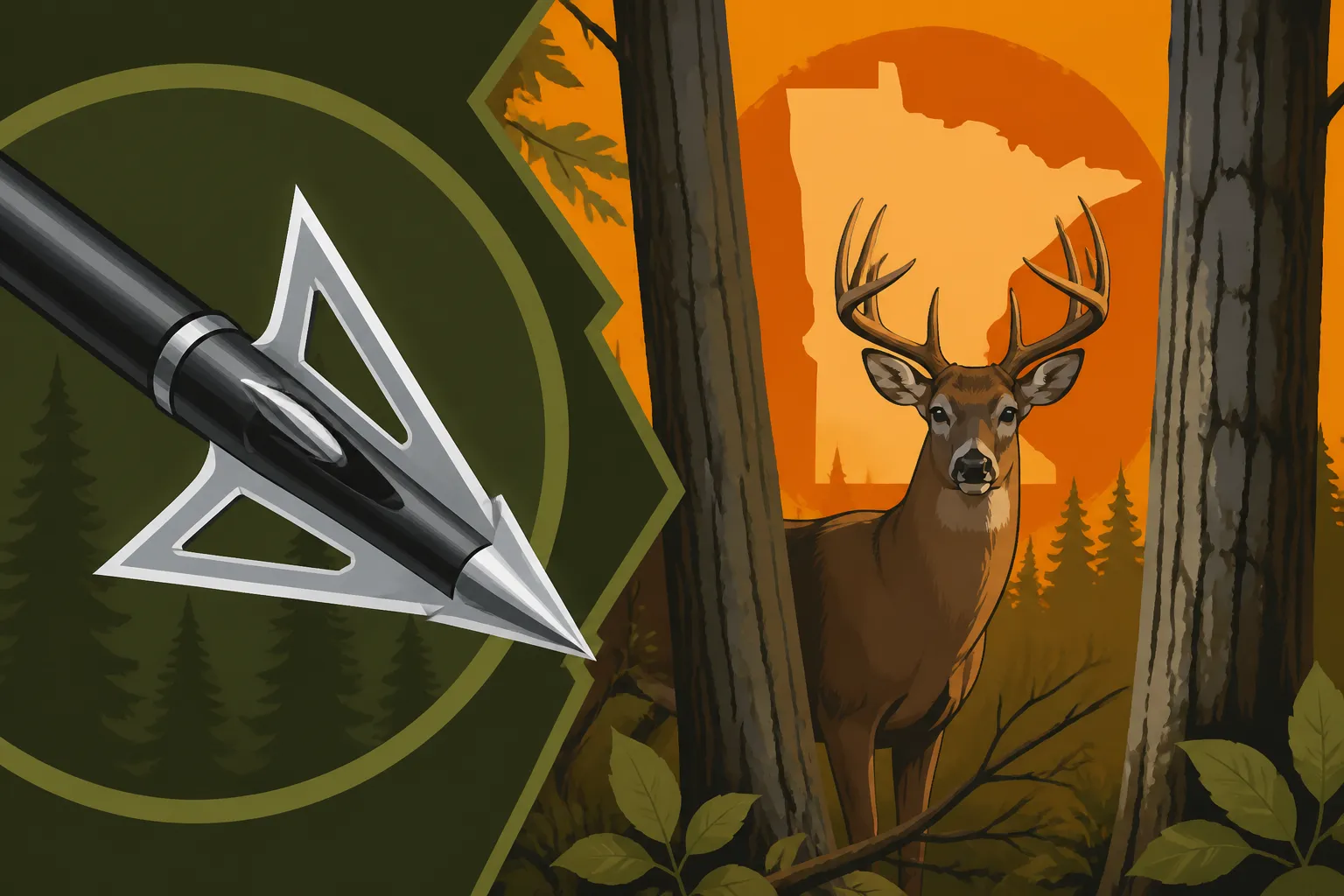
There's nothing quite like the thrill and challenge of bowhunting deer in Minnesota's dense timber. You spend countless hours scouting, hanging stands, and practicing your shot, only to find yourself facing a quartering-away buck at 20 yards through a tangle of brush. In these moments, your broadhead selection can make all the difference between a clean, ethical harvest and a frustrating, lost animal. This guide will dive deep into the specific considerations for choosing broadheads optimized for those unavoidable timber shots, helping you maximize your chances of success and ensure humane hunting practices.
Why Timber Hunting Demands Specific Broadheads
Hunting in Minnesota's vast stretches of hardwoods, thick popple, or impenetrable tamarack swamps presents unique challenges for bowhunters. Unlike open field hunting where long-range accuracy is paramount, timber hunting often means close encounters, awkward shot angles, and the omnipresent threat of brush deflection. Your broadhead choice needs to account for these realities, prioritizing performance where it truly matters.
Navigating Obstacles and Tight Windows
Imagine a classic Minnesota timber scenario: you're perched in your stand, perhaps overlooking a faint deer trail cutting through a young aspen stand. A buck materializes, moving silently, but there are countless small branches, twigs, and saplings between you and a clear shot. You might get a 6-inch window, maybe less, to thread your arrow through. This isn't just about your aiming ability; it's about how your broadhead-tipped arrow navigates that tight space. Broadheads with a larger profile or moving blades can catch on even small obstacles, causing the arrow to deflect wildly off course. This is a common and incredibly frustrating experience, leading to missed opportunities or, worse, poorly placed shots.
When you're still-hunting through thick public land, navigating tangles of downed trees and brush, the scenario is similar. A deer might jump unexpectedly at 15 yards, offering only a fleeting, obstructed shot. The broadhead you choose must be forgiving enough to fly true from your bow, but also robust enough to withstand potential minor deflections and still deliver devastating terminal performance. Many seasoned timber hunters prioritize broadheads that present minimal surface area during flight to minimize the chance of hitting and deflecting off small, unseen obstacles that can ruin a shot.
Understanding Shot Angles and Penetration Needs
Deer in heavy cover often don't offer textbook broadside shots. They might be quartering severely away, slightly quartering to, or even facing you head-on if you're still-hunting or stalking. These angles demand a broadhead capable of maximum penetration to reach vital organs, even after potentially encountering bone. A broadhead designed for high penetration will have a sharper, more acute blade angle, often a cut-on-contact tip, and a durable construction that won't deform or break upon impact with ribs, shoulder blades, or the spine.
Think about a shot where you hit the shoulder blade. A weaker broadhead might buckle or glance off, leading to a superficial wound. A fixed-blade, cut-on-contact broadhead, however, is designed to drive through bone and continue on its path, increasing the likelihood of reaching vitals. The kinetic energy from your bow and arrow setup needs to be efficiently transferred into cutting and penetrating. In the challenging environment of Minnesota's timber, where deer often flee into even thicker cover after the shot, every inch of penetration and every additional cutting surface counts towards a quick, humane kill and an easier recovery. This is particularly true when pursuing mature bucks that might have thicker hides and heavier bone structure.
Fixed Blade Broadheads: The Timber Hunter's Old Friend
For generations, fixed blade broadheads have been the workhorses of bowhunting, and for good reason. Their inherent simplicity and robust design make them exceptionally reliable, especially when hunting in challenging environments like Minnesota's dense timber. They don't have moving parts that can fail, making them a consistent choice for those critical shots.
The Enduring Power of Fixed Blades
Fixed blade broadheads are, by their very nature, designed for durability and maximum penetration. There are no moving parts to deploy, no O-rings to break, and no blades to potentially malfunction. When you launch a fixed blade, you know exactly how it will perform upon impact. This reliability is golden in heavy timber. Imagine you've got a buck moving through thick brush, and you manage to get an arrow through a small window. If that arrow happens to glance off a small twig or brush before impact, a fixed blade is far less likely to be affected than a mechanical broadhead, which could pre-deploy or have its blades damaged.
The design of many fixed blades, particularly those with a cut-on-contact tip, means they start cutting immediately upon impact. This is crucial for maximizing penetration on tough hide and bone, which is often encountered when dealing with less-than-ideal shot angles or when a deer presents its shoulder. In the dark, unforgiving woods of northern Minnesota, knowing your broadhead will perform exactly as intended, every single time, provides an immense sense of confidence. Whether you're hunting whitetails in the Superior National Forest Ranger Districts or trying to get on a bear in a remote bait site, that reliability is paramount.
Choosing Blade Design and Materials
Within the category of fixed blades, there's a wide array of designs, each with its own advantages. Two-blade, three-blade, and four-blade designs are common.
- Two-blade broadheads often offer the best penetration due to their smaller surface area and typically wider cutting angle. They excel at driving through bone. Think of brands like GrizzlyStik or Zwickey for this kind of traditional, ultra-penetrating power.
- Three-blade broadheads offer a good balance of penetration and cutting surface, creating larger wound channels. Many popular options like Magnus or Muzzy fall into this category, providing excellent blood trails.
- Four-blade broadheads (or more) increase the cutting surface further, potentially leading to larger initial wound channels but sometimes at the cost of some penetration, especially on hard impacts.
Beyond the number of blades, consider the material and construction. Stainless steel blades are common, offering a good balance of sharpness and durability. Some manufacturers use hardened tool steel for extreme toughness. Look for broadheads with a solid, one-piece ferrule (the body of the broadhead) or a deeply integrated blade design that minimizes potential points of failure. The overall weight of the broadhead is also a factor, as heavier broadheads (often 125 grains or more) can increase arrow FOC (Front of Center) and enhance penetration, which is a common discussion point when considering Arrow Weight for Short Shots. Many hunters find that a simple, sturdy design with replaceable blades offers the best combination of performance and cost-effectiveness over the long haul.
Pros and Cons for Heavy Cover
| Feature | Fixed Blade Broadhead Pros for Timber | Fixed Blade Broadhead Cons for Timber |
|---|---|---|
| Reliability | No moving parts to fail or pre-deploy, consistent performance. | Can sometimes be trickier to achieve perfect arrow flight, especially with poor bow tuning. |
| Penetration | Excellent penetration, especially cut-on-contact designs, good for bone. | Some designs might offer smaller cutting diameters than mechanicals, potentially leading to less blood trail. |
| Durability | Very robust, less prone to damage from brush or bone impact. | Blades can dull quicker if not maintained or if they hit ground/rocks after pass-through. |
| Accuracy | Generally very accurate when properly tuned; consistent flight path. | Can be more sensitive to wind drift or imperfect form than smaller-profile mechanicals on longer shots. |
| Deflection | Less prone to deflection from minor brush contact due to solid, non-deploying design. | Can still deflect if hitting significant obstacles, but generally more stable than mechanicals. |
| Maintenance | Often easy to resharpen or replace blades, ensuring a razor edge every hunt. | Can require more meticulous tuning of the bow and arrow system to ensure broadhead-accurate flight. |
The main "con" of fixed blades, particularly for newer archers, often centers around achieving perfect arrow flight. Fixed blades can magnify minor tuning issues in your bow setup. However, with proper paper tuning and walk-back tuning, most modern fixed blades can be made to fly "broadhead-accurate" out to ethical timber hunting distances. The peace of mind that comes from knowing your broadhead is going to hit true and perform flawlessly on impact is why so many seasoned hunters continue to trust fixed blades in the deep woods of Minnesota.
Mechanical Broadheads: When and Where They Shine
While fixed blades hold a special place in the hearts of timber hunters, mechanical broadheads have certainly carved out their own niche. They offer distinct advantages, primarily in terms of accuracy and wider cutting diameters, but also come with considerations that are amplified in a dense timber environment.
Accuracy at Longer Ranges (Even if Timber Shots are Short)
One of the primary selling points of mechanical broadheads is their field-point-like accuracy. Because their blades are retracted during flight, they present a smaller profile, reducing drag and making them less susceptible to wind drift or minor inconsistencies in arrow tuning. This means they often fly indistinguishably from your practice field points, which can be a huge confidence booster for many archers. While timber shots are typically closer – say, 10 to 30 yards – the inherent accuracy of a mechanical can still be beneficial.
Even at short ranges, a broadhead that flies exactly where you aim can make the difference between a pinprick hole and a perfectly placed shot in a small vitals window. However, the perceived accuracy advantage of mechanicals can sometimes lead hunters to overlook the importance of proper bow tuning. While a mechanical might mask minor tuning issues, a perfectly tuned bow will make any broadhead fly well. Always strive for a perfectly tuned setup, regardless of your broadhead choice. When you're trying to Sighting In a Rifle for Minnesota Woods Ranges, you ensure precision, and your bow setup deserves the same attention.
Deployment Concerns in Brush
This is where mechanical broadheads often face scrutiny in timber hunting scenarios. Their blades are designed to deploy upon impact, creating a larger cutting diameter than most fixed blades. However, the dense underbrush, twigs, and saplings that characterize Minnesota's big woods present potential deployment issues. There's a risk that a mechanical broadhead could impact a small branch just before reaching the deer, causing it to pre-deploy or damaging its blades.
If a mechanical broadhead pre-deploys, its flight characteristics immediately change, potentially causing a significant deflection. If it hits an obstacle and its blades are damaged or jammed, it might fail to deploy properly upon reaching the animal, resulting in a much smaller, less effective wound channel. Modern mechanicals have significantly improved their retention systems and blade durability to mitigate these risks. Some designs are specifically built to be "tougher" and more forgiving of minor impacts, often featuring a more robust ferrule and blade design, or a front-deploying mechanism that protects blades until entry. It's a trade-off many hunters consider: the potential for a massive wound channel versus the risk of a brush-induced malfunction.
Weighing the Risks and Rewards
Choosing a mechanical for timber hunting means carefully weighing its benefits against the potential risks.
| Feature | Mechanical Broadhead Pros for Timber | Mechanical Broadhead Cons for Timber |
|---|---|---|
| Accuracy | Field-point-like flight characteristics, easier to achieve consistent groups. | Can mask underlying bow tuning issues, giving false confidence. |
| Wound Channel | Typically larger cutting diameter than fixed blades, leading to massive wound channels and blood trails. | Risk of pre-deployment or blade damage from brush contact, reducing effectiveness. |
| Blood Trail | Often produces excellent blood trails due to larger cutting diameters. | Failure to deploy or partial deployment can result in a poor blood trail. |
| Forgiveness | More forgiving of shooter form errors or minor tuning issues. | Less forgiving of brush hits; can deflect more severely or fail to deploy properly. |
| Penetration | Good penetration, but can be slightly less than fixed blades on heavy bone due to energy expended on deployment. | Can struggle with heavy bone, or if deployment is hindered, penetration may be compromised. |
| Complexity | More complex design with moving parts, which introduces potential points of failure. | Requires careful inspection of blades, O-rings, and deployment mechanisms before each hunt. |
For a hunter who values maximum accuracy and a wide cutting diameter, and hunts in areas where "threading the needle" through brush is less common, a mechanical might be a great choice. However, if your hunting style involves frequent shots through dense saplings or you prioritize absolute reliability on bone, a tough fixed blade is likely the safer bet. Many hunters in Minnesota's heavy cover opt for a hybrid approach or carefully select only the most robust mechanicals on the market, like the deep-penetrating Rage Hypodermic or the tough NAP Killzone, after extensive testing. The critical takeaway is to understand the trade-offs and choose a broadhead that aligns with your specific hunting conditions and comfort level, which is a key consideration when discussing Crossbow Versus Vertical Bow in Minnesota.
Factors Beyond Broadhead Type
While the debate between fixed and mechanical broadheads often takes center stage, an ethical hunter knows that a successful harvest is the sum of many parts. The broadhead is just one component in a complex system that includes your arrow, your bow, and ultimately, your skill as an archer. Neglecting these other factors can render even the best broadhead ineffective, especially in the challenging environment of Minnesota's timber.
Arrow Weight and FOC (Front of Center)
The arrow itself plays a huge role in penetration. A heavier arrow carries more momentum, which is critical for driving a broadhead through hide, muscle, and bone. In timber hunting, where shots might be closer but obstacles and less-than-ideal angles are common, momentum often trumps sheer speed. Hunters will often opt for a slightly heavier arrow (450-550 grains total weight for deer) for increased penetration. This heavier setup, coupled with a well-designed broadhead, can punch through a shoulder blade or penetrate deeply on a quartering shot.
Furthermore, the Front of Center (FOC) balance of your arrow affects its flight stability and penetration. FOC refers to how far forward the balance point of your arrow is. A higher FOC (typically 12-18% for hunting arrows) means the arrow is more "nose-heavy." This increased weight up front can improve arrow flight stability, especially with fixed blade broadheads, and act like a keeled boat, driving the broadhead deeper into the target. Achieving good FOC often involves using heavier broadheads or adding weight inserts to the front of your arrow shaft. This synergy between arrow weight, FOC, and broadhead design is what truly maximizes your penetration potential when hunting deer in thick northern Minnesota woods.
Bow Tuning for Flawless Flight
Regardless of whether you choose a fixed blade or a mechanical, proper bow tuning is non-negotiable for consistent, ethical shots. A perfectly tuned bow will send an arrow flying true, minimizing broadhead planing or erratic flight. Tuning involves adjusting various components of your bow setup – the arrow rest, nocking point, cam timing, and limb deflections – to ensure the arrow leaves the bow cleanly and flies straight.
Paper tuning is a common method where you shoot through a sheet of paper at close range to analyze how the fletching tears the paper, indicating issues like nock high/low or left/right tears. Walk-back tuning further refines this by shooting at a vertical line at varying distances. A bow that's not perfectly tuned can cause fixed blades to "plane" or fly erratically, making accurate shot placement impossible. Even mechanical broadheads, while more forgiving, will perform better from a well-tuned bow. Investing the time to properly tune your bow with your hunting arrows and broadheads is one of the most important steps you can take to ensure ethical hunting in the timber. It's as fundamental as knowing Minnesota's New Statewide Rifle Rules for firearm hunters.
Sharpening and Inspection
A dull broadhead is an unethical broadhead. Period. No matter how well it flies or how durable its design, a dull broadhead will tear and push tissue rather than slice through it, leading to poor penetration, wider wound channels, and ultimately, a slower kill and a more difficult blood trail. Before every hunt, and ideally before every shot sequence, inspect your broadheads meticulously.
Ensure the blades are razor sharp. Many fixed blades have replaceable blades, making it easy to pop in a fresh, sharp set. Others can be resharpened with specialized broadhead sharpeners or fine grit stones. For mechanical broadheads, check that the blades are free of nicks or bends, that the deployment mechanism works smoothly, and that any O-rings or retention clips are in good condition. If you shoot a broadhead into a target, inspect it thoroughly afterwards. If there's any damage, replace or repair it before putting it back in your quiver for a hunting scenario. Taking a few extra minutes for this critical inspection can prevent immense suffering and maximize your chances of a successful recovery, especially if you're Blood Trailing After Dark in Minnesota.
Testing and Tuning Your Timber Setup
You wouldn't head into the woods with a rifle you haven't sighted in, right? The same goes for your bow and broadhead setup. Practicing with your hunting arrows and broadheads is not just about confidence; it's about ensuring your equipment performs exactly as expected in real-world conditions. This is particularly vital when hunting in Minnesota's dense timber, where shots can be unforgiving.
Practice with Hunting Arrows
It's a common mistake: practicing all summer with field points and then screwing on broadheads right before opening day. Field points and broadheads, especially fixed blades, can fly differently. The small wings on a fixed blade can create subtle drag and torque that a field point doesn't, causing the arrow to impact in a different spot. Even mechanicals, with their larger profile, can show slight differences.
The solution is simple: practice with your hunting broadheads. Spend time at the range shooting your actual broadhead-tipped arrows at various distances you expect to encounter in the timber – typically 10, 20, 30, and maybe 40 yards. Ensure your broadheads group consistently with your field points. If they don't, it indicates a tuning issue that needs to be addressed immediately. Don't be afraid to shoot broadheads into a dedicated broadhead target; many manufacturers offer targets specifically designed for this purpose. This practice helps you identify any flight inconsistencies, build confidence in your setup, and mentally prepare for the moment of truth in the woods. GoHunt, with its wealth of user reviews and product comparisons, can be a great resource for seeing what other hunters are using and how they're testing different broadheads in similar environments.
Paper Tuning and Walk-Back Tuning
These are two fundamental methods for achieving broadhead-accurate flight, which is paramount for timber hunting.
-
Paper Tuning: As mentioned earlier, this involves shooting an arrow through a sheet of paper at a very close distance (usually 6-10 feet) from your bow. The tear pattern the arrow makes in the paper tells you if your arrow is flying perfectly straight out of the bow.
- Perfect Tear: A small "bullet hole" tear where the fletching tear is centered around the shaft hole.
- High Tear: Nocking point is too low, or arrow rest is too high.
- Low Tear: Nocking point is too high, or arrow rest is too low.
- Left Tear (right-handed shooter): Arrow rest is too far left, or cam timing is off (bottom cam too fast).
- Right Tear (right-handed shooter): Arrow rest is too far right, or cam timing is off (top cam too fast).
By making small adjustments to your arrow rest or nocking point, you can eliminate these tears and ensure your arrow is flying laser-straight from your bow.
-
Walk-Back Tuning: This method refines your tuning at longer distances. Set up a target with a vertical line drawn down the middle. Stand 10 yards away and shoot three arrows at the line. Then, walk back to 20 yards and shoot three more, aiming at the same spot without adjusting your aim. Repeat at 30, and even 40 yards.
- If your arrows consistently group vertically along the line, your rest is likely horizontally aligned.
- If your arrows progressively move left or right as you increase distance, your arrow rest is likely out of horizontal alignment, or you have a cam lean issue.
Walk-back tuning helps confirm your broadheads and field points are hitting the same spot at various distances, giving you full confidence in your setup for a timber shot where range estimation can be tricky. This meticulous attention to detail is what sets successful hunters apart, especially when facing the variables of hunting in challenging terrain.
Real-World Scenario Practice
Beyond the static range, try to simulate real hunting scenarios. This is especially true for timber hunting, which presents unique shot angles and obstructions.
- Elevated Shots: If you hunt from a treestand (and you should for Treestand Setups in Minnesota Hardwoods), practice shooting from an elevated position. The dynamics of shooting down at an animal are different from shooting on flat ground, affecting your anchor point and aiming.
- Through Obstacles: Set up some harmless obstacles like tall grass, small branches (without hitting your actual broadhead on them), or even a hanging rope, and practice picking small lanes. This helps train your eye to find clear shot windows and improves your mental game for those high-pressure timber situations.
- Awkward Angles: Practice shooting at targets angled to simulate quartering shots. This helps you understand where to aim for vital organs from different perspectives.
- Movement and Noise: Practice drawing your bow silently and smoothly, especially with extra layers of clothing you'd wear during Cold-Weather Sitting Strategy in Minnesota. A noisy draw in the quiet timber can spook a deer instantly.
By incorporating these real-world scenarios into your practice, you not only ensure your broadhead flies true but also refine your decision-making and shot execution under conditions similar to what you'll encounter in Minnesota's dense woods.
Making the Ethical Shot in Dense Cover
The primary goal of any hunter is a quick, ethical kill. In dense timber, achieving this demands not only the right gear but also impeccable judgment, patience, and a commitment to meticulous tracking. The challenging nature of the terrain amplifies every decision you make after releasing the arrow.
Patience and Shot Selection
When hunting in thick cover, the temptation to take a marginal shot can be overwhelming. A deer might only present itself for a few seconds, partially obscured, and your adrenaline is surging. However, an ethical hunter knows that patience is paramount. If you don't have a clear, unobstructed shot at the vital zone, do not shoot. It's better to let a deer walk away and hunt another day than to take a risky shot that could wound the animal and lead to a prolonged, agonizing tracking job, or worse, a lost deer.
Focus on waiting for the deer to present a broadside or slightly quartering-away shot. These angles offer the best opportunity to hit both lungs or the heart, ensuring a rapid kill. Pay close attention to any brush or twigs between you and the target. Even a small branch can deflect an arrow, especially if using certain broadhead designs. Use the tools you have, like a rangefinder to confirm distance, and your knowledge of deer anatomy to visualize the vitals. If the animal is on the move, wait for it to stop and settle. In the quiet solitude of the big woods, sometimes the hardest thing to do is nothing – but it’s often the most ethical choice. This kind of judgment is built through experience, often gained by spending time Still-Hunting Minnesota Big Woods and observing deer behavior in challenging environments.
Tracking in Thick Minnesota Woods
Even with a perfectly placed shot from a premium broadhead, tracking in Minnesota's dense timber can be incredibly difficult. The thick undergrowth, fallen leaves, and frequent swamps can make following a blood trail a true test of perseverance. Your broadhead choice significantly impacts the blood trail you'll find. Fixed blades, particularly those with a wider cutting diameter and multiple blades, tend to produce good entry and exit holes, leading to a visible blood trail. Mechanical broadheads, when they deploy properly, often create truly massive wound channels that can leave impressive blood trails.
However, be prepared for minimal blood, especially if the arrow didn't pass through or if the deer ran through water. Mark the exact spot where the deer was standing when you shot, and the last place you saw it. Note the direction of travel. After waiting a sufficient amount of time (at least 30 minutes for a gut shot, or an hour for a lung shot), begin tracking slowly and methodically. Look for specks of blood on leaves, grass, and even on the bark of trees as the deer brushes past. A reliable headlamp (like those discussed in Headlamps for Walking Out After Dark) is essential, even if you start tracking in daylight, as it can quickly turn dark in thick canopy.
Recovery Tools and Techniques
Having the right recovery tools can significantly aid in tracking and retrieving your deer from Minnesota's heavy cover.
- Good Quality Flashlight/Headlamp: Absolutely critical. Even during the day, the canopy in dense timber can make it feel like dusk. A powerful, focused beam can help illuminate tiny specks of blood that would otherwise be missed.
- Tracking Tape: Biodegradable flagging tape can be invaluable for marking the blood trail as you go. Tie a piece every few yards, pointing in the direction of travel. This allows you to back-track easily if you lose the trail and pick it up from the last known spot.
- Binoculars: Use them to scan ahead for the deer itself, or for signs of a continued blood trail on distant leaves.
- GoHunt Mapping Tools: Before you even leave camp, use a mapping app like GoHunt to mark your stand location, the suspected hit site, and the direction of the deer's escape. These tools can be incredibly helpful for maintaining your bearings in featureless timber and for coordinating with hunting partners during a recovery effort. You can also use them to identify potential escape routes, dense bedding areas, or water sources where a deer might try to hide.
- Game Carts or Deer Sleds: Once you find your deer, getting it out of the timber can be a monumental task, especially if it's deep in a swamp or dense forest. A game cart or a heavy-duty deer sled (as covered in Deer Sleds for Snow Country) can make the drag much more manageable, reducing strain and preserving the meat.
- Game Bags: Especially in warmer early-season conditions, having game bags to quarter the deer on site can be a lifesaver. This reduces the weight you need to drag and allows the meat to cool more quickly.
The effort you put into preparation, shot selection, and recovery is a testament to your respect for the animal and the hunting tradition. Choosing the right broadhead is just one piece of that puzzle, but it's a mighty important one when facing the unique challenges of Minnesota's timber.
Disclaimer
This article is for general informational purposes only and does not constitute professional advice. Laws, prices and regulations vary by location and change over time. Consult a qualified professional for guidance on your specific situation.