Slug Guns and Shotgun Deer Loads
For years, Minnesota deer hunters grappled with regulations that often dictated what kind of firearm they could carry into the woods, especially concerning shotguns in certain zones. The frustration was real, buying specific guns and loads just to comply, and wondering if you were really getting the most effective tool for the job. Thankfully, some of those rules have eased, but the venerable slug gun still holds a vital place in many hunters' arsenals and for good reason. This guide will walk you through everything you need to know about slug guns and the various deer loads available, helping you understand their performance, how to optimize your setup, and when they are still your best bet in Minnesota.
The Evolving Landscape of Minnesota Deer Hunting
It wasn't that long ago that swathes of Minnesota deer country were strictly "shotgun only" zones, forcing hunters to adapt their gear choices or travel further north into rifle territory. That era is largely behind us now, but the legacy of those rules still shapes how many of us think about our firearms and hunting strategies.
Understanding the Historical "Shotgun Zone" Mentality
Picture this: you're heading out for deer season, and depending on whether you're hunting the rolling hills of southeastern Minnesota or the timber of the central part of the state, your firearm options might have been completely different. The "shotgun zone" was a reality for generations of hunters in the more densely populated or agriculturally focused regions. The underlying rationale was often public safety – keeping projectile travel distances shorter in areas where houses, farms, and roads were more prevalent. This made a certain amount of sense, but it also meant that if your deer camp was in one of those zones, you were limited to a shotgun, often with a smoothbore barrel that struggled with accuracy beyond 50 or 75 yards, no matter how much you practiced.
This limitation led to a culture of specific hunting tactics and equipment. Hunters in these areas became incredibly adept at close-quarters hunting, focusing on deer drives, still-hunting thick cover, or setting up stands in tight pockets of woods where shots were almost guaranteed to be short. The frustration of trying to get pinpoint accuracy out of a smoothbore with rifled slugs was a common complaint, leading many to invest in specialized slug guns with fully rifled barrels or to begrudgingly accept the shorter effective range. For those who grew up with these restrictions, the idea of using a rifle for deer hunting in these areas felt like a distant dream.
Why Straight-Wall Rifles Changed the Game
The landscape of deer hunting in Minnesota underwent a significant shift when the state approved the use of straight-wall cartridge rifles statewide. This was a monumental change that many hunters had advocated for, as it offered a more accurate and often more powerful option for deer hunting, especially at ranges beyond what a traditional slug gun could reliably offer. Suddenly, hunters in areas that were once shotgun-only could now consider a rifle like a .45-70 Government, a .350 Legend, or a .44 Magnum lever-action, providing flatter trajectories and greater confidence in shot placement at extended distances. You can dive deeper into this topic in our article, Why Straight-Wall Rifles Are Now Legal Statewide.
This rule change didn't just expand weapon choices; it expanded hunting opportunities and strategies. Hunters who once felt disadvantaged by their firearm could now reach across a larger food plot or take a more ethical shot at a deer slightly further away. However, it's crucial to understand that while straight-wall rifles are now broadly legal, they haven't entirely supplanted the slug gun. For many, the slug gun remains a familiar, effective, and often preferred tool, especially in specific scenarios or counties that still maintain their original restrictions. The flexibility is a welcome change, but it doesn't mean your trusty shotgun needs to be retired just yet.
The Enduring Role of the Shotgun for Deer
With the advent of statewide straight-wall rifle legality, some might wonder if the shotgun still has a place in Minnesota deer hunting. The answer is a resounding yes! While the rules have opened up options, there are still very practical and sometimes mandatory reasons to reach for your slug gun.
When a Shotgun Still Makes Sense (and is Required)
Even with the new regulations, there are still a handful of counties in Minnesota that maintain their "shotgun-only" status, typically due to unique local ordinances. It's always a good idea to double-check the specifics for your hunting area, but for those hunting in these specific spots, a slug gun isn't just an option—it's a requirement. Our guide Which Thirteen Counties Kept Shotgun-Only Rules provides a current list, ensuring you're compliant before heading afield. Beyond these mandatory zones, many hunters simply prefer a slug gun for specific hunting situations.
Consider hunting in extremely dense cover, like the cattail sloughs of western Minnesota or the thick alder swamps up north. Here, shot distances are almost always under 75 yards, often much closer, and the sheer stopping power of a large-diameter slug can be a real advantage when a deer bursts from heavy brush. The quick, decisive punch of a slug can be preferred over a rifle bullet, which might pass through quickly with less immediate energy transfer on a close-range, fleeting target. In these close-quarters scenarios, the slug gun feels right at home, offering confidence in tight spaces where a long-range rifle simply isn't needed.
Smoothbore vs. Rifled Barrel: The Performance Divide
When we talk about slug guns, it's vital to differentiate between two main types of barrels: smoothbore and rifled. This distinction dramatically impacts accuracy and, consequently, your choice of ammunition. Understanding this is key to optimizing your setup and is covered in more detail in Rifled Versus Smoothbore Slug Barrels.
A smoothbore barrel is exactly what it sounds like – the inside of the barrel is smooth, without any spiraling grooves. These are the standard barrels found on most bird hunting shotguns. When shooting slugs through a smoothbore, accuracy can be quite variable. Historically, these were paired with "Foster" style slugs, which have fins and a hollow base designed to stabilize themselves aerodynamically, much like a shuttlecock. They work, but typically offer limited precision beyond 50-75 yards. You're usually looking at patterns, not tight groups, from a smoothbore.
A rifled barrel, on the other hand, features helical grooves that impart a spin on the projectile as it travels down the bore. This spin stabilizes the slug, much like a rifle bullet, leading to significantly improved accuracy and extended effective range. Rifled barrels are designed to be used with "sabot" slugs, which are smaller, often bullet-shaped projectiles encased in a plastic sleeve (a sabot) that engages the rifling. Once the slug leaves the barrel, the sabot falls away, leaving the aerodynamically stable slug to continue its flight. A rifled barrel with sabot slugs can often achieve rifle-like accuracy out to 150-200 yards, transforming your shotgun into a highly capable deer firearm. Many dedicated slug guns come with fully rifled barrels, or you can often purchase aftermarket rifled barrels for popular shotgun models.
Decoding Shotgun Deer Loads: Slugs Explained
Choosing the right slug is just as important as choosing the right gun. The vast array of options on the store shelf can be bewildering, but understanding the two primary types and their intended use will save you a lot of headache and improve your success.
Foster vs. Sabot: Matching Your Barrel
This is perhaps the single most critical factor in successful slug hunting: matching your slug to your barrel. Get this wrong, and you'll experience poor accuracy, wasted ammunition, and potential frustration. We touched on this when discussing barrel types, but let's break down the slug types in detail.
Foster Slugs (often called "rifled slugs"): These are the traditional choice for smoothbore shotguns. Despite the name, the "rifling" is on the slug itself, not in the barrel. These angled fins are meant to help the slug spin and stabilize as it flies through the air, though they aren't nearly as effective as true barrel rifling. Foster slugs are typically made of soft lead, have a hollow base, and are slightly smaller than the bore diameter to allow them to compress and pass safely through any choke constriction. They are effective at close ranges, generally 50-75 yards, making them suitable for dense woods or deer drives where shots are known to be short. Trying to shoot a Foster slug through a rifled barrel can lead to excessive lead fouling and damage the rifling, so it's best avoided.
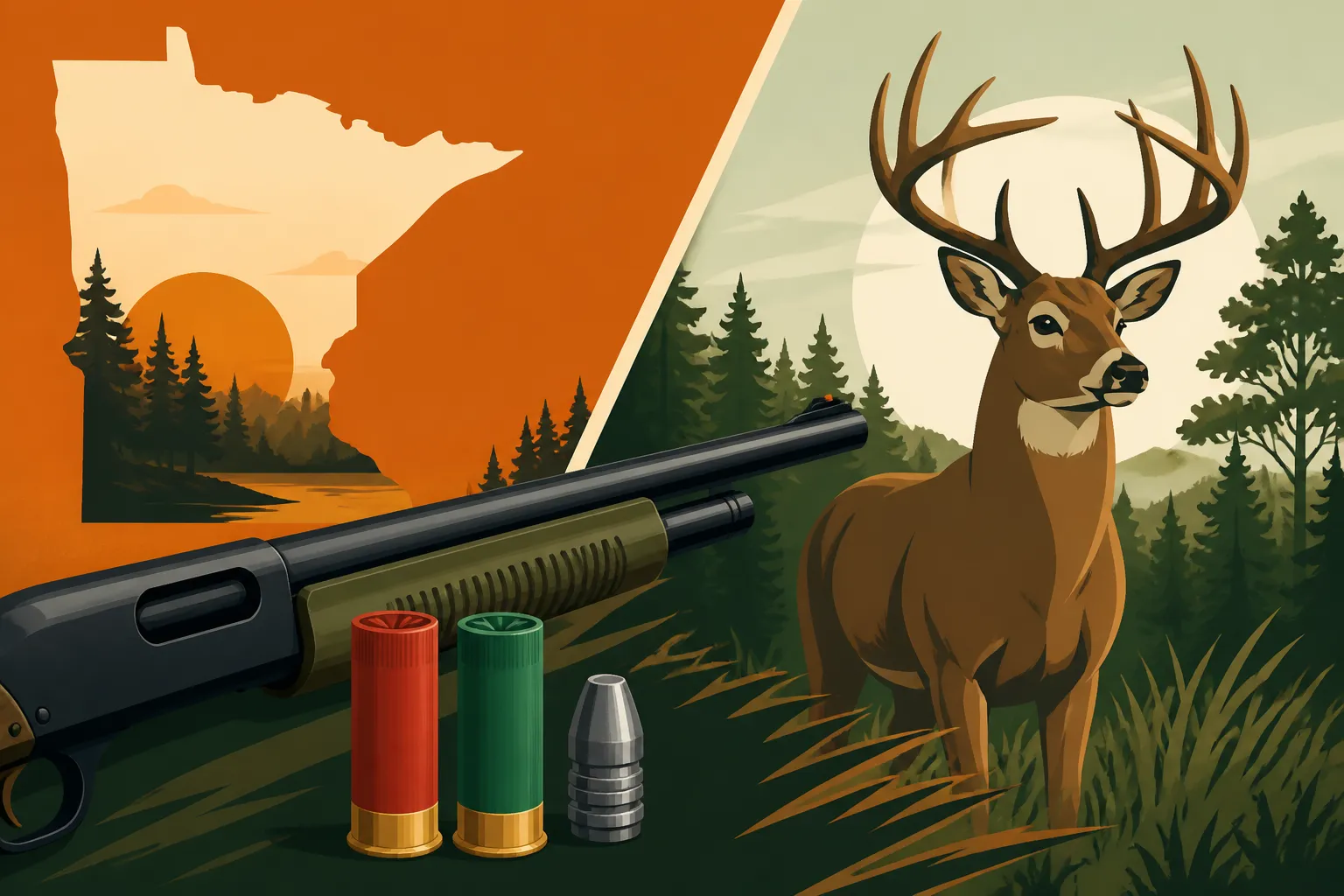
Sabot Slugs: These are engineered for rifled barrels and are where modern slug gun technology truly shines. A sabot slug consists of a sub-caliber bullet (often a .45 or .50 caliber bullet) encased in a plastic sabot. This sabot engages the rifling in your barrel, imparting a rapid spin. Once the slug exits the barrel, the plastic sabot separates, allowing the true projectile to fly with superior accuracy and flatter trajectory. Sabot slugs typically have a much more aerodynamic shape than Foster slugs, often resembling a modern rifle bullet, and are constructed with various bullet designs (e.g., bonded, copper solid, partitioned) to achieve controlled expansion and deep penetration. When paired with a rifled barrel, sabot slugs can deliver impressive accuracy and lethal performance out to ranges of 150-200 yards, putting them squarely in line with many straight-wall rifle cartridges. Using sabot slugs in a smoothbore barrel will result in extremely poor accuracy as the sabot will not properly engage any rifling to stabilize the projectile. For a deeper dive, check out Shotgun Slugs for Minnesota Deer.
| Feature | Foster Slug | Sabot Slug |
|---|---|---|
| Intended Barrel | Smoothbore (with cylinder or improved cylinder choke) | Rifled Barrel |
| Projectile Type | Full-bore lead projectile with exterior fins | Sub-caliber bullet encased in a plastic sabot |
| Accuracy | Fair to Good (50-75 yards) | Excellent (100-200+ yards) |
| Trajectory | More pronounced drop, rainbow-like | Flatter, more rifle-like |
| Cost | Generally less expensive | Generally more expensive |
| Fouling | Can cause lead fouling in rifled barrels if misused | Minimal fouling when used in appropriate barrel |
Ballistics and Range Considerations for Slugs
Once you've matched your slug type to your barrel, understanding the ballistic performance is the next step to becoming an effective slug hunter. This includes knowing their effective range, energy characteristics, and trajectory.
Effective Range: For Foster slugs in a smoothbore, ethical shots are generally limited to around 75 yards, though some skilled shooters with well-matched ammunition might stretch that to 100 yards under ideal conditions. Beyond that, accuracy falls off rapidly, and the energy delivered to the target might not be sufficient for a clean kill. Sabot slugs fired from a rifled barrel are a different beast entirely. Many modern sabot slugs can deliver accurate, lethal shots out to 150-200 yards, with some capable hands pushing them even further. This extended range makes them a formidable choice in open country or over longer food plots, competing favorably with many traditional rifle cartridges in terms of effective reach.
Energy and Knockdown Power: Slugs are heavy, large-diameter projectiles, meaning they carry a significant amount of kinetic energy. A 12-gauge slug, whether Foster or sabot, typically weighs around 1 ounce (about 437 grains) and leaves the muzzle at speeds ranging from 1,400 to 1,900 feet per second. This translates into tremendous knockdown power, often creating large wound channels and delivering a decisive impact. While a rifle bullet achieves its lethality through higher velocity and hydrostatic shock, a slug relies on its mass and diameter to create a massive transfer of energy. For deer, this often means impressive terminal performance, especially within their effective range. Twenty-gauge slugs, while lighter and often faster, still deliver excellent energy for deer hunting and can be a good option for those sensitive to the recoil of a 12-gauge.
Trajectory: This is where the difference between Foster and sabot slugs becomes most apparent. Foster slugs, due to their less aerodynamic shape and relatively slower speed, have a pronounced parabolic (rainbow-like) trajectory. You'll need to know your exact drop at various ranges and compensate accordingly. A 50-yard zero might see a significant drop at 100 yards. Sabot slugs, with their more aerodynamic profiles and higher velocities, offer a much flatter trajectory, more akin to a rifle bullet. This flatter flight path makes range estimation less critical within typical hunting distances and increases your margin for error, particularly in situations where a deer might be moving or your range estimation is slightly off. Practicing at different ranges with your chosen ammunition is absolutely crucial, as even subtle differences in slug design can affect your point of impact.
Optimizing Your Slug Gun Setup
Just like with any other hunting firearm, getting the most out of your slug gun requires attention to detail in your setup and plenty of practice. A well-tuned slug gun can be a devastatingly effective deer killer.
Enhancing Accuracy: Sights, Scopes, and Chokes
Gone are the days when a bead sight was considered "good enough" for deer hunting with a shotgun. Modern slug hunting demands precision, and there are several ways to enhance your slug gun's accuracy.
Sights and Optics:
- Iron Sights: Many dedicated slug guns come equipped with adjustable rifle-style iron sights or ghost ring sights. These are a significant upgrade over a single bead and allow for much greater precision, especially at close to medium ranges. They are robust and reliable, perfect for thick cover where optics might get bumped or fogged.
- Scopes: For maximum accuracy and extended range, a low-power scope is almost mandatory for a rifled slug gun. Magnification typically ranges from 1-4x, 2-7x, or fixed 2.5x or 3x. These provide sufficient magnification for slug gun ranges without being overly powerful and hindering quick target acquisition in dense cover. Look for scopes designed to withstand the heavy recoil of a slug gun and offer good low-light performance. Cantilever scope mounts are popular, attaching directly to the barrel to ensure the scope moves with the barrel, maintaining zero even if the receiver flexes slightly.
- Red Dot Sights: In very dense cover where shots are always fast and close, a red dot sight can be an excellent option. They offer lightning-fast target acquisition and are parallax-free within reasonable distances, making them ideal for quick, instinctive shooting. They often perform well in low light, too.
Choke Tubes (for smoothbore only): If you're using a smoothbore shotgun with Foster slugs, the choke tube you select can influence accuracy. Generally, the most open chokes – Cylinder or Improved Cylinder – will yield the best accuracy with Foster slugs. Tighter chokes like Modified or Full can deform the soft lead slug, leading to erratic flight and potentially even damaging the choke or barrel over time. Always check your shotgun's manual and test different chokes with your chosen slug to see what patterns best. Remember, never use sabot slugs through any choke constriction, as they are not designed for it.
Practice Makes Perfect: Drills and Considerations
Having the right gear is only half the battle; knowing how to use it effectively is the other. Spending time at the range with your slug gun is non-negotiable.
Range Time is Crucial:
- Patterning Your Shotgun: For smoothbore shooters, patterning is about consistency. Shoot several groups at 25, 50, and 75 yards from a solid rest. Which slug offers the tightest group? Where does it hit relative to your aiming point? You might be surprised at the variation between different brands and types of Foster slugs.
- Zeroing Your Rifled Slug Gun: For rifled barrel setups, the process is similar to zeroing a rifle. Most hunters will zero their sabot slug gun at 100 yards. Practice shooting from various positions: offhand, kneeling, and from a hunting stand. Understand your holdovers or hold-unders at different ranges, perhaps 50, 125, and 150 yards. Just like with a rifle, understanding your effective range is about putting consistent, ethical shots on target, which is precisely what we discussed in Sighting In a Rifle for Minnesota Woods Ranges. While that article focuses on rifles, the principles of establishing a solid zero and understanding your trajectory apply equally to slug guns.
Recoil Management: Let's be honest: slug guns, especially 12-gauge models, can deliver a hefty kick. This can lead to flinching and poor shooting habits.
- Proper Technique: Ensure proper stock weld, grip, and shoulder placement. Lean into the shot.
- Recoil Pads: Invest in a good recoil pad, either an aftermarket option or one built into the stock. This can significantly reduce felt recoil.
- Weight: Heavier shotguns tend to absorb more recoil.
- 20-Gauge Option: If recoil is a major concern, consider a 20-gauge slug gun. Modern 20-gauge sabot slugs are extremely effective on deer and have noticeably less recoil than their 12-gauge counterparts.
Consistent practice builds confidence, which is invaluable when a deer steps out. Knowing exactly where your slug will hit at various ranges under pressure is the mark of a responsible hunter.
Carrying and Handling Your Slug Gun in the Field
The Minnesota deer woods can be challenging, from dense cover to unpredictable weather. Knowing how to safely and effectively carry and handle your slug gun is paramount to a successful and ethical hunt.
Navigating Public Lands and Dense Cover
Whether you're still-hunting a clear-cut or sitting patiently in a treestand, how you manage your slug gun matters, especially on public land where you might encounter other hunters.
Carrying Methods:
- Slings: A comfortable, adjustable sling is essential. It frees your hands for other tasks – navigating tough terrain, using binoculars, or retrieving calls. When traversing thick brush, carry the shotgun muzzle-up or muzzle-down to protect the barrel and prevent brush from snagging. A quality sling also distributes the weight, making long walks into your spot far more comfortable. When you're dealing with Hunting Pressure on Minnesota Public Land, being able to move quietly and efficiently without fumbling your firearm can be the difference between success and disturbing others.
- Ready Position: When you're actively moving through promising deer habitat, keep your slug gun in a "ready" position, allowing for quick and smooth shouldering if a deer jumps. This often means carrying it at port arms or slightly slung across your chest, with your hand near the forend and safety.
- Safety First: Always keep the safety on until you're ready to shoot. When climbing into a treestand, use a haul rope to pull your unloaded shotgun up after you're safely secured. Never climb with a loaded firearm.
Navigating Cover:
- Muzzle Control: In thick brush, always be acutely aware of your muzzle direction. It's easy to accidentally point a firearm at yourself or a hunting partner if you're not careful. Maintain positive muzzle control at all times.
- Checking the Bore: After pushing through heavy brush, take a moment to quickly check your barrel for any obstructions (leaves, snow, mud). A clogged barrel can be extremely dangerous. A quick glance or run-through with a bore snake can prevent a catastrophic failure.
Field Dressing and Recovery Considerations
The terminal performance of a slug gun is often quite different from a rifle, and understanding these differences can aid in tracking and field dressing your deer.
Slug Wounds: Slugs create large-diameter wound channels due to their size and mass. This often results in significant tissue damage and a large exit wound, which can be advantageous for blood trailing. A good hit with a slug typically leaves a very impressive blood trail, making recovery easier. However, the larger entrance/exit wounds also mean you'll likely have more bloodshot meat to trim away around the wound channel compared to a smaller, high-velocity rifle bullet. The key is shot placement – aiming for the vital zone will always ensure the quickest, most ethical harvest, regardless of caliber.
Blood Trails: While slugs typically leave a good blood trail, you should still approach tracking with diligence. Mark your last known blood spot, give the deer time if you suspect a non-vital hit, and use good tracking techniques. Even with a powerful slug, a deer can run a considerable distance if not hit perfectly. The blood might be heavier, but the path can still be winding. Our article Blood Trailing After Dark in Minnesota offers excellent advice for those challenging recoveries, regardless of your weapon.
Field Dressing: When Field Dressing a Deer in Cold Weather, a slug's larger wound channel might mean more internal damage, so be prepared for a messier job. However, the basic principles remain the same: remove the entrails quickly to allow the carcass to cool, especially if temperatures are mild. The broad and often devastating internal damage caused by a slug makes rapid cooling even more important to preserve meat quality. Be mindful of potential bone fragmentation, especially if the slug hit a shoulder or spine, as these fragments can travel into surrounding meat.
Making the Choice: Shotgun, Rifle, or Both?
The decision of what to carry into the Minnesota deer woods is a personal one, influenced by regulations, terrain, hunting style, and personal preference. The recent rule changes offer more flexibility than ever before, prompting many hunters to re-evaluate their gear.
Assessing Your Hunting Area and Style
Your choice of firearm should ideally align with where and how you hunt. This is where understanding your specific permit area and habitat comes into play.
Habitat Considerations:
- Dense Northern Forests: In the thick, regenerating aspen cuts, alder swamps, and mixed hardwoods of northern Minnesota, shots are typically close. Deer can appear and disappear quickly, often within 75 yards. Here, a slug gun, especially a rifled one with a low-power optic or even good iron sights, is exceptionally effective. The fast-handling nature of many slug guns, combined with their stopping power, makes them ideal for snap-shooting in tight quarters. When you're deep in the big woods, analyzing the terrain using tools like Reading Aerial Photos for Big Woods Deer can help you predict these close encounters and confirm that shorter-range firearms are perfectly suited.
- Farmland and Open Country: In the agricultural zones of southern and western Minnesota, shots can be much longer, often across fields or open draws. Here, the flatter trajectory and extended range of a sabot slug from a rifled barrel really shine. If your permit area is in one of the traditionally open areas, such as The 100 Series Firearm Deer Zone, a well-zeroed slug gun can be a true workhorse. However, this is also where straight-wall rifles (or traditional rifles if you're in rifle zones) often gain an advantage due to their superior ballistic performance at longer distances.
- Southeast Bluff Country: This region, often associated with steep terrain and pockets of dense woods interspersed with fields, presents a mix of challenges. A slug gun is a solid choice here, capable of handling both the close-range shots in the valleys and the more open shots across smaller fields. For more information on this region, see Hunting Southeast Minnesota Bluff Country.
Hunting Style:
- Stand Hunting: If you primarily hunt from a fixed stand overlooking a food plot or trail, and you've accurately ranged your shooting lanes, a rifled slug gun with a scope can be incredibly precise.
- Still-Hunting/Stalking: For hunters who enjoy moving slowly through the woods, trying to jump deer, a lighter, quick-handling slug gun with iron sights or a red dot might be preferred for rapid target acquisition.
- Deer Drives: Slug guns are a classic choice for deer drives due to their knockdown power at close range and the historical restrictions in many drive-friendly areas.
The Versatility of a Combination
For many Minnesota hunters, the ideal scenario isn't an "either/or" choice between a slug gun and a rifle; it's recognizing the strengths of both and using the right tool for the job.
Owning Both Options: With the statewide straight-wall rifle regulations, many hunters now have the luxury of choosing based on the specific hunt. Perhaps you use your straight-wall rifle for longer shots on your friend's farmland, but you still rely on your trusted slug gun for the remaining shotgun-only counties or when you're pushing thick cattails on public land up north. This versatility ensures you're always optimized for the conditions you're hunting in. The cost of a good slug barrel for your existing shotgun can be significantly less than a new rifle, making it an accessible option for expanding your capabilities.
Considering a GoHunt Membership: For hunters who appreciate having detailed information at their fingertips to make informed decisions about gear, locations, and strategy, tools like GoHunt offer incredible resources. While GoHunt is perhaps best known for its Western hunting applications, the principles of scouting, understanding unit data, and evaluating gear are universal. Imagine using a mapping platform to identify key habitat features that would limit shot distances, confirming that your slug gun is the perfect choice for a specific parcel of public land, or conversely, identifying areas where a rifle might be more advantageous. While you won't find direct Minnesota hunting data on GoHunt specifically, the approach to research and planning it embodies is highly relevant.
Ultimately, both slug guns and straight-wall rifles have their place in the Minnesota deer hunter's toolkit. The most effective approach is to understand the capabilities and limitations of each, and then choose the firearm that best suits the specific hunting conditions and regulations you face on any given day. A well-equipped and practiced hunter, regardless of their chosen firearm, is an ethical and successful hunter.
Disclaimer
This article is for general informational purposes only and does not constitute professional advice. Laws, prices and regulations vary by location and change over time. Consult a qualified professional for guidance on your specific situation.