Nonresident Access to Minnesota Public Land
For many nonresident hunters, the idea of chasing whitetails, grouse, or waterfowl in a new state like Minnesota can feel daunting. You’ve heard about our incredible public land opportunities, but trying to decipher confusing regulations and locate accessible spots from hundreds or even thousands of miles away can be a huge barrier. This guide is here to cut through the confusion and provide clear, actionable insights for nonresidents looking to make the most of Minnesota's vast public hunting grounds.
Understanding Minnesota's Public Land Landscape for Nonresidents
Minnesota truly is a land of opportunity for hunters, boasting millions of acres of public land. But for someone coming from out of state, it’s not always obvious which lands are open, what the specific rules are, or how to even find them. It's a common frustration, feeling like you need a law degree just to figure out where you can legally step foot.
Types of Public Land Available
First off, let's break down the main categories of public land you'll encounter here. We have a mix of state and federal lands, each with its own flavor and regulations. Understanding these distinctions is key to a successful nonresident hunt.
Wildlife Management Areas (WMAs): These are state-owned lands specifically managed for wildlife production and public hunting. WMAs are typically open to hunting during established seasons, and they're often a prime target for deer, pheasants, grouse, and waterfowl. They range in size from small parcels to thousands of acres. What's nice about WMAs is that their primary purpose is hunting and wildlife, so you generally know what you're getting. You can find a WMA in nearly every corner of the state, from the farmlands of the south to the big woods of the north. They’re usually well-marked and often have dedicated parking areas. How Many Acres of Public Land Minnesota Has can give you an idea of the sheer scale.
State Forests: Minnesota's numerous state forests, covering millions of acres, are also generally open to hunting. These are typically larger tracts of timber, offering excellent opportunities for deer, grouse, and bear. While hunting is permitted, these forests are multi-use, meaning you might encounter hikers, ATV riders, or loggers. It’s important to be aware of other users and understand specific rules regarding vehicle access on forest roads, as some might be closed seasonally or permanently. Camping is often allowed, which can be a huge bonus for nonresidents planning a multi-day trip.
National Forests (Superior and Chippewa): Up north, the Superior and Chippewa National Forests offer immense, rugged landscapes for those seeking a more wilderness-style hunt. These federal lands operate under slightly different rules than state lands, but the general principle of public hunting access remains. Think of vast timber, lakes, and rivers, perfect for still-hunting or setting up for whitetails in dense cover. Access can be more challenging here, sometimes requiring longer walks or even canoe travel, but the solitude can be worth it. Superior and Chippewa National Forest Hunting goes into more detail.
Walk-In Access (WIA) Program: This is a fantastic program for hunters, especially nonresidents looking for accessible private land. The state leases private agricultural land from landowners and opens it to public hunting and trapping access. These areas are clearly marked with distinctive yellow-and-black signs. WIA lands are typically open from September 1 to May 31. This can be a game-changer for pheasant or deer hunters in farmland areas where private land access is otherwise difficult to secure. It expands your options beyond strictly public grounds.
Licensing and Legalities
Now, let's talk brass tacks: what licenses do you actually need as a nonresident? This is where many out-of-staters get tripped up, thinking their home state's license is sufficient. It's not.
The Essentials: To hunt in Minnesota as a nonresident, you'll need a specific nonresident hunting license. This isn't just a formality; it directly funds conservation efforts in the state. Depending on what you're hunting, you'll also need various stamps or endorsements. For instance, if you're chasing pheasants, you'll need a Pheasant Stamp. If ducks are your target, a Federal Duck Stamp and a Minnesota Migratory Bird Certification are mandatory. It's crucial to check the current regulations for each specific species you intend to pursue. Minnesota Nonresident Hunting License Options provides a deeper dive into the choices available.
Big Game Considerations: For deer, bear, or elk (though elk tags are incredibly rare), specific nonresident licenses apply. Deer hunting often involves permit areas, and if you plan to hunt in a lottery area for antlerless tags, you'll need to apply by a specific deadline, just like residents. Missing that deadline can seriously limit your options. Minnesota Deer Seasons and Permit Areas is an absolute must-read for deer hunters. It's not as simple as just buying a general license and showing up; understanding the permit area system is vital.
Proof and Possession: Always carry proof of your license, stamps, and any required permits while in the field. Digital copies on your phone are generally accepted, but having a physical copy, or at least a screenshot, is a good backup in areas with no cell service. It's not a bad idea to keep a printed copy in your truck, too. Wardens are out there enforcing the rules, and being prepared means a smooth hunt.
Reciprocity and Restrictions
Minnesota's public land access generally doesn't have reciprocity agreements with other states when it comes to specific permits or hunting privileges. You'll operate under the same rules as any other nonresident hunter, with fees and requirements set by Minnesota law.
No Resident/Nonresident Zones: Thankfully, Minnesota doesn't designate specific public land zones exclusively for residents or nonresidents. Once you have the appropriate nonresident licenses, you have the same access to public lands as a resident hunter, provided you follow all other regulations. This means you can hunt our Superior and Chippewa National Forest Hunting or walk our WMAs just like a local.
CWD Zones and Carcass Movement: One significant restriction for all hunters, including nonresidents, relates to Chronic Wasting Disease (CWD). If you harvest a deer in a CWD management or surveillance zone, there are strict rules about carcass movement. You often cannot transport the whole carcass out of the zone, let alone across state lines, without following specific processing and testing protocols. This is critical for preventing the spread of the disease and is a rule every hunter needs to be aware of. Always check the current CWD zone maps before your hunt and understand the regulations for carcass transportation. Minnesota's Four-Year CWD Testing Rotation provides more context.
| Public Land Type | Primary Management Goal | Typical Game Species | General Access Rules for Nonresidents |
|---|---|---|---|
| Wildlife Management Areas | Wildlife habitat & public hunting | Deer, pheasant, grouse, waterfowl | Open to licensed hunters, often specific parking areas. Vehicle use restricted to designated roads/lots. |
| State Forests | Timber, recreation, wildlife | Deer, grouse, bear | Open to licensed hunters. Roads vary from open to seasonal/closed. Camping often allowed. |
| National Forests | Forest management, recreation, wildlife | Deer, bear, grouse, moose (non-huntable) | Open to licensed hunters. More primitive access, potential for wilderness experience. |
| Walk-In Access (WIA) | Public hunting on private land | Deer, pheasant, small game | Marked private lands open to foot traffic for hunting only, Sept 1 – May 31. |
Navigating the Rules and Finding Your Spot
So you've got your licenses, you understand the types of land. Now, how do you actually find that perfect hunting spot, and what are the general rules once you're there? This can be the trickiest part, especially when you're unfamiliar with the local terrain.
General Access Rules for All Hunters
Whether you're from down the street or across the country, certain fundamental rules apply to everyone hunting on Minnesota's public lands.
Blaze Orange/Pink: During specific firearm seasons (like deer), Minnesota mandates blaze orange (or blaze pink) requirements for hunters. This isn't just a suggestion; it's a legal requirement designed for safety. Always check the specific regulations for the season you're hunting, but generally, a certain amount of visible orange or pink above the waist on your outer clothing is required. Minnesota Blaze Orange Requirements is a good read on this.
Vehicle Restrictions: Most public lands have rules about where you can drive. Generally, motorized vehicles are restricted to designated roads and parking areas. You can't just drive your truck wherever you want, especially on WMAs. Respecting these rules is crucial for minimizing habitat disturbance and maintaining fair chase conditions for all hunters. Pay close attention to signage at access points.
Treestands and Blinds: If you plan on using a treestand or ground blind, be aware of the rules. On state-managed lands (like WMAs and State Forests), treestands and ground blinds often cannot be left unattended overnight or for extended periods. They must be removed at the end of your hunt each day, or by a specific date after the season closes. National Forests might have slightly different rules, so always verify. Using non-damaging methods for hanging stands is also usually required. Treestand Rules on Minnesota Public Land covers this in detail.
Respecting Property Lines: This is paramount. Always know exactly where you are, especially near private land boundaries. Trespassing, even accidentally, can lead to fines and loss of hunting privileges. This is where digital mapping tools really shine.
Specific Considerations for Nonresidents
While most rules are universal, nonresidents might face a few extra hurdles or just need a clearer understanding of local norms.
Lodging and Logistics: As a nonresident, you'll need to figure out where you're staying. Minnesota has plenty of motels and campgrounds, but during peak hunting seasons, they can fill up fast, especially in popular hunting areas. Plan ahead! Primitive camping is often allowed in State and National Forests, which can save money and keep you closer to your hunting grounds. Camping on Minnesota Public Hunting Land might offer some useful tips.
Local Knowledge Deficit: You won't have the lifetime of local knowledge that residents might possess. This means relying more heavily on scouting, maps, and intel you gather. Don't be afraid to visit during the off-season for reconnaissance. Talk to locals at diners or sporting goods stores; sometimes they'll offer a nugget of wisdom.
Packing for All Weather: Minnesota weather, especially during fall and winter hunting seasons, can be notoriously unpredictable. A warm, sunny day can turn into a cold, driving snowstorm in hours. Pack layers, quality rain gear, and insulated boots. As a nonresident, you don't want to be caught unprepared hundreds of miles from home.
Tools for Locating Public Land
In today's age, technology is your best friend when it comes to finding and navigating public land, particularly for nonresidents who don't have the benefit of local experience.
DNR Recreation Compass: The Minnesota Department of Natural Resources (DNR) offers a fantastic online mapping tool called the "Recreation Compass." This tool is invaluable. It clearly delineates public lands (WMAs, State Forests, etc.), lakes, rivers, and even specific amenities. It's a great starting point for identifying potential hunting areas from home. You can layer different data sets to see everything from habitat types to contour lines. Using the Recreation Compass Map Tool will help you get started.
GPS and Mapping Apps: This is where brands like onX Hunt and GoHunt truly shine. Mobile mapping applications are practically essential for any hunter, but especially for nonresidents. These apps provide satellite imagery, topo maps, and crucially, property lines that show precisely where public land ends and private land begins. You can mark waypoints, track your movements, and easily identify land ownership in real-time on your phone or tablet, even without cell service if you download maps beforehand. I can’t stress enough how much peace of mind having an onX Hunt subscription gives me when I'm hunting unfamiliar territory; knowing those property lines is absolutely invaluable. While GoHunt is often associated with Western big game, their mapping technology and land ownership layers are equally powerful and useful for Midwestern public land hunters, too, offering detailed terrain analysis. onX Layers for Minnesota Land Status is highly relevant here.
Physical Maps: Don't completely ditch the old-school paper maps. A good waterproof topographical map of your chosen area is an excellent backup in case your electronics fail or run out of battery. It also helps you visualize the terrain and plan routes in a different way than staring at a screen.
Making the Most of Your Nonresident Hunt
You've done your homework, you've got your gear, and you're ready to hit the field. What else can you do to ensure a successful and enjoyable experience as a nonresident hunting in Minnesota?
Planning Your Trip
Effective planning is paramount when traveling a long distance to hunt.
Pre-Season Scouting: If possible, consider a pre-season scouting trip. Even a short weekend trip can give you an invaluable understanding of the terrain, access points, and potential hunting pressure. You can identify pinch points, food sources, and bedding areas. If a physical trip isn't feasible, spend hours poring over aerial maps on onX Hunt or the DNR Recreation Compass. Look for remote pockets that might see less pressure, or areas with specific habitat features that attract your target species. Scouting Minnesota Public Land Before Season is a great resource.
Anticipate Hunting Pressure: Minnesota public lands, especially those close to population centers or with easy access, can see significant hunting pressure, particularly on opening weekends. If you're coming from out of state, be prepared for this. To avoid crowds, consider hunting mid-week, focusing on areas that require a longer walk-in, or targeting less popular species. Sometimes, walking just a half-mile further than everyone else can put you into quality, unpressured ground. Hunting Pressure on Minnesota Public Land offers more insights.
Understand the Local Seasons: Minnesota has a variety of seasons, some running concurrently, others staggered. Make sure you understand the exact dates for the species and weapons you plan to use. For example, our archery deer season starts early and runs late, often overlapping with multiple firearm seasons. A nonresident needs to be precise in their trip timing. Minnesota Archery Season Dates and Minnesota 100 Series Firearm Opener are good places to start looking.
Respecting the Land and Fellow Hunters
As a guest in our state, showing respect for the land, wildlife, and other users is not just good manners, it's essential for ensuring positive experiences for everyone.
Leave No Trace: Pack out everything you pack in. This includes spent shell casings, food wrappers, and any trash. Leave your hunting area cleaner than you found it. This simple act helps preserve our public lands for future generations of hunters and outdoor enthusiasts.
Be Courteous: Public land is for everyone. You will encounter other hunters, hikers, birdwatchers, and sometimes even equestrians or ATV riders. A friendly nod or a polite conversation goes a long way. If you stumble upon another hunter's setup, back out quietly and find another spot. We're all out there to enjoy the outdoors.
Ethical Hunting Practices: Follow all game laws, shoot within your effective range, and make every effort to recover any game you harvest. If you wound an animal and it runs onto private property, you generally need to seek permission from the landowner before pursuing it. Having onX Hunt to quickly identify the landowner in such a scenario can be incredibly helpful. Blood Trailing After Dark in Minnesota discusses recovery techniques.
Popular Public Land Destinations for Nonresidents
While it's impossible to list every great spot, here are a few general regions known for significant public land opportunities that might appeal to nonresidents:
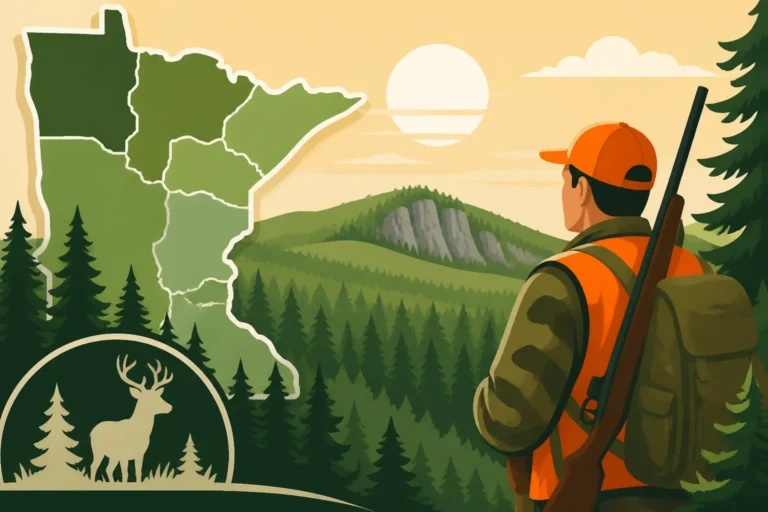
The North Woods (100 Series Permit Areas): The vast forests of northern Minnesota, encompassing the Superior and Chippewa National Forests and numerous State Forests, offer incredible opportunities for deer, grouse, and bear. Think St. Louis, Itasca, Cass, and Aitkin counties. This is big timber hunting, often requiring more effort, but rewarding those who put in the work. It's a different world than the agricultural areas. Best Minnesota Ground for Public Land Deer will steer you in the right direction.
Southeast Bluff Country: The rugged, hilly terrain of southeastern Minnesota, with its river valleys and expansive deciduous forests, offers excellent deer and turkey hunting. Areas like the Whitewater WMA and the Root River Blufflands are known for their picturesque landscapes and healthy game populations. Access can be steep, but the reward can be substantial. Hunting Southeast Minnesota Bluff Country offers specific insights into this beautiful region.
Western Prairie Pothole Region: For waterfowl and pheasant hunters, the western part of the state, particularly the prairie pothole region and areas with a strong agricultural presence, can be incredibly productive. Here you'll find numerous WMAs and Waterfowl Production Areas (WPAs), often interspersed with Walk-In Access lands. Counties like Lac qui Parle, Big Stone, and Yellow Medicine are prime pheasant country. Pheasant Hunting Minnesota Farmland has more details.
No matter where you choose to hunt in Minnesota, diligent research, adherence to regulations, and a respectful attitude will greatly increase your chances of a successful and memorable experience. Welcome to Minnesota!
Disclaimer
This article is for general informational purposes only and does not constitute professional advice. Laws, prices and regulations vary by location and change over time. Consult a qualified professional for guidance on your specific situation.