Timber Cuts and Where Deer Move After
It can be incredibly frustrating to scout a promising area of Minnesota timber only to find a fresh cut has completely altered the landscape, leaving you wondering where all the deer went. Timber cuts, whether small clearings or extensive logging operations, dramatically change deer movement patterns and habitat use. This guide will help you understand how deer react to these changes, what types of cuts impact them differently, and how you can adapt your hunting strategies to find success in these dynamic environments.
Understanding Deer Behavior Around Timber Cuts
Timber cuts are like a double-edged sword for deer hunters in Minnesota. Initially, they can displace animals, making them seem to vanish. But in the long run, these areas often become prime deer habitat, offering crucial food and cover that draws deer in. Understanding this push-and-pull is key to hunting them effectively.
Why Deer are Drawn to Fresh Cuts
Think about what a deer needs: food, cover, and security. A fresh timber cut, after the initial shock, starts to provide all of these in abundance, albeit in different stages. When timber is harvested, whether it's mature aspen, oak, or pine, the sunlight suddenly floods the forest floor. This explosion of light stimulates the growth of new, tender vegetation – the very browse deer love to eat. We're talking about young aspen sprouts, willow, dogwood, and all sorts of forbs that were previously shaded out. It’s like opening a new, nutrient-rich buffet in the middle of a once-sparse pantry. Deer will quickly key into these new food sources, especially in areas where quality browse was previously limited.
Beyond food, these young regenerating plants quickly grow into dense thickets that offer fantastic bedding and security cover. While a clear-cut might look stark and open right after logging, give it a year or two, and it transforms into a tangled jungle of saplings and brush. This dense cover provides thermal protection from harsh Minnesota winters and a safe haven from predators and hunters alike. Bucks love to bed down in these almost impenetrable areas, feeling secure knowing nothing can sneak up on them.
The Initial Disturbance and How Deer React
Of course, before the habitat benefits kick in, there's the disturbance. Logging operations are loud, messy, and disruptive. Heavy machinery, chainsaws, and human activity send deer scattering. It’s a natural flight response. When a forest is being actively cut, deer will almost always vacate the immediate area, seeking refuge in adjacent mature timber, unlogged swamps, or simply moving to a different part of their home range where things are quieter. This is often why hunters find their usual spots barren after a timber cut, leading to that initial frustration.
The key here is understanding that this displacement isn't usually permanent. Once the saws stop and the heavy equipment leaves, deer will slowly start to filter back in, especially if the new browse is appealing and the cover starts to develop. However, their patterns will be different. They might use the area primarily at night at first, slowly gaining confidence during daylight hours as they adapt to the altered landscape. Hunting pressure can also delay this return, pushing them further into those security thickets during legal shooting hours. Knowing this allows you to anticipate their movements and plan accordingly, perhaps by focusing on staging areas just outside the cut for a while.
Types of Timber Cuts and Their Impact on Deer
Not all timber cuts are created equal, and understanding the differences can dramatically influence how you scout and hunt them. Minnesota's forests are managed with various goals, from timber production to wildlife habitat, and each cutting method has a distinct impact on deer.
Clear-Cuts: Short-Term Pain, Long-Term Gain
A clear-cut is exactly what it sounds like: a large area where almost all trees have been removed. Initially, these look like moonscapes, devoid of cover and frankly, pretty ugly to the eye. For a short period right after the cut, deer will avoid these open areas due to lack of cover and the heavy disturbance of logging operations. It's a temporary "dead zone" for hunting, and you'll likely find deer pushed into surrounding timber or nearby swamps.
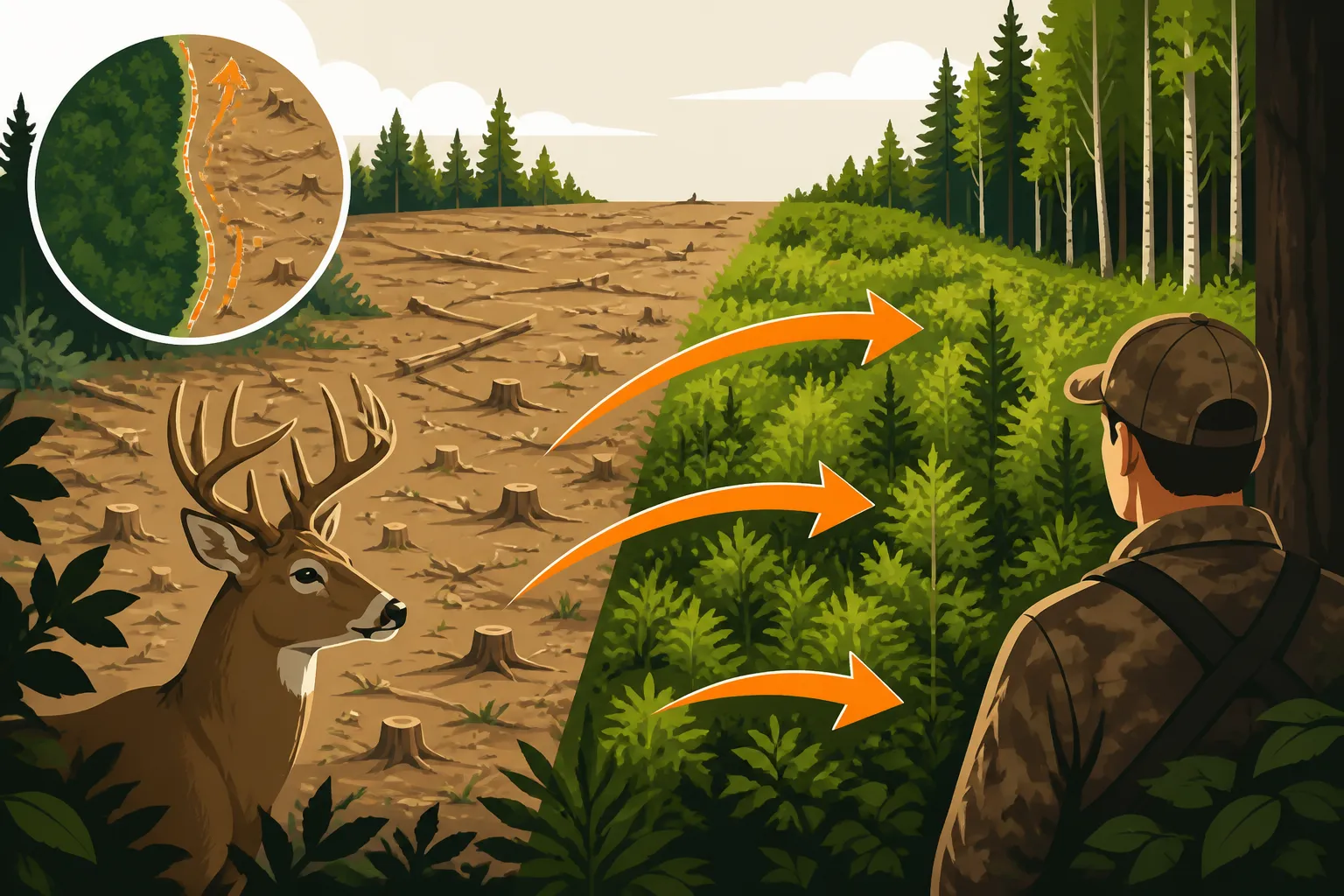
However, patience is a virtue here. Within a year or two, a clear-cut becomes an explosion of new growth. Sunlight hitting the forest floor, combined with disturbed soil, sparks a massive regeneration of young trees, shrubs, and forbs. This dense, young growth provides an incredible amount of browse for deer. Think about a 3- to 10-year-old aspen clear-cut: it's a nearly impenetrable wall of saplings that offers superb thermal cover in winter and escape cover year-round. Bucks will bed deep inside these thickets, feeling incredibly secure. Hunting these areas often means still-hunting the edges, or carefully working your way through the thickest parts, knowing visibility will be limited. You might find success hunting the edges where the new growth meets mature timber, as deer will often stage there before venturing into the dense cut to feed. Hunting a Clear-Cut Edge offers some specific tactics for these situations.
Select Cuts and Thinning: Subtle Shifts in Habitat
Unlike clear-cuts, select cuts and thinning operations are more nuanced. In a select cut, only certain trees are removed, often the mature or diseased ones, leaving a mixed stand. Thinning involves removing some trees to reduce competition and allow the remaining trees to grow larger. These methods don't create the immediate, drastic change of a clear-cut but rather a more subtle, beneficial shift in habitat.
When a stand is thinned or selectively cut, more sunlight reaches the forest floor, stimulating the growth of understory vegetation. This means more browse for deer, but without completely removing all the overhead cover. Deer tend to adapt to these areas much more quickly because their overall sense of security isn't as compromised. They still have mature trees for cover and a canopy overhead, but now there's also an improved food source beneath. These areas often become fantastic travel corridors and feeding grounds, especially if they are adjacent to denser bedding cover. You might find deer moving through these areas more frequently during daylight hours, making them excellent spots for strategic stand placement. Look for fresh rubs and scrapes that emerge after these cuts, as deer establish new travel routes. Scrape Lines Along a Logging Trail can give you more insight into these patterns.
Edge Habitat: The Goldilocks Zone
The "edge" where a timber cut meets undisturbed timber is often the most productive area for hunters. This is the Goldilocks Zone – not too open, not too dense, but just right. Deer are creatures of the edge. They thrive where different habitat types meet because it provides them with easy access to multiple resources. The edge of a clear-cut offers the best of both worlds: dense security cover and abundant browse within the cut, and the safety and familiarity of mature timber just steps away.
Deer will use these edges extensively for travel, feeding, and staging before moving into more open areas. A well-used trail running along the transition from a 5-year-old clear-cut to a mature oak stand is a prime example. They can quickly duck into the thick stuff if they feel threatened, or they can browse the tender regeneration without feeling completely exposed. Stand placement here is critical, focusing on natural funnels, pinch points, or major trails that parallel these edges. Understanding how deer approach and use these transition zones can be the difference between seeing a few deer and getting a shot opportunity. Pay close attention to wind direction, as deer will often approach these edges from downwind to use their noses to check for danger. Wind and Thermals on a Minnesota Ridge offers excellent advice on how to factor this into your hunting.
| Type of Timber Cut | Initial Impact on Deer | Long-Term Impact on Deer | Best Hunting Strategy |
|---|---|---|---|
| Clear-Cut | High disturbance, deer vacate immediate area. | Dense regeneration provides abundant browse and thick bedding cover (3-10 years post-cut). | Hunt edges and transition zones, or still-hunt dense regen in late season. |
| Select Cut | Moderate disturbance, deer adapt relatively quickly. | Increased sunlight boosts understory browse, maintaining overhead cover. | Hunt as enhanced feeding/travel corridors, focus on new trails. |
| Thinning | Low disturbance, deer often remain in the area. | Improved browse and varied cover within the stand, better visibility for deer. | Treat as improved general timber, focus on new browse and subtle funnels. |
| Edge Habitat | Minimal specific impact from cut itself, but becomes critical. | Combines security of mature timber with food/cover of cut; high traffic area. | Key stand locations along trails, funnels, and pinch points where habitats meet. |
Scouting and Hunting Strategies for Timber Cuts
Timber cuts demand a different approach than hunting unbroken stands of mature timber. They're constantly evolving, and what worked last year might be completely irrelevant this season. The good news is, with careful observation and smart strategy, these areas can be incredibly productive.
Pre-Season Scouting: Reading the Landscape
The work begins long before opening day. Pre-season scouting is absolutely crucial when dealing with timber cuts. First, you need to identify where new cuts have occurred. This can be done by physically walking your hunting areas, but modern tools make this much easier. Apps like onX Hunt or GoHunt often update aerial imagery, or at the very least, allow you to compare current satellite views with older ones to spot new logging activity. Look for the stark white or light-colored scars on the landscape that indicate recent removal. These mapping tools can also help you determine access points and property lines, which is essential on public land. Scouting With the Minnesota Recreation Compass App can guide you on using these mapping resources effectively.
Once you've identified a cut, you need to "read the landscape." Walk the perimeter, noting where the cut meets different types of cover – perhaps a swamp, a mature oak ridge, or a dense conifer stand. These transition points are natural travel routes. Look for signs of deer: tracks, droppings, rubs, and particularly established trails. Pay attention to the age of the cut; a recent clear-cut will be a mess of slash, while a 3-5 year-old cut will be a dense wall of saplings perfect for bedding. The objective is to determine how deer are beginning to use the new habitat and identify potential funnels or staging areas where they might move from cover to feed, or vice versa. Reading Aerial Photos for Big Woods Deer can help you interpret what you're seeing from above before you even set foot on the ground.
In-Season Adjustments: Adapting to Pressure
Even the best pre-season plan needs flexibility once the hunting season begins. Deer are sensitive creatures, and hunting pressure, especially on public land, can quickly alter their behavior around timber cuts. If a fresh clear-cut is attracting a lot of hunters, the deer might shift to using the area strictly at night, or they might abandon it during daylight hours entirely, moving to adjacent, undisturbed cover. This is where you need to be observant and willing to adapt.
Instead of fighting the crowds in a popular new cut, consider hunting the perimeter of the cut, especially on the side that offers the thickest, most unmolested cover nearby. Deer pushed by hunters will often seek refuge in these sanctuary areas, and you might catch them slipping in or out. Look for secondary trails that emerge during the season, indicating new escape routes. Also, pay attention to the wind and thermals. In a timber cut, especially a larger one, wind can swirl unpredictably, and thermals will dictate deer movement as temperatures change throughout the day. Hunting stand setups that allow you to cover multiple wind directions or adjusting your approach based on the thermal currents coming off a ridge or out of a valley can be crucial. If you're encountering significant Hunting Pressure on Minnesota Public Land, you might need to find ground others walk past, even if it means going deeper into the thick stuff or looking for overlooked pockets of habitat.
Leveraging Technology: Maps and Analytics
Today's hunting technology is a game-changer for navigating and understanding timber cuts. Gone are the days of relying solely on paper maps and compasses (though those are still great to have as backups!). Modern mapping applications like onX Hunt and GoHunt allow you to overlay satellite imagery with public and private land boundaries, topo maps, and even timber harvest data in some regions. This means you can identify recent cuts, assess their size and shape, and see how they relate to other key habitat features like swamps, ridges, and food plots, all from your phone or computer.
Using the GPS functions within these apps, you can mark potential stand locations, track your movement, and precisely locate deer sign. Imagine identifying a new cut on a satellite image, marking a potential access route, and then using the app to navigate silently to a transition point where you expect deer to cross. Furthermore, some of these platforms offer historical imagery, allowing you to see how an area has changed over time, which can be invaluable for understanding the long-term impact of a cut. These tools empower you to scout more efficiently, plan more effectively, and execute your hunts with greater precision, especially in complex, evolving habitats like timber cuts. Knowing exactly where you are relative to a property line or a specific timber edge can provide immense confidence and improve your safety.
Long-Term Habitat Benefits and Deer Management
While a fresh timber cut might look a bit devastating initially, the long-term effects on deer habitat are overwhelmingly positive, especially when integrated into a broader forest management plan. These cuts are not just about harvesting wood; they're vital for creating diverse, healthy ecosystems that support robust deer populations in Minnesota.
Regeneration and Food Sources
The primary long-term benefit of timber cuts for deer is the massive explosion of regeneration, which translates directly into abundant food. As we discussed earlier, sunlight hitting the forest floor stimulates the growth of new sprouts, seedlings, and herbaceous plants. In a typical aspen clear-cut, for instance, you'll see a dense thicket of young aspen, willow, birch, and various shrubs emerge within a couple of years. These young plants are highly palatable and nutritious, providing critical browse that simply wasn't available in the mature, shaded forest. This is especially important in regions where agricultural food sources are scarce.
This fresh growth is crucial not just for feeding deer, but for the overall health of the herd. Fawns and yearlings, in particular, benefit from easily accessible, high-quality forage, which aids in their growth and development. Does can maintain better body condition, leading to higher fawn survival rates. The cyclical nature of timber harvesting ensures a continuous supply of this vital food source across the landscape, rather than a uniform, less productive forest. This diversity is what truly sustains a thriving deer population.
Creating Security and Bedding Areas
Beyond food, the dense regeneration that follows a timber cut provides exceptional security and bedding cover. Picture a 5- to 15-year-old clear-cut: it's a labyrinth of saplings, brush, and downed logs that is incredibly difficult for predators (including human hunters) to navigate. Deer, especially mature bucks, will gravitate towards these thick areas for bedding. The density provides visual obstruction, making them nearly impossible to spot from a distance, and the physical barriers make it hard for anything to approach silently.
These thickets also offer important thermal cover, especially during harsh Minnesota winters. The dense network of young trees and brush helps to block wind and retain warmth, allowing deer to conserve energy. This combination of security from predators and protection from the elements makes regenerating timber cuts prime real estate for deer. Intelligent forest management often creates a mosaic of cuts of different ages, ensuring there's always a mix of fresh browse, dense bedding cover, and mature timber for hard mast production, leading to a much more resilient and robust deer population across Minnesota. Understanding this gives us a fuller appreciation for why these areas, while challenging to hunt, are so important for the future of our deer.
Disclaimer
This article is for general informational purposes only and does not constitute professional advice. Laws, prices and regulations vary by location and change over time. Consult a qualified professional for guidance on your specific situation.