Fogged Optics in Minnesota Cold
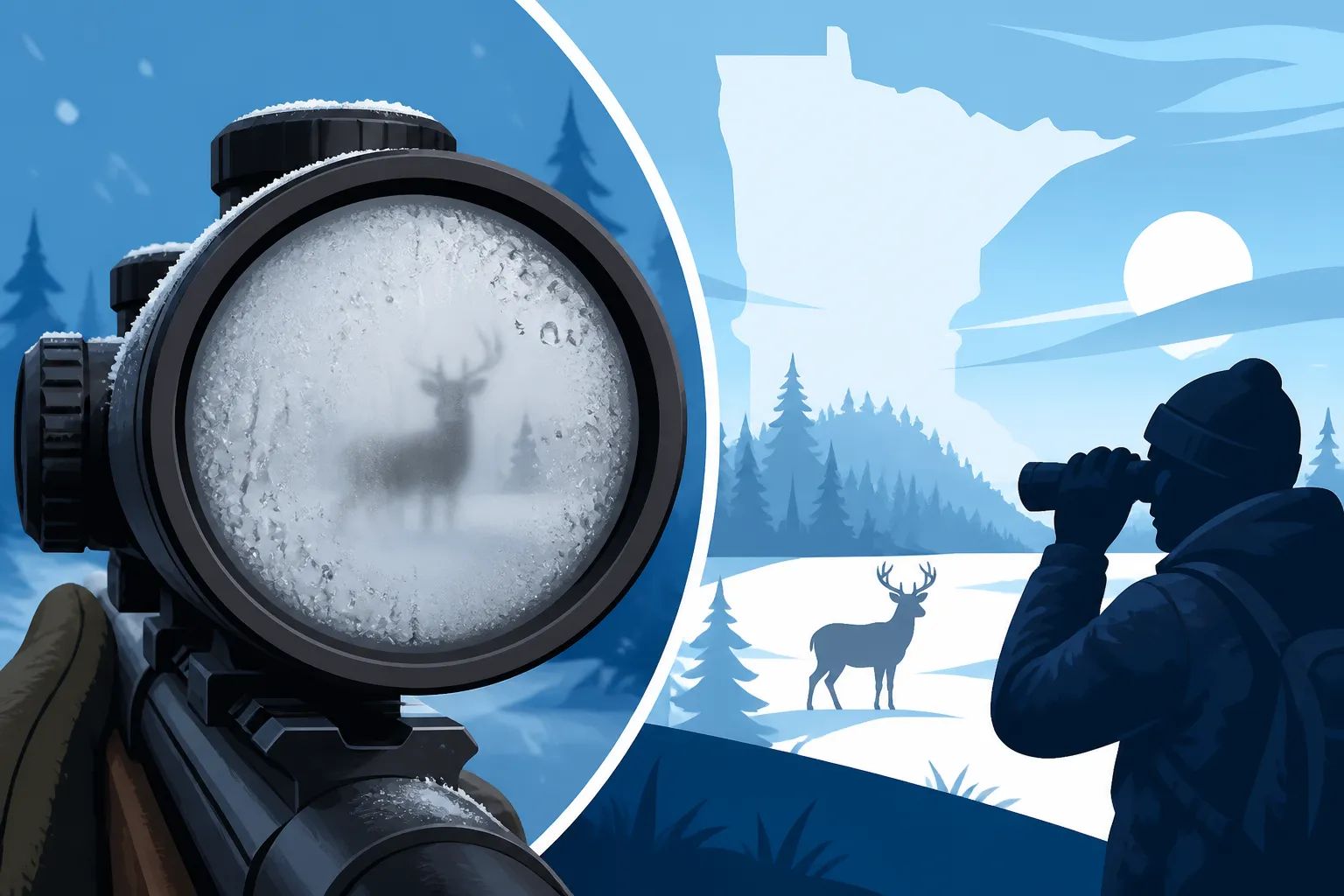
Oh, the dread of that moment. You've just still-hunted through a quiet stretch of northern Minnesota timber, finally spotted movement, slowly raised your binoculars or rifle scope, and then BAM—a milky, opaque haze completely obliterates your view. Nothing is more frustrating than having your optics fog up precisely when you need them most, turning a potential shot into a blurry, missed opportunity. This guide is all about tackling that persistent problem in Minnesota's often-frigid and damp hunting conditions, arming you with practical strategies to keep your vision crystal clear, even when the mercury drops.
The Universal Frustration of Fogged Optics
Let's be honest, we've all been there. You spend hours, sometimes days, meticulously scouting, setting up a stand, and waiting patiently in the cold. You've done everything right—worn the proper layers, accounted for the wind, maybe even used a mapping app like GoHunt to verify your property lines and access. Then, a deer finally steps out, and as you bring your optics to your face, they instantly cloud over. It's not just an inconvenience; it's a gut-wrenching moment of despair, feeling like all your hard work has been undone by a simple, frustrating environmental factor. This isn't just a minor annoyance; it's a hunt-ruining problem that can make or break your day in the field.
Why Minnesota's Cold is a Prime Culprit
Minnesota's hunting seasons, particularly for deer, stretch deep into the colder months. From the crisp days of the archery opener in September to the late-season muzzleloader hunts in December, we experience a vast range of temperatures and humidity levels. What makes our cold so challenging for optics isn't just the freezing temperatures themselves, but the frequent and often drastic temperature differentials. Think about climbing out of a warm truck or a heated deer shack into single-digit air, or perhaps moving vigorously through the woods, building up body heat, and then settling silently into a stand. That sudden change in temperature, combined with the often-damp air, is a recipe for condensation on your lenses. Our breath, too, laden with moisture, can quickly fog up an eyepiece when you bring it close to your face.
The Moment of Truth – When Fog Strikes Hardest
It's almost poetic, isn't it? Optics seem to have a knack for fogging at the absolute worst possible time. Picture this: you've been sitting patiently in your Treestand Setups in Minnesota Hardwoods for three hours, motionless and cold, but perfectly acclimated. A deer appears on the edge of a clearing, and as you slowly lift your binoculars for a better look, your body heat, or even just the subtle shift in air around your face, causes them to instantly cloud. Or perhaps you've been still-hunting, walking briskly through a patch of thick popple, and you suddenly stop, raise your rifle, and find your scope completely obscured. These aren't minor inconveniences; they are critical failures during the most important seconds of your hunt. That moment of clarity is everything, and a foggy lens can steal it right out from under you.
Understanding the Science Behind the Fog (Without Getting a Degree)
While it feels like a personal attack from Mother Nature, optical fogging is simply basic physics at play. You don't need a science degree to grasp the core concepts, but understanding why it happens is the first step in effectively preventing it. It's about managing moisture and temperature, two things we constantly battle in the Minnesota woods.
The Role of Condensation and Dew Point
At its core, fog is just condensation. Air always contains some amount of water vapor. The "dew point" is the temperature at which that air, for a given pressure, becomes saturated with water vapor and starts to condense into liquid water (dew) or ice (frost). When your cold binocular lens or rifle scope comes into contact with warmer, moist air (like your breath or the air inside a warm vehicle), the lens itself acts as a cold surface. If the lens's temperature is at or below the dew point of the surrounding air, that water vapor rapidly cools, condenses, and forms tiny droplets on the lens surface—creating that frustrating fog. It's the same reason your bathroom mirror fogs up after a hot shower or your iced tea glass "sweats" on a humid summer day. The greater the temperature difference, the faster and thicker the fog will form.
External vs. Internal Fogging: Know the Difference
It's crucial to distinguish between external and internal fogging, as their solutions differ.
External Fogging is the most common and occurs on the outside surfaces of your lenses. This happens when the outer glass elements come into contact with warm, moist air, as described above. It's usually a temporary issue, and often resolves itself as the lens acclimates, or can be wiped away with care.
Internal Fogging, on the other hand, is a much more serious problem. This occurs when moisture gets inside the optical housing itself. High-quality optics are typically "purged" with an inert gas like nitrogen or argon and then sealed to prevent internal moisture and fogging. If an optic fogs internally, it usually indicates a breach in its seals. This can be caused by a drop, a hard knock, or simply a manufacturing defect. An internally fogged optic often won't clear up on its own, or if it does, it will reoccur with every temperature change. If you suspect internal fogging, it's generally a warranty issue and requires professional repair or replacement, not just a wipe down. You can often tell the difference because internal fogging will appear persistent, may not respond to external wiping, and might even look like a smudge that's impossible to reach.
Proactive Strategies to Combat Fogged Optics
Dealing with fog after it appears is a reactive measure, and often too late. The real key to clear vision in cold Minnesota conditions is adopting a proactive mindset. There are several steps you can take to minimize the chances of your optics fogging up in the first place, ensuring you're ready when that critical moment arrives.
Temperature Acclimation: Your First Line of Defense
One of the simplest yet most effective ways to prevent fogging is to minimize temperature differentials. This is about allowing your gear to slowly adjust to the ambient temperature.
- Gradual Cooling: If you're heading out from a warm cabin or truck into the cold, don't just grab your binos and scope and rush out. Open your truck window a crack for 10-15 minutes before you get out, or leave your optics in a cold porch or unheated mudroom for an hour before your hunt. This allows the internal components of your optics to gradually cool down to the outdoor temperature, reducing the shock when exposed to colder air.
- Protect from Body Heat: When you're sitting in a stand, try not to keep your binoculars tucked under your heavy jacket where they'll warm up significantly. While it might feel counterintuitive, letting them hang freely (but protected from precipitation) allows them to stay closer to the ambient temperature. A simple bino harness is excellent for this, keeping them readily accessible while preventing them from becoming too warm from your body. This concept also applies when considering your Cold-Weather Sitting Strategy in Minnesota, where managing your own heat output is crucial.
Chemical Treatments and Anti-Fog Solutions
Beyond temperature management, there are a variety of products designed to prevent condensation from forming on lens surfaces. These often create a thin, hydrophilic layer that causes water to sheet off rather than bead up and fog.
- Anti-Fog Wipes and Sprays: Numerous commercial products exist, often used by divers, skiers, or eyeglass wearers. These typically contain a surfactant that reduces surface tension, preventing water droplets from forming. Apply them according to the directions, usually by wiping or spraying on the lens and letting it dry, then buffing lightly. It's wise to test any new product on a small, inconspicuous part of your lens first to ensure it doesn't cause damage or residue. Brands like Cat Crap or Rain-X Anti-Fog are common, but always check their compatibility with your specific lens coatings.
- Homemade Solutions: Some hunters swear by a very dilute solution of dish soap and water, or even saliva, applied and buffed dry. While these can work in a pinch by providing a similar surfactant effect, they might leave residue, attract dust, or degrade lens coatings over time. Always use caution with DIY methods on expensive optics. A high-quality lens cleaning cloth is essential, and ensure it's specifically designed for optics, not just any old rag.
Physical Barriers and Protective Measures
Sometimes, the best offense is a good defense. Protecting your lenses from direct contact with moisture, breath, and sudden temperature shifts can significantly reduce fogging.
- Lens Caps and Rain Guards: This seems obvious, but it's worth emphasizing. Keep your lens caps on and your eyepiece rain guard in place until the absolute last second. This protects the lens surface from moisture, dust, and direct exposure to sudden temperature changes. Modern flip-up caps are incredibly convenient for scopes, allowing for quick deployment.
- Optics Covers and Harnesses: A good bino harness or scope cover can do more than just protect your optics from bumps and scratches. Many are designed to enclose the optics, providing a small micro-climate that helps moderate temperature changes. When you're using detailed mapping systems like GoHunt to navigate to a new location, keeping your binoculars in a secure, covered harness until you reach your destination can make a big difference. This is especially true if you're hiking through heavy snow or experiencing Keeping a Muzzleloader Dry in Lake-Effect Snow type weather conditions.
- Microfiber Cloths: Always carry a high-quality microfiber lens cloth specifically for optics. Never use your shirt, a paper towel, or anything abrasive. If a lens fogs, a gentle wipe can sometimes clear external fog, but only if the cloth is clean and dry. Wiping a wet, dirty lens can scratch it.
What to Do When the Fog Rolls In Anyway
Despite all your best efforts, sometimes fog just happens. Whether it's an unexpected shift in humidity or a sudden temperature drop, knowing how to react quickly can still save your hunt. It’s about having a backup plan and understanding the limits of what you can do in the field.
The Quick Fixes: When Time is of the Essence
When that deer is standing there and your scope is fogged, you need fast, effective action.
- Breathe Away, Not On: This might sound basic, but in a panicked moment, many hunters instinctively try to blow on their lenses to clear them. This is often counterproductive, as your breath is warm and humid, adding more moisture to the problem. Instead, gently hold the optic away from your face for a few seconds, allowing the ambient air to gradually equalize the temperature.
- Gentle Wipe (Only if Dry): If the fog is light and external, a very gentle wipe with a clean, dry microfiber cloth might clear it. But remember, wiping a wet lens can smear moisture or, worse, grind grit into the glass, causing scratches. If there's any visible moisture beyond light fog, resist the urge to wipe until it's drier or you can use a proper cleaning solution.
- Wait it Out: Sometimes, patience is the best solution. If the temperature differential isn't extreme, the fog might dissipate on its own in 10-20 seconds as the lens warms or cools to match the ambient air. Use this time to remain still, reassess the situation, and be ready to make your move once clarity returns. While this might feel like an eternity, rushing the clear-up can make it worse.
Long-Term Solutions for Persistent Issues
If fogging is a constant problem, it might be time to consider upgrading your gear or getting professional help.
- Invest in Quality, Purged Optics: If you're constantly battling internal fogging, your optics might not be adequately sealed. Higher-end binoculars and scopes are purged with inert gases like nitrogen or argon, which prevents internal moisture and greatly reduces the chance of internal fogging. While this is an investment, it's one of the most reliable ways to ensure clear vision. When looking at Optics for Minnesota Big Woods and Farmland, consider their fogproof ratings. Products designed for harsh conditions are often sealed and purged.
- Check Warranty and Professional Cleaning: If your high-quality, purged optics are consistently fogging internally, it’s likely a manufacturing defect or a compromised seal. Most reputable optics manufacturers offer excellent warranties. Contact their customer service, describe the issue, and inquire about repair or replacement. Attempting to disassemble or repair internally fogged optics yourself will almost certainly void your warranty and likely cause more damage. For external lenses that constantly get dirty or develop persistent smears, consider a professional cleaning service rather than risking damage yourself. They have the right tools and solutions to safely clean intricate lens coatings.
Here’s a quick overview of anti-fog strategies:
| Strategy | Description | Pros | Cons | Ideal Use Case |
|---|---|---|---|---|
| Temperature Acclimation | Gradually exposing optics to cold air before hunting | Most effective, no cost, prevents fog at the source | Requires planning, might not be feasible for quick stops | Before all cold-weather hunts, long sits |
| Anti-Fog Wipes/Sprays | Applying a chemical coating to the lens surface | Creates a protective layer, quick application | Can leave residue, may need reapplication, cost involved | Humid conditions, active hunting, quick clearing |
| Lens Caps/Covers | Keeping lenses covered until moment of use | Physical barrier against moisture and temperature shock | Slows down target acquisition, extra steps | Waiting in stand, navigating dense cover |
| Microfiber Cloth | Gently wiping external fog with a clean, dry cloth | Quick, low cost | Can scratch lenses if dirty, only works for external fog | Light external fog, post-acclimation |
| Quality, Purged Optics | Investing in factory-sealed, gas-purged binoculars/scopes | Prevents internal fogging, durable, reliable | Significant upfront cost | All serious hunting, extreme conditions |
By understanding why fogging happens and implementing these proactive and reactive measures, you can dramatically improve your chances of having a clear view when it matters most. It takes a little extra planning and careful gear management, but a successful hunt often hinges on these small details. After all, what good is knowing Where Big Woods Bucks Bed in Minnesota if you can’t see them? Good luck out there, and stay clear!
Disclaimer
This article is for general informational purposes only and does not constitute professional advice. Laws, prices and regulations vary by location and change over time. Consult a qualified professional for guidance on your specific situation.