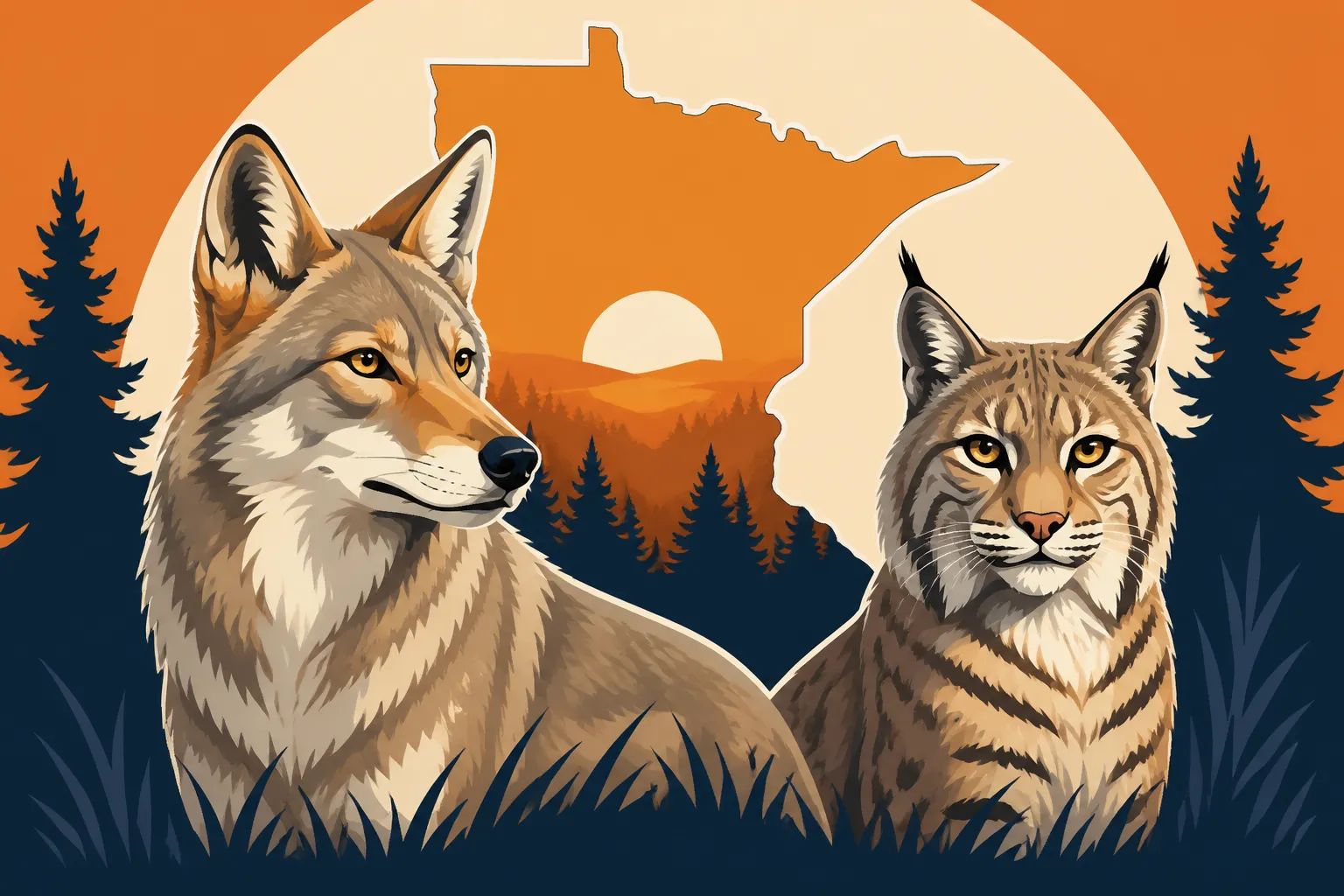
Coyotes and Bobcats in Minnesota
Hunting for elusive predators like coyotes and bobcats in Minnesota can feel like chasing ghosts. These animals are incredibly intelligent and often masters of stealth, making any successful encounter a true badge of honor. Whether you're interested in managing local populations, pursuing furbearers, or simply understanding more about these fascinating creatures, this guide will help unravel the mysteries of Minnesota's coyotes and bobcats, their habitats, and how to respectfully engage with them in the wild.
Understanding Minnesota's Wild Canines: Coyotes
Coyotes, often called the "song dogs" of the prairie, have made themselves at home across nearly every corner of Minnesota. Their adaptability is truly remarkable, allowing them to thrive in environments ranging from wide-open agricultural fields to dense northern forests, and even surprisingly close to urban and suburban areas.
Coyote Distribution and Habitat
You'd be hard-pressed to find a county in Minnesota without a coyote population. These highly adaptable canids have mastered the art of survival alongside human civilization, often using our presence to their advantage. They are particularly fond of what we call "edge habitat"—the places where two different environments meet, like where a forest opens into a field, or where a brushy creek bottom cuts through farmland. These transitional zones provide excellent hunting grounds for their primary prey, which includes rodents, rabbits, and even deer fawns during the spring.
In the southern and western parts of the state, agricultural landscapes interspersed with shelterbelts, cattail sloughs, and drainage ditches offer prime coyote real estate. These areas provide ample cover for denning and travel, as well as a steady supply of small game. Up north, in the vast timber country, coyotes are just as prevalent, often found along logging roads, clear-cuts, and the fringes of dense forest, which give them both hunting opportunities and escape cover. The ease with which they navigate these varied environments speaks volumes about their intelligence and ability to adapt their hunting strategies.
Coyote Behavior and Social Structure
Coyotes typically live in smaller family groups, usually consisting of a breeding pair and their offspring from the current year, and sometimes a few non-breeding adults from previous litters. Unlike the large, highly structured packs of their larger wolf cousins, coyote social units are more fluid. This structure allows them to hunt effectively for smaller prey but also to band together when necessary to take down larger animals like deer, especially when winter snows make deer more vulnerable.
Their vocalizations are one of their most defining characteristics, often a symphony of yips, barks, and howls that can be both haunting and exhilarating. A lone coyote might let out a series of high-pitched yips, while a chorus of howls usually indicates multiple animals communicating across their territory. These calls can serve various purposes: locating pack members, warning off intruders, or celebrating a successful hunt. Listening to a group of coyotes "singing" on a crisp Minnesota night is an experience every outdoorsperson should have. While often nocturnal or crepuscular (most active at dawn and dusk), it's not uncommon to spot coyotes out and about during daylight hours, especially if food is scarce or they feel undisturbed. For a deeper understanding of the differences between these two canids, check out our article on Timber Wolves Versus Coyotes in Minnesota.
Hunting Coyotes in Minnesota
Coyotes in Minnesota can be hunted year-round, which offers a fantastic opportunity for hunters looking to extend their time in the field outside of big game seasons. However, the open season doesn't mean it's easy. Coyotes are incredibly wary, making them a formidable challenge. Success often hinges on understanding their patterns and employing effective calling strategies.
One of the most popular and effective methods is calling, especially during the colder months when coyotes are more active and visible against the snow. Whether you're using distress calls that mimic a wounded rabbit or fawn, or challenge howls to provoke a territorial response, timing and setup are crucial. Our guide on Coyote Calling in a Minnesota Winter offers detailed advice on techniques and equipment. When setting up, always prioritize the wind; a coyote's nose is its best defense, and if they catch your scent, the game is over. Using a mapping tool like those found on GoHunt can be incredibly helpful for identifying potential stand locations, noting wind directions, and spotting advantageous terrain features like thick cover or natural funnels where coyotes might travel.
For those interested in the thrill of pursuing coyotes after dark, Minnesota has specific regulations for night hunting. This typically involves certain permits and restrictions on artificial lights, and safety should always be your top priority. You can learn more about these specific requirements in Night Hunting Rules for Minnesota Coyotes. When it comes to gear, a flat-shooting rifle chambered in something like a .223 Remington or .204 Ruger, paired with quality optics for low-light conditions, is ideal. Dressing in layers with warm, quiet clothing is essential, as you'll often be sitting still for extended periods in frigid temperatures.
Elusive Felines of the Northwoods: Bobcats
Bobcats are truly the phantom felines of Minnesota's wild places. While not as widespread or numerous as coyotes, their presence adds an undeniable mystique to the landscape. Encountering a bobcat in the wild is a rare and special event, a testament to their secretive nature and masterful camouflage.
Bobcat Range and Preferred Habitat
Minnesota's bobcat population is primarily concentrated in the forested regions of the state, particularly the central and northern areas. Unlike the adaptable coyote, bobcats prefer more remote, dense habitats, shying away from wide-open agricultural lands or heavily developed areas. They thrive in rugged terrain, utilizing a mosaic of conifer stands, mixed hardwoods, swamps, and rocky outcrops for cover, hunting, and denning. You can dive deeper into their distribution and population in Bobcat Range and Harvest in Minnesota.
Their preferred habitat provides ample opportunities for ambush hunting, which is their primary method of securing prey. Dense undergrowth, blowdowns, and thickets offer the perfect blend of concealment and vantage points from which to stalk. These areas also support a healthy population of their favorite meals: rabbits, snowshoe hares, and various small rodents. In winter, they are particularly adept at navigating deep snow, using their relatively large paws to distribute their weight, much like a natural snowshoe. They will also opportunistically hunt grouse and even small, vulnerable deer, especially fawns or sick animals.
Bobcat Characteristics and Habits
Often confused with their larger, more specialized cousin, the Canada lynx, bobcats are distinct creatures. They are roughly twice the size of a domestic house cat, easily identifiable by their short, "bobbed" tail, often tipped with black on the top and white on the underside. Their coats range from tawny brown to reddish-brown, usually spotted with dark markings, providing excellent camouflage in dappled forest light. While they have short tufts on their ears, these are less pronounced than those of a lynx.
Bobcats are solitary animals, generally quite territorial. They mark their home ranges with scent, scratches, and urine, letting other bobcats know where their boundaries lie. They are predominantly nocturnal or crepuscular, doing most of their hunting during the hours of darkness or twilight. This secretive nature, combined with their incredible stealth, is why they are so rarely seen, even in areas with healthy populations. Denning typically occurs in secluded spots, such as rocky crevices, hollow logs, or dense thickets, where mothers raise their kittens away from predators and disturbances.
Trapping Bobcats in Minnesota
Trapping is the primary method for harvesting bobcats in Minnesota, given their elusive nature and the difficulty of calling them in like coyotes. The state manages bobcat populations through strict seasons and often limited permit or tag systems, particularly in certain areas. This ensures sustainable harvest and helps monitor their numbers.
Before you even think about setting a trap, you absolutely need to be familiar with Minnesota Trapping Seasons and Tagging requirements. These regulations cover everything from season dates and bag limits to trap types, setting methods, and the mandatory tagging of harvested animals. Common trap types used for bobcats include footholds (leghold traps) and snares, all regulated for size and humane design. Proper trap placement is critical, often along known travel corridors, pinch points, or near areas with abundant bobcat sign like tracks or scat. Scent lures, visual attractants like feathers, and well-constructed cubby sets are often employed to draw a bobcat's attention.
Ethical and responsible trapping practices are paramount. This includes setting traps in a way that minimizes the chance of non-target captures, checking traps regularly (usually every 24 hours) to prevent undue stress to captured animals, and knowing how to dispatch an animal humanely. Trapping bobcats requires a significant investment of time, knowledge, and skill, but it can be a rewarding way to connect with these incredible felines and understand their presence in the Minnesota wilderness.
Distinguishing Between Minnesota's Predators
Minnesota is home to several incredible predators, and sometimes it can be tricky to tell them apart, especially in a fleeting glimpse or when examining tracks. Knowing the key differences between coyotes, wolves, and bobcats (and even lynx) is crucial for accurate identification, whether you're a hunter, trapper, or wildlife enthusiast.
Coyotes vs. Wolves
This is perhaps the most common identification challenge in Minnesota's wilderness. While both are canids, they are quite distinct when you know what to look for.
| Feature | Coyote | Timber Wolf |
|---|---|---|
| Size | Medium, often 20-50 lbs | Large, often 60-120 lbs |
| Build | Slender, lean, dog-like | Stockier, broader chest, powerful |
| Muzzle | Relatively pointed | Broader, blunter |
| Ears | Proportionately larger, pointed | Shorter, rounder, often heavily furred |
| Tail | Bushy, carried low, often with black tip | Bushy, carried low, no distinct black tip |
| Tracks | Smaller (2-2.5 inches), more oval | Larger (3.5-5 inches), more rounded |
| Gait | Often weaves, less direct | Often walks in a straight, purposeful line |
| Vocalization | High-pitched yips, barks, short howls | Deep, prolonged howls, growls |
Wolves are significantly larger and more robust than coyotes. Think of a German Shepherd-sized animal for a large coyote, versus a truly massive dog, sometimes approaching the size of a small deer, for a wolf. Their muzzles are broader and their feet are much larger, which is a key indicator when looking at tracks in the snow or mud. Wolf tracks are typically 3.5 to 5 inches long, compared to the coyote's 2 to 2.5 inches. Additionally, wolves tend to travel in a very straight line, often "single-filing" in deep snow, whereas coyotes may weave more. For a comprehensive overview of Minnesota's top predators, including wolves, consult Wolves and Predators in Minnesota. Wolves are also typically more wary of humans and less habituated to human-altered landscapes than coyotes, sticking to more remote wilderness areas.
Bobcats vs. Lynxes
While both are beautiful wild cats, bobcats and lynxes have some noticeable differences, primarily driven by their adaptation to different habitats.
- Size and Build: Bobcats are medium-sized cats, muscular and compact. Lynxes are slightly larger, with remarkably long legs and enormous, heavily furred paws that act like snowshoes, perfect for navigating deep snow.
- Tail: The bobcat's namesake short, "bobbed" tail typically has a black tip on top and a white underside, often with a few black bands near the end. The lynx's tail is even shorter and has a solid black tip, often described as if it was dipped in black ink.
- Ear Tufts and Facial Ruff: Lynxes have much longer, more prominent ear tufts and a more pronounced facial ruff (long fur along the cheeks) than bobcats.
- Coat: Both have spotted coats, but the lynx's fur is generally paler, more uniform, and thicker, especially in winter.
- Habitat: While both prefer forested areas, lynxes are highly specialized for deep snow environments and primarily feed on snowshoe hares. They are less common in Minnesota and generally found in the dense, mature conifer forests of the far north. Bobcats are more adaptable and can be found in a broader range of forested and brushy habitats, often where snow isn't quite as deep. It's important to remember that Canada lynx are a protected species and cannot be hunted or trapped in Minnesota.
Tracks, Scat, and Other Sign
Learning to read the "book of the woods" by identifying tracks, scat, and other signs is an invaluable skill for any outdoors enthusiast.
- Tracks: Canine (coyote, wolf, dog) tracks typically show claw marks, while feline (bobcat, lynx, domestic cat) tracks generally do not, as cats retract their claws. Pay attention to size, shape, and the arrangement of pads. For example, a coyote's track will be smaller and more oval than a wolf's, and the front and hind pads will register clearly. Bobcat tracks are rounded, with four toe pads and a distinct heel pad, usually without claw marks. GoHunt's detailed satellite imagery and topo maps can really help you identify areas where animals might travel, making it easier to find and interpret sign.
- Scat: Predator scat often contains hair, bone fragments, and sometimes teeth from their prey. Coyote scat is typically rope-like and can vary in size depending on their diet. Bobcat scat is often more segmented and may contain more fur and bone fragments from smaller prey. The location of scat can also tell a story; coyotes sometimes deposit scat in prominent locations to mark territory.
- Other Sign: Look for kill sites, especially in winter, where you might find hair or drag marks. Rubs or scratch marks on trees can indicate territory for felines. Game cameras are an excellent tool for identifying elusive predators; setting them up along game trails or near potential travel corridors can provide invaluable insights into their presence and behavior.
Management and Conservation of Coyotes and Bobcats
The management of predator populations like coyotes and bobcats is a complex balance, often influenced by their ecological role, interactions with human interests, and the health of their prey species. Minnesota's Department of Natural Resources (DNR) works to maintain healthy populations while addressing concerns from livestock producers and hunters.
Population Trends and Influencing Factors
Coyotes, as we've discussed, are incredibly adaptable. Their population in Minnesota has generally been stable or even increasing in many areas, largely due to their ability to thrive in human-modified landscapes and capitalize on various food sources. They quickly exploit new habitat opportunities and can recover from hunting and trapping pressure with relatively high reproductive rates. Urban sprawl, in some cases, has inadvertently created new niches for coyotes, as suburban areas often provide abundant small prey and cover. Factors like severe winters can impact coyote populations, especially if their primary prey species, like rabbits or deer fawns, suffer. Disease, such as Mange in Minnesota Coyotes and Foxes, can also temporarily reduce local populations.
Bobcats, on the other hand, are more sensitive to environmental changes. Their populations tend to be lower and more localized, tied closely to the availability of dense forest cover and their preferred prey, particularly snowshoe hares and rabbits. Habitat fragmentation, logging practices, and very severe winters with prolonged deep snow can have a more significant impact on bobcat numbers. Their slower reproductive rate also makes them less resilient to sustained pressure compared to coyotes. DNR biologists closely monitor these trends through various surveys and harvest data to ensure their management practices are sustainable.
Hunting and Trapping Regulations
Hunting and trapping regulations for coyotes and bobcats are designed to achieve several objectives: manage populations to prevent overabundance or decline, provide recreational opportunities for hunters and trappers, and allow for the sustainable harvest of fur. For coyotes, the year-round open season reflects their generally healthy and resilient population. However, even with coyotes, there are specific rules, such as those governing Night Hunting Rules for Minnesota Coyotes or the use of certain firearms.
For bobcats, regulations are typically much more restrictive. Season dates are usually short, often occurring in the late fall or early winter when their pelts are prime. Many areas require a special permit or lottery drawing to obtain a bobcat tag, reflecting their lower population density and the desire to manage them more conservatively. These regulations ensure that harvest levels are sustainable and do not negatively impact the long-term health of the bobcat population. Hunters and trappers play a vital role in wildlife management by adhering to these rules and reporting their harvest, which provides crucial data for biologists. You can find detailed information on these topics in Minnesota Trapping Seasons and Tagging.
Coexisting with Predators
Living in Minnesota, especially in rural or semi-rural areas, means sharing the landscape with predators. Learning to coexist peacefully is a key aspect of wildlife management.
- Protecting Livestock and Pets: This is where most human-predator conflicts arise. Simple measures like secure fencing, keeping pets indoors or supervised, and using deterrents (e.g., motion-sensor lights, guard animals) can significantly reduce depredation on livestock and pets. Understanding the behavior of both coyotes and bobcats can help you implement the most effective deterrents.
- Understanding Their Role: Both coyotes and bobcats play important ecological roles. Coyotes help control rodent and rabbit populations, and can also act as scavengers. Bobcats are natural predators of small game and can help maintain healthy ecosystems by targeting the weak or sick. Appreciating their place in the food web helps foster a more harmonious relationship with these wild neighbors.
- Responsible Practices: Hunters and trappers have a responsibility to conduct their activities ethically and to respect both the animals and other land users. This includes proper carcass disposal, respecting private property boundaries, and understanding public land rules. Areas like Minnesota Wildlife Management Areas provide critical habitat for both predators and prey, and respecting the rules in these areas ensures they remain healthy for all.
Practical Tips for Hunting and Trapping Success
Whether you're after the cunning coyote or the elusive bobcat, success in the field often boils down to careful planning, keen observation, and the right approach. These predators are intelligent and wary, demanding respect and strategy from those who pursue them.
Scouting and Planning
Effective scouting is the bedrock of successful predator hunting or trapping. You can't just wander out and expect a bobcat to appear or a coyote to charge in. Instead, you need to understand the landscape and identify where these animals are likely to be.
Modern mapping tools are game-changers for this kind of work. GoHunt, for example, offers detailed topographic maps, aerial imagery, and overlays for public land boundaries, all of which are invaluable. You can use these tools from the comfort of your home to identify potential travel corridors, such as brushy draws, logging roads, or the edges where timber meets open fields. Look for pinch points—narrow strips of cover that animals are funneled through—or areas with varied topography that offer natural ambush points. Analyzing aerial photos for dense cover, water sources, and potential denning areas can significantly narrow down your search. Many of the same principles apply as when Reading Aerial Photos for Big Woods Deer, looking for those subtle features that funnel movement.
Once on the ground, confirm what you've seen on the map by looking for fresh sign. Tracks in mud or snow, scat along trails, or even old kill sites can tell you a lot about an animal's presence and recent movements. Pay attention to changes in elevation, wind direction patterns in specific locations, and the location of natural barriers. The more you understand the specific area, the better you can predict where a coyote might emerge or a bobcat might set up an ambush.
Calling and Decoy Strategies
Calling predators is an art form, especially for coyotes. It's not just about making noise; it's about telling a story that piques their interest or invokes a territorial response.
- Coyote Calling: Electronic calls offer a vast library of sounds, from rabbit distress cries to pup yelps and challenge howls. For a rabbit distress call, start with soft, pleading cries and gradually increase volume and intensity. Use short bursts, then go silent for a minute or two, scanning constantly. For challenge howls, try to imitate a rival coyote; this works best during the breeding season. Wind is your absolute enemy, always set up with the wind in your face or quartering. Consider using a visual decoy, like a spinning fuzzy tail, to draw their attention away from your position and make them commit. Remember that Rattling Volume in Thick Popple Cover can differ greatly from calling in open farmland; adjust your volume accordingly.
- Bobcat Attractants: Bobcats are notoriously difficult to call in, but not impossible. Their curiosity can sometimes be exploited. Small bird or mouse distress sounds can occasionally work, but patience is key, as their approach is often slow and cautious. Visual attractants, such as fluttering feathers on a string or a small, subtle decoy that mimics a rodent, can sometimes draw them in for a closer look. Scent lures, particularly those based on their natural prey or bobcat urine, can also be effective when trapping or trying to draw them into a specific area.
Safety and Ethics
Predator hunting and trapping demand a high degree of responsibility and adherence to ethical practices.
- Public Land Considerations: When hunting Minnesota Wildlife Management Areas or other public lands, be acutely aware of other users. Always know where your shot will go and be certain of your target. Respect property lines and read all posted rules and regulations. If you're hunting in areas known for Opening Weekend Crowds in the 100 Series, consider how other hunters might influence predator behavior and choose quieter spots.
- Responsible Take: Whether hunting or trapping, strive for a quick, humane take. Practice your shooting to ensure accurate shot placement. If trapping, check your traps frequently and know how to dispatch an animal humanely. Remember that these are wild animals, and our interaction with them should always be respectful.
- Respecting Private Property: Gaining permission to hunt or trap on private land is a privilege, not a right. Always ask respectfully and follow the landowner's rules. If you're unfamiliar with the process, our article on Knocking on Doors in Minnesota Farm Country can provide some useful pointers. Never trespass. Leave gates as you found them, don't leave trash, and report any observed illegal activity. By being a responsible and ethical hunter or trapper, you contribute positively to the image of all outdoors enthusiasts and help ensure future access.
Disclaimer
This article is for general informational purposes only and does not constitute professional advice. Laws, prices and regulations vary by location and change over time. Consult a qualified professional for guidance on your specific situation.