Poult-to-Hen Ratios and What They Mean
Ever had a spring turkey season where the woods just felt… empty? Or maybe you had a banner year and wondered what made the difference? Understanding poult-to-hen ratios can offer a real window into the health of Minnesota's wild turkey population and help you make sense of those quiet or booming seasons. This guide will walk you through what these ratios are, why they're so important for hunters and wildlife managers alike, and how you can use this knowledge to better prepare for your next Minnesota turkey hunt.
Understanding Poult-to-Hen Ratios in Minnesota
When we talk about the health of our wild turkey populations, it’s not just about how many gobblers you hear in the spring. A much deeper indicator of long-term stability and future hunting success lies in what's happening behind the scenes with the hens and their offspring. This is where poult-to-hen ratios come into play, offering a critical snapshot of reproduction and survival each year.
What is a Poult-to-Hen Ratio?
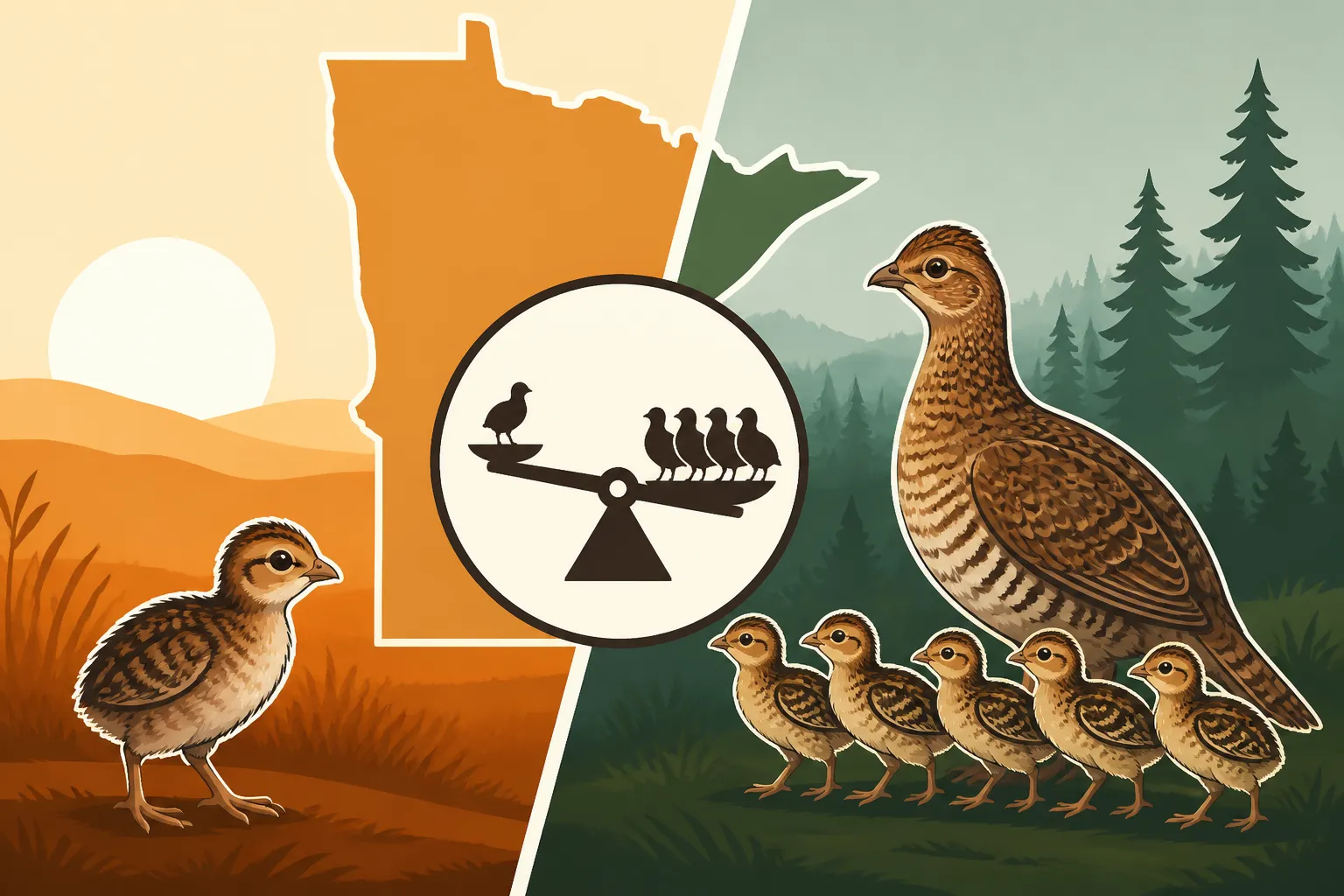
Simply put, a poult-to-hen ratio is the number of young turkeys (poult) observed per adult hen. It’s calculated by wildlife biologists and sometimes by dedicated citizen scientists during the late summer months. They'll count the number of adult hens they see and then, in the same observation, count how many poults are with them. This isn't just a casual headcount; it's a systematic effort to get a reliable average across different areas. A high number suggests a successful breeding season with good poult survival, while a low number can indicate challenges. Think of it as a report card for the wild turkey nursery.
These numbers give us an idea of recruitment – how many young birds are successfully making it to a stage where they can survive on their own and potentially contribute to the breeding population in future years. It’s not just about the absolute number of turkeys, but about the rate at which new birds are joining the flock. For instance, if you spot a hen with 8-10 healthy poults in tow, that’s a fantastic sign. If you see many hens but only one or two poults trailing them, or worse, none at all, that's cause for concern.
Why This Ratio Matters for Turkey Hunters
As a turkey hunter, you're naturally focused on the spring gobble and the fall hunt. But the poult-to-hen ratio directly influences your chances of success in those future seasons. A consistently high ratio means that the population is robust, growing, and likely to offer plenty of hunting opportunities down the line. It points to a healthy influx of new birds, which eventually mature into those wary gobblers we all love to chase. If you're wondering about Minnesota Turkey Population Trends, these ratios are a key piece of that puzzle.
Conversely, a string of years with low poult-to-hen ratios can signal trouble. It might mean fewer jakes (yearling males) the following spring, and fewer mature gobblers a year or two after that. This can lead to quieter woods, tougher hunting, and potentially even calls for more conservative harvest regulations to help the population recover. No hunter wants to face a decline, so understanding these ratios helps us appreciate why certain management decisions are made. It’s a direct link between what happens in the nesting season and what you experience in the blind or while Calling a Minnesota Gobbler Off the Roost.
How Minnesota DNR Collects This Data
The task of tracking wild turkey populations across Minnesota's diverse landscapes is no small feat. The Minnesota Department of Natural Resources (DNR) relies on a combination of scientific surveys and crucial input from the public to get an accurate picture of poult production. It's a testament to how everyone, from a seasoned biologist to a casual observer, can contribute to wildlife conservation.
The Role of Citizen Science and Hunter Observations
One of the most valuable resources for tracking poult-to-hen ratios comes directly from us – the people who spend time in the turkey woods. The DNR often encourages hunters, landowners, and outdoor enthusiasts to report their turkey sightings, especially during the crucial summer months when poults are growing. This isn't just busywork; these citizen science efforts provide a massive amount of data that would be impossible for the DNR to collect on its own.
Imagine you're out Scouting Minnesota Public Land Before Season in July, looking for deer sign, and you stumble upon a hen with a dozen fuzzy little poults scurrying behind her. Reporting that observation, noting the date, location, and number of birds, gives the DNR another data point for that specific area. This collective effort fills in gaps and helps confirm trends observed in more formal surveys. Tools like the GoHunt app can even help you pinpoint your location accurately when making these observations, making your data more valuable. The more eyes on the ground, the clearer the picture becomes, especially in those regions where turkeys might be more sparsely distributed.
The DNR's Brood Survey Program
While citizen observations are vital, the Minnesota DNR also conducts more structured brood surveys. These are systematic surveys performed by wildlife managers and technicians across various turkey ranges. They drive established routes, often at dawn or dusk, and record all turkey sightings. This controlled approach helps standardize the data collection, reducing bias and ensuring consistent methodology year after year.
During these surveys, special attention is paid to identifying adult hens and counting their poults. The age of the poults is also often estimated, as very young poults are more vulnerable to predators and weather events. By repeating these surveys in the same areas annually, the DNR can track changes over time and identify specific regions experiencing robust hatches or significant declines. This meticulous data collection forms the backbone of their population estimates and helps inform season setting. They're trying to understand what factors, like severe spring weather, might be impacting Nest Predation and Minnesota Turkey Hatches or overall poult survival.
Interpreting the Numbers for Your Hunt
Knowing the raw numbers is one thing, but truly understanding what a poult-to-hen ratio means for your hunting prospects is where the real insight comes in. These figures aren't just academic; they offer practical guidance on what to expect when you finally hit the woods.
What High Ratios Mean for Future Seasons
When the poult-to-hen ratios are consistently high, it’s like winning the lottery for turkey hunters. A ratio of, say, 3:1 or 4:1 (meaning 3 to 4 poults per hen) indicates a successful nesting season and strong poult survival. This means a surge of new birds into the population.
Here’s what that typically translates to:
- More Jakes: The following spring, you'll likely encounter a higher number of jakes – those yearling gobblers eager to strut and gobble, albeit a bit less cautiously than their older counterparts. For many hunters, jakes offer exciting action and a good chance to fill a tag.
- Increased Gobbling Activity: With more young birds coming of age, overall turkey activity can increase. Young gobblers are often less pressured and more vocal, which can make for some thrilling hunts, particularly during the earlier periods of Minnesota Spring Turkey Zones and Periods.
- Robust Population: Over the next couple of years, those poults mature into full-fledged gobblers, contributing to a healthy and resilient population. This generally means better odds of encountering birds, even on public land where pressure can be a factor. You might find better numbers of birds even in areas historically known for higher pressure, like those often scouted with tools from GoHunt.
- Liberal Seasons: Consistently strong ratios can support more generous hunting opportunities, such as more available tags or longer season periods, ensuring sustainable hunting for years to come.
The Challenges of Low Ratios
On the flip side, consistently low poult-to-hen ratios, perhaps 1:1 or even less than that, spell trouble. This suggests poor nesting success, high poult mortality, or both. It’s a red flag for the turkey population and often means tougher hunting.
The implications of low ratios include:
- Fewer Jakes: The immediate impact is a noticeable drop in the number of jakes the following spring. This means fewer immature gobblers to chase, making the woods feel quieter and increasing the challenge of locating a vocal bird.
- Reduced Gobbling: With fewer young, enthusiastic gobblers, overall vocalizations can decrease. Older, more experienced gobblers might be more wary and less inclined to gobble on the roost or respond aggressively to calls, making it harder to pinpoint their locations.
- Shrinking Population: A sustained period of low recruitment can lead to an overall decline in the turkey population. This isn't just bad for hunters; it can indicate underlying environmental issues impacting the species.
- Conservative Management: Wildlife agencies may implement more conservative management strategies, such as reduced tag numbers, shorter seasons, or even temporary closures in specific areas, to help the population rebound. This is a difficult decision for managers but often necessary for long-term health.
How Weather and Habitat Influence Ratios
Poult-to-hen ratios aren't static; they fluctuate year to year, and two of the biggest drivers are weather and habitat. Understanding these factors can help you predict trends and make sense of the annual reports.
- Weather: Spring and early summer weather are absolutely critical. Cold, wet springs can decimate poult survival. Young turkeys are incredibly vulnerable to hypothermia, and a prolonged period of rain and chilly temperatures right after hatching can wipe out entire broods. Conversely, warm, dry springs generally lead to higher survival rates. Droughts in summer can also impact food sources like insects, which are vital for growing poults.
- Habitat: Good habitat provides everything a hen and her poults need: dense nesting cover to hide eggs from predators, abundant insect populations (a primary food source for poults), and thick, protective cover for roosting and escaping predators once hatched. Areas with fragmented habitat, fewer insects due to pesticide use, or a lack of safe roosting sites will naturally see lower poult survival. For instance, knowing good roosting habitat is crucial when you’re attempting to Roost Hunting Minnesota Gobblers. Habitat improvements on public land or through private land conservation efforts can significantly boost these ratios over time.
Practical Application for Minnesota Turkey Hunters
So, you've absorbed all this information about poult-to-hen ratios. Now, how do you actually use it to put a Minnesota longbeard in your vest? This isn't just abstract science; it's intelligence that can inform your scouting and hunting strategy.
Using Ratio Information to Plan Your Hunt
Armed with knowledge of the latest poult-to-hen ratios, you can tailor your hunting approach. If reports indicate a strong hatch in a particular region, you might anticipate a season with more jakes and a generally higher turkey density. This could mean more opportunities for aggressive calling or hunting new areas with less hesitation. You might even consider trying Run-and-Gun Turkey Tactics on Public Land, knowing that the population can support a more mobile approach.
Conversely, if the numbers point to a poor hatch, you'll want to adjust. This might mean:
- More Intensive Scouting: You'll need to work harder to locate birds, focusing on prime habitat areas that tend to hold turkeys even during lean years. Tools from GoHunt or other mapping resources can be invaluable for identifying these high-percentage areas.
- Patient Hunting: Instead of running and gunning, you might opt for more patient, sit-and-wait strategies, perhaps calling less frequently but with more realism.
- Focus on Older Birds: With fewer jakes, mature gobblers become the primary target. These birds are warier, so meticulous setups and careful calling become even more critical.
- Consider Fall Hunting: Poult-to-hen ratios are also crucial for Hunting Minnesota's Fall Turkey Season. A strong spring hatch often means larger flocks in the fall, providing more opportunities to use scattering tactics.
Here's a quick look at what different ratios can suggest:
| Poult-to-Hen Ratio | Meaning for Population | Hunting Implications (Next Season) |
|---|---|---|
| 3.0 or Higher | Excellent hatch/survival | Strong jake numbers, good gobbling, robust population |
| 2.0 – 2.9 | Good hatch/survival | Decent jake numbers, solid hunting prospects |
| 1.0 – 1.9 | Fair hatch/survival | Fewer jakes, potentially tougher hunting |
| Below 1.0 | Poor hatch/survival | Very few jakes, challenging hunting, population decline concerns |
(Note: These are general guidelines; actual implications can vary by specific region and other factors.)
Regional Differences in Poult Production
It’s crucial to remember that poult-to-hen ratios aren't uniform across the entire state. Minnesota is a large and diverse state, and what’s happening with turkeys in the bluff country of Southeast Minnesota might be very different from the situation in the central hardwoods or the marginal turkey habitat further north. Different regions experience different weather patterns, varied predator populations, and distinct habitat types.
For example, a wet spring in one part of the state might devastate poult survival there, while another region experiences ideal dry conditions, leading to a booming hatch. Therefore, it's always best to seek out regional data if available. The DNR often provides reports broken down by management zones or even specific permit areas, giving you a more localized and accurate picture. Checking these regional reports before applying for a lottery tag or committing to a specific hunting area can be a game-changer. It helps you understand Where Minnesota Turkeys Are Densest and where you might have the best odds.
Remember, every bit of knowledge helps you become a more effective and responsible hunter. By paying attention to these vital statistics, you're not just improving your own success; you're also gaining a deeper appreciation for the complex ecological dance that keeps our Minnesota wild turkey populations healthy and thriving.
Disclaimer
This article is for general informational purposes only and does not constitute professional advice. Laws, prices and regulations vary by location and change over time. Consult a qualified professional for guidance on your specific situation.