Badgers in Minnesota Farm Country
Many Minnesota hunters head into our vast public lands or private fields with a clear idea of what game they're after: deer, pheasants, turkeys, or maybe even coyotes. But every now and then, you might stumble upon something far less expected, a creature that seems almost out of place in our agricultural heartland: the American badger. These powerful diggers are indeed residents of Minnesota's farm country, and understanding their presence, habits, and role can add a fascinating layer to your outdoor experiences, whether you're actively hunting or just observing.
The Elusive Badger: More Than Just a Western Icon
When most people picture a badger, they probably imagine the arid plains of the American West, perhaps a scene from a nature documentary with vast open spaces. It's true they thrive there, but it often comes as a surprise to many Minnesotans that these robust furbearers are right here, quietly going about their business beneath our very feet. They're not just a sporadic visitor; they've established themselves as an integral, if often unseen, part of our agricultural ecosystems. Their secretive, subterranean lifestyle makes them a genuine enigma, even for seasoned outdoors enthusiasts.
Where Badgers Call Home in Minnesota
While badgers are indeed associated with the open, treeless habitats of the western states, Minnesota offers surprisingly suitable terrain, particularly in our western and southern farm regions. Think about those expansive fields of corn and soybeans, the rolling grasslands, and the patchwork of pastures – this is prime badger country. They aren't going to be found deep in the Superior and Chippewa National Forest Hunting or the dense big woods of the north. Instead, they seek out areas with sandy, loamy soils that are easy to excavate, and where their primary food source, burrowing rodents, thrives. This makes the disturbed earth and plentiful prey in our agricultural areas incredibly appealing.
Their presence might not be as dense as in, say, Nebraska or the Dakotas, but they are here, and their numbers are sustained by the abundance of prey species. Farmers might sometimes curse their deep holes, but these very fields provide an endless buffet of gophers, ground squirrels, and mice, which are a badger's bread and butter. It's a testament to their adaptability that they've made a comfortable living alongside human development and intensive farming practices, finding niches where they can thrive, often unnoticed, just a few feet below the surface.
A Hunter's Perspective: Badger Sightings and Habitat Clues
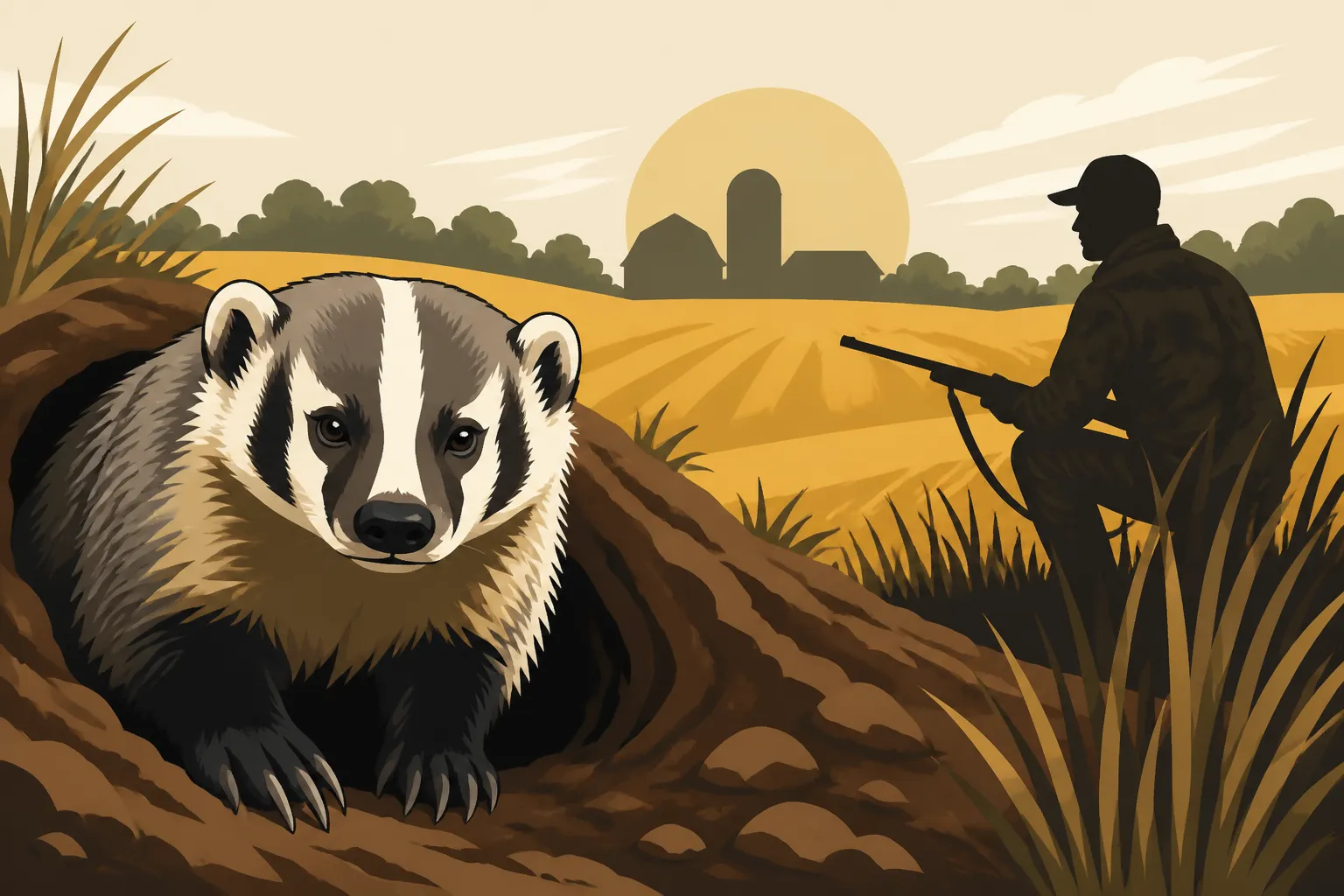
As hunters, we're constantly scanning the landscape for signs of game, and it's often during these focused observations that a badger's presence becomes evident. Actual visual sightings of a badger are fairly rare during daylight hours because they are largely nocturnal and spend a significant portion of their lives underground. You might catch a glimpse of one at dawn or dusk, or perhaps on an overcast day, scurrying across a field. More commonly, you'll see their "calling cards": characteristic diggings. These aren't just small, shallow scrapes; badger holes are typically large, oval-shaped excavations, often with a sizable mound of displaced dirt next to them. They can be several feet deep and wide enough to trip a deer or even a person walking carelessly.
When you're out there, maybe using a mapping app like GoHunt to scout for deer sign or pheasant cover, keep an eye out for these telltale signs. You'll notice them along field edges, in pastures, or even within CRP (Conservation Reserve Program) fields. Beyond the holes, if you're lucky, you might spot their tracks – broad, five-toed impressions with long claw marks that speak volumes about their digging prowess. Reading Aerial Photos for Big Woods Deer can help you spot open field edges and grassy areas where badgers might be active, even if you're not specifically looking for them. These subtle clues reveal the hidden life of badgers, proving they are indeed present, even if they prefer to keep a low profile.
Badger Behavior and Their Role in the Ecosystem
Badgers are fascinating creatures, perfectly adapted to their subterranean lifestyle. Their behavior is largely driven by their need to hunt and find shelter, and they do both with remarkable efficiency. Understanding these habits sheds light on why they choose our farm country and how they fit into the broader ecological picture. They're not just random visitors; they're active participants in the food web.
The Master Digger: Hunting and Denning Habits
When you see a badger hole, you're looking at the handiwork of one of North America's most efficient excavators. Badgers possess incredibly powerful forelimbs with long, non-retractable claws, allowing them to dig through surprisingly hard earth with astonishing speed. They don't just dig dens for shelter; they primarily dig to hunt. Their diet consists predominantly of burrowing rodents – think pocket gophers, ground squirrels, and deer mice, all of which are plentiful in Minnesota's agricultural zones. A badger will literally dig up a field, following the tunnels of its prey, collapsing them and cornering the unfortunate inhabitant. This makes them incredibly effective pest control agents from a farmer's perspective, though the collateral damage of their digging can sometimes outweigh the benefits.
Beyond rodents, badgers are opportunistic. They might feast on insects, reptiles, birds (especially ground-nesting species or their eggs), and even small rabbits if the opportunity arises. They maintain a network of dens, some serving as temporary shelters while hunting, others as more permanent residences for resting or raising young. These dens can be quite extensive, with multiple entrances and chambers, providing a secure sanctuary from predators and the elements.
Nocturnal Nomads: When and How They Operate
As mentioned, badgers are largely nocturnal creatures, preferring the cover of darkness for their hunting forays. This is a key reason why they are so seldom seen by humans. However, it's not uncommon to observe them at dawn or dusk, or on cooler, overcast days. Their internal clocks dictate a rhythm of rest and activity, and they will adjust based on prey availability and weather conditions. During the night, they emerge from their dens and embark on wide-ranging hunts, covering significant distances as they search for new burrows and fresh prey. They are solitary animals, generally avoiding contact with other badgers outside of the breeding season.
Their nomadic tendencies mean they don't typically stay in one specific den for extended periods, especially when actively hunting. They might occupy a den for a few days, deplete the local prey base, and then move on to a new area, digging a fresh set of holes as they go. This constant movement helps them exploit dispersed prey populations effectively. If you're out Coyote Calling in a Minnesota Winter, don't be surprised if a badger is one of the various furbearers that might be in the area, although they're not typically responsive to calls like canids are. Their stealth and subterranean lifestyle allow them to navigate the landscape with a unique blend of efficiency and invisibility.
Badgers and Minnesota Hunting: What You Need to Know
While badgers are certainly present, they aren't a primary target for most Minnesota hunters. However, their status as a furbearer means they fall under specific regulations, and encountering them in the field requires a certain understanding and respect.
Legal Status and Regulations
In Minnesota, badgers are classified as furbearers, meaning they can be legally harvested, primarily through trapping, during designated seasons. Unlike deer or turkey, there isn't a "hunting season" for badgers where people pursue them with firearms or archery equipment. Instead, trappers might catch them incidentally while targeting other furbearers like coyotes or foxes, or they might specifically set traps in areas known for badger activity. It's crucial for anyone interested in trapping to consult the most current Minnesota DNR regulations regarding Minnesota Trapping Seasons and Tagging and Trapping Minnesota Furbearers.
These regulations specify season dates, methods of take, and sometimes reporting requirements. The focus is on sustainable harvest management, ensuring populations remain healthy. For general hunters, it's simply good to be aware that badgers are a protected species outside of these specific trapping parameters. You can't just shoot one if you happen to see it outside of a legal trapping season, as they are not classified as a nuisance animal that can be taken at will like, say, a gopher (though they do a better job catching gophers than we ever could!). Always double-check regulations; ignorance is never a valid excuse for violating wildlife laws. Minnesota Small Game License Requirements might cover trapping, but it's essential to understand the specific furbearer regulations.
Encountering Badgers in the Field
If you're out walking a field edge, setting up a treestand, or Pheasant Hunting Minnesota Farmland and you unexpectedly come across a badger, your best course of action is to give it space. Badgers are not inherently aggressive towards humans, but they are incredibly defensive when cornered or threatened. Their primary defense mechanism is to dig rapidly and disappear, or if that's not possible, to become a formidable, snarling, hissing ball of fury. They can inflict a serious bite and deliver powerful scratches, so it's wise to avoid provoking them. Think of them like a grumpy, tough old man who just wants to be left alone.
A more significant concern, especially for those hunting with dogs, is the potential for an encounter between a hunting dog and a badger. A badger's powerful jaws and sharp claws can cause severe injury to a dog. If your dog gets too curious about a badger hole, or worse, encounters a badger underground, the situation can escalate quickly. It's often recommended to avoid letting dogs investigate active badger diggings. While GoHunt might not have a specific 'badger layer' (wouldn't that be something!), its detailed aerial imagery and public/private land overlays can certainly help you identify the kinds of open, sandy, or disturbed ground badgers love, allowing you to be more aware of potential encounters. Just be mindful, keep your dog close, and respect the badger's territory.
Conservation and Coexistence in Agricultural Landscapes
The presence of badgers in Minnesota's farm country presents an interesting dynamic between wildlife conservation and agricultural practices. These animals play a significant role in their environment, but their specific behaviors can sometimes lead to conflicts with human activities. Finding a balance is key to ensuring their continued presence and mitigating potential issues.
The Farmer's Friend (and Sometimes Foe)
From an ecological standpoint, badgers are a farmer's friend. Their voracious appetite for burrowing rodents means they provide natural pest control, keeping populations of gophers and ground squirrels in check. These rodents can cause significant damage to crops by consuming seeds and plants, and their tunnels can destabilize farm equipment. A healthy badger population acts as a free, efficient, and organic form of pest management, which is a tangible benefit to the agricultural community.
However, the very act that makes them beneficial – their digging – can also be a source of frustration. A large, deep badger hole in a field can damage farm equipment, from tractor tires to planting implements. Livestock, particularly horses or cattle, can also suffer leg injuries if they step into a hidden badger burrow. This creates a challenging situation where the long-term ecological benefits are weighed against immediate, practical concerns for agricultural operations. Open communication and understanding between landowners and wildlife agencies are essential for navigating these occasional conflicts.
Mapping Their Presence and Future Outlook
Understanding the distribution and density of badgers, like any furbearer, is crucial for wildlife management agencies. While direct population counts are difficult given their secretive nature, harvest data from trapping seasons and incidental observations contribute to their overall assessment. As hunters and outdoors enthusiasts, we can contribute to this understanding simply by being observant. Reporting unusual sightings or significant badger activity to local DNR offices can help paint a clearer picture of their health and range. For landowners or those managing property, understanding where badgers are active can be crucial. Tools like GoHunt can help visualize land features, soil types (if you cross-reference), and potential denning areas, aiding in both conservation and mitigation.
Maintaining diverse habitats, even within heavily farmed regions, is vital for badger populations. This includes leaving undisturbed grasslands, maintaining fencerows, and utilizing conservation programs like CRP, which provide critical cover and prey habitat. As we continue to manage our landscapes for both agricultural productivity and wildlife, finding ways to coexist with these incredible digging machines will be a testament to our commitment to a healthy, diverse ecosystem. The future of badgers in Minnesota depends on this delicate balance, allowing these subterranean residents to continue their vital work beneath the surface of our productive farmlands. Minnesota wildlife management area often promote diverse habitats that benefit badgers, even if they aren't the primary target species.
Here's a quick look at some key characteristics of these fascinating creatures:
| Feature | Description | Notes |
|---|---|---|
| Appearance | Stocky body, short legs; grizzled gray fur; distinctive black and white striped face. | Broad body, small ears; unmistakable face pattern. |
| Habitat | Open grasslands, prairies, pastures, agricultural fields. | Prefers well-drained, sandy soils for easy digging. |
| Activity | Primarily nocturnal (active at night), occasionally crepuscular (dawn/dusk). | Infrequent daytime sightings, mostly resting in dens. |
| Diet | Mostly burrowing rodents (gophers, ground squirrels, mice); also insects, eggs, small birds. | Highly carnivorous, exceptional at digging out prey. |
| Diggings | Large, oval-shaped holes, often with a significant mound of dirt nearby. | Telltale sign of badger presence; can be several feet deep. |
| Behavior | Solitary, territorial, defensive when threatened. | Powerful diggers, can be surprisingly fast over short distances. |
Disclaimer
This article is for general informational purposes only and does not constitute professional advice. Laws, prices and regulations vary by location and change over time. Consult a qualified professional for guidance on your specific situation.