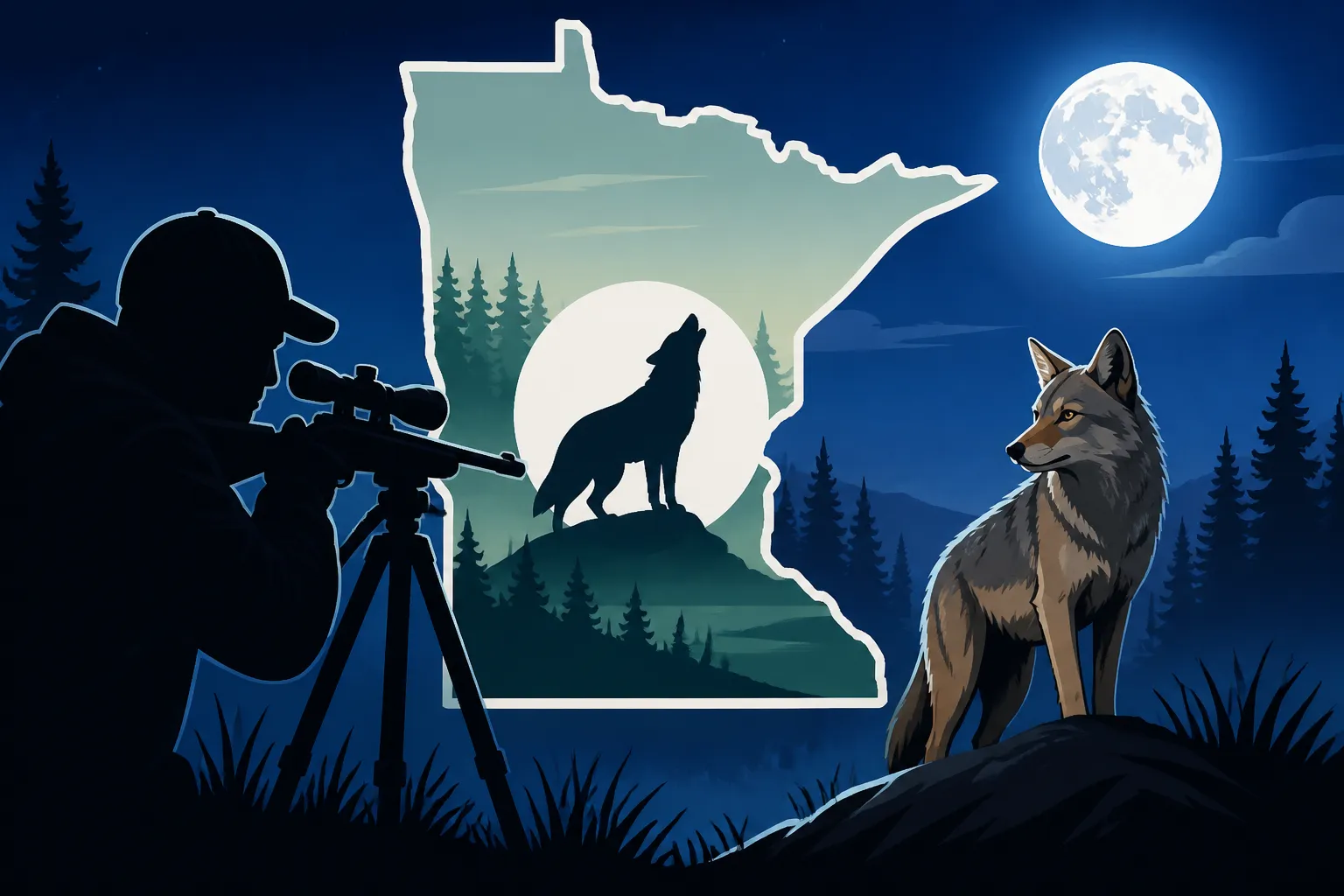
Night Hunting Rules for Minnesota Coyotes
If you're a Minnesota hunter or landowner, you've likely felt the frustration of a booming coyote population. These clever predators can take a serious toll on fawns, turkeys, and even livestock, leaving many of us wondering how to effectively manage their numbers. This comprehensive guide will shed light on the intricacies of night hunting coyotes in Minnesota, giving you the legal insights, tactical advice, and safety considerations you need to succeed after dark.
Why Night Hunting Coyotes Matters in Minnesota
Coyotes are incredibly adaptable animals, and their numbers have steadily increased across Minnesota, extending their range into areas they historically didn't inhabit. While they play a role in the ecosystem, an unchecked population can create real issues for other wildlife and agricultural operations. Trying to manage them during daylight hours can feel like a losing battle, as they're masters of elusion. This is where the strategic advantage of night hunting comes into its own.
The Problem with Growing Coyote Populations
Many hunters express concern over the impact coyotes have on local deer herds, especially during the fawning season. It's a tough pill to swallow when you've invested countless hours scouting, hanging stands, and planting food plots, only to know that a percentage of the fawn crop might never make it past their first few weeks due to predation. This isn't just about deer either; turkeys, pheasants, and other small game animals also face significant pressure. For farmers and ranchers, the problem is even more direct, often leading to livestock losses that hit the bottom line. The feeling of helplessness can be immense when you know coyotes are working your property under the cover of darkness, largely unmolested.
These animals are incredibly efficient predators. A healthy coyote population means more mouths to feed, and they're not shy about taking advantage of easy prey. From newborn calves to a farmer's chickens, the damage can stack up quickly. That's why active management, including night hunting, has become a crucial tool in many areas where their presence is keenly felt.
When Coyotes are Most Active and Vulnerable
Coyotes are naturally crepuscular and nocturnal, meaning they are most active during dawn, dusk, and throughout the night. This isn't just a preference; it's often a survival strategy, allowing them to hunt when many of their prey animals are most vulnerable, and when human activity is at its lowest. During the colder months, especially, when natural food sources can become scarce, coyotes become even bolder in their nocturnal hunts, making winter an incredibly opportune time for night hunting.
The cover of darkness provides them with an advantage, but it also creates a unique opportunity for hunters willing to adapt their methods. With the right equipment and careful planning, what seems like their strength—their nighttime activity—can actually become their Achilles' heel. They often travel established routes and respond to calls differently after the sun goes down, making them more predictable in some ways, and certainly more visible with appropriate night hunting gear.
Legal Framework for Night Hunting Coyotes in Minnesota
Minnesota's hunting regulations can feel like a labyrinth at times, and understanding the specific rules for night hunting coyotes is paramount. Unlike deer or turkey, coyotes fall under a different category, which allows for more flexible hunting hours and equipment, but it's not a free-for-all. Knowing these rules intimately prevents legal headaches and ensures you're hunting responsibly.
Understanding Statewide Regulations
First and foremost, coyotes in Minnesota are classified as unprotected animals. What does this mean for hunters? It means there's no closed season, and no daily or possession limit. You can hunt them year-round, day or night. However, you still need a valid small game license to hunt coyotes. This is a common point of confusion; just because they're unprotected doesn't mean you can hunt without a license. Make sure your Minnesota Small Game License Requirements are up to date.
The crucial distinction for night hunting comes with the use of artificial lights. The Minnesota Department of Natural Resources (DNR) specifically permits the use of artificial lights, including thermal imaging and night vision devices, for hunting furbearers like coyotes. This permission does not extend to big game, so understanding the difference is key. However, a critical restriction applies: you cannot shoot a firearm or discharge an arrow from a motor vehicle (including ATVs and snowmobiles) or from a public road or right-of-way. This rule is absolute and applies to all species, day or night. This includes shining a light from a vehicle while possessing a firearm unless the firearm is unloaded and cased. Always err on the side of caution and ensure you are off any public thoroughfare and out of your vehicle when preparing to shoot.
Equipment and Method Restrictions
When it comes to equipment, Minnesota offers a fair amount of flexibility for coyote hunters at night. Standard firearms legal for small game are generally acceptable, ranging from centerfire rifles to shotguns. For those interested in a quieter approach, archery equipment is also legal. What truly sets night hunting apart, though, is the legality of artificial lights and advanced optics.
You are permitted to use white light, red light, or green light to locate and shoot coyotes. This opens up options like handheld spotlights, weapon-mounted lights, or even headlamps. Beyond traditional lights, Minnesota law allows the use of night vision and thermal imaging devices for hunting unprotected animals like coyotes. These tools can dramatically increase your effectiveness and safety after dark, allowing for better target identification and shot placement. When considering your gear, keep in mind that a quality thermal scope can make spotting a coyote in a dark field almost effortless, turning a truly challenging hunt into a more manageable one.
However, remember the absolute prohibition on shooting from a motor vehicle or on a public road. This means you must exit your vehicle, be off the road, and preferably have a solid, safe backstop for your shot. Even with powerful thermal optics, ethical considerations like positive target identification and ensuring a safe shooting lane are magnified in the dark.
| Equipment Type | Day Hunting Coyotes | Night Hunting Coyotes |
|---|---|---|
| Small Game License | Required | Required |
| Artificial Lights | Not typically used | Permitted |
| Night Vision Devices | Not typically used | Permitted |
| Thermal Imaging Devices | Not typically used | Permitted |
| Rifles, Shotguns | Permitted | Permitted |
| Archery Equipment | Permitted | Permitted |
| Electronic Calls | Permitted | Permitted |
| Shooting from Vehicle | Never Permitted | Never Permitted |
| Shooting from Public Rd | Never Permitted | Never Permitted |
Essential Tactics for Successful Night Coyote Hunting
Night hunting coyotes isn't just about having the right gear; it's about understanding how coyotes move, react, and what cues they pick up in the dark. Success often hinges on meticulous scouting, patient setups, and a nuanced approach to calling that leverages their nocturnal instincts.
Scouting and Setup for Night Success
Just like deer hunting, effective coyote night hunting starts long before you ever step foot in the dark. Scouting is critical. Before you head out with your thermal or night vision, spend some daylight hours walking potential hunting grounds. Look for coyote tracks, scat, and active travel corridors, especially those leading between bedding areas and known food sources. Field edges, logging trails, and drainages are often prime spots. Understanding where coyotes typically cross or move will guide your setup location.
Wind direction becomes even more critical at night. Coyotes rely heavily on their sense of smell, and a shifting wind can instantly bust your setup. Always approach your chosen spot with the wind in your face or quartering. Consider your entry and exit routes carefully, ensuring they are quiet and don't push coyotes out of the area before you even set up. A good setup usually involves a clear field of view, a safe backstop, and enough cover to break up your silhouette. Utilizing a ground blind can be an excellent way to conceal yourself, especially in open country or on a field edge. When choosing your stand, think about the moon phase; a full moon can provide surprising visibility, but also make coyotes more wary. Many hunters find using a reliable mapping app like GoHunt invaluable for pinpointing property lines, identifying terrain features, and marking past coyote encounters, ensuring a well-planned and safe approach.
Calling Strategies Under the Cover of Darkness
Coyote calling at night can be incredibly effective, but it often requires a slightly different approach than daytime calling. In the dark, coyotes are often less inhibited and may approach calls with greater confidence, but they also have heightened senses and will be listening and sniffing for danger. Electronic calls are highly popular for night hunting due to their versatility in sound and volume. You can cycle through distress calls (rabbit, fawn, bird), challenge howls, or pup-in-distress sounds. Often, a longer, more drawn-out calling sequence is effective at night, giving coyotes more time to pinpoint the sound and commit to approaching.
Start your calling sequence subtly, especially if you know coyotes are nearby. Louder calls might work in open, windy conditions or to reach distant coyotes, but often a softer, more realistic call is best to draw them in close without spooking them. Positioning your call away from your actual location (perhaps 30-50 yards) can draw the coyote's attention away from you, giving you an extra edge for the shot. Remember to vary your calls; sometimes a series of short yips and howls after a distress sequence can really get a coyote to respond. Patience is a virtue in night hunting; once you start a calling sequence, commit to a significant sit, often 20-30 minutes, as coyotes can take their time to investigate. Sometimes a little bit of movement, like a light twitch of an ear or tail, is all you'll see through your thermal before the coyote is fully in view. For insights into vocalizations and how to effectively mimic them, resources like those found in Coyote Calling in a Minnesota Winter can be quite helpful.
Ethical Considerations and Safety First
Night hunting, by its very nature, carries increased safety risks compared to daylight hours. Ethical hunting practices and stringent safety protocols are non-negotiable. The number one priority is positive target identification. With night vision or thermal optics, it's easy to spot heat signatures or shapes, but confirming it's actually a coyote and not a domestic animal, or even another hunter, takes extra diligence. Never, ever, shoot at a sound or a vague shape.
Always know what’s beyond your target. Even if you're hunting on private land, you need to be acutely aware of property boundaries, buildings, and potential hazards. Ensure you have a substantial backstop. Hunting with a partner can add a layer of safety, allowing one person to scan while the other operates the call or rifle. Communication is vital. Before you even head out, inform someone of your hunting location and expected return time. Carry a good first-aid kit, a reliable flashlight (even if you're using night vision), and a fully charged cell phone. Blaze orange is not generally required for coyote hunting, but it's always wise to consider wearing some when walking to and from your setup, especially during concurrent big game seasons, though it should be removed once you are set up for night hunting to avoid spooking game. It’s also wise to check Minnesota Hunter Safety Requirements for general best practices.
Navigating Public and Private Land for Night Hunting
Minnesota offers a wealth of diverse hunting opportunities, but understanding where you can legally and effectively night hunt for coyotes requires a clear grasp of land ownership and access rules. Whether you're on a vast public forest or a farmer's back forty, the approach needs to be tailored.
Public Land Challenges and Opportunities
Minnesota boasts millions of acres of public land, including Wildlife Management Areas (WMAs), State Forests, and National Forests. These areas offer fantastic opportunities for coyote hunting, but they also come with their own set of considerations. While night hunting for coyotes is generally allowed on most public lands under statewide regulations, it's always wise to double-check with the specific managing agency (DNR, US Forest Service) for any localized restrictions or seasonal closures. Some WMAs, for instance, might have specific rules related to vehicle access or types of activities allowed after dark. Resources like Minnesota Wildlife Management Areas can help you find suitable locations.
One of the main challenges on public land, especially in more accessible areas, can be hunting pressure. Even at night, other hunters might be out for coyotes, or even shed hunting after big game seasons. To find success, you'll often need to put in the effort to get away from roads and popular access points. Learning to Reading Aerial Photos for Big Woods Deer can translate well to finding secluded coyote haunts. Coyotes on public land tend to be warier, having encountered humans more frequently. This means more subtle calling, longer waits, and often longer hikes to reach less pressured ground. Look for areas with diverse habitat, like the edges of recent timber cuts, dense marsh fringes, or transition zones between forest and open fields.
Gaining Private Land Access
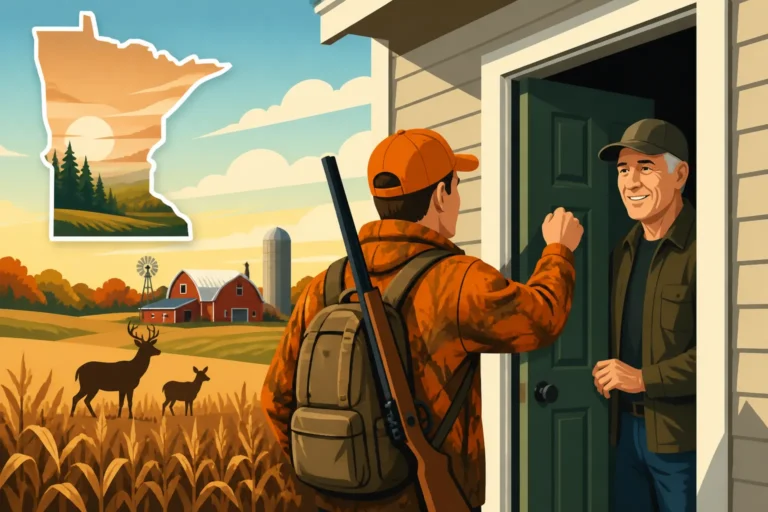
For many night coyote hunters, private land often presents the best opportunities. Landowners, especially those with livestock or concerns about deer populations, are often more than happy to grant permission to responsible hunters. The key here is building trust and demonstrating respect for their property. Don't just show up; make contact well in advance, introduce yourself, and clearly explain your intentions. Be upfront about using lights, night vision, or thermal gear, and reassure them about your safety practices.
When seeking permission, be clear about what you're asking for: night hunting coyotes specifically. Offer to share any harvest data you collect, and always leave the property cleaner than you found it. Bringing a small gift, like a box of chocolates or offering to help with a chore, can go a long way in establishing a good relationship. Using tools like GoHunt can help you quickly identify land ownership, allowing you to focus your efforts on contacting landowners directly. Always clarify property boundaries, especially if the land borders other private parcels or public land. This eliminates any ambiguity and prevents accidental trespassing. Remember, permission is a privilege, not a right. Being a good steward and a respectful guest is vital for maintaining access for yourself and other hunters. For more tips on this, refer to Asking a Minnesota Farmer for Permission and Minnesota Trespass and Permission Law.
Disclaimer
The information provided in this guide is for general informational purposes only and does not constitute legal advice. Hunting regulations can change frequently, and local ordinances may vary. It is always the hunter's responsibility to verify and comply with all current Minnesota Department of Natural Resources (DNR) regulations, federal laws, and local ordinances before engaging in any hunting activities. Always prioritize safety and ethical hunting practices.