Big Woods Versus Farmland Deer
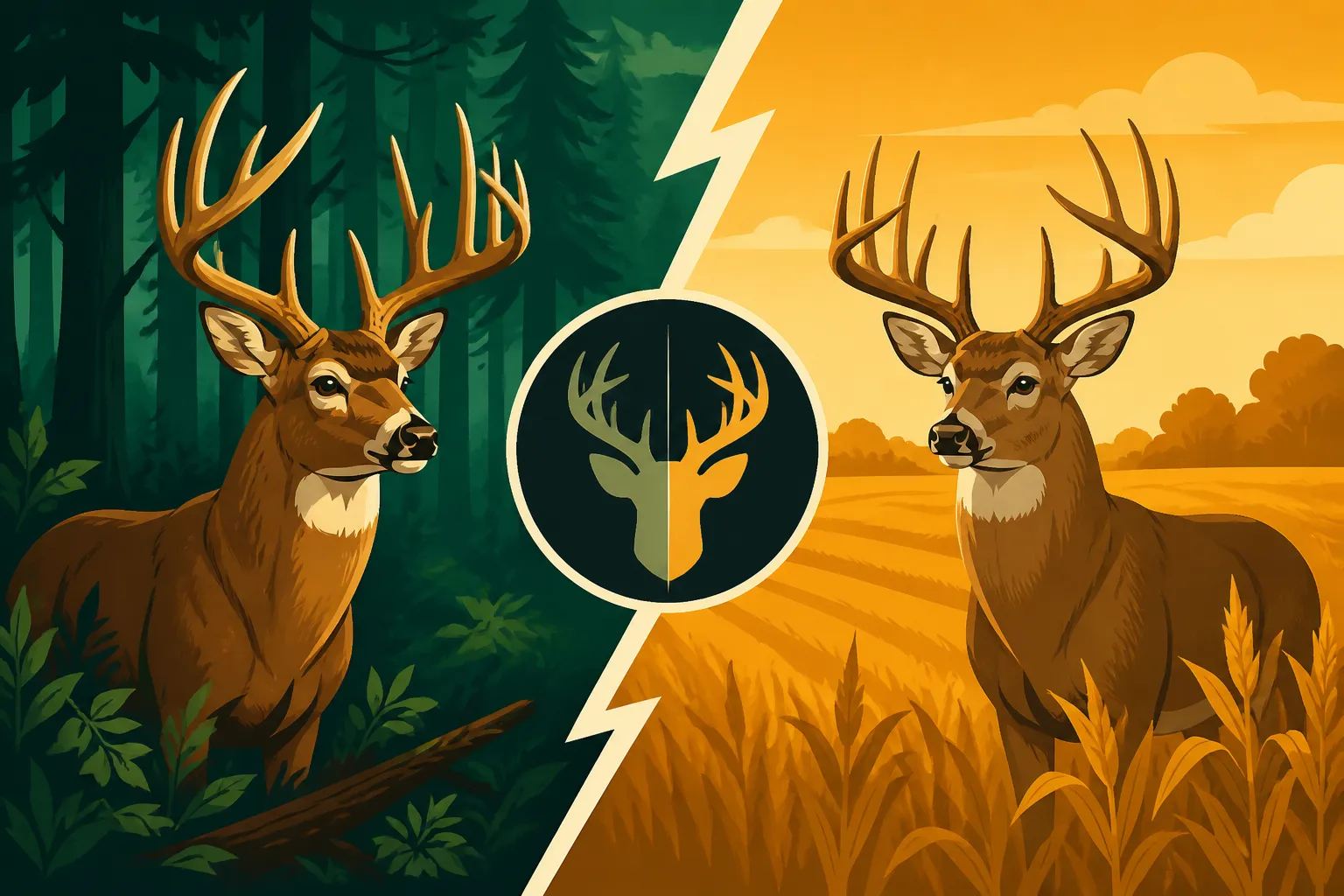
Hunting deer in Minnesota is a deeply ingrained tradition, but anyone who's spent time pursuing whitetails across our diverse landscapes knows that "deer hunting" isn't a single experience. The stark differences between tracking a wary buck through the vast, unbroken stretches of the Big Woods compared to setting up on the edge of a golden cornfield in farm country can feel like entirely different sports. This guide aims to peel back the layers of these distinct hunting environments, helping you understand the unique challenges and incredible rewards each offers, so you can adapt your approach and find success, no matter where your passion takes you in the North Star State.
Understanding the Landscapes: Big Woods Versus Farmland
Minnesota is a state of incredible contrasts, from the Canadian Shield forests in the north to the rich agricultural plains in the south and west. These geographical differences don't just shape our scenery; they fundamentally influence how deer live, move, and ultimately, how we hunt them. Recognizing these unique characteristics is the first step to becoming a more effective and adaptable hunter.
Defining Minnesota's Big Woods
When we talk about Minnesota's Big Woods, we're generally referring to the sprawling, contiguous forests of our northern counties. Think of places like the Superior National Forest, the Chippewa National Forest, or the vast state forests of Aitkin, Itasca, and St. Louis counties. This landscape is characterized by dense timber – a mix of mature hardwoods, aspen, balsam fir, spruce, and cedar swamps. Water is abundant, with countless lakes, rivers, and bogs woven throughout. The terrain can be rugged, featuring rolling hills, glacial moraines, and thick, nearly impenetrable cover.
The Big Woods offers deer a relatively secure existence, where escape cover is always close at hand. This environment fosters a different kind of whitetail, one that often grows older by simply avoiding human contact in the dense timber. Food sources are natural browse, acorns (in good mast years), and diverse undergrowth. Hunters who venture into these areas often find themselves miles from the nearest road, relying on their woodcraft and navigation skills more than any other tool. The sheer scale of these forests is both their greatest asset and their most daunting challenge, providing refuge for deer and a true wilderness experience for hunters.
Characteristics of Minnesota's Farmland
Contrast this with Minnesota's farmland, which dominates the central, western, and southern regions of the state. This landscape is a mosaic of agricultural fields – corn, soybeans, sugar beets, and wheat – interspersed with smaller woodlots, cattail sloughs, prairie grasslands, and creek bottoms. Human development, while still rural, is more prevalent, with roads, homes, and farmsteads breaking up the habitat. The terrain is generally flatter, though river valleys and bluff country in the southeast can provide significant topographic relief.
Deer in these areas have adapted to a life intertwined with agriculture. Crop fields provide an incredibly rich, readily available food source, leading to often larger, healthier deer populations and impressive antler growth, especially in areas like those that lead to Why Southeast Minnesota Grows Big Bucks. Cover is more fragmented, often concentrated in those precious woodlots, sloughs, and riparian corridors that act as bedding areas and travel routes. Hunters here often deal with a higher density of deer but also contend with increased hunting pressure, limited public access, and deer that are acutely aware of human activity due to their proximity to civilization.
Transitional Zones and Their Nuances
It's important to remember that Minnesota isn't a neat line dividing "Big Woods" from "Farmland." There are often fascinating transitional zones where these two landscapes blend, creating unique hunting opportunities. Think of areas where expansive forests start to break up into smaller woodlots as agriculture pushes northward, or where river valleys carve through open fields, creating ribbons of timber and thick brush. These zones can be incredibly productive, as deer often utilize the best of both worlds – the security of larger timber for bedding and the abundant food sources of agricultural fields.
These transition areas demand a hybrid approach from hunters. You might find yourself still-hunting a timber edge that borders a cornfield, or perhaps setting up a stand in a small woodlot that acts as a staging area between bedding cover and an evening food source. Understanding these "fringe" areas can unlock some of the best hunting, as deer funnel through predictable patterns between the different habitat types. Scouting these zones requires an eye for how deer navigate between cover and food, often utilizing subtle terrain features or brush lines to move undetected.
Deer Behavior and Adaptations
The environment a deer calls home fundamentally shapes its behavior, diet, and how it reacts to pressure. Understanding these adaptations is crucial, as a tactic that works brilliantly in one habitat might be completely ineffective in another. It’s not just about where you hunt, but how the deer you're hunting live.
Food Sources and Movement Patterns
In the Big Woods, deer are primarily browsers. Their diet consists of twigs, leaves, forbs, and fungi. During good mast years, acorns can be a significant draw, but otherwise, they are constantly foraging through diverse vegetation. This leads to more dispersed feeding patterns and larger home ranges, as they need to cover more ground to find enough sustenance. Their movement tends to be more subtle, winding through thick cover, often following faint deer trails or natural funnels like ridges or swamps. Long, winding trails connect various pockets of browse to bedding areas. The sheer vastness means they don't have to move far to find a new patch of security once pressured.
Farmland deer, on the other hand, are masters of agricultural buffets. Corn, soybeans, alfalfa, and winter wheat provide calorie-rich, easily accessible food sources. Their movement patterns are often more concentrated and predictable, moving from dense cover in woodlots or cattail sloughs to the fields at dusk, and back again at dawn. These movements create defined trails and obvious pinch points. While their daily movements might be shorter in distance, they are often more deliberate and cover open ground faster. During the rut, these defined travel corridors become high-traffic highways for bucks searching for does. The availability of consistent, high-quality food can also influence Minnesota Deer Herd Size and individual deer health, contributing to those bigger-bodied, heavier-antlered animals often seen in agricultural zones.
Cover, Bedding, and Thermal Protection
In the Big Woods, cover is king. Deer utilize thick stands of young timber, cedar swamps, spruce bogs, and dense blowdowns for bedding. These areas provide both visual security from predators and thermal protection from harsh Minnesota winters. Bucks will often bed on points or ridges where they can watch their backtrail and use the wind to detect danger downwind. When pressured, they simply melt into the vastness of the forest, using their incredible ability to move silently through dense cover. This deep, secure cover is a major factor influencing Where Big Woods Bucks Bed in Minnesota, often leading to mature bucks holding tight rather than fleeing openly.
Farmland deer also prioritize cover, but it's a more fragmented resource. Small woodlots, dense creek bottom brush, and extensive cattail sloughs become critical bedding sanctuaries. These islands of cover are often surrounded by open fields, making travel between them a vulnerable proposition. Deer become adept at using subtle contours, brush lines, and ditches to minimize exposure. Thermal protection is also found in these areas, particularly dense evergreens within woodlots or the insulating qualities of thick cattails. When pressured, farmland deer might make short, explosive runs to the nearest patch of cover or hunker down incredibly tightly in small, seemingly insignificant clumps of brush, demonstrating an impressive ability to vanish in plain sight.
Impact of Hunting Pressure
Hunting pressure affects deer everywhere, but the way it manifests and how deer react differs greatly between these two environments. In the Big Woods, intense pressure can scatter deer, pushing them deeper into remote, less-accessible areas. While it might make them more nocturnal, the sheer amount of cover means they still have plenty of places to go. Hunters who consistently push into these remote pockets find that deer learn quickly and adapt, forcing hunters to constantly seek out unpressured zones. This environment challenges hunters to adopt tactics like Still-Hunting Minnesota Big Woods to actively seek out deer that may be holed up.
In farmland, where cover is limited and hunter density can be higher (especially on public land or during the firearms season), deer become incredibly wary and nocturnal. They'll often spend daylight hours bedded in the thickest, most impenetrable cover available, only venturing into fields under the cover of darkness. They learn to avoid open areas during shooting light and become experts at slipping through narrow travel corridors. The constant presence of human activity—farmers, hikers, other hunters—makes them exceptionally attuned to any disturbance. This pressure can lead to frustrating hunts if you're not prepared to hunt the edges of daylight or understand how deer utilize every bit of available cover, even when it seems too small to hold a deer. Hunters need to be acutely aware of Hunting Pressure on Minnesota Public Land in these more accessible areas.
Hunting Strategies and Tactics
Given the profound differences in deer behavior and habitat, it stands to reason that your hunting strategies will need to adapt. What puts deer on the ground in the Big Woods might leave you empty-handed in farmland, and vice versa. It’s all about playing to the strengths of the landscape and understanding the deer within it.
Still-Hunting and Spot-and-Stalk in the Big Woods
For many, the Big Woods is synonymous with still-hunting. This method involves moving slowly and deliberately through the forest, pausing frequently to observe, listen, and scan for deer. It's a game of patience, stealth, and interpreting subtle signs. You're not necessarily waiting for deer to come to you; you're actively seeking them out on their terms. This often means covering ground, quietly moving into areas where deer might be bedding or feeding, and being ready for a quick, close-range shot. Hunters who excel at Still-Hunting Minnesota Big Woods develop a keen sense of the woods, reading terrain features, wind currents, and deer sign to anticipate where a deer might be.
Spot-and-stalk can also be effective in the Big Woods, particularly during late season when snow cover allows for easier tracking, or in more open timber types. This involves finding fresh tracks or spotting a deer from a distance, then using terrain and cover to close the distance for a shot. It demands exceptional patience, good optics, and the ability to move silently through varied terrain. The dense cover often makes long-range spotting difficult, so it's more about finding a fresh sign and then patiently following. Using a good mapping app, like one from GoHunt, can be critical here, helping you understand the terrain, identify potential bedding areas, and plan your approach while avoiding detection.
Stand Hunting and Field Edge Strategies in Farmland
In farmland, stand hunting, particularly from a treestand or ground blind, is often the most productive strategy. Given the more predictable movement patterns between bedding and feeding areas, positioning yourself along these travel corridors or on the edge of a food source can be highly effective. Field edges, especially those bordering dense cover like a cornfield or woodlot, are prime locations. Setting up a stand in a strategic location overlooking a cut cornfield, for instance, or along a known travel route deer use to enter or exit a standing crop, can pay dividends.
Using a ground blind offers excellent concealment in many farmland settings, especially when brushed in effectively along a field edge or within a small patch of cover. This is especially true when Brushing In a Blind on a Field Edge. Hunters in these areas become adept at reading aerial photos to identify pinch points, funnels, and isolated patches of cover that deer will inevitably use. The key is to be in position well before deer move and remain undetected, as their heightened awareness of human presence means they'll quickly bust you if you're not careful. This can be challenging, but highly rewarding when a mature buck finally steps out.
Deer Drives and Group Hunting
Deer drives, while possible in both environments, are often more effective and commonly employed in farmland and transitional zones. The smaller, more defined woodlots and sloughs lend themselves well to organized drives, where a small group of hunters can strategically push deer from cover to standers. Communication and safety are paramount, but a well-executed drive can move deer that would otherwise remain bedded tight. This tactic, often explored in guides like Deer Drives With Three or Four Hunters, requires good planning and a clear understanding of the terrain.
In the Big Woods, drives are possible but often much larger scale and more informal, focusing on pushing vast swaths of timber or swamp. The sheer size of the landscape makes tightly controlled drives challenging, and often, deer will simply slip around the flanks of the drivers. However, large groups of hunters with good local knowledge can still be very successful using this method, especially in areas with known bedding thickets or escape routes. It requires more hunters and a much larger communication network, sometimes stretching miles.
Gear and Preparation Considerations
Just as your strategies change, so too should your gear. The demands of navigating vast forests are different from those of sitting patiently on a field edge. Being prepared with the right equipment can make all the difference in comfort, safety, and success.
Weapon Choice and Effective Range
Your choice of weapon should reflect the likely shot opportunities in each environment. In the Big Woods, shots are typically closer, often under 75 yards, and frequently through dense brush. A fast-handling rifle chambered in a cartridge like the .30-30 or a straight-wall cartridge like the .450 Bushmaster, now legal statewide, can be ideal. These cartridges are designed for moderate ranges and often perform well through light cover. Bowhunters here favor setups that allow for quick, close-range shots. The critical factor is maneuverability in thick cover.
For farmland hunting, where shots can sometimes be longer across open fields or lanes, a more capable rifle might be preferred. Calibers like the .308 Winchester, .270 Winchester, or 6.5 Creedmoor offer flatter trajectories and greater accuracy at extended distances. Hunters in these areas might spend time Sighting In a Rifle for Minnesota Woods Ranges that could stretch out to 150-200 yards, a rare scenario in the thickest Big Woods. Shotgun slug guns, still common in some of Which Thirteen Counties Kept Shotgun-Only Rules, are also well-suited for the medium-range shots often encountered in fragmented farmland. The key is matching your weapon's effective range to the anticipated shot distances.
Clothing and Layering for Different Environments
Clothing is paramount, especially when facing Minnesota's unpredictable weather. In the Big Woods, silent movement is king. Wool or quiet synthetic layers are essential to avoid spooking deer as you still-hunt or track. Breathability is also important to manage sweat during strenuous activity, preventing chills when you stop. Layering is critical for adapting to changing temperatures, from crisp mornings to warmer mid-day pushes, and then back to cold evenings. Your outer layers should be durable enough to withstand brush and briars, and of course, blaze orange is required, with How Much Blaze Orange Minnesota Requires varying slightly by season and weapon.
Farmland hunting often involves more stationary periods, whether in a stand or ground blind. Here, warmth and protection from the elements are paramount. Bulkier, more insulated garments might be acceptable, as silent movement isn't always the top priority if you're waiting for deer to come to you. Waterproof and windproof outer layers are crucial, as you're more exposed to the elements. Good quality insulated boots are a must for long sits, keeping your feet warm and comfortable. The importance of good layering for Cold-Weather Sitting Strategy in Minnesota cannot be overstated, especially when you might be sitting for hours in frigid temperatures.
Navigation and Scouting Tools
In the Big Woods, getting lost is a real concern. A reliable GPS unit or a smartphone with a robust mapping app, even without cell service, is non-negotiable. Tools like the GoHunt app or other popular hunting mapping platforms offer invaluable aerial imagery, topo maps, and land ownership overlays that can help you Reading Aerial Photos for Big Woods Deer, identify potential funnels, escape routes, and bedding areas. Carrying a physical compass and map as a backup is always a wise move. Knowing Using Recreation Compass Without Cell Service is an essential skill for deep woods navigation.
For farmland hunting, these same mapping tools are equally vital for identifying public land parcels like Wildlife Management Areas (WMAs) and Walk-In Access (WIA) properties. They help you visualize how small woodlots connect to crop fields, identify isolated cover, and understand property boundaries. Knowing Finding Your Minnesota Deer Permit Area and navigating private land boundaries are critical, especially when Knocking on Doors in Minnesota Farm Country to ask for permission. A good set of binoculars, like a quality 8×42 or 10×42, is also indispensable for scanning distant fields and identifying deer activity from afar, especially at dawn and dusk. For timber hunting, specialized Rifle Scopes for Low-Light Timber can also provide a distinct advantage.
Finding and Accessing Hunting Ground
The search for suitable hunting ground is often the biggest hurdle for hunters, and again, the strategies diverge significantly between Minnesota's Big Woods and its agricultural zones. Knowing where to look and how to gain access is paramount to consistent success.
Public Land Opportunities in the North
Minnesota's Big Woods offer vast stretches of public hunting land. National Forests like the Superior and Chippewa, numerous State Forests, and large Wildlife Management Areas (WMAs) provide hundreds of thousands of acres for hunters to roam. These lands are generally open to hunting, offering a true "back forty" experience. The challenge here isn't necessarily finding access, but finding unpressured access. Hunters often need to be willing to walk further, use non-motorized access, or utilize methods like canoe hunting to reach remote pockets. This vastness can be overwhelming, so focusing on identifying key features like logging roads, recent clear-cuts, and water sources through aerial maps is crucial.
Scouting these large tracts of public land before the season opens is a huge advantage. Using mapping tools, including the GoHunt app's various layers, can help you pinpoint Scouting Minnesota Public Land Before Season for potential deer sign, funnels, and bedding areas. Don't be afraid to drive lesser-used forest roads or paddle into remote lakes and rivers to find hidden gems. While you might not see deer every day, the satisfaction of harvesting an animal from truly wild, unpressured public land is unparalleled.
Private Land Challenges and Permissions in the South
In Minnesota's farmland, the landscape is largely privately owned. This presents a different set of challenges. Public lands exist, primarily in the form of smaller WMAs, Waterfowl Production Areas (WPAs), and Walk-In Access (WIA) parcels, but they are often fragmented and can experience high hunting pressure. These smaller public areas, while valuable, require precise scouting and often a more strategic approach to avoid crowds.
For consistent success in farm country, securing private land permission is often key. This requires effort, respect, and good communication. Knocking on Doors in Minnesota Farm Country well in advance of the season, introducing yourself, and respectfully asking for permission can open up opportunities. Offering to help with chores or share venison can also build rapport. Many hunters find success by identifying neglected corners of farms, small woodlots, or creek bottoms that landowners might not hunt themselves. Building relationships with landowners is a long-term investment that can lead to years of productive hunting access. Utilizing mapping apps to identify landowner names and property lines, a feature often found in tools like GoHunt, can streamline this process significantly, allowing you to target your permission requests more effectively.
Utilizing Mapping Tools and Apps
Regardless of whether you're in the Big Woods or farmland, modern mapping tools and hunting apps are indispensable. They've revolutionized how hunters scout, navigate, and plan their hunts. Apps like GoHunt, onX Hunt, and the Minnesota DNR's Recreation Compass provide a wealth of information at your fingertips, including:
- Aerial Imagery: High-resolution satellite views to identify habitat types, field edges, cover, and terrain features.
- Topographical Maps: Showing elevation changes, perfect for understanding funnels, ridge lines, and drainages.
- Public/Private Land Boundaries: Clearly delineating ownership, which is crucial for staying legal and seeking permission.
- WMA/WPA Overlays: Showing the boundaries of public hunting areas.
- GPS Tracking: Allowing you to track your own movements, mark waypoints for deer sign, treestand locations, or blood trails.
These tools empower you to go into new areas with confidence, providing a strategic advantage that wasn't available to previous generations. They help you visualize the land, identify key features, and plan your approach, maximizing your time and effort in the field.
| Feature | Big Woods Deer Hunting | Farmland Deer Hunting |
|---|---|---|
| Primary Food | Browse, acorns, natural vegetation | Agricultural crops (corn, soybeans), natural browse |
| Cover Type | Vast, contiguous forests, swamps, dense timber, blowdowns | Fragmented woodlots, cattail sloughs, creek bottoms, shelterbelts |
| Typical Movement | Dispersed, winding, large home ranges | Concentrated between bedding/food, more predictable |
| Shot Distances | Primarily short to medium (under 75 yards) | Variable, often medium to long (50-200+ yards) |
| Hunter Density | Variable, often lower in remote areas, higher near access points | Generally higher, especially on public land |
| Primary Tactics | Still-hunting, spot-and-stalk, remote stand hunting | Stand hunting (treestand/ground blind), field edge ambushes |
| Navigation Need | Critical (GPS, map/compass, app) | Important (GPS, app for property lines) |
| Access | Abundant public land, willingness to walk deep | Mostly private land (permission needed), scattered public |
| Deer Population | Northern Minnesota Deer Density can be lower, older bucks | Often higher density, healthier deer, strong antler growth |
Challenges and Rewards of Each Zone
Both the Big Woods and farmland offer their own distinct set of challenges and, consequently, unique rewards. Being successful in either requires a certain mindset and an appreciation for the specific experience each provides.
The Mental Game of Big Woods Hunting
Hunting the Big Woods is often described as a true test of woodsmanship and mental fortitude. The vastness can be intimidating, and hours can pass without seeing a deer. It's easy to get discouraged when you're grinding out miles and the woods feel empty. This environment demands patience, resilience, and a deep trust in your instincts and scouting. The sheer silence and solitude can be both profound and daunting. You learn to appreciate the subtle signs: a rubbed tree, a faint track, a slight shift in the wind.
The reward, however, is immense. Harvesting a Big Woods buck, knowing you outwitted an animal that lives in truly wild country, often miles from any road, is an incredibly satisfying achievement. It's a testament to your hard work, your navigation skills, and your ability to adapt to a challenging environment. It's also an opportunity to connect with nature on a primal level, experiencing the solitude and beauty of Minnesota's untamed north. For many, it's less about the size of the rack and more about the quality of the hunt and the lessons learned.
Navigating Pressure in Farmland Areas
Hunting farmland brings its own mental game, often centered around managing expectations and dealing with other hunters. Finding unpressured areas, especially on public land, can be a constant battle. You might arrive at your spot only to find another truck already there, or hear shots echoing from neighboring properties. This can be frustrating and requires a flexible approach, sometimes forcing you to move to a Plan B or even a Plan C. The deer themselves are often much warier due to this pressure, making successful hunts dependent on strict scent control, minimal movement, and hunting the edges of legal light.
Despite the challenges, the rewards of farmland hunting are significant. The potential for encountering higher deer densities and often larger-bodied, heavier-antlered deer is a powerful draw. The proximity to robust food sources means that if you can pinpoint bedding areas and travel corridors, you might have consistent opportunities. Success here often comes from meticulous scouting, understanding local deer movement patterns, and having the discipline to sit tight and wait for the right moment. There's a particular satisfaction in patterning a wary buck in an area where deer are constantly aware of human presence.
The Unique Satisfaction of Each Hunt
Ultimately, both Big Woods and farmland deer hunting in Minnesota offer distinct, valuable experiences. The Big Woods calls to those who crave solitude, wilderness, and a test of traditional woodcraft. It's about immersion in a vast, wild landscape and the profound connection to nature that comes with it. Farmland hunting appeals to those who enjoy deciphering predictable patterns, outwitting highly pressured deer, and often, the chance at a truly massive animal.
Neither is inherently "better" than the other; they are simply different facets of the incredible Minnesota hunting experience. A truly adaptable hunter understands and appreciates both, learning to read the landscape, adapt their tactics, and embrace the unique challenges and triumphs each environment presents. Whether you prefer the deep timber or the open fields, Minnesota offers a lifetime of varied and rewarding deer hunting adventures.
Disclaimer
The information provided in this guide is for general informational purposes only and does not constitute legal advice. Hunting regulations, seasons, and permit requirements are subject to change. Always consult the most current Minnesota Department of Natural Resources (DNR) regulations and guidelines before planning any hunting trip. It is your responsibility to ensure you are in compliance with all applicable laws and regulations.