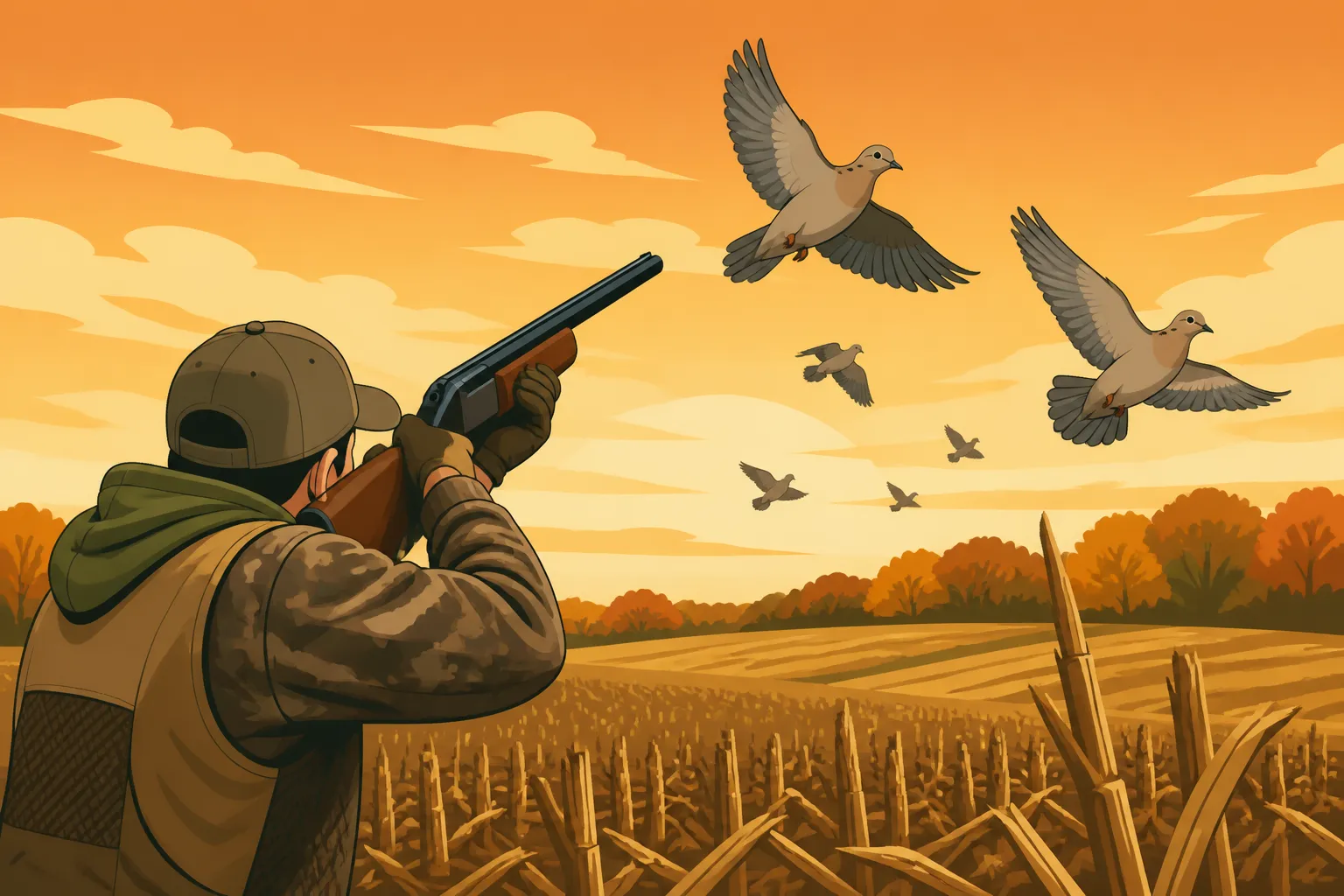
Dove Hunting a Cut Minnesota Field
The thrill of dove hunting in Minnesota can be absolutely exhilarating, but finding those elusive birds consistently, especially in the vastness of our cut agricultural fields, can feel like trying to find a needle in a haystack. You’re out there, the season has just opened, and you know the doves should be around, but where are they? It's a common frustration, and this guide is here to help you pinpoint those prime cut fields, set up for success, and truly capitalize on Minnesota's fantastic early-season dove opportunities.
Understanding Minnesota Dove Habits and Habitat
Doves aren't just flitting around randomly; they're creatures of habit, driven by their basic needs: food, water, and roosting cover. If you understand these, you're already halfway to figuring out their patterns in our Minnesota landscapes.
Why Cut Fields Are Dove Magnets
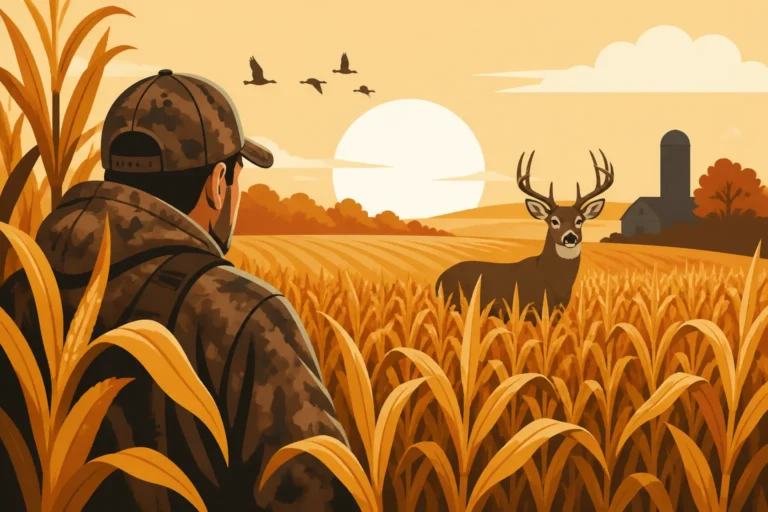
Mourning doves, the primary species we hunt in Minnesota, are essentially ground-feeding machines. They're not like ducks dabbling for submerged vegetation or pheasants pecking at standing corn. Doves prefer to walk along the ground, picking up seeds. This is precisely why a freshly cut field becomes an absolute magnet for them.
Think about it: when a farmer harvests a crop like corn, wheat, or sunflowers, there's always a certain amount of waste grain that drops to the ground. For us hunters, this "waste" is a dove's treasure. A combine goes through, and suddenly, what was once inaccessible food is now lying exposed on the surface. Sunflowers are often considered the holy grail of dove fields because their seeds are large and nutritious, making them incredibly appealing. But don't overlook cut corn, wheat, oats, or even milo fields. Any field that's recently been harvested and has shed some grain is fair game for doves. The exposed soil and scattered seeds make for easy feeding, and the birds will congregate in large numbers to take advantage of this bounty. They'll often return to the same fields day after day until the food source is depleted or hunting pressure pushes them elsewhere.
Prime Time for Doves in Minnesota
Minnesota's dove season typically kicks off on September 1st, marking the very beginning of our fall hunting calendar. This early start aligns perfectly with the peak availability of cut fields and the doves' migratory patterns. In fact, understanding the timing is crucial. While doves are present all summer, the early days of September are when fields are being harvested, and birds are still plentiful before the main migration pushes many of them south.
Weather plays a significant role in dove movement. A cool front can trigger a mass exodus, while warm, stable weather can keep birds around longer. Generally, the first two to three weeks of September offer the most consistent action.
Beyond the seasonal timing, doves also follow daily patterns. You'll often find a heavy morning flight, typically from sunrise for a couple of hours, as birds leave their roosts to feed. They'll then spend the midday hours loafing in nearby trees, on power lines, or on high spots in fields, digesting their meal. Then, in the late afternoon and evening, they'll have another major flight as they head to water sources before returning to their roosts for the night. Knowing these daily routines helps you plan your hunt. Regions like southern and western Minnesota, with their extensive agricultural landscapes, are generally the most productive. The Red River Valley, for example, is famous for its vast fields of sunflowers and small grains, making it a hotspot for dove activity. For broader context on when other game seasons kick off, check out our guide on Minnesota Small Game and Upland Bird Seasons.
Scouting and Locating Productive Cut Fields
You can have the best shotgun and gear, but if you're not in the right field, you won't be successful. Scouting is hands-down the most critical component of a successful Minnesota dove hunt. It’s not about luck; it’s about putting in the legwork to find where the birds are actually feeding.
Identifying Key Field Features
When you're out scouting, you're not just looking for any cut field; you're looking for the right cut field. The type of grain matters immensely. As mentioned, cut sunflower fields are often supreme because of the large, energy-rich seeds. You’ll want to prioritize these if possible. However, cut corn, wheat, oats, or even milo fields can be incredibly productive, especially if they’re adjacent to preferred cover or water.
Beyond the crop type, pay close attention to proximity to water. Doves need to drink, often twice a day, so a cut field near a pond, stream, slough, or even a drainage ditch can be a real hotspot. Look for dust on the edges of puddles or damp ground – that's a sign birds have been watering there.
Roosting cover is another critical piece of the puzzle. Doves don't like to just sit out in the open all day. They need places to loaf and roost overnight. Look for shelterbelts, small woodlots, isolated trees, or power lines bordering or running through the field. These provide safe perches and a quick escape route. Slight elevation changes within a field can also create preferred loafing areas, especially if there's a few weeds or scattered brush to break up the flat expanse.
Leveraging Mapping Tools and Local Knowledge
In today's age, technology is your friend when it comes to scouting. Tools like GoHunt, onX Hunt, or even the basic Scouting With the Minnesota Recreation Compass App can be invaluable. These apps allow you to view satellite imagery, identify property lines (crucial for private land), and often show crop types or recent harvest activity. You can digitally "walk" fields from your couch, marking potential hotspots, and then confirm them in person. When looking at aerial photos, keep an eye out for distinct changes in field color indicating harvesting, or patterns that suggest specific crop types.
However, nothing beats boots on the ground. Drive the backroads of southern and western Minnesota a week or two before the season, and certainly in the days leading up to opening day. Look for birds flying into or out of fields, birds sitting on power lines, or large concentrations of birds near potential food sources. Early morning and late evening drives will give you the best indication of dove activity.
Don't underestimate the power of local knowledge. Chatting with farmers in the area can provide invaluable insights. They're on their land every day and often know exactly which fields the doves are hammering. Always be respectful and upfront when approaching landowners, especially if you’re hoping to gain access. If you're hunting public land, remember that popular spots can see a lot of traffic. Learning to find Hunting Pressure on Minnesota Public Land can help you scout for less-pressured spots. Remember to always have your Carrying Proof of License on Your Phone or physical copy handy when out scouting or hunting.
Strategic Setup and Decoy Tactics
Once you've found a promising cut field, your setup is paramount. Doves have excellent eyesight and can be incredibly wary, especially after they've been shot at a few times. Your goal is to be hidden, in the right place, and to convince them to come into range.
Choosing Your Spot in a Cut Field
The key to a good setup is understanding dove flight lines. Doves tend to follow predictable routes when flying into and out of fields, especially when going to or from water or roosting areas. Watch these patterns during your scouting trips. Position yourself along these natural corridors.
Field edges are often excellent spots. Doves might skirt the edge of a timber line, a shelterbelt, or a fence row as they enter or exit. Look for a small clump of standing weeds, a brush pile, or even a low spot in the field to set up against. Isolated trees or power lines within or bordering the field are also magnets for doves to perch on before dropping down to feed. Setting up directly under these can be fantastic, but be prepared for high, fast shots. If possible, try to keep the sun at your back. This not only makes it harder for doves to see you but also makes it easier for you to see them silhouetted against the sky.
Decoy Spreads for Doves
Doves are social birds, and decoys can be incredibly effective at drawing them into range. There are two main types: static and motion.
Static decoys are your basic plastic or foam dove shapes. You can place these on the ground in a loose feeding pattern, on a fence line, or clip them to the branches of small trees or bushes bordering the field. A realistic spread of a dozen or so static decoys can make your spot look like a safe, productive feeding area.
However, motion decoys are often the real game-changer. Spinning wing decoys, like those from Mojo Decoys, mimic a dove landing and are incredibly effective. The flash of the spinning wings catches doves' attention from a long distance. Position them so they're visible and look natural – perhaps a pair or three spaced out in your feeding spread. "Dove trees" or poles with multiple decoy clips can also work, especially if there isn't natural cover for birds to land on. The key is realism and visibility. You want your spread to look inviting and natural, not like a trap. The number of decoys can vary, but even a few well-placed static decoys combined with one or two spinning wing decoys can make a huge difference.
| Decoy Type | Placement | Effectiveness | Notes |
|---|---|---|---|
| Static Decoys | Ground in feeding pattern, fence lines, branches | Moderate | Provides realism, good base for a spread. |
| Spinning Wing | Elevated for visibility (pole, branch) | High | Motion is key, mimics landing birds, highly visible. |
| Dove Tree/Pole | Elevated, within 20-30 yards of shooter | High | Creates a "landing strip" look for multiple birds. |
Concealment is Key
Doves are sharp-eyed. If they see you, they're gone. Good concealment is non-negotiable. If you're lucky enough to find natural cover like a thick stand of weeds, a downed tree, or a hay bale, utilize it to your advantage. Digging a shallow pit in the field stubble (where legal and safe) or simply sitting still against a natural backdrop can sometimes be enough.
Often, however, you'll need a portable blind. A simple pop-up blind that blends into the field stubble or a camouflage netting draped over some stakes can provide excellent cover. Laying down in a Layout Blind Hunting Minnesota Farm Fields is also a fantastic option, especially in wide-open expanses. The goal is to break up your outline and disappear into the surroundings. Think about what a dove sees from above – a stark human shape against a flat field is a dead giveaway. Wear camouflage that matches the dry, brown tones of a cut field. Stay still, move slowly, and only raise your gun when the birds are committed to your decoy spread and within range. Learning how to properly set up and use a ground blind for various hunting scenarios, even for deer, can be very beneficial, as outlined in Using a Ground Blind on Minnesota Public Land.
Shotgun and Ammunition Considerations
Dove hunting is a wingshooting challenge. These birds are fast, agile, and can change direction on a dime. Having the right firearm and ammunition setup can make all the difference between a full strap and an empty vest.
The Right Shotgun for Doves
For dove hunting, light-recoiling shotguns are generally preferred, as you'll likely be shooting a lot. A 12-gauge is certainly effective, but many hunters opt for a 20-gauge or even a 28-gauge for a lighter gun that's quick to shoulder and less punishing on the shoulder after dozens of shots.
Semi-automatic shotguns are a favorite for doves because they soften recoil and allow for quick follow-up shots on those passing birds or multiple birds that come in at once. Over-and-under or side-by-side shotguns also work beautifully for their natural pointing ability.
Choke selection is critical for these fast, close-range targets. Most dove hunting takes place within 20-35 yards, so open chokes are usually the way to go. Improved Cylinder (IC) or even Skeet (SK) chokes provide a wide, forgiving pattern that increases your chances of hitting those darting birds. Full or Modified chokes are generally too tight and will result in many missed opportunities at typical dove ranges. Pattern your shotgun with your chosen choke and ammunition to understand its spread at various distances – it’s always a good idea, just like Sighting In a Rifle for Minnesota Woods Ranges.
Ammunition Choices
When it comes to ammunition, you want light loads with plenty of pellets. Shot sizes 7.5 or 8 are ideal for doves. These smaller pellets create a dense pattern that is perfect for bringing down these relatively small birds without overkill. Avoid larger shot sizes like 4 or 5, which are meant for bigger game birds.
Because dove hunting can be high-volume, you'll want to bring plenty of shells. It’s not uncommon to go through a couple of boxes, or even more, in a good morning or evening hunt. Grab a few boxes of your preferred brand, whether it's Federal, Winchester, Remington, or others. Ensure you're using lead shot unless otherwise specified for a particular public land area that may require non-toxic shot, though this is less common for doves than waterfowl. However, it's always wise to be aware of Where Nontoxic Shot Is Required in Minnesota for other hunts.
Ethical Hunting and Retriever Etiquette
Being a responsible hunter goes beyond just pulling the trigger. It encompasses respect for the game, the land, and other hunters. Especially when hunting smaller game like doves, good ethics and safety are paramount.
Respecting the Resource and Landowners
First and foremost, always adhere to Minnesota's bag limits and shooting hours. The daily bag limit for mourning doves is 15, with a possession limit of 45. Minnesota Shooting Hours and Legal Methods generally mean you can hunt from one-half hour before sunrise to sunset. These regulations are in place to manage the population sustainably.
When hunting on private land, which is often the case for cut agricultural fields, securing permission from the landowner is not just courteous, it's the law. Never assume access. A friendly knock on the door, explaining your intentions, and offering to share some of your harvested birds can go a long way in building relationships and ensuring future hunting opportunities. Always leave the land better than you found it – pick up your spent shotgun shells, any trash, and avoid damaging crops or property. Leave no trace.
Beyond the legalities, strive for clean, ethical kills. While doves are small and fast, practice your wingshooting beforehand so you can make effective shots, minimizing the chance of wounding birds.
The Role of a Good Retriever
Doves, despite their small size, can be surprisingly difficult to find once they hit the ground in thick field stubble. They often fall into heavy cover, and their drab coloring blends in perfectly. This is where a good retrieving dog becomes an invaluable asset. A well-trained Labrador, Chessie, or any other retrieving breed can significantly increase your recovery rate, ensuring fewer birds are lost.
If you bring a dog, make sure it’s well-behaved and under control. E-collars from brands like SportDOG or Garmin can be extremely helpful for managing your dog in the field, ensuring they stay close and don't bust other potential flushes. Ensure your dog is hydrated, especially on warm early-September days. Carry extra water for them. Train your dog to be steady to shot and retrieve on command, preventing them from running wild and disturbing other birds or hunters. Many of the same principles for handling dogs during waterfowl hunts apply here, so consider how you manage them during Minnesota Waterfowl Hunting on Lakes and Potholes or Pheasant Hunting Minnesota Farmland.
Disclaimer
Please note: Hunting regulations, season dates, and permit area boundaries can change. Always consult the official Minnesota Department of Natural Resources (DNR) website and regulations handbook before planning any hunting trip. This article is for informational purposes only and does not supersede state laws or official DNR guidance.