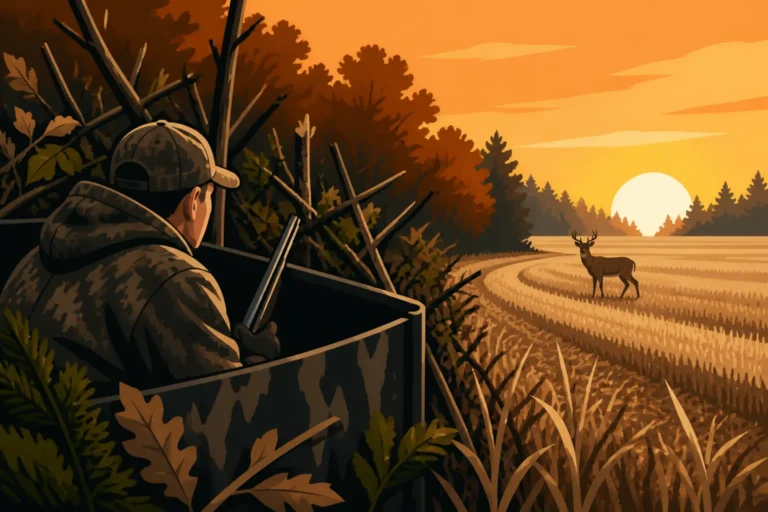
Hanging a Stand on a Big Woods Funnel
Hunting in Minnesota's vast "big woods" can feel like you're trying to find a specific thread in an enormous, interwoven tapestry. The sheer scale of the landscape makes it incredibly challenging to pinpoint consistent deer movement, leading to many frustrating hours in stands that feel more like observation posts than active hunting locations. This guide aims to change that by focusing on a proven strategy for increasing your odds in these expansive areas: effectively identifying and setting up a treestand on a natural funnel.
Understanding the Big Woods Funnel
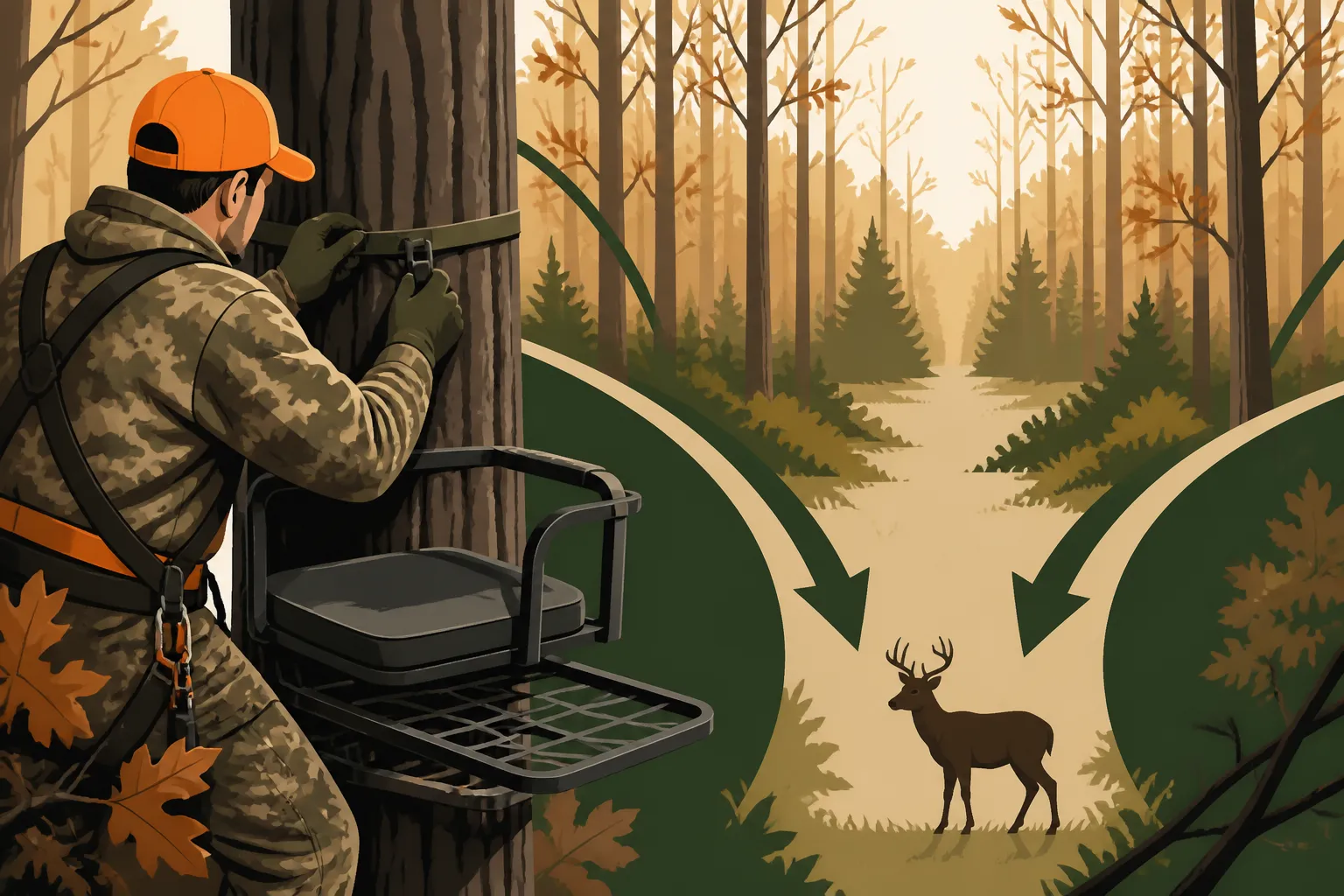
In the sprawling, seemingly endless timber of northern Minnesota, deer don't just wander aimlessly hoping to stumble upon their next meal or a safe place to bed. They are creatures of efficiency and security, constantly seeking the path of least resistance and the cover that offers the most protection. This behavior naturally creates "funnels"—narrow necks of terrain or changes in habitat that concentrate their travel into predictable, confined corridors. Overlooking these natural pathways is like trying to catch water with open hands; you might get a little, but you'll certainly miss the main flow.
What Defines a Big Woods Funnel?
Big woods funnels are often far more subtle than a barbed-wire fence line cutting across a farmer's field. Instead, they manifest as natural convergences of terrain features, distinct changes in habitat, or even the subtle winding of waterways that inherently constrict deer movement. A deer, especially a mature one, isn't going to exert unnecessary energy climbing over a steep, rocky ridge if a gentle saddle or low spot is just a short distance away. Similarly, they won't typically brave a wide, open marsh if a narrow, dry finger of land or a hidden game trail provides a safer, quicker passage between two timbered islands of cover.
- Terrain Features: These are some of the most consistent and often overlooked funnels. Imagine a slight depression or "saddle" between two higher knobs or ridges, a narrow strip of high ground snaking through an otherwise impassable bog or swamp, or even a steep bluff meeting the gentle curve of a river. These natural topographical elements literally funnel deer into specific paths as they navigate the landscape, conserving energy and staying hidden.
- Habitat Changes: The transition lines where one type of cover abruptly shifts to another are also prime funnel locations. Think about where a dense, dark stand of mature pines gives way to a thick, young aspen (popple) regeneration, or where the vastness of a cattail slough meets a stand of acorn-producing oaks. Deer frequently use these "soft edges" as travel corridors, benefiting from the security of the dense cover while moving between bedding and feeding areas. These edges might not jump out at you on a map, but they are incredibly productive on the ground.
- Waterways: Creeks, smaller rivers, and even narrow bog crossings can act as significant funnels. Deer will almost always choose the narrowest, shallowest, or most sheltered points to cross, turning these spots into heavily trafficked natural bridges. Even a seemingly insignificant stream meandering through heavy timber can have a few key crossing points that deer rely on year after year.
Identifying Prime Funnel Locations
Successfully finding these often-hidden big woods funnels requires a diligent, multi-pronged approach that combines modern mapping technology, an understanding of deer behavior, and plenty of boots-on-the-ground reconnaissance. You won't just stumble upon the best ones; it takes intentional effort and a keen eye for detail.
- Map Reconnaissance: This should always be your initial and most crucial step. Advanced mapping applications, such as GoHunt or the official Minnesota Recreation Compass App, are indispensable tools for this phase. Utilize their detailed aerial imagery and topographic map layers to meticulously scout from the comfort of your home. Look for terrain features that naturally constrict movement: saddles, draws, points of land extending into wet areas, or narrow fingers of timber connecting larger blocks of cover. Pay particular attention to elevation changes and how different cover types—often depicted by varying shades of green on aerials—merge and create pinch points. You're essentially looking for "hourglass" shapes where broader landscapes narrow into a confined passage. This extensive pre-season map work is absolutely paramount to your hunting success.
- Reading the Land on Foot: Once you've identified several promising funnel locations on your maps, it's time to put in the miles on the ground. This on-site verification is critical. As you walk these areas, actively search for fresh deer sign: well-worn trails, fresh rubs on saplings, active scrapes, and concentrations of droppings. A truly productive funnel will exhibit a significant amount of concentrated sign, indicating consistent and frequent use by deer. If you only find sparse or older sign, the area might be a less-trafficked route. Observe how the deer are using the funnel—are they moving quickly, browsing as they go, or pausing at specific points? This observation provides invaluable clues for optimal stand placement. This kind of thorough Scouting Minnesota Public Land Before Season is what truly differentiates consistently successful hunters from those who simply rely on luck.
- Focus on Security: Remember, big woods deer, especially mature bucks, are masters of staying hidden and secure. Their most consistently used funnels will often be tucked away from easily accessible points, deep within the thickest cover or utilizing the most challenging terrain features. Don't be afraid to venture deeper into areas that might initially seem less inviting or harder to reach. More often than not, the funnels that see the least human pressure are the ones that hold the most potential. Developing an understanding of Where Big Woods Bucks Bed in Minnesota will greatly assist you in connecting these crucial bedding areas to their primary feeding locations via these key funnels.
Strategic Stand Placement Within a Funnel
Discovering a promising funnel is a huge step, but simply hanging a treestand anywhere within it won't guarantee success. You need to think critically, putting yourself in the mind of a deer to anticipate their movements, effectively manage your scent, minimize your presence, and ultimately maximize your shot opportunities. This is where the true art of funnel hunting truly begins to shine.
Playing the Wind and Thermals
Without a doubt, managing your scent and understanding wind direction is the most critical factor in successful big woods hunting, particularly in a funnel where deer movement is concentrated. A single gust of wind carrying your scent can blow an entire hunt before a deer even knows you're in the area.
- The Wind is Your Enemy (and Friend): You must, without exception, position your stand so that your scent is carried away from where you expect deer to approach and travel. In a funnel, this means having a deep understanding of the prevailing wind directions for the specific time of year you're hunting. Ideally, you want a stand location that is effective for one or two particular wind directions. If the current wind doesn't favor your stand, your best move is often to stay home or move to a different pre-scouted location. For instance, a funnel running north-south might require one stand setup for an easterly wind and a completely separate one for a westerly wind.
- Understanding Thermals: In big woods, especially where the topography varies with ridges and valleys, thermals play a significant role in scent dispersal, particularly during the crucial dawn and dusk periods. As the sun rises, the air warms and begins to rise, creating an "updraft" that carries scent up ridges. Conversely, as the sun sets, the air cools and sinks, causing a "downdraft" that pulls scent into valleys. A stand placed high on a ridge in the morning with a downdraft could have your scent pooling directly into a valley where deer are actively moving. Conversely, an evening hunt with an updraft could carry your scent over deer feeding downhill. You absolutely must integrate your primary wind direction strategy with a keen awareness of these daily thermal shifts. Never underestimate the importance of understanding Wind and Thermals on a Minnesota Ridge; these are not just concepts for mountainous regions.
- Scent Control is Paramount: While achieving 100% human odor elimination is a myth, you can drastically reduce your scent signature. Employ scent-eliminating sprays, wash all your hunting clothes in scent-free detergents, and store them meticulously in airtight containers until you're ready to head afield. However, always remember that superior scent control is merely a valuable secondary measure; playing the wind correctly is your absolute primary defense against being detected.
Entry and Exit Routes
Successfully navigating to and from your treestand without alerting every deer within a half-mile radius is frequently the most overlooked and frustrating aspect of stand hunting. A perfectly placed stand means nothing if your arrival and departure spook the very deer you're trying to intercept.
- Stealth is Key: Your chosen entry and exit routes must be as quiet and concealed as humanly possible. Utilize natural cover such as meandering creek beds, drainage ditches, dense brush lines, or the backside of ridges to effectively mask your approach. Absolutely avoid walking directly through known bedding areas or primary feeding zones. Sometimes, this means committing to a longer, more circuitous route, but the value of leaving deer undisturbed in their core areas is immeasurable.
- Consider Time of Day: For morning hunts, it's essential to approach your stand in the dark, using a headlamp only when absolutely necessary and pointed directly at the ground to minimize light dispersion. For evening hunts, aim to be settled in your stand well before deer begin their primary movements, and commit to staying until it's completely dark, allowing ample time for deer to clear the area before you descend. When you're making decisions like Hanging a Stand on a Big Woods Funnel, always take the time to physically walk your intended entry and exit routes, imagining a deer's perspective, long before the season even begins.
- Using Water or Topography: If your selected funnel is in proximity to water, consider the highly effective tactic of using a canoe or kayak for a virtually silent approach, a strategy often employed in deeper wilderness areas, as explored in Hunting Boundary Waters Canoe Country Deer. Alternatively, if there's a steep bank or a commanding ridge nearby, plan your approach from the side least likely to hold deer or where their line of sight is obstructed. The less obvious and more discreet your path, the higher your chances of success.
Shot Opportunities and Lanes
While a funnel excels at concentrating deer movement, all that effort is wasted if you can't get a clean, ethical shot. You must meticulously prepare your stand location for that critical moment of truth.
- Anticipate Deer Movement: Spend time observing the worn trails within the funnel and mentally visualize precisely where a deer is most likely to appear and travel. Will they be moving quickly, pausing to browse, or perhaps hesitating at a natural break in the cover? Your stand should be positioned to intercept them at a point that offers you the best, most ethical shot opportunity. Deer frequently pause at natural transitions in vegetation or where multiple trails converge, providing that crucial, fleeting window.
- Clear Shooting Lanes (Discreetly): Well in advance of the hunting season, use a hand saw or pruners to carefully trim any branches or vegetation that would obstruct your shooting lanes. However, exercise extreme discretion and trim only what is absolutely necessary. The goal is not to create a gaping hole that screams "hunter here!" Focus on creating small, precise windows that allow for clear broadside or quartering-away shots at the typical distances you expect to encounter deer in the big woods. Remember, in dense timber, shots are often much closer than you might anticipate. Aim to clear lanes out to approximately 30-40 yards for archery hunting or 75-100 yards for firearms, adjusting based on your personal comfort, skill, and equipment.
- Range Key Landmarks: Once your treestand is securely hung and your shooting lanes have been carefully cleared, take the time to accurately range various prominent landmarks around your stand. Know the exact distance to that large pine tree, that distinctive fallen log, or that specific gap in the brush. This eliminates any agonizing guesswork in the adrenaline-fueled heat of the moment and will significantly improve your accuracy when a deer finally steps into your shooting window.
The Art of Hanging Your Treestand
Hanging a treestand in a big woods funnel is far more than just getting it up a tree. It's a precise process that prioritizes safety, maximizes discretion, and ultimately transforms the stand into an effective hunting tool. Employing the right techniques ensures you'll be comfortable, safe, and virtually invisible to game.
Equipment and Safety First
Before you even consider ascending a tree, your personal safety must be the absolute highest priority. No deer, regardless of its size, is worth a serious injury.
- Quality Gear Matters: Invest wisely in a sturdy, reliable treestand and a set of dependable climbing sticks (or a quality climbing stand if the local trees are suitable). For hunting deep within public lands or remote big woods areas where long packing distances are common, lightweight, portable stands are often the preferred choice. Companies like X-Stand and Lone Wolf are well-regarded for their portable options and are frequently mentioned on resources like GoHunt for their exceptional quality and thoughtful design. Meticulously inspect all straps, cables, and connection points for any signs of wear, deterioration, or damage.
- Always Use a Safety Harness: This point cannot be stressed enough—it is unequivocally non-negotiable. Wear a full-body safety harness from the very moment your feet leave the ground until they are safely back on terra firma. Utilize a lineman's belt when climbing to secure yourself to the tree, and immediately attach a tree strap once you are safely in your stand. Take the time to thoroughly familiarize yourself with the proper use of your harness and, crucially, how to perform a self-rescue or signal for help in the event of a fall. This knowledge is truly life-saving. For a deep dive into essential safety measures, read up on Safety Harnesses and Lifelines.
- Practice at Home: Before you ever try to hang a stand in a real hunting scenario, practice the entire process in a safe, non-hunting environment. Become completely comfortable with every step, from attaching your climbing sticks to securely fastening the stand itself. Attempting this complex task for the first time in the dark, on a cold morning, deep in the woods is a recipe for frustration, errors, and potentially dangerous accidents.
Minimizing Impact and Blending In
Your treestand should seamlessly integrate with the tree, appearing as a natural extension rather than an obvious, foreign object. Deer possess incredibly keen eyesight, and anything out of place or unnatural will immediately put them on high alert.
- Choose the Right Tree: Carefully select a tree that naturally provides ample cover from multiple angles. Ideally, choose one surrounded by other trees or with dense, low-hanging branches that help to break up your silhouette. Conifers or deciduous trees with thick, intertwining branches are often excellent choices. Even a slightly crooked or leaning tree can be advantageous, offering a more natural appearance than a perfectly straight trunk that might silhouette you more easily. When considering optimal Treestand Setups in Minnesota Hardwoods, always prioritize trees that offer the best natural concealment.
- Quiet Installation: Execute the hanging process as quietly and discreetly as possible. Take precautions to prevent metal-on-metal clanging. Consider adding stealth strips or sound-dampening tape to your climbing sticks and stand if they aren't already equipped. If you need to use a saw to clear shooting lanes, do so well in advance of the season to allow the disturbance to settle and for the scents to dissipate.
- Natural Concealment: Once your stand is securely hung, judiciously use natural vegetation, such as small cut branches or even camouflage netting, to further break up your outline. Avoid overdoing it, but apply just enough to help you disappear into the tree. The ultimate objective is for deer to walk directly past your location without ever detecting your presence.
Stand Maintenance and Pre-Season Checks
A treestand should never be considered a "set it and forget it" piece of equipment, particularly given Minnesota's often harsh and variable weather conditions. Regular, thorough checks are essential for ensuring both safety and continued effectiveness.
- Yearly Inspection: Before the commencement of each hunting season, conduct a meticulous, comprehensive inspection of your treestand and all its components. Carefully examine all straps for any signs of wear, fraying, evidence of rodent chewing (squirrels are notorious for this!), or dry rot. Inspect all cables, chains, and welds for any indications of damage, fatigue, or stress. Immediately replace any component that appears even remotely suspect.
- Weather Effects: Minnesota's winters can be incredibly brutal on outdoor equipment. The relentless cycle of snow, ice, freezing, and thawing can cause synthetic straps to loosen, accelerate wood rot, and promote metal corrosion. Always make it a habit to re-tighten all straps and confirm the complete stability of your stand before your first hunt of the season.
- Blending Over Time: Over the course of a year, leaves will fall, branches will grow, and your original concealment efforts might be compromised. Re-evaluate your shooting lanes and overall cover each season. You might find it necessary to trim back some new growth or add fresh natural materials to maintain your stand's hidden profile.
Adapting to Big Woods Challenges
Hunting big woods funnels is a dynamic endeavor; what proves effective on one day might be entirely unproductive on the next. Developing a high degree of adaptability is absolutely crucial for achieving consistent success in Minnesota's often challenging hunting environment.
Dealing with Changing Conditions
Minnesota's weather is notoriously unpredictable, and these sudden shifts directly impact deer movement patterns and, consequently, the effectiveness of your carefully selected funnel stand.
- Snow and Cold: A fresh blanket of snow can be both a blessing and a curse. While it undeniably makes tracking deer much easier, revealing how they are utilizing a funnel, it also ushers in colder temperatures that can alter deer behavior. Deep snow often compels deer to use the easiest travel routes available, making certain funnels even more critically important. Conversely, snow can make your own entry and exit routes noisier. During a significant cold snap, deer may be forced to move more frequently during daylight hours to feed, potentially making your stand significantly more productive. For practical advice on enduring and leveraging these conditions, understand Cold-Weather Sitting Strategy in Minnesota to maximize your time in the stand.
- Rain and Wind: A heavy rain can effectively wash away scent, which is beneficial, but it also tends to limit overall deer movement. Strong winds make deer incredibly nervous, reducing their ability to hear and often compelling them to move through thicker cover or simply lay low. In such conditions, funnels that offer a degree of protection from the wind, such as a leeward side of a ridge or a dense stand of pines, might experience increased activity. Always be prepared to adjust your expectations and even change your chosen stand location based on the prevailing weather conditions.
- Pressure Changes: The hunting season itself inherently brings increased pressure. When hunting Minnesota's public lands, anticipate encountering other hunters. Even your most reliable, go-to funnel might become less productive if another hunter discovers and begins to frequent it. This underscores the critical importance of having multiple backup locations and maintaining the willingness to relocate your stand as the season progresses.
Hunter Pressure and Deer Behavior
Public hunting land in Minnesota can experience significant hunter traffic, especially during the firearm opener and on weekends. Understanding how deer react to this heightened pressure is vital for continuing to find success in your chosen funnels.
- Finding Seclusion: The inherent advantage of big woods funnels is that many of the most productive ones are often situated deep within public land, far removed from easy road access. These are precisely the locations where deer feel the safest from human intrusion. While some funnels might be readily visible from a road or parking area, the most consistently productive ones will almost invariably demand a substantial hike or even a canoe trip to reach. For strategic insights on identifying these secluded gems, explore resources like Finding Ground Others Walk Past or leverage mapping tools like GoHunt's layering capabilities to pinpoint areas with limited or challenging access points.
- Deer Adjust to Pressure: As the hunting season advances and more hunters permeate the woods, deer will naturally and predictably shift their patterns. They might become increasingly nocturnal, opting to move through funnels primarily during low-light hours, or they may seek refuge in the thickest, nastiest cover available. Your stand setup in a funnel needs to anticipate and account for these behavioral adaptations. Sometimes, the most effective strategy is to push even deeper into undisturbed territory, or to hunt these funnels during non-peak times like weekdays or during the quiet middle hours of the day. For additional tactical advice on navigating crowded areas, consult Opening Weekend Crowds in the 100 Series.
- The Rut Impact: During the peak of the rut, while deer movement can sometimes seem chaotic, funnels remain absolutely critical. Bucks will still instinctively utilize funnels as efficient travel corridors to check for does, even if they are ranging more widely than usual. A funnel that effectively connects a known doe bedding area to a primary feeding location, or one that consistently parallels an active scrape line, can become an incredibly hot spot during the most active phases of the rut. Don't forget to consider how to effectively combine your funnel strategy with tactics for Hunting the Rut in Late October to maximize your chances.
| Funnel Type | Description | Ideal Stand Placement | Best Wind Directions | Notes |
|---|---|---|---|---|
| Ridge Saddle | A low point or dip between two higher ridges, serving as a natural and energy-efficient crossing point for deer. | Positioned on the downwind side of the saddle, allowing you to observe the main deer trail or trails. | Typically perpendicular to the ridge direction (e.g., a west wind for a north-south running ridge). | Frequently features multiple faint trails converging. Always check for secondary trails along the sides or up the slopes leading to the saddle. |
| Swamp/Bog Edge | A narrow, elevated strip of dry land bordering an extensive area of wet, dense, often impenetrable cover. | Situated just inside the timber, slightly off the immediate edge of the swamp, with your wind blowing into the wet area. | Blowing directly into the swamp/bog, or running parallel to the edge of the cover. | Deer often skirt these edges for enhanced security and cover during travel. Can be very productive if deer use the swamp for bedding. |
| Clear-Cut Edge | The transition zone where a dense, young clear-cut (often rich in browse) meets mature, older timber. | Placed within the mature timber, slightly back from the clear-cut edge, ensuring your wind is blowing towards the cut. | Blowing from the clear-cut area into the thicker mature timber, or parallel to the edge. | Deer will frequently browse and feed within the clear-cut, utilizing the secure edge for movement between feeding and bedding areas. |
| Creek/River Bend | The narrowest or shallowest crossing point of a significant water feature, often where banks are less steep. | Overlooking the exact crossing point, positioned downwind of the most likely deer approach routes on either side. | Blowing across the waterway, or running parallel to its flow. | Always look for worn trails leading directly to and from the crossing point. Multiple trails converging here indicate heavy use. |
| Timber Pinch | A natural constriction of dense timber that lies between two more open areas (e.g., agricultural fields, large lakes, or expansive clearings). | Located on the downwind side of the pinch point, ideally where deer are likely to exit the densest cover. | Parallel to the main direction of the pinch point, or blowing from the pinch into an adjacent open area. | Often serves as an incredibly heavily used corridor for deer moving between distinct bedding and feeding areas, especially under hunting pressure. |
Disclaimer
Hunting is an inherently risky activity that demands respect for wildlife, the environment, and personal safety. Always prioritize your well-being, thoroughly understand and strictly adhere to all Minnesota hunting regulations, and maintain constant awareness of your surroundings and other individuals in the field. This guide provides general information and should not be considered a substitute for proper hunter safety training, diligent local scouting, or professional guidance. Always verify the latest Minnesota DNR regulations and advisories before embarking on any hunting expedition.