Blaze Pink Options Under Minnesota Law
For years, the sight of blaze orange has been an unmistakable sign of hunting season here in Minnesota, a critical safety measure as iconic as the crunch of frosted leaves underfoot. But for many, the relatively recent introduction of blaze pink into our hunting regulations has raised questions, sometimes confusion, and occasionally even a bit of good-natured debate. It’s natural to wonder if this new color offers the same safety benefits, if it’s truly legal everywhere, and what it means for the time-honored traditions we hold dear. This guide is here to clear up all those queries, diving deep into Minnesota's blaze pink law and what it means for hunters of all stripes.
The Evolution of Hunter Visibility Laws in Minnesota
Let's be honest, hunting safety is paramount, and a huge part of that has always been about making sure we're visible to other hunters, especially in dense woods or during those frantic moments of a deer drive. For decades, blaze orange has been the standard, a color universally recognized as a signal of "hunter present." But like all good things, even hunting regulations can evolve, embracing new research and a broader understanding of who is out there enjoying our wild spaces.
The Rationale Behind Blaze Orange
Think about it: deer, and most other big game, see the world differently than we do. They’re largely red-green colorblind, perceiving a landscape of yellows, blues, and grays. Blaze orange, with its high luminosity and specific wavelength, doesn't register as a natural color in their limited spectrum. To a deer, it often appears as a dull gray or brown, blending more into the background than you might think. To the human eye, however, blaze orange pops with undeniable intensity, making it incredibly effective at differentiating a hunter from the natural environment. This science-backed approach has saved countless lives since its widespread adoption, reducing accidental shootings and ensuring that our precious time in the woods is as safe as possible. It's not just a tradition; it's a proven safety tool.
When Blaze Pink Entered the Picture
The movement for blaze pink actually started gaining traction in other states a few years before it reached Minnesota. It often stemmed from a desire to encourage more women to participate in hunting by offering gear that felt a bit more inclusive or simply offered another aesthetic choice. In Minnesota, the legislation to allow blaze pink passed in 2016 and became effective for the 2017 hunting season. The driving force was largely similar: to provide an alternative that was equally visible to the human eye but might appeal to a different segment of the hunting community. It was a recognition that while safety is non-negotiable, the color used to achieve that safety could have some flexibility. It's all about making sure everyone feels welcome and properly equipped in the field, whether they're pursuing pheasants or trying their hand at Bowhunting Minnesota's Long Archery Season.
Understanding Minnesota's Blaze Pink Requirements
So, now that blaze pink is an option, what are the actual rules for wearing it? It's not a free-for-all, and understanding the specifics is key to staying legal and, most importantly, staying safe. Just like with blaze orange, there are clear guidelines about how much blaze pink you need to wear and where it needs to be visible on your person.
Minimum Coverage and Placement
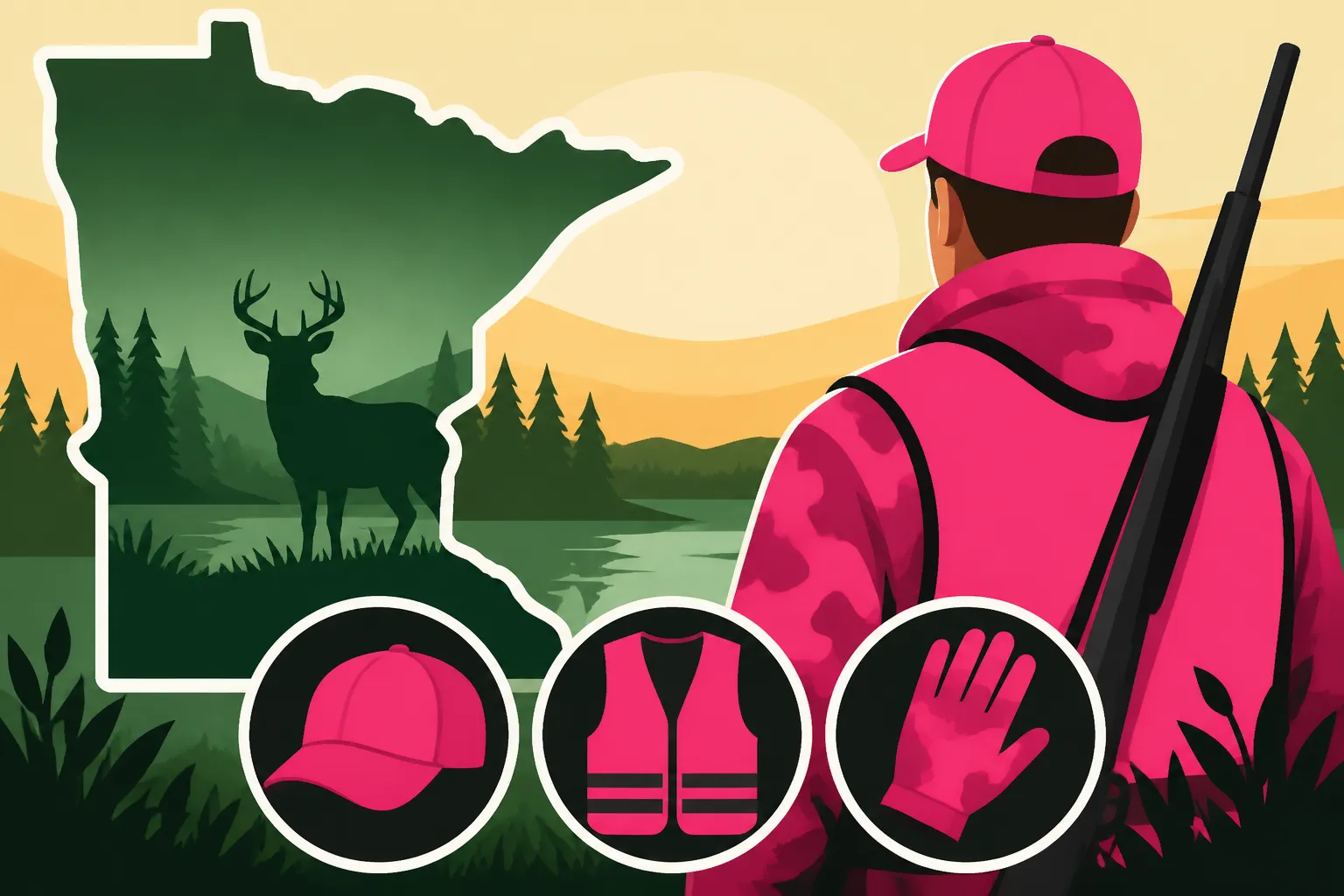
Minnesota law states that when hunting deer, elk, bear, or wolf, or when hunting small game during the firearm deer season, you must wear outer clothing above the waist that is blaze orange or blaze pink. This clothing must be visible from all sides. Specifically, the law requires that at least 50% of the visible portion of your cap and outer clothing above the waist, excluding the sleeves and pockets, must be blaze orange or blaze pink. So, if you're wearing a jacket, the main body of that jacket needs to meet the color requirement, and if you're wearing a hat, it needs to be primarily that color too. This ensures that no matter which direction another hunter might be looking, they'll see that unmistakable flash of safety color. Whether you're moving through dense brush or sitting still in a Treestand Setups in Minnesota Hardwoods, that visibility is non-negotiable.
Comparing Pink to Orange Regulations
The beauty of the Minnesota law is that it treats blaze pink exactly the same as blaze orange in terms of requirements. There's no separate set of rules for one color over the other. This means hunters have genuine flexibility without any added legal complexities. To help visualize this, let's break down the general requirements in a simple table.
| Requirement Feature | Blaze Orange | Blaze Pink | Notes |
|---|---|---|---|
| Applicable Seasons | Firearm Deer, Elk, Bear, Wolf | Firearm Deer, Elk, Bear, Wolf | Also required for small game hunters during these firearm seasons. |
| Required Clothing | Outer clothing above the waist, headwear | Outer clothing above the waist, headwear | Excludes sleeves and pockets from percentage calculation. |
| Minimum Coverage | At least 50% visible portion | At least 50% visible portion | Applies to cap and outer clothing above the waist. |
| Visibility | Visible from all sides | Visible from all sides | Crucial for safety in all directions. |
| Effectiveness (Human) | Highly visible to human eye | Highly visible to human eye | Both colors meet strict visibility standards. |
| Perception (Deer) | Appears dull gray/brown to deer | Appears dull gray/brown to deer | Deer are largely red-green colorblind. |
As you can see, the regulations are essentially identical. This simplifies things immensely for hunters. You simply choose the color that you prefer, as long as it meets the coverage and visibility standards. This applies whether you're heading out for Minnesota's Firearm Deer Season by Zone or trying your luck with Bear Hunting With Bait and Hounds in Minnesota.
Practical Considerations and Perceptions of Blaze Pink
While the legal aspect of blaze pink is straightforward, the practical and social sides of its adoption are worth exploring. Any change to a long-standing tradition is bound to spark conversation, and blaze pink is no exception. From its actual safety performance to where you can actually find the gear, there's more to consider than just the color itself.
Safety and Visibility Debates
When blaze pink was first proposed, one of the biggest questions was, "Is it actually as safe as blaze orange?" This isn't just about personal preference; it's about real-world visibility. Research has actually been conducted on this very topic. Studies, particularly those from states like Wisconsin where it was pioneered, indicated that blaze pink, when manufactured to the same brightness and saturation standards as blaze orange, is equally, if not more, visible to the human eye, especially in certain light conditions. Our eyes are wired to pick up specific wavelengths, and the fluorescent nature of both colors makes them stand out against natural backdrops. The key is that it's blaze pink, not just any shade of pink. This means it has those same fluorescent properties that make blaze orange so effective. So, from a scientific standpoint, Minnesota's decision to allow blaze pink was backed by evidence that it truly offers comparable safety to the traditional orange.
Finding Your Blaze Pink Gear
If you’re convinced and ready to add some blaze pink to your hunting wardrobe, the next step is finding it! When it first became legal, blaze pink gear was a bit harder to track down. It wasn't as widely produced by major hunting apparel companies, and you might have had to search specialty stores or online retailers. However, as its acceptance grows and more states adopt similar laws, the availability has steadily increased.
Many popular hunting brands now offer jackets, vests, and hats in blaze pink. You'll find options from companies that cater to women hunters specifically, but also unisex options from broader outdoor brands. When you’re looking for gear, make sure it explicitly states "blaze pink" and meets the DNR's brightness standards. Just like with any hunting gear, comfort, durability, and features like waterproofing are still important. Online platforms and specialized hunting retail sites are often your best bet for a wide selection. When researching gear options and availability, online resources like GoHunt can be incredibly helpful for comparing various brands and finding retailers that carry the specific items you're looking for, whether it's for archery season or during Hunting the Minnesota Rut in Early November. Don't be afraid to try on different styles and check the fit to ensure it won't impede your movement when you're out in the field.
Dispelling Misconceptions and Encouraging Inclusivity
Despite its proven safety and legal standing, blaze pink still faces some misconceptions. You might hear comments like, "Real hunters wear orange," or jokes about it being "too feminine." It’s important to remember that hunting is a diverse activity, enjoyed by people from all walks of life, and personal preference in gear color doesn't diminish anyone's passion or skill in the woods. The main goal is safety and legality, and blaze pink fulfills both these requirements just as effectively as blaze orange.
Embracing blaze pink is about more than just a color choice; it's about fostering an inclusive environment in the hunting community. It signals that hunting is for everyone, regardless of gender, and that personal expression can coexist with critical safety measures. Ultimately, what truly matters is that hunters are safe, respectful of the land and wildlife, and adhere to the regulations, not the specific hue of their safety apparel. Whether you're planning a trip for Grouse and Woodcock Hunting in Minnesota or gearing up for Minnesota's Firearm Deer Season by Zone, feeling comfortable and confident in your gear—including its color—can only enhance your experience. By choosing blaze pink, you're not just exercising a legal option; you're helping to expand the perception of what a "hunter" looks like.
Disclaimer
Please remember that hunting regulations can change, and it's always your responsibility to consult the most current Minnesota Department of Natural Resources (DNR) hunting regulations before heading afield. This guide provides general information based on current understanding.