Where Minnesota Sits in the Grouse Cycle
It’s a tale as old as time for Minnesota upland hunters: one year, the woods are absolutely teeming with ruffed grouse, and the next, you feel like you’re walking through a ghost town. This feast-or-famine reality is often attributed to the mysterious "grouse cycle," and trying to figure out where we currently sit in that cycle can be a huge part of planning a successful season. This guide will demystify the ruffed grouse cycle, explain how to interpret its current state in Minnesota, and help you adapt your hunting strategies no matter what Mother Nature throws our way.
Understanding the Ruffed Grouse Population Cycle
The ruffed grouse cycle is one of the most talked-about, and often most frustrating, phenomena for upland bird hunters in the northern woods. It’s a natural rhythm that dictates the abundance of these elusive birds, and understanding it is key to managing expectations and effort.
What Exactly is the Grouse Cycle?
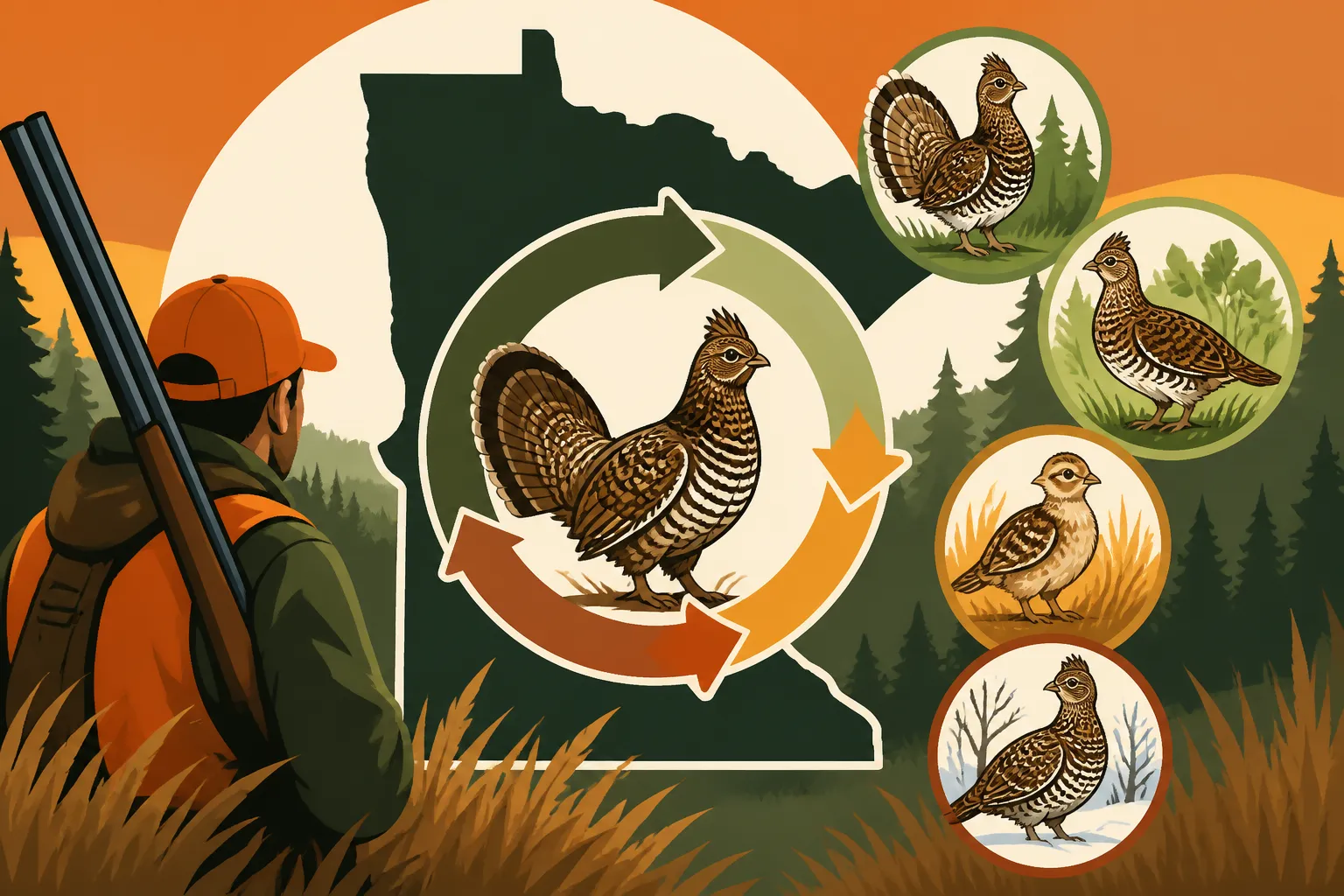
Imagine a roller coaster for bird populations. That’s essentially the ruffed grouse cycle. It’s an ecological pattern characterized by dramatic, periodic fluctuations in the ruffed grouse population, typically spanning an 8- to 11-year period from one peak to the next. You'll have years where the woods seem alive with drumming birds and flushes around every corner, followed by a gradual decline, reaching a low point, and then slowly building back up to another peak.
This cycle isn't unique to grouse; many northern species, particularly small mammals like snowshoe hares and their predators, experience similar boom-and-bust phases. For us hunters, it means that even if the habitat looks perfect, the sheer number of birds can swing wildly. A "good" year means more birds for everyone, more flushes, and a higher chance of filling your vest. A "low" year, however, means you'll be putting in a lot more legwork for fewer opportunities, demanding patience and refined tactics. It's a natural ebb and flow that has puzzled biologists and delighted (or disheartened) hunters for generations.
The Science (and Theories) Behind the Fluctuations
While the ruffed grouse cycle is a well-documented phenomenon, the exact mechanisms driving it are still subjects of scientific debate. No single factor fully explains it, but a combination of influences is thought to play a significant role. One prominent theory involves predator-prey dynamics. When grouse numbers are high, predator populations (like goshawks, great horned owls, foxes, and coyotes) also tend to increase due to an abundant food source. As predators become more numerous, they exert greater pressure on the grouse, leading to a decline in the grouse population. With fewer grouse, predator numbers eventually decline, allowing the grouse to recover, and the cycle begins anew.
Another significant theory ties the grouse cycle to the snowshoe hare cycle. Snowshoe hares, which also experience dramatic population swings, are a primary food source for many of the same predators that prey on grouse. When hare numbers crash, predators shift their focus to alternative prey, including ruffed grouse, intensifying predation pressure and contributing to the grouse decline. Conversely, when hare numbers are high, predators are less reliant on grouse, allowing grouse populations to rebound. Beyond these ecological interactions, factors like severe weather events during nesting season (cold, wet springs can devastate broods), habitat quality (consistent access to young, regenerating forests), and disease outbreaks can also influence local populations within the broader cycle. It's a complex interplay, making grouse hunting both a challenge and a yearly adventure.
Pinpointing Minnesota's Current Position in the Cycle
Knowing that a cycle exists is one thing, but figuring out where Minnesota currently stands in that cycle is the million-dollar question for many a grouse hunter. Thankfully, the Minnesota Department of Natural Resources (DNR) doesn't leave us completely in the dark, and there are ways for savvy hunters to glean insights.
Reading the Signs: Drumming Counts and Wing Collections
One of the most valuable tools for understanding the grouse cycle at a statewide level comes from the Minnesota DNR’s annual drumming counts. In the spring, male ruffed grouse "drum" to attract mates and mark their territory. DNR staff and volunteers conduct roadside surveys along established routes, listening for these drumming sounds. The number of drums heard per stop gives biologists an index of the breeding population. A consistently increasing trend in these counts usually indicates we're heading towards a peak, while declines suggest we're moving towards a low.
While drumming counts give us a macro view, hunters contribute to another important data set: the wing and tail feather collections. Each year, the DNR encourages hunters to submit one wing and tail feather from each grouse they harvest. By examining the feathers, biologists can determine the age and sex of the birds, providing crucial information on breeding success and the overall health of the population. A high percentage of juvenile birds in the harvest often points to a successful nesting season and a growing population, which typically happens on the upswing of the cycle. You can often find information on Minnesota Ruffed Grouse Numbers Today through DNR reports, which compiles these data points into accessible summaries. Paying attention to these official reports, which often come out in late summer or early fall, can give you a strong indication of what to expect before you even hit the woods.
On-the-Ground Observations and Local Knowledge
While statewide data is incredibly useful, don't underestimate the power of your own two feet and good old-fashioned local knowledge. What's happening in your favorite covert might not perfectly align with the statewide average. Factors like localized timber cutting, specific weather patterns, or predator presence can create microclimates of grouse abundance or scarcity. I always tell hunters that nothing beats boots on the ground.
Before the season even opens, take some time to scout. Listen for drumming in the spring, and later in the summer, drive some gravel roads during the early morning or late evening. If you're seeing broods feeding on the shoulders, that's a good sign. When the season starts, pay close attention to your flush rates. Are you consistently bumping birds, or are you walking for miles without a single flush? Keep a mental note, or even a literal log, of how many birds you're seeing per hour of effort. Talking to other hunters you trust, whether at the local diner, a sporting goods store, or a long-standing deer camp, can also provide valuable anecdotal evidence. Many of these seasoned veterans have watched the cycle play out countless times in their specific hunting areas. Tools like GoHunt can also aid in scouting by providing aerial photos that reveal fresh cuts or dense cover where grouse might be concentrated, helping you identify potential hotspots even before you visit. This blend of official data, personal observation, and shared wisdom will give you the clearest picture of where Minnesota’s grouse population sits in its ever-turning cycle in your neck of the woods. You can also use mapping tools like onX Layers for Minnesota Land Status to pinpoint prime habitat before you ever set foot on public land.
Hunting Strategies for Every Stage of the Cycle
Understanding the grouse cycle isn't just for academic interest; it profoundly impacts how you should approach your hunting efforts. Tailoring your strategy to the current phase of the cycle can make the difference between a frustrating season and a rewarding one.
Adapting Tactics During High Population Years
When Minnesota is in a peak or upswing phase of the grouse cycle, you're in for some fantastic hunting. These are the years when it feels like every alder clump holds a bird, and you're constantly on edge, waiting for the explosive flush. In these seasons, you can afford to be a bit more aggressive and cover more ground. Your primary goal might shift from simply finding a bird to finding multiple birds or even a full limit.
Here’s how to adapt:
- Cover More Ground: With more birds spread across the landscape, you don’t need to meticulously comb every square foot of cover. Focus on walking known grouse haunts like old logging trails, transition zones between different forest types, or the edges of clear-cuts. Don't be afraid to keep moving; the odds of bumping into a bird are higher. You might even find success in less "textbook" grouse cover simply because the sheer numbers push birds into marginal areas.
- Focus on Efficiency: These are the years to refine your dog's quartering pattern or your own walking lanes. Maximize your time in the woods by moving purposefully. If you're hunting with a partner, spread out a bit to cover a wider swath of habitat, but stay within communication distance.
- Less Pressure on Stealth: While quiet movement is always a virtue, in high-density years, a little noise might actually help to flush birds that are holding tight. You won't spook every bird for miles. This means you might get away with slightly faster walking or less concern about every snapped twig.
- Target Accessible Areas: During low cycle years, you might save your best, most remote spots for when numbers are down. But in a high cycle, even easier-to-access areas might hold plenty of birds, especially if you get there early in the season before Hunting Pressure on Minnesota Public Land pushes birds deeper. These are the years to introduce new hunters or younger family members to grouse hunting, as success rates are generally higher and morale stays up. Pay close attention to Grouse Hunting Minnesota Popple Cuts, as these areas are often abundant in birds during peak years.
Maximizing Success During Low Population Years
Conversely, hunting during the low or declining phase of the grouse cycle demands a completely different mindset and strategy. These years can test a hunter's patience and dedication, but they are also incredibly rewarding if you manage to find success. It’s not about how many birds you flush, but about making every opportunity count.
Here’s how to adjust your approach:
- Slow Down and Be Meticulous: This is not the time for a brisk stroll through the woods. Slow your pace considerably. Pause often, listening for any tell-tale rustle or movement. Ruffed grouse hold incredibly tight, especially when numbers are down, relying on their camouflage. Walk in a zigzag pattern through thick cover, and kick every brush pile, downed log, and alder clump. Think like a predator, systematically working through cover.
- Focus on Prime Habitat: In lean years, birds will concentrate in the absolute best habitat available. Look for dense, regenerating aspen stands (often 10-25 years old), thick alder bottoms, and areas with a diverse understory that provides both food and security cover. These "best of the best" spots are where grouse will weather the low cycle. Knowing How Old a Cut Should Be for Grouse can be invaluable here. Using resources like GoHunt or detailed topographic maps to identify these premium areas can be a game-changer.
- Utilize a Dog (If You Have One): A well-trained bird dog becomes an indispensable asset during low cycle years. Their ability to scent and pinpoint birds, even those holding incredibly tight, will significantly increase your flush rate. Work closely with your dog, trusting their nose and following their cues, especially if you are usually trying Flushing Grouse Without a Dog.
- Be Persistent and Patient: You will walk more, and you will flush fewer birds. Accept this reality. The key is persistence. Don't get discouraged after an hour of walking without a flush. Move to the next promising cover and keep at it. Low cycle years are often about covering a lot of different prime spots until you hit one that happens to hold a bird or two. Every flush feels like a major victory.
- Hunt Specific Food Sources: In the early season, grouse might be found near berries (like wild strawberries or raspberries). Later in the fall, they'll gravitate towards areas with acorns, catkins (especially aspen and birch), or clover. Knowing what Late-Season Food Sources for Minnesota Whitetails might exist can also give you clues to where grouse might be feeding. Concentrating your efforts around these seasonal food sources can yield better results than randomly walking through general cover.
| Factor | High Population Years (Peak/Upswing) | Low Population Years (Trough/Decline) |
|---|---|---|
| Effort to Find Birds | Lower; more frequent flushes, easier to find multiple birds | Higher; long walks between flushes, very few birds in some areas |
| Hunting Speed | Faster pace; cover more ground | Slower, more methodical pace; stop often to listen/look |
| Cover Focus | Can find birds in varied, even marginal cover | Focus intently on prime, dense habitat (young aspen, alder thickets) |
| Dog's Role | Helpful for retrieving and locating; can be less critical | Essential for maximizing flushes; invaluable for pinpointing tight-holding birds |
| Patience Level | Generally less required; frequent action keeps spirits high | High patience and persistence are crucial; celebrate every flush |
| Best Areas | Wide range of areas, including more accessible spots | Remote, thick, undisturbed cover; specific food sources |
| Typical Harvest | Higher bag limits, more opportunities for multiple birds in a day | Often a single bird or two after significant effort; focus on the experience |
Beyond the Cycle: Other Factors Affecting Grouse Numbers
While the cyclical nature of ruffed grouse populations is a dominant theme in Minnesota hunting, it's not the only story. Several other critical factors play a continuous role in how many birds you'll encounter in the woods, influencing local populations irrespective of where the statewide cycle might be.
Habitat Quality and Aspen Management
The single most crucial long-term factor for ruffed grouse abundance is habitat quality, specifically the availability of young, regenerating forests. Ruffed grouse are "early successional" species, meaning they thrive in forests that have been recently disturbed, whether by logging, fire, or disease. They need a mosaic of forest ages, but particularly young aspen stands, typically 10-25 years old. These dense thickets provide vital escape cover from predators and offer crucial food sources like catkins and buds, especially during winter.
Minnesota is blessed with vast tracts of aspen, and how this aspen is managed directly impacts grouse numbers. Aggressive, well-planned timber harvests create the necessary early successional habitat. Clear-cuts that regenerate with a high stem density of aspen and birch are grouse factories. Conversely, areas that lack active forest management, allowing forests to mature into older, more open stands, will see a decline in grouse populations over time. The concept of Aspen Management and Minnesota Grouse is not just academic; it's a practical, hands-on approach to maintaining and enhancing grouse habitat. Hunters can often find excellent grouse hunting in areas that have seen recent logging activity, especially a few years after the cut when the new growth is coming in thick. Utilizing mapping tools like those from GoHunt can help you locate recent timber sales or clear-cuts that are likely to hold birds.
Weather, Predators, and Disease
Even with perfect habitat and the cycle on an upswing, certain environmental pressures can still significantly impact grouse populations. Weather is a huge wildcard. Cold, wet springs can decimate grouse broods, as young chicks are highly vulnerable to hypothermia and a lack of insect food during prolonged adverse conditions. A single bad nesting season can cause a noticeable dip in local numbers, even if the overall cycle suggests an increase. Conversely, mild winters with abundant snow (which grouse use for thermal cover by "snow roosting") can boost survival rates.
Predation is a constant factor. While it's part of the natural cycle, localized increases in predator populations, such as coyotes, foxes, raptors, or even domestic cats, can suppress grouse numbers in specific areas. It’s a delicate balance that ecosystem managers continually monitor. Finally, disease can sometimes play a role. While widespread outbreaks are less common than for some other species, concerns about diseases like West Nile Virus in Minnesota Grouse have emerged in recent years. While the full impact of such diseases on grouse populations is still being studied, it's another variable that can affect local bird numbers, sometimes independently of the typical 8- to 11-year cycle. These external forces remind us that nature is complex, and even with the best data and understanding, every grouse season offers its own unique challenges and rewards.
Disclaimer
This article is for general informational purposes only and does not constitute professional advice. Laws, prices and regulations vary by location and change over time. Consult a qualified professional for guidance on your specific situation.