Minnesota’s Prairie Pothole Ducks
There's nothing quite like the sound of wings beating overhead as dawn breaks over a small, hidden waterhole, but finding those elusive prairie potholes that hold ducks can feel like an impossible puzzle. Many of us have spent countless hours driving gravel roads, peering through binoculars, only to find vast, empty fields or public spots hammered by pressure. This guide is here to unravel the mysteries of Minnesota's prairie pothole duck hunting, helping you understand this unique habitat and consistently find success.
Understanding Minnesota's Prairie Pothole Landscape
The prairie pothole region of Minnesota isn't just a pretty name on a map; it's a dynamic, intricate ecosystem that acts as a vital nursery for North American waterfowl. Understanding this landscape is the first step to becoming a more successful hunter, because it directly dictates where ducks will be, what they'll be eating, and how accessible they are. It’s a lot more than just looking for a pond; it’s about recognizing the subtle cues of prime duck habitat.
What Defines a Prairie Pothole?
Prairie potholes are essentially shallow, often temporary wetlands that dot the landscape of what was once tallgrass prairie, primarily found in western and southwestern Minnesota. These depressions were formed by retreating glaciers thousands of years ago, leaving behind countless basins that fill with snowmelt and rainfall. What makes them so special for ducks is their unique hydrology and the rich, fertile soil.
Unlike deeper lakes or rivers, potholes often have varying water levels throughout the year, sometimes even drying up completely. This natural fluctuation creates an incredible abundance of invertebrate life and wetland vegetation like smartweed, bulrush, and cattails, which are absolute magnets for dabbling ducks. These shallow waters allow ducks to easily reach the bottom to feed, providing a smorgasbord of seeds, tubers, and insects. It's this perfect combination of shallow water, diverse food, and nesting cover that makes them the duck factories they are.
The Importance of Waterfowl Production Areas (WPAs)
For hunters in Minnesota, Waterfowl Production Areas (WPAs) are absolute goldmines when it comes to prairie pothole hunting. These are federally managed lands specifically set aside to preserve and restore vital wetland and grassland habitats for breeding waterfowl. They are scattered throughout the prairie pothole region, and for those of us without private land access, they represent some of the best opportunities to find unpressured ducks.
WPAs are often a mix of small marshes, grasslands, and restored prairie, all designed to provide ducks with everything they need from nesting to migration. While they can see pressure, especially on opening weekend, the sheer number of these areas and their often-diverse layouts mean there's always potential to find a quiet corner. Don't be afraid to put some boot leather in, walking past the first few easy-access spots. Many of these areas are part of the larger network of Finding a Minnesota Waterfowl Production Area and are indispensable resources for the waterfowl hunter.
Key Duck Species of the Potholes
Hunting Minnesota's prairie potholes means you're going to encounter a fantastic variety of ducks. Knowing which ducks are likely to show up and when they’ll be there is crucial for setting up the right decoys, making the right calls, and having realistic expectations for your hunt. It's not just about "ducks" in general; it's about understanding the specific personalities and preferences of different species.
Common Dabblers and Divers
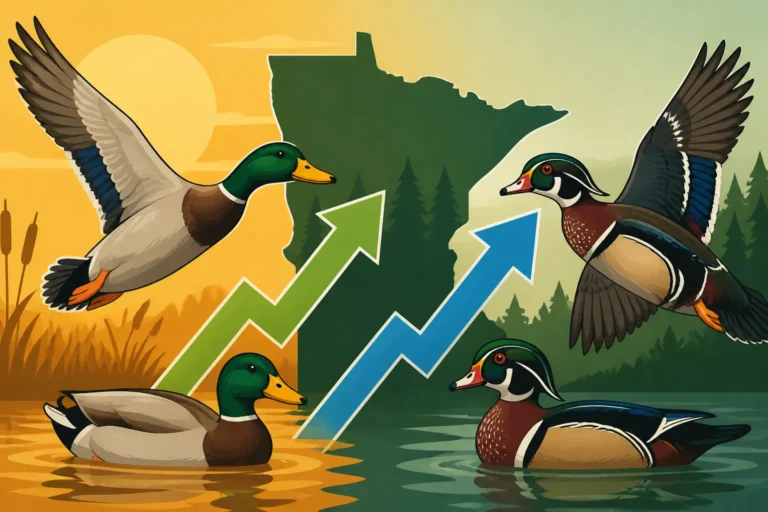
When you think of prairie pothole ducks, dabblers are usually the first that come to mind. Species like mallards, pintails, green-winged teal, blue-winged teal, wigeon, and gadwalls thrive in the shallow, food-rich environments of the potholes. They "dabble" or tip their heads down to feed, rather than diving deep. Mallards are, of course, the kings of the dabblers, and you'll find them in nearly every pothole. Green-winged and blue-winged teal are fast-flying, early-season favorites.
| Duck Species | Common Pothole Behavior | Key Identification Notes | Preferred Food in Potholes |
|---|---|---|---|
| Mallard | Most common, vocal, often feed on edges | Green head (drake), orange feet, blue speculum | Aquatic vegetation, seeds, grains, invertebrates |
| Green-winged Teal | Fast, erratic flight; often in large flocks | Smallest dabbler, green speculum, chestnut head (drake) | Small seeds, aquatic insects, snails, larvae |
| Blue-winged Teal | Early season, fast flight, small flocks | Sky blue patch on wing, white crescent on face (drake) | Aquatic insects, seeds, tiny snails, plant matter |
| Northern Pintail | Long neck, elegant, often fly high | Long pointed tail (drake), white stripe on neck | Seeds, grains, aquatic insects, tubers |
| Gadwall | Quiet, often associate with other species | Gray body, white speculum on wing (distinctive) | Aquatic plants (leaves, stems), seeds, insects |
| American Wigeon | Graze on emergent vegetation, distinct whistle | White patch on wing, white crown (drake), green eye band | Aquatic vegetation, roots, leaves |
While dabblers dominate, don't discount divers entirely. Sometimes, particularly on slightly deeper potholes or those connected to larger systems, you might encounter ring-necked ducks, buffleheads, or even redheads. These species prefer to dive for their food, often consuming mollusks, aquatic insects, and plant tubers from deeper water. They typically prefer larger, more stable water bodies, but a large, deep pothole or one with good invertebrate populations can certainly hold them. Knowing the Minnesota Duck Daily Bag Limit for these diverse species is important for responsible harvesting.
Migration Patterns and Timing
Understanding when different species move through Minnesota's pothole country is like having a secret weapon. The season can generally be divided into early, mid, and late periods, each bringing its own set of birds and challenges. This knowledge will greatly influence your hunting strategy.
Early Season (September – early October): This is prime time for local ducks and early migrants. Blue-winged teal are often the first to push through, followed by green-winged teal and early mallards. You'll find many resident birds on the potholes where they were raised. Warm weather can mean ducks are less concentrated, spread out across many water bodies. This is when you can experience explosive action if you hit a fresh flight of teal. Be mindful of the Minnesota Duck Opener Date to ensure you're ready when the season kicks off.
Mid-Season (mid-October – early November): As the weather cools and northern front push south, you'll see a surge in mallards, wigeon, gadwalls, and pintails. These are often adult birds, wise to hunter pressure. Divers also become more common during this period as they leave the larger northern lakes. This is often considered the peak of the duck migration, offering consistent hunting if you can stay on top of new birds moving in.
Late Season (mid-November – December): This is for the truly dedicated. Many smaller potholes freeze, pushing ducks to larger, deeper waters or those with natural springs. What remains are often hardy mallards and divers. These birds are usually extremely wary, having seen every trick in the book. Heavy snow and ice mean finding open water is key, and ducks will concentrate heavily where they can find it. You'll need tough gear and a willingness to brave the cold, but the rewards can be incredible.
Scouting and Accessing Pothole Country
Successfully hunting prairie potholes isn't just about showing up on opening morning. It's about diligent scouting and smart access, treating each hunt like a strategic mission. Many hunters get frustrated because they drive past potential goldmines without even knowing it, or they burn out a spot by approaching it incorrectly.
Utilizing Technology for Pothole Scouting
In today's world, technology has made scouting for ducks infinitely easier than it used to be. Gone are the days of relying solely on paper maps and endless driving. Digital mapping apps like GoHunt are indispensable tools for identifying potential hunting spots from the comfort of your home. You can zoom in on aerial imagery to spot small, hidden potholes, identify potential access points, and note terrain features that might concentrate birds or provide natural cover for blinds.
Before you even step foot in the field, use these apps to look for key features:
- Water Presence: Is there water? Obvious, but crucial. Look for dark blue or black spots that indicate standing water. Sometimes, dried-up potholes from prior years can be identified by distinct vegetation patterns that still hint at wetland characteristics.
- Surrounding Habitat: Ducks like a mix of open water, emergent vegetation (cattails, bulrushes), and nearby grain fields or grasslands for loafing and feeding. Look for these combinations.
- Access: Can you get to it? Look for public roads, parking areas, or obvious walking paths. If it's private land, you'll need to figure out who owns it. The Minnesota DNR's Recreation Compass is another excellent resource for public land boundaries, including Minnesota Wildlife Management Areas.
Once you've identified potential spots on the map, a quick drive-by can confirm water levels and bird presence. Be stealthy! Drive slowly, use binoculars, and avoid spooking birds if you plan to hunt the spot soon. A quick check at dawn or dusk will often tell you if ducks are using the area.
Gaining Access to Productive Potholes
Access is often the biggest hurdle for pothole hunters. While Minnesota Waterfowl Production Areas offer public access, many fantastic potholes are on private land. This is where your people skills come into play.
Public Land Access:
- Waterfowl Production Areas (WPAs): As mentioned, these are prime. Always check signs for specific WPA rules, as some may have restrictions on ATVs, specific entry points, or designated hunting areas. Be prepared to walk a bit to get away from other hunters.
- State Wildlife Management Areas (WMAs): Many WMAs in the prairie regions will also have potholes or floodings that hold ducks. Similar to WPAs, expect some pressure but also the reward of accessible hunting.
- Walk-In Access (WIA) Program: Minnesota's Walk-In Access program is a fantastic initiative that leases private land for public hunting. Look for WIA signs, especially in farming communities. These areas are specifically designed to provide public access to private ground, often with good habitat, and are an excellent alternative to direct landowner permission.
Private Land Permission:
- Knocking on Doors: This is still the most effective way to gain access to private potholes. Approach landowners respectfully, explain what you're hoping to do, and offer to share some of your birds. A polite, clean-cut appearance goes a long way.
- Building Relationships: If you get permission, be a model hunter. Clean up after yourself, respect their property, and follow through on any agreements. This can lead to long-term access and even more opportunities. A fresh loaf of banana bread or a gift card after the season isn't a bad idea either!
Always carry proof of your licenses, including your Minnesota Federal Duck Stamp Requirement and Minnesota HIP Certification for Bird Hunters, as well as any written permission for private land.
Essential Gear and Tactics for Pothole Hunting
You can have the best scouting in the world, but if your gear isn't right or your tactics are off, those ducks will give you the slip. Pothole hunting demands a specific setup to maximize your chances, from the decoys you throw out to the clothes you wear.
Decoy Spreads and Calling Strategies
Pothole duck hunting often doesn't require massive spreads like big-water diver hunting, but placement and realism are key.
Decoy Spreads:
- Numbers: For small potholes, a dozen to two dozen decoys can be plenty. A mix of mallards, pintails, and a few teal often works well. If you know a specific species is using the pothole, a small group of just that species can be effective.
- Placement: Think about landing zones. Ducks want to land into the wind, so position your spread to create an open pocket for them to settle into. A common setup is a J-hook or C-shape, with the open end facing into the wind, directly in front of your blind.
- Motion: A little motion goes a long way. A jerk cord, a spinning-wing decoy (where legal and appropriate), or even just a few decoys on Texas rigs that move in the slightest breeze can make your spread come alive. Ducks are constantly looking for signs of life.
- Realism: Keep your decoys clean and upright. If a decoy is leaning or full of holes, it looks unnatural and can spook wary birds.
Calling Strategies:
- Less is More: On small potholes, especially with wary birds, aggressive calling can be a detriment. Start with subtle greetings, a few contented quacks. Let the ducks tell you what they want.
- Variety: Have a range of calls – a good mallard call is essential, but a teal whistle or pintail whistle can be deadly when those species are in the area. Practice making realistic sounds, not just loud ones.
- Situational Calling: If ducks are circling high, a highball might get their attention. If they're locked up and coming in, switch to contented quacks and a soft feed call. Learn to read the birds and adjust your calling accordingly. Sometimes, the most effective call is no call at all.
Blinds, Waders, and Weather Preparedness
Your comfort and concealment directly impact your success in the potholes. Being cold, wet, or exposed will ruin a hunt faster than anything.
Blinds:
- Natural Cover: Often, the best blind is no blind at all – just smart use of natural cover. A dense cattail stand, a cluster of willows, or even a depression in the bank can offer perfect concealment. Use what's there and break up your outline.
- Portable Blinds: If natural cover is sparse, a portable ground blind or a panel blind brushed in with local vegetation can be effective. Camouflage patterns should match the local environment. Remember the rules for Using a Ground Blind on Minnesota Public Land if you're on public ground. For hunting larger fields near potholes, a layout blind is indispensable, and mastering Layout Blind Hunting Minnesota Farm Fields can open up many more opportunities.
- Stealth: No matter your blind choice, your biggest enemy is your silhouette. Wear full camouflage, including a face mask, and stay absolutely still when birds are approaching. Even a slight movement can flare them.
Waders:
- Chest Waders: These are non-negotiable for pothole hunting. You'll be wading to set decoys, retrieve downed birds, and potentially move to better cover. Neoprene waders offer excellent insulation in cold weather, while breathable waders are more comfortable in warmer early-season conditions. Ensure they fit well and allow for layering underneath. Read up on Waders for Minnesota Marsh Hunting to pick the right pair.
- Puncture Repair Kit: Always carry a small repair kit. A pinhole leak can turn a fantastic hunt into a miserable, soggy experience.
Weather Preparedness:
- Layer Up: Minnesota weather can change on a dime. Dress in layers, starting with a good base layer to wick moisture, an insulating layer, and a waterproof/windproof outer shell. Wool and synthetics are your friends; cotton is your enemy when it gets wet.
- Gloves and Hats: Hands and head lose heat quickly. Pack multiple pairs of gloves (a thin shooting pair and a warmer, waterproof pair) and a warm hat.
- Hand Warmers: These are a game-changer on cold mornings, especially for keeping your hands nimble enough to load shells and work calls.
- Food and Water: Even on a short morning hunt, pack snacks and water. Staying hydrated and fueled helps maintain focus and body temperature.
Conservation and Ethical Hunting in Pothole Regions
As hunters, we are often the first line of defense for the habitats we cherish. Hunting Minnesota's prairie potholes comes with a responsibility to not only respect the game and the land but also to actively contribute to the conservation efforts that make these hunting opportunities possible. It's about ensuring future generations can experience the same thrilling mornings we do.
Supporting Habitat Through Duck Stamps and Organizations
The primary way most hunters contribute to waterfowl conservation is through the purchase of licenses and stamps. Your Minnesota Waterfowl Zones and Seasons license and the Federal Duck Stamp aren't just legal requirements; they're direct investments in habitat. A significant portion of these funds goes directly to acquiring and restoring wetland habitats, including those precious prairie potholes and their surrounding grasslands.
Beyond mandatory stamps, consider joining or supporting organizations dedicated to waterfowl and wetland conservation.
- Ducks Unlimited (DU): DU is a global leader in wetlands conservation, and their work directly impacts the quality and quantity of duck habitat in Minnesota and across the flyways. Their efforts ensure breeding grounds remain viable.
- Delta Waterfowl: Delta focuses on scientific research and management practices aimed at increasing duck production. Their "hen houses" and predator management programs are vital for boosting duck populations in key breeding areas.
- Local Conservation Groups: Look for local chapters of these national organizations or smaller, regional groups focused on Minnesota's specific wetlands. Volunteering your time or donating directly to these efforts makes a tangible difference. Every dollar, every hour, helps ensure the future of these incredible birds.
Practicing Responsible Hunting
Ethical hunting isn't just about legality; it's about a deep respect for the animals we pursue and the experience itself. In the close quarters of a pothole, responsible hunting practices are paramount to ensure safety, minimize disturbance, and maximize success.
- Shot Selection: Use the right shot size and choke for waterfowl, and always use non-toxic shot (steel, bismuth, or tungsten-based alloys) as required by law for all waterfowl hunting. Practice shooting so you know your effective range and stick to it. Taking long shots often leads to wounded birds that are difficult to recover.
- Identification: Learn to identify your target species before you shoot. Not only is it a legal requirement to respect bag limits for specific ducks, but it's also a critical skill for understanding duck behavior and ensuring you're only taking birds within your Minnesota Duck Daily Bag Limit. A hunting app or even a simple pocket guide can help. GoHunt's mapping features can also help you understand the landscape and anticipate species movement.
- Retrieval: The goal is a clean kill and a quick recovery. If you don't have a dog, be prepared to wade out immediately to retrieve downed birds. A long retrieving stick can be invaluable. Losing a bird is a heart-wrenching experience and a waste of a resource.
- Safety First: Always follow basic firearm safety rules. Be aware of your hunting partners, property lines, and anything beyond your target. Remember that many potholes can be muddy, treacherous, and have unseen obstacles beneath the surface. Know your limits and hunt safely.
- Leave No Trace: Pack out everything you pack in. Shell casings, snack wrappers, empty calls – everything. Leave the pothole cleaner than you found it. This respect for the land is what makes us true conservationists and ensures continued access for all.
Disclaimer
This article is for general informational purposes only and does not constitute professional advice. Laws, prices and regulations vary by location and change over time. Consult a qualified professional for guidance on your specific situation.