How Old a Cut Should Be for Grouse
Finding prime ruffed grouse habitat in Minnesota can feel like a perpetual treasure hunt, especially when you're staring at a forest map filled with various timber harvest dates. It’s tough to know if that 5-year-old clear-cut is a grouse haven or a barren wasteland, and hitting the woods only to find sparse birds is a common frustration. This guide is here to unravel the mystery of timber cuts and their appeal to ruffed grouse, helping you understand precisely what age of regeneration offers the best hunting opportunities.
Optimal Age Ranges for Ruffed Grouse in Timber Cuts
When it comes to ruffed grouse, not all timber cuts are created equal, and their age is a huge determining factor in how productive they’ll be. Many hunters just look for any "cut," but there's a real sweet spot, a golden window, where the habitat truly flourishes for these elusive birds. Understanding this can save you countless hours of walking through unproductive cover.
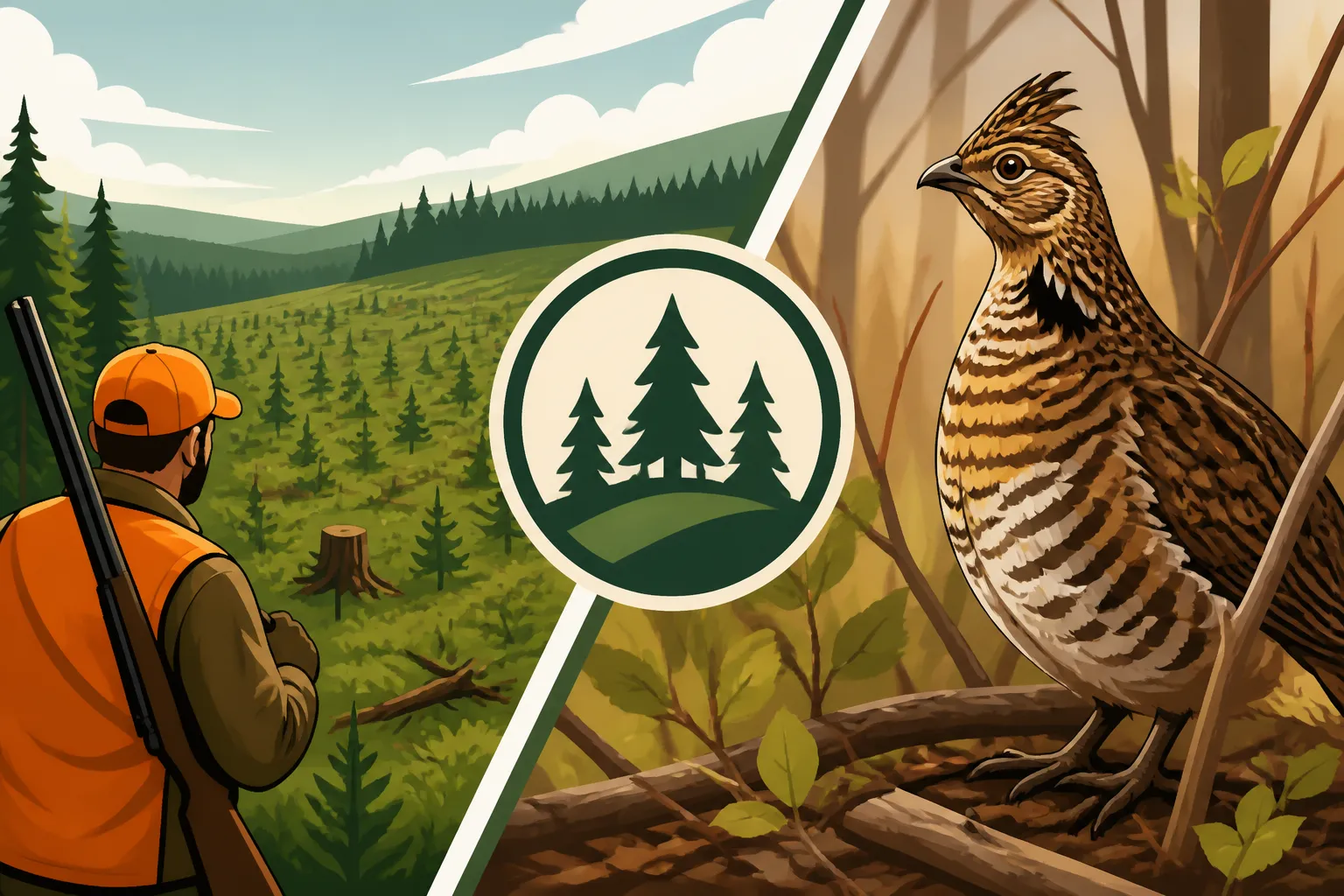
Typically, the prime window for ruffed grouse in Minnesota timber cuts begins around 5 to 7 years after a clear-cut and can extend up to about 20 to 25 years. This isn't a hard and fast rule, of course, as local conditions, tree species, and cutting methods play a role, but it gives you a solid starting point. What happens in that timeframe is critical: the forest floor explodes with new growth, particularly young aspen, which is the cornerstone of good grouse habitat. These young saplings provide both the dense cover grouse need to escape predators and a crucial food source. Beyond 25 years, as the canopy closes and the understory thins, the habitat often declines, though isolated pockets can remain productive longer, especially if there's varied terrain or ongoing management.
The initial years, say 1-4 years post-cut, can be deceptively sparse. While there might be some ground-level growth, it often hasn't developed enough vertical structure to offer substantial protection. Imagine a hawk circling overhead; a lone sapling isn't going to cut it for a hiding grouse. But once those aspens reach about 10-15 feet tall, creating a thicket of stems, it’s a whole different ballgame. This dense, tangled growth is exactly what grouse are looking for to evade predators like hawks and coyotes, and it's also where you'll find them feeding on buds and catkins in the colder months. This understanding is key when you're trying to figure out where to focus your efforts for Grouse Hunting Minnesota Aspen Cover.
Why the Age Matters: Food and Cover
The age of a timber cut is paramount because it directly correlates to the availability of two critical components for ruffed grouse survival and proliferation: food and cover. Without both, a cut is largely unproductive. It’s a delicate balance that shifts with the forest's regeneration, dictating where grouse choose to live and breed.
Firstly, let's talk about food. Young, regenerating aspen stands, particularly those in the 5-20 year range, are a buffet for ruffed grouse. Aspen buds and catkins are a primary food source, especially during fall and winter when other options are scarce. The younger, smaller trees produce more accessible buds at a height where grouse can easily reach them. As the trees mature and grow taller, those crucial buds move higher into the canopy, becoming less available. Beyond aspen, these regenerating areas also host a variety of other plants like clover, berries, and insects, all of which contribute to a grouse's diet. The abundance of these food sources directly impacts the health and numbers of grouse in an area. For more on this, check out Why Popple Cuts Grow Grouse.
Secondly, and perhaps even more critically, is cover. Ruffed grouse are masters of camouflage, but they rely heavily on dense horizontal cover to escape predators. Those thick, nearly impenetrable stands of young aspen or other regenerating hardwoods offer exactly that. Picture a wall of thin, closely spaced stems, often interwoven with brush and downed logs. This creates a protective maze where a grouse can dart, fly, and hide, making it incredibly difficult for predators to spot or pursue them. An older, mature forest, with its wide-open understory and tall, bare trunks, offers little protection, leaving grouse vulnerable. This is why you rarely find large numbers of grouse in mature timber, unless there's a unique understory component. The transition from open ground to dense thicket, then back to a more open, mature forest, perfectly illustrates the cyclical nature of Minnesota Ruffed Grouse Cycles and their preferred habitats.
Finding the Right Cuts: Reading the Landscape
Now that we understand why certain aged cuts are better, the next challenge is actually finding them on the ground. This isn't always as simple as it sounds, as what looks good on a map might not be what the grouse are truly using. It requires a combination of good scouting skills, understanding forest dynamics, and leveraging modern technology.
When you're out in the field, look for specific visual cues. The ideal grouse habitat is often characterized by thick, vertical stem density. We're talking about areas where you can barely see 10-15 yards in front of you due to the sheer number of young trees and brush. Aspen leaves are distinctive, and you'll often see them fluttering even in a light breeze, indicating those younger stands. Don't be afraid to walk into areas that feel "too thick" – those are often exactly where the birds are. Also, pay attention to the terrain. Grouse often prefer cuts on slightly higher ground or areas with good drainage, though they will utilize lowland edges if food and cover are present. Look for evidence of drumming logs (though this is more relevant in spring, it tells you grouse are in the general vicinity), and, of course, droppings and fresh tracks in the snow or mud.
Remember that forest management practices vary. Not all cuts are clear-cuts. Some might be thinnings or select cuts, which can also create good grouse habitat, but often with a different structural outcome. Always aim to understand the history of the specific parcel you’re hunting. This "reading the landscape" takes practice, but it's an invaluable skill for any serious grouse hunter.
Tools and Technology for Scouting Promising Areas
In today's age, we have an incredible advantage with mapping technology that makes identifying promising timber cuts much easier than it used to be. Gone are the days of relying solely on paper maps with vague markings. Now, you can practically scout from your couch before ever stepping foot in the woods.
The first essential tool is a good online mapping platform or a dedicated hunting app. Services like GoHunt, Gaia GPS, and onX Hunt offer satellite imagery, topographic maps, and often layers showing public land boundaries, logging roads, and even timber harvest data. You can zoom in on state forests or Wildlife Management Areas (WMAs) and visually identify clear-cuts by their distinct boundaries and the lighter green or brownish hues of regenerating vegetation. Look for blocky, uniform shapes, which often indicate planned timber harvests. Many state DNR websites also have interactive forest inventory maps that detail when certain tracts were logged, what species were harvested, and what the management goals are. This is gold for figuring out How Old a Cut Should Be for Grouse. Cross-referencing these dates with the optimal 5-20 year window allows you to pinpoint high-potential zones before you even lace up your boots.
When using these tools, focus on areas with a high concentration of young aspen or mixed deciduous forests. Satellite imagery is excellent for spotting these. During the fall and winter, deciduous cuts will show up as distinct brown or grey patches against the darker green of conifers. In the spring and summer, they'll be vibrant green. Pinpoint these areas, mark potential access points, and note any distinct features like old logging roads, creek bottoms, or adjacent mature timber that might serve as escape routes or travel corridors for birds. While you're at it, consider how these access points might affect hunting pressure – sometimes a slightly harder-to-reach cut can hold more birds. For more detailed insights on using mapping, you can refer to Reading Aerial Photos for Big Woods Deer, which also applies well to finding grouse cover.
Habitat Diversity and Edge Cover
While the age of a timber cut is crucial, it's rarely the only factor determining grouse density. The overall habitat diversity and the presence of "edge" cover are equally important. A perfectly aged aspen stand surrounded by a vast monoculture might not hold as many birds as a slightly older or younger cut that boasts more varied surroundings.
Ruffed grouse thrive in diverse habitats where they can find everything they need within a relatively small home range. This means a mix of different timber types, age classes, and structural components. Think about an ideal spot: a young, dense aspen cut for feeding and escape cover, bordering a mature conifer stand for thermal protection during harsh winter nights, and perhaps a small creek bottom or alder swamp for additional moisture and insect life. These transitions, or "edges," are incredibly productive. Grouse use these edges for travel, foraging, and as quick escape routes. For example, a grouse might feed in the dense young aspen, but quickly retreat into the thick pines on the edge when a hawk flies over. This combination of different cover types provides resilience against predators and weather, ensuring year-round suitability. This kind of nuanced understanding of habitat is key to really effective Grouse and Woodcock Hunting in Minnesota.
Furthermore, look for cuts that are irregular in shape or contain islands of uncut timber. These variations break up the landscape, creating more edge and micro-habitats that grouse love. A perfect square clear-cut might be productive, but one with fingers of timber extending into it, or small pockets of hardwoods left untouched, often concentrates birds. The complexity provides more hiding spots, more travel corridors, and generally a richer environment. When scouting, don't just focus on the center of the cut; pay close attention to where it meets older timber, swamps, or even field edges. These edge zones are often overlooked by less experienced hunters, yet they can be absolute hotspots.
Hunting Strategies in Young Cuts
So, you’ve done your homework, found the perfect 7-year-old aspen cut, and now it’s time to hit the woods. Hunting these dense young cuts requires a specific approach, as the tactics you'd use in open timber for deer simply won't cut it here. Success often hinges on your ability to navigate thick cover effectively, work with a dog, and understand grouse behavior within these challenging environments.
The sheer density of these cuts can be overwhelming. It's easy to get disoriented, and the birds have a distinct advantage in terms of concealment. You need to be prepared for close-quarters flushing and quick shots. Forget long-range glassing; this is a game of footwork and instinct. Moving slowly and deliberately, pausing frequently, is often more effective than crashing through the brush. Those pauses make a big difference – a grouse that thinks it's being pursued might hold tight, but a sudden silence might make it nervous enough to flush, giving you a shot. Pay attention to natural travel lanes within the thickets, even subtle ones like old deer trails or slightly less dense sections. These can often funnel birds.
Walking Techniques and Dog Work
Walking through a young timber cut for grouse is a unique experience. It’s physically demanding, often frustrating, but incredibly rewarding when a bird flushes. Your technique needs to be methodical, covering the ground thoroughly while being ready for a sudden eruption of wings.
If you’re hunting without a dog, the "stop and go" method is your best friend. Walk 10-20 yards, then stop for 10-20 seconds. The silence after your movement often makes nervous grouse flush, giving you a vital few seconds to shoulder your gun. This also gives you a chance to catch your breath and assess your surroundings. Try to walk in a zig-zag pattern or make wide sweeps through the thickest cover, ensuring you're covering as much prime habitat as possible. Be ready for the shot every second. Grouse rarely give you a courtesy flush in the open; they wait until you're least expecting it or in the densest part of the cover. Carrying a lightweight, quick-handling shotgun is a huge advantage here, something like a 20-gauge or even a 28-gauge. For more on this, check out Flushing Grouse Without a Dog.
For those fortunate enough to hunt with a good bird dog, the dynamic shifts. A well-trained pointing or flushing dog is an invaluable asset in these thickets. A pointing dog allows you to approach the bird's location more calmly, getting ready for the shot when the grouse flushes. A flushing dog, like a Springer Spaniel, works to push birds out, giving you a general idea of where the flush will come from. The dog's ability to cover ground, scent birds, and retrieve them from the impenetrable cover is unmatched. However, even with a dog, you need to work systematically, ensuring the dog doesn't get too far ahead or get lost in the dense growth. Communication and trust with your canine companion are paramount. Remember, these thickets are tough on dogs too, so consider protective vests and frequent breaks, especially on warm days.
Timing Your Hunt for Peak Activity
Just like deer hunting, timing your grouse hunt can significantly impact your success. While grouse can be found in cuts throughout the day, certain times often offer better opportunities for encountering active birds. Understanding their daily patterns, influenced by weather and food availability, can give you an edge.
Generally, early mornings and late afternoons are prime times for grouse activity. In the morning, birds often move from their roosting spots to feed, making them more active and visible (or at least more prone to flushing). As the sun climbs higher and the day warms, especially during the Indian summer days we often get in October, grouse tend to become less active, often "loafing" in denser cover. They'll venture out again in the late afternoon to feed before heading to their roosts for the night. Hunting during these peak windows maximizes your chances of encountering birds that are on the move. Also, cloudy, overcast days can sometimes extend this active period, making mid-day hunts more productive than on bright, sunny days.
Weather also plays a massive role. Grouse often become more active and "nervous" (which is good for flushing!) after a light rain or a cold snap. The cooler temperatures can spur them to feed more aggressively. Conversely, on windy days, grouse often burrow deep into thick cover to escape the gusts, making them harder to find. They also rely heavily on their hearing to detect predators, so strong winds can make them less aware and more likely to hold tight, but also make them more difficult for hunters to hear. Snow can be a double-edged sword: light snow can make tracking easier and highlight activity, but deep, heavy snow can push birds into specific thermal cover, making them harder to locate within the vastness of a cut. Always check the forecast and adjust your hunting plans accordingly to align with optimal grouse activity.
Disclaimer
Please ensure you are familiar with and adhere to all current Minnesota hunting regulations, licensing requirements, and safety guidelines. Hunting laws can change, and it is your responsibility to stay informed. Always prioritize safety for yourself, your hunting partners, and others in the field.