Minnesota Ruffed Grouse Numbers Today
It's a question almost every Minnesota upland hunter asks, often with a mix of hope and dread as hunting season approaches: "How are the grouse numbers looking this year?" We all know the famous 10-year cycle, that rollercoaster ride of booming flushes and silent woods, and trying to gauge where we are on that ride can feel like reading tea leaves. This guide is here to cut through the speculation, offering an honest look at what influences ruffed grouse populations in Minnesota and how to interpret the data to inform your hunting strategy.
Understanding the Ruffed Grouse Cycle in Minnesota
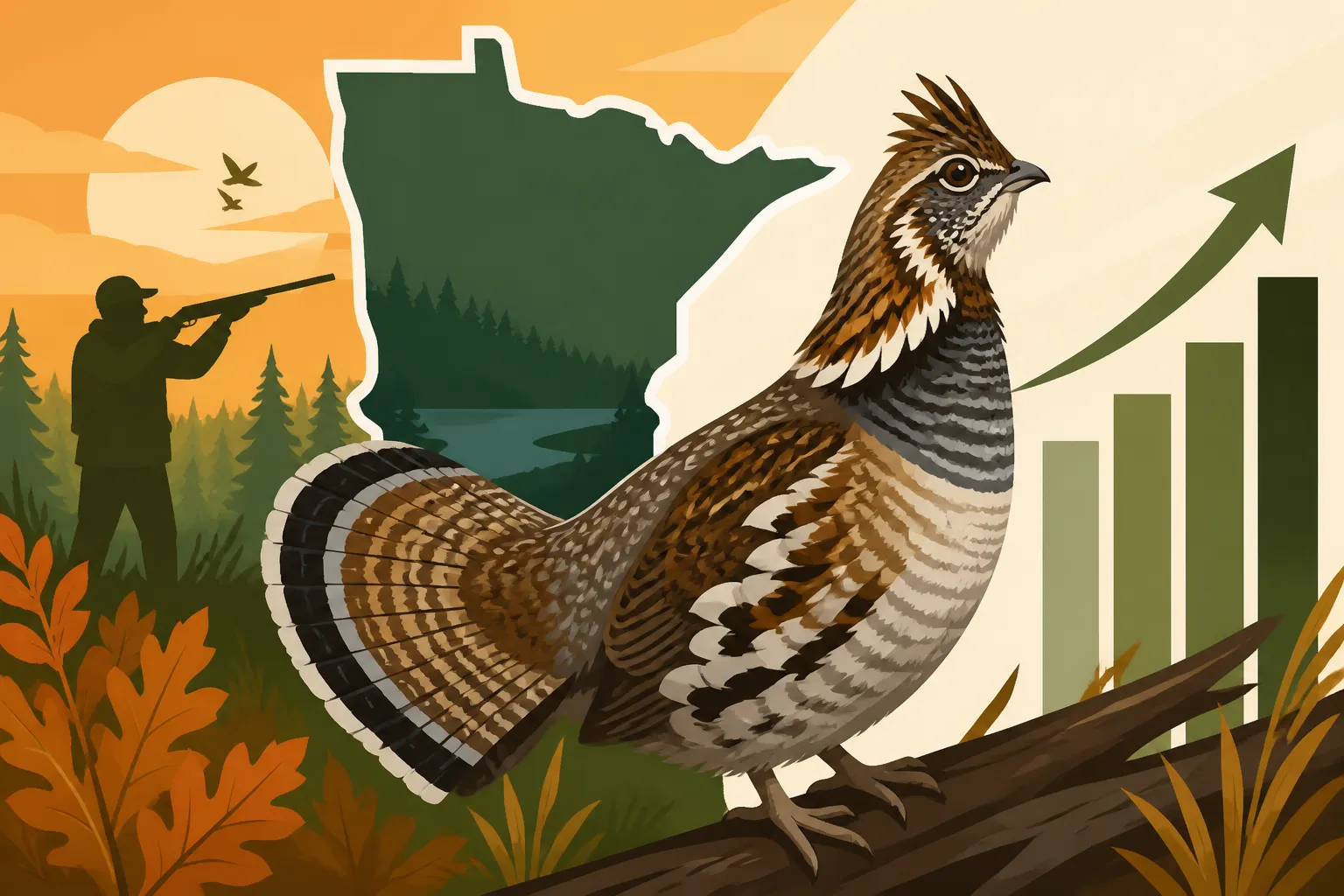
For anyone who's spent even a single autumn morning walking a popple cut in northern Minnesota, the "grouse cycle" is a familiar, if sometimes frustrating, concept. It's the natural ebb and flow of ruffed grouse populations that typically peaks every 8-12 years, followed by a gradual decline, hitting a low, and then starting the climb all over again. This isn't just an old wives' tale; it's a well-documented biological phenomenon that dramatically impacts our hunting seasons. We can have years where the woods are alive with explosive flushes, and then years later, you might walk for hours and only hear the distant drumming of a single bird. It's enough to make even the most seasoned grouse hunter wonder if they're doing something wrong, but often, it's just the cycle at play.
The cycle is a complex interaction of factors, with researchers still unraveling its full mystery. While we often simplify it to a single "10-year cycle," it's more of a general trend, and the exact timing and severity of the peaks and valleys can vary locally. What's important for hunters to grasp is that this cycle sets the baseline for what you can expect. A "good" year during a downswing might still feel slow compared to a "bad" year during a population peak. Managing expectations is key, and understanding where Minnesota sits in the grouse cycle gives you a valuable perspective. It helps us appreciate those peak years even more, knowing they won't last forever, and to stay resilient during the lows.
The Ruffed Grouse Drumming Survey: How DNR Gathers Data
So, how do we know where we are in this elusive cycle? The Minnesota Department of Natural Resources (DNR) doesn't just guess. They rely on science, primarily through the annual Ruffed Grouse Drumming Survey. This survey is a crucial piece of the puzzle, offering the best snapshot we have of the previous spring's breeding population. It's a massive undertaking, with dedicated staff and volunteers driving established routes across the grouse range, stopping at predetermined points at dawn to listen for the distinctive drumming of male ruffed grouse. Each drum is counted, and over time, this data creates a long-term trend line that clearly illustrates the cyclical nature of the population.
These drumming surveys don't just happen anywhere; they are strategically located in prime grouse habitat, primarily in the northern and central forests. The routes are run at the same time of year, under similar weather conditions, to ensure consistency and make the data comparable year after year. It's a testament to long-term wildlife management that we have such a rich dataset spanning decades. When you hear reports about grouse numbers being up or down, it's very likely referencing the results of these drumming surveys. They give us a statewide pulse, helping us to understand the general health and trajectory of the ruffed grouse population, which then helps hunters plan their outings. For a deeper dive into this important work, check out Minnesota Grouse Drumming Surveys.
Deciphering the "Boom and Bust" Pattern
The "boom and bust" pattern of the ruffed grouse cycle is a fascinating natural phenomenon that profoundly affects hunting opportunities. During the "boom" years, typically occurring around the peak of the cycle, it feels like grouse are everywhere. Flushes are frequent, multiple birds might explode from a single cover, and success rates for hunters tend to be much higher. These are the seasons we dream about, where limits can be had, and memories are made. However, this period is inevitably followed by the "bust," where numbers decline, sometimes quite sharply, leading to years of scarcity. The woods can seem eerily quiet, and finding birds becomes a much greater challenge, often requiring more effort, skill, and patience.
This pattern isn't unique to Minnesota; it's observed across much of the ruffed grouse's range. While the exact causes are still debated, it's thought to involve a complex interplay of factors including habitat changes, predation pressure, and even weather patterns that impact nesting success. During peak years, abundant grouse can support a larger predator population, which then contributes to the decline. As grouse numbers fall, so too do predator numbers, allowing the grouse population to begin its slow recovery. Understanding that this cycle is natural helps hunters to manage their expectations. It's not always about finding "the spot" that holds birds every year; sometimes, it's simply the broader population dynamics at work. Knowing How Long the Grouse Cycle Runs can help put current numbers into perspective.
Factors Influencing Current Grouse Populations
While the 10-year cycle is the big picture, many other factors contribute to the day-to-day, year-to-year fluctuations in ruffed grouse numbers. Think of the cycle as the major ocean current, but then there are strong winds, tides, and local eddies that also shape the water's surface. These more localized or short-term influences can make a particular season surprisingly good or bad, even if the overall cycle suggests otherwise. A hunter might visit their favorite cover during what should be a peak year, only to find few birds due to a localized issue, or conversely, stumble into a hot pocket during a low year because local conditions were just right.
These influencing factors include everything from the quality and quantity of habitat available to the whims of Mother Nature, and even the subtle pressures from predators and diseases. It means that while statewide drumming counts give us a general idea, true success in the woods often comes down to understanding these more nuanced, local conditions. Hunters who pay attention to these details, and adapt their strategies accordingly, tend to be more consistently successful over the long haul. It's about being a student of the landscape and the natural world, not just a follower of statewide statistics.
The Role of Aspen Management and Habitat
Hands down, one of the most critical factors influencing ruffed grouse numbers is habitat, specifically young aspen forests. Ruffed grouse are famously linked to aspen management because young, regenerating aspen stands, typically 5-20 years old, provide the dense overhead and horizontal cover that these birds absolutely need for survival. This thick cover protects them from aerial predators like hawks and owls, and ground predators like coyotes and foxes. It also provides essential food sources in the form of catkins, buds, and insects. Without a mosaic of aspen stands in various age classes, grouse populations simply cannot thrive. This is why you'll often hear about timber companies and land managers discussing "grouse cuts."
When mature aspen stands are harvested, either through clear-cutting or other methods, the forest floor is exposed to sunlight, stimulating a vigorous new growth of aspen suckers. This creates that dense, almost impenetrable thicket that grouse adore. However, as these stands mature, the understory thins out, becoming less suitable for grouse. This highlights the importance of ongoing, rotational timber management. Areas with consistent, well-planned aspen cutting schedules tend to hold more stable and robust grouse populations over time. If you're hunting in an area where timber harvesting has slowed or ceased, you might find fewer birds as the habitat becomes less ideal. Understanding Why Popple Cuts Grow Grouse is fundamental for any serious upland hunter.
Weather's Impact on Nesting and Brood Survival
Mother Nature plays an enormous, often unpredictable, role in annual grouse numbers, particularly concerning nesting success and brood survival. Even if the spring drumming count indicates a healthy breeding population, a harsh spring or early summer can dramatically impact the number of young birds that make it to the fall hunting season. Consider a cold, wet spring: prolonged periods of rain and low temperatures can be devastating for grouse chicks. They are particularly vulnerable to hypothermia in their first few weeks of life, and wet conditions make them more susceptible to disease. Heavy rains can also wash away nests or make it harder for hens to forage for the insects that are crucial for a chick's early diet.
Conversely, a warm, dry spring and early summer can lead to excellent brood survival, resulting in a bumper crop of young birds by fall. These are the years when hunters report seeing plenty of smaller, inexperienced birds, which often translates to higher flush rates. It's why many veteran hunters will pay close attention to spring and early summer weather reports in prime grouse country. They know that even if the cycle is at a low point, exceptionally good weather for nesting can provide a pleasant surprise, offering more birds than initially expected. While we can't control the weather, knowing its impact helps us understand the variability in grouse numbers from one year to the next.
Predation and Disease in the Grouse World
Beyond habitat and weather, predation and disease are ever-present forces shaping grouse populations. While healthy grouse populations can often withstand a certain level of predation, an imbalance can certainly contribute to declines, especially during the downswing of the cycle. Predators such as hawks, owls, foxes, coyotes, and bobcats all include grouse in their diet. When grouse numbers are high, these predators might also experience population booms. As grouse numbers start to fall, the continued high predator numbers can accelerate the decline. It's part of that complex natural balancing act.
Diseases can also play a role, though often more localized or less understood than the broad cyclical patterns. One disease that has garnered attention in recent years is West Nile Virus (WNV). While its full impact on ruffed grouse populations is still being studied, research suggests that WNV can affect grouse survival, particularly in certain regions or during specific outbreaks. It's a subtle but real threat that adds another layer of complexity to population dynamics. You might hear about West Nile Virus in Minnesota Grouse in specific areas, which could lead to localized dips in bird numbers. Understanding these factors reminds us that wildlife populations are constantly facing challenges, and their numbers are a reflection of many interacting forces.
Regional Trends: Where Grouse Are Doing Best (and Worst)
Minnesota is a large, diverse state, and it’s important to remember that ruffed grouse numbers don't necessarily look the same everywhere. While statewide drumming surveys give us an average, the reality on the ground can vary significantly by region, and even from one county to the next. What's happening in the far northern reaches of the Superior National Forest might be vastly different from what you're seeing in the patchwork of woods and farms in central Minnesota. This regional variation is influenced by localized habitat conditions, specific weather events, and even hunting pressure.
A savvy grouse hunter doesn't just read the statewide report; they try to understand what's happening in their particular hunting grounds or the region they plan to visit. This might involve looking at county-specific harvest data (if available), scouting before the season, or simply observing conditions on the ground. A little local knowledge can go a long way in finding better hunting, even if the general forecast isn't stellar. For hunters seeking the best opportunities, knowing the regional nuances is just as important as knowing the statewide trends.
Northern Minnesota's Core Grouse Range
When most people think of ruffed grouse hunting in Minnesota, their minds immediately go to the vast forests of the northern part of the state. This is truly the core of Minnesota's grouse range, encompassing counties like Itasca, St. Louis, Cass, Beltrami, and Cook, among others. Here, extensive tracts of public land, dominated by aspen, birch, and mixed conifers, provide ideal habitat for grouse. This region typically holds the highest densities of grouse, and even during the low points of the cycle, these areas often offer the best opportunities to find birds. The sheer amount of suitable cover means that even when populations are down, there's still a good chance of finding pockets of birds.
However, even within this core range, there are variations. Areas with more active timber management, creating a continuous supply of young aspen, will generally hold more birds than areas where the forest has become over-mature. Hunters who focus on areas with varied age classes of aspen and good access to logging roads or ATV trails (where permitted) tend to do well. This region is also where you'll find the most dedicated grouse hunters, leading to some localized hunting pressure, especially on easily accessible public land. But for those willing to walk a bit further or explore new areas, the potential for success remains high. If you're wondering which specific areas might be most productive, check out Best Minnesota Counties for Grouse.
Grouse Populations in Central and Southern Transition Zones
While northern Minnesota gets all the glory, there are also grouse populations in the central and even some southern parts of the state. These areas are often referred to as "transition zones" because the habitat is more fragmented, a mix of smaller woodlots, agricultural fields, and often more oak and hardwood forests mixed with aspen. Grouse numbers in these zones tend to be lower and more scattered than in the north, and they can be more susceptible to localized habitat loss or severe weather events. Hunting here requires a different approach, often focusing on smaller, isolated covers.
In these transition zones, habitat quality is paramount. Grouse will seek out dense thickets, often associated with small creeks, brushy edges, or neglected woodlots that offer good cover. Farmers who manage their woodlots for timber or maintain brushy fencerows can inadvertently create prime grouse habitat. These birds often live on the edge of agricultural lands, finding refuge in the woods during the day and sometimes venturing into fields for food. Success in these areas often hinges on gaining permission to hunt private land, as large tracts of public land are less common. However, for those willing to scout and knock on doors, these areas can offer rewarding, less-pressured hunting opportunities closer to home.
Applying Local Knowledge to Current Numbers
Ultimately, understanding current grouse numbers isn't just about reading a report; it's about integrating that information with your own local knowledge. Statewide averages and regional trends are fantastic starting points, but they don't tell the whole story of your favorite cover. Has that particular aspen stand been cut recently? Was there a severe ice storm in your area last winter? Did a new predator move into the territory? These kinds of hyper-local details can dramatically influence the birds you encounter. A good way to track specific areas is to use a mapping tool like GoHunt, which can help you identify habitat changes over time.
For example, if the drumming survey suggests a statewide downturn, but you know your specific hunting spot had an ideal, dry spring and good young aspen growth, you might still find reasonable numbers there. Conversely, even in a "good" cycle year, a specific block of woods that has matured past its prime will likely hold fewer birds. Talk to local landowners, other hunters, or even people who spend time in the woods like loggers or bird watchers. Their anecdotal observations can provide invaluable real-time insights that complement the broader data. Pay attention to signs of birds, like droppings, dusting areas, or fresh browse. This combination of official data and boots-on-the-ground observation is the most effective way to gauge Minnesota Ruffed Grouse Numbers Today for your specific hunting plans.
Interpreting Harvest Reports and What They Mean for Your Hunt
While the drumming surveys give us a snapshot of the spring breeding population, the annual harvest reports provide another vital piece of information: what actually happened during the hunting season. These reports, compiled by the DNR based on hunter surveys, tell us how many birds were harvested, hunter effort, and success rates. It's retrospective data, meaning it reflects the previous season, but it's incredibly useful for confirming trends indicated by the drumming surveys and understanding hunter behavior. After all, what good are grouse if no one is finding and harvesting them?
These reports can show us if hunter success aligns with predicted population trends, or if factors like increased hunting pressure or unusual weather during the season affected the outcome. They also offer insights into which areas sustain the most hunting effort and yield the most birds. For dedicated upland hunters, digging into these past season's numbers isn't just a nostalgic look back; it's a critical tool for planning future hunts and setting realistic expectations. It helps you become a more informed and adaptive hunter.
What the Annual Harvest Numbers Tell Us
The annual ruffed grouse harvest numbers are a direct reflection of both the grouse population and hunter participation/success. A significant increase in harvest from one year to the next, especially if accompanied by a similar increase in "birds per hunter," strongly suggests a healthy or growing population. Conversely, a sharp decline in harvest, even if hunter effort remains stable, often indicates a population downturn. These numbers, when viewed over several years, clearly illustrate the peaks and valleys of the grouse cycle. They are the ultimate confirmation of what the drumming surveys predicted.
However, it's crucial to look beyond just the raw number of birds harvested. Other metrics like "hunter days afield" and "birds per day" provide a more nuanced picture. If the harvest goes up but hunter days afield increase even more, it might mean hunters are working harder for their birds, not necessarily that there are more birds per se. The key is to look for consistency in the trends between drumming counts and harvest data. If both are trending up, it's generally a good sign. If they diverge, it might suggest other factors at play, like an unusually harsh or mild hunting season weather-wise, or a change in hunter behavior.
Adjusting Your Expectations for the Season
Armed with information from drumming surveys, past harvest reports, and your own local observations, you can make more informed decisions about your upcoming season and adjust your expectations accordingly. Let's be honest, we all want to hit a peak year, but that's not always the reality. If all the data points to a low year in the cycle, it might mean you need to plan for more days in the field, cover more ground, or seek out those specific habitat features that hold birds even in lean times. This could involve exploring areas with younger, denser cover that might be overlooked by others, or focusing on public lands that are harder to access.
On the other hand, if the numbers indicate an upward swing or a peak, you might find success more readily. This could be a great year to introduce new hunters to the sport or explore new areas with a higher chance of success. Regardless of where we are in the cycle, the ruffed grouse season is an incredible opportunity to get out into the woods. Understanding the numbers doesn't diminish the experience; it simply makes you a more prepared and patient hunter, ready to adapt to whatever the Minnesota woods throw at you.
Scouting Smart Based on Current Trends
Using current trends to inform your scouting strategy is perhaps one of the most effective ways to maximize your hunting success. If the statewide numbers are indicating a low point in the cycle, you know that finding birds will likely require more effort. This is when pinpointing optimal habitat becomes even more critical. You might focus your scouting efforts on finding the freshest, densest stands of young aspen or alder, often in areas that have been recently logged or clear-cut. Looking at aerial photos on an app like GoHunt can help you identify these areas remotely, and then verify them on the ground. For more on finding the right cover, consider Grouse Hunting Minnesota Aspen Cover.
During peak years, your scouting might involve more exploration of less-pressured areas, knowing that birds could be more widely distributed. You might venture deeper into national forests or state lands, confident that quality habitat will likely hold birds. Even in a good year, scouting still pays dividends, allowing you to find those honey holes that might hold more consistent flushes. Regardless of the cycle, always prioritize areas with diverse age classes of aspen, good access (but not too easy access if you want to avoid crowds), and a mix of cover types. Remember, Ruffed Grouse and Woodcock in Minnesota often share similar habitat, so scouting for one can benefit the other. Smart scouting, informed by the latest population data, turns a hopeful stroll into a strategic hunt.
Disclaimer
This article is for general informational purposes only and does not constitute professional advice. Laws, prices and regulations vary by location and change over time. Consult a qualified professional for guidance on your specific situation.