How Turkeys Were Restored to Minnesota
It's easy to take for granted the sight and sound of wild turkeys fanning out across a Minnesota field or gobbling from an oak ridge in spring. But for decades, these magnificent birds were a distant memory, completely absent from our landscape. Many hunters who grew up here never thought they'd hear a wild gobbler on their home turf. This guide explores the incredible, challenging, and ultimately triumphant journey of how wild turkeys were brought back to thrive in the Land of 10,000 Lakes.
The Vanishing Act: Turkeys Before Restoration
Before European settlement transformed the landscape, wild turkeys were a natural part of Minnesota's diverse wildlife, particularly in the southeastern hardwood forests. Their absence for so long was a stark reminder of how quickly even abundant species can disappear without careful management and habitat.
Historical Presence and Decline
Imagine a time when the deep woods and river bottoms of what is now southeast Minnesota echoed with the calls of wild turkeys. Historical accounts and archaeological evidence suggest these impressive birds, likely the Eastern subspecies, were present in the region, particularly south of a line roughly from the Twin Cities to the southeastern corner of the state. They thrived in mature oak-hickory forests, finding abundant mast crops and diverse undergrowth for food and cover. These prime habitats supported robust turkey populations for centuries.
However, as European settlers moved into Minnesota, the landscape began to change dramatically. Unregulated hunting, driven by market demand and a lack of conservation ethics, took a heavy toll. But even more devastating was the rapid and widespread habitat destruction. Vast tracts of old-growth timber were clear-cut for lumber and to create agricultural land. The intricate web of mature forests, dense thickets, and open fields that turkeys relied upon was fragmented and diminished. By the late 1800s, wild turkeys were completely extirpated from Minnesota. The last native wild turkey sighting in the state is generally believed to have occurred around 1880, leaving a silence in the spring woods that lasted for nearly a century.
The Silent Woods: Life Without Wild Turkeys
For generations, Minnesota's forests and farmlands were devoid of their most charismatic game bird. The absence of turkeys had a subtle yet profound impact. Ecologically, it meant a missing link in the food chain, a gap in seed dispersal, and a reduction in the overall biodiversity of certain habitats. Hunters, too, felt the void. While deer, grouse, and waterfowl were hunted, the unique challenge and thrill of pursuing a wily gobbler simply wasn't an option. There was a sense of something important lost, a piece of our natural heritage missing.
For those of us who appreciate the rich tapestry of Minnesota's game species, the thought of a spring without the booming call of a tom turkey is almost unimaginable now. It was a time when the stories of turkey hunting were heard from other states, not from within our own borders. This long absence underscored the critical importance of habitat conservation and regulated hunting, lessons that would eventually pave the way for their return.
Early Attempts and Lingering Doubts
The idea of bringing turkeys back to Minnesota wasn't new, but the early efforts were largely misguided and, unfortunately, doomed to fail. These initial stumbles taught valuable lessons about what not to do when attempting such a monumental wildlife restoration.
The First Flawed Efforts
Beginning in the 1920s and sporadically through the 1960s, there were several attempts to reintroduce wild turkeys to Minnesota. These efforts primarily involved releasing pen-raised, farm-bred turkeys. The logic seemed sound enough at the time: raise birds in captivity and then release them into suitable habitat. However, these birds, despite being genetically wild turkeys, lacked the crucial instincts and conditioning necessary to survive in the wild.
Pen-raised turkeys are accustomed to human care, lack fear of predators, and often struggle to forage effectively for natural foods. They're also often susceptible to domestic diseases, which can spread to wild populations if they somehow persist. Without the innate survival skills honed over generations in the wild, these birds simply couldn't hack it. They quickly fell prey to predators, struggled to find food through harsh winters, or dispersed in ways that prevented viable breeding populations from forming. Each attempt was met with failure, leading to a general skepticism within the Minnesota Department of Natural Resources (DNR) and among the public about the feasibility of turkey restoration in the state. It was a frustrating cycle of hope followed by disappointment, and many began to believe that Minnesota was simply too far north or too cold for turkeys to ever truly thrive again.
The Missouri Model: A Glimmer of Hope
While Minnesota was struggling with pen-raised birds, other states were beginning to crack the code. Missouri, in particular, became a beacon of success. Their pioneering efforts in the 1950s and 60s demonstrated that the key to successful wild turkey restoration wasn't domestic birds, but rather wild-trapped turkeys. These were birds that had already proven their ability to survive and reproduce in challenging wild environments.
Missouri's strategy involved using rocket nets and cannon nets to capture wild turkeys, then carefully transporting and releasing them into new, suitable habitats. This "trap-and-transfer" method ensured that the relocated birds possessed the genetic hardiness, wariness, and survival instincts vital for establishing new, self-sustaining populations. The success in Missouri, and later in states like Iowa, provided a clear blueprint. It showed that given the right birds and suitable habitat, wild turkeys could indeed make a comeback. This pivotal shift in understanding — from relying on domesticated stock to utilizing truly wild birds — was the turning point that would eventually ignite Minnesota's own restoration efforts.
The Game Changer: Trap-and-Transfer Operations
Armed with the knowledge gained from other states, the Minnesota DNR embarked on a scientifically sound plan to bring back the wild turkey. This approach, centered on acquiring and releasing wild-trapped birds, proved to be the ultimate game changer, setting the stage for one of Minnesota's greatest wildlife success stories.
Bringing the Eastern Wild Turkey Home
The real work of turkey restoration in Minnesota began in the early 1970s. The Minnesota DNR, having learned from past mistakes and inspired by Missouri's triumphs, initiated a new strategy focused entirely on wild-trapped Eastern subspecies turkeys. The first significant releases occurred in 1971 and 1973, when 29 wild birds were obtained from Missouri and released into the Houston County area of southeastern Minnesota. This region was strategically chosen because its rugged bluff country, extensive hardwood forests, and mild microclimates most closely resembled traditional turkey habitat and offered the best chances for survival.
These initial releases were critically important, but they were just the beginning. Over the next two decades, the DNR continued to acquire wild turkeys through partnerships with other states. Missouri, Iowa, and even Nebraska contributed birds to Minnesota's burgeoning restoration program. The process was meticulously planned: birds were captured using cannon nets, carefully health-checked, transported swiftly, and released into prime habitat. The focus was always on ensuring the birds were healthy and had the best possible chance to establish breeding populations. These foundational flocks, established with birds from thriving wild populations, proved resilient and quickly began to reproduce, laying the groundwork for the future expansion that would see Minnesota's wild turkey numbers grow exponentially. If you're curious about the general health and trends, you can always check out the latest Minnesota Turkey Population Trends.
Adapting to the Northwoods: Turkey Success Factors
One of the most remarkable aspects of Minnesota's turkey restoration is how well the Eastern wild turkey adapted to conditions often considered marginal for the species, especially compared to their more southern counterparts. Southeastern Minnesota offered a good start, but the birds eventually pushed north and west, demonstrating incredible resilience. Several factors contributed to their success in what many previously considered unsuitable "Northwoods" habitat.
Firstly, the Eastern subspecies proved to be incredibly adaptable. They are generalist foragers, able to switch between acorns, seeds, insects, and agricultural grains depending on availability. This dietary flexibility allowed them to exploit a wider range of food sources as they expanded their range. Secondly, careful habitat management played a crucial role. While pristine old-growth forests were largely gone, the DNR and private landowners worked to maintain and enhance suitable blocks of timber and adjacent fields, providing critical winter cover and food. Lastly, the birds' own natural instincts and the gradual acclimation of new generations helped them thrive. As populations grew, locally adapted birds spread into new areas, slowly learning to cope with deeper snows and colder temperatures. This gradual expansion is part of the amazing story of How Turkeys Reached Northern Minnesota. It's a testament to the wild turkey's tenacity and the effectiveness of science-based conservation that these birds, once considered lost, now populate diverse habitats across our state.
Expanding the Flock: Strategic Spreading
Once the initial trap-and-transfer efforts proved successful in establishing core populations, the next challenge was to facilitate the spread of turkeys across suitable habitats throughout the state. This involved a combination of further reintroductions and allowing the birds to naturally expand their range, with significant help from dedicated individuals and careful planning.
From Southeast Strongholds to Statewide Presence
The initial releases in Houston County truly became the "stronghold" for Minnesota's wild turkeys. From these resilient populations, the DNR continued its trap-and-transfer efforts, but this time, many of the donor birds came from within Minnesota itself. This "intra-state" trapping program became incredibly efficient. Wild turkeys captured in areas with established populations were then relocated to other promising regions across the state, accelerating their expansion beyond natural dispersal rates. Early target areas included the rugged terrain of Winona, Fillmore, and Olmsted counties, gradually extending through the fertile river valleys and mixed forests of central and eventually even parts of northern Minnesota.
The expansion wasn't just about direct releases; it was also about natural dispersal. As populations boomed in release areas, young birds would naturally push out to find new territories, colonizing adjacent suitable habitats. This organic spread, combined with strategic relocation efforts, allowed turkeys to populate a remarkable variety of landscapes, from the big woods pockets to the farmland fringes. Today, it's not uncommon to find turkeys in many areas that would have seemed impossible just a few decades ago. Mapping tools and apps like GoHunt have become invaluable for hunters trying to keep tabs on these expanding populations and identify prime turkey habitat, showcasing just how widespread these birds have become. Knowing the ins and outs of Minnesota Spring Turkey Zones and Periods is crucial for planning your hunt across these diverse regions.
Citizen Scientists and Landowner Partnerships
The success of Minnesota's wild turkey restoration wasn't solely the work of the DNR; it was a true community effort. Private landowners played a crucial, often unsung, role. Many of the initial successful releases, and subsequent population expansions, occurred on private lands where landowners were enthusiastic about the return of turkeys. They provided critical habitat, protected the fledgling flocks, and often allowed access for trapping efforts. Without this collaboration, the pace of restoration would have been significantly slower.
Moreover, the passion of hunters and conservationists fueled the movement. Organizations like the National Wild Turkey Federation (NWTF) became instrumental partners, providing funding, volunteer labor for habitat projects, and advocacy. Local chapters worked tirelessly, participating in releases, conducting surveys, and educating the public. Citizen scientists contributed by reporting sightings, helping track population growth, and identifying areas where new releases might be beneficial. This grassroots support created a powerful momentum, demonstrating that when communities come together with a common conservation goal, incredible achievements are possible. These partnerships highlight the shared responsibility in maintaining healthy wildlife populations, especially when considering the implications for sustainable hunting and the future of species like the wild turkey.
The Modern Wild Turkey: A Minnesota Success Story
Today, the wild turkey is a ubiquitous sight and sound across much of Minnesota, a testament to one of the most successful wildlife restoration efforts in North American history. This success, however, brings its own set of management considerations and has profoundly reshaped the state's hunting landscape.
Population Boom and Management Challenges
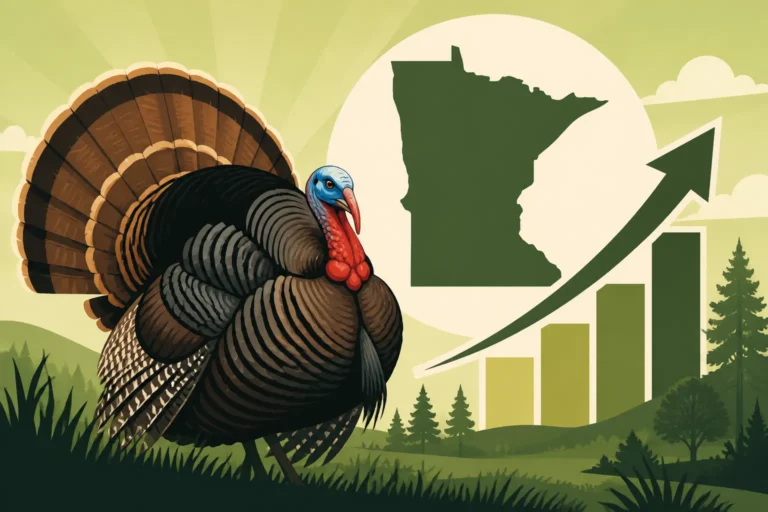
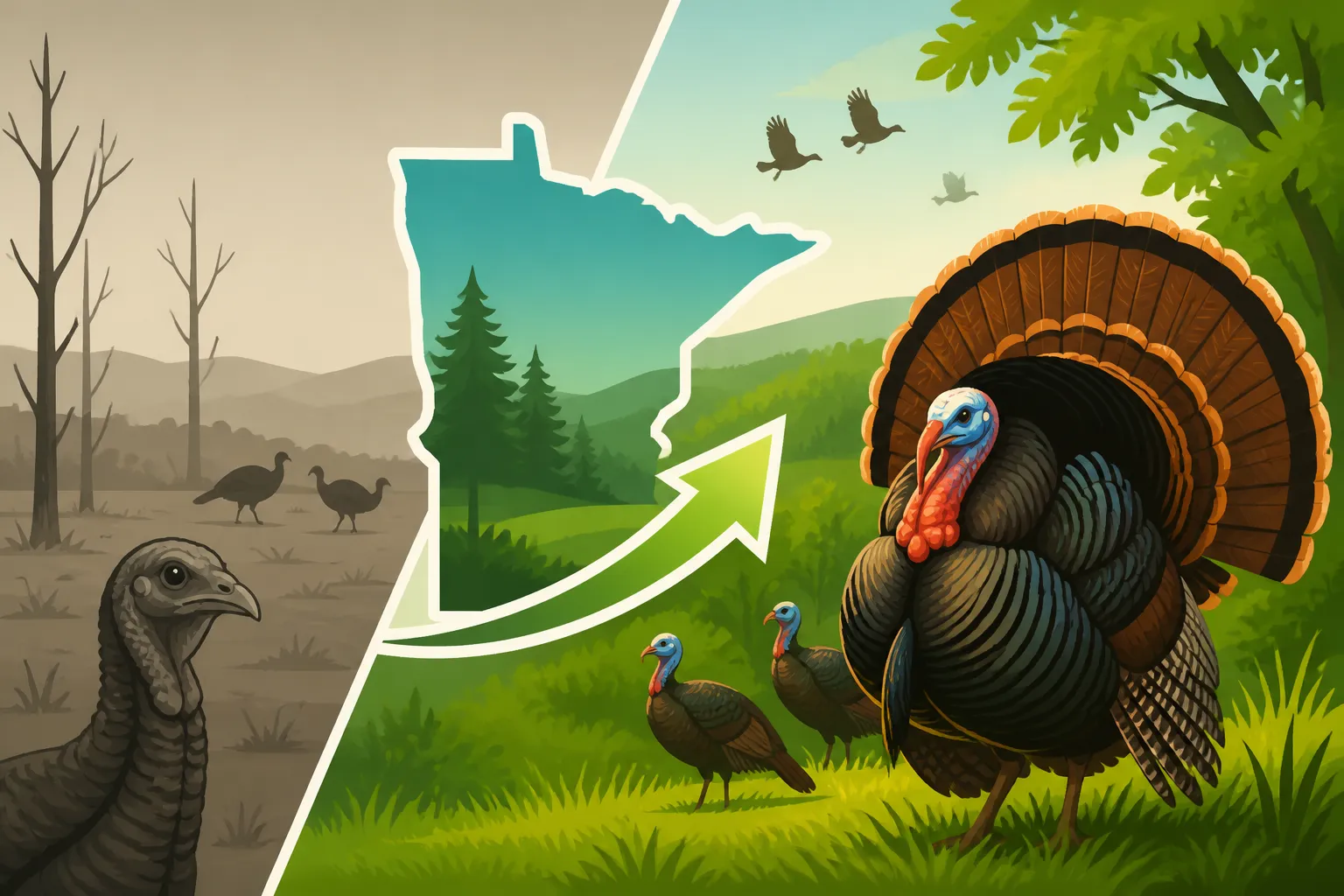
From just a handful of wild-trapped birds in the early 1970s, Minnesota's wild turkey population has exploded. Estimates now place the statewide population well into the tens of thousands, with strong, viable populations established in nearly all counties with suitable habitat, and even some areas once thought unsuitable. This growth is truly remarkable, allowing for generous hunting seasons and opportunities that were unimaginable just a few decades ago. The annual Minnesota Turkey Harvest Numbers clearly reflect this success, showing a consistent and healthy take by hunters each year.
However, a booming population also presents its own unique management challenges. The DNR must constantly monitor population trends, habitat health, and disease prevalence. Balancing hunter demand with maintaining healthy, sustainable flocks requires careful regulation of season dates and bag limits, as seen in the variety of The Seven Minnesota Turkey Firearm Periods available. In some areas, localized issues like crop depredation can arise, requiring creative solutions and landowner collaboration. The spread of turkeys into suburban and exurban areas also means managing human-wildlife conflicts, as these large birds can become quite comfortable around people. Keeping the population healthy and spread out means continuous effort from both wildlife agencies and private citizens.
The Impact on Minnesota Hunting Culture
The reintroduction of wild turkeys has injected a vibrant new energy into Minnesota's hunting culture. Before turkeys, spring hunting opportunities were extremely limited. Now, the spring turkey season is a highly anticipated event, drawing thousands of hunters into the woods and fields each year. This new season provides an exciting challenge and a unique experience, often introducing new hunters to the sport in a less crowded, more intimate setting than the deer opener. The pursuit of a gobbler, with its intricate calling, strategic setups, and the thrill of a close encounter, has become a cherished tradition for many.
Beyond spring, the establishment of a fall turkey season has added another dimension to hunting opportunities. Minnesota Fall Turkey Season Rules allow hunters to pursue birds using different tactics, often targeting flocks rather than individual gobblers. This has diversified hunting experiences and provided more time afield. The economic benefits are also notable, as hunters purchase licenses, gear, and contribute to local economies, supporting conservation efforts through those dollars. The return of the wild turkey is not just an ecological victory; it's a cultural one, weaving a new thread into the rich tapestry of Minnesota's outdoor heritage. Learning Calling a Minnesota Gobbler Off the Roost or mastering Setting Up Against a Big Oak has become an integral part of many hunters' spring ritual.
Here's a quick look at the major phases of Minnesota's turkey restoration:
| Phase | Time Period | Key Strategy | Outcome |
|---|---|---|---|
| Pre-Restoration | ~1880 – 1970 | Sporadic, failed attempts (pen-raised) | No viable wild turkey population |
| Initial Reintroductions | Early 1970s | Wild-trapped Missouri turkeys | Established foundational flocks in SE MN |
| Intra-state Transplants | 1970s – 1990s | MN-trapped birds moved to new areas | Accelerated statewide expansion |
| Natural Dispersal | Ongoing | Birds expanding naturally | Population spread into diverse habitats |
| Current Management | 1990s – Present | Regulated hunting, habitat work | Robust, widespread turkey population |
Looking Ahead: Sustaining the Success
While the story of turkey restoration in Minnesota is undeniably a success, the work of conservation is never truly finished. Maintaining these thriving populations requires ongoing dedication, adaptive management, and the continued support of hunters and landowners.
Ongoing Habitat Management and Research
The future of Minnesota's wild turkeys, much like their past, hinges on the availability and quality of suitable habitat. The DNR continues to work on habitat enhancement projects, focusing on managing woodlands for mast production (like acorns), creating diverse understory vegetation for nesting and brooding, and maintaining accessible water sources. This isn't just about creating new habitat; it's also about protecting existing crucial areas from development and degradation. Organizations like the NWTF remain vital partners in these efforts, often funding and organizing volunteer work for habitat improvements.
Research also plays a critical role. Scientists continually study turkey populations, track disease prevalence (including any potential links with issues like CWD, though less directly impactful on turkeys), and monitor reproductive success, often indicated by Poult-to-Hen Ratios and What They Mean. Understanding challenges like Nest Predation and Minnesota Turkey Hatches helps inform management strategies to ensure future generations of birds. By staying proactive and adapting to changing environmental conditions, we can ensure that the success story of Minnesota's wild turkeys continues for many years to come. Hunters can also help by using tools like GoHunt to scout areas and understand habitat patterns, which indirectly aids in recognizing strong turkey areas.
The Future of Turkey Hunting in Minnesota
The outlook for turkey hunting in Minnesota remains incredibly bright. With a robust and widespread population, hunters can expect continued opportunities for spring and fall seasons. As populations expand and mature, we might even see new hunting challenges or specialized opportunities arise. From mastering Run-and-Gun Turkey Tactics on Public Land to perfecting specific calls, the sport offers endless learning curves. The continued growth in popularity of turkey hunting also strengthens the conservation ethic, as more people become invested in protecting the habitat and populations that make these experiences possible.
For those who cherish the outdoors and the thrill of the hunt, the future promises many more mornings filled with the thunderous gobble of a Minnesota tom. Whether you're chasing a bird in the deep hardwoods, scouting Best Minnesota Counties for Turkeys, or employing Fall Turkey Tactics in Minnesota on the edges of agricultural fields, the legacy of turkey restoration is a powerful reminder of what dedicated conservation efforts can achieve. It's a story of patience, scientific application, and the enduring spirit of both the wild turkey and the people who fought to bring it back.
Disclaimer
This article is intended for informational purposes only and does not constitute legal advice. Hunting regulations and seasons in Minnesota can change. Always consult the most current Minnesota Department of Natural Resources (DNR) regulations and guidelines before planning any hunting activity. Ensure you have the proper licenses and adhere to all safety requirements.