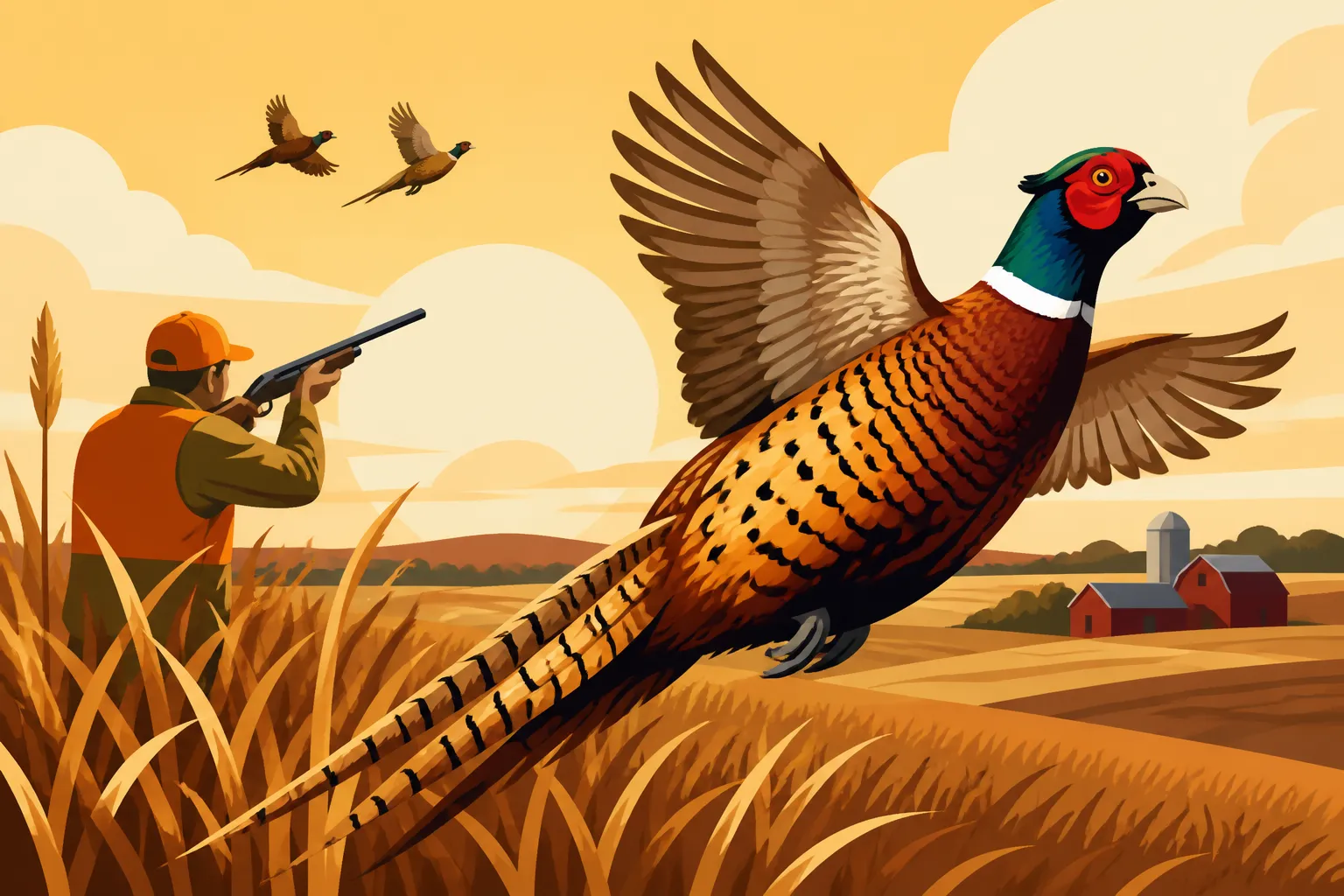
Pheasants and Southwest Minnesota Farmland
Many hunters face the challenge of consistently finding good pheasant hunting, especially in a state as diverse as Minnesota. It can feel like you're driving endless miles of agricultural fields, hoping to stumble upon a bird, only to find empty land or posted signs. This guide is dedicated to unlocking the secrets of pheasant hunting in Minnesota's premier pheasant country: the southwest farmland, helping you understand the unique habitat, effective tactics, and how to navigate access to increase your chances of a successful hunt.
The Unique Appeal of Southwest Minnesota for Pheasants
Southwest Minnesota isn't just another agricultural region; it's a vibrant tapestry of crops, grasslands, and wetlands that creates an almost perfect environment for ring-necked pheasants. The combination of fertile soil, diverse farming practices, and dedicated conservation efforts has cultivated a region renowned among upland bird hunters. You'll hear veterans talk about the "good old days" of pheasants, and while those days might look a little different now, the southwest remains the undisputed king for these colorful birds.
Why the Farmland Habitat is So Productive
The very nature of farming in southwest Minnesota, with its vast fields of corn, soybeans, and small grains, provides an incredible food source for pheasants. These birds thrive on waste grain left after harvest, which offers crucial energy through the colder months. But food alone isn't enough; pheasants also need diverse cover for nesting, brooding, roosting, and escape from predators. This region often delivers a patchwork of undisturbed grasslands, such as Conservation Reserve Program (CRP) lands, native prairie remnants, and wetland fringes, all interspersed with agricultural fields. This mosaic is what makes it tick.
Think about a typical section of land: you might have a cornfield bordering a long, thick cattail slough, which in turn abuts a hayfield or a strip of CRP grass. This arrangement allows pheasants to move easily between feeding areas and secure cover, depending on the time of day, weather, and hunting pressure. The richness of this habitat is a primary reason Why Southwest Minnesota Holds the Most Pheasants compared to other parts of the state. It's not just about the numbers; it's about the quality of life the habitat provides, allowing birds to grow, reproduce, and survive.
Understanding the Pheasant Index Survey
If you're serious about pheasant hunting in Minnesota, especially in the southwest, you need to understand the annual pheasant index survey. This isn't just some dusty government report; it's a vital tool that gives hunters a snapshot of the pheasant population going into the season. Every August, wildlife biologists and volunteers drive established routes across various regions, counting pheasants seen along these roadsides. They look for both adult birds and broods, calculating a "pheasant per 100 miles" index.
This data is incredibly valuable because it gives you an idea of how the birds fared through the previous winter and, more importantly, how successful the spring nesting and summer brooding seasons were. A high number of broods per 100 miles suggests a strong hatch and promising hunting prospects. Conversely, a low count might indicate a tough winter or a poor nesting season, signaling that you might need to adjust your expectations or work a bit harder to find birds. Knowing The Minnesota Pheasant Index Survey results can help you decide which counties or general areas might offer the best opportunities, saving you valuable time and fuel. It's like checking a fishing report before you hit the lake.
The Crucial Role of Winter Cover
While food sources are abundant in the southwest farmland, winter cover is often the real limiting factor for pheasant populations. When the snow flies and temperatures drop, pheasants need dense, thermal cover to survive. This means tall, standing vegetation that can shed snow, block wind, and provide refuge from predators. Without adequate winter cover, even a strong summer hatch can be decimated by a severe Minnesota winter.
Prime winter cover often includes large cattail sloughs, dense stands of switchgrass or other native prairie grasses, thick shelterbelts, and unharvested food plots. These areas are not only critical for survival during blizzards but also serve as important late-season hunting grounds where birds concentrate. The ongoing challenge of Winter Cover Loss and Minnesota Pheasants due to changes in agricultural practices and urban development highlights the importance of conservation programs that protect and enhance these critical habitats. As hunters, supporting these efforts ensures there will be pheasants to chase for generations to come.
Essential Tactics for Hunting Pheasants on Farmland
Hunting pheasants in the sprawling fields and diverse cover of southwest Minnesota requires a blend of strategy, patience, and often, good dog work. Unlike deer hunting from a stand, pheasant hunting is highly active, involving a lot of walking and reading the landscape. It's a game of flushing, often demanding quick reactions and accurate shooting. Knowing how to approach different types of cover and adapt to varying conditions is key to success.
Working Different Cover Types Effectively
Pheasants will use a variety of cover types, and understanding how to hunt each one is crucial. The most common areas you'll encounter include CRP fields, standing crops, shelterbelts, and wetland edges. Each demands a slightly different approach.
-
CRP Fields: These dense grass fields are quintessential pheasant habitat. When hunting CRP, it's best to work into the wind, if possible, allowing your dog (if you have one) to pick up scent more easily. Walk slowly and deliberately, covering the field methodically. If hunting with a group, spread out evenly, forming a line, and push towards a natural block like a road, another cover type, or a fence line. Pay extra attention to corners, ditches, and any areas with slightly thicker vegetation, as these are common spots for birds to hold tight. Sometimes, if the field is particularly large, you might want to focus on the edges first, as birds often stick to the transition zones. You'll find many success stories hunting Pheasant Hunting a Slough Edge within or adjacent to these fields.
-
Standing Crops: Unharvested corn or soybean fields can be pheasant magnets, especially later in the season. These fields offer excellent cover and food. Hunting standing corn can be challenging due to its density. A common tactic is a group drive, with "blockers" positioned at the end of a row or field while "pushers" walk through, making noise and forcing birds to flush ahead. Remember to communicate clearly with your hunting partners. Even though Hunting a Standing Cornfield in Farm Country is legal, ensure you have permission if it's private land.
-
Shelterbelts and Tree Rows: These linear strips of trees and shrubs, often planted as windbreaks, are fantastic for pheasants, especially when they offer thick undergrowth. Birds will often run the length of a shelterbelt before flushing, making them ideal for a classic push-and-block strategy. Station hunters at either end, and have one or two walk through the middle. Roosters are notorious for trying to sneak out the side or back of a Working a Shelterbelt for Roosters, so staying alert is key. Don't be surprised if a bird flushes closer than you expect, seemingly out of nowhere, especially in thicker sections.
-
Cattail Sloughs and Wetland Edges: These wet, often difficult-to-traverse areas are vital escape and winter cover. Pheasants will dive into the thick of a cattail slough when pressured, often holding incredibly tight. These areas are best hunted with partners, systematically pushing through the dense cover. Be prepared for muddy conditions and difficult walking. Birds flushed from sloughs often fly high and fast, so be ready for challenging shots. Retrieving a bird from a muddy slough can also be quite an adventure, making a good dog even more invaluable.
The Advantage of Good Bird Dogs
Let's be real: while you can hunt pheasants without a dog, a well-trained bird dog elevates the experience to an entirely different level. Whether it's a pointing breed like a German Shorthaired Pointer, a flushing dog like a Springer Spaniel, or a versatile retriever like a Labrador, a dog's nose and tenacity are game-changers. They cover ground much more efficiently than a human, pick up scent you'd never detect, and, most importantly, find downed birds that you might otherwise lose.
A good pointing dog allows hunters to get into position before the flush, increasing shot opportunities. Watching a dog lock up on point, tail rigid, nose twitching, is one of the true joys of upland hunting. Flushing dogs excel at busting birds out of dense cover, often leading to more chaotic but equally exciting flushes. And any dog that can reliably retrieve a bird from thick grass or cold water saves you countless hours of searching and prevents lost game. If you're considering Running Pointing Dogs on Minnesota Pheasants, remember that training takes time, patience, and consistency, but the rewards in the field are immeasurable. They're not just pets; they're essential hunting partners.
Solo Hunting Strategies vs. Group Drives
The way you hunt pheasants often depends on whether you're alone or with a group. Both approaches have their merits, and knowing when to employ each can make a big difference.
-
Solo Hunting: This is for the hunter who loves the solitude and challenge of figuring out the birds themselves. When hunting solo, you become the "pusher" and the "flusher." Focus on smaller, manageable blocks of cover, such as thin strips of CRP, field edges, or smaller sloughs. You'll need to walk slowly, stopping frequently to make birds nervous and encourage them to flush. Using the wind to your advantage is even more critical when solo, as it helps you pinpoint where birds might be holding. Sometimes, doubling back on a field you just hunted can surprise birds that circled behind you. It's physically demanding and requires keen observation, but the satisfaction of finding and flushing a rooster on your own is truly special.
-
Group Drives: For larger fields or dense cover, a group drive is often the most effective method. This involves several hunters walking in a line, pushing birds towards a predetermined "blocker" or line of blockers. The key here is coordination and communication. Everyone needs to walk at roughly the same pace, maintain their line, and be aware of where their partners are for safety. Having someone at each end of a field or cover strip can prevent birds from sneaking out the sides. Group drives are excellent for covering extensive ground and maximizing the number of flushes. They're also a fantastic social experience, creating lasting memories with friends and family. A common tactic in Minnesota is running Deer Drives With Three or Four Hunters in pheasant country, where deer drives transition into pheasant pushes on appropriate land.
Navigating Public and Private Land Access
One of the biggest hurdles for pheasant hunters in Minnesota is finding places to hunt. The prime pheasant habitat in the southwest is largely private farmland, meaning permission is often required. However, Minnesota also boasts a robust system of public lands that can offer excellent opportunities if you know where to look and how to approach them. Successfully navigating access is as much a part of the hunt as the walk itself.
Maximizing Public Hunting Opportunities
Minnesota has a fantastic network of public hunting lands, including Wildlife Management Areas (WMAs) and Waterfowl Production Areas (WPAs), many of which hold pheasants. These lands are specifically managed for wildlife habitat and public recreation, making them invaluable resources. The trick is often finding them and understanding how hunting pressure might affect bird behavior.
Many WMAs and WPAs in southwest Minnesota are smaller parcels, often ranging from 40 to 160 acres, and are often overlooked by hunters who prefer larger tracts. Don't discount these smaller pockets; they can hold surprising numbers of birds, especially early in the season or during weekdays. The Minnesota Department of Natural Resources (DNR) website and apps like the GoHunt mapping tool are invaluable for locating these areas. These resources allow you to overlay public land boundaries, parcel ownership, and even habitat types, helping you pinpoint potential hotspots. For example, a WMA with a mix of dense grass and adjacent cattail sloughs will likely be more productive than one that's primarily hayfield. Remember to check specific regulations for each WMA, as some might have unique rules. Hunters often find good success on Public Ground for Southwest Pheasants, but it often means working a bit harder or focusing on overlooked areas.
The Art of Gaining Private Land Permission
Given that much of the best pheasant habitat is on private farms, securing permission from landowners is a vital skill. This isn't about simply showing up and asking; it's about building relationships and demonstrating respect. The season for asking for permission often starts well before hunting season opens.
Begin by identifying potential farms. Drive rural roads, looking for good habitat like dense CRP fields, standing food plots, or heavy cover along ditch lines. Once you've spotted a promising area, try to find the landowner's contact information. Often, a polite knock on the door or a phone call is the best approach. When you speak to them, be courteous, introduce yourself, and clearly state your intentions. Offer to share some of your birds, and be absolutely clear about how many hunters will be with you and if you'll have a dog. Reassure them that you will respect their property, close all gates, avoid driving on wet fields, and pick up any spent shells. Offering to help with a small chore, like fixing a fence or cleaning up a fallen branch, can go a long way in establishing goodwill. Remember, Asking a Minnesota Farmer for Permission is a privilege, not a right, and a "no" should always be accepted gracefully. A bad impression can close doors for everyone.
Tools for Scouting and Accessing Information
In today's hunting world, digital tools have become indispensable for scouting and land access, especially in complex farmland environments. Gone are the days of relying solely on paper plat books, though they still have their place. Now, hunters have powerful apps at their fingertips.
Mapping applications like GoHunt are incredibly useful. They provide detailed satellite imagery, property lines, public land boundaries, and even information on habitat types. Before you even leave home, you can use these apps to scout potential areas, identify access points, and plan your routes. You can mark promising cover, note potential parking spots, and visualize how you'll work a field. Many hunters also use features that show onX Layers for Minnesota Land Status, helping to differentiate between public, private, and Walk-In Access (WIA) parcels. The WIA program is another fantastic initiative where private landowners allow public hunting access for a fee, and these areas are clearly marked on most hunting apps. Leveraging these tools responsibly can significantly reduce your unproductive scouting time and help you approach landowners with more informed questions.
| Cover Type | Ideal Hunting Method | Group vs. Solo | Dog Recommended | Key Considerations |
|---|---|---|---|---|
| CRP Grassland | Line drive, grid pattern | Both | Yes | Work into wind, focus on edges/thicker spots |
| Standing Corn/Soybeans | Group drive with blockers | Group | Yes | Safety with blockers, communicate loudly |
| Shelterbelt/Tree Row | Push-and-block, linear push | Both | Yes | Birds run, watch for side flushes |
| Cattail Slough/Wetland | Slow, methodical push through | Group | Highly | Difficult walking, muddy, birds hold tight |
| Cut Fields (Stubble) | Quick walk-through (sparse cover) | Solo | Yes | Birds will be in adjacent heavy cover or feeding |
| Food Plots (Uncut) | Slow, deliberate push | Both | Yes | Excellent late-season draw, dense cover |
Challenges and Conservation for Sustainable Pheasant Hunting
Pheasant hunting in Minnesota's southwest farmland isn't without its challenges, both for the hunter and for the birds themselves. Understanding these obstacles, from crowded public lands to the impacts of weather and habitat loss, is crucial for fostering realistic expectations and promoting responsible hunting practices. Ultimately, ensuring the future of this iconic game bird relies heavily on ongoing conservation efforts and the ethical behavior of hunters.
Pressure and Hunter Crowds
Let's face it: good pheasant hunting means attracting other hunters. On opening weekend, especially in well-known public lands, you can expect company. This pressure can make birds wary, causing them to flush at longer distances or run into thicker cover, making them harder to find. It's a common frustration for many, driving them to seek out lesser-known spots or secure private land access.
One common scenario is arriving at a WMA only to find several vehicles already parked, indicating hunters are already out. In these situations, rather than getting discouraged, consider adjusting your strategy. You might focus on areas that other hunters tend to overlook, such as smaller, harder-to-reach pockets of cover, or the edges of dense sloughs that seem too difficult to penetrate. Sometimes, simply waiting until midday, when some hunters have left, can open up opportunities. Being aware of Opening Weekend Crowds in the 100 Series (which overlaps with much of the pheasant zone) can help you plan to avoid peak times or seek out alternative, less-pressured locations. Remember to always be respectful of other hunters, giving them space and avoiding conflicts.
Habitat Loss and Weather Impacts
Beyond hunting pressure, pheasants face significant threats from habitat loss and unpredictable weather patterns. Modern agricultural practices, while highly efficient for food production, can sometimes reduce the amount of ideal pheasant cover. The conversion of grasslands to row crops, the tiling of wetlands, and the removal of fence rows all diminish the critical nesting, brooding, and wintering cover pheasants need to thrive. Winter Cover Loss and Minnesota Pheasants is a continuous concern across the region.
Weather also plays a huge role. Severe winters with prolonged deep snow and extreme cold can decimate pheasant populations, especially if adequate thermal cover is lacking. Similarly, cold, wet springs can lead to poor nesting success, as pheasant chicks are particularly vulnerable to exposure. Even droughts can impact nesting cover and food availability. While hunters can't control the weather or large-scale agricultural trends, understanding these impacts helps contextualize annual pheasant populations and emphasizes the need for habitat conservation. Sometimes, after a harsh winter, the population might need a year or two to bounce back, making ethical harvest decisions even more important. Conversely, a mild winter followed by a warm, dry spring often leads to banner years for pheasants. Hunters often need to adapt their tactics based on these conditions, for example, considering Late-Season Pheasant Tactics in Deep Snow if a heavy winter hits.
The Importance of Conservation and Hunter Ethics
For pheasant hunting to remain a vibrant tradition in Minnesota, robust conservation efforts and strong hunter ethics are non-negotiable. Organizations like Pheasants Forever play a critical role by working with landowners and state agencies to create and restore habitat, particularly critical nesting and winter cover. Hunters can contribute directly by purchasing a Minnesota Pheasant Stamp Requirement (which funds these very programs) and by participating in habitat projects.
Ethical hunting practices are equally vital. This includes knowing and following all hunting regulations, such as bag limits and shooting hours. It means ensuring clean, humane kills and making every effort to retrieve downed birds. Leaving no trace, respecting private property (even if you have permission), and always prioritizing safety are fundamental tenets. Beyond the rules, it's about being a responsible ambassador for hunting. Each interaction with a landowner, a fellow hunter, or even a casual observer reflects on the entire hunting community. By being mindful and respectful, we ensure continued access and public support for hunting, securing the future of this cherished outdoor pursuit.
Disclaimer
This article is for general informational purposes only and does not constitute professional advice. Laws, prices and regulations vary by location and change over time. Consult a qualified professional for guidance on your specific situation.