Winter Cover Loss and Minnesota Pheasants
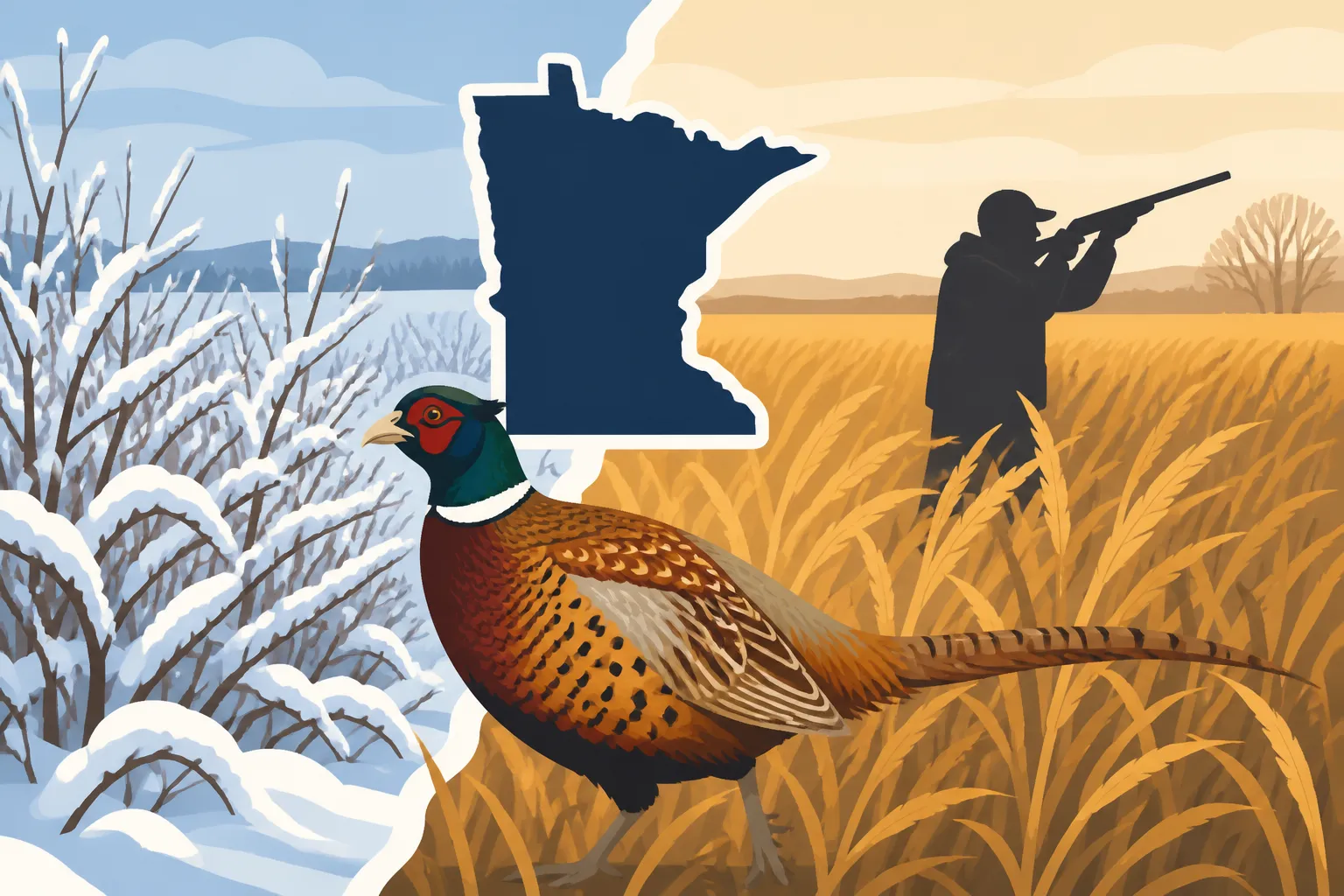
There’s nothing quite as disheartening for a pheasant hunter as trudging through a vast, snow-covered landscape in Minnesota, knowing in your gut that the birds you’re looking for just aren't there. We’ve all seen those winters where the snow piles up and the temperatures plummet, and suddenly, those familiar spots that hold roosters during the fall are eerily empty. This guide is all about understanding why that happens – the critical role winter cover plays in Minnesota pheasant survival, how its loss impacts our favorite game birds, and what we can do to help.
The Harsh Reality of Minnesota Winters for Pheasants
Minnesota winters are undeniably brutal, and for a ground-dwelling bird like the pheasant, they present a gauntlet of survival challenges. It’s not just the cold; it’s the combination of extreme temperatures, persistent snow, and relentless wind that can quickly turn a thriving population into a struggling remnant. Pheasants are hardy, yes, but even they have their limits, and those limits are often tested to the breaking point when suitable winter cover is scarce.
The Critical Role of Thermal Cover
Think about trying to stay warm when you're caught in a blizzard with no shelter – it’s a losing battle. Pheasants face this exact scenario if they don't have proper thermal cover. This isn't just any patch of grass; it's dense, structured vegetation that can trap snow and create small, insulated pockets of air, shielding the birds from biting winds and sub-zero temperatures.
Ideal thermal cover often comes in the form of thick cattail sloughs, dense brushy draws, or robust stands of switchgrass or other native warm-season grasses. These habitats act like natural insulation, allowing pheasants to hunker down and conserve vital energy that would otherwise be burned just trying to stay warm. Without it, birds are exposed to the full fury of a Minnesota cold snap, leading to rapid energy depletion and, sadly, mortality. It's often the difference between life and death during a prolonged cold spell or a sudden severe storm. We've all seen those small groups of pheasants clustered together in the scant protection offered by a fence line, and it's a stark reminder of how desperate they can become when good thermal cover is lacking.
Snow Depth and its Dual Threat
Beyond the sheer cold, the sheer volume of snow we often receive in Minnesota poses a double threat to pheasants. First, deep snow limits their mobility. Pheasants are built for walking and running, not wading through two feet of powder. When the snow gets too deep, their ability to move, escape predators, and even simply reach safe roosting areas is severely hampered. Every step becomes an exhausting effort, burning precious calories they can ill afford to lose.
Secondly, deep, crusty snow effectively buries food sources. Pheasants primarily feed on waste grain, seeds, and insects found on the ground. When a hard crust forms over deep snow, it’s like a concrete slab between them and their next meal. They can scratch and peck all they want, but if the snow is too deep or too crusted, they simply can't access the sustenance they need to survive. A single heavy snowfall followed by a deep freeze can isolate entire populations from their food, leading to rapid starvation. This is particularly devastating in areas where winter food plots are sparse or non-existent, forcing birds to depend on whatever sparse agricultural leavings might be available, often far from protective cover. You really see the impact of this when you're out looking for Late-Season Pheasant Tactics in Deep Snow and realizing the birds have moved completely out of areas that were productive just weeks before.
Understanding Habitat Loss and its Impact on Winter Survival
The challenges posed by a harsh winter are magnified exponentially when suitable habitat is already in decline. It’s not just about the immediate effects of cold and snow; it's about the long-term, systemic loss of the very places pheasants need to survive the winter, let alone thrive. Our agricultural landscape, while incredibly productive for human needs, has changed dramatically, and these changes have often come at the expense of crucial pheasant habitat.
Agricultural Practices and Changing Landscapes
The evolution of farming practices in Minnesota has had a profound impact on pheasant habitat, especially when it comes to winter cover. Modern agriculture favors larger fields, often tilled right up to the property lines, leaving little room for the brushy fencerows, small wetlands, or uncultivated corners that once provided critical sanctuary.
One of the biggest culprits is fall tillage. While beneficial for preparing fields for the next season, it removes much of the waste grain and stalks that could provide some measure of food and stubble cover through the winter. Fields that stand with crop residue offer at least a little protection from wind and some scattered food, but a cleanly tilled field offers nothing but barren ground. The consolidation of smaller farms into larger operations also means more uniform, expansive fields and less diversity in the landscape, further reducing the scattered pockets of cover that pheasants rely on. We've gone from a patchwork quilt of small fields, woodlots, and diverse cover to more of a monolithic carpet, which, while efficient for farming, is detrimental for wildlife trying to make it through the lean months. If you're hunting in areas of Pheasants and Southwest Minnesota Farmland, you'll notice these changes most acutely.
The Disappearance of CRP and Native Grasslands
Conservation Reserve Program (CRP) acres and native grasslands are the lifeblood of pheasant populations, providing vital nesting cover in spring, brood-rearing habitat in summer, and, critically, robust winter cover when the snow flies. However, the total acreage enrolled in CRP has fluctuated over the years, and when contracts expire, many of these valuable grasslands revert to row crops.
This loss is devastating for pheasants because these areas were specifically designed to provide dense, tall cover that can withstand heavy snow and strong winds, creating those insulated pockets we talked about earlier. When a CRP field is plowed under, it’s not just nesting habitat that’s lost; it’s a critical winter refuge that birds in the surrounding area depended on. Similarly, our original native prairies, which once covered vast swathes of Minnesota and provided unparalleled winter cover, have largely been converted. While some efforts are made to restore them, they represent a mere fraction of their former extent. The long-term trend of decreasing quality and quantity of these dense grass habitats leaves pheasants with fewer and farther-between havens when winter truly settles in.
Strategies for Mitigating Winter Cover Loss and Supporting Pheasants
While the challenges of winter cover loss for Minnesota pheasants can feel overwhelming, there are tangible steps we can take, both as individuals and as a hunting community, to make a real difference. It requires a commitment to conservation, working with landowners, and understanding the specific needs of these resilient birds.
Advocating for and Creating Winter Habitat
Creating and maintaining winter habitat is perhaps the most impactful strategy. For landowners, this can involve enrolling in conservation programs like CRP, state-specific initiatives, or even planting dense cover crops in field corners or along ditches that specifically target winter thermal protection. Planting shelterbelts of conifers or dense shrubs along field edges provides excellent windbreaks and cover, acting like natural snow fences and creating quieter, more protected areas for pheasants.
We can also advocate for policies that support habitat programs and encourage sustainable farming practices. Attending local DNR meetings, joining conservation organizations like Pheasants Forever, and supporting their efforts to fund habitat projects are all ways to contribute. Even small, strategically placed food plots – left standing through the winter – can provide a crucial lifeline, offering both sustenance and some minimal cover during desperate times. It's about thinking beyond the immediate hunting season and considering what the landscape offers birds when the snow is deepest. We need to focus on creating robust, multi-year cover that can withstand the elements, rather than ephemeral solutions. When you consider Pheasant Hunting a Slough Edge, you’re seeing exactly the type of habitat that needs protecting and expanding.
The Role of Hunters in Conservation
As hunters, we have a vital role to play in pheasant conservation that extends far beyond just pursuing birds in the fall. Our license fees and stamp purchases directly fund habitat acquisition and management, but our involvement can be much more hands-on. Many local Pheasants Forever chapters organize planting projects, brush pile construction, and other habitat workdays. Volunteering your time and effort to these initiatives directly translates into better survival rates for pheasants in your area.
Furthermore, being responsible and respectful when Knocking on Doors in Minnesota Farm Country to ask for permission can build relationships with landowners, some of whom might be open to discussing habitat improvement options on their property if approached correctly. Offering to help with a small habitat project, even clearing some brush or planting a few trees, can go a long way in fostering goodwill and creating new cover. Educating ourselves and others about the importance of winter cover and the specific needs of pheasants also helps build a broader base of support for conservation efforts. Our passion for the hunt should naturally extend to a passion for the well-being of the game we pursue.
Mapping and Scouting for Pheasant Winter Sanctuaries
Finding pheasants during the hunting season, especially later in the year, is intrinsically linked to understanding where they seek refuge from winter's wrath. Scouting for these critical winter sanctuaries isn't just a pre-season activity; it's an ongoing process that can dramatically improve your success rate and deepen your understanding of pheasant ecology. Learning to identify these areas on a map and then confirming them on the ground is a key skill.
Using Technology to Pinpoint Critical Areas
In today’s age, we have incredible tools at our fingertips to help us pinpoint potential winter cover, even before stepping out the door. Satellite imagery, available through various mapping apps and platforms, is your best friend here. Look for dark green areas that indicate dense stands of cattails, switchgrass, or brush, especially those near food sources like corn or soybean fields that might have waste grain. Scouting With the Minnesota Recreation Compass App or premium hunting apps like GoHunt allow you to layer different maps, identify public land boundaries (like WMAs or WPAs), and get a bird's-eye view of the landscape.
I personally spend hours with my laptop, zooming in on areas I plan to hunt. I look for those tell-tale dense, linear features like old fencerows that have grown up into brush, or those circular patches of heavy cattails in the middle of a sprawling field. These apps often let you mark waypoints, measure distances, and even check landowner information if you're considering private ground. GoHunt, for instance, provides detailed land ownership maps and overlays that can reveal hidden pockets of cover or connect smaller habitat blocks that might otherwise be overlooked. This digital reconnaissance is crucial for efficiently narrowing down your search, saving you countless hours of unproductive walking.
On-the-Ground Scouting for Winter Roosts
While technology is fantastic for initial identification, there's no substitute for boots-on-the-ground scouting, especially when it comes to confirming winter roosts. Once you've identified potential areas on a map, get out there and walk them. Pay close attention to sign – tracks in the snow leading into dense cover, droppings, and even shed feathers. Look for areas where the vegetation is thick enough to truly break the wind and collect snow, creating those protective pockets.
Good winter cover will often have multiple layers: taller grasses or cattails providing overhead cover, with shorter, denser stems at ground level. Shelterbelts, for example, are great, but the best ones often have a thick understory of shrubs or pines that reach the ground, preventing wind from blasting through underneath. When you're Working a Shelterbelt for Roosters, you'll quickly learn that a sparse, open understory won't hold birds like a thick, impenetrable one will. Also, observe how snow drifts. The leeward side of a dense cover patch will often have less snow and offer more accessible food or easier travel lanes. During extreme cold, pheasants will gravitate towards the absolute densest, most protected cover, often near a reliable food source. Learning to read these subtle cues on the ground helps you understand precisely where birds will be making their last stand against winter.
Here's a quick overview of some common winter cover types and their benefits for pheasants in Minnesota:
| Cover Type | Primary Benefit | Secondary Benefit | Location/Description |
|---|---|---|---|
| Cattail Sloughs | Thermal protection | Predator concealment | Wet, low-lying areas, often near fields. Very dense. |
| Native Warm-Season Grasses | Thermal & escape cover | Food source (seeds) | CRP fields, WMAs, WPAs. Tall, stiff stalks hold snow. |
| Dense Brush/Shrub Thickets | Windbreak, escape cover | Some food (berries) | Fencerows, stream banks, odd corners. Creates thickets. |
| Conifer Shelterbelts | Supreme thermal protection | Predator concealment | Field edges, farmsteads. Blocks wind and holds snow well. |
| Standing Corn/Grain Fields | Food source | Minimal windbreak | Left unharvested or with significant residue. Vulnerable. |
Disclaimer
This article is for general informational purposes only and does not constitute professional advice. Laws, prices and regulations vary by location and change over time. Consult a qualified professional for guidance on your specific situation.