Working a Shelterbelt for Roosters
There’s nothing quite like the rush of a rooster pheasant busting out of cover, cackling defiance as it takes flight. But if you’ve spent any time chasing these wily birds in Minnesota’s wide-open farm country, you know they can be incredibly frustrating to pin down. Often, the key to success isn't just finding birds, but understanding where they seek refuge when the landscape is otherwise barren, and how to effectively hunt those spots. This guide is all about one of the most consistent pheasant hideouts: the shelterbelt. We'll dive deep into how to work these crucial strips of cover to put more pheasants in your vest.
The Undeniable Appeal of Shelterbelts for Roosters
In Minnesota's agricultural heartland, where vast fields stretch for miles, shelterbelts stand out like verdant oases. These linear strips of trees and shrubs might seem simple, but to a pheasant, they're complex ecosystems offering everything a bird needs to survive and thrive. Understanding their appeal is the first step toward hunting them effectively.
Why Pheasants Love Shelterbelts
Think about a pheasant's daily life: it needs food, water, thermal protection from harsh weather, and escape cover from predators. Shelterbelts, whether they're single rows of pines or multi-layered plantings of cedar, spruce, and various shrubs, provide a fantastic combination of these elements.
For starters, shelterbelts offer incredible thermal cover. On biting cold, windy Minnesota days, a pheasant out in an open field would quickly perish. But tucked into the dense lower branches of a cedar or spruce, or hunkered down in a thicket of wild rose and plum bushes, they're shielded from the worst of the elements. This is especially true as the season progresses and snow piles up; the canopy of conifers can hold the snow, creating open pockets underneath that pheasants use like warm, dry bunkers. Deciduous trees, even without their leaves, still break up the wind and provide structure.
Beyond just warmth, these linear strips act as natural travel corridors. Roosters are known for their preference to run rather than fly when pressured. A shelterbelt gives them a perfect escape route, allowing them to sprint its length, often hoping to burst out the end or cut across to another patch of cover. They’ll use these routes to move between feeding areas in nearby crop fields and secure roosting spots. They also offer a measure of protection from aerial predators like hawks and owls, especially in their dense inner reaches. Sometimes, you'll even find residual food sources within the belt itself, from weed seeds to fallen berries, though their primary draw is usually the cover they provide in proximity to food.
Identifying Productive Shelterbelts
Not all shelterbelts are created equal. Some are thin, short, and sparse, offering little more than a visual break in the landscape. Others are dense, long, and multi-layered, practically screaming "pheasant hotel." The trick is learning to spot the difference and prioritize your efforts.
Start by looking for older, denser belts. Mature evergreens, like Norway spruce or Colorado blue spruce, planted in multiple rows, are absolute magnets. Their lower branches, often touching the ground, create impenetrable fortresses that pheasants adore. Mixed plantings, incorporating a variety of trees and shrubs, are often even better. These diverse habitats offer different types of cover for various conditions, ensuring the birds have options. A shelterbelt that has an understory of thick brush, even if the trees themselves are less dense, can be highly productive.
The proximity of a shelterbelt to food sources is also paramount. A thick belt running alongside a standing cornfield, a freshly cut bean field, or even a stubble field will almost always hold birds. Pheasants will feed in the fields, then retreat to the security of the belt for loafing, roosting, and escape. Similarly, consider belts near water sources or other types of dense cover, like cattail sloughs or even ungrazed pastureland.
When you're scouting, whether it's before the season or on a bluebird day without your shotgun, mapping tools can be invaluable. Applications like GoHunt or other satellite imagery apps allow you to zoom in and visually assess the density and length of shelterbelts on public lands like Wildlife Management Areas (WMAs) or even potential private ground you might seek permission for. You can often discern multi-row plantings from single rows, and get a sense of how thick the undergrowth might be. Look for belts that offer good connectivity to other cover types; pheasants rarely live in isolation in just one small strip. A long belt that connects two larger patches of cover, or runs along a field edge, can be a significant travel artery. Checking out "Scouting Minnesota Public Land Before Season" can help you refine these pre-hunt strategies.
Strategic Approaches for Hunting Minnesota Shelterbelts
Once you’ve identified a promising shelterbelt, the real fun begins: figuring out how to get those wily roosters to flush within range. The best approach will often depend on whether you’re hunting solo or with a group, the size of the shelterbelt, and whether you have a dog.
Solo Hunter Tactics: Slow and Methodical
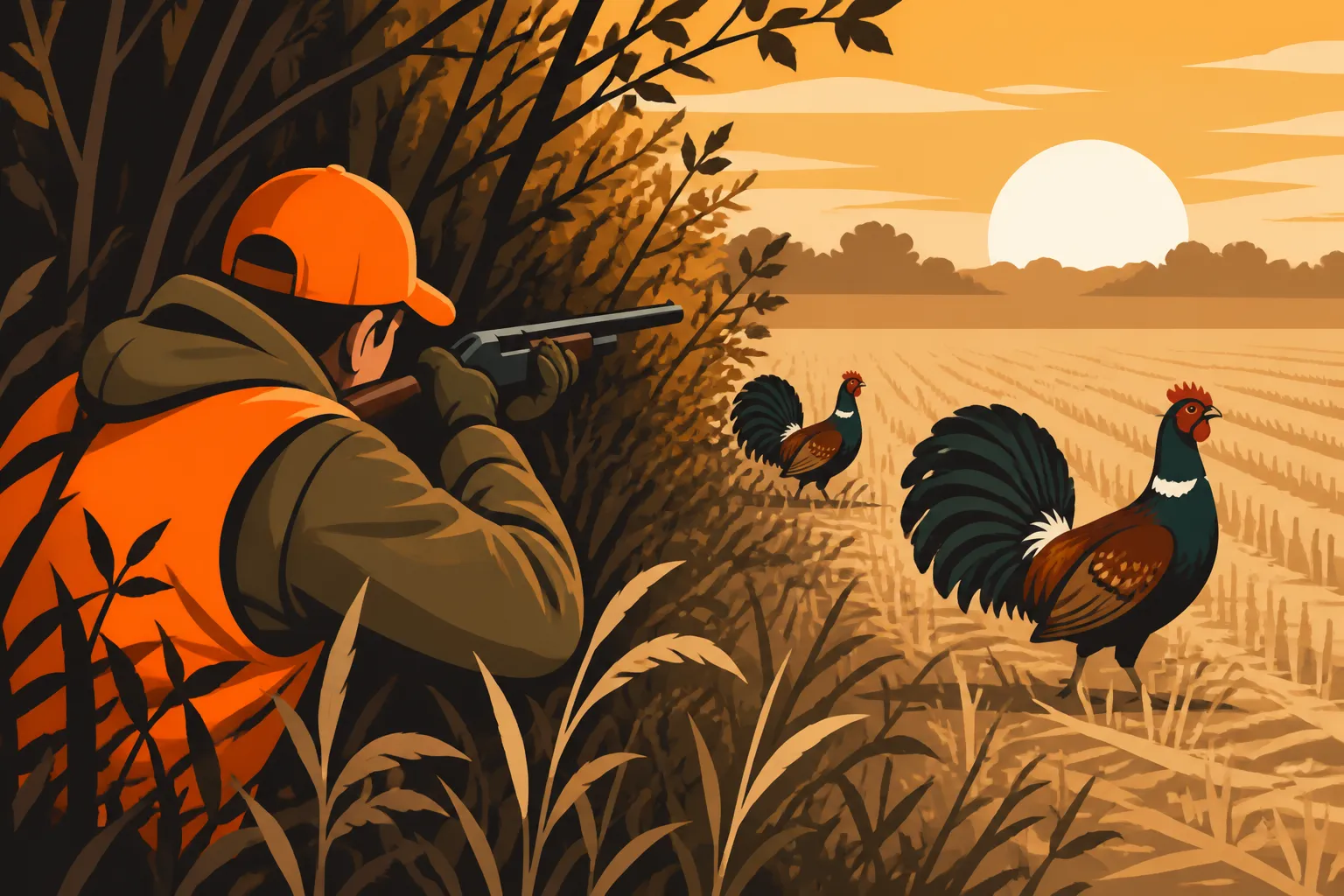
Hunting a shelterbelt by yourself can be incredibly rewarding, but it requires a different mindset than a group drive. Your biggest asset is stealth and patience. Roosters are masters of the run, and if you go crashing through, you'll likely push them out the end before you ever get a shot.
The best approach is often to move slowly and deliberately, almost like still-hunting for deer. Take a few steps, then pause. Listen for rustling, watch for subtle movements in the thick cover. Those pauses can make a nervous rooster think the danger has passed, or make it impatient enough to hold tight rather than run. When it does, your sudden resumption of movement might trigger a flush.
Try to work into the wind if possible. This gives your scent, and your dog's, the best chance to reach the birds. It also helps you hear those subtle sounds of a pheasant moving through the brush. Focus on working both sides of the belt, especially the edges where birds often stage or try to slip out. If the belt is narrow, zigzagging through it can ensure you cover all the ground.
A good flushing dog, or even a well-behaved retriever, is an absolute game-changer for solo hunters. A dog's nose can find birds you'd walk right past, and their energy can convince a running rooster to finally take to the air. Without a dog, you need to be even more vigilant, relying on your eyes and ears. Consider stopping directly in front of the densest cover for an extended period; sometimes, the perceived threat of you being stationary is enough to make a hidden rooster nervous and flush. For more on canine companions, check out "Running Pointing Dogs on Minnesota Pheasants".
Group Tactics: Pushing and Blocking
When you have a few friends and dogs, shelterbelts are ideal for the classic "pusher and blocker" strategy. This method effectively blankets the cover, minimizing a rooster's ability to run out of sight.
Here’s how it works:
- Pushers: These hunters walk through the length of the shelterbelt. Their goal is to move the birds toward the blockers. They should spread out, typically 10-20 yards apart, depending on the density of the cover, making noise and covering all lanes. Dogs can be invaluable here, working the cover ahead and to the sides of the pushers. The pushers should maintain a consistent, steady pace.
- Blockers: These hunters position themselves silently at the end of the shelterbelt, forming a line across the anticipated escape route. Their job is to intercept any birds that run out of the cover. It’s crucial that blockers get into position quietly and remain absolutely still, often tucked into adjacent cover if available, until the birds are pushed to them.
Communication is paramount in a group hunt. Before you start, discuss your plan, assign roles, and agree on safety protocols. Everyone needs to know where others are at all times, especially regarding shooting lanes. Never swing on a bird if there's any doubt about where your partners are positioned. When planning your approach, consider the length and thickness of the shelterbelt. A shorter, very dense belt might only need one or two blockers, while a long, open belt might require more. For longer belts, you might even consider "leap-frogging" blockers, where some pushers become blockers halfway down, and vice-versa.
| Tactic | Best For | Pros | Cons | Key Considerations |
|---|---|---|---|---|
| Solo Hunter | Shorter, less dense belts; stealthy approach | Maximizes individual control; focuses on specific bird behavior | Higher chance of birds running past; requires more self-reliance and patience | Slow, methodical pace; use of a dog is highly recommended; focus on wind direction |
| Group (Push/Block) | Longer, denser belts; multiple hunters | Efficiently covers large areas; minimizes running birds; higher success rate | Requires good communication; potential for safety concerns if not well-coordinated; less stealthy | Clear roles (pushers/blockers); established shooting lanes; constant communication |
Optimal Timing and Conditions
Pheasants adapt their behavior to weather and time of day, and understanding this can significantly increase your odds.
Early in the season, when the weather is mild and cover is abundant, pheasants might be found anywhere, but they'll still use shelterbelts for security, especially during midday loafing periods. As the season progresses, however, and temperatures drop, shelterbelts become absolutely critical.
Cold, windy days are prime times to hit shelterbelts. Birds seek refuge from the elements, concentrating in the densest parts of the cover. A brutal northwest wind or a day with single-digit temperatures will push birds deep into these protected strips. You’ll find them bunched up, reluctant to leave their sanctuary, which can lead to explosive flushes. Similarly, hunting after a fresh snowfall can be incredibly productive. Snow makes tracks visible, allowing you to confirm birds are present, and often concentrates them further. If the snow is deep, it can also hinder their running, making them more likely to flush. If you're out late in the year, be sure to brush up on "Late-Season Pheasant Tactics in Deep Snow".
Also, consider the time of day. Early morning and late afternoon will often find birds moving to and from feeding areas. Midday, especially on cold days, is when they are most likely hunkered down in those thick shelterbelts, digesting and resting.
Essential Gear and Safety Considerations
Hunting shelterbelts often means dealing with thick cover, potentially running birds, and varying weather. Having the right gear and, more importantly, a strong commitment to safety, are non-negotiable.
The Right Shotgun and Loads
For pheasant hunting, most hunters opt for a 12-gauge or 20-gauge shotgun. Both are highly effective. The 12-gauge offers a bit more payload and a denser pattern, which can be advantageous on longer shots or when birds burst out quickly. The 20-gauge, being lighter and handier, is often preferred for navigating thick cover, especially if you're carrying it all day.
When it comes to chokes, a modified or improved cylinder is usually ideal. In dense shelterbelts, shots are often close and fast, so a tight choke can result in missed birds or overly shredded meat. A more open choke allows your pattern to spread quickly, increasing your chances of connecting with a fast-flying rooster at close range. If you anticipate longer shots at the end of a drive, you might consider a modified choke in your second barrel, or if using an over/under or side-by-side.
For loads, shot sizes 4, 5, or 6 are generally excellent for pheasants. Number 5 shot is a fantastic all-around choice. Remember, if you're hunting on federal Waterfowl Production Areas (WPAs) or certain other designated public lands, you'll need to use non-toxic shot, like steel, bismuth, or tungsten-matrix. Always check the regulations for the specific area you plan to hunt to ensure compliance. A quick review of "Where Nontoxic Shot Is Required in Minnesota" will keep you on the right side of the law.
Clothing and Footwear for Tough Cover
Shelterbelts, by their nature, are thick. You're going to encounter thorns, tangled branches, and likely some wet, mucky ground. Your clothing needs to be tough, protective, and highly visible.
- Blaze Orange: This is non-negotiable, especially when hunting with a group. Minnesota law requires hunters to wear specific amounts of blaze orange or blaze pink. This ensures you're easily seen by other hunters, drastically reducing the risk of accidents.
- Brush Pants or Chaps: Invest in a good pair of brush pants or chaps made from durable material like waxed cotton or ballistic nylon. They will save your legs from countless scratches, pokes, and tears from multiflora rose, honeysuckle, and other thorny vegetation. Trying to hunt shelterbelts in regular jeans is a recipe for misery.
- Waterproof Boots: You'll likely be slogging through dew-soaked grass, muddy ditches, or even light snow. Good, waterproof boots with ankle support are crucial for comfort and safety. Consider boots with good traction for potentially uneven ground. If you’re looking at what footwear works best in similar Minnesota terrain, read up on "Boots for Walking Minnesota Popple Cuts".
- Layering: Minnesota weather is famously fickle. Dress in layers so you can adjust to changing temperatures. A good base layer, a mid-layer for insulation, and a water-resistant outer layer are standard.
Crucial Safety Rules
Pheasant hunting is an incredibly safe sport, but that's because responsible hunters adhere to strict safety guidelines.
- Know Your Target and Beyond: This is the golden rule of firearm safety. Especially in a group hunt within a shelterbelt, you must always be aware of where your partners are. Never shoot at a bird flying low or towards another hunter. Be aware of homes, roads, or livestock beyond the shelterbelt.
- Communicate Constantly: In a group hunt, talk to each other. Call out "bird left!" or "coming your way!" Let others know when you’re crossing a fence, or when you've spotted movement.
- Unload and Be Safe at Obstacles: When crossing fences, jumping ditches, or navigating particularly tricky terrain, unload your firearm and open the action. Pass the unloaded gun to a partner, or lean it securely against a fence before you cross.
- Respect Property Lines: Many productive shelterbelts are on private land. Always confirm property boundaries before you start hunting. Mapping apps like GoHunt can clearly delineate public and private land, showing you exact boundaries and often landowner names. This is especially helpful if you’re unsure if you’re on Walk-In Access (WIA) land or need to "Asking a Minnesota Farmer for Permission".
- No Alcohol While Hunting: This should go without saying, but never mix alcohol or impairing substances with hunting. Your focus and judgment need to be 100% at all times.
Mastering Shelterbelts: Challenges and Advanced Tips
Even with the right strategy and gear, pheasants in shelterbelts can present unique challenges. Learning to anticipate and adapt to their behavior is what separates a good hunter from a truly successful one.
Dealing with Running Roosters
The running rooster is arguably the pheasant hunter's greatest nemesis. These birds are built for speed on the ground, and in the linear cover of a shelterbelt, they can often outpace hunters and even dogs.
Signs of running birds include:
- Your dog acting "birdy" but not flushing, instead following a scent line down the belt.
- Seeing subtle movements in the underbrush far ahead of you, but no flush.
- Finding fresh tracks, especially after a snow, heading toward the end of the belt.
If you suspect birds are running, you need to adjust quickly.
- Flanking: If you have multiple hunters, one or two can try to quickly get ahead and flank the running bird, cutting off its escape route. This requires speed and good communication.
- Circling Back: Sometimes, a bird will double back on its own tracks. If you push through and nothing flushes, circle back to where you last saw or scented the bird and try a different approach.
- Stop and Go: For solo hunters, the stop-and-go tactic is even more critical when birds are running. Pause for longer periods. Let the bird think you've passed, then surge forward. This unpredictability can make them hold tight or flush.
- Patience and Persistence: Ultimately, dealing with running birds often comes down to sheer persistence. Keep working the cover. Eventually, they might run out of real estate, or get confused enough to hold.
Navigating Different Shelterbelt Compositions
Shelterbelts aren't uniform. Their composition can vary wildly, and each type demands a slightly different approach.
- Dense Conifer Belts: These are the gold standard for pheasants, offering incredible thermal and escape cover. Hunters often need to be aggressive in these, pushing hard to get birds moving. Expect shots to be quick and close. If hunting with a dog, ensure they are disciplined enough not to get lost in the thick stuff.
- Mixed Deciduous and Shrub Belts: These offer good cover, but might be less dense at ground level than conifer belts. Birds might be more inclined to flush earlier or hold less tightly. Pay attention to the densest shrub patches within these belts, as that's where birds will concentrate.
- Sparse or Single-Row Belts: These are less likely to hold birds for long, but they can still be used as travel corridors. Work them quickly, as birds will likely run the length or cross to better cover. They might also hold a lone rooster, particularly on an overcast or mild day.
Always try to use the wind to your advantage, regardless of the composition. Pushing into the wind helps you, your dog, and can sometimes disorient a flushing bird slightly, giving you an extra fraction of a second to react. Conversely, if you're blocking, sometimes setting up downwind can give you an edge, as birds might fly into the wind when flushed, bringing them closer to your position.
Finding Undisturbed Shelterbelts
Public land often receives a lot of pressure, especially during opening weekend and the early season. Roosters on pressured public ground quickly learn to run or flush wild. The trick is to find those overlooked gems.
- Look for Less Accessible Belts: On public land, don't just hunt the belts right next to the parking lot. Hike deeper, or look for belts that are surrounded by thick sloughs or difficult terrain. Many hunters won't put in the extra effort, leaving these spots undisturbed. Reading up on "Finding Ground Others Walk Past" can offer more insights into this strategy.
- Private Land Permission: This is often where the real trophies lie. Many farmers have shelterbelts on their property, often un-hunted or lightly hunted. A polite knock on a door, with a respectful request for permission, can open up a world of opportunities. Discussing "Asking a Minnesota Farmer for Permission" thoroughly beforehand can increase your chances of success.
- Scout Smarter: Use those mapping tools (like GoHunt!) to find smaller, isolated shelterbelts that might not look like much on a statewide map but could be holding birds simply because no one else is bothering to check them. Look for shelterbelts that are a good distance from roads or major access points. The more effort it takes to get to, the less pressure it likely receives.
Remember, every shelterbelt is a unique puzzle. The more you hunt them, the better you’ll become at reading the cover, anticipating the birds, and ultimately, celebrating that satisfying cackle of a flushed rooster.
Disclaimer
Please remember that hunting regulations, seasons, and public land access rules can change. Always consult the latest official Minnesota Department of Natural Resources (DNR) regulations before heading afield. Safety should always be your top priority.