Minnesota Turkey Harvest Numbers
For many of us, the spring woods of Minnesota hold a special kind of magic. The anticipation of a gobbler thundering on the roost, the crisp air, and the sheer challenge of outsmarting one of these wary birds is what keeps us coming back year after year. But let's be honest, there are seasons when it feels like the turkeys are everywhere, and others where they're as elusive as a phantom. This guide will dive deep into Minnesota's turkey harvest numbers, helping us understand why some years feel tougher than others and what these statistics really mean for our hunting strategies.
Understanding Minnesota's Turkey Harvest Data
When we talk about turkey hunting, it's easy to get caught up in our personal experiences – the birds we saw, the shots we missed, or the ones we brought home. But behind all those individual stories is a wealth of data that the Minnesota Department of Natural Resources (DNR) diligently collects. These numbers aren't just dry statistics; they're a window into the health of our wild turkey population and the overall hunting success across the state. Understanding how this data is gathered and interpreted is crucial for any hunter who wants to be more informed and, ultimately, more successful.
How Harvest Data is Collected
The process of collecting turkey harvest data in Minnesota is actually quite straightforward, relying heavily on hunter participation. After a successful hunt, every hunter in Minnesota is legally required to register their harvested turkey. This can be done online, by phone, or at designated registration stations during the prescribed time frames. When you register your bird, you'll provide key information such as the date of harvest, the permit area where you hunted, and often details about the bird itself, like whether it was a male or female, and if it had a beard or spurs.
This individual registration data is then compiled by the DNR. Each entry adds a piece to a much larger puzzle, allowing the state to track harvest trends over time, assess the distribution of successful hunts, and monitor the overall health of the turkey population. Without this mandatory reporting, wildlife managers would be flying blind, unable to make informed decisions about season structures, bag limits, and conservation efforts. It's a fundamental step that empowers the DNR to effectively manage our cherished wild turkey resource.
Interpreting the Numbers: What They Mean for Hunters
Once the raw data is collected, the real work of interpretation begins. For hunters, these numbers offer insights far beyond a simple "how many birds were shot." A rising harvest number in a specific permit area, for instance, might indicate a thriving local population and potentially less pressure on individual birds, suggesting a good area to focus on. Conversely, a consistent decline could signal a need for changes in hunting strategy, or perhaps a shift to a different area altogether.
The data also helps us understand the effectiveness of different hunting periods. For example, knowing the harvest numbers for Hunting an Early Turkey Period in Minnesota versus a later one might influence your application strategy for a specific period. These statistics can reveal success rates, which aren't just about bragging rights; they can help manage expectations. If the statewide success rate is 20%, and you're new to turkey hunting, knowing that can help you appreciate a successful hunt even more, or not get discouraged if you come up empty-handed. It’s about setting realistic goals and understanding the broader context of your hunting experience.
Limitations and Nuances of Harvest Statistics
While harvest numbers are incredibly valuable, it's important to remember they don't tell the whole story. Several factors can influence the reported harvest that aren't directly tied to turkey population health. For example, a year with exceptionally mild weather during the spring season might see higher hunter participation and therefore higher harvest numbers, even if the turkey population itself hasn't necessarily grown. On the flip side, a brutal spring with late snow or heavy rain could depress harvest numbers simply because hunters stay home or conditions make hunting more difficult.
Another nuance is that harvest data reflects hunter success, not necessarily the total population size. A lower harvest might mean fewer birds, but it could also mean more hunting pressure, or that hunters are simply having a harder time locating or calling birds. It’s also important to consider potential reporting discrepancies. While registration is mandatory, a small percentage of harvested birds might go unreported, skewing the total slightly. However, the DNR uses various methods, including hunter surveys, to cross-reference and refine their estimates, minimizing these limitations and striving for the most accurate picture possible.
Factors Influencing Annual Turkey Harvest
The number of turkeys harvested each year isn't a random figure; it's the result of a complex interplay of environmental, biological, and human factors. From the brutal cold of a Minnesota winter to the choices made by the DNR, everything plays a role in how many birds end up in our freezers. Understanding these influences can give us a clearer picture of why certain years are banner years, and others are a bit more challenging.
Weather Conditions and Their Impact
Mother Nature plays an enormous role in determining turkey harvest success. A harsh winter, especially one with deep, persistent snow and prolonged cold, can significantly impact turkey survival. Turkeys are resilient, but extended periods of deep snow can make foraging difficult, leading to starvation or increased vulnerability to predators. Conversely, mild winters generally mean higher overwinter survival rates, leading to more birds available for the spring season.
Spring weather during the hunting season itself is equally critical. Persistent rain, high winds, or unusually cold temperatures can dramatically reduce hunter effort and success. Turkeys tend to be less active and vocal in inclement weather, making them harder to locate and call. A beautiful, warm spring with calm mornings, on the other hand, often translates to more hunters in the woods and more vocal gobblers, generally leading to higher harvest numbers. When planning your hunt, or even applying for permits, checking long-range forecasts, or considering the typical weather patterns for each Minnesota Spring Turkey Zones and Periods can give you an edge.
Population Dynamics and Management Decisions
At the heart of harvest numbers is the wild turkey population itself. Factors like nesting success, poult survival, and disease prevalence all contribute to the overall health and size of the flock. A strong hatch in the spring, followed by good summer poult survival, means more young birds maturing into the hunting population in subsequent years. Conversely, poor hatches or high poult mortality due to predators or severe weather can lead to fewer turkeys overall.
The DNR's management decisions are also crucial. They analyze population data, harvest trends, and hunter feedback to set season dates, establish permit areas, and determine bag limits. Changes in these regulations, such as increasing or decreasing the number of available tags in a specific zone, or altering season lengths, directly influence the potential harvest. For example, if the DNR identifies a permit area with a rapidly growing population, they might increase permit quotas to allow for more harvest, helping to manage the local flock. These decisions are carefully made to ensure sustainable hunting opportunities for future generations, drawing on data that often shows how factors like habitat changes or disease prevalence, such as those that impact Minnesota Turkey Population Trends, influence the big picture.
Hunter Numbers and Effort
It might seem obvious, but the sheer number of hunters and the effort they put in directly impacts the annual harvest. More hunters in the woods, especially during peak activity times, often leads to a higher overall take. Similarly, if hunters are dedicating more days to hunting, or are more persistent in their pursuit, the harvest numbers are likely to reflect that increased effort.
Economic factors can also subtly influence hunter effort. During prosperous times, more people might have the disposable income and vacation time to dedicate to hunting trips. Conversely, tough economic conditions could see fewer hunters in the field or shorter hunting trips. The rise of sophisticated scouting tools, like those offered by GoHunt, might also contribute to increased efficiency, allowing hunters to pinpoint better areas more quickly, thus potentially increasing individual success and contributing to the overall harvest. This also ties into how many people decide to apply for Minnesota Spring Turkey License Cost each year. The more people that are out there, the more chances there are for birds to be harvested, regardless of the overall turkey population size, up to a certain point.
Historical Trends in Minnesota Turkey Harvest
Minnesota's wild turkey story is truly a conservation success saga. From a state with virtually no wild turkeys for decades, we now boast a thriving population across much of the landscape. Examining the historical harvest numbers paints a vivid picture of this journey, revealing how far we've come and the management challenges that still lie ahead.
The Restoration Success Story
It’s easy to forget that just a few generations ago, wild turkeys were completely absent from Minnesota. They were extirpated from the state by the early 1900s due to unregulated hunting and habitat loss. The incredible comeback story began in the late 1960s with initial reintroduction efforts, using birds trapped in other states. These early releases, particularly in the southeastern bluff country, laid the foundation for the healthy flocks we enjoy today.
As these initial populations took hold and expanded, the DNR began carefully opening limited hunting seasons. The very first modern Minnesota turkey hunt was held in 1978, a small, highly restricted season that marked a monumental achievement. From that point, harvest numbers gradually climbed as the turkey population flourished and expanded its range. This period saw rapid growth in both bird numbers and hunter opportunities, truly showcasing one of North America's most impressive wildlife restoration efforts. It's a testament to dedicated conservation work and the resilience of this magnificent game bird.
Peaks and Valleys Over the Decades
While the overall trend has been one of growth, looking at the historical harvest data reveals natural fluctuations – peaks and valleys that reflect various influences. In the early years, the growth was exponential as populations boomed and expanded into new habitats. By the 1990s and early 2000s, harvest numbers were consistently strong, reflecting a robust and widespread population.
However, like any wild population, turkeys are subject to environmental pressures. Some years might see a slight dip in harvest due to severe winters, poor nesting conditions, or an outbreak of disease in a localized area. For example, a particularly cold, wet spring could lead to reduced poult survival, which then impacts the number of adult birds available for hunting a year or two down the line. Wildlife managers closely monitor these fluctuations, using them as indicators of population health and adjusting regulations as needed. Comparing Minnesota Turkey Harvest Numbers over different decades shows how resilient these birds are, but also how susceptible they can be to external factors.
Recent Stability and Future Outlook
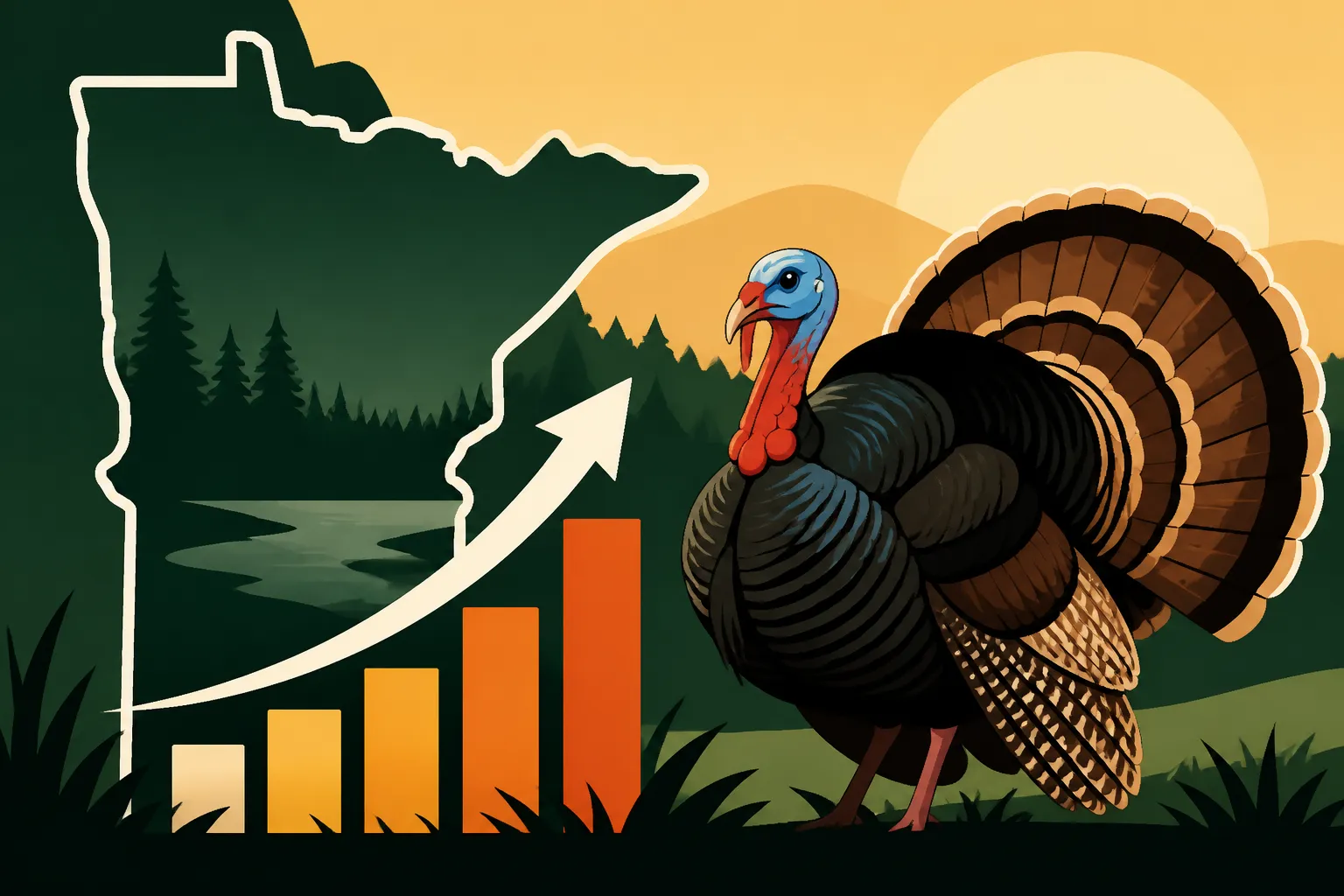
In more recent years, Minnesota's turkey harvest numbers have largely stabilized after the rapid expansion phase. This doesn't mean the population isn't thriving, but rather that it has filled much of its suitable habitat across the state. While there might still be minor year-to-year variations, significant dramatic increases in statewide harvest are less likely unless new, substantial habitat becomes available or management strategies drastically change.
The future outlook for Minnesota turkey hunting remains positive. The DNR continues to manage the population through careful regulation, habitat improvement projects, and monitoring for diseases like Avian Influenza. Hunters play a vital role in this future, not just through license purchases that fund conservation, but also through responsible hunting practices and accurate harvest reporting. Organizations like GoHunt provide valuable tools that help hunters stay informed about these trends, ensuring they can contribute positively to the future of turkey hunting in Minnesota while maximizing their own opportunities.
Harvest Numbers by Season and Zone
When we drill down into the turkey harvest data, it quickly becomes apparent that not all hunts are created equal. The time of year you hunt, and precisely where you hunt within Minnesota, can have a profound impact on your chances of success and what kind of numbers you're contributing to. Let's break down these distinctions.
Spring vs. Fall Harvest Differences
The most significant distinction in turkey harvest numbers in Minnesota comes down to the season: spring versus fall. Spring turkey hunting is by far the most popular and productive season. This is when gobblers are actively breeding, strutting, and vocalizing, making them susceptible to calling tactics. Consequently, spring harvest numbers are consistently much higher than fall numbers. Hunters are primarily targeting adult gobblers, and success rates, while variable, tend to be higher due to the birds' predictable breeding behaviors.
Fall turkey hunting, in contrast, focuses more on breaking up flocks and calling birds back together, often targeting any turkey, male or female. This season is less popular, and the tactics are different, leading to considerably lower overall harvest numbers. Many hunters will opt for Fall Turkey Tactics in Minnesota as a bonus hunt, or as a way to fill the freezer, but it doesn't draw the same crowds or produce the same volume of harvested birds as the spring season. The data clearly reflects this difference, highlighting the distinct experiences and opportunities each season offers.
Regional Variations Across Minnesota's Permit Areas
Minnesota is a large and diverse state, and turkey populations, as well as hunter success, vary significantly by region. The traditional stronghold for wild turkeys has always been the bluff country of southeastern Minnesota, and this region often produces the highest harvest numbers per square mile. Areas like the Whitewater WMA and the Root River Valley consistently offer excellent hunting. These regions have ideal habitat, including a mix of hardwoods, agriculture, and rugged terrain that turkeys thrive in.
As you move north and west into the state's farmland and big woods regions, turkey densities can become more scattered, and harvest numbers generally reflect this. While turkeys are present, and often thriving, in many central and western Minnesota counties, the sheer volume of birds and therefore the harvest potential might not rival the southeast. It's crucial for hunters to look at the specific permit area data from the DNR to gauge local success. Understanding Where Minnesota Turkeys Are Densest can guide your permit application and scouting efforts.
Breakdown by Turkey Period
Within the spring season, Minnesota further segments hunting opportunities into several distinct periods, typically A through G. These periods are staggered from mid-April through the end of May. The harvest numbers often show a clear trend across these periods. The earlier periods (A and B) often see high hunter participation and some of the highest harvest numbers, largely because birds are typically very vocal and actively breeding. However, these periods can also be impacted by late spring snow or cold.
As the season progresses into the later periods (C, D, E, F, G), harvest numbers can sometimes dip slightly. This might be due to reduced hunter pressure, as many hunters have already filled their tags, or because gobblers become "henned up" and less responsive to calls as hens begin nesting. However, the later periods can still offer excellent hunting for persistent individuals, especially after the peak breeding frenzy when gobblers might be more willing to search for lonely hens. Knowing these trends can help you decide if Hunting an Early Turkey Period in Minnesota or a later one is best for your schedule and preferred tactics.
| Spring Turkey Period | Typical Dates (Approx.) | Hunter Numbers (Relative) | Harvest Numbers (Relative) | Success Rate (Average Range) | Primary Advantages | Potential Challenges |
|---|---|---|---|---|---|---|
| A (Early) | Mid-April | High | High | 20-30% | Very vocal birds, less foliage | Cold weather, snow, wary birds |
| B (Early-Mid) | Late April | High | High | 20-28% | Active breeding, good weather chances | Moderate foliage, wary birds |
| C (Mid) | Early May | Medium-High | Medium-High | 18-25% | Consistent activity, increasing foliage | Hen-up birds, more foliage |
| D (Mid-Late) | Mid-May | Medium | Medium | 15-22% | Good weather, less pressure | More foliage, less consistent gobbling |
| E (Late) | Late May | Low-Medium | Low-Medium | 12-18% | Least pressure, fully leafed out | Sporadic gobbling, heavy foliage |
| F (Late) | Late May | Low | Low | 10-15% | Very low pressure, good weather | Heavily wooded, sporadic gobbling |
| G (Late) | Late May – Early June | Very Low | Very Low | 8-12% | Minimal pressure, last chance | Very sporadic gobbling, thick foliage |
Note: These are generalized figures and can vary significantly year to year and by permit area.
Analyzing Success Rates and Hunter Effort
Harvest numbers on their own are helpful, but when you pair them with data on hunter participation, you can truly understand success rates and the relationship between effort and outcome. This deeper analysis offers valuable insights into hunter behavior and the quality of the hunting experience.
Calculating Hunter Success Rates
The hunter success rate is a vital statistic for understanding turkey hunting in Minnesota. It's typically calculated by taking the total number of turkeys harvested and dividing it by the total number of turkey hunters (or licenses sold) for a given season or period. For example, if 10,000 hunters participate in a spring season and 2,500 turkeys are harvested, the success rate is 25%. This figure gives hunters a realistic benchmark. If the statewide average is 20%, and you manage to bag a bird, you're doing better than most!
These rates can fluctuate based on all the factors we've discussed: population health, weather, and hunter pressure. A declining success rate might indicate a challenging year for birds, or perhaps simply more new, less experienced hunters entering the field. The DNR monitors these success rates closely, as they are a key indicator of hunting quality and can influence future season structures. This kind of data can be especially useful when considering how to approach areas with high hunter numbers.
Relationship Between Effort and Opportunity
There's a direct, almost universal, relationship between hunter effort and the opportunity for success. Simply put, the more time you spend in the woods, the higher your chances of encountering and harvesting a turkey. This is particularly true for turkey hunting, where patience, persistence, and strategic movement are key. Hunters who scout diligently before the season, put in long hours on the ground, and are willing to adapt their tactics based on bird behavior are generally more successful.
While some lucky hunters might bag a bird on their first morning, the data often shows that those who hunt multiple days, or spend more time scouting, consistently have higher success rates. This means understanding that a successful hunt isn't always about the highest bird population, but also about the individual hunter's dedication. Tools that help hunters with pre-season scouting, like those offered by GoHunt, can effectively increase "effort" by making it more efficient, allowing hunters to maximize their time in the field. This can mean the difference between a frustrating season and filling your tag.
Impact of Public Land Pressure on Harvest
Minnesota offers a wealth of Public Hunting Land in Minnesota, but these accessible areas can also experience significant hunter pressure, especially during the early spring periods. High hunter numbers on public land can sometimes lead to lower individual success rates, even if the overall harvest for that area remains robust. When multiple hunters are vying for the same birds, turkeys can quickly become "call shy" or move into thicker cover, making them harder to work.
Hunters often report that birds on heavily pressured public land require different tactics than those on private land or less-trafficked public parcels. This might involve being more aggressive with locator calls early, but then becoming much quieter and more patient. It could also mean moving further off main trails, or trying Run-and-Gun Turkey Tactics on Public Land to cover more ground and find unpressured birds. The harvest data for specific public land areas, if available, can sometimes show lower success rates compared to nearby private land, underscoring the challenge and the need for adaptable strategies when hunting areas like Carlos Avery WMA or Whitewater WMA.
What Recent Harvest Numbers Tell Us About the Population
Looking at the most current turkey harvest numbers isn't just about celebrating success; it's about understanding the health and future of Minnesota's wild turkey population. These statistics act as vital indicators for wildlife managers and provide valuable context for hunters planning their next outing.
Indicators of a Healthy or Declining Flock
Consistent, stable harvest numbers over several years, especially when hunter effort remains consistent, generally indicate a healthy and robust turkey population. This means that overwinter survival is good, nesting success is sufficient, and poult survival is strong enough to replenish the birds harvested each season. A healthy flock can withstand hunting pressure and continue to provide recreational opportunities.
Conversely, a sustained decline in harvest numbers, without a corresponding drop in hunter effort or severe weather, can be a red flag. This might suggest issues like declining habitat quality, increased predation, disease outbreaks, or consecutive years of poor nesting success. Wildlife managers would then investigate these factors and consider adjustments to hunting regulations, such as reducing bag limits or shortening seasons, to protect the population. This kind of monitoring is essential, especially when we look at long-term trends in Minnesota Turkey Population Trends.
DNR's Perspective on Harvest Management
The Minnesota DNR uses harvest data as a cornerstone of its wild turkey management program. Their primary goal is to maintain a healthy, sustainable turkey population while providing ample hunting opportunities. They don't just look at total numbers, but also factors like age structure (the ratio of jakes to adult gobblers harvested), and geographic distribution of success. For example, if they see a significant drop in the number of adult gobblers and an increase in jakes harvested, it could indicate that older birds are becoming scarcer, potentially signaling a population shift or a need to adjust future management.
The DNR constantly reviews this data, along with biological surveys and environmental factors, to inform their decisions regarding permit area designations, season lengths, and whether to make changes to the number of available tags for specific periods or zones. Their approach is data-driven, ensuring that hunting remains a sustainable activity that benefits both the hunters and the wildlife.
Adapting Your Strategy Based on Data
For the savvy Minnesota turkey hunter, paying attention to the harvest numbers and trends can significantly improve your strategy. If recent data shows that a particular permit area has had strong harvests, it might be worth targeting. Conversely, if an area is consistently showing low success rates, it might be time to broaden your horizons and explore new territory, perhaps by leveraging mapping tools provided by companies like GoHunt to scout different WMAs or public forest land.
Understanding which periods typically yield the best results can also influence your permit application strategy. If the early periods consistently have higher success rates, applying for an A or B tag might give you a statistical edge, although it also means facing more competition. Alternatively, if you prefer less crowded woods, the later periods, while statistically lower in harvest, might offer a more solitary and rewarding experience. This detailed information allows you to make informed decisions, transforming you from a hopeful hunter into a strategic one, whether you're working a field edge or trying to pattern a gobbler that's already heard every call in the book. This means thinking about everything from Calling a Minnesota Gobbler Off the Roost to Decoy Placement for Pressured Minnesota Birds.
Disclaimer
This guide is intended for informational purposes only and should not be considered legal advice. Hunting regulations, season dates, and permit area rules are subject to change. Always consult the official Minnesota Department of Natural Resources (DNR) regulations and publications before planning and participating in any hunting activity. It is the hunter's responsibility to know and follow all applicable laws.