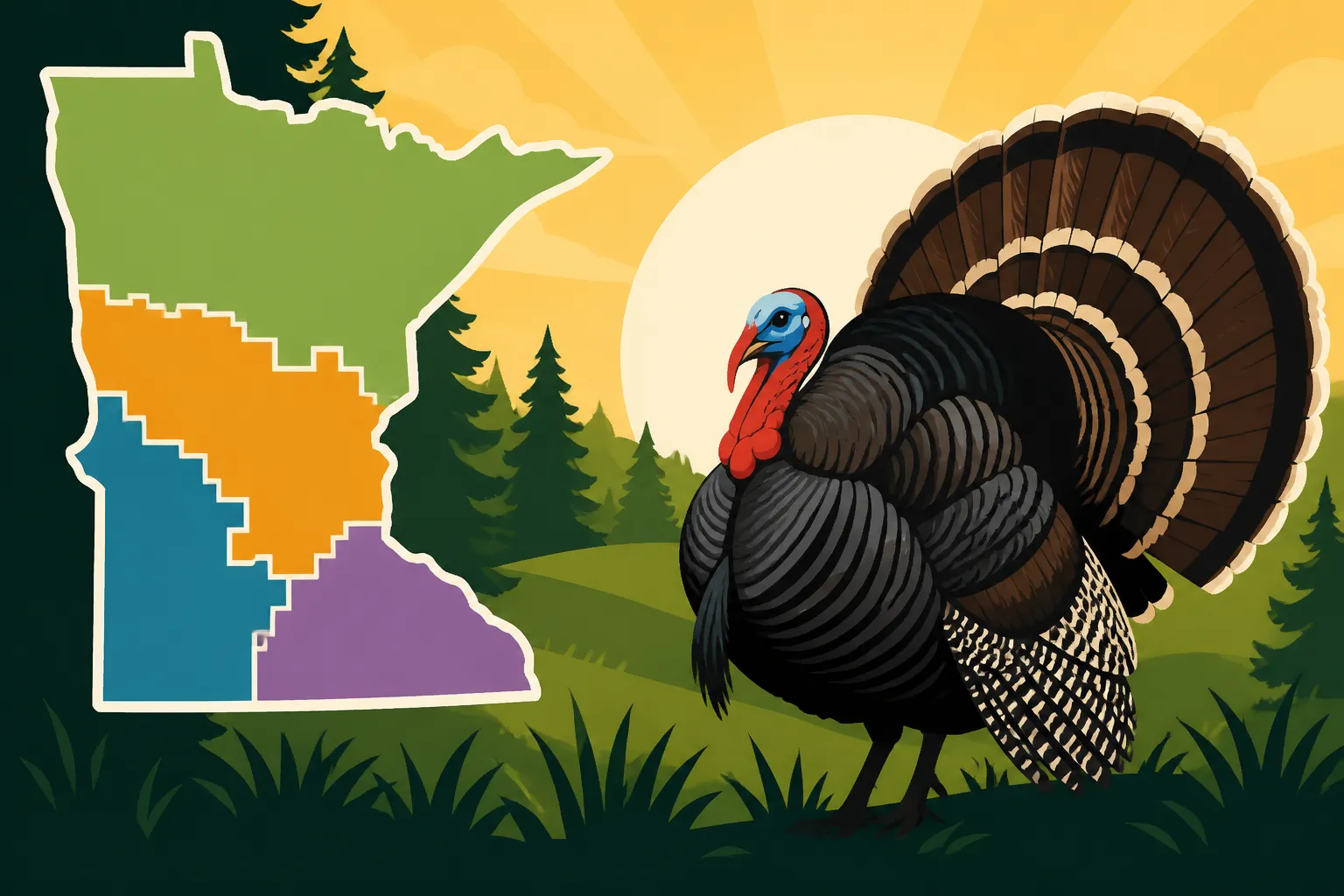
Minnesota Spring Turkey Zones and Periods
The spring turkey season in Minnesota can feel like a puzzle, especially when you're trying to figure out where you can hunt and when. Between the statewide zones and the various time periods, it's easy to get lost in the regulations and miss out on an application deadline or a prime hunting opportunity. This guide is here to break down Minnesota's spring turkey zones and periods, making sense of the system so you can plan your hunt with confidence and get those gobblers strutting.
Understanding Minnesota's Spring Turkey Lottery and Zones
Minnesota's approach to spring turkey hunting isn't a free-for-all; it's a carefully managed system designed to distribute hunting pressure and ensure a quality experience while protecting the turkey population. This means understanding the statewide framework, including the general system and specific lottery zones, is your first crucial step. Without it, you might find yourself showing up to a prime spot only to realize you don't have the right permit for that area or time.
The General Statewide System
For the most part, Minnesota operates on a general statewide system for spring turkeys, but with an important distinction: it's typically divided into "permit areas" rather than broad zones like some other states. These permit areas are where the lottery system comes into play. Most hunters will apply for a specific permit area and a specific hunting period. The Minnesota DNR manages these areas based on turkey populations, hunter success rates, and overall land access. While you might dream of hunting a particular tract of public land, if it falls within a lottery-controlled permit area, you absolutely need to secure a permit for that specific spot and time. It's a system that tries to give everyone a fair shot at hunting popular areas while still offering options for those who might prefer less crowded opportunities.
Designated Lottery Zones vs. No-Quota Areas
The real complexity comes when you differentiate between the designated lottery zones and the "no-quota" areas. Most of Minnesota's prime turkey habitat falls into a lottery system, particularly in the more populated central and southern regions, as well as specific wildlife management areas (WMAs). For these areas, you apply for a license and a specific hunting period, and you enter a drawing. If you're successful, you get an authorization to hunt that area during that period. It's a system designed to limit hunter numbers and ensure a high-quality experience.
However, many areas in the statewide zone operate under a "no-quota" system for some periods, especially the later ones. What this means is that if you don't draw a permit in the initial lottery, or if you simply prefer to wait, you can often purchase a leftover license for one of these no-quota zones or for the later hunting periods. This is a huge opportunity that many hunters overlook. If you're flexible with your hunting dates and locations, the no-quota options can be a fantastic way to still get out in the woods. It also provides a second chance for hunters who might have been unsuccessful in the initial lottery. The key is to stay informed about which areas and periods have leftover licenses available, usually starting in mid-March. Many hunters use resources like GoHunt to keep track of these dynamic availability updates.
Breaking Down the Seven Hunting Periods
One of the most distinctive features of Minnesota's spring turkey season is its division into seven separate hunting periods. This isn't just an arbitrary calendar choice; it's a strategic management tool designed to spread out hunters, reduce pressure, and provide varied hunting experiences throughout the spring. Each period has its own unique characteristics, opportunities, and challenges that can significantly impact your hunting strategy.
Why the Periods Exist and How They Function
The reason Minnesota implements "The Seven Minnesota Turkey Firearm Periods" is primarily to manage hunter density. Imagine if all turkey hunters could hit the woods on opening day. It would be a crowded, chaotic mess, leading to frustrated hunters and potentially over-pressured birds. By staggering the season into periods, the DNR ensures that different groups of hunters are in the field at different times, which helps distribute pressure across the landscape.
Each period typically runs for about four to five days, with new groups of hunters rotating in. For example, Period A might be the first week of April, followed by Period B, and so on, sometimes extending into late May. When you apply for your license, you choose your preferred permit area and period. If you're drawn, you're authorized to hunt only during that specific window in that specific area. This structure means you need to be strategic not just about where you hunt, but when you hunt, and how that timing aligns with your schedule and your preferred hunting style. It requires careful planning, often months in advance, to ensure you're applying for the period that gives you the best chance at success given your personal availability and hunting goals.
Early Periods (A, B, C) – Opportunities and Challenges
The early hunting periods, typically A, B, and C, are often the most coveted and therefore the hardest to draw in the lottery. Why? Because these periods coincide with the earliest stages of the spring breeding cycle. In late April and early May, gobblers are often still grouped up, highly vocal, and actively seeking hens. This can make them incredibly responsive to calls, and seeing large groups of birds in fields is not uncommon. The enthusiasm of the birds often makes for very exciting, action-packed hunting.
However, these early periods also come with their own set of challenges. Weather can be unpredictable in Minnesota during late April and early May, swinging from warm, sunny days to cold rain or even snow. Temperatures can fluctuate wildly, requiring versatile clothing layers. Furthermore, because hens are still very receptive, gobblers might be "henned up," meaning they are with actual hens and less inclined to leave their real-life companions for your calls. This can lead to frustrating scenarios where a gobbler answers every call but simply won't commit. Hunters in these periods need to be prepared for dynamic weather and ready to adapt their calling tactics if birds are with hens, focusing more on patience and strategic setups. Scouting plays a huge role here; knowing where birds are roosting and strutting can be key to success.
Late Periods (D, E, F, G) – Advantages and Tactics
While the early periods get a lot of hype, the late periods (D, E, F, and G) offer unique advantages that many experienced hunters appreciate, and they're often easier to draw in the lottery or available as leftover tags. By late May, many hens have been bred and are beginning to nest, which means gobblers are often "lonely" and actively searching for the remaining receptive hens. This can make them incredibly responsive to calls and far more willing to travel to investigate a yelp or gobble. You're less likely to encounter large groups of hens distracting a gobbler, and individual birds might be more predictable in their movements.
The weather is generally more stable and pleasant during these later periods, often meaning warmer, sunnier days that are perfect for spending long hours in the woods. While the peak "gobbling frenzy" might have passed, the increased responsiveness of single gobblers can lead to incredibly rewarding hunts. Tactics often shift to more aggressive calling, especially mid-morning when lone gobblers are actively cruising, and greater emphasis on patience and persistence. You might need to cover more ground or sit longer, but when a lonely gobbler finally commits, it's an experience unlike any other. This is also when you can employ tactics like "Run-and-Gun Turkey Tactics on Public Land" because birds are spread out and responsive.
Applying for a Spring Turkey License and Permit
Navigating the application process for a Minnesota spring turkey license and permit can feel a bit like wading through treacle, especially for first-timers or those unfamiliar with lottery systems. It’s crucial to understand the deadlines, the steps involved, and how your residency status impacts your chances, as missing a key date can mean missing the season entirely.
The Application Process and Deadlines
The initial application period for Minnesota's spring turkey lottery typically opens in early January and usually closes in early to mid-February. It's an important window to mark on your calendar because if you miss the deadline, you won't be able to apply for a permit in the initial drawing. Hunters apply online through the Minnesota DNR's website, where they can select their preferred permit area and up to three hunting period choices in order of preference. Many hunters utilize tools like GoHunt's application tracking features to ensure they don't miss these critical dates.
Once the application period closes, the DNR conducts a random drawing. Successful applicants are usually notified by mid-February to early March, often via email or by checking their DNR account online. If you're successful, your permit will be automatically attached to your hunting license. If you're unsuccessful in the lottery, don't despair! This is where the leftover license sales come into play. These are typically available on a first-come, first-served basis starting in mid-March, offering another chance to secure a tag, often for later periods or in less-pressured areas. Keeping an eye on the "Minnesota Spring Turkey Application Deadline" is paramount for anyone hoping to hunt these magnificent birds.
Resident vs. Non-Resident Application Considerations
Minnesota offers both resident and non-resident spring turkey licenses, but there are distinct differences in the application process and availability that non-residents need to be aware of. Residents generally have a higher chance of drawing a permit in the lottery, and their license costs are significantly lower. This is a common practice in many states, prioritizing in-state hunters who contribute directly to the state's conservation efforts through their taxes and fees.
Non-residents can apply for the same lottery permits, but their draw odds are typically lower, especially for the most popular early periods and permit areas. Furthermore, the "Minnesota Nonresident Turkey License Cost" is considerably higher. Non-residents often find their best opportunities by targeting less popular permit areas, later hunting periods, or by purchasing leftover licenses once they become available. It's not impossible for a non-resident to draw a prime tag, but managing expectations and having a backup plan for leftover licenses is a smart strategy. It's worth noting that if you're planning a non-resident hunt, carefully reviewing the regulations for specific permit area allocations for non-residents is always a good idea, as these can sometimes vary.
Understanding Preference Points
While Minnesota's turkey lottery doesn't operate with a complex preference point system like some other big game species, the concept of "Minnesota Turkey Preference and Leftover Tags" does play a subtle role. In some instances, for specific high-demand permit areas, if you are unsuccessful in the lottery, you might gain a slight edge in subsequent years' drawings. However, for most turkey permit areas, it's primarily a random lottery.
The more significant aspect of preference comes into play with the general understanding of demand. If you consistently apply for the most popular early periods (A, B, C) in well-known permit areas, your odds will naturally be lower. Hunters who are flexible and willing to apply for less popular areas or later periods often find greater success in drawing a tag. The real "preference" many hunters gain is through experience: learning which periods and areas have historically lower draw odds, or which areas consistently have leftover tags. Some hunters even intentionally skip the lottery to wait for leftover tags, preferring guaranteed access to a later period over the uncertainty of the lottery for an early one.
Navigating Specific Zone Rules and Exceptions
While the general statewide system covers most spring turkey hunting in Minnesota, there are specific rules and unique exceptions that every hunter needs to be aware of. Failing to understand these nuances can lead to frustrating encounters with regulations or missed opportunities. From specialized WMAs to the crucial distinction between public and private land, knowing these details is key to a smooth and successful hunt.
The Carlos Avery WMA Special Hunt Lottery
One of the most prominent examples of a specific zone rule is the special hunt lottery at Carlos Avery Wildlife Management Area. Located relatively close to the Twin Cities metro area, Carlos Avery is a highly sought-after destination for various game species, including turkeys. Due to its popularity and prime habitat, hunting pressure needs to be tightly controlled. This is why "Why Carlos Avery Needs a Lottery in A Season" is a critical consideration for many hunters.
Unlike other statewide lottery areas, Carlos Avery often has its own separate, highly competitive lottery, especially for the early "A" period. This means that even if you apply for a general statewide permit, you might need to make a separate application if your heart is set on Carlos Avery. The limited number of permits issued for this WMA ensures a more secluded and potentially higher-quality hunting experience for those lucky enough to draw a tag. Hunters interested in Carlos Avery need to pay close attention to the specific application deadlines and rules for this unique area, as they can sometimes differ from the general statewide lottery. It's a fantastic spot, but getting a permit requires diligent planning and a bit of luck.
Special Considerations for Public vs. Private Land
Whether you're hunting public or private land significantly impacts the rules and the overall experience in Minnesota. On public lands, such as Wildlife Management Areas (WMAs), State Forests, or federal lands like the Superior National Forest or Chippewa National Forest, you are generally free to hunt with a valid license and permit, adhering to all state and local regulations. However, public land often means dealing with increased hunter pressure, especially in popular areas or during early periods.
On private land, the rules shift considerably. You must obtain permission from the landowner before hunting. This isn't just a courtesy; it's a legal requirement in Minnesota. Without explicit permission, you are trespassing, which carries penalties. Many hunters find success by "knocking on doors" in Minnesota farm country or developing relationships with landowners over time. The benefit of private land is often less hunter pressure and potentially more consistent turkey populations, as landowners may manage their property with wildlife in mind. Before heading out, always be sure of the land ownership and have your permission, preferably in writing, readily available. This distinction is vital for ethical and legal hunting.
Mentored Youth Opportunities and Rules
Minnesota is a strong proponent of introducing youth to hunting, and the spring turkey season offers excellent opportunities through its mentored youth hunting rules. These rules are designed to allow young, often unlicensed, hunters to gain experience in the field under the direct supervision of an experienced adult mentor. Typically, the mentor must be at least 18 years old and possess a valid Minnesota hunting license.
The mentored youth program allows a youth (who meets specific age criteria, usually under 16) to hunt without needing their own lottery permit, as long as they are directly supervised by an adult mentor who possesses an unfilled turkey license for the same permit area and period. This means the youth can harvest a bird under the mentor's tag. This is an incredible way to share the outdoors and teach responsible hunting practices. It removes some of the barriers for youth entry, like the lottery system, and focuses on education and experience. Many families plan their spring turkey hunts around these youth opportunities, prioritizing teaching the next generation. The "Minnesota Hunter Safety Requirements" are still important for future independent hunting, but the mentored program provides an excellent entry point.
Maximizing Your Success Within Your Assigned Period
Once you've navigated the lottery and secured your permit for a specific period, the real work—and fun—begins. Each period, from the early gobbling frenzy to the later, more solitary hunts, demands slightly different strategies. Understanding how to adapt your scouting, calling, and setup according to the unique characteristics of "When the Minnesota Turkey Periods Run" is crucial for punching your tag.
Early Season Scouting and Roosting Strategies
For those fortunate enough to draw an early period (A, B, or C) tag, your success often hinges on meticulous pre-season scouting and effective roosting strategies. In late April and early May, gobblers are very much on a schedule, often roosting in consistent locations and flying down to strutting zones or feeding areas. Your goal is to pinpoint these patterns.
Start scouting a week or two before your season opens. Drive gravel roads at dawn and dusk, listening for gobblers on the roost. They'll often gobble aggressively just before flying up to roost and again right after flying down in the morning. Use locator calls—owl hoots or crow calls—to try and provoke a shock gobble, which can help you narrow down their location without alerting them to your presence. Once you've located a roost, plan your approach for opening morning. You want to get into position silently and well before fly-down, ideally within 100-150 yards, without spooking the birds. Setting up "against a big oak" or other substantial cover at the edge of a field or an open timber stand where gobblers might want to strut is a classic tactic. The goal is to be in their world before they even hit the ground, ready to make those soft, seductive yelps as soon as they fly down.
Mid-Season Calling and Decoy Tactics
As the spring progresses into periods C, D, and E, the dynamics of the hunt often shift. Hens are increasingly bred and starting to nest, which means gobblers might be "lonely" and actively seeking out the remaining receptive hens. This can make them incredibly responsive, but also more cautious. Your calling and decoy tactics need to adapt.
Mid-season is often a fantastic time for more aggressive calling, especially in the mid-morning after gobblers have dispersed from the roost and hens are on their nests. Don't be afraid to use a variety of calls—slate, box, mouth—to mimic an excited hen. Yelps, clucks, purrs, and even some cutting can all be effective. The key is to listen to the gobbler's response; if he's gobbling hard, keep up the intensity. If he starts to get quiet, soften your calls. Decoys can be incredibly effective during these periods. A single hen decoy or a jake and hen combination can be irresistible to a lonely gobbler looking for action. Position your decoys where a gobbler has an open approach, and ensure they are visible from a distance. Just be aware of other hunters on public land and always set your decoys where you have a clear, safe shooting lane and a solid backdrop. The objective here is to lure that bird into a comfortable range, making him believe a real hen is waiting.
Late Season Patience and Persistence
The late periods (F and G), often stretching into late May, present some of the most challenging yet rewarding turkey hunting experiences. By this time, many gobblers have been called to, chased, and often pressured by hunters. They've heard it all, and they might be wary. Hens are largely on their nests, which means gobblers are generally solitary and on the prowl for any remaining receptive hens. This is where "Late-Season Antlerless Hunting in Minnesota" tactics, focused on understanding deer movements, might unexpectedly inform your late-season turkey hunt—patience above all else.
Patience becomes your most valuable asset. Aggressive calling might spook pressured birds. Instead, focus on subtle, intermittent calling. Soft yelps, clucks, and purrs, mimicking a contented hen, can be more effective than loud, excited sequences. You might need to sit for much longer periods in known turkey areas or cover more ground using "Run-and-Gun Turkey Tactics on Public Land" to find a responsive bird. Don't give up on a spot too quickly; a gobbler might eventually wander into your setup. Decoys can still work, but consider a single hen or even no decoy at all if birds seem particularly wary. Focus on ambushing opportunities near food sources, strutting zones, or travel corridors. The birds are still there, they're just smarter. Persistence and the willingness to adapt your strategy are the hallmarks of successful late-season turkey hunters.
| Hunting Period Characteristic | Early Season (A, B) | Mid-Season (C, D, E) | Late Season (F, G) |
|---|---|---|---|
| Typical Dates | Late April – Early May | Mid-May | Late May |
| Gobbler Behavior | Grouped, vocal, often with hens | Dispersing, active, seeking hens | Solitary, wary, actively cruising |
| Weather | Variable (cold, rain, snow possible) | Generally stable, pleasant | Warm, stable |
| Calling Strategy | Soft tree calls, moderate yelps; patience if henned up | Moderate to aggressive yelps, clucks, cuts | Soft, subtle yelps, purrs; patient calling |
| Decoy Strategy | Single hen or jake/hen combo if visible | Single hen or jake/hen combo | Single hen or no decoy for wary birds |
| Scouting Focus | Roost locations, fly-down zones, strutting areas | Travel corridors, feeding areas | Known strut zones, water sources, food plots |
| Hunter Pressure | Highest (lottery permits common) | Moderate (more leftover tags available) | Lowest (good for leftover tags) |
| Key Tactic | Fly-down ambushes, patient setups | Run-and-gun, aggressive calling | Stealth, patience, subtle calling |
Common Frustrations and Troubleshooting the System
Even with all the planning in the world, the Minnesota spring turkey hunting system can throw curveballs. It's easy to get frustrated when you don't draw a tag, or when deciphering the DNR's information feels like a riddle. Understanding these common pain points and knowing how to troubleshoot them can save you a lot of headache and keep you in the field.
Dealing with Unsuccessful Lottery Applications
Let's be honest, it's a gut punch when you open that email or check your DNR account and see "unsuccessful" for your spring turkey lottery application. It feels like all your hopes for an early season gobbler just went out the window. But here's the reality: drawing an early period or a highly popular permit area in Minnesota can be tough, especially for periods A and B. It's a lottery, and chance plays a significant role.
The key to dealing with an unsuccessful application is to not let it derail your entire season. Immediately shift your focus to the leftover license sales. These licenses become available to purchase on a first-come, first-served basis, usually a few weeks after the lottery results are released. While you might not get your top-choice permit area or the earliest period, you can almost always secure a tag for a later period (D, E, F, or G) or for a less-pressured permit area. These later periods, as we've discussed, offer fantastic hunting opportunities. Many successful hunters intentionally bypass the lottery, knowing they can reliably pick up a leftover tag later and plan their hunt with certainty. Don't view an unsuccessful draw as the end of your season, but rather a redirection to new opportunities. Utilizing a platform like GoHunt can help you quickly identify available leftover licenses.
Understanding Leftover Licenses and When to Buy Them
Leftover licenses are your golden ticket if you didn't draw in the initial lottery, or if you simply prefer a more flexible hunting schedule. The sale of these licenses typically begins in mid-March, and they are available until they sell out, or until the end of the season. The exact date is announced by the DNR, so keep an eye on their website or subscribe to their email updates.
When leftover licenses become available, it's a bit of a race. The most desirable remaining permits—often for mid-periods or popular areas that had a few cancellations—will go quickly. However, there are usually plenty of tags for the later periods (E, F, G) and for less populated permit areas. You can purchase these online directly through the DNR's eLicense system. It's a straightforward process, but being prepared with your DNR account information and knowing which periods/areas you're interested in beforehand will make the process smoother. Don't procrastinate; if you want a leftover tag, be ready on the day sales open. This is often the best route for securing an opportunity when "The Antlerless Lottery Deadline in Minnesota" has already passed for deer, providing a different type of lottery second chance for turkeys.
Interpreting DNR Mapping and Information
The Minnesota DNR provides a wealth of information online, from regulations to interactive maps, but sometimes, interpreting it can feel like cracking a code. Hunters often get confused about permit area boundaries, public land access, and specific rules for certain WMAs. The key is to leverage all available resources.
The DNR's Recreation Compass map tool is invaluable. It allows you to zoom in on specific areas, view public land boundaries, and even identify permit areas. Learning "Scouting With the Minnesota Recreation Compass App" is a game-changer for pre-season planning. Cross-reference the permit area boundaries with the written regulations to ensure you understand which rules apply to your chosen hunting ground. Don't be afraid to call your local DNR office or a regional wildlife manager if you have specific questions about a piece of land or a particular rule; they are there to help! Many hunting apps, like onX Hunt, also offer excellent layers that show public/private land ownership and permit boundaries, which can be easier to navigate in the field. Take the time to understand the maps, as it can be the difference between a legal, successful hunt and a frustrating, unlawful experience.
Preparing for Your Spring Hunt Beyond Zones and Periods
Securing your license and understanding the season structure is just the beginning. A truly successful and enjoyable Minnesota spring turkey hunt involves meticulous preparation beyond the paperwork. From having the right gear to understanding ethical practices, these elements combine to ensure you're ready for whatever the woods throw at you.
Essential Gear Considerations
Having the right gear is paramount for a comfortable and effective spring turkey hunt in Minnesota. The weather can be wildly unpredictable, swinging from frosty mornings to warm, humid afternoons. Layering is your best friend. Start with a moisture-wicking base layer, add insulating layers like fleece or wool, and top it off with a waterproof/windproof outer shell. Camouflage is crucial, and a full head net and gloves will help you disappear into the foliage.
Your shotgun choice is also important. A 12-gauge or 20-gauge shotgun with a tight choke (like a full or extra-full) is standard, paired with quality turkey loads. Patterning your shotgun before the season is non-negotiable; you need to know your effective range. Don't forget your calls: a mouth call, a slate call, and a box call offer versatility for different situations. A comfortable turkey vest with a seat pad, binoculars for spotting distant birds, a rangefinder, and a sharp knife are also essential. Remember a headlamp for walking in or out in the dark, and always carry a small first-aid kit. For hunters who value reliable navigation and planning tools, a GoHunt membership often includes advanced mapping features that integrate public land, property boundaries, and even historical harvest data, helping you to pinpoint productive areas.
Ethical Hunting Practices and Regulations
Being an ethical hunter goes far beyond simply following the law; it's about respecting the game, the land, and other hunters. In Minnesota, this means adhering to fair chase principles. Don't pursue turkeys from a vehicle, don't shoot birds on the roost, and always ensure you have a safe backdrop for your shot. Shot placement is critical; aim for the head and neck to ensure a quick, clean kill.
Understanding specific regulations, such as "Minnesota Legal Shooting Hours" (typically one-half hour before sunrise to noon during spring turkey season), is non-negotiable. Always properly tag and register your bird as required by the DNR. Respect private property by obtaining permission, and if hunting public land, be mindful of other users, whether they are hikers, birdwatchers, or other hunters. Good sportsmanship means giving other hunters space and not knowingly interfering with their hunt. Leaving no trace, packing out all your trash, and even picking up discarded items left by others demonstrates a true commitment to conservation and the hunting heritage.
Post-Harvest Reporting and Meat Care
Once you've successfully harvested a Minnesota gobbler, your responsibilities aren't over. Proper post-harvest care and reporting are vital parts of the hunting process. First and foremost, you must validate your turkey. Minnesota requires hunters to register their turkey online or via phone shortly after harvest. This provides crucial data to the DNR for population management and future season setting. Make sure you understand "Minnesota Turkey Bag Limit" regulations before heading out.
Immediately after harvest, focus on proper meat care. In warmer spring temperatures, getting the bird cooled down quickly is essential to prevent spoilage. Field dress the bird promptly to remove internal organs, which helps cool the carcass. If you're planning to take photos, do so respectfully and then get to work on processing. Many hunters will breast out their birds, while others prefer to pluck and take the whole bird. Transport the bird cleanly, making sure your tag is securely attached. If you have a long drive home, keep the meat on ice. Proper care ensures that the delicious wild turkey meat makes it to your dinner table in prime condition, honoring the bird and your hunting effort.
Disclaimer
Please remember that hunting regulations can change. Always consult the official Minnesota Department of Natural Resources (DNR) website for the most current and comprehensive regulations before planning and embarking on any hunting trip. This guide is for informational purposes only and should not be considered a substitute for official DNR publications.