Minnesota Ruffed Grouse Cycles
One of the most perplexing and, let's be honest, sometimes frustrating aspects of chasing ruffed grouse in Minnesota is understanding why their numbers seem to swing so wildly from year to year. You can have a banner season where birds explode from every aspen stand, and then just a few years later, you feel like you're walking through a ghost forest. This guide is dedicated to unraveling the mystery behind Minnesota's ruffed grouse cycles, helping you anticipate the boom and bust, and adjust your hunting strategies accordingly.
Understanding the Ruffed Grouse Population Cycle
Anyone who's spent more than a few seasons tramping through Minnesota's popple cuts knows that ruffed grouse populations aren't static. Unlike deer, which tend to have more stable, managed populations, grouse are famous for their dramatic ups and downs. These are not random fluctuations; they are part of a predictable, natural phenomenon known as the ruffed grouse cycle.
What is a Grouse Cycle?
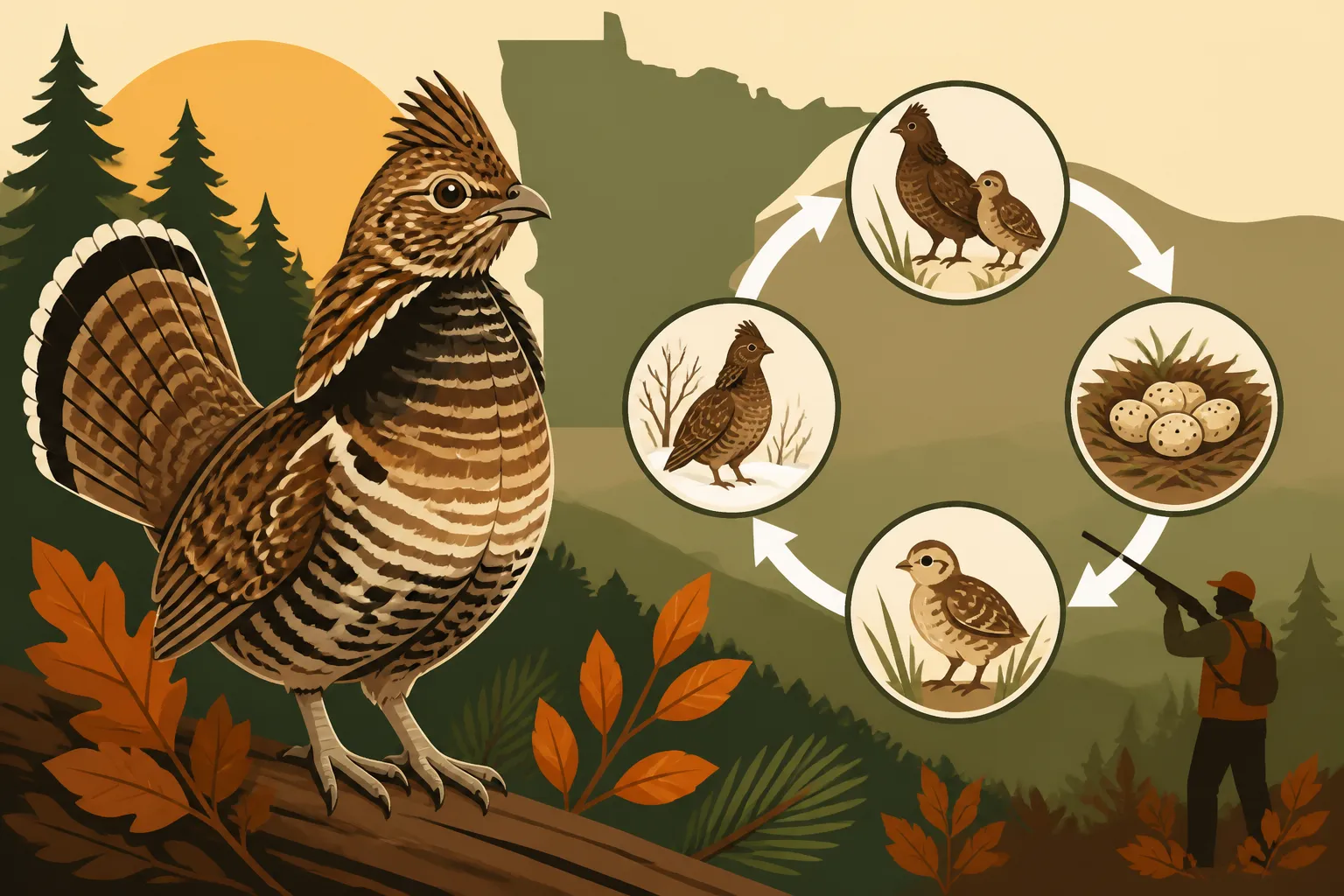
A grouse cycle refers to the periodic, roughly 8-12 year, rise and fall in the population of ruffed grouse, particularly in the northern parts of their range, including much of Minnesota. It's a boom-and-bust pattern where numbers can go from incredibly abundant to surprisingly scarce within a relatively short period. Imagine a rollercoaster ride for bird numbers: a slow climb, a thrilling peak, and then a rapid descent before the slow climb starts again. This cyclical nature is deeply ingrained in the species' ecology and is a defining characteristic of grouse hunting in our state. Understanding How Long the Grouse Cycle Runs is crucial for any serious hunter.
These cycles are most pronounced in the boreal forests of the upper Midwest and Canada, where aspen and mixed hardwoods provide ideal habitat. Hunters eagerly anticipate the "peak" years, when flushing birds becomes a regular occurrence, almost guaranteeing action. Conversely, the "low" years can be incredibly challenging, testing even the most seasoned bird dog and hunter, often leading to long walks with minimal reward. It's during these low periods that many newer hunters might get discouraged, not realizing that what they're experiencing is simply a natural part of the grouse world.
Historical Context in Minnesota
Minnesota has a long, well-documented history with these ruffed grouse cycles. For generations, hunters, trappers, and wildlife biologists have observed these regular fluctuations. We’ve seen incredible peaks, where hunters reported flushing hundreds of birds in a single day, followed by frustrating lows where finding a dozen flushes required serious effort. These cycles are so inherent to our experience that old-timers often speak of them with a mix of reverence and resignation, having lived through several peaks and valleys themselves.
The Minnesota Department of Natural Resources (DNR) has been tracking these trends for decades, and their data consistently shows this cyclical pattern. Legendary conservationists and researchers like Gordon Gullion, who dedicated his life to studying ruffed grouse, primarily out of Cloquet, Minnesota, extensively documented these cycles and their underlying causes. His work, and the work of many others, forms the foundation of our understanding. This rich history means we're not just guessing; we have a solid scientific basis for recognizing and predicting these patterns, which is invaluable for managing expectations and adapting hunting methods across the state.
The Science Behind the Cycles
While the cycle itself is easy to observe, the mechanisms driving it are complex, involving a delicate interplay of various ecological factors. It's not usually one single cause but a combination of forces that align to create these dramatic population swings. This understanding helps us appreciate the intricate web of life that supports these amazing game birds.
Predator-Prey Dynamics
One of the most significant theories explaining grouse cycles revolves around predator-prey relationships. As grouse populations boom, their primary predators, such as goshawks, great horned owls, red-tailed hawks, and mammalian predators like bobcats, coyotes, and foxes, also tend to see their numbers increase. With more food readily available, these predators reproduce more successfully and survive in greater numbers. This increase in predator efficiency eventually puts greater pressure on the grouse population.
Once the grouse numbers start to decline due to this increased predation, the predator population, lacking its primary food source, will eventually follow suit, experiencing its own decline. This lag in predator numbers allows the grouse population to begin its slow recovery, starting the cycle anew. It's a classic ecological feedback loop, often visualized as two waves, slightly out of sync, with predator numbers peaking after grouse numbers do. This dynamic also shifts the behavior of remaining grouse, making them more wary and challenging to hunt during low cycles.
Habitat Quality and Food Sources
The availability and quality of habitat are always critical for any wildlife population, and ruffed grouse are no exception. They thrive in young, regenerating forests, particularly those dominated by aspen (also known as popple), birch, and alder. These areas provide dense cover from predators, crucial for both nesting and roosting, and offer abundant food sources throughout the year. Aspen buds are a vital winter food, while berries, catkins, and insects are important in other seasons. Areas rich in these younger forest stages are often Why Popple Cuts Grow Grouse in such large numbers.
During a low cycle, even prime habitat might seem empty, but it's important to remember that the potential for recovery is still there if the habitat remains good. Conversely, widespread changes in habitat – like older forests maturing or large areas being converted – can dampen or even disrupt the cyclical pattern. Proper forest management, particularly promoting aspen regeneration through logging, is therefore crucial for maintaining healthy grouse populations over the long term, helping to ensure there's always a good base for the cycle to build upon.
Weather Patterns and Reproduction
Weather plays a surprisingly large role, especially during the crucial spring and early summer nesting and brooding periods. Ruffed grouse hens typically lay clutches of 10-14 eggs. For these chicks to survive and contribute to the population, they need favorable conditions. Cold, wet springs can be devastating, leading to high chick mortality. Young grouse chicks are particularly vulnerable to hypothermia and a lack of insect food during prolonged periods of cold rain.
A string of mild, dry springs can lead to excellent brood survival, boosting the population and accelerating the upswing of the cycle. Conversely, several consecutive severe or unusually wet springs can delay recovery or even contribute to a sharper decline. While weather doesn't cause the cycle, it acts as a powerful amplifier, either pushing populations higher faster or holding them back. Similarly, harsh winters can impact adult survival, but spring weather is generally seen as the more critical factor for driving population changes.
Disease and Parasites
While less understood than predator-prey dynamics or habitat, disease and parasites can also influence grouse populations, particularly during periods of high density. When grouse numbers are at their peak, birds are often living in closer proximity, which can facilitate the spread of diseases. Historically, outbreaks of diseases or parasites haven't been identified as the primary driver of the broad 10-year cycle, but they can certainly contribute to localized declines or exacerbate a downward trend.
More recently, West Nile Virus in Minnesota Grouse has emerged as a concern. Studies have shown that ruffed grouse are susceptible to the virus, and some research suggests it might have an impact on local populations, especially during the downswing of a cycle. While the full extent of its impact on the larger cyclical pattern is still being investigated, it's another factor that wildlife managers are monitoring closely. This adds another layer of complexity to understanding why grouse numbers fluctuate.
Hunting Strategies During Different Cycle Phases
Knowing where Minnesota's grouse population stands in its cycle can dramatically influence your hunting strategy. What works best during a peak year might lead to frustration during a low year. Adapting your approach is key to consistent success and, more importantly, consistent enjoyment out of your time afield.
Hunting During Peak Years
Ah, the peak years! These are the seasons every grouse hunter dreams of. The woods feel alive, flushes are frequent, and your dog is on cloud nine. During these years, you can often find birds in a wider variety of habitats. They might not be as concentrated, and you can sometimes find good numbers even in less-than-perfect cover simply because there are so many birds spread across the landscape. The sheer abundance means that even if you don't hunt the absolute best cover, you're still likely to encounter plenty of birds.
In these peak seasons, focus on covering ground. Walk more, explore new areas, and don't be afraid to venture into habitat that might seem a little thin in other years. Your dog will get more opportunities, and you'll likely bag more birds. It's a great time to introduce new hunters or young dogs to grouse hunting because the action is plentiful and encouraging. You can often try out different techniques, like focusing on specific types of edges or thicker pockets, without the pressure of needing every flush to be a success. Hunters should also consider carrying a few extra shells, because the opportunities will be abundant!
Hunting During Low Years
These are the challenging seasons, the ones that test your resolve and often lead to long, quiet walks. During low years, grouse are much more concentrated in the absolute best available habitat. They retreat to the densest, most protective cover – areas with thick aspen regeneration, dense alder swamps, or thorny dogwood thickets that offer maximum protection from predators. You'll need to work harder, and your expectations need to be tempered significantly. Instead of expecting constant flushes, you'll be celebrating every single one.
The strategy here shifts from covering broad ground to meticulously working prime cover. Slow down. Focus on quality over quantity. Target areas you know have historically held birds, even in tough years. Think about thermal cover, food sources, and escape routes. Instead of just walking, really hunt the cover, pausing frequently, letting your dog work every inch, and paying close attention to every sound and sign. This is where detailed scouting and knowledge of Grouse Hunting Minnesota Aspen Cover truly pays off. Using an app like GoHunt or onX Hunt to scout aerial imagery for dense cover and recent cuts can be invaluable in identifying these critical spots. It's also a year where having a good flushing dog or understanding how to effectively execute Flushing Grouse Without a Dog becomes even more important, as birds will hold tighter and be harder to put up.
Hunting During Rising Years
Rising years are exciting because they offer a sense of anticipation and optimism. You start to see more birds than in the low years, but it's not quite a peak yet. Flushes become more consistent, and you might even find birds starting to spread out into slightly less dense cover than during the absolute low. It's a great time to refine your skills and explore new areas as the population expands its range.
During these years, you can gradually increase your coverage, but still prioritize good habitat. Pay attention to fresh sign and where you're seeing those first few flushes; these areas might be the core of the population's comeback. It's a perfect time to build confidence in a young dog, offering more opportunities than a low year but still requiring good work. You might not fill your vest every time, but the increasing number of encounters will keep you motivated and remind you that the good times are just around the corner. These are also excellent seasons to start experimenting with different Upland Guns for Popple and Alder and seeing how they perform as bird numbers increase.
Identifying Where Minnesota Sits in the Grouse Cycle
So, how do you know if you're in a peak, a low, or a rising year? Fortunately, there are several ways to gauge the current status of Minnesota's ruffed grouse population, from official surveys to your own observations in the field.
DNR Drumming Surveys
The most reliable and official data comes from the Minnesota DNR's annual Ruffed Grouse Drumming Surveys. Every spring, DNR wildlife managers and volunteers drive established routes and listen for the distinctive drumming of male ruffed grouse. The number of drums heard per stop provides an index of the breeding population. This long-term dataset is invaluable for tracking the cyclical patterns and pinpointing exactly Where Minnesota Sits in the Grouse Cycle.
These surveys offer a broad, statewide picture, but it's important to remember they are an index, not an exact count of every bird. They provide trends. The DNR releases the results each year, typically in late summer, giving hunters a heads-up before the season opens in September. Reviewing these reports, which are usually available on the DNR website, is probably the single best way to get a scientific assessment of what to expect in the upcoming season. Additionally, you can find historical data on Minnesota Grouse Drumming Surveys to see how current numbers compare to past cycles.
Personal Observation and Scouting
While the DNR surveys give us the big picture, your own boots-on-the-ground observations are equally critical, especially for understanding local conditions. Pay attention during your summer scouting trips for deer or bear. Are you seeing birds along logging roads? Are broods crossing trails? Are you hearing drumming in the spring while shed hunting or turkey scouting? These personal encounters build your mental database and can confirm or sometimes even slightly contradict the broader DNR trends for your specific hunting areas.
During the season, keep a tally of your flushes per hour or per mile walked. If you're consistently seeing more birds than the previous year, it's a good sign of a rising population. If you're walking vast stretches of seemingly good cover with no flushes, that's a strong indicator of a low year. Don't be afraid to trust your gut and your dog's nose. They'll often tell you more about the local grouse numbers than any statewide report can. Tools like the GoHunt app can help you log these observations and build a personal heatmap of activity over seasons.
Using Mapping Tools
Modern mapping applications have revolutionized how we scout for grouse, helping us find and analyze habitat critical to understanding cycles. Apps like onX Hunt, GoHunt, or the Minnesota DNR's Recreation Compass allow you to view satellite imagery, topo maps, and public/private land boundaries right on your phone or computer. This is incredibly useful for identifying those prime aspen cuts, alder swamps, and dense regenerating timber stands that hold birds, especially during the challenging low years.
You can look for recent clear-cuts, which indicate young, regenerating aspen that will be prime grouse habitat in a few years. Use the layers to identify different forest types. In a low year, you'll want to focus on the densest, most secure cover, and these apps let you pinpoint those areas from your couch. In a peak year, you can use them to explore broader areas of suitable habitat. These tools help you strategize your routes and maximize your chances, regardless of where the cycle currently stands. They're invaluable for Scouting Minnesota Public Land Before Season and finding the Best Minnesota Counties for Grouse.
| Cycle Phase | Population Trend | Hunting Strategy | Expected Flushes | Key Focus Areas |
|---|---|---|---|---|
| Peak | High & Abundant | Cover lots of ground, explore new areas | Frequent, many per hour | Broad habitat, less dense cover |
| Rising | Increasing Steadily | Expand coverage, focus on good habitat | Consistent, growing | Good quality habitat, new pockets |
| Low | Low & Scarce | Work prime, dense cover meticulously | Infrequent, few per hour | Densest cover, historical hotspots |
Impact on Hunters and Long-Term Trends
The ruffed grouse cycle isn't just a biological phenomenon; it profoundly impacts the hunting experience, hunter satisfaction, and even conservation efforts in Minnesota. Understanding these broader implications helps us appreciate the full picture.
Hunter Success and Satisfaction
There's no denying that hunter success and satisfaction are heavily tied to the grouse cycle. During peak years, the woods are alive, and every hunter feels like a pro. These are the years that forge lasting memories, motivate new hunters, and keep the passion burning. Limit bags are more common, and even a less-experienced hunter can find success. This leads to higher overall hunter satisfaction and often translates to more days spent in the field. This abundance also gives a clearer picture of Minnesota Ruffed Grouse Numbers Today.
Conversely, low years can be incredibly frustrating. Hunters might question their skills, their dog's abilities, or even the health of the grouse population itself. It takes a dedicated and patient hunter to stay motivated during a lean year. Lower success rates can sometimes lead to reduced hunter participation, as some might choose to wait for "better" years. However, for the truly dedicated, these low years are character-building. They teach patience, perseverance, and a deeper understanding of the birds and their habitat. It's also a time when you might appreciate the broader context of Minnesota's Small Game and Upland Bird Seasons and consider diversifying your pursuit.
Conservation Efforts and Habitat Management
The grouse cycle underscores the critical importance of habitat management, particularly the active management of aspen forests. Ruffed grouse are a "disturbance-dependent" species, meaning they thrive in habitat created by events like logging or fire that create young, regenerating forests. Without these disturbances, forests mature, and the dense, multi-aged stands grouse prefer slowly disappear.
The DNR, in partnership with other organizations, actively manages public lands to ensure a continuous supply of young aspen, maintaining quality habitat throughout the state's grouse range. This often involves strategic timber harvests, creating a mosaic of different-aged forest stands. These efforts are designed to ensure that even during a low cycle, there's always excellent habitat available for the population to rebound. Sustained habitat management is the most important tool we have to buffer the natural dips in the cycle and ensure future hunting opportunities.
Future Outlook for Minnesota Grouse
Looking ahead, the future of Minnesota's ruffed grouse populations and their cycles will likely continue to be influenced by a combination of factors. Climate change, for example, could alter habitat suitability and impact nesting success, particularly if it leads to more frequent or intense spring weather events. Land use changes, such as further development or conversion of forest land, could also reduce available habitat.
However, active forest management and ongoing research into factors like West Nile Virus offer hope. As long as there's a commitment to maintaining diverse forest habitats, especially young aspen, Minnesota will continue to be a premier destination for grouse hunting. The cycles will undoubtedly continue, offering us peaks to celebrate and lows to challenge our skills. The key for hunters and conservationists alike is to understand these patterns, adapt our approaches, and support the ongoing efforts to ensure the drumming of ruffed grouse continues to echo through our northern woods for generations to come.
Disclaimer
The information provided in this guide is for general informational purposes only and does not constitute legal advice or replace official regulations. Hunters are responsible for knowing and abiding by all current Minnesota hunting regulations, which can change annually. Always consult the official Minnesota Department of Natural Resources (DNR) hunting regulations handbook before heading afield.