Minnesota Shooting Hours and Legal Methods
One of the most common anxieties for any hunter, whether you're a seasoned veteran or just starting out in Minnesota, revolves around the seemingly simple questions: "When can I legally shoot?" and "What gear can I actually use?" It's not always as straightforward as it seems, with various game species having different rules, and the legal definition of "shooting hours" constantly shifting with the sun. This guide aims to clear up the confusion, helping you understand Minnesota's specific regulations on legal shooting hours and approved hunting methods, so you can hunt confidently and responsibly.
Understanding Legal Shooting Hours in Minnesota
The sun moves, and so do the rules. It’s a reality that can tie even the most experienced hunters in knots if they’re not paying close attention. Getting these hours right isn isn't just about avoiding a ticket; it's fundamental to ethical hunting and ensuring a clean, safe shot.
Defining Legal Shooting Hours for Big Game
For most big game in Minnesota, like our prized whitetails and black bears, the legal shooting hours are defined as 30 minutes before official sunrise to 30 minutes after official sunset. This is the golden rule you’ll hear repeated most often. Sounds simple enough, right? But here’s where it gets tricky: "official sunrise" and "official sunset" aren't static. They change daily, sometimes by several minutes, and can even vary slightly depending on your exact longitude within the state. What was legal last week might be just outside the window today.
This daily flux means you can't just memorize a single time and stick with it for the whole season. If you're out there for deer during Minnesota Deer Seasons and Permit Areas, especially during the critical low-light periods of dawn and dusk, those 30-minute windows are absolutely crucial. Being a minute early or a minute late can mean the difference between a legal harvest and a violation, or worse, making a poor shot in insufficient light. It’s a constant mental clock management that every Minnesota hunter faces.
The frustration often stems from how easily these times can slip. You might check a generic weather app on your phone, but those often provide times for the nearest major city, which might not be accurate for your specific hunting location deep in the Northwoods or out on the vast western prairies. The terrain itself, with dense tree cover or deep valleys, can make it feel darker or lighter than the official times suggest, adding another layer of challenge to an already tense hunting moment.
Special Considerations for Migratory Birds and Waterfowl
While big game follows the 30-minute rule, migratory birds, particularly waterfowl, often operate under slightly different guidelines. For ducks, geese, and other migratory species during Minnesota Waterfowl Hunting on Lakes and Potholes, the shooting hours typically begin at sunrise, not 30 minutes before. This distinction is incredibly important for early morning duck hunters sitting in layout blinds or hiding in cattail sloughs.
The later start for waterfowl is a conservation measure, designed to give birds a calmer roosting period and to prevent shooting at indistinct flocks in very low light. This can be a real test of patience, especially when you’re freezing in a duck blind and hear birds moving around before legal light. Knowing these precise times is paramount for a successful and legal hunt, as wardens are very vigilant about migratory bird regulations.
Furthermore, some specific migratory bird seasons, like the Minnesota Early Teal Season Dates, might have their own unique shooting hour rules that deviate even from the standard waterfowl regulations. Always, always check the specific regulations for the species you're pursuing. Don't assume. The Minnesota DNR's annual hunting and trapping regulations handbook is your bible in these situations, providing the exact times for each season and species, which can vary depending on the zone you are hunting in (e.g., North or South Duck Zones).
The Importance of Official Time Sources
Given the daily changes and species-specific nuances, where should a Minnesota hunter turn for reliable shooting hour information? Relying on a general smartphone weather app is like guessing the wind direction by licking your finger – it might give you a general idea, but it's rarely precise enough for hunting. You need official, accurate sources that factor in geographical location.
The most reliable source, of course, is the Minnesota Department of Natural Resources (DNR) website or their annual hunting and trapping regulations handbook. These resources provide precise sunrise and sunset tables, often broken down by major cities or regions, and sometimes even offer online calculators where you can input your specific coordinates. Many dedicated hunting apps also incorporate this data. Applications like GoHunt or onX Hunt, for example, often have built-in tools that automatically calculate legal shooting hours based on your exact GPS location, which is incredibly helpful when you're miles from the nearest town.
It’s worth the small investment in a reliable hunting app or taking the time to cross-reference the DNR's official tables with your specific hunting location. Imagine sitting in your stand, feeling the first hints of dawn, and knowing with certainty, thanks to your GoHunt app, that you have exactly five minutes until legal shooting light for deer. That kind of confidence can make all the difference, allowing you to focus on the hunt itself rather than second-guessing the clock. These tools are far more accurate than a simple Google search for "sunrise time," which usually provides generic information not tailored for hunting regulations.
Legal Methods for Taking Game in Minnesota
Minnesota's hunting heritage is rich and diverse, allowing for various hunting methods, each with its own set of rules and traditional gear. But as regulations evolve, especially with changes like statewide rifle legality, it's crucial to stay updated on what's permitted and what's not.
Firearm Regulations for Deer Hunting
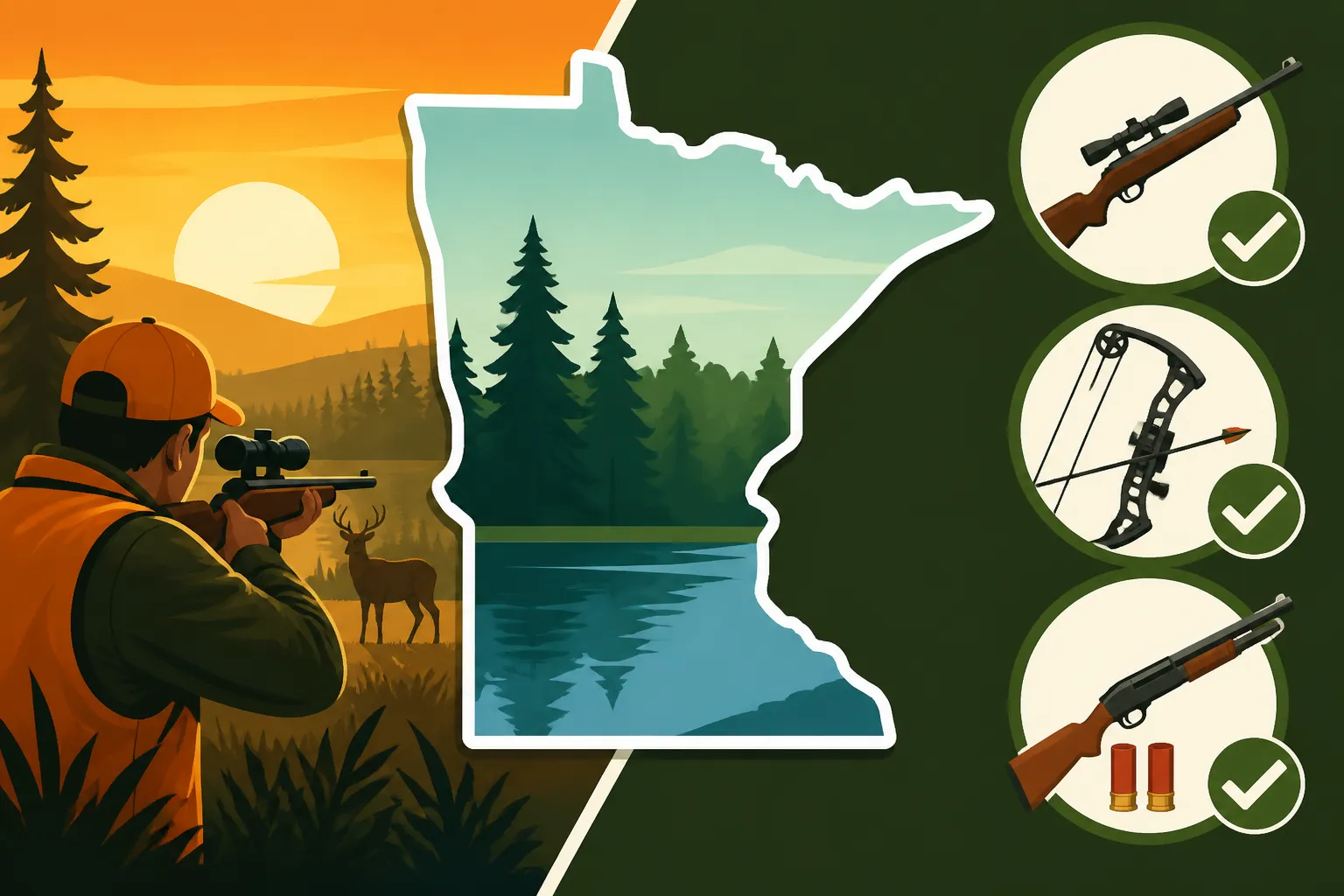
The recent shift in Minnesota hunting laws allowing rifles statewide for deer hunting has been a significant change, bringing excitement for many. Previously, much of the state was restricted to shotguns, muzzleloaders, and handguns only. Now, you can generally use a rifle throughout most of the state during Minnesota's Firearm Deer Season by Zone. However, "generally" is the key word here, and there are still important nuances to understand.
While rifles are now legal in most areas, thirteen counties in the state opted to retain their "shotgun-only" status. It's critical that hunters verify the specific rules for the county or permit area they plan to hunt in. You can't just assume. For those looking to take advantage of the new rifle rules, understanding Choosing a Rifle Now That Shotgun Zones Are Gone is paramount. Minnesota also has specific requirements regarding minimum rifle caliber for deer, usually .22 centerfire or larger, and limitations on magazine capacity to prevent unfair advantage. Straight-wall cartridges, which were a workaround for rifle legality in shotgun zones, are still legal and popular choices, offering excellent performance within their effective range.
For areas that remain shotgun-only, slug guns are still the primary choice. Modern slug guns, particularly those with rifled barrels and saboted slugs, are incredibly accurate and effective out to 150 yards or more, rivaling many rifles in practical hunting situations. Understanding the type of slugs (saboted versus foster) and Rifled Versus Smoothbore Slug Barrels is important for maximizing accuracy. Regardless of your chosen firearm, ensure it's sighted in properly for the distances you expect to shoot in Minnesota's varied terrain, whether that's dense timber or open farmland.
Archery and Muzzleloader Specifics
Minnesota offers a long and rewarding archery season, allowing hunters to pursue deer from early fall well into winter. When it comes to archery equipment, both traditional vertical bows and modern compound bows are permitted. There are minimum draw weight requirements to ensure humane kills, typically around 40 pounds for deer, though it's always best to check the current regulations. Broadhead rules are also specific, usually requiring cutting edges of a certain width to ensure quick, clean penetration. For those interested in expanding their archery season, Bowhunting Minnesota's Long Archery Season offers a deeper dive into tactics.
Crossbows have become increasingly popular, offering a different set of advantages, particularly for hunters with physical limitations or those who prefer a different shooting experience. In Minnesota, crossbows are generally legal for all hunters during the archery season, not just those with special permits, but always confirm the latest regulations regarding Crossbow Versus Vertical Bow in Minnesota. Just like vertical bows, crossbows have specific bolt and broadhead requirements.
Muzzleloader season, typically held in December, offers a unique hunting experience in colder, often snowier conditions. Muzzleloader Deer Hunting in Minnesota requires adherence to specific rules regarding the type of muzzleloader (caplock, flintlock, or inline), projectiles (saboted bullets or conical projectiles), and powder (black powder or approved substitutes). Modern inline muzzleloaders can be very accurate, but keeping your powder dry in the often damp, snowy Minnesota December conditions is a constant challenge. Hunters must also be aware of the minimum caliber for muzzleloaders, typically .45 caliber or larger for deer, and regulations regarding the use of scopes versus open sights, though scopes are generally allowed.
Shotgun and Rimfire Rules for Small Game and Birds
For upland birds like ruffed grouse and pheasants, and migratory birds such as ducks and geese, shotguns are the go-to firearm. Minnesota has specific regulations regarding gauge (10 gauge to .410 bore are generally legal), shot size, and capacity. For waterfowl, the use of non-toxic shot is mandatory across the board to protect aquatic environments and scavengers. This means no lead shot for ducks and geese, and often for other migratory birds like doves and pheasants on certain public lands. Steel, bismuth, or tungsten-based shots are common alternatives. You'll need to pattern your shotgun with your chosen non-toxic loads to ensure effective range and ethical kills.
When it comes to small game like squirrels and rabbits, rimfire rifles (like a .22LR) are a popular and effective choice, especially in wooded areas for squirrels or brushy cover for rabbits. Shotguns with fine shot are also legal and widely used for these species. Air rifles have also seen a rise in popularity for small game, though they too must meet specific power and caliber requirements.
Choosing the right firearm for small game and birds often comes down to personal preference and the specific hunting situation. For fast-flushing grouse in thick popple cover, a lightweight 20-gauge shotgun with improved cylinder choke is often preferred. For pheasants pushing through heavy cover, a 12-gauge with a modified choke might be more effective. For squirrel hunting in the deep hardwoods, a quiet .22 rifle offers precision.
Here's a quick overview of common legal methods for different game types:
| Game Type | Primary Legal Methods | Key Restrictions/Notes |
|---|---|---|
| White-tailed Deer | Rifles (statewide, verify county), Shotguns (slugs), Muzzleloaders, Archery (bows, crossbows), Handguns | Minimum caliber rules, magazine capacity limits, specific broadhead/projectile rules. |
| Black Bear | Rifles, Shotguns (slugs), Muzzleloaders, Archery (bows, crossbows), Handguns | Minimum caliber rules, no artificial lights at night. |
| Wild Turkey | Shotguns (with specific shot size/load), Archery (bows, crossbows) | No rifles or handguns for turkey; specific shot sizes. |
| Waterfowl (Ducks, Geese) | Shotguns | Mandatory non-toxic shot, specific shooting hours (sunrise start). |
| Upland Birds (Grouse, Pheasant) | Shotguns (lead OK in most areas, check public land), Falconry | No rifles for upland birds. Pheasant requires a pheasant stamp. |
| Small Game (Squirrel, Rabbit) | Rimfire Rifles, Shotguns, Archery, Air Rifles | Check local ordinances for air rifle use. |
| Predators (Coyote, Fox) | Rifles, Shotguns, Archery, Trapping | Night hunting allowed for coyotes with specific rules. |
Prohibited Methods and Common Misconceptions
It's just as important to know what you can't do as what you can. Many prohibited methods are in place to ensure fair chase, safety, and to prevent undue harm to wildlife populations. Some of these rules are commonly misunderstood, leading to honest mistakes that can result in significant penalties.
Artificial Lights, Night Vision, and Thermal Imaging
This is an area where hunters often get into trouble, sometimes unintentionally. In Minnesota, it is generally illegal to use artificial lights (commonly referred to as "shining") to locate, spot, or attempt to take any wild animal, especially deer, during legal night hours. This rule is absolute for big game and is designed to prevent unfair advantage and ensure ethical hunting. The frustration often comes when a hunter is simply driving home from scouting or another activity and spots a deer with their headlights, then gets worried about being perceived as "shining." The intent is key, but the law is strict about illuminating game animals with artificial light in a manner that could be construed as hunting.
Furthermore, while night vision and thermal imaging devices are becoming more accessible, their use in hunting big game during legal shooting hours is highly restricted. You cannot use these devices to aid in the taking of big game in Minnesota. Some limited exceptions might exist for certain predator hunting scenarios (like Night Hunting Rules for Minnesota Coyotes), but for deer, bear, and turkey, these advanced optics are off-limits for active hunting. This often leads to confusion for hunters who might own these devices for other purposes, so it's vital to know their legal boundaries within the hunting context.
The spirit of these regulations is to maintain a level playing field between hunter and hunted, relying on natural light and human skill. Using powerful lights or advanced night optics fundamentally changes that dynamic. For hunters trying to follow a blood trail after dark, Blood Trailing After Dark in Minnesota highlights that using a light to track a legally shot animal is permissible, but it's not a green light to then actively hunt other animals.
Motorized Vehicles and Aircraft
Another critical area of regulation involves the use of motorized vehicles and aircraft. In Minnesota, it is strictly illegal to shoot any wild animal from a motorized vehicle, including ATVs, snowmobiles, or even a stopped truck, unless you have a specific disability permit allowing it. This also extends to shooting across or down a public road or highway. The rule is in place for public safety and to maintain the challenge of hunting, preventing hunters from simply driving around until they spot an animal and then shooting it from their vehicle.
Beyond shooting from a vehicle, using motorized vehicles to "herd" or "drive" game is also prohibited. You can often use a vehicle to access public land, driving on established roads or trails to get to your hunting spot, but once you're there, the hunt must generally be conducted on foot. This applies equally to aircraft; spotting game from an airplane or helicopter and then immediately going to hunt those animals is illegal.
These rules ensure fair chase and promote a more traditional, physically active hunting experience. While it can be tempting to use an ATV to quickly cover ground, knowing when and where you can operate your vehicle versus when you need to be on foot is a fundamental aspect of hunting Minnesota's vast landscapes. The DNR's Vehicle Rules on Minnesota Public Land outlines specific restrictions for various land types.
Baiting and Feeding Restrictions
Baiting and feeding rules are some of the most complex and rapidly changing regulations in Minnesota, especially concerning deer. Due to concerns over Chronic Wasting Disease (CWD), there is a statewide ban on baiting deer on public lands. Additionally, many areas, particularly in CWD management and surveillance zones, have complete bans on feeding deer on both public and private land. These bans are put in place to prevent the congregation of deer around a common food source, which increases the risk of CWD transmission.
The definition of "bait" can sometimes be tricky. It generally refers to any material, substance, or attractant placed to lure wild animals, including salt, minerals, grain, fruit, or even liquid attractants. Scents used for attracting deer are often exempt if they don't involve a consumable attractant. It's vital to stay informed about Minnesota Feeding and Baiting Bans in CWD Zones because these zones can change, and the penalties for baiting can be severe.
Even outside of CWD zones, the spirit of fair chase applies. While some states allow baiting for deer on private land, Minnesota's regulations are stricter, especially regarding public land. For bear hunting, baiting is a legal and traditional method in Minnesota's forest zones, but it comes with its own detailed set of rules, including registration of bait sites and specific timelines for when bait can be placed and maintained. Always consult the current DNR regulations for your specific hunting area and species.
Hunter Safety and Ethical Considerations
Beyond the letter of the law, ethical hunting practices and safety measures are cornerstones of responsible hunting in Minnesota. These considerations ensure not only your well-being but also the reputation of the entire hunting community and the health of our wildlife.
Blaze Orange and Visibility Requirements
Visibility is paramount, especially during Minnesota's firearm seasons when many hunters are afield. The law requires hunters (and often those accompanying them) to wear certain amounts of blaze orange (or blaze pink, which is also legal) during the firearm deer season. This isn't just a suggestion; it's a critical safety measure designed to make hunters highly visible to one another, preventing accidental shootings. How Much Blaze Orange Minnesota Requires outlines the specifics, which typically involve wearing an outer layer above the waist, totally visible from all sides, and a blaze orange or pink hat.
For archers during the archery-only portions of the deer season, blaze orange isn't usually required, as bows have shorter effective ranges and visual identification is crucial before a shot. However, as the archery season extends into the firearm season, or if you're hunting in an area concurrently open to firearm hunting, you'll need to don your blaze orange. It's always a good idea to wear blaze orange when walking to and from your stand, even if it's not strictly required, just to increase your visibility to others.
The debate around blaze orange often focuses on whether deer can see it. Research shows that deer, being dichromatic, perceive orange differently than humans, often seeing it in shades of gray or yellow. However, the movement and presence of a bright color like orange still makes a human shape stand out from the natural environment. The primary purpose is always hunter-to-hunter visibility, not concealment from game.
Fair Chase and Respect for Game
The concept of "fair chase" is central to ethical hunting. It means pursuing a wild animal in a manner that allows it a reasonable chance to escape, without undue advantage taken by the hunter. This includes avoiding tactics that are considered unsporting or that compromise the animal's ability to evade capture. Examples of fair chase principles include:
- Minimizing suffering: Taking clean, ethical shots within your effective range to ensure a quick, humane kill. This requires practice and knowing your weapon's capabilities.
- Respect for the animal: Treating harvested animals with dignity, utilizing as much of the animal as possible, and never wasting meat. Field Dressing a Deer in Cold Weather is part of this respect, ensuring the meat is cared for promptly.
- Adherence to legal methods: Sticking to the legal shooting hours and methods, even when doing so might make the hunt more challenging. It's about the quality of the hunt, not just the kill.
This commitment to fair chase and respect helps maintain the integrity of hunting as a conservation tool and a valued outdoor tradition. When hunters uphold these values, it strengthens public support for hunting and ensures wildlife populations are managed sustainably.
Planning and Preparation
A successful and ethical hunt begins long before you ever step into the woods. Proper planning and preparation are not just about finding game; they're about ensuring safety, legality, and a responsible approach to the field. This includes everything from scouting to understanding the terrain and having the right gear.
Using tools like Scouting With the Minnesota Recreation Compass App can be invaluable for understanding property boundaries, public land access, and identifying potential hunting hotspots. Mapping software, such as that offered by GoHunt, allows you to mark potential stand locations, entry and exit routes, and even identify food sources or bedding areas. This foresight minimizes disturbance, maximizes your chances, and helps you navigate effectively, especially in areas with no cell service.
Preparation also involves:
- Knowing your gear: Practice with your firearm or bow regularly. Ensure it's sighted in and you're confident in your ethical shooting range.
- Physical fitness: Hunting, especially in Minnesota's varied terrain, can be demanding. Being in good physical shape helps you navigate safely and effectively.
- Emergency preparedness: Carrying a first-aid kit, knowing how to use it, and having communication devices (even a satellite messenger for remote areas) are crucial.
- Understanding the weather: Minnesota weather can change rapidly. Dressing in layers and being prepared for anything from warm sun to bitter cold and snow is essential, especially when Cold-Weather Sitting Strategy in Minnesota comes into play.
Navigating Regulations and Resources
With regulations that can vary by species, weapon, zone, and even the time of year, staying informed is a continuous process. Thankfully, there are excellent resources available to help Minnesota hunters navigate this complex landscape.
Official DNR Resources and Publications
The cornerstone of understanding hunting rules in Minnesota is the Department of Natural Resources (DNR). Their official website (mndnr.gov) is a treasure trove of information, offering detailed breakdowns of regulations, season dates, permit area maps, and special announcements. It's the most authoritative source for all things hunting in the state.
Crucially, the DNR publishes annual hunting and trapping regulations handbooks. These free publications, available online and at most license vendors, are indispensable. They cover everything from general rules and shooting hours to specific regulations for each game species and hunting method. Always grab the latest edition, as rules can and do change year to year. For example, understanding Minnesota's New Statewide Rifle Rules means consulting the most recent handbook.
Beyond the general regulations, the DNR also provides specific publications or online updates concerning critical issues like CWD. If you're hunting in a CWD management or surveillance zone, you'll need to pay close attention to additional rules regarding carcass movement, mandatory testing, and baiting/feeding bans. This means checking beyond just the basic season dates for your specific permit area.
Using Technology to Stay Informed
In today's digital age, technology offers incredible tools to help hunters stay compliant and improve their success. While the DNR's official resources are paramount, apps and digital platforms can make those regulations more accessible and actionable in the field.
Mapping applications like the Minnesota Recreation Compass (developed by the DNR itself) or popular private platforms like onX Hunt and GoHunt are game-changers. These apps typically integrate public and private land boundaries, give you your precise GPS location, and many now overlay season dates and even legal shooting hours directly onto the map. Imagine you're deep in a state forest, far from any signs, but your GoHunt app clearly shows you the exact boundary of public land and even tracks the changing sunrise/sunset times for your specific location. This level of detail removes guesswork and reduces the risk of trespassing or hunting outside legal hours.
Beyond mapping, many online forums and dedicated hunting communities also serve as valuable resources for staying updated on local conditions, sharing tips, and discussing regulatory changes. However, always cross-reference information found on forums with official DNR sources, as interpretations can vary. These technological aids, when used in conjunction with official publications, create a powerful toolkit for any responsible Minnesota hunter.
Disclaimer
The information provided in this guide is for general informational purposes only and does not constitute legal advice. Hunting regulations in Minnesota are subject to change, and it is the hunter's responsibility to consult the most current Minnesota Department of Natural Resources (DNR) regulations and local ordinances before engaging in any hunting activity. Always confirm specific rules, dates, and requirements for the precise game species, weapon, and location you intend to hunt.