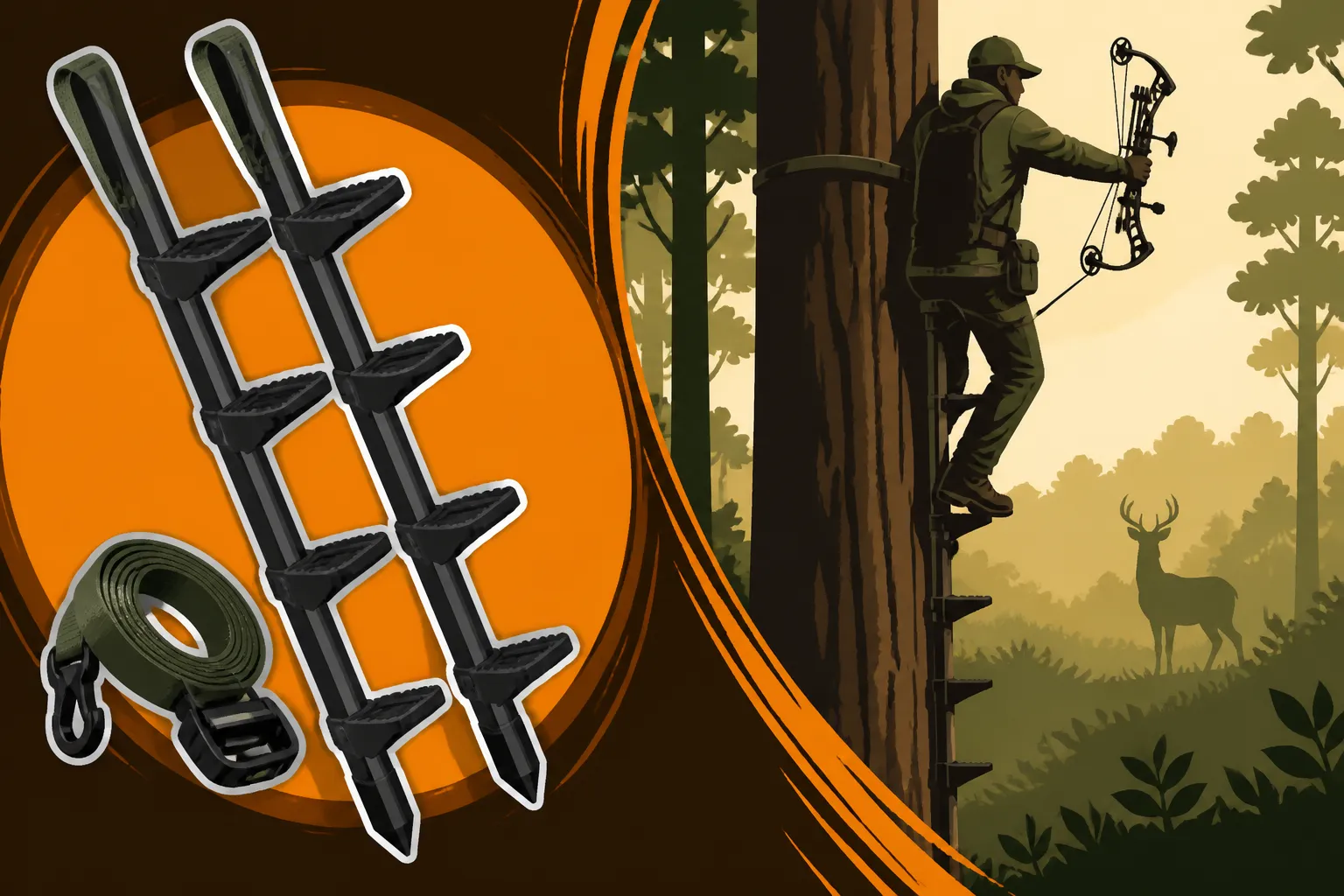
Climbing Sticks for Minnesota Hardwoods
Hunting in Minnesota's dense hardwoods presents a unique set of challenges, from navigating thick undergrowth to finding the perfect elevated setup that offers both concealment and a commanding view. Many hunters struggle with bulky, noisy equipment that limits their mobility and forces them into less-than-ideal spots. This guide is all about demystifying climbing sticks, showing you how these versatile tools can revolutionize your approach to hunting Minnesota's whitetails, helping you get into those prime locations quietly and efficiently.
Why Climbing Sticks Are Essential in Minnesota Hardwoods
The diverse landscapes of Minnesota, from the sprawling "big woods" of the north to the scattered woodlots of farm country, often mean that a ground blind simply won't cut it, and hauling a ladder stand is out of the question for most public land scenarios. Climbing sticks offer a stealthy, portable solution that directly addresses the unique demands of hunting mature timber. They empower you to ascend quickly and safely, gaining the vantage point you need without leaving a permanent footprint or alerting every deer in the area.
The Challenge of Public Land Hardwoods
Public land in Minnesota, especially within state forests and wildlife management areas, often means thicker cover, more hunting pressure, and trees that aren't always perfectly straight. You're rarely going to find the ideal, perfectly limbless trunk that makes a traditional climber stand easy. Instead, you'll encounter gnarly oaks, maples, and aspens, often surrounded by brush that makes accessing the base of a tree a challenge in itself. Furthermore, getting deep into these areas means covering significant ground, sometimes miles, which makes lightweight and packable gear an absolute necessity. You simply can't drag a heavy, cumbersome ladder stand through two miles of swamp and thickets.
This is where the frustration really sets in for many hunters. You scout a perfect pinch point, a subtle ridge line where deer are obviously funneling, or a prime oak flat dropping acorns, only to realize the only suitable trees for a stand are too crooked for a climber or too far from the trail to carry in a heavy fixed-position stand. The sheer effort required to get to these spots means you need gear that supports that effort, not hinders it. Climbing sticks are specifically designed to overcome these very obstacles, allowing you to access trees that would otherwise be unreachable with other elevated hunting methods.
Benefits Over Other Elevated Methods
When you think about elevated hunting, your mind might go straight to a climbing stand, a ladder stand, or even permanent stands you leave in the woods. While each has its place, climbing sticks, particularly when paired with a quality hang-on stand or a saddle, offer superior versatility in many Minnesota hunting scenarios. Unlike ladder stands, which are often too heavy and noisy for mobile public land hunting, sticks are lightweight and designed for quick, quiet deployment. They don't require perfectly straight, limbless trees like many climbing stands do, making them far more adaptable to the varied and often gnarly trees you find throughout Minnesota's woods.
Consider a scenario where you've been doing some serious scouting, perhaps even utilizing digital mapping tools that GoHunt and similar platforms provide, and you've pinpointed a killer rut funnel between a swamp and an old growth oak stand. The only decent tree for a setup is a triple-trunked maple with branches starting low. A climbing stand would be a non-starter. A ladder stand would be an impossible carry and too visible. But a set of climbing sticks? You can navigate those branches, zig-zagging your way up the trunk, often using shorter stick sections to work around obstacles. This adaptability means you're not limited to the "easy" trees, giving you access to the best trees, which is often the key to consistent success, especially when you're hunting during Hunting the Minnesota Rut in Early November.
Stealth and Versatility
The ability to move silently and adapt your setup to conditions is paramount in pressured Minnesota hardwoods. Climbing sticks excel here. When packed properly, they are surprisingly quiet, minimizing the metallic clanking that can ruin a hunt before it even begins. Imagine slipping into a new spot just before dawn, finding a fresh scrape line along a logging road, and needing to get up a tree quickly and silently. With practice, you can get a set of sticks and a hang-on stand deployed with minimal disturbance. This stealth factor is a huge advantage over the noisy setup of some climbing stands or the blatant presence of a pre-set ladder stand.
Beyond stealth, their versatility is a game-changer. You're not tied to a single stand location for an entire season. If the deer shift, if the wind changes unexpectedly, or if hunting pressure pushes deer to a new area, you can easily pack up your sticks and hang-on stand and relocate. This mobile approach is critical for success, particularly on public land where deer patterns can be less predictable due to external factors. Whether you're trying Still-Hunting Minnesota Big Woods or focusing on a specific food source, the freedom to move your entire setup with relative ease means you're always hunting where the deer are, not where your stand happens to be.
Types of Climbing Sticks and Their Features
The market for climbing sticks has really exploded in recent years, offering hunters a fantastic array of options tailored to different hunting styles and budgets. Understanding the various types and their features is key to making an informed decision that suits your specific needs in Minnesota's diverse hunting environments. From ultralight single sticks designed for the mobile hunter to more robust multi-section units, each design brings its own set of pros and cons to the timber.
Single-Stick Designs
Single-stick designs, often referred to as "individual" sticks, are essentially short, independent sections that you attach to the tree one at a time as you ascend. They're typically very light and compact, making them a favorite among minimalist hunters, saddle hunters, and those who need to cover serious ground. Many of these individual sticks feature a modular design, meaning you can carry as few or as many as you need to reach your desired hunting height. Imagine packing four to six of these into your backpack, often weighing less than a full multi-section stick system.
The primary advantage here is packability and customization. You might only need three sticks for a quick hang-and-hunt setup for an afternoon sit, or six for a higher perch in a mature oak flat. Brands like Lone Wolf, Eastern Woods Outdoors (EWO), and custom fabricators often offer excellent single-stick options. These sticks usually feature a single step or two on each section, keeping their profile narrow and reducing overall weight. While they might take a little longer to deploy individually, their unmatched flexibility for navigating crooked trees or branches, and their light carry weight, make them incredibly effective for deep-woods scouting and hunting, where every ounce counts on the walk-in.
Multi-Stick Sections
Multi-stick sections, often sold in packs of two, three, or even four interconnected sections, are another popular choice. These sticks are designed to attach to the tree in longer, consolidated units, which can sometimes speed up the initial ascent. For example, a three-section stick might get you 15 feet up the tree with just three attachment points. They typically offer more steps per section compared to single sticks, providing a more ladder-like feel for climbing. This can be particularly appealing for hunters who prefer a quicker, more stable climb or those who don't venture quite as far off the beaten path.
While generally heavier and bulkier than single-stick systems, modern multi-section sticks are still far more portable than a traditional ladder stand. They often feature sturdy construction, sometimes with wider steps that feel more secure underfoot. For hunters who typically hunt specific, identified trees or those who prefer a somewhat faster setup, these systems are excellent. They offer a good balance of portability and convenience, especially when paired with a good Portable Treestands Worth Packing In. However, it's worth noting that their longer sections can sometimes make navigating very crooked or branched trees more challenging than with shorter, individual sticks.
Attachment Methods
The way climbing sticks secure to a tree is crucial for both safety and ease of use. There are a few primary methods, each with its own characteristics. The most common is a cam-buckle strap system, where a strap wraps around the tree and is tightened with a cam buckle. This is generally very secure, easy to adjust, and relatively quiet if you're careful not to let the metal buckle clank against anything. Many popular stick brands utilize this system due to its reliability and widespread acceptance.
Another method involves rope and a specific knotting technique, often a "Ropeman" or similar ascender device. This system can be incredibly lightweight and quiet, as there are no metal buckles to clank. It does, however, require a bit more practice to master the knots and ensure a secure attachment every time. Hunters who prioritize ultralight setups and extreme stealth often gravitate towards rope attachment systems. Lastly, some sticks use a simple buckle-and-strap system, similar to a backpack strap, which is generally quicker to deploy but might require more force to get truly cinched down securely. Regardless of the method, always ensure your sticks are rock-solid before putting your weight on them – your safety depends on it!
Choosing the Right Climbing Sticks for Your Minnesota Hunt
Selecting the perfect set of climbing sticks really boils down to balancing your hunting style with the specific demands of Minnesota's diverse terrain and game. It’s not just about what looks good online; it’s about what will genuinely perform when you’re freezing your digits off in November or sneaking through wet cattails in October. Thinking through factors like how far you're willing to walk, the types of trees you'll encounter, and how much noise you can tolerate will guide you to the right choice.
Weight and Packability for Long Walks
Minnesota offers vast stretches of public land, from the state forests up north to the WMAs scattered throughout the state. Accessing the best hunting spots often means long, sometimes grueling, walks far from the nearest trail or road. If your plan is to hike a mile or more to get away from Opening Weekend Crowds in the 100 Series or find some Finding Ground Others Walk Past, then the weight and packability of your climbing sticks become paramount. Heavy, bulky sticks will quickly wear you out, making your hunt less enjoyable and potentially impacting your focus when it matters most.
Consider ultralight aluminum or carbon fiber sticks if covering significant distance is part of your strategy. These materials drastically reduce the overall weight you have to carry, allowing you to go farther with less fatigue. Also, look for designs that nest together tightly or stack efficiently to minimize bulk when strapped to your pack. Some sticks even have integrated attachments or straps specifically designed for secure carrying. Before committing, consider how the sticks will feel on your back for an extended period, especially when combined with your stand, bow/rifle, and other gear. A few extra pounds might not seem like much in your living room, but after two miles of trudging through swamp and thickets, every ounce feels like a ton.
Tree Diameter and Contour Adaptability
Minnesota's hardwoods are rarely uniform. You'll find everything from towering, straight red pines in some areas to old, gnarled oaks with bulging burls and crooked trunks in others. The effectiveness of your climbing sticks will depend heavily on how well they adapt to these varied tree diameters and contours. Some stick designs are excellent on perfectly straight trees but struggle to get a secure bite on a tree that's not perfectly round or has a lot of texture.
Look for sticks with standoff arms that are sufficiently long to provide clearance for your boots, even on larger diameter trees. Adjustable standoff arms are a huge plus, allowing you to fine-tune the distance from the tree for optimal climbing comfort and stability. Furthermore, consider the attachment method: rope systems or cam-buckle straps generally offer more flexibility in conforming to irregular tree shapes compared to fixed-clamp designs. If you're hunting older, gnarlier timber, particularly in areas known for big, mature hardwoods, prioritizing sticks that can firmly attach to a variety of trunks, even those with significant bark texture or slight bends, will save you a lot of headache and potentially keep you safer aloft. You want your sticks to bite into the tree and hold tight, giving you a stable platform all the way up.
Noise Considerations
Deer, especially in pressured public land areas, are incredibly sensitive to noise. The clanking of metal, the scrape of plastic on bark, or the loud thwack of a strap being tightened can send them running long before you've even reached your hunting height. When choosing climbing sticks, noise reduction should be a significant factor, particularly if you're planning to set up close to bedding areas or travel corridors.
Modern climbing sticks often incorporate features designed to minimize noise. This can include rubberized coatings on steps or attachment points, silent cam buckles, or designs where sections nest tightly to prevent movement and metal-on-metal contact during transport. When you're practicing your setup pre-season, pay close attention to the sounds your sticks make. Can you quiet them further with electrical tape on potential contact points? Can you adjust your packing strategy to prevent them from rattling against your stand or backpack frame? Many experienced hunters will wrap their sticks in bungee cords or use silent strapping systems to ensure a truly quiet walk-in and setup. The goal is to be as silent as a falling leaf as you make your way to your spot and ascend your chosen tree. This attention to detail can make all the difference, especially if you're trying to integrate your setup into a specific area you've identified while Finding Sign in Minnesota Big Woods.
Techniques for Effective Stick Deployment
Having the right climbing sticks is only half the battle; knowing how to deploy them efficiently, quietly, and safely is just as important. Many a hunt has been sabotaged by a clumsy, noisy setup, or worse, by an unsafe climbing technique. Master these methods, and you'll find yourself consistently getting into prime positions with confidence, even in the most challenging Minnesota hardwoods.
Pre-Season Practice and Setup
Just like you wouldn't head into the woods without sighting in your rifle or practicing with your bow, you shouldn't use climbing sticks for the first time on opening day. Pre-season practice is absolutely crucial. Start by setting up your sticks and hang-on stand in your backyard or a local woodlot. Focus on developing a smooth, repeatable sequence. How do you attach the first stick? How do you transition to the second, and so on? Pay attention to how the sticks feel under your boots and how securely they attach to different tree sizes.
Practice climbing to different heights, deploying your stand, and safely attaching your harness. Do this in the dark, with a headlamp, replicating real hunting conditions. This isn't just about speed; it's about muscle memory and ensuring every movement is deliberate and quiet. Many hunters underestimate how much harder simple tasks become in the dark, in cold weather, or under the pressure of knowing a deer could be just yards away. Practicing repeatedly builds confidence and efficiency, reducing both noise and the time it takes to get settled. This preparation is foundational, much like scouting public land for deer sign well before the season, or using an app like GoHunt to mark potential stand trees.
Quiet and Efficient Installation in the Field
When you're out in the field, especially during prime hunting hours, every sound echoes in the quiet woods. Your goal is to install your climbing sticks as silently and efficiently as possible. Start by having your sticks organized and easily accessible from your pack. Many hunters attach them to the side of their pack in a way that allows for quick, silent removal. Once you're at the base of your chosen tree, take a moment to clear any debris, leaves, or small branches from around the trunk that could create noise.
The first stick is the most critical. Ensure it's level and incredibly secure before you put any weight on it. As you climb, focus on fluid, controlled movements. Avoid dragging sticks against the tree or letting them clank together. Use your body weight and the tree itself to help steady the stick as you secure the strap. If using cam buckles, feed the strap through carefully, keeping tension to prevent loud snaps or clangs. Work your way up methodically, always maintaining three points of contact (two hands, one foot, or one hand, two feet) as you climb and attach the next section. The quieter and smoother you are, the less likely you are to spook game that might be moving nearby, ensuring your efforts to find the best tree aren't wasted.
Integrating with Your Treestand or Saddle
Climbing sticks are typically used in conjunction with a hang-on treestand or a saddle hunting setup. The integration needs to be seamless for safety and comfort. If using a hang-on stand, the top stick should be positioned so that the platform of your stand is just above the top step of your last stick, allowing for an easy, stable transition onto the stand. Practice this transition extensively, making sure your safety harness is always attached to the tree before you step onto your stand platform.
For Saddle Hunting in Minnesota Oaks, climbing sticks are the fundamental method of ascent. Saddle hunters often position their sticks slightly differently, sometimes wrapping them around the tree to create a full 360-degree climbing path, or they might use fewer sticks with longer gaps between them, relying on their climbing rope and various techniques to ascend. Regardless of your chosen setup, the final step is always to attach your safety line or tether to the tree at your desired hunting height. Never disconnect from the tree until you are safely back on the ground. A well-practiced integration ensures you spend less time fumbling and more time focused on the hunt, enhancing your overall experience and safety in the canopy. This kind of attention to detail is something I often discuss on my blog, emphasizing the importance of not cutting corners on safety.
| Feature | Single-Stick Designs | Multi-Stick Sections |
|---|---|---|
| Weight | Generally Lighter | Moderately Heavier |
| Packability | Very Compact, Modular | Can be bulkier, but often nest |
| Setup Speed | Slower (more attachments) | Faster (fewer attachments) |
| Tree Adaptability | Excellent for crooked/branched trees | Good for straighter trees, some limitation on gnarly ones |
| Number of Steps | Fewer steps per section (1-2) | More steps per section (3+) |
| Common Use | Mobile hunting, saddle hunting, deep public land | Fixed-position trees, faster setup, less extreme mobility |
| Noise Potential | Low, especially with rope systems | Moderate, depending on nesting and material |
Maintenance and Safety with Your Climbing Sticks
Your climbing sticks are more than just pieces of metal or carbon fiber; they're critical safety equipment. Neglecting their maintenance or misusing them can lead to serious injury or worse. In the rugged conditions of Minnesota's hunting seasons – from wet, early archery mornings to frigid late-season muzzleloader sits – your gear takes a beating. Taking the time to properly care for and safely use your sticks ensures they'll perform when you need them most and keep you safe high above the forest floor.
Pre-Hunt Inspection and Care
Before every hunt, take a few minutes to thoroughly inspect your climbing sticks. This isn't just a suggestion; it's a non-negotiable step for your safety. Check each section for any signs of damage: cracks, bends, loose welds, or excessive wear. Pay close attention to the attachment points – are the straps frayed? Are the cam buckles or rope systems showing signs of degradation? Even small nicks or bends can compromise the structural integrity, especially when exposed to cold temperatures or repeated stress.
Beyond structural integrity, ensure all moving parts are clean and free of rust or debris. Lubricate any pivots or hinges as recommended by the manufacturer. Clean off any mud, sap, or ice that might have accumulated from previous hunts. If you find any significant damage, do not use the stick. Replace the damaged component or the entire stick set if necessary. Think of it like checking your tire pressure before a long drive; it's a simple, quick task that can prevent a catastrophic failure down the road. Regular, diligent inspections extend the life of your gear and, more importantly, safeguard your life.
Proper Use and Fall Protection
Climbing sticks are incredibly effective, but only when used correctly and always in conjunction with appropriate fall protection. Never, ever climb a tree without wearing a full-body safety harness. This harness should be attached to a safety line or tree tether that remains connected to the tree from the moment your feet leave the ground until they return. Many hunters utilize a lineman's belt to maintain connection while ascending and descending, allowing them to secure sticks and their stand safely.
When climbing, always ensure each stick is securely anchored and stable before shifting your full weight onto it. Ascend slowly and deliberately, checking each step. Avoid carrying too much gear in your hands, which can throw off your balance; use a haul rope to bring your bow, rifle, or backpack up after you've reached your hunting height and are safely connected to your stand. Remember, the goal is a safe, controlled ascent and descent every single time. Accidents happen when shortcuts are taken, or when complacency sets in. Your life is not worth the risk of skipping a safety step.
Storage Tips for Longevity
Proper storage significantly impacts the longevity and performance of your climbing sticks. After each hunting season, or even after a particularly wet or dirty hunt, clean your sticks thoroughly. Remove any mud, dirt, sap, or moisture. A damp cloth and mild soap usually suffice. Make sure they are completely dry before storing them away to prevent rust or corrosion, especially if they have metal components.
Store your sticks in a dry, cool place, away from direct sunlight and extreme temperature fluctuations. Hanging them vertically in a garage or shed is ideal, as it prevents warping or stress on specific points. Avoid leaving them exposed to the elements for extended periods, as UV rays can degrade straps and plastics, and moisture can lead to rust. Inspect your straps and ropes carefully for wear before putting them away for the off-season, and consider replacing them every few years as a preventative measure. Taking these simple steps will ensure your climbing sticks are ready for action year after year, providing reliable access to those prime hunting spots deep in the Minnesota hardwoods, ensuring your investment (and your safety) lasts through many seasons of chasing whitetails.
Disclaimer
This article is for general informational purposes only and does not constitute professional advice. Laws, prices and regulations vary by location and change over time. Consult a qualified professional for guidance on your specific situation.