Minnesota’s Firearm Deer Season by Zone
Navigating Minnesota's firearm deer season can feel like trying to untangle a bowl of spaghetti – there are so many threads, twists, and turns, especially with the recent changes to rifle laws and the intricate zone structure. Hunters often get frustrated trying to decipher permit area types, season dates, and whether they can even use a rifle in their favorite spot. This comprehensive guide will pull back the curtain on Minnesota's firearm deer seasons, breaking down each zone and its unique characteristics so you can plan your hunt with confidence.
Understanding Minnesota's Firearm Deer Zones: The Big Picture
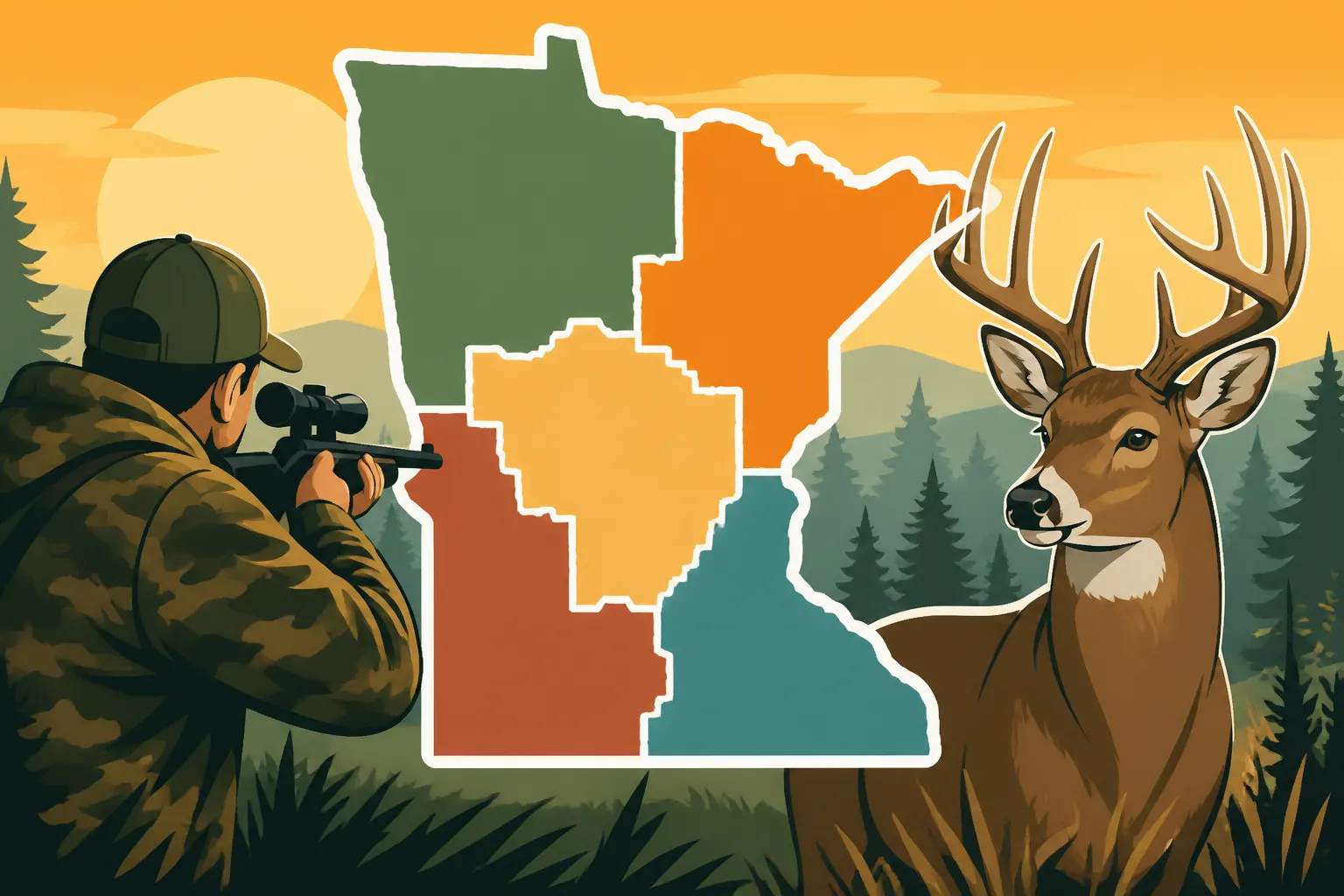
Minnesota's deer hunting landscape is incredibly diverse, stretching from the vast, rugged forests of the north to the rolling farmlands of the south. To manage this diverse population effectively, the Department of Natural Resources (DNR) has divided the state into different zones, each with its own specific rules, season dates, and deer management goals. This zonal system is crucial for every firearm hunter to understand, as it dictates everything from weapon choice to permit area availability. Ignoring these distinctions can quickly lead to a confusing, or even illegal, hunt.
The state is generally divided into three main series: the 100 series in the north, the 200 series in central Minnesota, and the 300 series covering the agricultural areas of the south. Within each of these zones, you'll encounter various "Permit Areas," which are further classified as Intensive, Managed, Lottery, or Hunter Choice. Each classification directly impacts how many deer you can harvest, the type of tags available, and often, the hunting pressure you'll face. It's a system designed to balance hunter opportunity with sustainable deer populations, but it definitely takes some digging to understand. Thankfully, with resources like GoHunt, you can often find detailed information about specific permit areas, including historical harvest data and public land overlays, right at your fingertips. Understanding these overarching categories is the first step in decoding the puzzle that is Minnesota Deer Seasons and Permit Areas.
How Zones and Permit Areas Work Together
Think of the zones as broad geographical regions, each with a general habitat type and deer population characteristic. The 100 series, for instance, is primarily boreal forest, while the 300 series is largely agricultural. Within these zones, Permit Areas (often denoted by a three-digit number, like 172 or 341) are smaller units where deer management is more finely tuned. These Permit Areas are where the rubber meets the road for hunters, as their designation directly affects your tag options.
For example, an "Intensive" Permit Area might allow hunters to harvest multiple antlerless deer, often through bonus tags or liberal quotas, because the DNR aims to reduce the population. Conversely, a "Lottery" Permit Area signifies a more conservative approach, where antlerless tags are limited and allocated via a drawing due to lower deer numbers or specific management goals. A "Managed" Permit Area falls somewhere in between, usually allowing for a single antlerless deer per hunter without a lottery. "Hunter Choice" areas are the most straightforward, generally allowing you to take one deer of either sex, sometimes with specific antler point restrictions. This intricate system is designed to allow the DNR to respond precisely to local deer population trends, habitat conditions, and social tolerances, making it imperative for hunters to check their specific Permit Area's rules before each season.
Navigating Permit Area Designations
The differences in permit area designations are not just bureaucratic hurdles; they are critical pieces of information that shape your entire hunting strategy. If you're hunting in an Intensive area, you might focus on filling multiple tags, perhaps participating in deer drives or targeting does to help meet the management goals. In a Lottery area, your focus shifts to securing that single antlerless tag, if drawn, or primarily hunting for an antlered buck if you weren't successful in the lottery.
It's not uncommon for hunters to find themselves driving an hour or two to hunt a different permit area that aligns better with their hunting goals for the year. Maybe you're looking for a challenging big buck hunt in a Managed area, or perhaps you want to fill your freezer with venison in an Intensive area. The DNR's online resources and mapping tools, sometimes enhanced by platforms like GoHunt, are indispensable for pinpointing these areas and understanding their regulations. Always double-check the specific rules for your chosen Permit Area well in advance of the season, as they can change annually based on deer survey data and harvest success.
The Northern 100 Series: Big Woods Challenges
The 100 Series comprises Minnesota's expansive northern forests, characterized by dense timber, vast public lands, and often lower deer densities compared to the agricultural zones. This is the land of big woods hunting, where patience, woodsmanship, and a willingness to cover ground truly pay off. The terrain can be challenging, ranging from thick popple cuts to mature stands of pine and hardwoods, interspersed with bogs and swamps. The firearm season in the 100 series is typically a shorter, single period, often opening the first weekend in November, coinciding with the peak of the rut in many areas. This season structure allows hunters a concentrated window to pursue deer in a rugged environment. To learn more about this region specifically, check out The 100 Series Firearm Deer Zone.
Hunting the Vast 100-Series Wilderness
Hunting in the 100 Series means embracing the wild. You won't find many standing cornfields or neat hedgerows here. Instead, you'll be navigating miles of public land, often without clear trails, relying on topographic maps, aerial imagery, and perhaps a GPS mapping app to keep your bearings. Access can be limited, sometimes requiring long walks in or even paddling into remote areas. This is where hunters often spend days, or even weeks, scouting before the season, looking for subtle funnels, buck rubs along logging trails, and clear-cuts that offer new browse for deer.
The sheer scale of the landscape can be intimidating, but it also means less human pressure in the deeper reaches. Hunters who are willing to push past the first ridge or leave the easily accessible roads often find success. This style of hunting demands a different kind of preparation; you need to be physically fit, well-versed in wilderness navigation, and equipped for unpredictable northern Minnesota weather, which can transition from mild autumn to heavy snow in a matter of hours. This is also where understanding deer behavior in relation to logging activity becomes critical; deer will often congregate in younger clear-cuts for food and thick thermal cover, making these areas prime hunting grounds.
Tactics for Low-Density Deer in the North
Because deer densities are generally lower in the 100 series, success often hinges on covering ground effectively or strategically positioning yourself in prime travel corridors. Still-hunting, where you slowly move through the woods, stopping frequently to scan, is a classic big woods tactic. You might also consider setting up on pinch points between different habitat types, along ridge lines, or near recent timber cuts where deer are actively feeding. Due to the dense cover, shot distances are often short, making proficiency with your chosen rifle at close range paramount.
While traditional stand hunting can be effective, especially if you've done your homework scouting travel routes, many northern hunters also employ deer drives, particularly on public land. These drives, often involving small groups of hunters, can be incredibly effective at pushing deer out of thick cover towards waiting standers. It requires coordination and knowledge of the terrain, but it's a time-honored tradition in the north. Regardless of your chosen method, remember that the cold November air and unpredictable snow can make tracking difficult, so a well-placed shot is always your best insurance for a quick recovery in this rugged country.
Central Minnesota's 200 Series: Transition Zone Hunting
The 200 Series of Minnesota represents a fascinating transition zone, blending elements of the northern forests with the more agricultural landscapes of the south. Here, you'll find a mosaic of habitat: small woodlots, larger tracts of state and county forest, sprawling cattail marshes, and expanding agricultural fields. This diversity translates to a different kind of deer hunting, often characterized by higher deer densities than the north, but with unique challenges related to fragmented habitat and increased human population. The firearm season structure in the 200 series generally mirrors the 100 series, with a single, often shorter, season opening in early November. This unified season often means higher hunter concentrations, especially on opening weekend.
Blending Big Woods and Farm Edge in the 200s
Hunting in the 200 series means becoming proficient at reading a diverse landscape. One day you might be tracking deer through a dense stand of oaks, and the next you're setting up on the edge of a cornfield. Deer in these areas are highly adaptable, utilizing the various habitat types for food, cover, and bedding. Wooded river bottoms and drainages become critical travel corridors, especially where they connect larger blocks of timber to agricultural fields. These areas often experience higher deer numbers because they offer the best of both worlds: abundant food from farming operations and secure cover in the timber or thick marshlands.
Public lands in the 200 series, while not as vast as the deep north, can still offer excellent opportunities, especially state forests and Wildlife Management Areas (WMAs). However, these public lands tend to see more pressure. Smart hunters will use mapping tools, like those found on GoHunt, to identify less-traveled pockets, often by focusing on areas requiring a longer walk-in or those bordered by less accessible features like large swamps. The mix of cover also means that scouting for sign — rubs, scrapes, and trails — is crucial for understanding how deer are using the fragmented landscape to their advantage.
Adapting Strategies for Diverse Landscapes
Given the mixed habitat, hunters in the 200 series often employ a hybrid approach to their tactics. Stand hunting from a treestand or a ground blind is very popular, especially when set up on a food source transition, a travel corridor between bedding and feeding areas, or a funnel that pinches deer movement. Since many areas are broken up by roads and private parcels, understanding deer movement patterns between these fragments is key. Look for areas where small woodlots connect, creating natural funnels, or where heavy cover leads directly to agricultural fields.
For those looking for a bit more action, small-scale deer drives can be effective in pushing deer out of dense cover, like overgrown woodlots or cattail sloughs. Just be mindful of property lines and other hunters, especially on busy public land. Because this zone often sees more pressure, deer tend to be more nocturnal and wary. Early morning and late evening hunts, especially during the rut when bucks are more active, can be particularly productive. Patience and adaptability are crucial here; what works in a hardwood forest might not be effective on a field edge, and vice-versa. Understanding Hunting Minnesota Farmland Deer can be particularly useful when you're on the edges of agricultural areas here.
The Southern 300A and 300B Series: Farmland and Multiple Seasons
Southern Minnesota, encompassed by the 300 Series, is a deer hunter's paradise in many respects, characterized by rich agricultural lands, dense deer populations, and some of the state's largest bucks. Unlike the northern zones, much of this land is privately owned, making landowner permission a critical component of successful hunting here. The 300 Series is further complicated by having split firearm seasons: the 300A season (often the same as the 100/200 series opener) and the later 300B season. This split offers extended opportunities but also requires careful attention to specific dates and permit area rules. Hunters in these zones will often encounter "Intensive" and "Lottery" permit areas due to the high deer numbers and the DNR's efforts to manage the population.
The Rich Farmland and Split Seasons of 300A
The 300A season typically runs concurrently with the statewide opener, giving hunters in the southern zones a chance to hunt during the peak of the rut in some areas. The primary habitat here is agricultural: cornfields, soybean fields, and alfalfa, interspersed with river bottom timber, small woodlots, and grassy Conservation Reserve Program (CRP) lands. Deer thrive in this environment, with abundant food sources contributing to larger body sizes and impressive antlers. However, the predominance of private land means that securing access is paramount. Knocking on doors, building relationships with landowners, and respecting their property are essential skills for hunters in this zone.
Tactically, hunting the 300A season often revolves around food sources. Setting up on field edges, pinch points leading to and from bedding areas in woodlots, or along major drainages that deer use for travel are common strategies. Ground blinds are popular, especially in areas with limited trees for treestands. The sheer number of deer means that even in pressured areas, opportunities can arise, especially for patient hunters who understand how deer use the cover that is available. It’s a completely different game than the big woods, demanding keen observation of agricultural patterns and deer movement relative to those fields. You can find more detail about this specific season in The 200 and 300A Firearm Deer Zones.
Navigating the Late-Season Opportunities in 300B
The 300B season, often opening several weeks after the main firearm season has closed statewide, offers a unique opportunity for southern Minnesota hunters. This late season occurs when crops are typically out of the fields, and deer are heavily focused on remaining food sources. It's often colder, with the possibility of snow, which can both aid in tracking and push deer into thicker thermal cover. This season can be especially good for filling antlerless tags, as deer often congregate in larger groups around prime food sources. The later dates give hunters another chance, particularly if the initial 300A season was slow or if they're holding extra antlerless tags from Intensive permit areas.
Hunting 300B requires a shift in tactics. Deer are often more nocturnal and wary after surviving the earlier seasons. Focus on hard-to-reach pockets of cover during daylight hours, or target the brief windows when deer move from bedding areas to late-season food sources like standing beans, cut corn, or brassicas. Snow can reveal fresh tracks, making it easier to pinpoint active areas and even attempt still-hunting or small drives. Access to private land becomes even more valuable, as it might hold sanctuaries that deer retreat to. For more detailed insights into this specific late-season hunt, consider reading The 300B Late Firearm Zone.
Understanding the Antlerless Lottery in Southern Zones
Many of the Permit Areas in the 300 Series, and some in the 200s, are designated as "Lottery" areas for antlerless deer. This means that if you wish to harvest an antlerless deer in these areas, you must apply for a special permit through a lottery system before the season begins. This is a critical distinction from "Intensive" or "Managed" areas, where antlerless tags might be over-the-counter or included with your standard license. The lottery system is a tool the DNR uses to carefully control the antlerless harvest in areas where deer populations need to be stabilized or allowed to grow.
Applying for the antlerless lottery typically has a specific deadline, usually in early September, so it's vital to mark your calendar. If you are successful in the lottery, you'll receive an antlerless permit that allows you to harvest one antlerless deer in your chosen Permit Area. If you aren't drawn, you're generally restricted to hunting antlered bucks in that specific area (unless it's an "Either Sex" or "Hunter Choice" area, which are rare in lottery zones). This system makes pre-season planning crucial, especially if filling the freezer is a high priority. Many hunters will apply in several different lottery areas to increase their odds. For a full breakdown, check out How the Antlerless Lottery Works.
Special Considerations for Firearm Hunters
Beyond the specific zone regulations, there are several broader considerations that every firearm hunter in Minnesota needs to be aware of. These include the ongoing management of Chronic Wasting Disease (CWD), the nuances of accessing public and private lands, and the importance of ethical hunting practices that extend beyond simply following the letter of the law. Staying informed on these topics not only helps ensure a successful hunt but also contributes to the health of Minnesota's deer herd and the future of hunting in the state.
Chronic Wasting Disease Protocols and Zones
Chronic Wasting Disease (CWD) continues to be a significant concern for Minnesota's deer herd, and the DNR has implemented strict protocols to monitor and manage its spread. Hunters, particularly those in designated CWD management and surveillance zones, have a crucial role to play. These zones often have mandatory carcass movement restrictions, meaning you cannot transport whole deer out of the zone until CWD test results are negative. There may also be mandatory CWD sampling requirements, where hunters must submit their harvested deer for testing at designated stations or through mail-in kits.
These rules are not arbitrary; they are designed to limit the human-assisted spread of this fatal neurological disease. Before you head afield, always check the latest CWD regulations for your specific Permit Area. You can find detailed maps and up-to-date information on the DNR website. Knowing where CWD Management Zones in Minnesota are located and understanding the rules is vital to avoid potential penalties and, more importantly, to help protect the state's deer population. Properly handling carcasses, whether through deboning or processing within the zone, is a responsibility all hunters must take seriously.
Finding and Accessing Public Hunting Land
While Minnesota boasts a good amount of public hunting land, especially in the northern half of the state, finding and accessing it can sometimes be a challenge. Wildlife Management Areas (WMAs), State Forests, and National Forests (like the Superior and Chippewa) offer vast opportunities, but they also vary greatly in accessibility and the types of hunting experiences they provide. In the more agricultural southern zones, public land might be limited to smaller WMAs, Waterfowl Production Areas (WPAs), or parcels of county-managed land.
Using mapping applications like GoHunt or the DNR's own Recreation Compass is indispensable for identifying public land boundaries, access points, and potential areas of interest. These tools can show you forest roads, trails, and even topographic features that might concentrate deer. Always be mindful of vehicle access rules on public land; not all roads are open to motorized vehicles, and some areas may require walk-in access only. Don't be afraid to put in the miles on foot – often, the best spots are found well away from easy access, where fewer hunters are willing to venture. A good starting point for exploring these opportunities is Public Hunting Land in Minnesota.
Respecting Private Land Boundaries and Asking for Permission
In much of Minnesota, especially in the central and southern zones, a significant portion of the prime deer habitat is privately owned. This means that securing permission from landowners is often essential for a successful firearm hunt. Never assume you have permission to hunt private land, even if it appears unposted or unmanaged. Trespassing is not only illegal but also damages the reputation of all hunters.
The best approach is to ask for permission well in advance of the season, ideally in person. Be polite, offer to help with chores, and always be respectful of the landowner's property and wishes. Building a relationship with landowners can open up incredible hunting opportunities for years to come. Remember to clarify what type of hunting is allowed, where you can park, and any other specific rules they might have. Even if you hunt primarily public land, knowing Finding Minnesota Property Lines can prevent accidental incursions onto private ground. A simple "no trespassing" sign means exactly that, and it's our responsibility as ethical hunters to honor those boundaries.
Essential Gear and Planning for Firearm Seasons
A successful and enjoyable firearm deer season in Minnesota goes beyond just understanding the zones and regulations; it also requires careful planning and the right gear. From your choice of rifle and optics to the layers you wear to combat Minnesota's notoriously fickle November weather, being prepared can make all the difference. Don't leave your success to chance – invest time in scouting and gear preparation.
Choosing Your Firearm and Optics Wisely
With Minnesota's recent changes that made rifles legal statewide, hunters now have more options than ever. The key is to choose a rifle and caliber appropriate for the type of hunting you'll be doing and the terrain you'll be in. For the dense timber of the 100 series, where shots are often close and fast, a quick-handling lever-action or a bolt-action in a caliber like .30-30, .308, or 6.5 Creedmoor can be excellent. In the more open farm country of the 300 series, where longer shots might be possible, calibers like .270, .30-06, or a flat-shooting magnum might be considered. Even straight-wall cartridges are still a viable option, especially for those who prefer them or are hunting in one of the few remaining shotgun-only counties. For a deep dive into your weapon choice, check out Rifle Setups for Minnesota Deer Hunting.
Optics are equally important. A quality rifle scope with good low-light performance is invaluable, especially during legal shooting hours at dawn and dusk. Magnification often doesn't need to be extremely high for typical Minnesota ranges; a 3-9x or 4-12x is usually more than sufficient. Don't forget a good set of binoculars (8x or 10x) to scan distant cover or confirm details, and a rangefinder is always a good idea, even for shorter distances, to remove any doubt about shot placement.
| Zone Series | Primary Habitat | Typical Deer Density | Firearm Season Dates | Common Permit Area Types | Suggested Calibers |
|---|---|---|---|---|---|
| 100s (North) | Boreal Forest, Pine | Low to Moderate | Early November (Single) | Managed, Lottery, Hunter Choice | .30-30, .308, 6.5CM, .243 |
| 200s (Central) | Mixed Forest, Farm Edge, Wetlands | Moderate to High | Early November (Single) | Managed, Lottery, Intensive | .308, 6.5CM, .270, .30-06 |
| 300A (South) | Farmland, Woodlots, River Bottoms | High | Early November (Split) | Lottery, Intensive | .270, .30-06, 7mm-08, .308 |
| 300B (South) | Farmland, Remaining Cover | High (Late Season) | Late November/Early December | Lottery, Intensive | .270, .30-06, 7mm-08, .308 |
Dressing for Success in Minnesota's November Weather
Minnesota's November weather is famously unpredictable. You could experience a mild, sunny day, pouring rain, or a full-blown blizzard, sometimes all within the same week. Layering is not just a suggestion; it's a necessity. Start with a moisture-wicking base layer, add insulating mid-layers like fleece or wool, and top it off with a waterproof and windproof outer shell. Wool is an excellent choice for insulation as it retains warmth even when wet. Don't forget a warm hat, gloves, and insulated, waterproof boots that can handle mud, snow, and long periods of sitting still.
Critically, you must adhere to Minnesota's blaze orange requirements during the firearm season. This typically means wearing a visible cap and an outer garment, above the waist, that is at least 50% blaze orange or blaze pink. This ensures you are visible to other hunters and promotes safety in the field. Remember that sitting still in a stand during cold weather will feel much colder than walking, so always overdress slightly and shed layers if you get warm. For more specific advice, check out Clothing for a Minnesota November.
Pre-Season Scouting and Using Mapping Tools
Modern hunting is greatly enhanced by effective pre-season scouting and the intelligent use of mapping tools. Long before the firearm season opens, you should be out in your chosen hunting area, looking for deer sign, identifying travel corridors, bedding areas, and potential food sources. Aerial photographs, easily accessible through platforms like GoHunt, can reveal subtle features that are hard to spot on the ground, such as hidden clear-cuts, old logging roads, or small patches of hardwoods within a larger swamp.
Utilize these mapping tools to pinpoint potential stand locations, mark property lines, and plan entry and exit routes that minimize your disturbance. Pay attention to how deer might move between different cover types and how prevailing winds might affect your setup. Even if you're hunting familiar ground, deer patterns can change from year to year based on food availability, logging activity, or hunting pressure. Fresh scouting provides up-to-date information, giving you the confidence to place your stand or plan your drive in the most productive spots. Detailed scouting helps identify Where Big Woods Bucks Bed in Minnesota, for instance, giving you a serious advantage.
Disclaimer
The information provided in this guide is for general informational purposes only and does not constitute legal advice. Hunting regulations, season dates, and permit area rules can change frequently. Always consult the official Minnesota Department of Natural Resources (DNR) website and current hunting regulations booklet for the most accurate and up-to-date information before planning and executing your hunt. It is the hunter's responsibility to know and follow all applicable laws and regulations.