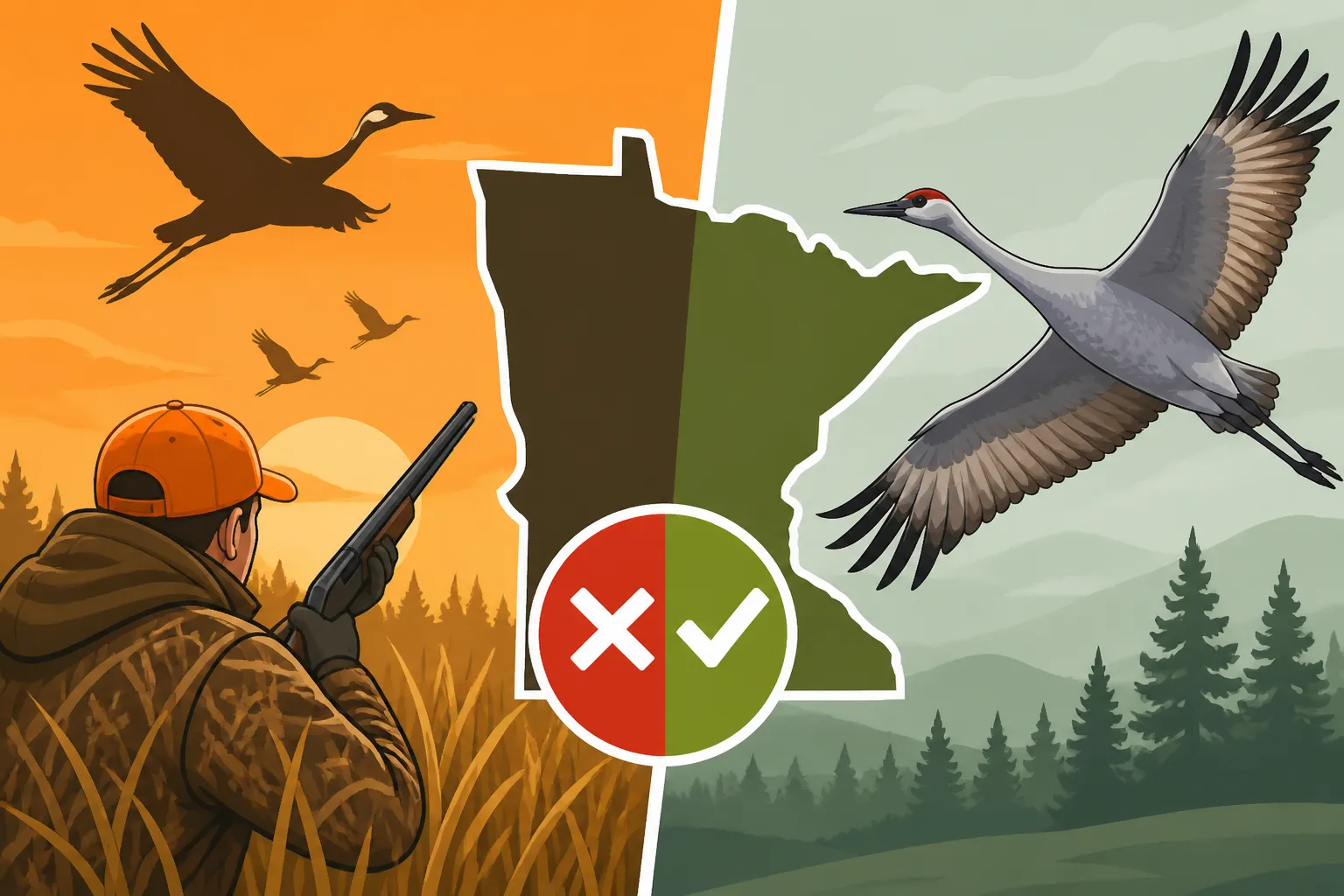
Whether Minnesota Will Hunt Sandhill Cranes
The question of whether Minnesota will ever have a Sandhill Crane hunting season is one that sparks a lot of conversation among hunters, conservationists, and agricultural producers alike. Many folks who spend time in the fields and marshes of Minnesota are seeing more and more of these magnificent birds, and naturally, the thought turns to whether they'll ever be a game species. This guide will dive deep into the current situation, explore the arguments for and against a season, and discuss what it might take for a Sandhill Crane hunt to become a reality in our great state.
The Current Status of Sandhill Crane Hunting in Minnesota
Right now, if you're a hunter in Minnesota, Sandhill Cranes are not on your target list. They're simply not classified as a game bird here, meaning there is no legal season, no bag limit, and no way to pursue them under current regulations. This can be a bit confusing for hunters, especially those who travel to other states where crane seasons are well-established. It’s not uncommon to hear someone lamenting the lack of a crane season, especially when they witness fields full of the big birds.
The fact is, Minnesota has a strong conservation ethic, and the journey for any species to move from protected or non-game status to a huntable game animal is a long and often contentious one. It involves significant biological research, public input, and careful deliberation from state wildlife agencies. For many years, Sandhill Cranes were a species in recovery, and while their numbers have rebounded impressively, the regulatory framework has not yet shifted to include a hunting season within our borders.
Why Sandhill Cranes Aren't Currently Hunted
Historically, Sandhill Cranes faced significant population declines due to habitat loss and unregulated hunting in the late 19th and early 20th centuries. Because of this, they were given protected status across much of their range, allowing populations to recover. Minnesota played a part in this recovery, with dedicated conservation efforts and the natural re-establishment of breeding populations, particularly in the western and northwestern parts of the state. Today, Minnesota Sandhill Crane Numbers are robust and growing.
Beyond their historical vulnerability, Sandhill Cranes hold a unique place in the public eye. They are large, conspicuous birds with distinctive calls and elaborate courtship dances, making them popular subjects for birdwatchers and nature enthusiasts. For many non-hunters, the idea of hunting such a charismatic species can be met with strong opposition, often fueled by an emotional connection to the birds. This public perception plays a significant role in any discussions about potential seasons.
Furthermore, any decision about migratory bird hunting isn't solely a state matter. Migratory birds, by their very nature, cross state and international borders, and as such, they fall under federal jurisdiction and international treaties. The U.S. Fish and Wildlife Service (USFWS) works with flyway councils (like the Mississippi Flyway Council, which Minnesota belongs to) to manage populations and set frameworks for hunting seasons. For a state to establish a season for a species like Sandhill Cranes, it must first gain approval through this federal process, which involves rigorous scientific review and population modeling.
The Regulatory Landscape for Migratory Birds
The federal government, through the USFWS, sets the overarching rules for migratory bird hunting in the United States. This includes species classification, season lengths, bag limits, and shooting hours. Individual states then have the authority to set their own seasons within these federal frameworks, often opting for more conservative regulations than the federal maximums. This system ensures that migratory bird populations are managed at a continental scale, preventing overharvest in one area from negatively impacting populations in another.
For a new species to be added to the huntable list within a state, a proposal typically goes through several layers of review. First, the state's wildlife agency (in Minnesota's case, the DNR) would need to conduct research to demonstrate that the local and flyway-wide populations can sustain a hunting season without detrimental effects. This often involves population surveys, harvest modeling, and an assessment of potential impacts.
Once the state agency is satisfied, they would typically present a proposal to their respective flyway council. These councils are made up of representatives from each state and province within a flyway, and they play a crucial role in recommending migratory bird hunting regulations to the USFWS. Even with flyway council endorsement, the USFWS still has the final say, considering national policy, scientific data, and public input before granting approval. It’s a deliberately slow and cautious process to ensure the long-term health of these shared resources.
The Push for a Minnesota Sandhill Crane Season
Despite the hurdles, there's a growing voice among Minnesota hunters and farmers advocating for a Sandhill Crane season. Many argue that the biological and ecological reasons for maintaining a non-game status are diminishing, especially given observed population trends and the experiences of neighboring states. It’s not just a desire for a new hunting opportunity; it’s often a practical response to what people are seeing on the ground.
Hunters are always looking for ethical opportunities to expand their pursuits, and the Sandhill Crane offers a challenging hunt and a unique table fare. When they see states like Wisconsin, Kentucky, and Tennessee successfully managing crane seasons, it begs the question: why not Minnesota? For some, it feels like an untapped resource that could provide additional recreational and economic benefits while helping manage a booming population.
Furthermore, the growing popularity of hunting resources like GoHunt, which provides detailed mapping and planning tools, means hunters are better informed about species movements and densities than ever before. They see the numbers and the opportunities, leading to increased pressure on state agencies to consider new hunting options.
Population Growth and Crop Depredation
One of the strongest arguments for a Sandhill Crane season comes from agricultural producers, particularly in parts of western and northwestern Minnesota. Sandhill Cranes are primarily herbivorous, and while they forage on natural seeds and insects, they are increasingly attracted to agricultural fields, especially those planted with corn and small grains. As crane populations have surged, so too have reports of crop depredation.
Farmers describe significant damage to newly planted fields, where cranes pull up sprouted corn seedlings to eat the germinating kernel. Later in the season, they can also cause damage to mature crops. This isn't just a minor annoyance; it can result in substantial financial losses for farmers, forcing them to replant or accept reduced yields. A hunting season, proponents argue, could help mitigate some of this damage by dispersing birds and potentially reducing local populations in high-impact areas.
It's a classic wildlife management challenge: balancing the needs of a thriving wildlife population with human economic interests. Hunters, many of whom come from agricultural backgrounds, often sympathize with farmers and see a hunting season as a viable tool in this balance. They recognize that healthy wildlife populations sometimes need active management to prevent conflicts.
Neighboring State Precedents and Hunter Interest
Minnesota is part of the Mississippi Flyway, a major migratory bird corridor that stretches from the Arctic to the Gulf of Mexico. Within this flyway, several states have already established successful Sandhill Crane hunting seasons. Wisconsin, our neighbor to the east, has had a limited season for many years, managing harvest through a permit system. Further south, states like Kentucky and Tennessee also have seasons. These precedents demonstrate that a hunting season for Sandhill Cranes can be implemented responsibly without harming the overall flyway population.
The existence of these seasons in other states serves as a powerful argument for Minnesota hunters. It shows that the biological capacity exists and that effective management strategies are in place elsewhere. Many Minnesota waterfowl hunters, who regularly travel for species like ducks and geese, are keenly interested in the potential for a new migratory bird opportunity close to home. It adds another exciting challenge to the hunting calendar, offering a unique experience that combines elements of waterfowl and upland bird hunting.
The growing interest in diverse hunting opportunities, from Minnesota Waterfowl Hunting on Lakes and Potholes to Pheasant Hunting Minnesota Farmland, highlights a desire among the hunting community for new challenges. A Sandhill Crane season would fit perfectly into this landscape, offering a chance to pursue a large, wary bird that demands skill and strategic thinking. Hunters are increasingly advocating for these opportunities, especially when they see populations thriving.
Challenges and Concerns Facing a Potential Season
While the arguments for a Sandhill Crane season in Minnesota are compelling for many, there are significant challenges and concerns that need to be addressed before any season could realistically move forward. These concerns are rooted in both biological realities and public sentiment, often creating a complex situation for wildlife managers. It’s never as simple as just saying “yes” or “no.”
The process of opening any new hunting season, especially for a large, iconic bird, involves navigating a minefield of public opinion and intricate regulatory requirements. It’s a delicate balance that requires careful consideration of all viewpoints and a commitment to sound scientific principles. Ignoring these challenges would be a disservice to both the birds and the broader public.
Any proposal would face intense scrutiny, and rightly so. Our state has a rich history of conservation, and decisions about game species are not made lightly. This means addressing concerns head-on and ensuring that any potential season is structured in a way that prioritizes the long-term health of the Sandhill Crane population and respects the values of all Minnesotans.
Public Perception and Identification Issues
One of the biggest hurdles for establishing a Sandhill Crane season in Minnesota is public perception. As mentioned, these birds are highly visible, and many people, including those who don't hunt, have a strong appreciation for them. They are seen as symbols of the wild, and there's often resistance to the idea of them becoming a hunted species. This emotional connection can generate significant opposition, making it difficult for agencies to move forward without a clear and compelling justification.
Beyond general sentiment, there's a very real concern about species identification. Sandhill Cranes, while distinctive, bear a resemblance to the federally endangered Whooping Crane. Whooping Cranes are extremely rare and protected by law, making any accidental harvest a serious conservation and legal issue. While Whooping Cranes are primarily found further west, they do occasionally migrate through Minnesota. This risk of mistaken identity means that any Sandhill Crane season would require extensive hunter education programs focusing specifically on crane identification, likely with mandatory training components.
The need for careful identification would also impact how and where a season could be implemented. Zones where Whooping Cranes are more likely to occur might be excluded, or specific regulations might be put in place to minimize risk. It's a critical safety net that would require buy-in from all stakeholders.
| Feature | Sandhill Crane | Whooping Crane |
|---|---|---|
| Size | Large (3-4.5 ft tall, 5.5-7.5 ft wingspan) | Very Large (4.5-5.5 ft tall, 7-8 ft wingspan) |
| Color | Grayish-brown body, reddish crown | Pure white body, black wingtips (visible in flight) |
| Call | Rolling, bugling "kar-r-r-o-o-o" | Loud, resonant "ker-loo, ker-lee-loo" |
| Legs/Feet | Black | Black |
| Habitat | Wetlands, marshes, agricultural fields | Marshes, shallow wetlands, grasslands |
| Population | Common, increasing (North American population) | Critically Endangered, rare (approx. 800 total) |
Management Complexities and Scientific Review
Even with positive population trends and growing hunter interest, the scientific and management complexities of establishing a new migratory bird season are considerable. It's not simply a matter of opening a season; it requires developing a robust management plan that ensures sustainability and adheres to federal guidelines. This means extensive data collection, analysis, and modeling.
The Minnesota DNR would need to conduct thorough population assessments to understand local breeding populations, migratory patterns, and potential harvest impacts. This information would then be used to craft a season proposal, including recommended season dates, bag limits, and specific hunting zones. This proposal would then need to pass through the Mississippi Flyway Council for review and recommendation to the USFWS. This process is highly data-driven and requires a strong scientific justification.
Furthermore, there would be a need for robust hunter reporting and monitoring systems. Like other migratory birds, hunters would likely be required to obtain a Minnesota Migratory Game Bird Certification and report their harvest. This data is crucial for adaptive management, allowing wildlife agencies to adjust season parameters in future years to ensure the long-term health of the crane population. Without this scientific rigor and commitment to monitoring, it's unlikely a season would ever get off the ground.
What the Future Might Hold for Minnesota Hunters
So, what does all this mean for the Minnesota hunter hoping to add Sandhill Cranes to their autumn pursuits? The path to a season is certainly not short or easy, but it’s not entirely impossible either. The landscape of wildlife management is constantly evolving, driven by ecological changes, population dynamics, and shifts in public opinion and recreational interests. It’s a process that requires patience, advocacy, and a deep understanding of the regulatory framework.
For those who are passionate about the possibility, staying informed and engaged is key. Following the discussions within the DNR, participating in public comment periods if they arise, and communicating with conservation groups can all play a role in shaping future decisions. Every state has unique challenges and opportunities when it comes to wildlife, and Minnesota is no exception.
The discussion around a Sandhill Crane season also highlights the importance of broader conservation efforts. Healthy habitats benefit all wildlife, and supporting initiatives that protect wetlands and restore native grasslands contributes to the overall health of the ecosystems that support Sandhill Cranes and countless other species. Hunting and conservation go hand-in-hand, and this scenario is a perfect example of that intricate relationship.
The Path to a New Migratory Bird Season
If Minnesota were to pursue a Sandhill Crane season, it would follow a well-established, multi-step process. First, the Minnesota DNR would need to conduct a thorough biological assessment, demonstrating that the state's Sandhill Crane population and the larger Mississippi Flyway population could sustain a harvest. This would involve extensive research, population modeling, and an evaluation of potential impacts.
Next, if the DNR determines that a season is biologically feasible and desirable, they would develop a proposal outlining potential season dates, bag limits, and specific hunting zones. This proposal would then be presented to the public for comment, allowing all stakeholders – hunters, farmers, birdwatchers, and concerned citizens – to voice their opinions. Public input is a critical part of the process, and strong opposition can significantly delay or even halt a proposal.
Finally, the proposal, after incorporating public feedback and scientific review, would be submitted to the Mississippi Flyway Council. If the council recommends approval, it then goes to the USFWS for final authorization. This entire process can take years, as it requires careful consideration at every level to ensure the long-term sustainability of the species. It's not a decision made overnight, nor should it be, given the importance of responsible wildlife management.
Preparing for a Potential Opportunity
While there's no Sandhill Crane season in Minnesota yet, it doesn't hurt to think about what preparing for such an opportunity might entail. If a season were to eventually be established, hunters would likely need to adapt their strategies and gear. Sandhill Cranes are known for their wariness and sharp eyesight, making them a challenging quarry. You can't just stumble upon them; it would require specific tactics.
Hunters would need to scout extensively, often using tools like GoHunt to identify key feeding and roosting areas. Decoys, similar to those used for geese, would likely be essential to draw birds within range. Concealment would be paramount, meaning layout blinds or well-constructed pit blinds would be crucial for success, much like for Layout Blind Hunting Minnesota Farm Fields. Furthermore, hunters would need to invest in new calls to mimic the distinctive bugling of the cranes.
Beyond gear, new educational requirements would almost certainly be put in place, particularly regarding species identification to prevent accidental harvest of Whooping Cranes. This might involve an online course or in-person seminar, similar to the requirements for Minnesota Hunter Safety Requirements. Hunters would also need to be mindful of new regulations regarding season dates and specific zones, which could vary significantly from other Minnesota Waterfowl Zones and Seasons. It would be a new challenge, requiring dedicated effort and a commitment to ethical hunting practices.
Disclaimer
This article is for general informational purposes only and does not constitute professional advice. Laws, prices and regulations vary by location and change over time. Consult a qualified professional for guidance on your specific situation.