Root River Valley Turkey and Deer Ground
For many Minnesota hunters, the idea of prime deer and turkey ground often conjures images of thick northern forests or vast western farmlands. But if you haven't explored the southeastern bluff country, particularly the rich, rolling landscape of the Root River Valley, you're missing out on some truly incredible opportunities. This area presents unique challenges and rewards, and this guide will walk you through how to find and hunt this distinct terrain for both whitetails and wild turkeys.
The Unique Appeal of the Root River Valley for Deer and Turkey Hunters
The Root River Valley is a special place in Minnesota, a real gem that stands apart from much of the state's flatter, more agricultural or lake-dotted landscape. Here, the deeply carved river system has created a rugged topography of steep bluffs, winding coulees, and narrow creek bottoms. This isn't your typical flat cornfield hunting, and that's precisely what makes it so appealing to those willing to put in the effort.
A Landscape Carved for Wildlife
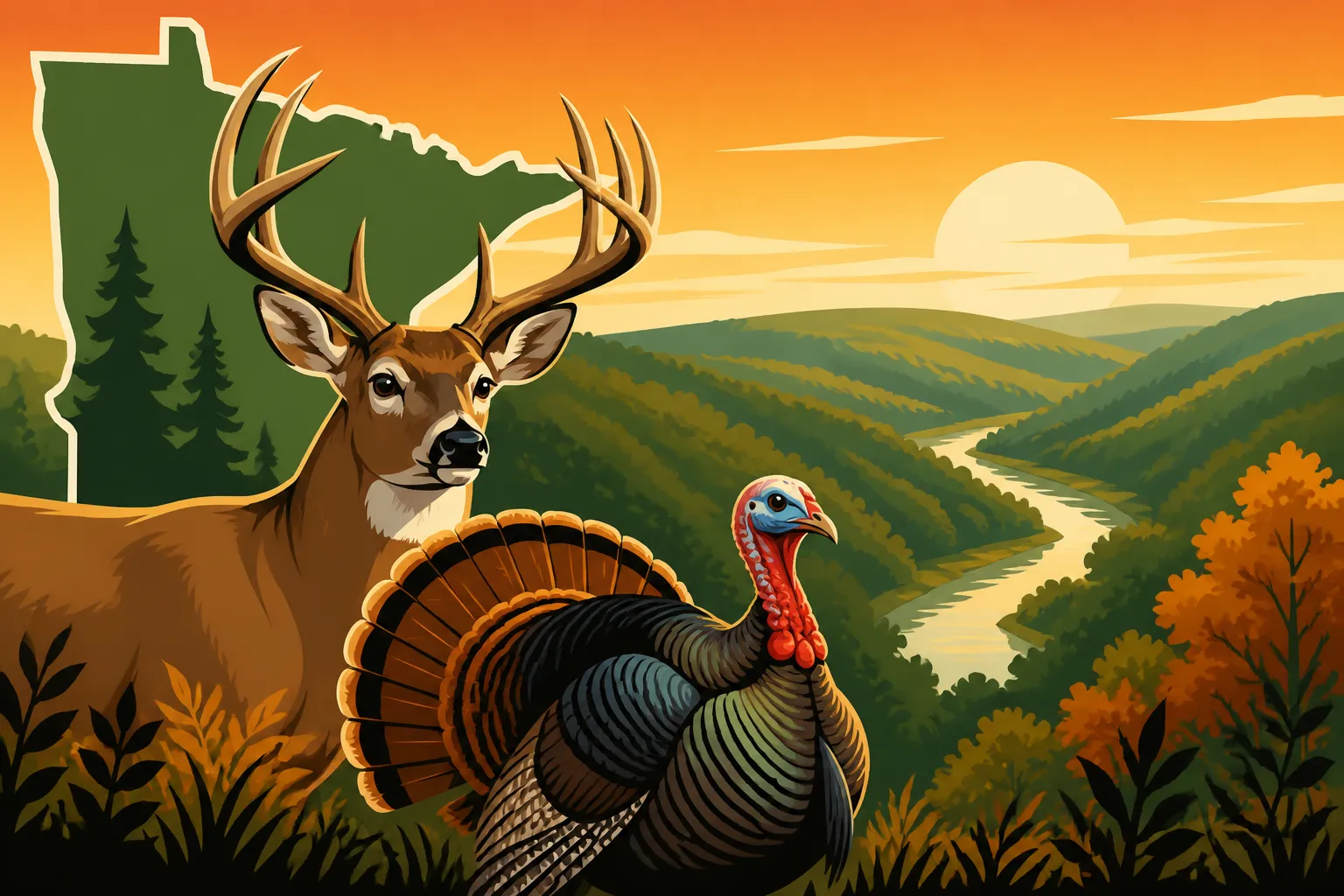
Unlike the glacial plains that define much of Minnesota, the Root River Valley, part of what's known as the Driftless Area, was untouched by the last glaciers. This geological history left behind a dramatic landscape of limestone bluffs, caves, and a dense network of hardwood forests mixed with cedar thickets and agricultural fields on the ridgetops. This diverse habitat creates an absolute haven for both deer and turkeys. The steep slopes offer thermal cover in winter and escape routes from pressure, while the varied mast crops, brushy draws, and interspersed farm fields provide abundant food sources year-round. It's a land where a mature buck can seemingly vanish into thin air, and a flock of turkeys can roost high on a bluff, hidden from nearly every angle.
Why This Region Holds Exceptional Potential
The combination of rugged terrain and varied habitat leads to excellent hunting potential. For deer, the broken landscape creates natural funnels and pinch points, forcing deer movement into predictable patterns if you can decipher the topography. Mature bucks often grow large here, benefiting from the plentiful food and the difficulty hunters face accessing their core areas. As for turkeys, the steep hillsides provide ideal roosting sites, while the open hardwoods and adjacent fields are perfect for feeding and strutting. The population of eastern wild turkeys has really taken hold in this region, offering fantastic spring and fall hunting opportunities. It’s a place where you might work hard for every bird, but the rewards are often spectacular.
Navigating Public Hunting Lands in Southeast Minnesota
Finding good public ground in the Root River Valley might feel daunting at first, given the mix of private farms and rugged terrain. However, the state has done an admirable job of preserving significant tracts for public use, particularly through Wildlife Management Areas (WMAs) and State Forests, along with the unique Walk-In Access (WIA) program.
Key Public Access Points
The cornerstone of public hunting in the Root River Valley often centers around WMAs like the expansive Whitewater WMA Deer and Turkey Hunting, which is legendary for its deer and turkey populations, though it can see considerable pressure. Other smaller WMAs are scattered throughout the region, offering hidden gems if you're willing to do some research and boot-leather scouting. State Forests, while less numerous than in northern Minnesota, also provide critical blocks of accessible land. These areas typically have a mix of timber types, from mature hardwoods to younger stands, providing diverse habitat that can hold game throughout the season. Remember that vehicle access rules vary, so always check local regulations before driving off main roads.
Leveraging Mapping Tools for Success
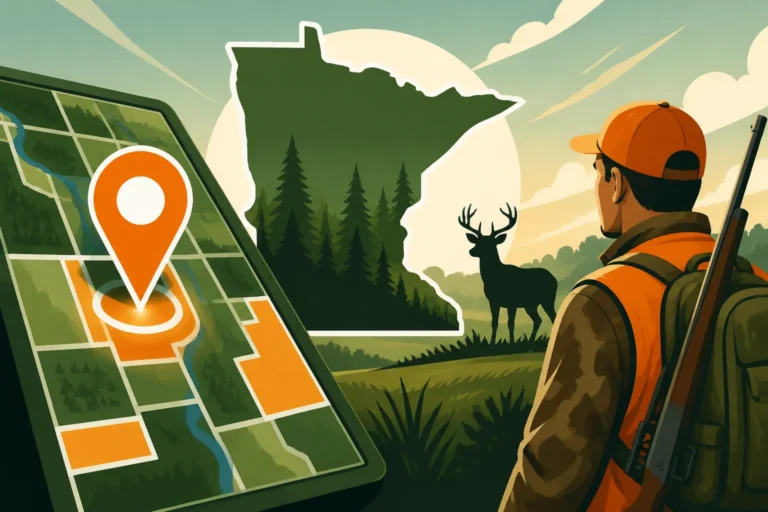
In this complex terrain, a good mapping application is not just a luxury, it's essential. Tools like onX Hunt are invaluable for identifying property lines, public land boundaries, and topographical features like steep slopes, drainages, and ridge lines. You can overlay satellite imagery to spot clear-cuts, old logging roads, and potential food sources. Without a detailed map showing land ownership, you risk trespassing or missing out on prime, unpressured corners of public ground. I've spent countless hours studying aerial photos and topo maps on my phone, identifying potential stand locations, escape routes, and bedding areas before ever setting foot on the ground. Using Recreation Compass Without Cell Service is a crucial skill here, as cell service can be spotty in the deeper valleys.
Understanding Walk-In Access (WIA)
Minnesota's Walk-In Access (WIA) program is a game-changer for hunting parts of the Root River Valley. This program leases private land for public hunting, specifically for pheasants, deer, and turkeys. These parcels are typically marked with distinctive yellow signs and offer hunters the chance to access ground that might otherwise be unavailable. While often found in more agricultural settings, some WIA parcels are located strategically in bluff country, providing access to creek bottoms or wooded edges adjacent to known game travel corridors. The beauty of WIA is that it often disperses pressure and gives you more options, particularly on those busy opening weekends. Always respect the landowners and remember that these are non-motorized access only areas.
Proven Tactics for Root River Valley Whitetails
Deer hunting in the Root River Valley is a different beast than hunting the flat woods up north or the small woodlots of central Minnesota. The terrain dictates tactics, and those who adapt will find success.
Reading the Bluff Country Terrain
The key to consistently finding deer in the Root River Valley is understanding how they use the steep bluffs, deep coulees, and narrow benches. Deer don't want to expend unnecessary energy, so they'll often follow the path of least resistance. Look for subtle benches or "deer trails" that wrap around the bluffs, rather than going straight up and down. These become natural travel corridors, especially during the rut. Creeks and drainages at the bottom of the valleys also act as highways, connecting different parts of the landscape. Funnels are everywhere here: narrow saddles between bluffs, points of timber that extend into fields, or even subtle changes in vegetation density can concentrate deer movement. Reading a Ridge for Northern Minnesota Deer tactics apply surprisingly well to the bluffs here.
| Terrain Feature | Deer Use | Hunting Strategy | Key Considerations |
|---|---|---|---|
| Steep Bluffs | Bedding, escape routes, thermal cover | Hunt edges, benches, saddles; use wind to your advantage | Difficult access, thick cover, tricky thermals |
| Coulees/Draws | Travel corridors, bedding, food (mast) | Set up on cross-wind trails, near intersections | Wind swirling, thick brush, limited visibility |
| Creek Bottoms | Main travel routes, water source, winter food | Ambush points where trails converge, early/late season | Can be wet, loud with leaves, human activity |
| Ridgetops | Feeding (agriculture), open timber travel, staging | Morning/evening hunts on field edges, funnels | Highly exposed, can be pressured, thermal inversions |
| Saddles/Pinch Points | Natural bottlenecks, highly trafficked during rut | Prime stand locations for rut activity | Often high-pressure spots, early arrival crucial |
Stand Placement and Entry/Exit Routes
Given the steep terrain, your entry and exit routes are critical, perhaps more so than anywhere else. You absolutely cannot afford to spook deer on your way in or out. Use the terrain to your advantage: deep coulees, creek beds, or even the backside of a bluff can provide a concealed approach. For stand placement, look for those subtle benches or saddles where deer will travel between bedding and feeding areas. Don't be afraid to hang a stand high on a bluff face if it gives you a commanding view of a travel corridor below. Treestand Setups in Minnesota Hardwoods become an exercise in precision in this broken ground. During colder weather, south-facing slopes can be absolute magnets for deer seeking warmth, making them prime spots for a morning sit.
Rut Hunting in the Root River Valley
The rut in the Root River Valley can be explosive. With all the broken terrain, bucks are constantly moving to check does, and they’ll use every available travel corridor to do so. Mid-morning cruises by mature bucks are common as they follow the contours of the bluffs. I’ve had great success with both rattling and grunting in this environment, as the sounds can carry well across the valleys, and a buck cruising a ridge might hear you from a long distance. Focus your efforts during the Hunting the Peak Rut in Early November on those narrow funnels and saddles between distinct bedding and feeding areas. Bucks will often cruise these points, scent-checking the wind and looking for receptive does. A well-placed stand with a clear shooting lane can be deadly.
Chasing Gobblers in the Bluff Country
The Root River Valley is a turkey hunter's paradise. The landscape is tailor-made for these birds, offering everything they need to thrive. Hunting them here, however, requires a good understanding of their patterns and the terrain.
Roosting and Locating Birds
One of the most exciting aspects of hunting turkeys in the bluff country is the ease with which you can often roost birds. The steep, mature hardwood bluffs provide countless ideal roosting trees. Listening for birds fly up at dusk or fly down at dawn is a fantastic way to pinpoint their general location. Once you know where they're roosting, you can plan your morning approach to get between them and their desired strutting or feeding areas. Getting to your setup quietly in the dark is paramount, especially when working your way up or down a steep incline. Even without a specific roost, running locator calls at dawn from a high point can often reveal a gobbler's location as he sounds off from his perch. Calling a Minnesota Gobbler Off the Roost requires patience and strategic positioning.
Setup Strategies in Varied Terrain
Setting up for a turkey in the Root River Valley means adapting to the immediate environment. If birds are on a ridgetop, you might find yourself setting up on a field edge, using a ground blind or brushing into a natural break in cover. If they're in a creek bottom, a more aggressive run-and-gun tactic might be necessary to cut off a bird that's moving quickly through the timber. For birds coming off a steep bluff, identifying a flat bench or a subtle finger ridge where they'll feel comfortable strutting is key. Always try to set up with your back to something wider than your shoulders, like a large tree trunk or a rock outcrop. This provides crucial concealment and safety, especially when dealing with the unpredictable approach of a wary gobbler. Setting Up Against a Big Oak can be a great option here.
Calling Tactics for Bluff Country Turkeys
The undulating terrain of the Root River Valley impacts how your calls carry. Sound often travels surprisingly well across open valleys, but can be swallowed up or distorted by thick timber or steep slopes. Start with soft calls, especially early in the morning, gradually increasing volume only if needed. Use a mix of mouth calls, slate calls, and box calls to mimic different hens and create variety. When a gobbler hangs up on a distant ridge, which they often will, resist the urge to overcall. Sometimes, a series of soft yelps and purrs, coupled with a bit of patience, is all it takes to convince him to close the distance. Understanding When Minnesota Gobblers Go Quiet can save you from calling too aggressively when they're already on their way. If you’re really struggling, sometimes the best call is no call at all, letting curiosity draw him in.
Best Practices for a Successful Root River Valley Hunt
Hunting this unique part of Minnesota isn't just about deer and turkey; it's about embracing the challenge and enjoying the distinct beauty of the region. A few best practices can help ensure a more successful and enjoyable experience.
Planning and Scouting the Terrain
Effective scouting is paramount here. Before the season, spend time hiking the public lands, even without your bow or gun. Learn the lay of the land, identify deer trails, look for turkey sign, and pinpoint potential stand locations. Pay attention to mast crops like acorns and walnuts, as these will be critical food sources. Use your mapping app like onX Hunt to mark bedding areas, water sources, and pinch points. The more intimately you know the terrain, the better your chances of predicting animal movement. Scouting Minnesota Public Land Before Season is invaluable in this dynamic landscape. Don't be afraid to put in the miles; the hunters who walk further often find less pressured game.
Respecting Private Land and Local Regulations
While there's a good amount of public land, the Root River Valley is still a patchwork of private and public ownership. Always be aware of property lines, and if you plan to hunt adjacent to private land, make sure you know exactly where those boundaries lie. If you're considering Knocking on Doors in Minnesota Farm Country for permission, do so well in advance of the season, and always be respectful and courteous. Carry your license and proper identification, and adhere strictly to all hunting regulations, including blaze orange requirements for firearm seasons. Remember that Chronic Wasting Disease (CWD) is a concern in parts of southeastern Minnesota, so be aware of any special rules regarding carcass movement or mandatory testing in specific permit areas. You can find out CWD Management Zones in Minnesota through the DNR's website.
Gear Considerations for Bluff Country Hunting
The steep terrain demands appropriate gear. Good hiking boots with excellent ankle support are non-negotiable. You'll be doing a lot of climbing and descending, often on slick leaves or loose rock. A comfortable, well-fitting pack is also essential to carry water, snacks, extra layers, and your essential hunting gear. When it comes to firearms, consider the ranges you'll likely encounter. While rifles are now broadly legal, shots in the bluffs can often be closer than you think, especially in the thick draws. A versatile optic that performs well in low light, like a quality 8×42 binocular, will be a huge asset when picking apart distant hillsides or spotting a subtle movement in the shadows. Binocular Power for Big Woods Hunting needs careful consideration for this kind of terrain. Don't forget a sturdy drag rope or game cart for deer, as getting an animal out of a deep coulee can be a serious workout.
Disclaimer
This article is for general informational purposes only and does not constitute professional advice. Laws, prices and regulations vary by location and change over time. Consult a qualified professional for guidance on your specific situation.